
2027 CACREP Accreditation: Everything You Need to Know

Co-Founder and Chief Data Scientist
Choosing a counseling graduate program is not only an academic decision. It can affect whether you meet state licensure rules, how smoothly you qualify for supervised practice, what employers see on your resume, and how much extra coursework you may need later. CACREP accreditation is one of the most important quality markers for counseling programs because it signals that a program has been reviewed against national standards for curriculum, clinical training, faculty qualifications, ethics, and student support.
This guide is for prospective counseling students comparing online, hybrid, and campus-based programs; career changers planning for LPC or related licensure; and applicants trying to understand whether a CACREP-accredited degree is worth the cost. You will learn what CACREP accreditation means, when it matters most, how it compares with other accreditors, which states required it in the cited 2025 licensure snapshot, how to evaluate programs, and what questions to ask before enrolling.
Quick Answer: Does CACREP Accreditation Matter?
Yes, CACREP accreditation matters most if you plan to become a licensed professional counselor or pursue a counseling role where state licensure, clinical supervision, or employer credential screening is important. It does not guarantee admission, licensure, or employment, but it can reduce uncertainty because the program has been evaluated against counseling-specific standards. In 2025, four states—Ohio, Kentucky, North Carolina, and Florida—mandate a CACREP-accredited degree for licensure, while many other states reference CACREP standards or may require extra review for non-CACREP graduates.
| Decision Question | Practical Answer |
| Should I choose CACREP if I want to become an LPC? | Usually yes, especially if you may move states or want the clearest path through licensure review. |
| Is CACREP required for every counseling job? | No. Some coaching, community, career services, and non-licensed roles may not require it. |
| Can online programs be CACREP-accredited? | Yes. The key issue is not format alone but whether the specific program is accredited and meets clinical placement requirements. |
| Does CACREP make a program affordable? | No. Accreditation speaks to quality standards, not price. Public institutions average about $11,800, while private schools average roughly $20,500 per academic year. |
| Will CACREP guarantee a job? | No. Employment still depends on licensure, supervised experience, location, specialization, interviews, and professional network. |
Key Things You Should Know About CACREP Accreditation
- CACREP accreditation has supported counseling education quality standards for nearly 50 years.
- The review process includes 5 major phases: self-assessment, application submission, peer review, site visit, and final decision.
- In 2025, Ohio, Kentucky, North Carolina, and Florida mandate a CACREP-accredited degree for licensure.
- Public graduate programs average about $11,800 per academic year, while private institutions average roughly $20,500.
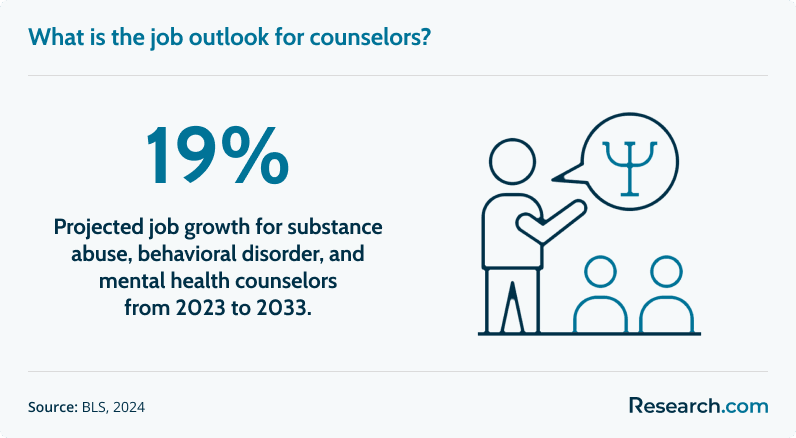
- Careers in mental health, substance abuse, and behavioral counseling are projected to grow by 19% over the next decade.
- What does CACREP accreditation mean?
- How does a counseling program become CACREP-accredited?
- How is CACREP different from APA, MPCAC, and CSWE accreditation?
- Do all counseling careers require CACREP accreditation?
- Which states required a CACREP degree for licensure in the cited 2025 snapshot?
- How should you choose a CACREP-accredited counseling program?
- What counseling specializations are available in CACREP-accredited programs?
- How can CACREP programs support additional professional credentials?
- Why do salaries vary by region for CACREP graduates?
- Are online CACREP programs as credible as campus programs?
- Can accelerated options improve a CACREP-accredited program experience?
- What are typical admission requirements for CACREP-accredited programs?
- How do CACREP programs help students build networks and mentorships?
- How long does it take to become a counselor?
- How do CACREP-accredited programs address diversity and inclusion?
- How much do CACREP-accredited counseling programs cost?
- Can students get financial aid for CACREP-accredited degrees?
- Does CACREP accreditation guarantee employment?
- How should you evaluate ROI for a CACREP-accredited degree?
What does CACREP accreditation mean?
CACREP stands for the Council for Accreditation of Counseling and Related Educational Programs. It reviews counseling programs to determine whether they meet defined standards for course content, faculty preparation, supervised clinical experience, assessment, ethics, and program outcomes. For students, the practical value is simple: a CACREP-accredited program has gone through an external quality review focused specifically on counselor preparation.
This matters because counseling is a regulated profession in many career paths. If your goal is to become a licensed professional counselor, school counselor, clinical mental health counselor, substance abuse counselor, or another licensed practitioner, your graduate curriculum may be reviewed by a state board. Programs such as the best online master’s in school counseling degree programs often seek accreditation because students need assurance that academic and fieldwork expectations align with professional standards.
Accreditation is also useful for comparing programs that look similar on the surface. Two schools may both offer a master’s in counseling, but their licensure alignment, practicum structure, faculty supervision, and student outcome reporting may differ. Whether you choose a campus program or CACREP accredited online counseling programs, verify the accreditation status of the specific program, not only the university. This is similar to how students in other professional fields may compare whether the best online master’s in legal studies degree programs align with the expectations of their intended career path.
| CACREP Helps With | What It Does Not Do |
| Confirms that a counseling program has been reviewed against counseling-specific standards. | It does not guarantee state licensure, because each licensing board sets its own requirements. |
| May make transcript review easier in states that recognize CACREP standards. | It does not replace supervised post-graduate hours, exams, background checks, or applications. |
| Signals structured clinical training and faculty oversight. | It does not guarantee a job offer, salary level, or private practice success. |
| Can support mobility if you later seek licensure in another state. | It does not mean every specialization within a university is automatically accredited. |
How does a counseling program become CACREP-accredited?
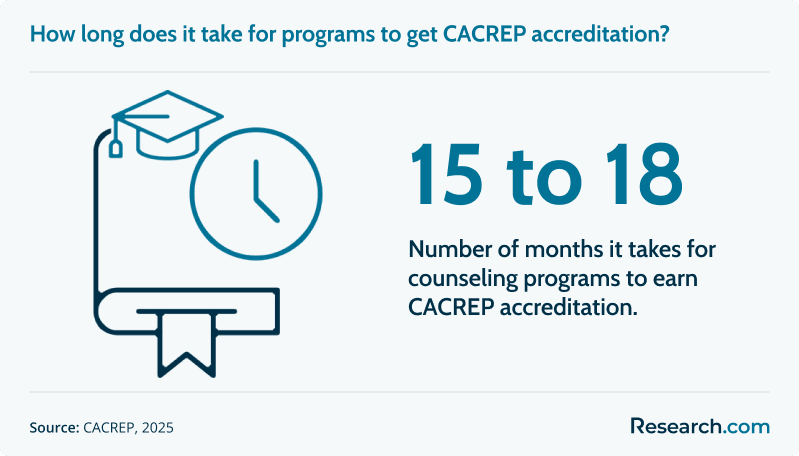
A program earns CACREP accreditation through a formal review process. The institution must show evidence that it meets CACREP expectations for curriculum design, faculty qualifications, student assessment, clinical training, program evaluation, and ongoing improvement. The process is not a simple application form; it requires documentation, review by trained evaluators, and a final accreditation decision.
| Stage | What Happens | Why It Matters to Students |
| Self-assessment | The program compares its curriculum, policies, clinical requirements, and student outcomes with CACREP standards. | Weak areas should be identified and corrected before students rely on the program for licensure preparation. |
| Application submission | The institution submits its application and a detailed self-study explaining how it meets the standards. | Students benefit when schools can clearly document what they teach and how they evaluate readiness. |
| Peer review | Reviewers with counseling education expertise examine the program’s materials and may request more evidence. | This adds external scrutiny rather than relying only on the school’s own claims. |
| Site visit | A review team meets with faculty, administrators, students, and other stakeholders to verify program practices. | The process checks whether policies described on paper are actually implemented. |
| Final decision and renewal | CACREP determines whether the program qualifies for accreditation and requires future review for continued status. | Accreditation is monitored over time, so students should still confirm current status before enrolling. |
Before applying to any counseling program, check the official CACREP directory and confirm the exact program name, degree level, campus or online designation, and accreditation period. A university may have one accredited counseling track and another track that is not accredited.
How is CACREP different from APA, MPCAC, and CSWE accreditation?
CACREP is not the only accreditor connected to mental health education, but it is the one most directly tied to professional counseling programs. Students often confuse counseling, psychology, and social work pathways because all can involve helping clients with behavioral, emotional, or social concerns. The accreditor that matters depends on the credential you want.
| Accreditor | Primary Focus | Best Fit for Students Who Want To | Important Limitation |
| CACREP | Master’s and doctoral programs in counseling. | Prepare for counseling roles such as LPC-focused clinical mental health counseling, school counseling, or related counseling specialties. | Not designed for psychologist or social work licensure. |
| APA | Doctoral psychology programs, including Ph.D. and Psy.D. programs. | Become licensed psychologists or pursue advanced psychology practice, teaching, or research roles. | Does not accredit master’s programs, including counseling master’s degrees. |
| MPCAC | Master’s programs in psychology and counseling that may not follow the CACREP model. | Study counseling or psychology in programs with a different curricular structure. | May not satisfy some state counseling licensure rules without additional review. |
| CSWE | Social work education. | Pursue social work licensure and social work practice roles. | Does not accredit counseling or psychology degrees for LPC or psychologist pathways. |
If your goal is professional counseling licensure, CACREP is usually the most relevant accreditation to investigate first. If you are more interested in psychology research, assessment, or psychologist licensure, an online masters in psychology may be a different academic step, but psychologist licensure typically depends on doctoral-level preparation and APA accreditation rather than CACREP.
Career goals should drive the accreditation decision. A student asking, “What can I do with a master’s in sports psychology?” may be comparing performance consulting, research, and athlete mental health support options, while someone exploring MBA career paths and salaries is evaluating a different professional market entirely. Accreditation matters only when it matches the credential and occupation you plan to pursue.
The chart below shows the most common degree levels for mental health counselors in the US, based on Zippia data from 2025.
Do all counseling careers require CACREP accreditation?
No. CACREP accreditation is not mandatory for every counseling-adjacent job, but it can be critical for licensed clinical counseling roles. The more your career depends on state licensure, insurance reimbursement, clinical diagnosis, supervised practice, or independent counseling authority, the more important accreditation becomes.
For Licensed Professional Counselor pathways, some state boards require a CACREP-accredited degree or make the process easier for CACREP graduates. Students from non-CACREP programs may be asked to document course-by-course equivalency, complete extra coursework, or provide detailed syllabi and supervised experience records. If you are planning a clinical career, researching how to become an addiction counselor, or preparing for school counseling, choosing an accredited program can reduce avoidable licensure complications.
Some roles may not require CACREP. Examples can include life coaching, career development services, some nonprofit support roles, wellness programming, student affairs positions, or entry-level community services work. However, job titles can be misleading. “Counselor” may be used informally in some workplaces and legally restricted in others, so always check the credential requirements in your state and industry.
| Career Direction | CACREP Importance | What to Verify |
| Licensed professional counseling | High | State board education rules, supervised hours, exams, and whether CACREP is required. |
| School counseling | High to moderate | State education department requirements, school counselor certification, and field placement rules. |
| Substance abuse counseling | Moderate to high | State-specific addiction counseling credentials and whether a counseling degree is required. |
| Career counseling or coaching | Variable | Whether the role requires licensure, certification, or only employer-defined qualifications. |
| Community mental health support roles | Variable | Whether duties include clinical counseling or nonclinical case support. |
Which states required a CACREP degree for licensure in the cited 2025 snapshot?
Licensure rules change by state, and they can change over time. In the cited 2025 information, Ohio, Kentucky, North Carolina, and Florida require graduation from a CACREP-accredited program to become an LPC. Students planning to work in any of these states should treat CACREP accreditation as a non-negotiable program requirement unless the state board provides another explicit pathway.
Other states may mention CACREP in regulations without making it the only acceptable route. In those states, a CACREP degree may simplify the review process, while a non-CACREP degree may trigger additional documentation requests. This can include transcript audits, course descriptions, syllabi, supervised experience verification, or extra coursework.
The risk is highest when students enroll without checking the state board first. For example, a Florida student who completes a non-CACREP counseling program may find that the degree does not satisfy the state’s LPC education rule. A student in another state may still qualify through equivalency review, but the process may take more time and require more documentation.
| Before You Enroll, Ask | Why It Matters |
| Does my intended state require CACREP for the license I want? | A non-CACREP degree may not be acceptable in states with strict rules. |
| Is the exact program and specialization accredited? | Institutional accreditation does not automatically mean every counseling track is CACREP-accredited. |
| Will the program’s practicum and internship meet state hour requirements? | Licensure boards may evaluate both coursework and supervised clinical experience. |
| What happens if I move after graduation? | Licensure portability can be easier when your education is widely recognized. |
Always confirm requirements directly with the licensing board in the state where you plan to practice. Do not rely only on admissions representatives, rankings, or general program pages.
How should you choose a CACREP-accredited counseling program?
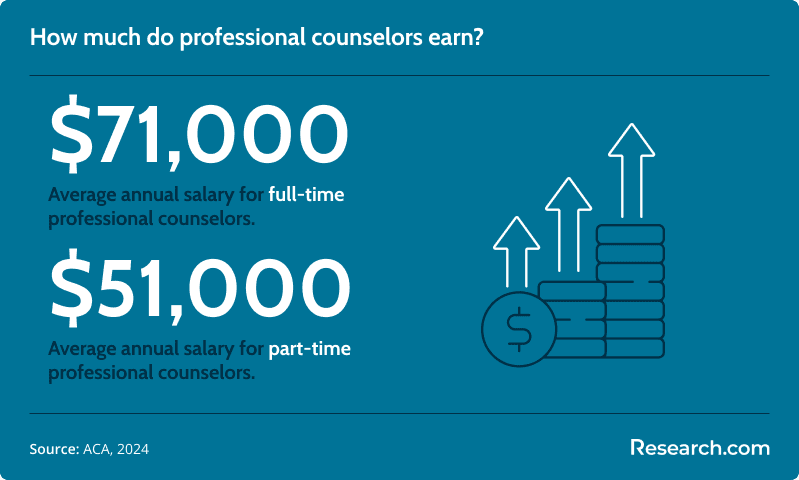
The best CACREP-accredited program is not automatically the most famous, the cheapest, or the fastest. It is the program that fits your licensure target, specialization, budget, schedule, clinical placement needs, and learning style. Start with accreditation, then evaluate whether the program can actually help you complete the steps required for your intended role.
| Selection Factor | What to Look For | Red Flag |
| Accreditation status | Current CACREP accreditation for the exact degree and track you plan to enter. | The school says it is “seeking accreditation” but has not yet earned it. |
| Licensure alignment | Clear mapping between courses, clinical hours, and your target state’s requirements. | Vague claims that the program “prepares students for licensure” without state-specific guidance. |
| Curriculum | Training in counseling theory, ethics, assessment, multicultural counseling, diagnosis, and clinical skills. | Coursework that does not match LPC, school counseling, or specialty requirements. |
| Faculty | Instructors with counseling credentials, clinical experience, research expertise, or supervision experience. | Little information about faculty qualifications or availability for mentoring. |
| Clinical placement support | Practicum and internship guidance, site approval processes, and supervision expectations. | Students are left to find placements with minimal support. |
| Student support | Advising, career services, writing support, licensure advising, and technology help for online learners. | No clear contact for fieldwork, licensure planning, or academic concerns. |
| Cost and aid | Transparent tuition, fees, financial aid, scholarships, payment plans, and total estimated cost. | The program highlights low tuition but hides fees, travel, residency, or internship costs. |
| Format | Online, hybrid, or campus delivery that fits your work schedule and clinical training needs. | Required residencies or daytime placements that conflict with your availability. |
Students who need flexible study options may compare counseling programs with broader online affordability resources such as the most affordable online colleges, but affordability should not replace licensure fit. A lower-cost program can become expensive if it requires extra coursework later or does not meet your state’s requirements.
What counseling specializations are available in CACREP-accredited programs?
CACREP-accredited programs may offer specialization tracks that prepare students for different counseling settings and client populations. Common areas include clinical mental health counseling, school counseling, substance abuse counseling, rehabilitation counseling, college counseling, career counseling, and marriage, couple, and family counseling. Specialization matters because field placements, electives, and licensing rules may differ by practice area.
For example, students interested in working with couples and families may compare options such as masters in marriage and family therapy online programs, while students focused on schools should verify school counselor certification requirements in their state. Do not choose a specialization only because it sounds interesting. Choose it because it matches the license, population, and work setting you want.
| Specialization | Good Fit If You Want To | Key Question to Ask |
| Clinical mental health counseling | Work with individuals or groups in clinical, community, or private practice settings. | Does the curriculum align with LPC requirements in my state? |
| School counseling | Support students’ academic, social, emotional, and career development. | Does the program meet state school counselor certification rules? |
| Substance abuse counseling | Help clients address addiction, recovery, relapse prevention, and behavioral health needs. | Will this degree satisfy addiction counseling credential requirements? |
| Marriage, couple, and family counseling | Work with relational systems, couples, families, and communication patterns. | Which license does the program prepare students to pursue? |
| Career counseling | Help clients with career planning, transitions, assessment, and employment decisions. | Is licensure required for the roles I am targeting? |
How can CACREP programs support additional professional credentials?
CACREP-accredited programs can give students a structured foundation for later certifications, specialty training, and advanced practice credentials. The value is not that CACREP automatically awards extra credentials; rather, accredited programs often include the supervised practice, ethics, assessment, and theory base that students need before pursuing more specialized qualifications.
Some graduates add credentials related to trauma, addiction, play therapy, school counseling, career development, or behavioral intervention. Others may move into adjacent areas, such as behavior analysis, by researching pathways like board certified behavior analyst online programs. Before assuming a counseling degree will qualify you for a separate credential, check the certifying body’s coursework, supervision, exam, and degree requirements.
Why do salaries vary by region for CACREP graduates?
Salary outcomes for counseling graduates vary because local labor markets vary. Pay can be affected by cost of living, state funding for behavioral health, demand for clinicians, employer type, licensure level, bilingual skills, specialization, years of experience, and whether the role is in a school, hospital, community agency, private practice, or government setting.
Regional comparisons are useful, but they should be interpreted carefully. A higher salary in one metropolitan area may come with higher rent, transportation, insurance, or tax costs. Related workforce analyses, such as state-level discussions of ABA salary, show why location-specific research matters before estimating return on investment. For counseling students, the smartest approach is to compare salaries only after confirming licensure rules, job availability, supervision opportunities, and total program cost.
Are online CACREP programs as credible as campus programs?
Online CACREP-accredited counseling programs can be credible when the specific program is accredited, the curriculum meets the same standards, and the school provides strong support for practicum and internship placement. Accreditation is attached to program quality and compliance with standards, not simply to whether classes are delivered online or in person.
The main difference is the student experience. Online programs may offer flexibility for working adults, caregivers, military learners, or students far from campus. Campus programs may provide more immediate face-to-face interaction, easier access to local faculty, and built-in relationships with nearby clinical sites. Neither format is automatically better for every student.
| Feature | Online CACREP Program | Campus CACREP Program |
| Schedule flexibility | Often better for students balancing work, family, or relocation limits. | Usually follows a more fixed class schedule. |
| Peer and faculty interaction | Uses video meetings, discussion boards, virtual advising, and digital collaboration. | Offers in-person class discussion, role-play, office visits, and informal networking. |
| Clinical training | May require students to secure approved local practicum and internship sites. | May have established relationships with nearby agencies, schools, or clinics. |
| Residency requirements | Some programs may require short campus visits or synchronous skills labs. | Campus presence is expected throughout the program. |
| Best for | Self-directed learners who need geographic flexibility and can manage deadlines independently. | Students who prefer in-person structure, immediate feedback, and campus-based community. |
Before choosing an online program, ask how the school approves field sites, whether students can complete placements in their own state, what happens if a placement falls through, and whether the program meets licensure requirements where you live.
The chart below lists the leading fields of study for online students in the US, as reported in 2024.
Can accelerated options improve a CACREP-accredited program experience?
Accelerated options can help some students finish faster, but speed should never come at the expense of licensure readiness, clinical quality, or manageable workload. Counseling programs include skills practice, reflection, supervision, practicum, and internship requirements. These are difficult to compress without increasing intensity.
An accelerated pathway may work well if you already have strong academic preparation, flexible work hours, reliable support at home, and the ability to complete fieldwork on the program’s timeline. It may be a poor fit if you need to work full time, have limited availability for clinical placements, or are new to graduate-level writing and counseling theory. Students comparing faster education models may also review related options such as fast track psychology degree online programs, while remembering that psychology and counseling licensure paths can differ.
What are typical admission requirements for CACREP-accredited programs?
Admission requirements vary by school, but CACREP-accredited master’s programs commonly look for academic readiness, communication skills, ethical maturity, and evidence that applicants understand the counseling profession. The goal is not only to admit students who can complete coursework but also to identify applicants who can develop into responsible practitioners.
| Requirement | What It Usually Shows |
| Official transcripts | Prior degree completion, GPA history, and relevant coursework. |
| Personal statement | Career goals, motivation for counseling, self-awareness, and writing ability. |
| Letters of recommendation | Academic, professional, or volunteer-based evidence of readiness and character. |
| Resume or experience summary | Exposure to helping roles, human services, education, research, advocacy, or related work. |
| Interview | Interpersonal skills, professionalism, fit with the program, and ethical judgment. |
| Standardized test scores | Some programs may request them, while others may not. |
Applicants interested in interdisciplinary mental health, law, and behavioral science topics may also compare programs such as online masters forensic psychology degrees, but they should verify whether those programs lead to the counseling license they want. A related field is not automatically a substitute for a counseling licensure program.
How do CACREP programs help students build networks and mentorships?
Strong counseling programs help students connect classroom learning with the professional community. Networking is not just about finding a job; it can help students secure practicum sites, identify supervisors, learn about specializations, understand ethical practice, and prepare for licensure requirements.
Common networking and mentorship supports include faculty advising, alumni panels, professional association introductions, field placement coordination, supervision seminars, career workshops, and partnerships with schools, clinics, hospitals, and community agencies. Students interested in family-focused practice may also compare options such as the best affordable MFT degree online programs to understand how different counseling and therapy pathways structure mentorship and clinical training.
How long does it take to become a counselor?
Students in CACREP-accredited master’s programs commonly complete the degree in 2 to 3 years when enrolled full time. Part-time enrollment can extend the timeline. The total path to independent practice may take longer because many counseling licenses also require post-graduate supervised experience, examinations, state applications, and continuing education.
Program length depends on course load, practicum timing, internship availability, specialization, state rules, and whether the student pauses enrollment. If your main concern is timeline, review How long to be a counselor? and compare the full licensure pathway, not just the classroom portion of the degree.
How do CACREP-accredited programs address diversity and inclusion?
CACREP standards emphasize preparation for counseling diverse clients and communities. In practice, that means students should expect coursework and clinical training that address cultural humility, social justice, ethics, identity, power, privilege, systemic barriers, and culturally responsive counseling methods.
Diversity training is not a decorative part of counseling education. Counselors work with clients whose backgrounds, beliefs, family systems, trauma histories, languages, disability experiences, and access to care may differ from their own. Programs may use case studies, community partnerships, supervised practice, and reflective assignments to help students build competence. Students evaluating online quality and accreditation questions can also review what accreditation is best for a psychology degree, while keeping in mind that counseling and psychology accreditation standards are not identical.
How much do CACREP-accredited counseling programs cost?
Costs vary by institution, delivery format, residency requirements, fees, and whether the school is public or private. Based on academic year 2023-24 data, full-time graduate students at public institutions pay about $11,800 per academic year for tuition and required fees, while students at private institutions pay around $20,500.
Those figures are useful benchmarks, but they are not the full price of attendance. Counseling students should also budget for books, technology, background checks, liability insurance, travel to field sites, residency travel if required, exam preparation, licensing applications, and potential lost income if fieldwork hours reduce work availability.
| Cost Category | Why It Matters |
| Tuition and required fees | The largest visible cost and the easiest number to compare across schools. |
| Practicum and internship expenses | Students may need transportation, schedule flexibility, professional attire, or documentation fees. |
| Online learning costs | Technology fees, equipment, internet reliability, and possible campus residency travel can add up. |
| Licensure costs after graduation | State applications, exams, supervision, and continuing education may create additional expenses. |
| Opportunity cost | Reduced work hours during internship can affect income and financial planning. |
To compare programs fairly, request a total cost estimate through graduation, not only a per-credit tuition rate. Then compare that cost with licensure fit, field placement support, completion timeline, and local job opportunities.
Can students get financial aid for CACREP-accredited degrees?
Yes. Students in eligible CACREP-accredited programs may have access to federal aid, institutional scholarships, professional association awards, state programs, employer support, or loan repayment options. The exact aid package depends on the institution, program eligibility, enrollment status, financial need, academic profile, and funding availability.
- Federal student aid: Eligible students can complete the FAFSA and explore federal loans, work-study, and grants such as Pell Grants, depending on program and student eligibility.
- School-based scholarships and grants: Universities may offer merit-based, need-based, diversity-focused, or department-specific aid for counseling students.
- Professional association support: Counseling organizations may provide scholarships, awards, or grants. The National Board for Certified Counselors offers scholarship opportunities for students preparing for counseling careers.
- State and local programs: Some states or agencies may support students who plan to work in underserved communities or high-need behavioral health settings.
- Employer benefits: Students already working in education, healthcare, human services, or government agencies should ask about tuition assistance or professional development funding.
| Financial Aid Question | Why You Should Ask It |
| Is this specific program eligible for federal aid? | Not every educational offering has the same aid eligibility. |
| What is the average aid package for graduate counseling students? | Published tuition does not show what students actually pay after aid. |
| Are scholarships renewable? | A one-year award may not reduce total degree cost as much as expected. |
| Will part-time enrollment affect aid? | Enrollment intensity can change eligibility and disbursement amounts. |
| Are there service commitments? | Some grants or repayment programs may require work in specific settings after graduation. |
Does CACREP accreditation guarantee employment?
No. CACREP accreditation can strengthen your educational foundation and may help with licensure review, but it does not guarantee a job. Employers still evaluate your license status, internship experience, references, communication skills, specialization, professionalism, and fit with the organization.
Accreditation is best viewed as one part of employability. A graduate who completes a CACREP-accredited program but has weak interview skills, limited clinical experience, or no licensure plan may struggle. A student who actively builds supervised experience, joins professional organizations, develops a specialty, and understands local hiring needs will usually be better positioned.
| Career Path | Typical Focus | What Can Improve Employability |
| Mental health counselor | Helping clients manage emotional, behavioral, and psychological concerns. | Clinical internships, licensure progress, crisis training, and strong supervision. |
| School counselor | Supporting academic planning, student well-being, and school-based interventions. | School placements, certification alignment, and experience with diverse student populations. |
| Substance abuse counselor | Supporting recovery, relapse prevention, and behavioral health treatment. | Addiction-focused coursework, supervised recovery setting experience, and state credential planning. |
| Marriage and family-focused counselor | Working with relationship systems, families, and couples. | Specialized clinical placements and clarity about the relevant license pathway. |
| Clinical counselor | Providing therapeutic services in clinical or community settings. | Assessment skills, documentation ability, ethical judgment, and supervised practice hours. |
Some counseling roles can become part of the highest paying jobs with a masters in counseling when graduates combine licensure, specialization, experience, leadership ability, and strong local demand. Still, salary and employment outcomes are never guaranteed by accreditation alone.
How should you evaluate ROI for a CACREP-accredited degree?
Return on investment should be measured by more than tuition. A useful ROI review compares total cost, time to completion, licensure eligibility, local salary potential, job availability, supervision access, debt burden, and the likelihood that the program helps you reach the exact role you want.
CACREP accreditation can improve ROI when it prevents costly licensure delays, supports access to required clinical training, and strengthens employer confidence in your preparation. It can weaken ROI if you overborrow, choose a poor-fit specialization, enroll in a program that does not support your state requirements, or underestimate unpaid or low-paid fieldwork demands. Students comparing mental health graduate programs may also examine other cost models, such as how much do PsyD programs cost, to understand how degree level, licensure pathway, and career goals change the financial equation.
| Common Mistake | Better Approach |
| Choosing a program because it is cheapest. | Compare total cost with licensure fit, placement support, accreditation status, and completion timeline. |
| Assuming institutional accreditation is the same as CACREP accreditation. | Confirm accreditation for the exact counseling program and track. |
| Ignoring state licensure rules until after graduation. | Check your state board before applying and again before enrolling. |
| Believing online automatically means easier. | Ask about synchronous sessions, field placements, residencies, supervision, and workload. |
| Relying only on rankings. | Use rankings as one input, then verify outcomes, faculty, cost, and licensure alignment. |
| Assuming accreditation guarantees a job or salary. | Build experience, supervision relationships, interview skills, and a clear licensure plan. |
Questions to Ask Before Enrolling in a CACREP-Accredited Program
- Is the exact degree track I want currently CACREP-accredited?
- Does the program meet the education requirements for the state where I plan to practice?
- How does the school help online students secure practicum and internship placements?
- What are the total costs through graduation, including fees, travel, technology, and fieldwork expenses?
- What percentage of students complete the program, and what support exists for students who struggle?
- Who teaches the courses, and what clinical or supervisory experience do faculty members have?
- Are there required campus residencies, synchronous classes, or daytime fieldwork expectations?
- What licensure exams, supervised hours, or post-graduate steps will I still need after the degree?
- Can I speak with current students or alumni in my intended specialization?
- What happens if my state changes licensure requirements while I am enrolled?
Current Trends Affecting CACREP Counseling Students
Several trends make accreditation and careful program selection more important. Demand for behavioral health services remains a major factor, with counseling careers expected to grow by 19% over the next decade. At the same time, state licensure rules continue to shape which degrees qualify graduates for professional practice.
Online counseling education has also become more common, but students must look beyond convenience. A strong online program should provide live skills practice, ethical technology use, field placement support, supervision guidance, and clear state authorization information. AI and digital tools may assist with administrative tasks, telehealth workflows, documentation support, and training simulations, but they do not replace clinical judgment, ethical practice, cultural competence, or supervised counseling experience.
Employers are also paying close attention to readiness. Graduates who can document clinical hours, work with diverse clients, use evidence-informed approaches, and communicate professionally may be more competitive than applicants who rely on the degree name alone.
Key Insights
- CACREP accreditation is most important for students pursuing licensed counseling careers, especially LPC pathways and state-regulated roles.
- In the cited 2025 snapshot, Ohio, Kentucky, North Carolina, and Florida mandate a CACREP-accredited degree for licensure.
- Accreditation can simplify licensure review, but it does not replace exams, supervised hours, applications, or state-specific requirements.
- Online CACREP programs can be credible, but students must verify field placement support, residency requirements, and state licensure alignment.
- Cost comparisons should include more than tuition. Public institutions average about $11,800, while private schools average roughly $20,500 per academic year, but fees, fieldwork, travel, and licensing expenses also matter.
- The best program is the one that matches your state, license goal, specialization, schedule, budget, and clinical training needs.
- CACREP accreditation does not guarantee employment. Career outcomes depend on licensure progress, supervised experience, specialization, networking, and local demand.
References:
- American Counseling Association (ACA). (2024). Counseling Workforce Report. Research & Reports. ACA.
- Bureau of Labor Statistics (BLS). (2024). Substance Abuse, Behavioral Disorder, and Mental Health Counselors. Occupational Outlook Handbook. BLS.
- Council for Accreditation of Counseling and Related Educational Programs (CACREP). (2024). 2024 CACREP Standards. CACREP.
- Council for Accreditation of Counseling and Related Educational Programs (CACREP). (2025). For Students. CACREP.
- Korhonen, V. (2024). Leading fields of study for online college students in the United States in 2024. Education & Science. Statista.
- National Center for Education Statistics (NCES). (2024a). Student Charges: What is the average amount of tuition and required fees for full-time graduate students at private postsecondary institutions operating on an academic year calendar system?. Integrated Postsecondary Education Data System (IPEDS). NCES.
- National Center for Education Statistics (NCES). (2024b). Student Charges: What is the average amount of tuition and required fees for graduate students at public postsecondary institutions operating on an academic year calendar system?. Integrated Postsecondary Education Data System (IPEDS). NCES.
- Zippia. (2025). Mental Health Counselor Demographics and Statistics in the US. Zippia.
Other Things You Should Know About CACREP Accreditation
Counseling programs maintain CACREP accreditation in 2027 by regularly undergoing accreditation reviews, demonstrating adherence to CACREP standards, and submitting annual reports. They remain committed to continuous improvement by integrating feedback and updating curriculum to align with current best practices in counseling education.
CACREP requires a formal site visit by trained peer reviewers as part of the accreditation review. The visit verifies curriculum, faculty qualifications, student support, and compliance with standards before the Council votes on initial or continuing accreditation for the program.
The application process for CACREP accreditation in 2027 involves submitting a detailed self-study report outlining compliance with standards, a site visit by CACREP evaluators, and addressing any feedback. Programs must demonstrate adherence to curricular, faculty, and resource standards through detailed documentation and evidence.


