2027 MBA Degree Salaries: Guide to Highest Paying Concentrations

Co-Founder and Chief Data Scientist
MBA salary research can be confusing because the answer changes sharply by industry, school, location, work experience, and concentration. A finance MBA in New York, a product-focused MBA in Seattle, and an operations MBA in manufacturing may all carry the same degree title but lead to very different compensation packages. This guide explains what MBA graduates can realistically expect to earn, which specializations and industries tend to pay more, how rankings and alumni networks affect outcomes, and how to evaluate whether an MBA is likely to pay off for your career goals.
If your main reason for pursuing an MBA is higher income, do not look only at the average salary. The better question is whether a specific program, concentration, market, and career path can move you into roles with stronger base pay, bonuses, equity, leadership responsibility, or long-term advancement potential.
Quick Answer: What MBA Salary Should You Expect?
MBA salaries vary widely, but the average base salary for a professional with this degree is approximately $98,000 as of 2024. For management occupations, the median annual wage is around $116,880 as of May 2024, according to the U.S. Bureau of Labor Statistics. Graduates who enter consulting, finance, technology, engineering management, or supply chain leadership often have access to higher compensation, especially when bonuses, equity, or commissions are part of the offer.
Key Things You Should Know About MBA Degree Salaries
- MBA pay depends heavily on industry, role, geography, prior experience, and school reputation; the average base salary is approximately $98,000 as of 2024, but top-paying fields can exceed that by a wide margin.
- The degree is often most valuable when it helps a professional move into management, strategy, consulting, finance, product, operations, or executive-track roles rather than when it is pursued without a clear career target.
- Although MBA programs can be expensive, graduates in high-demand areas such as finance and consulting may recover costs within 3-5 years after graduation, depending on tuition, lost income, debt, and post-MBA compensation.
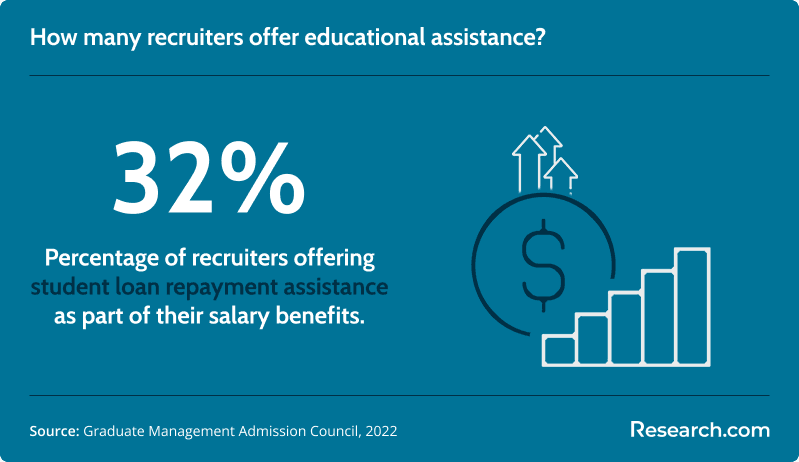
- Base salary is only one part of the picture. Signing bonuses, annual incentives, equity, stock options, relocation support, and tuition assistance can materially change the total value of an offer.
- 10 Highest-paying MBA Concentrations for 2027
- What is the average MBA degree salary?
- What industries pay the highest salaries for MBA graduates?
- What are the highest-paying cities for MBA graduates in the U.S.?
- Do graduates from top-ranked MBA programs earn more?
- How does an MBA affect career advancement opportunities?
- Which MBA programs have the best ROI?
- How Will Economic Trends Impact MBA Salary Outcomes?
- How Can MBA Graduates Effectively Negotiate Their Salaries?
- Can supplemental certifications boost MBA salary prospects?
- Is there a gender pay gap for MBA graduates?
- Can Pursuing a Doctorate Enhance My MBA Career and Salary?
- Are accelerated MBA programs a viable option for boosting salary outcomes?
- Is there a salary gap between graduates of online and traditional MBA programs?
- How does an MBA alumni network influence salary outcomes?
- How do international MBA salary outcomes differ from U.S. standards?
- What Additional Advantages Does an MBA Provide Beyond Immediate Salary Increases?
- Can Complementary Graduate Programs Enhance My MBA Career?
- Can an Accelerated Project Management Degree Boost MBA Career Outcomes?
- How should I choose a high-paying MBA concentration?
- How Do MBA Salaries Evolve Over the Course of a Career?
- Does the Cost of an MBA Influence Earning Potential?
10 Highest-paying MBA Concentrations for 2027
The highest-paying MBA concentrations tend to combine strategic decision-making with scarce technical, financial, operational, or leadership skills. The figures below should be read as compensation benchmarks, not guaranteed outcomes. Your actual salary will depend on the employer, market, prior experience, school brand, internship pipeline, and whether you move into a revenue-generating or senior leadership role.
| Concentration | Reported pay figure | Best fit for students who want to... |
| Engineering Management | $257,000 per year | Lead technical teams, complex projects, product delivery, or engineering operations |
| Management Consulting | $221,000 per year | Advise organizations on strategy, transformation, growth, and operational improvement |
| Supply Chain Management | $203,000 per year | Manage logistics, procurement, resilience planning, and global operations |
| Leadership | $181,000 per year | Move into executive, organizational development, or people-management roles |
| Business Analytics | $151,000 per year | Use data, AI, forecasting, and analytical tools to improve business decisions |
| Sustainability Management | $142,000 | Connect profitability with environmental, social, and governance priorities |
| Technology Management | $118,000 per year | Lead digital products, systems, transformation projects, or technology strategy |
| Entrepreneurship | $110,000 per year | Launch ventures, join startups, or lead innovation inside established companies |
| Finance | $107,000 per year | Work in corporate finance, investment strategy, banking, private equity, or asset management |
| Real Estate | $106,000 per year | Manage property investments, development, acquisitions, or real estate portfolios |
1. Engineering Management
An MBA in engineering management is designed for professionals who need to connect technical execution with business strategy. This concentration can be especially valuable in sectors such as manufacturing, technology, construction, infrastructure, and product development, where leaders must understand budgets, engineering constraints, staffing, risk, and profitability at the same time. Graduates may be prepared to manage engineering teams, oversee complex projects, improve operational workflows, and translate technical priorities for executive stakeholders.
Median Pay: $257,000 per year
2. Management Consulting
Management consulting remains one of the most compensation-driven MBA paths because consultants are hired to solve high-value business problems. MBA graduates in this field may work on market entry, restructuring, mergers, digital transformation, cost reduction, pricing, or growth strategy. The work is demanding, travel-heavy in some firms, and performance-focused, but compensation can be strong because clients pay for measurable business impact and firms compete aggressively for high-performing MBA talent.
Average Salary: $221,000 per year
3. Supply Chain Management
Supply chain management can lead to well-paid careers in logistics and supply chain because companies depend on efficient sourcing, transportation, inventory control, and delivery systems. Global disruptions have made resilience, supplier risk, forecasting, and cost control more important to executives. MBA graduates who can reduce delays, strengthen procurement, manage vendor relationships, and improve distribution networks can have a direct effect on margins and customer satisfaction.
Median Pay: $203,000 per year
4. Leadership
A leadership-focused MBA is less tied to a single function and more useful for professionals preparing to manage people, business units, organizational change, or executive-level initiatives. Compensation can rise when leadership responsibility includes profit-and-loss ownership, large teams, strategic planning, performance incentives, or stock-based awards. Some professionals later pursue advanced credentials, including expensive or affordable doctoral programs in leadership, when their goals include consulting, academia, executive coaching, or senior organizational leadership.
Median Pay: $181,000 per year
5. Business Analytics
Business analytics is a high-value MBA concentration because employers need leaders who can turn data into decisions. The strongest candidates combine business judgment with skills in analytics, data visualization, forecasting, AI, machine learning concepts, and cross-functional communication. This path can support roles in finance, marketing, operations, product, supply chain, and strategy, particularly when organizations are investing in data-driven decision systems.
Median Pay: $151,000 per year
6. Sustainability Management
Sustainability management is becoming more relevant as organizations respond to climate risk, resource constraints, reporting expectations, consumer pressure, and corporate responsibility goals. MBA graduates in this area may help companies evaluate sustainability investments, design responsible supply chains, improve energy use, manage stakeholder expectations, or align environmental initiatives with financial performance. The highest-value roles usually require both business fluency and the ability to measure sustainability outcomes credibly.
Median Pay: $142,000
7. Technology Management
Technology management attracts MBA candidates who want to lead digital products, platforms, systems, or transformation efforts without necessarily becoming engineers. Employers often look for professionals who can coordinate product teams, translate customer needs, prioritize technology investments, manage implementation risk, and evaluate the business impact of emerging tools. This concentration can be especially useful for candidates targeting product management, tech operations, enterprise software, digital strategy, or technology consulting.
Average Salary: $118,000 per year
Related salary benchmark: $115,000 per year
8. Entrepreneurship
Entrepreneurship can produce high earnings, but it is also one of the least predictable MBA salary paths. Some graduates launch companies, pursue venture funding, buy or scale small businesses, or join early-stage startups where equity may matter more than immediate salary. Others use the concentration to become innovation leaders inside established organizations. The potential upside can be significant, but students should be realistic about risk, capital needs, market timing, and the possibility of uneven income in the early years.
Average Salary: $110,000 per year
9. Finance
Finance remains a classic high-paying MBA concentration because organizations need leaders who can evaluate capital, manage risk, price investments, build financial models, and make disciplined decisions with large sums of money. In 2023, 93% of finance and accounting firms actively sought MBA graduates, which shows continued demand for advanced business training alongside specialized finance and accounting education such as the cheapest online accounting masters degree options. Roles in investment banking, corporate finance, private equity, asset management, and strategic finance can reward strong analytical skills and sound judgment.
Average Salary: $107,000 per year
10. Real Estate
A real estate MBA can lead to roles in acquisitions, development, asset management, investment analysis, portfolio strategy, and commercial property operations. Compensation may include salary plus commissions, transaction-based incentives, or performance awards tied to deals and portfolio results. This concentration is best suited to students who understand that real estate income can be cyclical and highly dependent on interest rates, capital markets, local demand, and transaction volume.
Average Salary: $106,000 per year
What is the average MBA degree salary?
The average MBA degree salary is approximately $98,000 as of 2024, but that figure is only a starting point. MBA compensation is shaped by role type, employer size, industry, region, pre-MBA experience, school reputation, and whether the graduate moves into a management-track position. For management occupations, the median annual wage is around $116,880 as of May 2024, according to the U.S. Bureau of Labor Statistics.
Starting salaries for MBA graduates are typically 22% to 40% higher than those offered to individuals holding only a bachelor’s degree. Many graduates also evaluate total compensation rather than salary alone. A 2022 corporate survey found that nearly 60% of MBAs reported receiving bonuses, often between $20,000 and $50,000, depending on industry and role. The California Business Journal also noted that some companies offer signing bonuses of up to $30,000 to attract MBA talent.
| Compensation factor | Why it matters for MBA graduates |
| Base salary | The fixed annual pay used for budgeting, loan repayment planning, and offer comparisons. |
| Signing bonus | A one-time payment that can help offset relocation, lost income, or transition costs. |
| Annual bonus | Often tied to individual, team, or company performance, especially in finance, consulting, and leadership roles. |
| Equity or stock options | Can be valuable in technology, startups, and executive roles, but the value is not guaranteed. |
| Tuition assistance | Employer support may improve ROI by reducing out-of-pocket MBA costs. |
What industries pay the highest salaries for MBA graduates?
The best-paying MBA careers are usually in industries where business decisions directly affect revenue, capital allocation, operational efficiency, or competitive strategy. Students comparing MBA concentrations should look at both salary ranges and the type of work required, because a high-paying field may also involve long hours, travel, high pressure, or specialized technical expectations.
1. Finance and Investment Banking
Finance and investment banking can pay MBA graduates exceptionally well because the work involves capital markets, transactions, mergers, acquisitions, portfolio decisions, and client assets. Investment bankers, asset managers, financial analysts, and corporate finance leaders are often evaluated on accuracy, deal execution, risk management, and revenue impact. Bonuses, commissions, and equity-linked compensation can increase total pay beyond base salary.
Salary Range: $175,000 - $317,000 per year
2. Consulting
Consulting firms hire MBA graduates for structured problem-solving, market analysis, strategy development, transformation planning, and executive communication. The field can be lucrative because clients pay for recommendations that affect major investments, operating models, growth plans, and cost structures. Students comparing the highest paying business majors will often find consulting near the top of the business career ladder, but they should also consider workload and travel expectations.
Salary Range: $142,000 - $256,000 per year
3. Manufacturing and Operations Management
Manufacturing and operations management can reward MBA graduates who know how to reduce waste, improve throughput, strengthen supplier networks, and protect margins. Common paths include operations manager, supply chain director, process improvement consultant, and production strategy leader. Professionals interested in public-sector leadership or administrative policy may also compare business paths with options such as what are the most affordable MPA programs, but operations-focused MBA roles are typically more tied to private-sector productivity and efficiency targets.
Salary Range: $147,000 - $247,000 per year
4. Technology
Technology companies hire MBAs for product management, business operations, go-to-market strategy, partnerships, technology consulting, and digital transformation. Strong candidates can connect market needs with technical feasibility and revenue strategy. In some roles, stock options or equity grants may be a major part of compensation. Healthcare professionals weighing leadership pathways may find sector-specific alternatives such as online AGNP programs useful, but technology MBA roles are generally focused on products, platforms, growth, and operational scale.
Salary Range: $110,000 - $202,000 per year
5. Pharmaceuticals and Biotechnology
Pharmaceuticals and biotechnology offer strong MBA salary opportunities because business leaders in these fields must understand product commercialization, regulatory constraints, partnerships, pricing, lifecycle management, and research investment. Roles can include biotech product manager, business development director, market access strategist, and regulatory affairs manager. Students targeting healthcare business leadership may compare specialized pathways such as an affordable online MBA healthcare management. Those drawn to student support and counseling careers should instead evaluate the best online school counseling master's degree programs because the career outcomes are very different.
Salary Range: $162,000 - $189,000 per year
What are the highest-paying cities for MBA graduates in the U.S.?
Location affects MBA pay because major cities concentrate different employers, industries, capital markets, and executive roles. High salaries in expensive cities should be compared with housing, taxes, commuting, and lifestyle costs before assuming the offer is better.
- San Francisco: Tech-focused MBA graduates can see salary ranges from $245,000 to $456,000.
- New York City: Finance and consulting MBAs may find top salaries ranging from $211,00 to $394,000.
- Boston: Healthcare and biotech specialists can earn around $206,000 to $385,000 annually.
- Chicago: Finance, manufacturing, and operations roles can produce MBA salaries from $192,000 to $358,000 per year.
- Seattle: Technology-oriented MBA graduates can find salary ranges from $220,000 to $411,000 per year, supported by employers such as Amazon and Microsoft.
Do graduates from top-ranked MBA programs earn more?
Graduates from top-ranked MBA programs often earn more, but the reason is not only classroom instruction. Elite programs typically have selective admissions, powerful employer relationships, stronger internship pipelines, influential alumni networks, and access to recruiters in consulting, finance, technology, and executive-track roles. A Harvard Business Review discussion found that graduates from higher-ranked universities showed marginally better overall performance—about 1.9% for every 1,000 places in the rankings—largely because of selection and training factors.
When graduates from widely different university rankings were compared, the performance increase favoring top schools was 19%. However, when comparisons were limited to similarly ranked universities, the difference fell to around 1%. This suggests that prestige can help with access and signaling, but individual ability, fit, experience, interview performance, and career strategy still matter. For some career goals, a lower-cost or specialized option may be more practical than paying premium tuition for prestige alone, just as students in other fields may compare an online or on-campus public administration degree online based on outcomes rather than brand name only.
| When ranking matters more | When ranking may matter less |
| You want investment banking, top-tier consulting, or competitive leadership development programs. | You are staying with your current employer and need the credential mainly for promotion eligibility. |
| You need access to a specific recruiter network or alumni base. | You already have strong industry experience and a clear internal advancement path. |
| You can afford the program without excessive debt or lost income. | A lower-cost accredited program gives you similar access to your target local market. |
How does an MBA affect career advancement opportunities?
An MBA can improve advancement prospects when it builds skills that employers associate with leadership: financial analysis, strategy, communication, operations, people management, and decision-making under uncertainty. According to a Niche survey, 82% of potential students cited career advancement as a primary motivation for pursuing the degree.
The strongest outcomes usually occur when students enter with work experience and use the MBA to pivot into a higher-responsibility role, move to a better-paying industry, or qualify for management. Common advancement targets include chief executive officer, operations manager, financial director, product leader, strategy manager, consultant, and business development director.
Which MBA programs have the best ROI?
Return on investment depends on tuition, fees, living costs, lost wages, scholarships, debt, career outcomes, salary increases, and long-term promotion potential. A report by the Foundation for Research on Equal Opportunity (FREOPP) found that many MBA programs struggle to deliver positive ROI, while a small group of elite programs generate very high lifetime returns.
The report identified 13 elite programs, including Yale, the University of Pennsylvania (Wharton), and the University of Chicago (Booth), with lifetime returns exceeding $2 million. It also found that approximately 41% of master's degrees from Ivy League and comparable schools achieve an ROI above $1 million, compared to only 8% of master’s degrees in general. Research universities also performed better in the analysis: 10% of their master's programs exceeded the $1 million mark, compared with 5% at non-research institutions.
| ROI question to ask | Why it matters |
| What are total tuition, fees, books, travel, and residency costs? | Sticker tuition understates the true cost of many MBA programs. |
| Will I stop working or continue earning while enrolled? | Lost wages can be one of the largest MBA costs. |
| Which employers recruit from this program? | Recruiter access often affects salary outcomes more than course descriptions. |
| What salary outcomes are reported by concentration? | Overall MBA averages may hide major differences by specialization. |
| Is the school accredited and respected in my target market? | Accreditation and reputation affect transferability, employer trust, and value. |
How Will Economic Trends Impact MBA Salary Outcomes?
MBA salary outcomes move with the economy. Inflation, interest rates, hiring slowdowns, global supply chain conditions, technology investment, and employer profitability can affect base pay, bonuses, equity value, and recruiting volume. In tighter markets, employers may become more selective, while candidates with analytics, finance, operational resilience, AI-related business skills, or transformation experience may remain competitive.
Students considering flexible formats, including affordable online mba programs, should evaluate whether the curriculum reflects current employer needs rather than assuming any MBA will produce the same salary lift. Courses in data analysis, digital strategy, financial modeling, operations, leadership, and change management may be especially useful when companies face uncertainty.
How Can MBA Graduates Effectively Negotiate Their Salaries?
MBA graduates should negotiate compensation with market data, role-specific evidence, and a clear understanding of total rewards. Start by comparing salaries for the same role, industry, city, and experience level. Then prepare examples of measurable impact: revenue growth, cost savings, process improvements, team leadership, client wins, product launches, or analytical projects.
- Benchmark before the interview process ends: Know the likely range before the employer asks for salary expectations.
- Negotiate total compensation: Consider bonus, equity, signing bonus, relocation, paid time off, retirement contributions, and tuition reimbursement.
- Use business language: Explain the value you bring rather than framing the negotiation only around personal need.
- Ask about performance review timing: If base pay is fixed, an early review or performance bonus may improve the offer.
- Stay collaborative: Strong negotiation should reinforce that you are serious, prepared, and professional.
For a broader view of the degree’s value, compare salary outcomes, costs, and career goals in Is MBA worth it?.
Can supplemental certifications boost MBA salary prospects?
Certifications can help MBA graduates when they add a specific skill that employers already value. They are not a substitute for experience, but they may strengthen a profile in project management, analytics, finance, cybersecurity management, product, digital transformation, supply chain, or healthcare administration. The best certifications fill a real gap between your MBA coursework and your target role.
Supplemental credentials are most useful when they are targeted and recognizable. A candidate pursuing product analytics, for example, may benefit more from data and visualization training than from a broad certificate with little employer recognition. Students comparing faster degree options can also review fast MBA online pathways, but speed should not outweigh accreditation, recruiting support, or career fit.
Is there a gender pay gap for MBA graduates?
Yes. A gender pay gap persists among MBA graduates. According to a Forté Foundation study, the gap is approximately $6,864 before the MBA and widens to $8,681 after graduation, though the percentage difference decreases from 8% to 6%.
The gap becomes larger when current salaries are examined: women earn 17% less than men, a difference of $35,941. This means salary negotiation, employer transparency, promotion practices, industry selection, mentorship, sponsorship, and access to high-paying roles all matter. MBA candidates should review employment reports carefully and ask schools how they support equitable recruiting outcomes.
Can Pursuing a Doctorate Enhance My MBA Career and Salary?
A doctorate can enhance an MBA career when the target role requires advanced research, executive credibility, teaching, high-level consulting, or thought leadership. A DBA, for example, is usually more applied than a traditional research doctorate and may fit professionals who want to study complex business problems while remaining connected to practice. However, a doctorate is not necessary for most management roles, and it can add significant cost and time.
Before enrolling, ask whether the doctorate supports a specific career outcome that an MBA alone cannot deliver. Professionals who want a cost-conscious route can compare top online DBA programs while checking accreditation, dissertation expectations, faculty expertise, and career services.
Are accelerated MBA programs a viable option for boosting salary outcomes?
Accelerated MBA programs can be useful for experienced professionals who want to finish quickly and reduce time away from the workforce. The salary advantage comes from lowering opportunity cost and returning to full-time work sooner, not from the accelerated format itself. A shorter program can be a strong choice if it still offers rigorous coursework, accreditation, employer recognition, career support, and access to the student’s target industry.
Students comparing accelerated MBA programs should review admissions requirements, course intensity, internship access, cohort quality, and employment outcomes. This format may not be ideal for career switchers who need internships, networking time, and extensive recruiting support.
Is there a salary gap between graduates of online and traditional MBA programs?
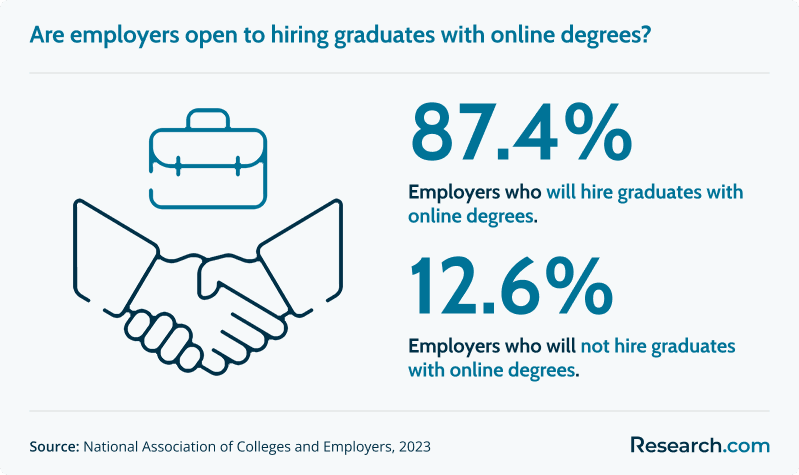
The salary gap between online and traditional MBA graduates has narrowed as accredited online programs have gained legitimacy. A National Association of Colleges and Employers (NACE) survey indicates that over 87% of employers are open to hiring graduates from online programs, and 100% of these employers report offering equivalent starting salaries for online and traditional degree holders.
The important distinction is not simply online versus campus. Employers are more likely to care about accreditation, school reputation, curriculum quality, career services, student experience, and demonstrated skills. Students seeking lower-cost or test-flexible options may compare the cheapest online MBA no GMAT requirement programs, but they should still verify outcomes, faculty quality, and employer recognition.
How does an MBA alumni network influence salary outcomes?
An MBA alumni network can influence salary indirectly by improving access to referrals, mentors, industry information, interview preparation, hidden job openings, and decision-makers. This matters most in competitive fields where referrals and reputation can help candidates reach interviews that are difficult to secure through job boards alone.
When comparing programs, ask how active the alumni network is in your target industry and city. A large network is less useful if graduates are not responsive or concentrated in your field. Programs with strong business accreditation, including AACSB online MBA programs, may offer structured networking platforms, employer events, and alumni access that support long-term career mobility.
How do international MBA salary outcomes differ from U.S. standards?
International MBA salaries can differ from U.S. salaries because compensation reflects local economies, currencies, taxation, benefits, cost of living, industry mix, and employer norms. A role that appears to pay less than a U.S. position may still offer strong purchasing power or benefits in its local market. Conversely, a high nominal salary may be reduced by taxes, relocation costs, or currency volatility.
Candidates considering international careers should compare local salary data, work authorization rules, employer sponsorship, exchange rates, and post-graduation job placement by country. Executive-format options such as affordable EMBA programs may be attractive for professionals already in leadership roles who want global business training without pausing their careers.
What Additional Advantages Does an MBA Provide Beyond Immediate Salary Increases?
An MBA can deliver benefits that do not show up immediately in starting salary. Graduates may gain broader business language, stronger leadership confidence, better strategic judgment, access to mentors, and more flexibility to move across industries. The degree can also help professionals transition from technical or functional roles into general management, consulting, product, finance, or entrepreneurship.
That said, an MBA is not the only route to business expertise. Some learners may benefit from earlier or more specialized study, such as a bachelor of finance online, especially if they need a stronger quantitative foundation before pursuing graduate-level business work.
Can Complementary Graduate Programs Enhance My MBA Career?
Complementary graduate study can strengthen an MBA career when it adds depth in a field that directly supports the student’s target role. For example, an affordable master of economics online can deepen quantitative analysis, policy understanding, forecasting, and market interpretation. This may be useful for careers in finance, consulting, public policy, strategy, or economic analysis.
However, stacking degrees without a clear purpose can increase debt without improving outcomes. Before adding another credential, compare the expected salary gain, employer demand, time commitment, and whether a shorter certificate or work experience would produce the same benefit.
Can an Accelerated Project Management Degree Boost MBA Career Outcomes?
Project management training can complement an MBA when a graduate wants to lead complex initiatives, technology implementations, construction projects, operational transformations, or cross-functional teams. Skills in risk planning, stakeholder communication, agile methods, scheduling, budgeting, and execution can make an MBA more practical in roles where results depend on delivery, not just strategy.
An accelerated project management degree may be useful for professionals who need a formal project credential quickly, but it should be evaluated against certifications, employer expectations, and the specific project leadership roles the candidate wants.
How should I choose a high-paying MBA concentration?
Choose an MBA concentration by starting with the job you want after graduation, not by chasing the highest salary number on a list. A concentration pays off when it aligns with your prior experience, target employers, strengths, location, and willingness to do the day-to-day work required in that field.
| Decision factor | What to ask before choosing |
| Industry demand | Are employers actively hiring MBA graduates in this specialization? |
| Personal fit | Do your strengths match the work, such as analytics, client service, leadership, finance, or operations? |
| School reputation | Is the program known for your target field, such as Wharton for finance or Stanford for entrepreneurship? |
| Recruiting access | Which companies recruit from the program for this concentration? |
| Long-term path | Will this concentration still support your goals 5-10 years after graduation? |
| Risk tolerance | Are you comfortable with variable compensation, travel, long hours, startup uncertainty, or cyclical markets? |
- Choose finance or consulting if you want high compensation potential and can handle competitive recruiting and demanding workloads.
- Choose technology management or business analytics if you want to connect strategy with data, products, platforms, or digital transformation.
- Choose supply chain or operations if you want measurable impact through efficiency, resilience, and cost control.
- Choose entrepreneurship if you are comfortable with uncertainty and value ownership or innovation more than predictable salary.
- Choose leadership if your goal is broader management responsibility rather than a narrow technical specialization.
How Do MBA Salaries Evolve Over the Course of a Career?
MBA salaries often grow as graduates move from specialist or manager roles into senior management, director, vice president, partner, founder, or executive positions. Early compensation increases may come from switching industries, entering a post-MBA leadership track, or moving into consulting, finance, product, or operations. Later increases are more likely to depend on team size, budget authority, revenue responsibility, equity, bonuses, and strategic impact.
Flexible formats such as a self-paced online MBA may support salary growth for working professionals who cannot pause their careers. However, students should still confirm that the program offers credible coursework, career support, and employer recognition.
Does the Cost of an MBA Influence Earning Potential?
The cost of an MBA does not directly determine earning potential, but it strongly affects ROI. A very expensive program may be worthwhile if it provides access to elite recruiting, major salary growth, and a powerful network. A lower-cost program may be the better choice if it meets your promotion needs, allows you to keep working, and avoids heavy debt.
Students should compare total program cost against realistic post-MBA salary outcomes, not best-case anecdotes. Include tuition, fees, books, travel, residency requirements, interest on loans, and lost wages. For a deeper cost comparison, review the MBA online cost.
Common Mistakes to Avoid When Evaluating MBA Salary Potential
- Using average salary as the only decision point: Averages can hide major differences by industry, city, school, and experience level.
- Ignoring accreditation: Employers may discount degrees from programs that lack recognized accreditation or strong academic standards.
- Assuming every MBA leads to executive pay: Salary growth usually requires relevant experience, strong performance, and access to the right roles.
- Overlooking opportunity cost: Lost income during a full-time MBA can materially change ROI.
- Borrowing based on best-case outcomes: Use conservative salary assumptions when estimating loan repayment.
- Choosing a concentration only for pay: High-paying fields can involve long hours, travel, pressure, or technical work that may not fit every student.
- Relying only on rankings: A lower-ranked program with strong local employer ties may outperform a prestigious program for certain regional goals.
- Not verifying employment reports: Ask whether salary data includes only employed graduates, international students, bonuses, or self-reported figures.
Questions to Ask Before Choosing an MBA Program for Salary Growth
- What are the median base salary, bonus, and placement rates for my intended concentration?
- Which employers recruit from this program, and for which roles?
- How much debt will I graduate with, and what monthly payment will that create?
- Can I keep working while enrolled, or will I lose income during the program?
- Does the program have strong alumni in my target city and industry?
- Is the MBA accredited and respected by employers I want to work for?
- What career services are available to online, part-time, executive, and full-time students?
- How recent and transparent are the school’s employment outcomes?
- Will this MBA help me change industries, earn a promotion, or qualify for leadership roles?
- What is my backup plan if I do not land a top-paying role immediately after graduation?
Key Insights
- Over 90% of companies hired MBA graduates in 2023, with especially strong demand in tech, consulting, and finance.
- The average base salary for MBA graduates is approximately $98,000 as of 2024, but industry, role, school, location, and experience can move compensation far above or below that figure.
- Management roles offer strong earning potential, with a median annual wage of around $116,880 as of May 2024, according to the U.S. Bureau of Labor Statistics.
- Top-paying MBA concentrations include engineering management, management consulting, supply chain management, leadership, business analytics, sustainability management, technology management, entrepreneurship, finance, and real estate.
- Elite MBA programs can improve access to high-paying employers; FREOPP identified 13 elite programs, including Yale, the University of Pennsylvania (Wharton), and the University of Chicago (Booth), with lifetime returns exceeding $2 million.
- Online MBA graduates can earn competitive salaries when the program is accredited and respected; NACE reported that over 87% of employers are open to hiring online graduates, and 100% of those employers offer equivalent starting salaries.
- The gender pay gap remains a serious issue: women MBA graduates earn 17% less than men, equal to a difference of $35,941.
- The best MBA choice is not always the most prestigious or expensive program. The strongest decision balances cost, accreditation, concentration, employer access, alumni network, and realistic salary outcomes.
References
- Cooper, P. (2022, February 24). Is Grad School Worth It? A Comprehensive Return on Investment Analysis - FREOPP. The Foundation for Research on Equal Opportunity. Retrieved, October 31, 2024.
- Dyvik, E. H. (2024a, July 4). Median starting salary offered by companies to business school graduates worldwide in 2022, by degree type. Statista. Retrieved, October 31, 2024.
- Dyvik, E. H. (2024b, July 4). Share of companies hiring MBA graduates from 2020 to 2022, by industry. Statista. Retrieved, October 31, 2024.
- E. H. (2024c, August 7). Share of employers hiring MBA graduates in 2023, by business area. Statista. Retrieved, October 31, 2024.
- Forté Foundation. (2022). Career outcomes of the MBA. FortéFoundation.org. Retrieved, October 31, 2024.
- Marin, B. (2022, July 13). 8 Career Benefits of an MBA. California Business Journal.
- NACE. (2023, November). Job outlook 2024. National Association of Colleges and Employers. Retrieved, October 31, 2024.
- Patch, W. (2021, August 25). 2021 Niche grad searcher survey. Niche.com. Retrieved, October 31, 2024.
- SalaryTaras, V., Shah, G., Gunkel, M., & Tavoletti, E. (2020, September 4). Graduates of elite universities get paid more. Do they perform better? Harvard Business Review. Retrieved, October 31, 2024.
Other Things You Should Know About MBA Degree Salaries
Many top MBA programs report average admitted GMAT scores between 650 and 740, with elite schools often above 700. For salary-focused concentrations, admissions also weigh GPA, 2–5 years of work experience, leadership record, and quantitative coursework, not GMAT alone.
In 2027, the MBA concentration that offers the highest average salary is typically finance, with graduates earning an average starting salary of over $120,000. However, this can vary based on geographic location, industry demand, and years of experience.