2027 Online Mechanical Engineering Degrees With the Most Flexible Credit Transfer Rules

Co-Founder and Chief Data Scientist
Transfer credits can decide whether an online mechanical engineering degree takes two years or starts over almost from scratch. That matters because BLS data places the median annual wage for mechanical engineers at $102,320, while tuition and time-to-degree remain major barriers for working adults.
This guide is for community college students, military learners, returning adults, and anyone with prior STEM coursework. You will learn how flexible transfer policies work, which online programs are more transfer-friendly, and how to compare accreditation, cost, curriculum, and career value before enrolling.
Key Things You Should Know
- The most transfer-friendly online mechanical engineering bachelor's programs usually require at least 30 credits in residence, so even generous schools rarely let students transfer an entire degree.
- ABET accreditation is a major decision point: some online mechanical engineering programs are ABET-accredited, while some mechanical engineering technology programs hold different ETAC accreditation.
- Flexible transfer rules can reduce cost substantially, especially when lower-division calculus, physics, chemistry, and general education credits come from lower-cost community colleges before university enrollment.
What makes an online mechanical engineering degree's transfer credit policy truly flexible?
A flexible transfer credit policy is not just a high maximum number of accepted credits. For mechanical engineering students, flexibility means the school can apply prior coursework to the right parts of a highly sequenced engineering curriculum: calculus, physics, chemistry, computer-aided design, statics, dynamics, thermodynamics, materials, circuits, and upper-division design.
The best policies are transparent before you enroll. They explain how many credits can transfer, whether community college courses are accepted, whether military training or ACE-recommended credit is reviewed, how old technical courses can be, and whether a course must be considered "equivalent" rather than just "elective."
When comparing online mechanical engineering degrees, look for these signs of real transfer flexibility rather than marketing language:
- A published transfer cap: The school clearly states whether it accepts up to 60, 75, 90, or another number of credits toward the bachelor's degree.
- Course-by-course equivalency tools: A transfer database or articulation guide helps you see whether Calculus I, University Physics I, or Engineering Graphics will meet a specific requirement.
- Community college pathways: The program accepts lower-division STEM courses from regionally accredited two-year colleges without forcing unnecessary repeats.
- Engineering-specific review: Faculty or engineering advisors review technical credits instead of treating them only as general electives.
- Clear residency rules: The school states how many credits must be completed through the university and whether senior design must be taken there.
- Reasonable recency rules: Older math, science, or engineering courses are reviewed with context rather than automatically rejected.
The key distinction is "accepted" versus "applied." A school may accept 80 credits on your transcript but apply only 45 to the mechanical engineering degree plan. Always ask for a written degree audit before committing to a program.
Which accredited online mechanical engineering programs accept the most transfer credits?
Online mechanical engineering bachelor's degrees are less common than online business or computing degrees because ABET-accredited engineering programs require intensive lab, design, and faculty review. The programs below are commonly considered by transfer students because they offer online or distance-friendly mechanical engineering or mechanical engineering technology pathways and publish transfer-oriented policies or advising processes.
The table compares programs by the type of credential, accreditation consideration, and transfer-credit flexibility. Policies can change, and final applicability depends on course content, grades, accreditation of the sending school, and residency requirements.
| School | Online mechanical pathway | Accreditation consideration | Transfer flexibility to investigate | Best fit |
| University of North Dakota | BS in Mechanical Engineering, online/distance format | ABET-accredited engineering program | Often transfer-friendly for lower-division math, science, and engineering basics; students should confirm residency and upper-division requirements | Students seeking an ABET engineering degree with prior calculus, physics, and general education credits |
| The University of Alabama | BS in Mechanical Engineering, distance format | ABET-accredited engineering program | Transfer review is strongest when prior courses match Alabama's engineering sequence; community college credits may reduce lower-division load | Students who want a traditional mechanical engineering degree from a public university |
| Arizona State University | Online mechanical engineering or engineering pathway depending on current catalog | Students should verify the exact ABET listing for the program and delivery option | ASU is known for transfer pathways and course equivalency tools, but engineering major applicability must be confirmed course by course | Students who want a large online university with structured advising and transfer tools |
| Old Dominion University | Mechanical Engineering Technology, online completion-oriented option | Typically a technology-focused pathway, not the same as an EAC mechanical engineering degree | Often designed for students bringing prior technical or associate-level credits; final transfer depends on program plan | Students interested in applied engineering technology, manufacturing, testing, or technical operations roles |
| Indiana State University | Mechanical Engineering Technology, online option | Technology accreditation and employer expectations should be checked carefully | May be more accommodating to technical transfer coursework than a traditional mechanical engineering curriculum | Students with technical associate degrees who want a bachelor's completion route |
The most flexible choice is not always the one with the largest credit cap. If your goal is professional engineering licensure, graduate engineering study, or roles that specifically require an ABET-accredited mechanical engineering degree, prioritize ABET fit over speed.
If your goal is advancement in manufacturing, maintenance, product support, or engineering operations, a mechanical engineering technology pathway may be more practical and transfer-friendly.
How can you compare transfer credit policies across online mechanical engineering schools?
To compare schools accurately, evaluate how each program handles the same transcript. A general admissions estimate is not enough for engineering because one missing prerequisite can delay multiple upper-division courses.
Use a consistent process so you are comparing real degree progress, not just transfer-credit totals:
- Request an unofficial transfer evaluation before applying, then ask whether an official evaluation will differ after admission.
- Send syllabi for engineering, physics, chemistry, CAD, programming, and math courses, not just transcripts.
- Ask which credits apply to major requirements, which apply to general education, and which transfer only as electives.
- Confirm whether the program uses cohort sequencing that could make a missing prerequisite delay graduation by a semester or year.
- Ask whether labs completed online, hybrid, or in person at another school satisfy the program's lab expectations.
- Get the remaining course plan in writing, including summer availability and senior design timing.
Common mistakes include choosing the school that accepts the most credits without checking whether those credits apply to the major, assuming an associate degree automatically covers all lower-division requirements, and ignoring residency rules. A better approach is to compare the number of remaining required credits, not the number of credits accepted.
The table below shows the most important comparison factors and why each one affects transfer students differently in mechanical engineering.
| Comparison factor | Why it matters | Red flag |
| Major applicability | Mechanical engineering curricula are sequential, so correct placement matters more than raw credit volume | Many accepted credits appear only as electives |
| Residency requirement | Most universities require a minimum number of credits completed through the degree-granting school | The school will not clarify how many credits must be completed after transfer |
| ABET status | Some employers, graduate programs, and licensing boards prefer or require ABET-accredited engineering degrees | The program uses vague accreditation language without naming the exact program |
| Lab delivery | Mechanical engineering requires hands-on or simulation-based lab work that may not transfer cleanly | The school cannot explain how transferred labs are evaluated |
| Course sequencing | Courses like dynamics, thermodynamics, fluids, heat transfer, and machine design often have strict prerequisites | A missing course is offered only once per year |
Students comparing STEM programs should also remember that transfer rules vary widely by field. A student researching an animal science degree online, for example, will face different lab, internship, and transfer-credit issues than a mechanical engineering student.
What prerequisites and prior learning can typically be transferred into these degrees?
Mechanical engineering transfer students usually get the most value from lower-division courses that are standardized across colleges. Calculus, calculus-based physics, chemistry, composition, humanities, social science, and introductory programming are often easier to transfer than upper-division engineering design courses.
Before enrolling, separate your credits into three categories: likely transferable, possibly transferable, and hard to transfer. This will help you decide whether you are close to junior standing or still missing foundation courses.
- Likely transferable: English composition, public speaking, humanities, social sciences, Calculus I through III, differential equations, general chemistry, and calculus-based physics with labs from regionally accredited institutions.
- Possibly transferable: statics, dynamics, circuits, CAD, materials science, engineering economy, programming, manufacturing processes, and technical electives, depending on syllabi and learning outcomes.
- Harder to transfer: senior design, capstone, advanced mechanical design, heat transfer labs, fluids labs, controls labs, and institution-specific professional practice courses.
Prior learning assessment is more limited in mechanical engineering than in some adult-degree programs. Work experience may help with admissions or placement conversations, but ABET-aligned engineering programs usually require documented college-level coursework for core engineering outcomes.
If you have strong technical experience but weak math preparation, do not skip the foundation. A flexible transfer policy helps most when your math sequence is complete and current, because calculus and physics unlock the rest of the curriculum.
How do online mechanical engineering programs evaluate community college and military credits?
Community college credits are often the most cost-effective way to complete general education and lower-division STEM requirements. College Board's 2024 pricing data shows average published in-district tuition and fees at public two-year colleges were far lower than public four-year and private nonprofit prices, which is why a planned transfer route can reduce total cost without lowering academic rigor.
Engineering schools usually evaluate community college credits through articulation agreements, transfer equivalency databases, or faculty review. The most successful transfer students choose community college courses that are designed for engineering majors, not algebra-based science courses intended for non-STEM majors.
Military credits are usually reviewed through Joint Services Transcript records, ACE credit recommendations, and the university's own policies. However, military technical training may apply more easily to electives or technology requirements than to ABET mechanical engineering core courses.
Veterans comparing engineering pathways may also want to review options such as an online electrical engineering bachelor degree for veterans, especially if their military experience is closer to electronics, power systems, avionics, communications, or instrumentation than mechanical design.
For community college or military transfer credit, ask these questions before you pay an enrollment deposit:
- Will calculus-based physics transfer as the required engineering physics sequence?
- Does the program accept my chemistry lab, or will I need to repeat it?
- Will military technical credit apply to the major, electives, or only total credit hours?
- Are there grade minimums for engineering, math, and science transfer courses?
- Does the school require recent completion of calculus, physics, or engineering science courses?
- Can I appeal a transfer decision by submitting syllabi, lab manuals, or work samples?
Do flexible transfer rules affect program length, total cost, and time to graduation?
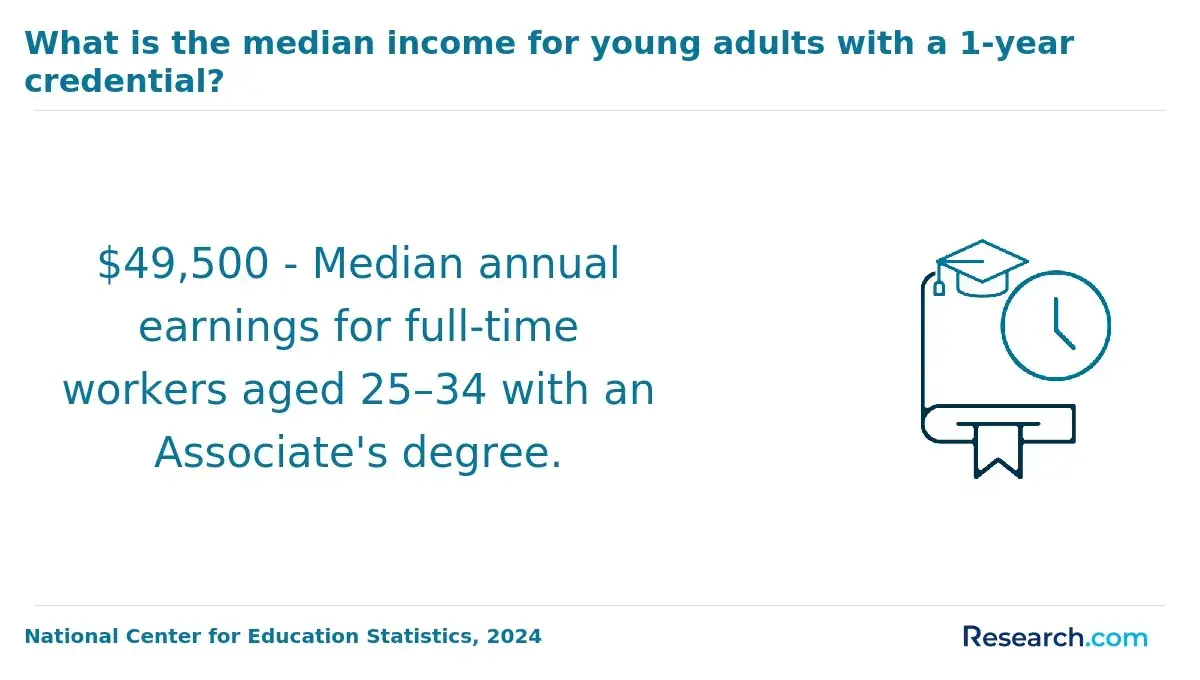
Yes. Flexible transfer rules can shorten the degree and lower cost, but only when credits apply to required courses. If 60 credits transfer but several prerequisites are missing, the student may still need three or more years because mechanical engineering courses must be taken in sequence.
Published tuition is only part of the cost decision. College Board's 2024 Trends in College Pricing report lists average published tuition and fees for full-time undergraduates at public four-year in-state institutions at $11,610 for the academic year, before housing, books, tools, transportation, and fees.
Online transfer students may save on relocation, but they should still budget for lab kits, proctoring, software, and occasional campus visits if required.
The table below shows how transfer-credit outcomes can affect time and cost. It is a decision framework, not a promise, because actual graduation timing depends on course availability and sequencing.
| Transfer situation | Likely impact on time | Likely cost effect | Decision point |
| General education completed, but little calculus or physics | May still require a long runway because engineering prerequisites remain | Moderate savings | Start math and physics immediately before upper-division planning |
| Associate of science with calculus, physics, chemistry, and basic engineering | Often the strongest position for junior-level transfer | Potentially significant savings | Verify course equivalency before assuming junior standing |
| Technical associate degree with applied courses | May transfer better into engineering technology than engineering | Varies widely | Compare both mechanical engineering and mechanical engineering technology routes |
| Many older credits from several institutions | Evaluation may take longer and some technical courses may be questioned | Uncertain until official audit | Gather syllabi and ask about recency rules |
ROI comparisons should account for the field, credential type, and career goal. The way students evaluate whether engineering is worth it differs from how they might evaluate whether "Is a masters in library science worth it?," because licensure expectations, salary distributions, and employer requirements are not the same.
How do online mechanical engineering curricula differ for transfer versus first-time students?
First-time students usually follow a four-year sequence starting with calculus, chemistry, physics, introductory engineering, and general education. Transfer students enter at different points, so advising focuses on prerequisite mapping, lab completion, and upper-division sequencing.
The curriculum itself should not be easier for transfer students. In a credible program, transfer students still complete the same core outcomes in mechanics, thermodynamics, fluid systems, heat transfer, design, materials, controls, manufacturing, and capstone work. The difference is where they complete each requirement.
The following comparison shows how the experience commonly differs for the two groups.
| Curriculum area | First-time online student | Transfer online student |
| Math sequence | Starts with placement into precalculus or calculus | Must prove prior calculus and differential equations equivalency |
| Science labs | Takes required labs through the institution or approved format | Needs transferred labs evaluated for level, content, and credit hours |
| Engineering fundamentals | Moves through the school's designed sequence | May need bridge courses if statics, dynamics, or circuits do not align |
| Upper-division engineering | Usually begins after completing lower-division prerequisites | Often starts here only if prerequisite map is complete |
| Senior design | Completed near the end with institutional teams and faculty | Usually must be completed at the degree-granting school |
Transfer students should be especially careful with "almost equivalent" courses. For example, a physics course without calculus may be academically useful but may not satisfy a mechanical engineering physics requirement. Similarly, a CAD course may transfer as elective credit without replacing engineering graphics if the outcomes do not match.
What accreditation and ABET considerations matter when transferring mechanical engineering credits?
Accreditation matters because mechanical engineering is a regulated-adjacent field. Not every role requires a Professional Engineer license, but licensure, federal employment, graduate admission, and some engineering employers may care whether the bachelor's degree is from an ABET-accredited engineering program.
ABET has different commissions. EAC accreditation generally applies to engineering programs, while ETAC accreditation applies to engineering technology programs. Both can be valuable, but they are not interchangeable for every goal.
Before transferring, understand these accreditation distinctions:
- Institutional accreditation: The college or university should hold recognized institutional accreditation so credits and financial aid are more likely to be portable.
- Programmatic ABET accreditation: For mechanical engineering, confirm whether the exact degree title appears in ABET's listing, not just the university name.
- Engineering versus engineering technology: Mechanical engineering programs usually emphasize theory, modeling, and design; mechanical engineering technology programs often emphasize application, testing, operations, and implementation.
- Licensure impact: State engineering boards set PE eligibility rules, and some are stricter about ABET engineering degrees than technology degrees.
- Transfer source quality: Credits from regionally accredited institutions with matching syllabi are generally easier to evaluate than undocumented training or noncredit learning.
The biggest red flag is vague language such as "ABET-aligned" or "based on ABET standards" without an exact accreditation listing. If PE licensure is part of your long-term plan, contact the state engineering board before choosing a nontraditional or technology-focused route.
How do online mechanical engineering degrees compare to campus programs for transfer students?
For transfer students, online programs can be more convenient, but campus programs may offer more sections, easier lab access, and direct access to machine shops or design studios. The best choice depends on your schedule, location, career goals, and how much hands-on support you need.
Online engineering has improved because of remote labs, simulation software, video-based instruction, and collaborative design platforms. At the same time, mechanical engineering remains a hands-on discipline, so students should examine how each program handles lab kits, proctored exams, design teamwork, and senior projects.
The table below summarizes the trade-offs for transfer students choosing between online and campus mechanical engineering pathways:
| Factor | Online mechanical engineering | Campus mechanical engineering |
| Schedule flexibility | Better for working adults and students outside commuting range | Better for students who can attend daytime labs and classes |
| Transfer advising | Can be strong if the school has online transfer specialists | May offer easier walk-in access to faculty and department advisors |
| Labs and equipment | May use remote labs, kits, simulations, or short campus sessions | Usually offers direct access to physical labs and machine shops |
| Peer networking | Depends on virtual project teams and discussion formats | Often stronger through clubs, competitions, and in-person design work |
| Internship access | Works best when students are already near engineering employers | May be easier through campus recruiting and local employer partnerships |
Students who are comparing several online degree categories should not assume the same transfer logic applies everywhere. For example, a master of data science online may emphasize programming prerequisites and portfolio readiness, while mechanical engineering depends more heavily on lab science and sequential engineering coursework.
What mechanical engineering careers and salaries are realistic for transfer students graduating online?
Graduating online does not automatically limit mechanical engineering career options, especially when the degree is properly accredited and the student can show strong projects, internships, technical skills, and design experience. Employers typically care about the degree, accreditation, skills, work samples, and ability to solve engineering problems.
BLS data shows the median annual wage for mechanical engineers was $102,320 in May 2024, and the occupation is projected to grow 11% from 2023 to 2033. That outlook is stronger than average, but it should be read as a labor-market indicator rather than a personal salary guarantee; region, industry, experience, clearance, internships, and technical specialization all matter.
Online transfer graduates commonly pursue roles in industries such as manufacturing, aerospace, automotive, energy, robotics, HVAC, medical devices, defense, product development, and industrial equipment. Entry points may vary depending on whether the degree is mechanical engineering or mechanical engineering technology.
The table below connects common career paths with the preparation employers often look for:
| Career path | Typical work | Useful preparation |
| Mechanical design engineer | Designs components, assemblies, and mechanical systems | CAD, machine design, materials, finite element analysis, senior design portfolio |
| Manufacturing engineer | Improves production processes, tooling, quality, and efficiency | Manufacturing processes, statistics, quality systems, lean methods, hands-on plant experience |
| Thermal or fluids engineer | Works on heat transfer, fluid flow, HVAC, energy, or cooling systems | Thermodynamics, heat transfer, fluid mechanics, simulation tools, lab experience |
| Test engineer | Plans experiments, validates products, analyzes performance data | Instrumentation, data acquisition, lab methods, technical writing, statistics |
| Engineering technology specialist | Supports applied design, testing, operations, and technical implementation | Mechanical engineering technology coursework, CAD, troubleshooting, manufacturing experience |
Current trends are also changing what "career-ready" means. Mechanical engineers increasingly work with automation, robotics, additive manufacturing, sensor data, simulation, and AI-assisted design. Transfer students can strengthen employability by building a portfolio with CAD models, analysis reports, lab writeups, senior design documentation, and internship evidence.
A smart next step is to compare the remaining credits, total cost, ABET status, and career fit side by side. If two programs look similar, choose the one that gives you the clearest written transfer audit, the strongest engineering advising, and the most credible path to internships or project experience.
Other Things You Should Know About Mechanical Engineering
If your credits do not transfer as expected in 2027, first contact your prospective school's admissions office to understand why. Gather detailed course descriptions or syllabi to make your case. Consider appealing the decision or consulting an academic advisor for alternative options that may accommodate the transferred credits.
It can be more demanding because of advanced math, lab science, engineering design, and sequenced prerequisites. Online students need strong time management and access to required software, but a well-structured program can work for disciplined learners.
Diplomas usually do not emphasize delivery format, but transcripts and resumes may show program details. Employers are more likely to focus on accreditation, projects, internships, technical skills, and interview performance than on whether courses were online.
References
- Navy Veteran looking for Online Engineering - Engineering Majors - College Confidential Forums https://talk.collegeconfidential.com/t/navy-veteran-looking-for-online-engineering/3605548
- Student guide to credit transfer and recognition of prior learning | University of West London https://www.uwl.ac.uk/about-us/policies-and-regulations/student-guide-credit-transfer-and-recognition-prior-learning
- Recognition of prior learning https://www.massey.ac.nz/study/admission-and-enrolment/recognition-of-prior-learning/
- Criteria for Accrediting Engineering Programs, 2025 - 2026 - ABET https://www.abet.org/accreditation/accreditation-criteria/criteria-for-accrediting-engineering-programs-2025-2026/
- Top Online Schools That Accept Transfer Credits https://www.edvisorly.com/student-guides/online-schools-that-accept-transfer-credits
- How to Graduate on Time with Multiple Transfers https://www.mefa.org/article/how-to-graduate-on-time-with-multiple-transfers/
- Best Online Schools for Transferring Credits [2026 Guide] https://www.straighterline.com/blog/transfer-best-online-schools-for-transferring-credits
- Division I Council approves changes to transfer rules - NCAA.org https://www.ncaa.org/media-center-division-i-council-approves-changes-to-transfer-rules/
- Campus vs Online Engineering Degrees - What Employers Think https://www.itcareerfinder.com/brain-food/blog/entry/what-employers-think-about-online-engineering-degrees.html
- Credit Transfer and Recognition of Prior Learning https://xcl.ac.uk/credit-transfer-and-recognition-of-prior-learning