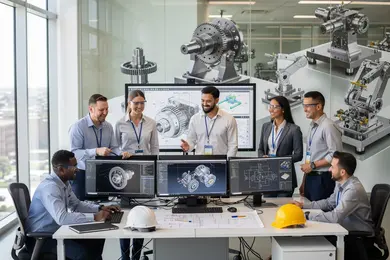
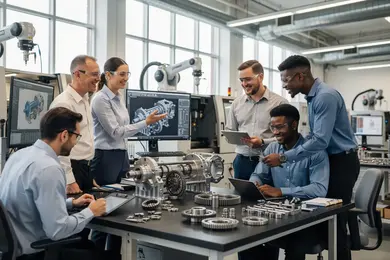
2027 Online Mechanical Engineering Degrees for Students Who Want Design-and-Operations Hybrid Paths

Co-Founder and Chief Data Scientist
Choosing an online mechanical engineering degree is really a fit question: will the program build both design skill and operations judgment? That matters because mechanical engineers work across product development, manufacturing, energy systems, robotics, and process improvement. The U. S. Bureau of Labor Statistics reported a $102,320 median annual wage for mechanical engineers in May 2024, making program choice a meaningful investment decision. This guide is for working adults, transfer students, and career changers who want a flexible path and need to compare accreditation, cost, curriculum, and career outcomes before enrolling.
Key Things You Should Know
- For licensure-oriented mechanical engineering paths, an ABET-accredited bachelor's degree is the safest option; online master's programs are usually institutionally accredited but not separately ABET-accredited.
- The strongest design-and-operations programs combine CAD, mechanics, thermal systems, manufacturing, controls, quality, data analytics, and project management rather than focusing only on theory.
- BLS data shows mechanical engineers had a $102,320 median wage in May 2024, while projected employment growth for 2023 to 2033 is 11%, which is faster than the average for all occupations.
What is an online mechanical engineering degree with a design-and-operations focus?
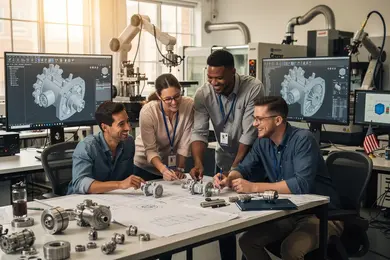
An online mechanical engineering degree with a design-and-operations focus prepares students to connect two sides of engineering work: creating products or systems and making sure they can be manufactured, maintained, improved, and scaled. "Design" usually covers CAD, mechanics, materials, machine elements, simulation, and prototyping. "Operations" adds manufacturing systems, quality, reliability, supply chain awareness, automation, process improvement, and technical project management.
This path fits students who do not want to be limited to only product design or only plant operations. It is especially useful for people aiming at roles in manufacturing engineering, product engineering, process improvement, robotics integration, energy systems, or technical leadership. If you are asking can you get an engineering degree online, the short answer is yes, but the program's accreditation, lab model, transfer policy, and engineering rigor matter more than the delivery format.
Students should understand the difference between degree levels before comparing schools. The table below summarizes the most common options and how each one fits a design-and-operations goal.
| Degree option | Best fit | Design-and-operations value | Important limitation |
| Online bachelor's in mechanical engineering | Students seeking entry-level engineering roles or future PE eligibility | Builds core engineering fundamentals, labs, design projects, and manufacturing knowledge | Fully online ABET-accredited options are limited and may still require proctored exams or lab coordination |
| Online master's in mechanical engineering | Engineers with a bachelor's degree who want advancement or specialization | Allows deeper study in design, controls, mechanics, thermal systems, manufacturing, or systems engineering | Usually not a substitute for an ABET bachelor's degree if licensure is the goal |
| Mechanical engineering technology degree | Students who prefer applied testing, production, equipment, and implementation work | Strong fit for manufacturing support, quality, field engineering, and operations roles | May not qualify graduates for the same engineering roles or PE pathway in every state |
| Graduate certificate | Working professionals who need a targeted skill upgrade | Can add CAD, additive manufacturing, systems, quality, or analytics skills quickly | Usually does not replace a full engineering degree for engineering-title roles |
This degree is not ideal for students who dislike advanced math, physics, technical problem-solving, or long design iterations. It may also be a poor fit if the program lacks ABET accreditation at the bachelor's level and the student expects to pursue Professional Engineer licensure later.
How do online mechanical engineering programs compare to campus-based options for hybrid career paths?
Online and campus-based mechanical engineering programs can lead to similar technical outcomes when they use the same faculty standards, accredited curriculum, lab expectations, and design project requirements. The difference is less about quality by default and more about how students access labs, mentoring, peer collaboration, equipment, and internships.
The comparison below can help students decide whether an online or campus-based format better supports a hybrid design-and-operations career path.
| Factor | Online program | Campus-based program | Best choice when |
| Flexibility | Often better for working adults, military students, and students with family obligations | More fixed schedules and location requirements | Online is better when you need to keep working while studying |
| Labs and prototyping | May use lab kits, simulation, local lab arrangements, short residencies, or campus visits | Direct access to machine shops, test equipment, and research labs | Campus is better if you want intensive hands-on prototyping access |
| Design teamwork | Requires strong remote collaboration habits and digital documentation | Face-to-face teamwork is easier to coordinate | Online is workable if the program has structured team projects and industry-style tools |
| Operations exposure | Strong for students already working in manufacturing, maintenance, logistics, or quality environments | Often depends on co-ops, labs, and local industry partnerships | Online can be stronger if you can apply coursework directly at work |
| Networking | More intentional effort is needed through faculty, virtual cohorts, and professional societies | More spontaneous access to events, clubs, and recruiters | Campus may be better for students who need a built-in professional network |
Online study makes the most sense for students who already have technical work experience, strong self-management skills, or employer support. Campus study may be better for first-time college students who need close academic structure, frequent in-person tutoring, and extensive access to fabrication facilities.
A common mistake is assuming "online" means easier. Mechanical engineering remains math-heavy and lab-dependent regardless of format. A reputable online program should still include calculus, differential equations, physics, statics, dynamics, thermodynamics, fluid mechanics, materials, controls, and capstone design.
Which U.S. schools offer accredited online mechanical engineering degrees with design-and-operations tracks?
Fully online mechanical engineering bachelor's degrees are less common than online business or computer science degrees because ABET-accredited engineering programs must document lab, design, faculty, and assessment standards. Online master's options are more widely available, especially for engineers who already hold an undergraduate engineering degree.
The table below lists U.S. schools students commonly investigate for online or distance mechanical engineering study. Program availability, tuition, residency rules, and accreditation status can change, so students should confirm details directly with the school and with the ABET public program search before applying.
| School | Online mechanical engineering option | Accreditation note | Design-and-operations fit |
| University of North Dakota | Online bachelor's in mechanical engineering | Known for offering an ABET-accredited mechanical engineering bachelor's pathway; verify current listing before enrollment | Good for students who need a licensure-conscious bachelor's path with engineering fundamentals and design coursework |
| Arizona State University | Online mechanical engineering bachelor's pathway | Students should verify current ABET status and campus code for the specific online program | Useful for students seeking a broad mechanical engineering foundation with modern online delivery |
| Purdue University | Online master's in mechanical engineering | Institutionally accredited graduate engineering program; ABET generally applies to bachelor's engineering programs | Strong fit for engineers seeking advanced study in areas such as mechanics, thermal sciences, design, or manufacturing-related topics |
| Penn State World Campus | Online mechanical engineering graduate option | Institutionally accredited; students should review whether the program is Master of Engineering or Master of Science and whether it requires a thesis | Useful for working engineers who want applied graduate-level technical depth |
| Johns Hopkins Engineering for Professionals | Online or part-time mechanical engineering graduate study | Institutionally accredited graduate engineering option | Good fit for professionals interested in advanced mechanics, controls, robotics, aerospace, defense, or systems-oriented work |
| NC State University | Online master's-level mechanical engineering option | Institutionally accredited; students should check prerequisites and whether the degree is intended for practicing engineers | Useful for engineers who want flexible graduate study tied to technical specialization |
For bachelor's students, ABET accreditation is the key filter. For master's students, the more important questions are whether the school is institutionally accredited, whether faculty teach the online sections, whether courses match the student's career goal, and whether the degree title is respected by target employers.
What admission requirements do online mechanical engineering programs typically have for working adults?
Admissions requirements vary by school and degree level, but mechanical engineering programs tend to be more prerequisite-driven than many other online degrees. Working adults should pay special attention to math placement, transfer credit, lab requirements, and whether past technical coursework is still accepted.
Applicants can use the following checklist to prepare before contacting admissions. These items matter because missing prerequisites can add semesters and raise total cost.
- For bachelor's programs, expect high school or transfer coursework in algebra, trigonometry, chemistry or physics, and readiness for calculus-based study.
- For transfer students, ask how calculus, physics, engineering graphics, programming, and lower-division engineering courses will be evaluated.
- For master's programs, expect a bachelor's degree in mechanical engineering or a closely related engineering field; students from physics, math, or engineering technology backgrounds may need bridge courses.
- Working adults should ask whether courses are asynchronous, synchronous, or mixed because live class times can affect work schedules.
- Internationally educated applicants should expect transcript evaluation requirements and possible English proficiency documentation.
- Military, employer-sponsored, and returning adult students should ask about credit for prior learning, but engineering departments may limit non-course credit for technical ABET-required content.
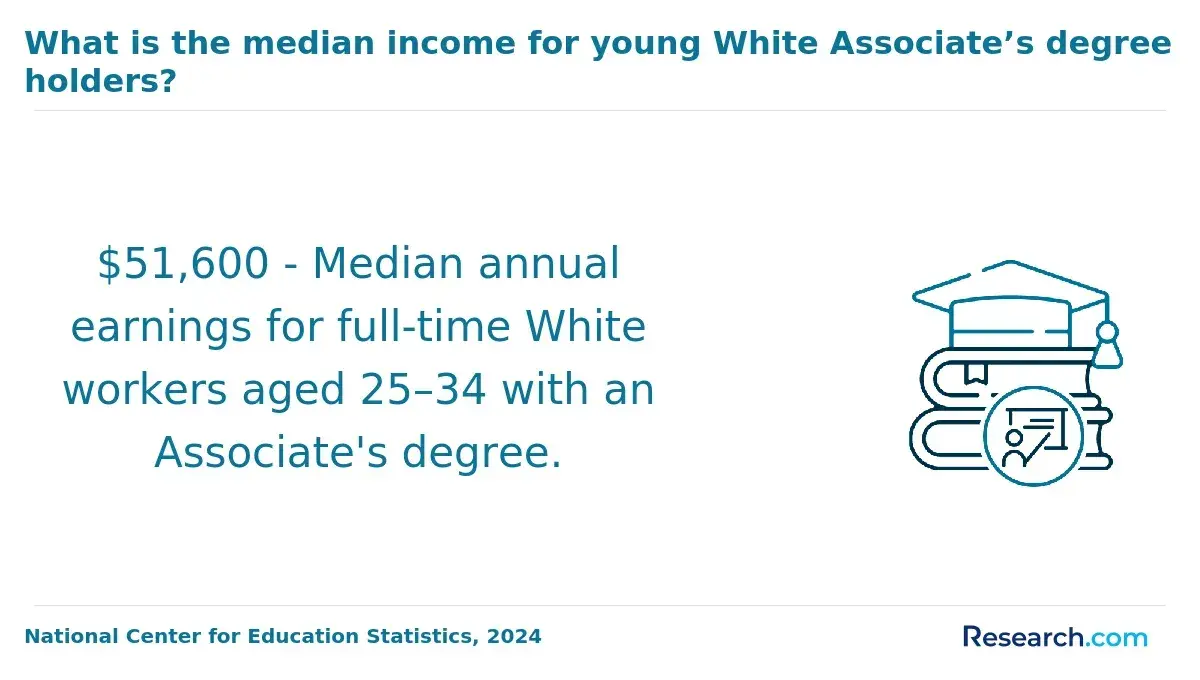
The biggest admissions mistake is applying before mapping prerequisites. A student who has an associate degree may still need several calculus-based science and engineering courses before entering upper-division mechanical engineering classes.
Students should also ask whether the program has a formal pathway for part-time learners. Mechanical engineering sequences can be rigid; if a course is offered only once per year, missing it can delay graduation.
What courses and specializations cover both design and operations in online mechanical engineering?
A true design-and-operations pathway should not be just a collection of CAD classes. It should help students understand how mechanical systems are conceived, modeled, tested, manufactured, monitored, improved, and managed over their full life cycle.
The table below shows common courses and how they support hybrid roles in product, process, and operations environments.
| Course or specialization area | What students learn | Why it matters for hybrid paths |
| Computer-aided design and engineering graphics | 2D drawings, 3D modeling, assemblies, tolerances, and design documentation | Creates the communication foundation for product design, manufacturing, and supplier collaboration |
| Mechanics of materials and machine design | Stress, strain, failure modes, shafts, bearings, fasteners, and mechanical components | Helps engineers design parts that can survive real operating conditions |
| Thermodynamics and fluid mechanics | Energy transfer, heat, flow, pumps, compressors, engines, and HVAC-related principles | Supports careers in energy systems, plant operations, equipment design, and process optimization |
| Manufacturing processes | Machining, casting, forming, welding, additive manufacturing, and production constraints | Connects design intent to manufacturability, cost, quality, and throughput |
| Controls and mechatronics | Sensors, actuators, feedback systems, automation, and electromechanical integration | Supports robotics, smart manufacturing, maintenance engineering, and automated production lines |
| Quality, reliability, and lean systems | Variation, failure analysis, process capability, root-cause analysis, and continuous improvement | Builds the operations skill set employers value in manufacturing and service environments |
| Engineering data analytics | Data interpretation, modeling, simulation results, operations metrics, and decision support | Helps engineers use production, sensor, and performance data to improve systems |
AI, automation, and digital twins are increasingly changing what employers expect from mechanical engineers. Students who want stronger analytics skills can also compare engineering electives with adjacent data science degrees, especially if they are aiming for predictive maintenance, manufacturing analytics, simulation, or industrial AI roles.
When reviewing curricula, students should look for a capstone or major project that requires trade-off decisions. The most career-relevant projects usually include cost, manufacturability, reliability, safety, performance, documentation, and testing rather than only a theoretical calculation.
How long do online mechanical engineering degrees take, and what do they cost?
Time to completion depends on starting point, transfer credit, course load, and whether the program requires labs or campus visits. A first-time bachelor's student should expect a longer path than a working engineer entering a 30-credit master's program.
The table below gives practical planning ranges. These are not guarantees; engineering course sequencing can extend timelines if prerequisites are missing or courses are offered infrequently.
| Student situation | Typical program length | Main time variable | Planning advice |
| First-time bachelor's student | About four years full time | Calculus, physics, labs, and engineering sequence availability | Build a semester-by-semester plan before enrolling |
| Transfer student with technical credits | Often two to three years, depending on accepted credits | Whether prior math, science, and engineering courses transfer cleanly | Request an official transfer evaluation, not just an informal estimate |
| Part-time working adult | Often longer than the standard plan | Course load, work schedule, and annual course rotation | Ask which courses are offered every term and which are annual only |
| Online master's student | Often one to three years | Number of credits taken per term and thesis or project requirements | Choose a pace that protects work performance and technical depth |
Cost varies widely by residency, public or private status, online tuition policy, fees, books, software, travel, and lost work time. College Board's 2024 Trends in College Pricing reported these average published tuition and fee figures for the 2024-25 academic year, which help frame the broader U.S. cost environment:
- Public four-year, in-state average published tuition and fees: $11,610 for the academic year
- Public four-year, out-of-state average published tuition and fees: $30,780 for the academic year
- Private nonprofit four-year average published tuition and fees: $43,350 for the academic year
Online engineering tuition may be lower, similar, or higher than campus tuition depending on the institution. Students should calculate total program cost, not just per-credit tuition. Engineering students may also need a capable computer, CAD or simulation software access, lab kits, proctoring fees, travel for required sessions, and extra time for prerequisite courses.
To reduce cost risk, compare employer tuition assistance, military benefits, transfer credits, public university residency rules, payment plans, and whether the program charges the same tuition to online out-of-state students. Avoid choosing solely by lowest tuition if the program does not match accreditation or career goals.
What mechanical engineering careers combine design, manufacturing, and operations management?
Design-and-operations mechanical engineers often work where product decisions meet manufacturing, equipment performance, quality, cost, and reliability. These roles are common in advanced manufacturing, aerospace, automotive, energy, robotics, medical devices, defense, building systems, logistics automation, and industrial equipment.
The table below summarizes career paths that commonly combine mechanical design, manufacturing knowledge, and operational decision-making.
| Career path | Typical responsibilities | Useful preparation | Good fit for students who like |
| Mechanical design engineer | Create models, drawings, prototypes, simulations, and design documentation | CAD, machine design, materials, FEA, GD&T, product testing | Solving technical design problems and improving product performance |
| Manufacturing engineer | Improve production processes, tooling, layouts, equipment, and workflow | Manufacturing processes, lean systems, quality, automation, ergonomics | Turning designs into repeatable production systems |
| Process engineer | Analyze and improve industrial processes, yield, throughput, and safety | Thermal fluids, controls, statistics, root-cause analysis, operations metrics | Using data and engineering judgment to improve systems |
| Quality or reliability engineer | Investigate failures, reduce defects, validate designs, and improve reliability | Statistics, materials, testing, failure analysis, Six Sigma, documentation | Finding why systems fail and preventing repeat problems |
| Automation or robotics engineer | Integrate sensors, actuators, controls, robots, and production equipment | Controls, mechatronics, programming, safety standards, manufacturing systems | Combining mechanical systems with software and electronics |
| Operations or engineering manager | Lead teams, budgets, schedules, maintenance strategy, and technical improvement projects | Engineering experience, project management, finance basics, leadership, quality systems | Coordinating people, technology, cost, and performance |
Some students interested in mechanical systems eventually move into biomechanics, rehabilitation devices, sports equipment, ergonomics, or human-performance product design. Those students may benefit from comparing mechanical engineering with an online exercise science degree, but the better choice depends on whether they want to become engineers, clinicians, researchers, or product specialists.
Entry-level students should build a portfolio that shows more than finished CAD images. Employers often respond better to documented design decisions, calculations, manufacturing constraints, test results, failure analysis, and lessons learned.
What salary ranges and advancement opportunities exist for design-and-operations mechanical engineers?
Salary potential depends on industry, location, degree level, experience, security clearance, management responsibility, and technical specialization. Students should use salary data as a planning benchmark, not as a promise of individual earnings.
BLS May 2024 wage data provides a useful national reference point for several roles related to mechanical design and operations. The table below shows how compensation tends to rise as engineers move from individual technical work toward broader systems and leadership responsibility.
| Role category | Relevant BLS occupation | May 2024 median annual wage | What the figure means for students |
| Core mechanical engineering | Mechanical engineers | $102,320 | This is the most direct benchmark for design, analysis, testing, and mechanical systems roles |
| Operations-heavy engineering | Industrial engineers | $99,380 | This benchmark is relevant for students leaning toward process improvement, production systems, and efficiency |
| Technical leadership | Architectural and engineering managers | $167,740 | This reflects management-level responsibility and typically requires substantial engineering experience |
Advancement usually comes from combining depth and scope. Early-career engineers often grow by becoming stronger in CAD, analysis, testing, manufacturing, or controls. Mid-career professionals may move into lead engineer, project engineer, systems engineer, quality manager, manufacturing manager, or operations leadership roles.
Certifications can support advancement, but they are not substitutes for engineering fundamentals. Depending on the role, useful credentials may include Engineer in Training or Professional Engineer licensure, Lean Six Sigma, project management credentials, safety training, quality certifications, or software-specific certifications in CAD, simulation, or manufacturing systems.
A common salary mistake is comparing only national medians. Aerospace, energy, semiconductors, medical devices, defense, and high-cost metro areas may pay differently from smaller manufacturers or regional employers. Students should compare job postings in their target location before estimating return on investment.
How strong is the job outlook and industry demand for hybrid mechanical engineering roles?
The job outlook for hybrid mechanical engineering roles is strong because employers need people who can improve products and the systems that build, operate, and maintain them. Demand is supported by automation, reshoring and supply-chain resilience efforts, energy infrastructure, robotics, electrification, advanced manufacturing, and data-enabled maintenance.
BLS projects 11% employment growth for mechanical engineers from 2023 to 2033, which is faster than the average for all occupations. For students, this suggests a healthy labor market, but not a guaranteed job; the strongest candidates still need internships, projects, software skills, communication ability, and evidence that they can solve real engineering problems.
Current employer expectations are shifting in several practical ways. Students should prepare for these trends before graduation because they increasingly appear in job descriptions and interview questions.
- Digital engineering workflows are becoming standard, so students should be comfortable with CAD, simulation, version control of design files, and clear technical documentation.
- Automation and robotics are expanding the value of controls, sensors, safety systems, and mechatronics knowledge.
- Manufacturing employers increasingly value engineers who understand quality, reliability, root-cause analysis, and continuous improvement rather than only initial product design.
- AI-assisted tools can speed up modeling, coding, documentation, and analysis, but engineers remain responsible for verifying assumptions, safety, and design decisions.
- Sustainability and energy efficiency are influencing equipment selection, materials decisions, facility operations, and product life-cycle analysis.
The most resilient path is to pair mechanical fundamentals with adaptable tools. Students who can explain both why a design works and how it will perform in production or service are better positioned for hybrid roles than students who focus on software tools alone.
How can students evaluate and choose a reputable online mechanical engineering program?
Choosing a reputable online mechanical engineering program requires more than checking rankings or tuition. Students need to verify whether the program can support their specific goal: entry-level engineering employment, PE licensure, graduate study, manufacturing leadership, technical specialization, or career change.
Use the following steps before enrolling. This sequence helps reduce the risk of paying for credits that do not match your career or licensure plan.
- Confirm institutional accreditation through an agency recognized by the U.S. Department of Education.
- For bachelor's programs, verify ABET accreditation for the exact program name and delivery location using ABET's official listing.
- Ask how online labs work, including kits, simulations, local arrangements, campus visits, proctoring, and safety requirements.
- Request a written transfer-credit evaluation before committing, especially if you have community college, military, or prior engineering technology credits.
- Compare the curriculum against your target roles and look for design, manufacturing, controls, quality, and capstone experiences.
- Ask whether faculty who teach online courses are the same or comparable to those teaching campus courses.
- Review career support, internship access, employer partnerships, alumni outcomes, and whether online students can use the same services as campus students.
- Calculate total cost, including tuition, fees, software, hardware, travel, books, and any prerequisite courses.
Red flags deserve serious attention. Be cautious if a school is vague about accreditation, will not explain lab requirements, promises unrealistic salary outcomes, pressures you to enroll quickly, refuses to provide transfer details in writing, or offers a mechanical engineering title without the expected math, physics, lab, and design sequence.
The accreditation-first approach applies across online professional degrees, whether a student is comparing engineering programs or researching fields such as library science degrees online. The name of the degree matters, but the stronger question is whether the program is recognized, transparent, appropriately rigorous, and aligned with the occupation you want.
A good final test is to collect three job postings you would want after graduation and compare them with the program's courses, software tools, projects, and credentials. If the overlap is weak, keep looking or ask the department how students close that gap.
Other Things You Should Know About Mechanical Engineering
It may be possible, but requirements vary by state. The safest route is usually an ABET-accredited bachelor's degree, followed by the FE exam, qualifying work experience, and the PE exam. Always confirm rules with the state licensing board where you plan to practice.
It can be worth it if the program builds skills tied to your next role, such as design analysis, controls, thermal systems, automation, reliability, or technical leadership. If your goal is a narrow skill upgrade, a certificate or employer-sponsored training may be more cost-effective.
In 2027, students in online mechanical engineering programs focusing on design-and-operations hybrid paths generally don't need to buy expensive software. Many programs provide access to necessary tools through student licenses or cloud-based applications, minimizing costs and ensuring students have the resources needed to succeed in their studies.
References
- Campus vs Online Engineering Degrees - What Employers Think https://www.itcareerfinder.com/brain-food/blog/entry/what-employers-think-about-online-engineering-degrees.html
- Online Mechanical Engineering Degrees 2025 https://www.affordablecollegesonline.org/degrees/engineering-programs/mechanical-engineering/
- 7 Top-Rated Design Courses for Mechanical Engineers in 2024 - CADD Centre https://caddcentre.com/blog/seven-top-rated-design-courses-for-mechanical-engineers/
- How to Evaluate If an Engineering Program Is a Good Fit - Your College-Bound Kid https://yourcollegeboundkid.com/2023/03/10/how-to-evaluate-if-an-engineering-program-is-a-good-fit/
- Salary progression in Mechanical Engineer https://www.whitecarrot.ai/resources/templates/progression-salary/mechanical-engineer
- The Future of Mechanical Engineering Jobs in the UK https://www.pin-point.co.uk/post/the-future-of-mechanical-engineering-jobs-in-the-uk
- Mechanical Engineering Courses Online + Certification [2026] - GaugeHow – Mechanical Engineering Skills Platform https://gaugehow.com/blog/mechanical-engineering-courses-online