2027 Best Online Bachelor's in Mechanical Engineering With Hybrid Lab Requirements

Co-Founder and Chief Data Scientist
Choosing an online mechanical engineering bachelor's degree is harder than picking a typical online major because labs, accreditation, and hands-on design work matter. The U. S. Bureau of Labor Statistics lists the May 2024 median pay for mechanical engineers at $102,320, making the degree attractive, but only if the program fits your schedule, budget, and career goals. This guide is for students comparing online and hybrid options, including working adults and transfer students. You'll learn how hybrid labs work, which accredited options to check, what programs cost, and how to avoid expensive enrollment mistakes.
Key Things You Should Know
- ABET EAC accreditation is the key filter for students who want the broadest mechanical engineering career and PE licensure flexibility; ETAC-accredited mechanical engineering technology programs can be useful but are not the same credential.
- Hybrid lab requirements are normal in online mechanical engineering because students must complete experiments, measurements, design projects, and sometimes short campus residencies that cannot be fully replaced by video lectures.
- Use current cost and labor-market data carefully: College Board's 2024-2025 tuition averages range from $11,610 for in-state public four-year tuition and fees to $43,350 at private nonprofit four-year colleges, while BLS reports $102,320 as the May 2024 median mechanical engineer wage.
What is an online bachelor's in mechanical engineering with hybrid lab requirements?
An online bachelor's in mechanical engineering with hybrid lab requirements is a four-year engineering degree delivered mostly through online coursework, with some required hands-on components completed on campus, at approved local sites, through mailed lab kits, or during scheduled intensive sessions. The degree typically covers mechanics, thermodynamics, fluids, materials, manufacturing, machine design, controls, and senior design.
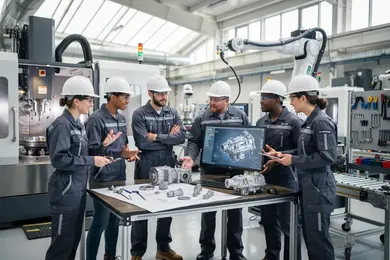
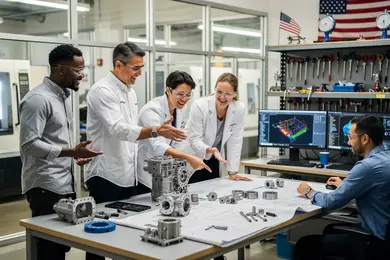
The phrase "hybrid lab requirements" is important because mechanical engineering is not a lecture-only subject. Students need to collect data, use instruments, test materials, build or model systems, and document design decisions. A reputable online program should explain exactly which labs are online, which are in person, how often students must travel, and whether local proctoring or employer-based lab work is allowed.
For students asking can you get an engineering degree online, the practical answer is yes, but mechanical engineering has fewer fully online options than fields such as engineering management, computer science, or electrical engineering. The best fit is usually a student who is comfortable with advanced math, can plan around lab residencies, and wants the same technical foundation expected in traditional engineering roles.
It may not be the right path if you need a program with no travel at all, if you dislike physics-heavy coursework, or if your career goal is closer to technician work, product design drafting, data analysis, or software development. In those cases, a mechanical engineering technology degree, computer science degree, manufacturing certificate, or applied engineering program may be more efficient.
How do hybrid lab requirements work in online mechanical engineering programs?
Hybrid labs vary by school, but the goal is the same: prove that online students can complete the experimental and design work required in an engineering curriculum. Before enrolling, ask for a written lab plan that covers every required course, not just a general statement that the program is "online."
Most programs use a mix of the following lab models, and each affects travel, cost, and scheduling differently:
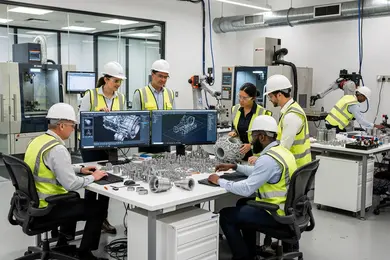
- Campus residencies: Students travel to campus for several days or weeks to complete labs in fluids, materials, manufacturing, thermal systems, or measurements.
- Remote or virtual labs: Students control equipment remotely, analyze instructor-provided data, or use simulation software for experiments that do not require direct physical manipulation.
- Home lab kits: Students receive approved equipment for basic circuits, measurements, controls, or materials demonstrations, then submit data and lab reports online.
- Approved local labs: Some schools allow students to complete certain work at a community college, employer facility, or partner site if faculty approve the equipment and supervision.
- Senior design collaboration: Teams may meet online for design reviews but still build, test, and present prototypes through scheduled in-person or documented remote processes.
Hybrid labs are manageable for many working adults, but they require planning. The biggest mistake is assuming that "online" means "asynchronous and travel-free." A better approach is to map each required lab to your work calendar, family responsibilities, travel budget, and access to tools before you accept admission.
The table below summarizes common lab formats and what they mean for students comparing programs. Use it to identify questions to ask admissions and faculty advisors before committing.
| Lab format | Best for | Main trade-off | What to verify |
| Short campus residency | Students who can travel a few times and want access to full engineering labs | Travel and lodging can increase total cost | Dates, frequency, required equipment, and whether sessions are offered every term |
| Remote lab | Students who need flexibility and can work with digital instrumentation | Less direct handling of equipment | Whether the lab satisfies ABET-related course outcomes |
| Home lab kit | Students comfortable setting up equipment independently | Requires careful documentation and sometimes extra purchases | Kit cost, safety rules, shipping limits, and replacement policies |
| Approved local site | Students near a community college or engineering employer | Approval may not be guaranteed | Faculty approval process, required instruments, and supervision rules |
Which accredited schools offer online mechanical engineering bachelor's degrees with hybrid labs?
Accredited online bachelor's options in mechanical engineering are limited, especially if you want an ABET Engineering Accreditation Commission degree rather than an engineering technology credential. Because program delivery can change, always confirm the current catalog, accreditation page, and lab schedule directly with the school before applying.
The schools below are commonly considered by U.S. students looking for online or mostly online mechanical engineering study with required hands-on components. The distinction between engineering and engineering technology matters because employers, graduate schools, and state licensing boards may treat them differently.
| School | Credential to check | Accreditation point | Hybrid lab consideration | Best-fit student |
| University of North Dakota | Bachelor of Science in Mechanical Engineering | Check for ABET EAC accreditation in the current catalog | Online students should expect required lab, design, and hands-on components that may include campus or approved experiential work | Students who want a true mechanical engineering degree and can plan ahead for lab logistics |
| The University of Alabama | Bachelor of Science in Mechanical Engineering through distance delivery | Check that the distance pathway leads to the same ABET-accredited mechanical engineering degree | Students should confirm which labs, exams, and design experiences require travel or scheduled participation | Transfer students and working adults who can handle a structured engineering sequence |
| Old Dominion University | Mechanical Engineering Technology or related engineering technology pathway | Check ETAC accreditation and understand that ETAC is different from EAC | May include hands-on or applied technical requirements depending on the pathway | Students seeking applied engineering technology roles rather than a traditional mechanical engineering track |
| Indiana State University or similar public online providers | Mechanical engineering technology or engineering technology completion options | Verify current programmatic accreditation and degree title | Lab expectations vary by transfer status and course plan | Students with technical credits, associate degrees, or manufacturing experience |
For a traditional mechanical engineer pathway, prioritize ABET EAC programs when available. For applied roles in manufacturing, quality, field engineering support, CAD/CAM, maintenance, or technical operations, an ETAC-accredited engineering technology degree may still be valuable, but you should confirm how it is viewed by employers and licensing boards in your state.
A common red flag is a school that markets "mechanical engineering" heavily but awards a general studies, industrial technology, or non-accredited engineering-related degree. That may still be useful for some jobs, but it is not the same as an ABET-accredited mechanical engineering bachelor's degree.
How do online mechanical engineering bachelor's programs compare to campus-based degrees?
Online and campus-based mechanical engineering degrees can lead to similar academic outcomes when they share the same curriculum, faculty oversight, assessments, and ABET-accredited degree title. The difference is not simply quality; it is delivery. Online students need more self-management, while campus students typically get easier access to labs, peer study groups, faculty offices, clubs, and recruiting events.
Students comparing engineering with other technical fields may also review online degrees in computer science, especially if they are more interested in software, AI, cybersecurity, or accelerated online formats than in physical systems and laboratory work.
The table below shows where the online-hybrid and campus formats usually differ. Use it to decide which learning environment fits your constraints, not to assume one format is automatically better.
| Factor | Online mechanical engineering with hybrid labs | Campus-based mechanical engineering | Decision point |
| Scheduling | More flexible for lectures, but labs may be fixed | More fixed weekly schedule | Online can work well for employed students who can plan around residencies |
| Lab access | Requires remote tools, kits, local approvals, or short campus visits | Regular access to institutional labs | Campus may be better if you want frequent hands-on experimentation |
| Peer interaction | Online teams, discussion boards, video meetings, occasional in-person work | Daily interaction, clubs, design teams, and study groups | Campus may offer stronger informal networking |
| Career services | Virtual advising, online fairs, and regional employer outreach | More visible campus recruiting and lab-based research access | Ask online programs how they support internships and co-ops |
| Best fit | Working adults, transfer students, military students, and place-bound learners | Recent high school graduates or students who want an immersive college experience | Choose based on support needs, not just convenience |
The online route makes the most sense when the degree is accredited, the lab plan is realistic, and the student has the discipline to keep up with calculus-based engineering courses. Campus may be the better choice for students who want undergraduate research, Formula SAE or robotics teams, frequent fabrication access, or a stronger residential college experience.
What courses and technical skills are typically taught in these mechanical engineering programs?
Mechanical engineering programs are math- and physics-intensive. The curriculum is designed to teach students how forces, motion, heat, fluids, materials, manufacturing processes, and control systems behave in real products and machines.
Most accredited programs include a sequence like the one below, though course names vary by school:
- Foundational math and science: Calculus, differential equations, physics, chemistry, and statistics.
- Engineering fundamentals: Statics, dynamics, mechanics of materials, thermodynamics, fluid mechanics, and heat transfer.
- Design and manufacturing: CAD, machine design, manufacturing processes, materials science, and engineering economics.
- Systems and controls: Instrumentation, vibrations, mechatronics, control systems, and data acquisition.
- Computing and analysis: Programming, numerical methods, simulation, finite element analysis, and modeling tools.
- Professional practice: Technical writing, ethics, project management, teamwork, and senior capstone design.
Current mechanical engineering students should also expect more digital work than past generations did. Employers increasingly value simulation, product lifecycle management, additive manufacturing, robotics, automation, and AI-assisted design workflows. That does not mean mechanical engineers are becoming software engineers, but it does mean graduates who can combine physical intuition with data and modeling tools may have more flexible career options.
If your strongest interest is the data side of engineering, an online master in data science can be a later graduate option after a mechanical engineering bachelor's, especially for roles involving predictive maintenance, manufacturing analytics, energy modeling, autonomous systems, or digital twins.
To prepare for the technical workload, students should refresh algebra, trigonometry, calculus readiness, and basic programming before the first term. A common mistake is starting a mechanical engineering degree while underprepared in math, then falling behind in physics, statics, and dynamics because those courses build quickly on earlier material.
What admission requirements and prior preparation do these online programs expect?
Admissions requirements vary by school, but online mechanical engineering programs often expect stronger preparation than many general online bachelor's degrees. This is because the course sequence is cumulative: falling behind in calculus or physics can delay multiple engineering courses.
Applicants should be ready to provide evidence of academic readiness and, in some cases, transfer coursework. Typical expectations include:
- High school diploma or equivalent, with a college-preparatory math and science background.
- Completed or placement-ready algebra, trigonometry, precalculus, and calculus depending on entry level.
- Physics and chemistry preparation, especially for first-year or lower-division applicants.
- Official transcripts from all colleges attended, including community college and military credits.
- Minimum GPA requirements that may be higher for engineering admission than for general university admission.
- Transfer course evaluations for calculus, physics, chemistry, engineering graphics, programming, and introductory engineering courses.
- Technology requirements such as a capable computer, webcam, reliable internet, and software access for CAD or simulation tools.
Transfer students should pay special attention to sequencing. A course may transfer as general credit but not satisfy the exact engineering requirement needed for graduation. Ask for a degree audit before enrolling, and confirm whether upper-division engineering courses are offered often enough for part-time students.
Students with military, manufacturing, HVAC, machining, CAD, or technician experience may bring useful practical knowledge, but that experience usually does not replace ABET-required engineering science and design courses. It can, however, make labs, internships, and capstone projects more meaningful.
How long do online mechanical engineering bachelor's programs take, and what do they cost?
A full bachelor's in mechanical engineering usually requires about 120 to 130 credits. First-time full-time students often need four to five years, while transfer students with the right calculus, physics, and general education credits may finish faster. Part-time students commonly take longer because many engineering courses must be completed in sequence.
Cost depends on residency, transfer credits, lab travel, technology fees, and whether the school charges online students different tuition. College Board's 2024-2025 published averages provide a useful benchmark for tuition and fees at four-year institutions:
- $11,610 for in-state students at public four-year colleges.
- $30,780 for out-of-state students at public four-year colleges.
- $43,350 for students at private nonprofit four-year colleges.
Those figures are not mechanical-engineering-specific totals, and they do not include every possible expense. Online mechanical engineering students should also budget for lab travel, lodging, proctored exams, software, hardware, shipping for lab kits, textbooks, and possible summer sessions.
The table below outlines cost factors that often matter more than the advertised per-credit rate. Reviewing these items can prevent a program that looks affordable from becoming unexpectedly expensive.
| Cost factor | Why it matters | Question to ask |
| Transfer credit acceptance | Accepted calculus, physics, and general education credits can shorten the degree | Will the school provide a course-by-course degree audit before enrollment? |
| Lab residency travel | Flights, driving, lodging, meals, and time off work can change total cost | How many campus visits are required, and when are they scheduled? |
| Course availability | Delayed upper-division courses can add extra terms | Are required courses offered every term, annually, or only on rotation? |
| Software and equipment | CAD, simulation, and lab kits may require specific hardware | Which tools are included in tuition, and which must students buy? |
| Residency tuition rules | Online students may or may not qualify for in-state pricing | Is tuition based on residency, online status, military status, or a flat rate? |
To reduce costs, start with a transfer plan rather than enrolling course by course without guidance. Community college can be a smart way to complete calculus, physics, chemistry, and general education requirements, but only if the target engineering school confirms equivalency in advance.
What careers can graduates pursue with an online mechanical engineering bachelor's degree?
Graduates with a mechanical engineering bachelor's degree can pursue roles across manufacturing, aerospace, automotive, energy, robotics, HVAC, medical devices, consumer products, defense, and industrial equipment. The degree is broad because mechanical engineers work with motion, heat, materials, machines, and physical systems.
Common entry-level and early-career paths include the roles below. Exact titles vary by employer, and some roles may prefer internships, co-op experience, security clearance eligibility, or industry-specific software skills.
- Mechanical design engineer: Creates and tests parts, assemblies, drawings, and product improvements using CAD and engineering analysis.
- Manufacturing engineer: Improves production processes, tooling, quality, automation, and workflow in factories or industrial facilities.
- Product development engineer: Works with cross-functional teams to turn concepts into tested, manufacturable products.
- Test engineer: Designs experiments, collects performance data, troubleshoots failures, and documents results.
- Quality engineer: Uses measurement systems, standards, root-cause analysis, and process controls to reduce defects.
- HVAC or energy engineer: Designs or evaluates heating, cooling, ventilation, and energy systems for buildings or industrial sites.
- Robotics or automation engineer: Integrates mechanical systems with sensors, actuators, controls, and manufacturing equipment.
Mechanical engineering can also lead to graduate study in robotics, aerospace, biomedical engineering, materials, systems engineering, business, or analytics. Students who discover that they prefer information organization, academic support, or research infrastructure rather than product development might explore a different graduate route such as a masters in library science, but that is a career pivot rather than a typical mechanical engineering advancement path.
The strongest applicants often graduate with more than coursework. Internships, co-ops, undergraduate research, senior design projects, CAD portfolios, machining or fabrication exposure, and documented simulation projects can help employers see how a student applies engineering theory to real problems.
What salary ranges and job outlook can mechanical engineering graduates expect?
The mechanical engineering labor market is broad, but salaries vary by region, industry, clearance requirements, experience, and technical specialization. BLS Occupational Employment and Wage Statistics reports a May 2024 median annual wage of $102,320 for mechanical engineers in the U.S. This median is a midpoint, not a guarantee; entry-level offers may be lower, while specialized or senior roles can be higher.
BLS also projects mechanical engineering employment to grow faster than the average for all occupations over its current projection period, with demand supported by manufacturing, automation, clean energy systems, robotics, transportation, and product development. For students, this means the degree can be versatile, but career outcomes still depend on internships, location, technical skills, and the reputation and accreditation of the program.
The table below groups common mechanical engineering career directions by the type of work involved. It is not a salary promise, but it can help you connect program choices and electives to job targets.
| Career direction | Typical work focus | Skills that strengthen competitiveness |
| Product and machine design | Parts, assemblies, mechanisms, tolerance analysis, and design reviews | CAD, GD&T, materials, finite element analysis, prototyping |
| Manufacturing and industrial systems | Production lines, tooling, quality, automation, and process improvement | Lean methods, statistics, robotics, PLC familiarity, root-cause analysis |
| Thermal and fluid systems | Engines, HVAC, pumps, energy systems, heat exchangers, and flow analysis | Thermodynamics, fluid mechanics, heat transfer, simulation tools |
| Robotics and mechatronics | Mechanical systems integrated with sensors, motors, controls, and software | Controls, programming, dynamics, electronics basics, system integration |
| Testing and validation | Experiments, failure analysis, performance verification, and compliance testing | Instrumentation, data acquisition, lab documentation, statistical analysis |
Students should be careful with salary claims from schools or rankings sites. A more reliable approach is to compare BLS data, regional job postings, internship availability, alumni outcomes, and the industries that recruit from the program.
How can students evaluate and choose a reputable online mechanical engineering program?
The best online mechanical engineering program is not simply the cheapest or fastest option. It is the program that is properly accredited, transparent about labs, realistic for your schedule, and aligned with your target career.
Use this step-by-step checklist before applying or enrolling:
- Confirm the exact degree title, such as Bachelor of Science in Mechanical Engineering, and do not rely only on marketing language.
- Check ABET accreditation and identify whether it is EAC for engineering or ETAC for engineering technology.
- Request a full lab schedule showing campus visits, remote labs, local-site approvals, lab kits, and senior design expectations.
- Ask for a transfer credit evaluation before committing, especially for calculus, physics, chemistry, programming, and engineering courses.
- Calculate total cost, including tuition, fees, books, software, lab kits, travel, lodging, and time away from work.
- Review course rotation to make sure upper-division classes are available when you need them.
- Ask how online students access internships, co-ops, career fairs, faculty advising, tutoring, and design teams.
- Verify whether the degree supports your long-term plans, including graduate school, government work, industry roles, or PE licensure in your state.
Several red flags deserve caution. Be wary of programs that will not identify lab requirements before enrollment, schools that imply accreditation without naming the accreditor and commission, degree titles that sound like mechanical engineering but are not, and aggressive admissions pressure before a transfer audit is complete.
A good final test is simple: can you explain the program's accreditation, total cost, lab travel, course sequence, and likely career fit in one page? If not, keep asking questions before you enroll.
Other Things You Should Know About Mechanical Engineering
Usually, yes, if the student meets the requirements set by the state licensing board. Graduating from an ABET-accredited engineering program is commonly the most straightforward path, but exam and Engineer Intern rules vary by state.
Many employers focus more on the institution, accreditation, projects, internships, and technical skills than on whether lectures were online. However, students should be ready to discuss how they completed labs, teamwork, and design projects.
The academic content is not necessarily harder, but the format requires more self-discipline. Online students must manage deadlines, labs, software, group projects, and travel without the daily structure of a campus schedule.
In 2027, many online mechanical engineering programs with hybrid labs offer flexible scheduling, including evening and weekend lab sessions, to accommodate full-time working students. Some programs also provide simulated lab environments or allow students to complete certain lab components remotely to better align with their schedules.
References
- 2025 Best Online Mechanical Engineering Degrees https://www.onlineu.com/degrees/mechanical-engineering
- What Classes Do Mechanical Engineers Take In College? https://www.grace.edu/what-classes-do-mechanical-engineers-take-in-college/
- Online and Blended Labs for Practical Mechanical Engineering https://research.chalmers.se/en/publication/537835
- Online Mechanical Engineering Degrees 2025 https://www.affordablecollegesonline.org/degrees/engineering-programs/mechanical-engineering/
- High School Classes Required for College Admission - National Association for College Admission Counseling (NACAC) https://www.nacacnet.org/high-school-classes-required-for-college-admission/
- 5 Tips to Help You Prepare for Online Colleges and Courses https://www.aiuniv.edu/blog/2014/december/5-tips-to-prepare-for-online-colleges-and-classes