2027 Mechanical Engineering Degrees That Deliver the Best Career ROI

Co-Founder and Chief Data Scientist
Choosing a mechanical engineering degree is a high-stakes investment because program quality, accreditation, cost, and career fit can change your long-term return. The U. S. Bureau of Labor Statistics projects mechanical engineer employment to grow 11% from 2023 to 2033, making this a timely path for students interested in design, manufacturing, robotics, energy, aerospace, and automation. This guide is for prospective students, career changers, and working technicians comparing degree options. You will learn which credentials tend to deliver stronger ROI, what to verify before enrolling, and how to avoid expensive program-selection mistakes.
Key Things You Should Know
- A bachelor's degree from an ABET-accredited mechanical engineering program usually offers the strongest entry-level ROI because it meets the standard education expectation for most mechanical engineering roles and supports eventual PE licensure.
- Cost matters as much as prestige: College Board's 2024 pricing data shows average published tuition and fees at public four-year in-state institutions were $11,610, while private nonprofit four-year institutions averaged $43,350.
- The median annual wage for mechanical engineers was reported by the U.S. Bureau of Labor Statistics at $102,320 in May 2024, but actual outcomes vary by industry, location, experience, internships, and technical specialization.
What mechanical engineering degrees offer the best career ROI?
The mechanical engineering degree with the best career ROI is usually the lowest-cost, ABET-accredited bachelor's degree that gives you access to internships, co-ops, design labs, and employer recruiting. ROI does not come from the degree title alone; it comes from the relationship between total cost, completion time, accreditation, hands-on experience, and the types of roles the program helps you reach.
Mechanical engineering is a broad engineering discipline focused on designing, testing, improving, and maintaining mechanical systems. That can include engines, thermal systems, robotics, medical devices, manufacturing equipment, HVAC systems, aerospace components, energy systems, and consumer products. Because the field is broad, the "best" degree depends on whether you want entry-level engineering employment, advancement, research, management, or a lower-cost transfer pathway.
The table below compares common mechanical engineering education paths by ROI logic. Use it to match the credential to your goal rather than assuming the highest degree automatically gives the best return.
| Degree path | Best fit | ROI strengths | Potential trade-offs |
| Associate degree or pre-engineering transfer pathway | Students who want to reduce first- and second-year costs before transferring | Can lower total tuition if credits transfer cleanly into an ABET-accredited bachelor's program | Usually not enough for mechanical engineer roles by itself |
| Bachelor's in Mechanical Engineering | Students seeking entry-level mechanical engineering jobs | Best all-around ROI for most learners because it aligns with employer expectations and licensure pathways | Requires substantial math, physics, labs, and design coursework |
| Bachelor's in Mechanical Engineering Technology | Students who prefer applied testing, manufacturing, or technical operations roles | Can be practical for hands-on industry roles and may have a more applied curriculum | May not be treated the same as an engineering degree by every employer or licensing board |
| Master's in Mechanical Engineering | Engineers targeting advanced design, simulation, robotics, aerospace, energy, or R&D roles | Can improve specialization and advancement potential when paired with relevant experience | ROI depends heavily on employer tuition support, opportunity cost, and specialization demand |
| PhD in Mechanical Engineering | Students pursuing faculty roles, national labs, advanced research, or specialized R&D | Strong fit for research-intensive careers and highly technical innovation work | Long timeline and narrower career target can reduce ROI for students who mainly want industry employment |
The smartest ROI strategy is to begin with the job you want and work backward. If your goal is product design, manufacturing engineering, thermal systems, or robotics, a bachelor's program with strong labs and internships may beat a more expensive school with weaker industry access.
Before choosing a program, compare these ROI factors carefully:
- Total net price after grants, scholarships, transfer credits, and employer aid
- ABET accreditation status for the specific mechanical engineering program
- Internship, co-op, senior design, and undergraduate research opportunities
- Graduate placement patterns by industry, not just broad employment claims
- Access to CAD, simulation, robotics, manufacturing, fluids, and thermal labs
- Whether the curriculum supports FE exam preparation and future PE licensure
A common mistake is choosing a school based only on name recognition. A less famous public university with ABET accreditation, lower debt, strong co-op access, and solid local employer relationships can produce a stronger practical return than a higher-priced option that does not improve your career access.
Which mechanical engineering programs are ABET-accredited?
ABET-accredited mechanical engineering programs are programs reviewed against engineering education standards for curriculum, faculty, student outcomes, facilities, and continuous improvement. ABET accreditation matters because many employers recognize it as a quality marker, and many state engineering boards use graduation from an ABET-accredited engineering program as the cleanest education pathway toward Professional Engineer licensure.
ABET accredits individual programs, not simply entire universities. That distinction is important: a university may be accredited institutionally, but its mechanical engineering program may or may not hold ABET accreditation.
The table below explains how accreditation affects different program types. This can help you avoid confusing engineering, engineering technology, and non-engineering degrees.
| Program type | What to verify | Why it matters |
| Mechanical Engineering, B.S. | ABET Engineering Accreditation Commission status | Most aligned with traditional mechanical engineer roles and PE licensure pathways |
| Mechanical Engineering Technology, B.S. | ABET Engineering Technology Accreditation Commission status | May support applied technical roles, but licensure rules and employer preferences can differ |
| Online mechanical engineering program | Program-specific ABET listing and any in-person lab requirements | Online format does not automatically mean the program is or is not ABET-accredited |
| Master's in Mechanical Engineering | Whether the undergraduate degree is ABET-accredited and whether the master's supports your specialization | ABET accreditation is most commonly emphasized at the bachelor's level for engineering licensure |
Use a step-by-step check before applying. This is especially important if you are considering an online, transfer, engineering technology, or accelerated option.
- Search the official ABET accredited program database by institution and program name.
- Confirm the exact degree title, campus, and delivery format match the program you plan to enter.
- Ask admissions whether accreditation applies to your catalog year if the program is new or changing.
- Contact your state engineering board if you plan to pursue PE licensure and your pathway is unusual.
- Save written confirmation from the school and licensing board for your records before enrolling.
One red flag is a school saying it is "seeking ABET accreditation" as if approval is guaranteed. Pending or planned accreditation is not the same as accredited status, and relying on it can create problems for licensure, transfer, or employer screening.
Should you choose an online or campus mechanical engineering degree?
You should choose an online mechanical engineering degree if you need schedule flexibility and the program can still provide ABET accreditation, credible labs, proctored assessments, faculty access, and career support. You should choose a campus program if you want easier access to physical labs, design teams, undergraduate research, fabrication facilities, and in-person recruiting.
Mechanical engineering is harder to move fully online than some fields because students must learn through labs, measurement, materials testing, fluid and thermal experiments, CAD/CAM work, and team-based design. Some online programs solve this through hybrid residencies, local lab kits, simulation tools, or required campus visits.
The table below compares online and campus formats by practical decision factors, not by assumptions about quality.
| Factor | Online or hybrid degree | Campus degree |
| Flexibility | Better for working adults, military students, caregivers, and transfer students | Better for students who can study full time in a fixed location |
| Labs and design work | May require short residencies, lab kits, local proctoring, or simulation-heavy assignments | Usually easier access to machine shops, wind tunnels, robotics labs, and testing equipment |
| Networking | Depends heavily on virtual career services, faculty access, and employer partnerships | Often stronger for student teams, research groups, and campus recruiting |
| Cost control | Can reduce relocation and commuting costs, but technology fees and residencies matter | May provide more scholarship, assistantship, or co-op access depending on the school |
| Best fit | Self-directed learners who already have discipline and a clear plan | Students who benefit from structured labs, peer interaction, and in-person mentoring |
If your interest is shifting from mechanical systems toward AI, analytics, or digital modeling, you may also want to compare engineering programs with a data science masters online, especially if your target roles involve predictive maintenance, simulation data, or manufacturing analytics rather than mechanical design licensure.
Before choosing an online program, ask specific operational questions. Vague answers are a warning sign because mechanical engineering requires more infrastructure than lecture-only majors.
- How are required labs completed, assessed, and documented?
- Is the exact online or hybrid program ABET-accredited?
- Are exams proctored, and what technology is required?
- Can online students join design teams, research projects, or career fairs?
- Does the school have employer relationships for remote, local, or summer internships?
- Are campus visits required, and are travel costs included in the published estimate?
The biggest mistake is assuming "online" means cheaper or easier. A strong online engineering degree can be rigorous, time-intensive, and lab-heavy; the advantage is flexibility, not a reduced academic standard.
What coursework is included in a mechanical engineering degree?
A mechanical engineering degree combines math, science, design, computing, and applied engineering. The curriculum is intentionally cumulative: calculus supports physics, physics supports mechanics, mechanics supports machine design, and design courses bring those concepts together in real projects.
Mechanical engineering students should expect a demanding sequence. The table below summarizes typical coursework areas and what each one prepares you to do.
| Coursework area | Common subjects | Career relevance |
| Mathematics and science | Calculus, differential equations, linear algebra, chemistry, physics | Builds the analytical foundation for modeling forces, motion, heat, and materials |
| Core mechanics | Statics, dynamics, mechanics of materials, vibrations | Prepares students to analyze structures, machines, and moving systems |
| Thermal and fluid systems | Thermodynamics, heat transfer, fluid mechanics | Supports work in energy, HVAC, aerospace, engines, and process systems |
| Design and manufacturing | Machine design, CAD, manufacturing processes, materials science | Connects engineering analysis to real products, production methods, and reliability |
| Controls and mechatronics | Control systems, instrumentation, robotics, sensors | Supports automation, robotics, electromechanical systems, and smart manufacturing |
| Capstone and labs | Senior design, experimental methods, testing, technical communication | Demonstrates teamwork, documentation, prototyping, and problem-solving ability |
Current mechanical engineering programs are also being shaped by AI-enabled design tools, digital twins, additive manufacturing, robotics, and data-driven maintenance. These tools do not remove the need for engineering fundamentals; they make it more important to understand whether software outputs are physically realistic, safe, and manufacturable.
Students who want stronger career ROI should build skills beyond the minimum curriculum. The most marketable additions are practical and portfolio-friendly.
- CAD and parametric modeling with tools commonly used by employers
- Finite element analysis and computational fluid dynamics fundamentals
- Programming for engineering tasks, especially Python, MATLAB, or similar tools
- Manufacturing knowledge, including CNC, additive manufacturing, and quality systems
- Technical writing, engineering documentation, and presentation skills
- Team-based design experience through Formula SAE, robotics, aerospace, or similar projects
A common mistake is treating grades as the only signal of readiness. Employers often want evidence that you can solve messy, real problems, communicate trade-offs, test designs, and work on a team under constraints.
What admission requirements do mechanical engineering programs need?
Mechanical engineering admissions requirements vary by school and level, but strong preparation in math and science is the main theme. Competitive bachelor's programs often expect high school or transfer coursework in calculus readiness, physics, chemistry, and strong academic performance in quantitative subjects.
At the undergraduate level, admissions teams usually want evidence that you can handle a rigorous sequence. At the graduate level, programs focus more on prior engineering preparation, GPA, recommendations, purpose, and fit with faculty or specialization areas.
The table below shows common requirements by degree level. It is a planning tool, not a substitute for each school's official admissions page.
| Program level | Common requirements | What applicants should prepare |
| First-year bachelor's | High school transcript, math and science courses, application essay, test scores if required | Calculus readiness, physics preparation, and evidence of problem-solving interest |
| Transfer bachelor's | College transcript, prerequisite courses, minimum GPA, course syllabi in some cases | Calculus, physics, chemistry, and engineering courses that transfer into the major |
| Master's | Bachelor's degree, engineering prerequisites, GPA, resume, recommendations, statement of purpose | Clear specialization goals and evidence of readiness for advanced technical coursework |
| PhD | Prior degree, research interests, faculty fit, recommendations, statement, sometimes publications | Research direction, technical depth, and alignment with funded labs or advisors |
Applicants can improve their chances and reduce wasted credits by preparing early. Focus on requirements that affect both admission and graduation time.
- Complete calculus, calculus-based physics, and chemistry as early as possible.
- Ask transfer schools for written course equivalency evaluations before enrolling in lower-cost credits.
- Build a project portfolio that shows design, coding, fabrication, testing, or troubleshooting skills.
- For graduate programs, contact departments about prerequisite gaps before applying.
- Compare conditional admission rules carefully if you are missing core engineering coursework.
One red flag is a program that makes transferring sound simple but will not confirm how your credits apply to the mechanical engineering major. General education transfer is helpful, but ROI depends on whether the credits reduce time in the engineering sequence.
How long does a mechanical engineering degree take?
A traditional bachelor's degree in mechanical engineering usually takes four years of full-time study, but the real timeline depends on math placement, course sequencing, transfer credits, co-ops, and whether you study full time or part time. Engineering courses often have strict prerequisites, so one missed course can delay later classes.
The table below summarizes typical completion timelines. Use it to estimate opportunity cost as well as tuition cost.
| Path | Typical full-time timeline | Timeline considerations |
| Associate or pre-engineering transfer pathway | 2 years before transfer | Works best when credits map directly into the bachelor's engineering plan |
| Bachelor's in Mechanical Engineering | 4 years | May take longer if calculus, physics, or major courses are delayed |
| Bachelor's with co-op | 4 to 5 years | Can extend graduation but may improve experience, earnings during school, and job access |
| Master's in Mechanical Engineering | 1 to 2 years | Course-only programs may be faster than thesis-based programs |
| PhD in Mechanical Engineering | 4 to 6 years after bachelor's or less after a master's | Timeline depends on research progress, funding, advisor fit, and dissertation scope |
If speed is your main concern, be careful. Accelerated formats can save time, but only if they preserve lab quality, accreditation, and prerequisite depth. Mechanical engineering is not a field where skipping fundamentals usually pays off.
Students comparing timelines across career paths may notice that other professional degrees can be structured differently; for example, a librarian degree online may have a very different lab burden, licensure context, and schedule model than engineering. That comparison can help you separate a desire for flexibility from a desire to work specifically in mechanical systems.
To keep your mechanical engineering timeline on track, take these steps before enrolling:
- Ask for the official four-year plan and identify courses offered only once per year.
- Confirm math placement policies and whether remedial or precalculus work extends the timeline.
- Review transfer-credit rules for engineering, science, and lab courses separately.
- Ask how co-ops affect graduation date and whether they are optional or embedded.
- Check whether online or hybrid students can complete required labs on the same schedule as campus students.
The most common timing mistake is underestimating prerequisite chains. A student who enters without calculus readiness may still succeed, but the degree plan may take longer than the advertised four-year timeline.
How much do mechanical engineering degrees cost?
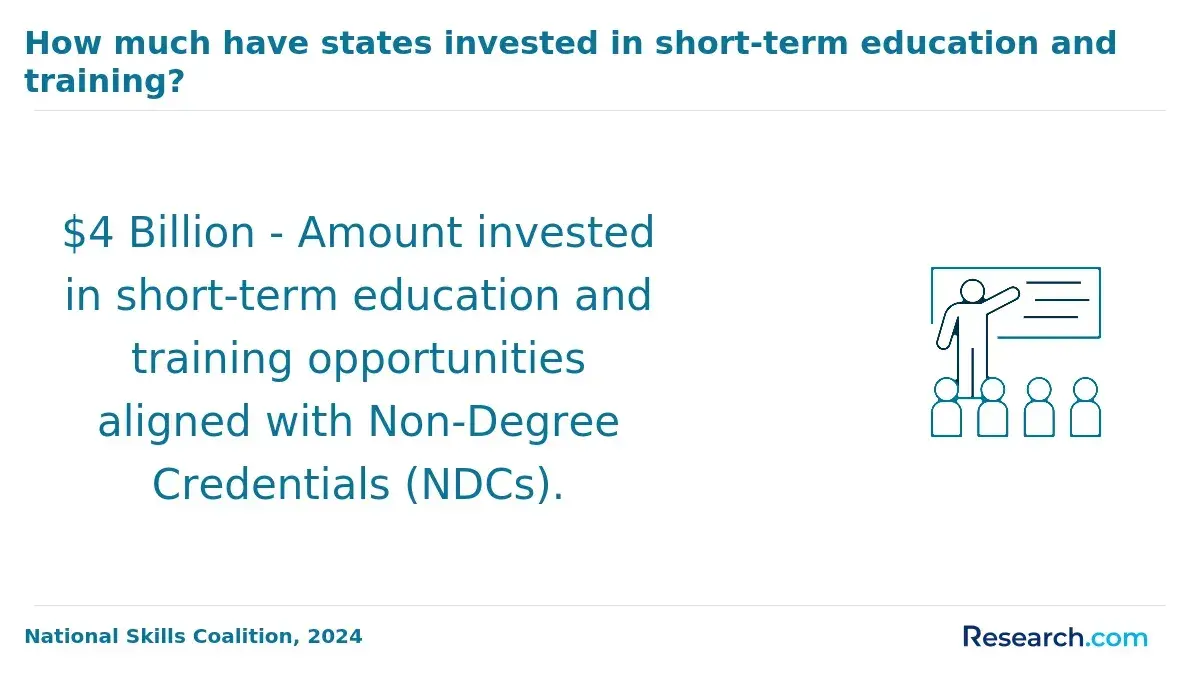
Mechanical engineering degree costs vary widely because tuition is only one part of the total price. Students also need to consider fees, housing, transportation, software, lab materials, textbooks, relocation, lost work time, and whether co-ops or employer tuition assistance can offset expenses.
College Board's 2024 pricing data shows a large gap in published tuition and fees by institution type. These figures are not mechanical-engineering-specific, but they provide a useful benchmark for comparing the cost side of ROI.
- Public four-year in-state average published tuition and fees: $11,610
- Public four-year out-of-state average published tuition and fees: $30,780
- Private nonprofit four-year average published tuition and fees: $43,350
Those published prices do not equal what every student pays. Net price after grants, scholarships, state aid, institutional aid, transfer credits, and employer support is the more useful number for ROI. For online options, compare the full mechanical engineering degree online cost, including residencies and technology fees, rather than tuition alone.
The table below breaks down cost factors that can change the real price of a mechanical engineering degree.
| Cost factor | Why it affects ROI | What to ask |
| Tuition and mandatory fees | Usually the largest direct education cost | Is tuition charged per credit, semester, residency, or program? |
| Lab and materials costs | Engineering programs may require tools, supplies, lab access, or project expenses | Are senior design and lab fees included in the estimate? |
| Software and hardware | CAD, simulation, and computing requirements can add costs | Does the school provide licenses and computer lab access? |
| Housing and transportation | Campus location can significantly change total cost | Can you commute, study online, or complete labs during short residencies? |
| Transfer credits | Accepted credits can reduce both cost and time | Will credits apply to the major, or only to electives? |
| Co-op earnings | Paid work experience can reduce borrowing and improve employability | What share of mechanical engineering students complete paid co-ops? |
To reduce cost without weakening career value, prioritize affordability strategies that preserve accreditation and completion speed.
- Start at a community college only if engineering prerequisites transfer directly.
- Apply for departmental scholarships, not just general university aid.
- Ask employers about tuition reimbursement if you already work in manufacturing, utilities, aerospace, or technical operations.
- Choose a program with paid co-op access if extending the timeline is financially reasonable.
- Avoid borrowing extra for prestige unless the program offers clear advantages in internships, labs, or target-industry recruiting.
The biggest cost mistake is comparing tuition sticker prices without calculating total net cost to graduation. A lower per-credit price can become expensive if credits do not transfer, labs require travel, or course availability delays completion.
What jobs can mechanical engineering graduates get?
Mechanical engineering graduates can work in design, manufacturing, energy, aerospace, automotive, robotics, HVAC, medical devices, utilities, defense, consulting, and product development. The degree is valued because it teaches students how to model physical systems, evaluate constraints, test designs, and improve performance.
Entry-level job titles vary by employer. Some graduates are hired directly as mechanical engineers, while others begin in manufacturing, quality, test, field, or applications roles and move into more specialized work after gaining experience.
The table below shows common career paths and how they differ in day-to-day focus.
| Job path | Typical responsibilities | Best-fit preparation |
| Mechanical design engineer | Creates and improves components, assemblies, drawings, and prototypes | CAD, machine design, materials, GD&T, prototyping |
| Manufacturing engineer | Improves production processes, tooling, quality, and efficiency | Manufacturing processes, lean methods, automation, quality systems |
| Thermal or fluids engineer | Analyzes heat transfer, fluid flow, cooling, engines, or energy systems | Thermodynamics, fluid mechanics, heat transfer, simulation |
| Robotics or mechatronics engineer | Works on electromechanical systems, sensors, motion, and control | Controls, programming, electronics basics, robotics projects |
| Test engineer | Plans experiments, collects data, validates performance, and documents results | Instrumentation, statistics, lab methods, technical writing |
| HVAC or building systems engineer | Designs or evaluates heating, cooling, ventilation, and energy systems | Thermal systems, fluid flow, codes, energy modeling |
| Product development engineer | Balances user needs, cost, performance, manufacturability, and reliability | Design thinking, CAD, materials, testing, communication |
Technology is changing these jobs, not eliminating the need for mechanical judgment. AI-assisted design, simulation automation, additive manufacturing, and sensor-rich equipment make it more valuable for engineers to understand both physical principles and digital tools.
Graduates can improve job prospects by building evidence of applied skill before graduation. Employers often respond well to proof of practical ability.
- Complete at least one internship, co-op, research project, or industry-sponsored capstone.
- Build a portfolio with CAD models, design reports, prototypes, test results, and reflection on trade-offs.
- Learn the software used in your target industry rather than collecting random tools.
- Join a project team where you can explain your specific contribution.
- Practice technical interviews that involve mechanics, design reasoning, and problem decomposition.
A common mistake is applying only to jobs with "mechanical engineer" in the title. Manufacturing engineer, test engineer, quality engineer, applications engineer, and project engineer roles can also be strong entry points, especially when they build technical experience toward your preferred specialty.
How much do mechanical engineers earn?
The U.S. Bureau of Labor Statistics reported a median annual wage of $102,320 for mechanical engineers in May 2024. That figure is a national median, so it should be used as a benchmark rather than a personal salary prediction.
Mechanical engineering pay depends on industry, region, security clearance, licensure, overtime policies, specialization, graduate education, and experience. Aerospace, scientific research, energy, semiconductors, and advanced manufacturing can pay differently from local consulting or facilities roles, and high-cost regions often post higher salaries that must be weighed against living expenses.
The table below shows how career stage often affects compensation context. It does not guarantee income, but it helps you understand why two mechanical engineers with the same degree may see different outcomes.
| Career stage | Common role focus | What can increase earning potential |
| Entry level | Design support, testing, manufacturing, documentation, analysis | Internships, co-ops, strong CAD and lab experience, FE exam progress |
| Early career | Independent design tasks, process improvement, customer or production support | Specialization, measurable project results, software fluency, cross-functional experience |
| Midcareer | Lead engineer, project engineer, systems responsibility, technical decision-making | PE license where relevant, advanced technical depth, project leadership |
| Senior or specialist | Architecture, R&D, consulting, management, technical authority | Expertise in high-demand systems, patents or publications, management ability, client trust |
Students comparing earnings across technical fields should look beyond median salary and consider tuition, fit, math intensity, and job type. If your strongest interest is data modeling rather than mechanical systems, reviewing the cheapest data science masters in usa can provide a useful comparison point for graduate-level ROI in another quantitative field.
To evaluate salary outcomes responsibly, ask schools for context rather than broad averages.
- What job titles do recent mechanical engineering graduates accept?
- Which employers recruit from the program repeatedly?
- How many students complete paid internships or co-ops before graduation?
- Are salary reports based on verified outcomes, voluntary surveys, or small samples?
- Do outcomes differ by specialization, campus, online format, or transfer status?
The main salary mistake is treating national medians as guaranteed individual outcomes. Use wage data to estimate the opportunity, then use program quality, debt level, internships, and location to judge your personal risk.
What certifications or licenses do mechanical engineers need?
Mechanical engineers do not always need a license to work in industry, but licensure can matter for engineers who offer services to the public, sign and seal engineering documents, work in consulting, or pursue leadership in fields such as HVAC, utilities, facilities, and infrastructure-related systems. Requirements vary by state, so students should verify rules with the relevant engineering board.
The most recognized engineering licensure pathway is the Professional Engineer pathway. It typically begins with an accredited engineering degree and the Fundamentals of Engineering exam, followed by supervised experience and the Principles and Practice of Engineering exam.
The table below summarizes credentials that may be relevant depending on your career direction.
| Credential | Who it helps | Why it matters |
| FE exam and Engineer-in-Training or Engineer Intern status | Students and recent graduates planning for PE licensure | Signals progress toward professional licensure and is often easiest soon after coursework |
| Professional Engineer license | Engineers in consulting, public-facing work, building systems, utilities, or regulated environments | May be required to approve certain engineering work depending on state law and role |
| Certified Manufacturing Engineer or related manufacturing credentials | Engineers focused on production, quality, or process improvement | Can support advancement in manufacturing environments |
| Six Sigma or quality certifications | Manufacturing, process, quality, and operations engineers | Useful when roles emphasize defect reduction, process control, and measurable improvement |
| CAD or software certifications | Design-focused students and early-career engineers | Can document tool proficiency, though project evidence is often more persuasive |
| HVAC or energy-related credentials | Engineers working in building systems, energy efficiency, or facilities | Can strengthen credibility in specialized building and energy roles |
Use credentials strategically. A license or certification has the strongest ROI when it matches your target industry, employer expectations, and legal responsibilities.
- Decide whether your target roles require public accountability, sealed drawings, or regulated engineering judgment.
- Confirm your state's education and experience rules before choosing a nontraditional program.
- Take the FE exam near graduation if PE licensure is part of your long-term plan.
- Ask employers which certifications they actually reward before paying for optional credentials.
- Prioritize project experience and technical competence over collecting unrelated certificates.
A common mistake is waiting until midcareer to understand licensure rules. If your degree is not ABET-accredited or your experience does not meet board expectations, becoming licensed later can be more complicated.
Other Things You Should Know About Mechanical Engineering
A student who struggles with complex mathematics, lacks analytical skills, or dislikes working on long-term technical projects might find mechanical engineering challenging. Those who prefer more creative or less structured disciplines may also be unsuited for the rigorous demands of a mechanical engineering curriculum.
Some people enter related technical roles through physics, engineering technology, manufacturing, or another engineering discipline, but many mechanical engineer positions prefer or require a mechanical engineering or closely related engineering degree. Licensure pathways may also be harder without an ABET-accredited engineering background.
Yes, mechanical engineering can be a strong major for robotics, especially if you add coursework or projects in controls, mechatronics, programming, sensors, and electronics. Students who want the software side of robotics may also consider computer engineering, electrical engineering, or computer science.
References
- Find Programs - ABET https://www.abet.org/accreditation/find-programs/
- What Classes Do Mechanical Engineers Take In College? https://www.grace.edu/what-classes-do-mechanical-engineers-take-in-college/
- Campus vs Online Engineering Degrees - What Employers Think https://www.itcareerfinder.com/brain-food/blog/entry/what-employers-think-about-online-engineering-degrees.html
- Mechanical Engineer Certifications: Best Credentials to Advance Your Career | Teal https://www.tealhq.com/career-paths/mechanical-engineer-certifications
- How to Become a Mechanical Engineer - Degree & Steps https://www.onlineengineeringprograms.com/faq/how-to-become-a-mechanical-engineer
- How Long to Become a Mechanical Engineer? | University of Bridgeport https://www.bridgeport.edu/news/time-to-become-a-mechanical-engineer/
- Taylor University Mechanical Engineering Program Receives ABET Accreditation https://www.taylor.edu/news/2025/10/taylor-university-mechanical-engineering-program-receives-abet-accreditation
- Engineering Specializations with Highest Salary 2026: ROI Guide https://www.ezscholar.org/post/which-engineering-is-right-for-you-a-freshman-s-guide-to-7-big-choices
- Salaries in Mechanical Engineering, Poland - Pensjometr https://www.pensjometr.pl/en/salaryinfo/mechanical-engineering
- Online Mechanical Engineering Degrees 2025 https://www.affordablecollegesonline.org/degrees/engineering-programs/mechanical-engineering/