2027 Best Mechanical Engineering Degrees by Rigor, Cost, and Career Mobility

Co-Founder and Chief Data Scientist
Choosing a mechanical engineering degree is a high-stakes decision because program rigor, lab access, accreditation, and cost can shape both your first job and long-term mobility. The U. S. Bureau of Labor Statistics projects mechanical engineer employment to grow 9% from 2024 to 2034, making program choice especially important for students targeting design, manufacturing, robotics, energy, aerospace, or automotive careers. This guide helps prospective undergraduates, graduate students, transfers, and career changers compare degree levels, costs, admissions, online options, and outcomes so they can choose a program with clearer academic and financial fit.
Key Things You Should Know
- The strongest mechanical engineering bachelor's programs usually combine ABET accreditation, calculus-based engineering science, extensive labs, capstone design, co-ops or internships, and verifiable graduate outcomes.
- Cost should be judged by net price, transfer credit, time to graduation, engineering fees, and co-op earnings; College Board reported 2024-25 average published tuition and fees of $11,610 for in-state public four-year students and $43,350 at private nonprofit four-year institutions.
- Career mobility is broad: BLS reported a May 2024 median annual wage of $102,320 for mechanical engineers, but outcomes vary by region, industry, security clearance, graduate study, software skills, and hands-on project experience.
What makes a mechanical engineering degree rigorous, affordable, and high in career mobility?
A "best" mechanical engineering degree is not simply the most selective or highest ranked. For most students, the best choice is the program that balances academic rigor, total cost, accreditation, hands-on learning, and access to employers in industries where mechanical engineers are hired.
Rigor matters because mechanical engineering is built on physics, calculus, materials, thermodynamics, fluid mechanics, controls, machine design, and experimental methods. A rigorous program should be challenging, but it should also provide tutoring, faculty access, design spaces, modern software, and structured pathways into internships rather than using difficulty as a filter with little support.
Affordability should be measured as total cost of completion, not just annual tuition. A lower sticker price can become expensive if courses are not offered often enough, credits do not transfer, or students need an extra year to finish required labs and design sequences. Conversely, a higher-cost school may be reasonable if it has strong co-op salaries, high retention, and employer pipelines that match the student's goals.
Career mobility refers to how well a degree allows graduates to move across roles, industries, and regions. Mechanical engineering is unusually portable because the same core principles apply to vehicles, medical devices, HVAC systems, robotics, renewable energy, aerospace systems, manufacturing, and consumer products. Mobility improves when students graduate with both engineering fundamentals and evidence of applied work.
The following table summarizes the main criteria students should use when comparing programs by rigor, cost, and career mobility. It is designed to help readers look beyond rankings and focus on features that directly affect graduation and employment options.
| Evaluation factor | What strong programs usually show | Why it matters for the student |
| Academic rigor | Calculus-based sequence, engineering labs, design projects, faculty-led research, senior capstone | Builds the analytical foundation needed for engineering roles and graduate study |
| Affordability | Transparent tuition, engineering fees, net price data, transfer policies, co-op opportunities | Shows the likely total investment, not just the first-year bill |
| Career mobility | Employer partnerships, career fairs, internship placement, alumni in multiple industries | Helps graduates avoid being locked into one narrow job market |
| Student support | Tutoring, advising, retention initiatives, makerspaces, team-based project culture | Reduces the risk that a demanding curriculum becomes unmanageable |
| Outcome transparency | Published graduation, job placement, licensure, graduate school, or salary information | Lets applicants test whether the program's claims match measurable results |
Students should be cautious about programs that advertise engineering careers but lack clear lab requirements, faculty credentials, accreditation status, or employer connections. Mechanical engineering is a practical field, so a program's value depends heavily on what students actually build, test, simulate, and present before graduation.
How do mechanical engineering bachelor's, master's, and doctoral pathways differ for students?
Mechanical engineering pathways differ mainly by career objective. A bachelor's degree is the standard entry point for most mechanical engineering roles, a master's degree supports specialization or advancement, and a doctorate prepares graduates for research-intensive work, faculty roles, or advanced technical leadership.
The table below compares the main degree levels so students can match the credential to the kind of work they want. The key decision is whether the student needs broad entry-level preparation, deeper specialization, or research training.
| Degree level | Typical student profile | Main academic focus | Common outcome |
| Bachelor's in Mechanical Engineering | First-time college students, transfers, and career changers seeking entry-level engineering work | Engineering fundamentals, labs, design, manufacturing, mechanics, thermal-fluid systems | Mechanical engineer, design engineer, manufacturing engineer, test engineer, field engineer |
| Master's in Mechanical Engineering | Engineers seeking specialization, promotion, technical depth, or a path into research and development | Advanced mechanics, robotics, controls, energy systems, simulation, materials, product development | Senior engineer, systems engineer, R&D engineer, project engineer, technical specialist |
| Doctorate in Mechanical Engineering | Students pursuing original research, university teaching, national lab work, or high-level technical innovation | Original dissertation research, advanced modeling, experimentation, publication, specialized seminars | Research scientist, professor, principal engineer, advanced technology lead |
A bachelor's degree is usually the best starting point if the goal is to become employable as quickly as possible in mechanical design, manufacturing, testing, or operations. Students should prioritize ABET accreditation, project work, internships, and strong advising because these features affect both job readiness and eligibility for licensure steps later.
A master's degree makes more sense when a student already knows the specialization they want. Robotics, computational mechanics, aerospace systems, energy engineering, advanced manufacturing, and mechatronics are common directions. Students should compare thesis and non-thesis tracks carefully: a thesis can be better for research or doctoral preparation, while a coursework or project-based option may fit working engineers seeking career advancement.
A doctoral degree is not required for most mechanical engineering jobs. It is most useful for students who want to create new knowledge, lead complex research programs, or work in roles where advanced modeling, experimentation, and publication are central. Students considering research-heavy careers outside mechanical engineering can also compare adjacent technical paths, such as a PhD in data science online, especially if their interests lean toward computational modeling, AI, or large-scale engineering analytics.
The biggest mistake is choosing a higher degree level simply because it sounds more prestigious. A student who wants an entry-level design role may be better served by a strong bachelor's program with co-op experience than by delaying work for a graduate degree without a clear specialization.
What admission requirements and academic background are needed for mechanical engineering programs?
Mechanical engineering admissions requirements vary by institution and degree level, but the strongest applicants usually show readiness for calculus, physics, problem solving, and sustained technical coursework. Because the curriculum is sequential, weak preparation in math or science can delay graduation even after admission.
For bachelor's programs, admissions committees often look for evidence that students can handle college-level engineering science. High school applicants should pay attention to math placement, because starting below calculus can add time and cost to the degree.
Prospective undergraduate students should prepare the following academic foundation before entering or transferring into a mechanical engineering program:
- Four years of math when available, ideally including pre-calculus or calculus before enrollment.
- Physics, chemistry, and laboratory science courses that build comfort with measurement and experimentation.
- Strong grades in quantitative subjects, because mechanical engineering courses build rapidly on earlier math and physics concepts.
- Experience with coding, CAD, robotics, machining, or engineering clubs, which can strengthen applications and improve first-year confidence.
- Clear transfer planning if starting at a community college, including confirmation that calculus, physics, chemistry, and engineering graphics courses apply to the target degree.
Master's programs typically expect a bachelor's degree in mechanical engineering or a closely related engineering field. Applicants from physics, mathematics, computer science, or engineering technology backgrounds may be considered, but they may need prerequisite coursework in mechanics, thermodynamics, fluids, or design.
Doctoral admissions are usually more research-focused. Faculty fit, prior research experience, recommendation letters, a statement of purpose, and evidence of advanced math or engineering depth often matter as much as grades. Funding availability can also shape admission decisions, so applicants should identify faculty whose research aligns with their goals before applying.
Students should avoid three common admissions mistakes. First, do not assume that admission to the university means direct admission to the engineering major. Second, do not ignore minimum grades required in "gateway" courses such as calculus, physics, statics, and dynamics. Third, do not assume that all transfer credits count toward the major; engineering departments often review technical courses more strictly than general education credits.
How does ABET accreditation impact mechanical engineering education and career opportunities?
ABET accreditation is one of the most important quality signals for mechanical engineering bachelor's programs in the United States. ABET evaluates whether engineering programs meet recognized standards for curriculum, faculty, facilities, continuous improvement, student outcomes, and institutional support.
For many students, ABET matters because it can affect eligibility for professional engineering licensure pathways, employer screening, graduate school recognition, and confidence that the curriculum covers essential engineering competencies. Not every mechanical engineering job requires licensure, but choosing an ABET-accredited bachelor's program preserves more options.
The table below explains how ABET accreditation can influence practical outcomes. Students should use it as a screening tool, especially when comparing online, newer, private, public, or lesser-known programs.
| Area affected | How ABET can matter | What students should verify |
| Licensure pathway | Many state engineering boards use ABET-accredited engineering degrees as the standard education pathway toward the FE and PE process | Check the state board rules for the state where you may seek licensure |
| Employer recognition | Some employers prefer or require ABET-accredited engineering degrees for engineering job titles | Review job postings in your target industry before enrolling |
| Graduate admissions | Accreditation can make it easier for graduate programs to evaluate undergraduate preparation | Ask graduate programs how they treat non-ABET or international credentials |
| Program quality assurance | ABET requires documented outcomes, assessment, and continuous improvement | Confirm the exact program name, campus, and delivery format in the ABET database |
Students should be precise when checking accreditation. A university may be accredited institutionally, but that is not the same as ABET accreditation for a specific mechanical engineering program. Also, engineering technology and engineering programs may have different accreditation categories and different career implications.
A common red flag is a school that uses broad phrases such as "industry aligned" or "engineering focused" without clearly stating whether the mechanical engineering program itself is ABET accredited. If the program is not accredited, ask exactly how that affects licensure, employer recognition, and transferability before committing.
What is the typical curriculum and coursework in a mechanical engineering degree?
Mechanical engineering curriculum is cumulative: math and science courses support engineering science, engineering science supports design and analysis, and design courses prepare students for capstone projects and internships. The best programs sequence these requirements clearly so students can graduate on time.
Most bachelor's programs begin with calculus, physics, chemistry, computing, and introductory engineering design. Students then move into statics, dynamics, mechanics of materials, thermodynamics, fluid mechanics, heat transfer, materials science, controls, machine design, manufacturing, and laboratory methods.
The table below shows how major curriculum areas contribute to career readiness. This helps students understand why rigorous mechanical engineering programs include both theory and hands-on work.
| Curriculum area | Common courses | Career relevance |
| Mathematics and science | Calculus, differential equations, physics, chemistry, statistics | Supports modeling, simulation, measurement, and engineering analysis |
| Mechanical systems | Statics, dynamics, mechanics of materials, machine design | Prepares students for structural, product, and equipment design work |
| Thermal-fluid systems | Thermodynamics, fluid mechanics, heat transfer, energy systems | Supports HVAC, propulsion, power, renewable energy, and process roles |
| Controls and mechatronics | System dynamics, controls, sensors, robotics, instrumentation | Builds skills for automation, robotics, vehicles, and smart devices |
| Design and manufacturing | CAD, manufacturing processes, prototyping, capstone design | Connects engineering calculations to buildable, testable products |
| Professional practice | Technical communication, ethics, project management, teamwork | Helps graduates work effectively on multidisciplinary engineering teams |
Students should also examine software and computing expectations. Mechanical engineers increasingly use CAD, finite element analysis, computational fluid dynamics, data analysis, automation tools, and programming. Students who enjoy coding-heavy technical work may also compare adjacent pathways such as an online computer science degree, but mechanical engineering remains the better fit for students who want to design and analyze physical systems.
For practical preparation, students should look for programs that require substantial design documentation, lab reports, prototype testing, and team presentations. These experiences help students build a portfolio that can be discussed in interviews, especially for internships and entry-level roles.
Course catalogs can also reveal red flags. Be cautious if a program has very few labs, limited design work before senior year, outdated equipment descriptions, unclear prerequisite maps, or no obvious path to take required courses in sequence.
How do online mechanical engineering degrees compare with campus-based programs in quality and outcomes?
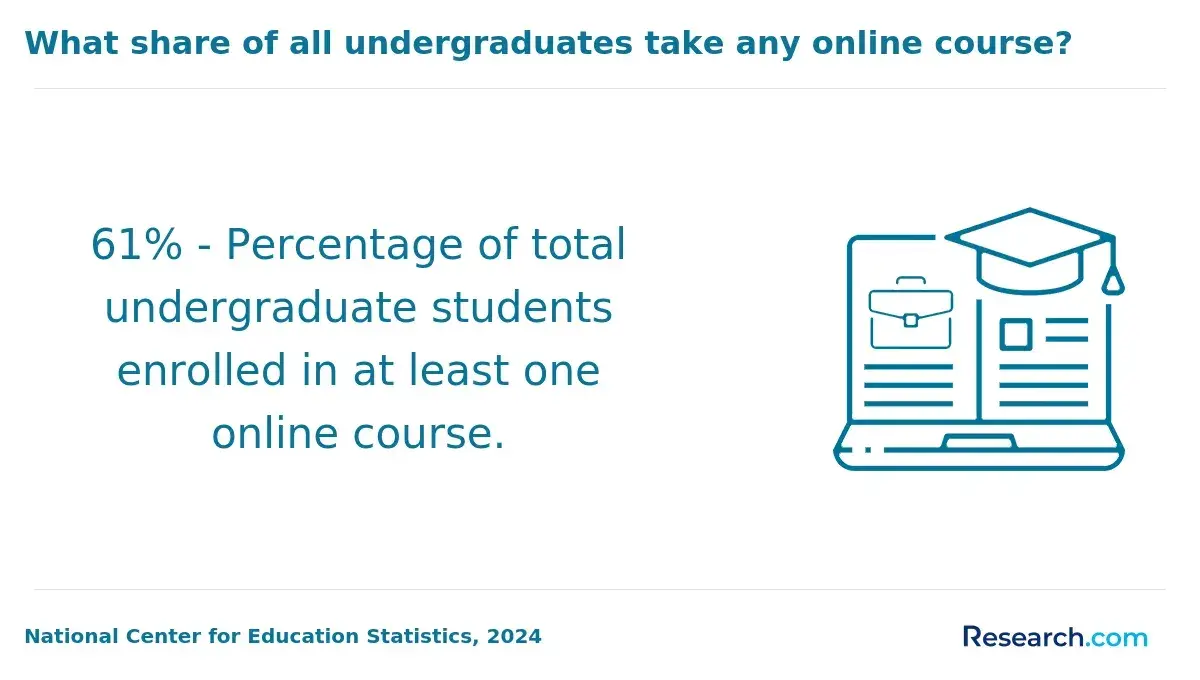
Online mechanical engineering degrees can be high quality, but they are more complex to deliver than many online majors because mechanical engineering requires labs, design projects, testing, measurement, and often access to specialized equipment. The best online or hybrid programs solve this through remote labs, simulation tools, mailed lab kits, short campus residencies, local proctoring, or approved partner facilities.
Campus-based programs may offer easier access to machine shops, student design teams, research labs, and employer visits. Online programs may be better for working adults, military students, students far from an engineering school, or learners who already have technical employment and need scheduling flexibility.
The table below compares online and campus formats in the areas that matter most for mechanical engineering outcomes. Students should use it to identify trade-offs rather than assuming one format is always better.
| Comparison area | Online or hybrid mechanical engineering | Campus-based mechanical engineering |
| Flexibility | Stronger for working students and students with location constraints | Stronger for traditional full-time students who can attend scheduled labs |
| Labs and equipment | May use remote labs, residencies, kits, simulations, or local arrangements | Often provides direct access to lab spaces, machine shops, and testing facilities |
| Networking | Requires more intentional effort through virtual events, local internships, and faculty outreach | Often easier through clubs, design teams, research groups, and on-campus recruiting |
| Accreditation check | Students must verify that the specific online format is covered by the program's accreditation status | Accreditation is often easier to confirm for the main campus program, but still must be checked |
| Best fit | Self-directed students who need flexibility and can plan hands-on requirements carefully | Students who want frequent in-person support, labs, clubs, and campus recruiting |
Students comparing engineering fields should also look at tuition patterns in related online programs. For example, reviewing electrical engineering online tuition costs can help applicants understand how lab-based engineering degrees often price differently from less equipment-intensive online majors.
Before enrolling online, ask admissions and the engineering department direct questions about how labs work, whether exams are proctored, how group design projects are completed, and whether online students have equal access to career services. If the answers are vague, treat that as a warning sign.
How long do mechanical engineering programs take, and what do they cost at different institutions?
A mechanical engineering bachelor's degree is usually designed as a four-year full-time program, but actual completion time depends on math placement, transfer credit, course availability, co-op participation, and whether students repeat any prerequisite-heavy courses. Master's programs commonly take one to two years full time, while doctoral programs often take several years because of research and dissertation requirements.
Cost varies widely across public, private nonprofit, and private for-profit institutions, and institution type alone does not determine value. College Board's 2024 Trends in College Pricing reported average 2024-25 published tuition and fees of $11,610 for in-state public four-year students and $43,350 for private nonprofit four-year students; students should treat these as broad benchmarks, not program-specific estimates.
The table below shows typical time and cost considerations by pathway. It focuses on the factors that change the total investment rather than only the advertised annual tuition.
| Pathway | Typical full-time length | Major cost drivers | Cost-control opportunities |
| Bachelor's degree | About four years if students enter calculus-ready and follow the course sequence | Tuition, fees, housing, engineering lab fees, software, textbooks, delayed graduation | In-state tuition, transfer pathways, scholarships, paid co-ops, summer courses, careful prerequisite planning |
| Master's degree | Often one to two years full time, longer part time | Graduate tuition, research or project fees, lost wages if studying full time | Employer tuition assistance, assistantships, part-time enrollment, choosing a focused specialization |
| Doctoral degree | Often several years due to research and dissertation work | Opportunity cost, fees, living expenses, funding availability | Funded assistantships, fellowships, research grants, strong advisor fit before enrollment |
Students should calculate cost as a completion budget. That means estimating the number of credits remaining, tuition per credit, mandatory fees, housing or commuting, tools and software, health insurance, and the financial effect of co-ops or internships. For online students, the budget should also include travel for required labs or residencies.
Transfer students should be especially careful. A low-cost first two years can be a smart strategy, but only if the receiving engineering school accepts the correct calculus, physics, chemistry, and engineering prerequisites. Students comparing technical online options may also review affordability patterns in a computer science bachelor degree online, but they should remember that mechanical engineering usually has more physical lab and design requirements.
The best financial choice is usually the program with the lowest realistic cost for the desired outcome, not necessarily the lowest advertised tuition. A program that delays graduation by a year can erase much of the savings from a lower tuition rate.
What mechanical engineering careers, industries, and job roles can graduates pursue?
Mechanical engineering graduates can work in many industries because they are trained to analyze motion, forces, heat, fluids, materials, energy, and mechanical systems. This breadth is one reason the degree can offer strong career mobility when paired with internships and industry-relevant projects.
Common industries include automotive, aerospace, defense, manufacturing, energy, HVAC and building systems, robotics, medical devices, semiconductors, consumer products, logistics automation, and consulting. Students should choose electives and projects based on the industry they want to enter, because "mechanical engineer" can mean very different day-to-day work across employers.
The table below connects common roles with responsibilities and useful preparation. It can help students choose electives, internships, and portfolio projects that align with target jobs.
| Role | Typical responsibilities | Helpful preparation |
| Design engineer | Create and refine parts, assemblies, drawings, and product specifications | CAD, GD&T, materials, prototyping, design for manufacturing |
| Manufacturing engineer | Improve production processes, tooling, quality, efficiency, and workflow | Lean manufacturing, process control, machining, automation, quality systems |
| Test engineer | Plan experiments, collect data, validate performance, diagnose failures | Instrumentation, statistics, lab methods, technical reporting |
| Thermal or fluids engineer | Analyze heat transfer, flow, combustion, HVAC, cooling, or energy systems | Thermodynamics, fluid mechanics, heat transfer, CFD, energy systems |
| Robotics or mechatronics engineer | Integrate mechanical systems with sensors, controls, actuators, and software | Controls, dynamics, electronics basics, programming, robotics projects |
| Project engineer | Coordinate technical work, schedules, vendors, documentation, and implementation | Communication, systems thinking, project management, broad engineering fundamentals |
AI and automation are changing mechanical engineering work, but they are not eliminating the need for engineering judgment. Employers increasingly value engineers who can use simulation, generative design, data tools, digital twins, and automation while still understanding physical constraints, safety, manufacturability, and testing.
Students can improve career mobility by building evidence of applied skill before graduation. The most useful actions are practical and cumulative:
- Complete at least one internship, co-op, research project, or industry-sponsored design project before graduation.
- Build a portfolio with CAD models, test results, design reports, code, prototypes, and capstone documentation that can be discussed in interviews.
- Join a design team such as robotics, Formula SAE, solar car, aerospace, human-powered vehicle, or manufacturing competition if available.
- Learn one or more industry tools, such as SolidWorks, CATIA, Creo, MATLAB, Python, ANSYS, Abaqus, LabVIEW, or manufacturing software relevant to the target field.
- Use electives strategically instead of choosing only the easiest courses; match them to target industries such as energy, controls, aerospace, robotics, or manufacturing.
A common mistake is waiting until senior year to think about employment. Mechanical engineering hiring often rewards students who can explain what they built, tested, improved, or analyzed, so career preparation should begin in the first or second year.
What are salary expectations and job outlook for mechanical engineers in the United States?
Salary expectations for mechanical engineers depend on industry, location, experience, degree level, employer size, clearance requirements, union status, and technical specialization. National salary data is useful for context, but it should not be treated as a guarantee for any individual graduate.
The U.S. Bureau of Labor Statistics reported a May 2024 median annual wage of $102,320 for mechanical engineers. For students, this means the field has a strong national wage floor compared with many bachelor's-level careers, but entry-level offers may be lower than the median because the median includes experienced engineers.
The table below summarizes salary and outlook context using national labor-market categories. Students should use it to understand the difference between entry-level expectations, midcareer benchmarks, and long-term demand.
| Career measure | Current U.S. context | How students should interpret it |
| Median wage | BLS reported $102,320 as the May 2024 median annual wage for mechanical engineers | This is a midpoint for the occupation, not a starting salary promise |
| Employment outlook | BLS projects 9% growth for mechanical engineers from 2024 to 2034 | Demand appears favorable nationally, but hiring still varies by region and industry cycle |
| Higher-paying contexts | Specialized roles may be found in advanced manufacturing, aerospace, energy, R&D, defense, and technology-heavy product development | Students should build relevant projects, software skills, and internship experience for these markets |
| Early-career factors | Internships, co-ops, location, security clearance, software tools, and portfolio quality can influence offers | Program choice should be tied to practical experience, not only classroom reputation |
Graduate education can improve access to specialized work, but it is not automatically the highest-ROI move for every student. A master's degree may be valuable for advanced simulation, robotics, controls, thermal systems, or R&D roles, especially when funded by an employer or assistantship. A doctorate is more appropriate when the role requires original research or advanced technical leadership.
Students should also recognize regional variation. Mechanical engineering opportunities may cluster around aerospace corridors, automotive regions, defense contractors, energy hubs, manufacturing centers, and technology product companies. A lower-cost school with strong regional employer ties can sometimes outperform a more expensive program with weaker access to the student's target industry.
How can prospective students evaluate and choose the best mechanical engineering school for their goals?
Choosing the best mechanical engineering school requires more than comparing rankings. Students should test whether the program is rigorous enough to build engineering competence, affordable enough to complete without unnecessary financial strain, and connected enough to support internships and employment.
A practical evaluation starts with accreditation and curriculum, then moves to cost, support, and outcomes. Students should collect the same information from each school so comparisons are fair.
Use the following steps to evaluate programs before applying or enrolling:
- Confirm that the specific mechanical engineering program, campus, and delivery format are ABET accredited if licensure flexibility or broad employer recognition matters to your goals.
- Map the full curriculum from first semester to graduation, including calculus, physics, labs, prerequisites, technical electives, and capstone design.
- Estimate total completion cost using net price, fees, housing, transfer credit, course availability, and the risk of delayed graduation.
- Review career evidence, including internship participation, co-op options, employer partners, career fair access, alumni outcomes, and graduate school placement.
- Ask how students get help in difficult gateway courses such as calculus, physics, statics, dynamics, thermodynamics, and fluid mechanics.
- Compare lab facilities, makerspaces, machine shops, software access, student design teams, and undergraduate research opportunities.
- Speak with current students or recent graduates about advising quality, course bottlenecks, workload, and how easy it is to get internships.
The table below summarizes common red flags and better alternatives. It is meant to help students avoid costly enrollment mistakes.
| Red flag | Why it is risky | Better alternative |
| Choosing solely by overall university ranking | General reputation may not reflect mechanical engineering labs, advising, or employer access | Compare program-specific accreditation, curriculum, facilities, and outcomes |
| Ignoring ABET status | May limit licensure pathways or employer recognition in some contexts | Verify the exact program in the ABET database before enrolling |
| Looking only at tuition | Fees, housing, delayed graduation, and lost transfer credits can change total cost | Build a full completion budget for each school |
| Assuming online labs are equivalent without details | Mechanical engineering requires practical measurement, testing, and design experience | Ask how each required lab and capstone is completed |
| Waiting to pursue internships | Employers often favor students with applied experience before senior year | Use the first year to prepare a resume, join projects, and attend career events |
The best choice depends on the student's constraints. A cost-sensitive student may prioritize an in-state public program with strong transfer pathways and co-ops. A student targeting aerospace or robotics may prioritize labs, research faculty, and employers in those sectors. A working adult may prioritize an ABET-accredited hybrid program with clear lab logistics and flexible scheduling.
Before committing, students should ask one final question: "If I graduate from this program, what evidence will I have that I can solve real engineering problems?" The strongest programs make that answer visible through projects, internships, lab work, design reviews, and employer connections.
Other Things You Should Know About Mechanical Engineering
Mechanical engineering is demanding because it combines calculus, physics, design, labs, and multiple engineering science areas. It is not necessarily "harder" than every other engineering major, but it requires consistent study habits and comfort with both theory and hands-on problem solving.
Some graduates with mechanical engineering technology degrees work in engineering-related roles, especially in testing, manufacturing, design support, and operations. However, engineering technology and mechanical engineering degrees are not always treated the same by employers, graduate schools, or licensing boards, so students should check requirements for their target roles.
Before starting a mechanical engineering degree, prospective students should focus on strengthening their foundation in mathematics and physics, research various programs for their strengths in rigor and career mobility, and consider the financial aspects, including tuition and potential scholarships, to ensure the best fit for their goals in 2027.
References
- How Long to Become a Mechanical Engineer? | University of Bridgeport https://www.bridgeport.edu/news/time-to-become-a-mechanical-engineer/
- Criteria for Accrediting Engineering Programs, 2025 - 2026 - ABET https://www.abet.org/accreditation/accreditation-criteria/criteria-for-accrediting-engineering-programs-2025-2026/
- Mechanical Engineering Careers: Scope, Fields & High Paying https://www.upes.ac.in/blog/advanced-engineering/careers-in-mechanical-engineering
- What factors make one mechanical engineering program rank higher than another? https://talk.collegeconfidential.com/t/what-factors-make-one-mechanical-engineering-program-rank-higher-than-another/1943598
- What jobs can you do with a mechanical engineering degree? https://targetjobs.co.uk/careers-advice/engineering/what-jobs-can-you-do-mechanical-engineering-degree
- How to Evaluate If an Engineering Program Is a Good Fit - Your College-Bound Kid https://yourcollegeboundkid.com/2023/03/10/how-to-evaluate-if-an-engineering-program-is-a-good-fit/
- Why pursue Master in Mechanical Engineering in Germany https://www.bookmyuniversity.com/Blogs_Comments.aspx
- How to Choose the Right Engineering College by goals | Guide https://mailamengg.ac.in/how-to-choose-the-right-engineering-college-based-on-your-career-goals/
- 2025 Best Online Mechanical Engineering Degrees https://www.onlineu.com/degrees/mechanical-engineering
- Top Jobs for a Mechanical Engineer in 2026 https://www.stonebridge.uk.com/blog/engineering/jobs-for-a-mechanical-engineer-or/