2027 How to Choose an Online Mechanical Engineering Degree With Strong Outcomes

Co-Founder and Chief Data Scientist
Choosing an online mechanical engineering degree is really a decision about outcomes: Will the program meet employer expectations, prepare you for engineering work, and justify the cost? The stakes are high because the U. S. Bureau of Labor Statistics reports a May 2024 median annual wage of $102,320 for mechanical engineers, with demand shaped by automation, manufacturing modernization, energy systems, and robotics. This guide is for prospective undergraduates, transfer students, and working adults comparing online options. You will learn how to judge accreditation, costs, curriculum, admissions fit, licensure value, and career return before enrolling.
Key Things You Should Know
- For U.S. mechanical engineering bachelor's programs, ABET Engineering Accreditation Commission accreditation is the most important quality signal because it affects employer recognition, graduate study options, and eligibility for the FE and PE licensure pathway in many states.
- Online and campus degrees can lead to similar outcomes when the online program includes rigorous labs, design projects, faculty access, career services, and internship support; weak hands-on learning is the biggest online-program risk.
- Use cost and outcome data together: College Board's 2024-25 tuition benchmarks show large differences by institution type, while BLS May 2024 data places the median mechanical engineer wage at $102,320, so ROI depends heavily on debt, completion time, location, and industry.
How do online mechanical engineering degrees compare to traditional on-campus programs for outcomes?
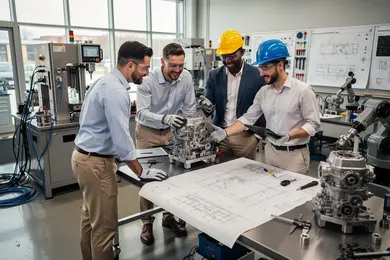
An online mechanical engineering degree can be a strong choice when it is built around the same academic standards as the school's campus program. The best online programs are not lighter versions of engineering; they still require calculus, physics, thermodynamics, materials science, mechanics, design, simulation, labs, and a capstone project.
The main difference is delivery. Lectures, assignments, exams, advising, and collaboration may happen online, while some programs require short campus residencies, local lab arrangements, shipped lab kits, proctored testing, or in-person design intensives. If you are comparing an engineering online degree with a campus program, focus less on the label and more on whether the program produces evidence of engineering competence.
The table below summarizes the outcome factors that usually matter most. Use it to compare program design, not just convenience.
| Decision factor | Online mechanical engineering degree | Traditional on-campus program | Why it matters for outcomes |
| Employer recognition | Strong when the school is reputable and the program is properly accredited | Strong when the school and program have established engineering credibility | Employers usually care most about accreditation, projects, skills, internships, and interview performance |
| Hands-on labs | May use lab kits, simulation, local labs, or short residencies | Usually completed in campus laboratories | Mechanical engineering is applied, so weak lab access can reduce readiness for design and testing roles |
| Flexibility | Often better for working adults, military students, and transfer students | Usually better for students who want daily campus structure | Flexibility can improve persistence, but students must be disciplined with math-heavy coursework |
| Networking | Depends on virtual career fairs, alumni access, team projects, and employer partnerships | Often easier through labs, student clubs, faculty offices, and campus recruiting | Internships and referrals can strongly influence first engineering jobs |
| Best fit | Self-directed students who need location flexibility and can handle remote collaboration | Students who want immersive labs, in-person teams, and campus engineering culture | The better format is the one that helps you complete the degree with credible experience |
Online study makes the most sense if you already have strong time-management skills, reliable technology, and a clear plan for completing labs and projects. A campus program may be the better option if you learn best through daily in-person interaction, want direct access to machine shops and testing equipment, or are seeking a highly residential engineering experience.
What accreditation should an online mechanical engineering degree have in the United States?
Accreditation is the first filter you should apply because it protects the value of the credential. In the United States, a college or university should hold institutional accreditation from a recognized accreditor, and a mechanical engineering bachelor's program should ideally hold programmatic accreditation from the ABET Engineering Accreditation Commission.
ABET accreditation matters because it evaluates whether an engineering program meets accepted standards for curriculum, faculty, facilities, student outcomes, continuous improvement, and professional preparation. For mechanical engineering, this is especially important because many employers, graduate schools, and licensing boards use ABET accreditation as a shorthand for academic rigor.
There are three accreditation checks to make before applying. These checks help you avoid programs that sound engineering-related but may not meet the expectations of engineering employers or licensing boards.
- Confirm the college or university has recognized institutional accreditation, which affects federal financial aid eligibility, transfer credit, and general degree legitimacy.
- Search the ABET database for the exact program name, degree level, campus or online designation, and accreditation status; do not rely only on marketing language.
- If you may pursue Professional Engineer licensure, verify your state board's education rules because requirements can vary by jurisdiction and may treat non-ABET programs differently.
A common mistake is assuming that "engineering technology," "mechanical engineering technology," and "mechanical engineering" are interchangeable. Engineering technology programs can be valuable and practical, but they may lead to different roles and may not meet the same licensure or graduate school expectations as an ABET-accredited mechanical engineering program.
How can I evaluate and choose a reputable online mechanical engineering program?
The strongest online mechanical engineering program is the one that fits your career goal, learning style, budget, and licensing needs. Rankings can help you build an initial list, but they should not replace a careful review of accreditation, curriculum, student support, lab delivery, transfer credit, and career outcomes.
Use the following process to compare programs systematically. It is designed to help you move from broad search results to a defensible shortlist.
- Start with accreditation by confirming institutional accreditation and, for bachelor's degrees, ABET Engineering Accreditation Commission status whenever possible.
- Match the curriculum to your target field, such as robotics, HVAC, aerospace, automotive systems, manufacturing, energy, product design, or graduate study.
- Ask how labs work, including whether you must travel, buy equipment, use simulation software, complete local lab work, or attend required campus sessions.
- Review faculty access, tutoring, math support, advising, and career services because online engineering students often need structured academic help to persist through difficult courses.
- Calculate total cost, not just tuition, by including fees, software, hardware, lab kits, travel, books, lost work time, and the cost of repeating prerequisite courses.
- Request outcome information such as internship participation, employer partnerships, graduate school placement, FE exam preparation, and examples of senior design projects.
- Check transfer policies before enrolling, especially for calculus, physics, chemistry, programming, CAD, and lower-division engineering courses.
If you are comparing engineering with data-heavy STEM alternatives, looking at an affordable data science degree can also help you benchmark tuition, flexibility, and ROI expectations across technical fields. That comparison is useful if your interests lean more toward analytics, modeling, or software than physical systems.
Watch for red flags. Be cautious if a school will not clearly explain accreditation, hides required campus visits until late in the admissions process, makes unusually broad salary claims, lacks upper-division engineering labs, or cannot describe how online students complete team-based design work.
What courses and specializations are typically offered in online mechanical engineering degrees?
Mechanical engineering is the study of physical systems: how they move, transfer heat, use energy, respond to forces, and become real products. Online programs usually combine math and science foundations with engineering analysis, design, experimentation, and computing.
The table below shows common curriculum areas and why they matter. Exact course names vary by school, but reputable programs should cover the major technical foundations of the discipline.
| Curriculum area | Typical topics | Why it matters |
| Math and science foundation | Calculus, differential equations, physics, chemistry, statistics | These courses support advanced modeling, mechanics, thermodynamics, and control systems |
| Mechanical systems | Statics, dynamics, mechanics of materials, machine design | Students learn how structures and components behave under loads and motion |
| Thermal and fluid systems | Thermodynamics, heat transfer, fluid mechanics, energy systems | These courses support work in HVAC, power, engines, aerospace, and energy efficiency |
| Design and manufacturing | CAD, materials, manufacturing processes, product design, prototyping | Students learn how ideas become manufacturable mechanical products |
| Computing and simulation | Programming, numerical methods, finite element analysis, modeling tools | Modern engineers use software to test designs before physical production |
| Professional practice | Engineering ethics, project management, technical communication, capstone design | Employers expect engineers to work in teams, document decisions, and manage constraints |
Specializations are most useful when they align with a target industry. A student interested in medical devices may prioritize biomechanics and product design, while a student targeting aerospace may need fluids, controls, materials, and simulation depth.
Common online mechanical engineering specializations and elective clusters include the following. These options can help you decide whether a program's strengths match your career direction.
- Robotics and automation, which can fit students interested in manufacturing systems, mechatronics, controls, and industrial automation.
- Aerospace and vehicle systems, which may emphasize fluid dynamics, propulsion concepts, lightweight materials, vibration, and simulation.
- Energy and thermal systems, which can support work in HVAC, renewable energy systems, power generation, and energy efficiency.
- Manufacturing and materials, which is useful for students interested in production, quality, additive manufacturing, materials selection, and process improvement.
- Design and product development, which fits students who want roles involving CAD, prototyping, testing, user requirements, and cross-functional product teams.
Computational skills are becoming more important as mechanical engineers use simulation, sensor data, and AI-assisted design tools. Students who eventually want research leadership in modeling, machine learning, or large-scale technical systems may later compare graduate engineering options with an online data science PhD, although that path serves a different purpose than an engineering bachelor's or master's degree.
What admissions requirements and prior education do online mechanical engineering programs expect?
Admissions expectations depend on degree level. Mechanical engineering is math-intensive, so schools usually look closely at calculus readiness, physics preparation, prior engineering coursework, and academic persistence.
The table below compares common admissions expectations by program type. Use it to identify whether you are ready to apply now or should complete prerequisites first.
| Program type | Common applicant background | Typical admissions materials | Best fit |
| Online bachelor's in mechanical engineering | High school diploma, GED, transfer credits, or associate coursework with strong math preparation | Transcripts, application form, possible test scores, placement results, prerequisite review | First-time degree seekers and transfer students aiming for entry-level engineering roles |
| Online bachelor's completion pathway | Prior college credit in calculus, physics, chemistry, and foundational engineering | College transcripts, transfer evaluation, course syllabi when needed | Students who completed lower-division coursework at a community college or another university |
| Online master's in mechanical engineering | Bachelor's degree in mechanical engineering or a closely related engineering field | Transcripts, resume, statement of purpose, recommendations, possible GRE depending on school policy | Working engineers seeking specialization, advancement, or preparation for doctoral study |
| Graduate certificate | Bachelor's degree in engineering or a related technical field | Transcripts, resume, application, possible prerequisite review | Professionals who want targeted skills without committing to a full degree |
If you are not yet calculus-ready, do not rush into an engineering sequence. It is often smarter to complete algebra, trigonometry, precalculus, and introductory programming before starting expensive upper-division engineering coursework.
Applicants should also understand the difference between admission to the university and admission to the engineering major. Some schools admit students to a pre-engineering track first and require minimum grades in calculus, physics, chemistry, and introductory engineering before full major progression.
Before applying, gather the items that most often delay enrollment decisions. This short preparation list can prevent transfer-credit surprises and missed deadlines.
- Official transcripts from every college attended, even if the coursework seems unrelated.
- Course descriptions or syllabi for math, science, engineering, CAD, programming, and lab-based transfer courses.
- Documentation of military, workplace, or technical training if the school evaluates prior learning, while recognizing that core engineering credits may be limited.
- A realistic weekly schedule because online mechanical engineering courses can require extensive problem-solving time outside lectures.
How long do online mechanical engineering degrees take and what do they cost?
Time to completion depends on degree level, transfer credit, course load, prerequisite readiness, and whether the program runs in traditional semesters or accelerated terms. A full bachelor's degree commonly takes about four years of full-time study, while transfer students with substantial lower-division credits may finish faster.
The table below gives a practical timeline comparison. Use it to estimate how much flexibility you need and how long you may be paying tuition before seeing career benefits.
| Credential | Typical completion time | What can extend the timeline | What can shorten the timeline |
| Bachelor's degree | About four years full time | Missing calculus or physics prerequisites, part-time enrollment, limited course availability, lab scheduling | Transfer credits, summer courses, strong prerequisite preparation, continuous enrollment |
| Bachelor's completion program | Often two to three years after lower-division preparation | Non-equivalent transfer credits, repeated technical courses, work schedule conflicts | Completed associate-level math and science sequence, block transfer agreements |
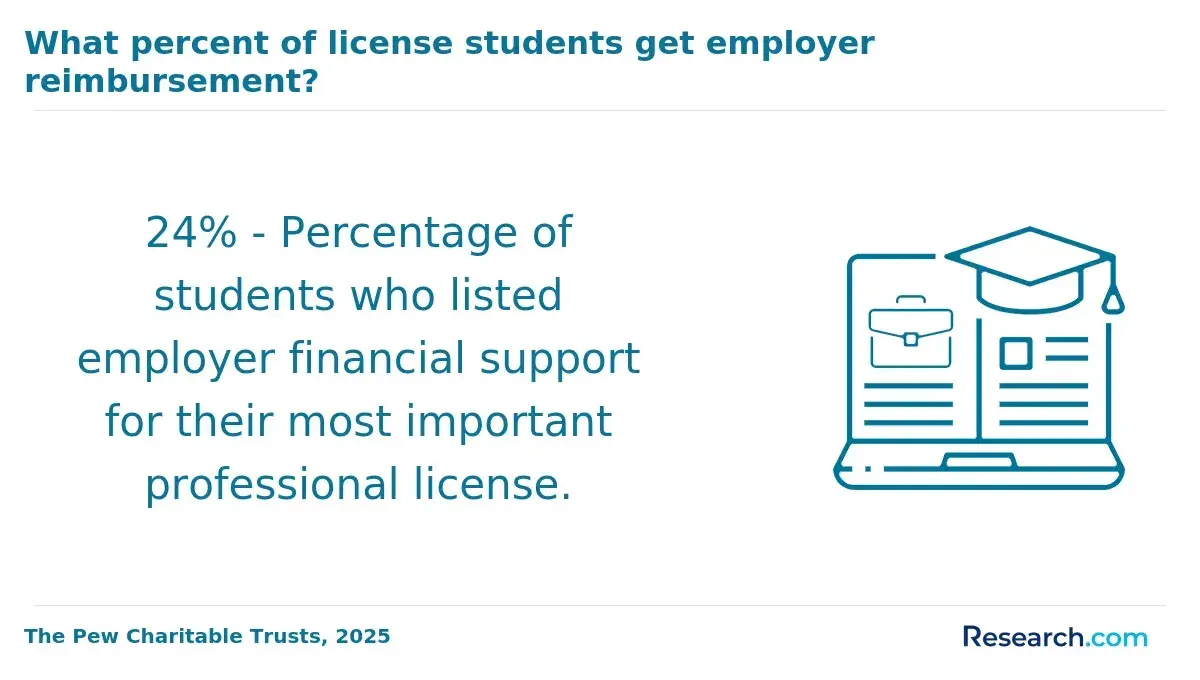
| Master's degree | Often one and a half to three years depending on course load | Part-time study, thesis requirements, employer workload, prerequisite gaps | Course-only options, employer tuition support, focused specialization |
| Graduate certificate | Often less than a full master's degree | Prerequisite gaps or infrequent course offerings | Stackable credits that apply later toward a master's degree |
For cost context, College Board's 2024-25 national tuition and fee averages show why institution type and residency status matter. These are broad benchmarks, not program-specific prices, but they are useful for spotting whether a school is unusually expensive or unusually affordable.
- Public four-year, in-state average tuition and fees: $11,610
- Public four-year, out-of-state average tuition and fees: $30,780
- Private nonprofit four-year average tuition and fees: $43,350
Online mechanical engineering programs may charge per credit, per semester, or by residency status. Some online public universities offer the same rate to all online students, while others still charge different in-state and out-of-state rates.
To estimate your true cost, look beyond the tuition line. Engineering students may need specialized software, a strong computer, lab kits, proctoring, travel for residencies, books, equipment fees, and extra time for prerequisite math or science courses. If you plan to keep working, also factor in whether a slower part-time schedule increases total time to completion.
A lower-cost program is not automatically the best ROI, and a higher-cost program is not automatically poor value. The better question is whether the program is accredited, completable, affordable without excessive borrowing, aligned with your target industry, and strong enough to help you compete for internships or engineering roles.
What careers can I pursue with an online mechanical engineering degree?
An online mechanical engineering degree can support roles in design, manufacturing, energy, robotics, aerospace, automotive systems, HVAC, product development, quality, testing, and technical project work. The strongest opportunities usually go to candidates who can show applied experience through internships, senior design projects, CAD portfolios, lab work, simulation projects, or relevant work history.
The table below connects common career paths to typical responsibilities. Use it to see whether a mechanical engineering curriculum matches the type of work you actually want to do.
| Career path | Typical responsibilities | Helpful preparation |
| Mechanical design engineer | Create and improve mechanical components, assemblies, and products | CAD, machine design, materials, prototyping, design documentation |
| Manufacturing engineer | Improve production processes, tooling, quality, workflow, and equipment performance | Manufacturing methods, process improvement, automation, quality systems |
| Thermal or fluids engineer | Analyze heat transfer, airflow, cooling systems, engines, HVAC, or energy systems | Thermodynamics, heat transfer, fluid mechanics, simulation tools |
| Robotics or automation engineer | Work on automated systems, motion control, sensors, and mechanical integration | Controls, mechatronics, programming, dynamics, manufacturing systems |
| Test or validation engineer | Plan experiments, evaluate prototypes, collect data, and verify product performance | Instrumentation, statistics, lab methods, technical reporting |
| Quality engineer | Reduce defects, improve reliability, document processes, and support compliance | Statistics, materials, manufacturing, Six Sigma, quality standards |
| Project engineer | Coordinate technical work across design, procurement, production, vendors, and clients | Communication, project management, technical breadth, budgeting basics |
Mechanical engineering is a good fit if you like solving physical problems, improving how things work, and balancing design trade-offs such as cost, strength, safety, manufacturability, weight, energy use, and reliability. It may be a poor fit if you strongly dislike math, physics, iterative design, technical documentation, or long problem sets.
If you are drawn more to organizing information, research systems, digital archives, or information services than designing physical systems, an MLIS degree may be a better-aligned graduate option. That alternative serves a very different career direction, but it is worth considering if your interests are more information-centered than engineering-centered.
For mechanical engineering students, the most important career-building step is to graduate with evidence. Employers are more likely to value an online degree when the candidate can discuss real projects, design decisions, tools used, constraints handled, and measurable results.
What salary ranges and earning potential do mechanical engineers typically have?
The U.S. Bureau of Labor Statistics reports a May 2024 median annual wage of $102,320 for mechanical engineers. This median is a midpoint, not a promise; actual pay varies by experience, industry, region, degree level, security clearance requirements, licensure, technical specialization, and the complexity of the role.
Use salary data as a planning tool rather than a guarantee. A new graduate entering manufacturing support in a lower-cost region may see a different offer than an experienced engineer in aerospace, robotics, energy, or advanced product development.
The table below shows the main factors that influence earning potential. It can help you think beyond the degree credential and evaluate what will make you more competitive.
| Salary factor | How it can affect earning potential | What students can do |
| Experience level | Entry-level roles typically pay less than roles requiring independent design judgment or project ownership | Pursue internships, co-ops, senior design leadership, and relevant part-time technical work |
| Industry | Aerospace, energy, automation, medical devices, and specialized manufacturing may value different skill sets | Choose electives and projects that match the industry you are targeting |
| Technical tools | CAD, simulation, data analysis, controls, and manufacturing software can improve job readiness | Build a portfolio showing models, analyses, test results, and design iterations |
| Location | Pay often reflects regional labor markets, cost of living, and concentration of engineering employers | Compare job postings in your target region before choosing a specialization |
| Licensure or advanced credentials | PE licensure can matter in consulting, public infrastructure, and roles involving responsible charge | Consider the FE exam if your career path may require licensure later |
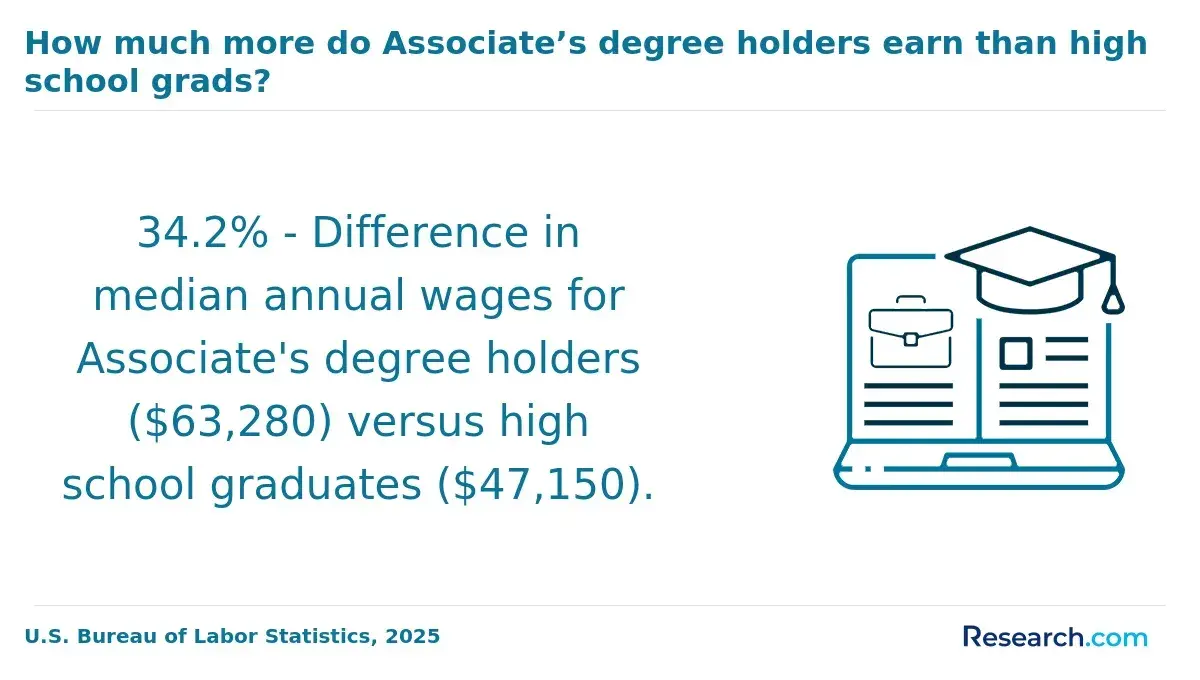
Students evaluating ROI should compare expected monthly loan payments with realistic early-career earnings, not just the national median. The degree may be more financially attractive if you transfer credits, receive employer tuition assistance, choose a lower-cost accredited program, or continue working while studying.
What is the job outlook and industry demand for mechanical engineers nationwide?
The national outlook is favorable, but it is not uniform across all industries. The Bureau of Labor Statistics projects mechanical engineer employment to grow by 11% from 2023 to 2033, which is faster than the average for all occupations. For students, that suggests continued demand, but not automatic placement; skills, location, internships, and specialization still matter.
Demand is being shaped by several trends: automation in manufacturing, robotics adoption, energy efficiency, electrification, aerospace modernization, advanced materials, and the need to improve complex physical products. AI is also changing the workflow by speeding up simulation, design iteration, data analysis, predictive maintenance, and documentation, but it does not remove the need for engineers who understand physics, safety, testing, and real-world constraints.
Mechanical engineers work across many industries, which can make the degree more flexible than narrowly focused technical programs. Common employers include manufacturers, aerospace firms, automotive companies, energy organizations, HVAC and building systems firms, product development companies, medical device manufacturers, defense contractors, and engineering consulting firms.
To position yourself for current demand, focus on skill combinations rather than a single buzzword. The most resilient candidates often combine core mechanical fundamentals with software tools, data interpretation, communication, and hands-on project experience.
- Pair CAD and mechanical design with manufacturing knowledge so you can design parts that can actually be produced.
- Pair thermodynamics or fluids with energy systems if you are targeting HVAC, power, thermal management, or efficiency roles.
- Pair dynamics and controls with programming if you are interested in robotics, automation, or mechatronics.
- Pair materials and testing with quality or reliability if you want roles in regulated or high-performance products.
A common mistake is choosing electives based only on what sounds advanced. It is usually better to study job postings in your target region, identify repeated tools and skills, and choose projects that let you demonstrate those competencies.
Are licenses, certifications, or professional exams required for mechanical engineers?
Most mechanical engineering jobs in private industry do not require a Professional Engineer license at entry level. However, licensure can be important for engineers who offer services to the public, sign and seal engineering documents, work in consulting, manage public-safety-related projects, or advance into roles involving responsible charge.
The standard engineering licensure pathway in many states follows a sequence. Requirements vary by state board, so always confirm the rules where you plan to practice.
- Earn an engineering degree that meets the state board's education requirements, often with the clearest path through an ABET-accredited engineering program.
- Pass the Fundamentals of Engineering exam, commonly called the FE exam, to become an Engineer Intern or Engineer-in-Training depending on the state.
- Gain qualifying supervised engineering experience, typically under licensed professionals when required by the board.
- Pass the Principles and Practice of Engineering exam in the appropriate discipline if you need PE licensure for your role.
Certifications are different from licenses. They are usually optional credentials that demonstrate focused skills rather than legal authority to practice engineering. Depending on your career goal, useful credentials may involve CAD software, geometric dimensioning and tolerancing, Six Sigma, project management, energy management, welding inspection, quality systems, or specific simulation tools.
Do not collect certifications randomly. Choose them only when they match job postings, employer expectations, or a skill gap in your background. For many students, a strong project portfolio, internship, FE exam progress, and ABET-accredited degree will matter more than a long list of unrelated certificates.
Other Things You Should Know About Mechanical Engineering
Sometimes. Programs may use home lab kits, simulation tools, partner facilities, local proctors, or short campus residencies. Before enrolling, ask exactly which labs require physical attendance, what equipment is required, and whether travel costs are included in published tuition estimates.
In 2027, evaluate online mechanical engineering programs by considering accreditation, curriculum strength, faculty qualifications, hands-on lab experiences, and alumni success rates. Ensure the program aligns with your career goals and offers robust support services, such as career counseling and technical resources.
Yes, and this can reduce cost if courses transfer cleanly. Focus on calculus, calculus-based physics, chemistry, programming, and introductory engineering courses, and confirm equivalencies with the destination university before taking classes.
Build practical evidence of CAD, technical writing, spreadsheet analysis, programming basics, testing, teamwork, and design iteration. Employers often want to hear how you defined a problem, evaluated constraints, tested alternatives, and improved a design based on data.
References
- PE Exam | NCEES https://ncees.org/exams/pe-exam/
- Find Programs - ABET https://www.abet.org/accreditation/find-programs/
- Engineering School Admissions Requirements - GPA, GRE, SAT https://www.onlineengineeringprograms.com/faq/admissions-requirements-for-engineering-school
- 40 Different Types of Engineering Degrees https://typesofengineeringdegrees.org/
- What Does It Take to Become a Mechanical Engineer https://www.pdh-pro.com/pe-resources/what-does-it-take-to-become-a-mechanical-engineer/
- Mechanical Engineering Salary: 2026 Industry Standards https://startcareer.co.za/career-advice/mechanical-engineering-salary/
- What is a PE? https://www.nspe.org/about/about-professional-engineering/what-pe
- Online Mechanical Engineering Degrees 2025 https://www.affordablecollegesonline.org/degrees/engineering-programs/mechanical-engineering/
- Mechanical Engineer Certifications: Best Credentials to Advance Your Career | Teal https://www.tealhq.com/career-paths/mechanical-engineer-certifications