2027 Online Mechanical Engineering Degrees for Students Who Want Flexible Lab Access

Co-Founder and Chief Data Scientist
Choosing an online mechanical engineering degree is harder than choosing many other online majors because labs, equipment access, and accreditation can directly affect your career options. The stakes are real, the U.S. Bureau of Labor Statistics reported a $102,320 median annual wage for mechanical engineers in May 2024.
This guide is for working adults, transfer students, military learners, and career changers who need flexibility without sacrificing hands-on training. You will learn how online labs work, what to verify before enrolling, and how to compare cost, quality, and career fit.
Key Things You Should Know
- ABET accreditation is the key quality signal for bachelor's-level mechanical engineering programs, especially if you may pursue the Fundamentals of Engineering exam, Professional Engineer licensure, defense work, or traditional engineering roles.
- Flexible lab access usually means a mix of mailed lab kits, simulation software, remote-controlled equipment, weekend campus residencies, or approved local labs rather than a completely lab-free engineering degree.
- The BLS reported a $102,320 median annual wage for mechanical engineers in May 2024, but outcomes vary by industry, region, degree level, internship experience, and whether the program includes credible hands-on design work.
What is an online mechanical engineering degree with flexible lab access and how does it work?
An online mechanical engineering degree with flexible lab access is a bachelor's or master's program that delivers most lectures, assignments, exams, and collaboration online while giving students structured ways to complete experiments, design projects, and measurement-based coursework. The goal is not to remove labs from engineering education. The goal is to make them possible for students who cannot relocate or attend a campus every weekday.
At the bachelor's level, mechanical engineering programs typically cover mechanics, materials, thermodynamics, fluid systems, machine design, manufacturing, controls, and capstone design. At the master's level, online programs are often designed for engineers who already have a related bachelor's degree and want advanced training in areas such as thermal systems, robotics, aerospace, advanced manufacturing, or computational engineering.
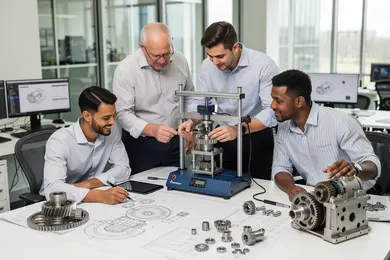
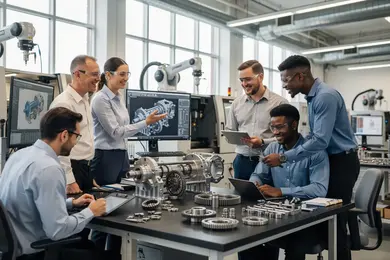
Flexible lab access can take several forms. Some programs mail experiment kits to students. Others use remote instrumentation, where students log in to control real equipment from a distance. Some require short campus visits for intensive lab weekends. A few allow students to use employer facilities or approved partner sites if the equipment and supervision meet course requirements.
This format fits students who need a rigorous engineering pathway but also need control over location and scheduling. It can be especially useful for working technicians, military personnel, parents, transfer students, or students who live far from an ABET-accredited engineering campus. Students comparing a mechanical engineering degree online should pay close attention to whether the program is a true mechanical engineering degree, an engineering technology degree, or a related applied science program because those labels can lead to different employer and licensure outcomes.
The main trade-off is that online mechanical engineering requires more self-management than a campus program. Students must plan lab deadlines, software access, internet reliability, proctored exams, and any travel for required residencies. A strong program will make these expectations clear before enrollment rather than surprising students after they register.
How do online mechanical engineering programs provide hands-on labs, simulations, and remote equipment?
Online mechanical engineering programs provide hands-on learning by combining physical experimentation, digital modeling, and instructor-verified design work. The best programs do not rely on simulations alone; they use simulations to prepare students for measurement, testing, uncertainty analysis, and engineering decision-making.
The table below compares the most common lab delivery models. It helps you understand what "flexible lab access" may actually mean when you review a school's curriculum.
| Lab model | How it works | Best fit | Potential limitation |
| Mailed lab kits | The school sends sensors, small-scale mechanical components, test materials, or measurement tools for home experiments. | Introductory mechanics, circuits for mechatronics, materials demonstrations, and basic instrumentation. | Home kits may not replicate industrial-scale equipment or advanced manufacturing tools. |
| Simulation software | Students use CAD, finite element analysis, computational fluid dynamics, or system modeling tools to test designs virtually. | Design iteration, stress analysis, thermal modeling, and controls concepts. | Simulation quality depends on assumptions, mesh choices, boundary conditions, and student skill. |
| Remote equipment access | Students operate real lab equipment online through cameras, sensors, control interfaces, and data acquisition systems. | Measurement-heavy experiments where real data, calibration, and uncertainty matter. | Scheduling windows may be limited, especially in courses with many students. |
| Short campus residencies | Students travel to campus for several days or weekends to complete intensive lab sessions. | Programs that need machine shops, wind tunnels, materials testing, robotics labs, or thermal systems equipment. | Travel, lodging, and time away from work can increase the true cost of attendance. |
| Approved local or employer labs | A student completes certain activities using verified equipment at a workplace, community college, or partner site. | Working professionals with access to engineering or manufacturing facilities. | Not every employer facility meets academic requirements, and approval may take time. |
A well-designed online lab sequence usually builds from guided experiments to open-ended design. Early courses may focus on collecting accurate data and writing technical reports. Later courses may require students to model, build, test, revise, and defend a design under constraints.
When comparing programs, ask how the school verifies that students personally complete lab work. Strong programs use a combination of live check-ins, recorded demonstrations, lab notebooks, raw data files, proctored practical assessments, team design reviews, and instructor feedback. This matters because employers often care less about whether a course was online and more about whether students can document credible engineering work.
Current technology trends are making online labs more capable. Cloud-based CAD, remote instrumentation, digital twins, low-cost microcontrollers, 3D printing, and AI-assisted design tools are changing how students prototype and evaluate systems. However, these tools do not replace engineering judgment. Students still need to understand tolerances, material behavior, safety, manufacturing limits, and the difference between a model that looks correct and a design that actually performs.
Are online mechanical engineering degrees accredited and respected by employers?
Online mechanical engineering degrees can be accredited and respected, but students must verify the exact credential. The most important distinction is whether the program is accredited by ABET's Engineering Accreditation Commission for mechanical engineering or a closely related engineering discipline. ABET accreditation is especially important for students who want the broadest pathway into engineering licensure, government contracting, aerospace, energy, manufacturing, and other traditional engineering roles.
Employer respect usually depends on three factors: institutional legitimacy, program accreditation, and evidence of hands-on competence. If the transcript and diploma come from an accredited university and the program has strong lab and design requirements, many employers evaluate it similarly to a campus degree. Problems arise when a student assumes that "online," "engineering technology," "mechanical design," and "mechanical engineering" are interchangeable. They are not always interchangeable.
The table below summarizes what to verify before you rely on a program for licensure, graduate study, or employer screening.
| Item to verify | Why it matters | What a strong answer looks like |
| Institutional accreditation | Confirms that the college or university meets recognized academic and administrative standards. | The school is accredited by a recognized institutional accreditor and is eligible for federal financial aid if applicable. |
| Programmatic ABET accreditation | Signals that the engineering curriculum, faculty qualifications, outcomes assessment, and facilities meet engineering standards. | The exact mechanical engineering bachelor's program is listed as ABET-accredited, not merely the university as a whole. |
| Degree title | Employers and licensing boards may treat engineering and engineering technology credentials differently. | The program clearly states whether it awards a Bachelor of Science in Mechanical Engineering, mechanical engineering technology degree, or another credential. |
| Lab and design requirements | Mechanical engineering requires applied problem-solving, testing, and design verification. | The curriculum includes documented labs, senior design, technical reporting, and faculty-supervised project work. |
| Licensure pathway | Professional Engineer rules vary by state and can depend on degree type and accreditation. | The program explains how graduates typically prepare for the FE exam and what students should confirm with their state board. |
For master's programs, ABET is less central because ABET accreditation is most commonly associated with undergraduate engineering programs. A reputable online master's degree should still come from an accredited institution, have qualified engineering faculty, and align with your technical goals. If you need a master's for promotion, specialized engineering work, or doctoral preparation, review faculty research areas, thesis or project options, and whether online students can access the same advising and computing resources as campus students.
A common mistake is assuming that a school's general reputation automatically solves accreditation questions. Even well-known universities may offer different online programs with different accreditation statuses. Always verify the exact program name, degree level, campus or online designation, and accreditation listing before you enroll.
How does an online mechanical engineering degree compare to a campus-based program?
An online mechanical engineering degree can be academically comparable to a campus-based program when it uses the same standards, qualified faculty, rigorous labs, and credible assessments. The student experience, however, is different. Online learning shifts more responsibility to the student for scheduling, communication, equipment setup, and staying engaged with faculty and peers.
The comparison below shows where online and campus formats tend to differ most. Use it to decide which format better matches your responsibilities, learning style, and career goals.
| Factor | Online mechanical engineering | Campus-based mechanical engineering |
| Schedule flexibility | Often better for working adults, military students, caregivers, and students who cannot relocate. | Usually more structured, with fixed class and lab times. |
| Lab access | May use kits, simulations, remote labs, residencies, or approved local facilities. | Usually provides regular access to campus labs, machine shops, and design studios. |
| Peer interaction | Depends heavily on discussion tools, team projects, video meetings, and student initiative. | Often easier for spontaneous collaboration, study groups, and club participation. |
| Cost structure | May reduce relocation and commuting costs but can include technology, shipping, proctoring, or residency travel fees. | May include housing, transportation, campus fees, and opportunity costs if work hours are reduced. |
| Career networking | Strong if the program has online career services, employer projects, alumni networks, and internship support. | Often easier to access in-person career fairs, labs, clubs, and local employer pipelines. |
| Student discipline required | High; students must manage deadlines, lab logistics, and software setup independently. | Still high, but the campus routine can create more external structure. |
Online mechanical engineering is often a strong fit if you already work in manufacturing, maintenance, drafting, aerospace, energy, or another technical field and want to move into engineering roles without leaving your job. It may also fit transfer students who completed calculus, physics, and general education courses elsewhere and need a flexible upper-division pathway.
A campus-based program may be better if you are entering college directly from high school, want extensive machine-shop access, plan to join design teams such as Formula SAE or robotics clubs, or need intensive face-to-face support in calculus and physics. Campus programs can also be better for students who learn best through fixed routines and frequent in-person feedback.
Online engineering is also different from many other online professional degrees because of its equipment requirements. For example, students researching MLIS programs may find fully online formats with no physical lab residency, while mechanical engineering students often need some form of verified experimental or design work. That difference is not a weakness; it reflects the nature of engineering practice.
What courses and specializations are included in online mechanical engineering curricula?
Online mechanical engineering curricula are built around math, physics, design, analysis, and systems thinking. Bachelor's programs usually start with calculus, differential equations, chemistry or physics, statics, dynamics, materials, programming, and engineering graphics. Upper-division courses then move into thermal systems, machine design, manufacturing, controls, fluid mechanics, heat transfer, and capstone design.
Master's programs are usually more specialized. They may require a mechanical engineering or closely related bachelor's degree and often let students choose electives based on industry needs. Some programs include a thesis, while others use a project, portfolio, or course-only structure.
The table below groups common courses and specializations by the kind of engineering work they support. This can help you match a curriculum to the jobs you actually want.
| Curriculum area | Typical courses or topics | Career relevance |
| Mechanical design | CAD, machine elements, kinematics, product design, finite element analysis. | Useful for product development, mechanical systems design, equipment design, and prototyping. |
| Thermal and fluid systems | Thermodynamics, fluid mechanics, heat transfer, HVAC, energy systems. | Relevant to energy, aerospace, automotive, building systems, and process industries. |
| Manufacturing and materials | Materials science, manufacturing processes, quality control, additive manufacturing. | Important for production engineering, materials testing, manufacturing optimization, and supplier quality. |
| Controls and robotics | Dynamic systems, control theory, mechatronics, sensors, automation, robotics. | Useful for automation, robotics, industrial equipment, autonomous systems, and smart manufacturing. |
| Computational engineering | Numerical methods, simulation, optimization, data-informed modeling, computational mechanics. | Supports advanced analysis roles in aerospace, automotive, energy, and research-focused engineering teams. |
| Capstone or applied project | Team design, testing, technical documentation, design reviews, project management. | Provides evidence of applied engineering ability for internships, portfolios, and employer interviews. |
Students should also look for modern tools in the curriculum. Mechanical engineers increasingly work with simulation platforms, embedded sensors, automated manufacturing systems, and data from connected equipment. A program does not need to chase every trend, but it should teach students how to validate models, interpret data, document assumptions, and communicate design trade-offs.
If you discover that your strongest interest is not mechanical systems but machine learning, analytics, or large-scale data modeling, a data-focused graduate path may be more appropriate than a mechanical engineering master's. Students comparing technical graduate options sometimes review the cheapest data science masters in usa to understand how data programs differ in cost and curriculum from engineering degrees.
A common mistake is choosing a specialization because it sounds advanced rather than because it connects to a target role. For example, robotics can be exciting, but it may not be the best choice if your local job market is dominated by HVAC, manufacturing quality, or plant engineering. Review job postings in your region and compare the required skills with the program's electives before committing.
What are typical admission requirements for online mechanical engineering bachelor's and master's programs?
Admission requirements vary by school, degree level, and whether the program is designed for first-time students, transfer students, or working engineers. Mechanical engineering is math-intensive, so admissions offices often pay close attention to calculus readiness, physics preparation, and prior technical coursework.
The table below summarizes common requirements. It is not a substitute for a school's official admissions page, but it can help you understand what to prepare before you contact programs.
| Program level | Common academic requirements | Common application materials | Important fit questions |
| Online bachelor's for first-time students | High school diploma or equivalent, strong math preparation, science coursework, and placement readiness for calculus. | Application, transcripts, test scores if required, personal statement if requested, and financial aid forms. | Will you receive enough support in calculus, physics, and introductory engineering courses? |
| Online bachelor's completion or transfer program | Prior college credits, calculus sequence, calculus-based physics, chemistry or computing, and general education courses. | College transcripts, transfer credit evaluation, prerequisite review, and sometimes a minimum GPA. | How many credits will actually transfer into the engineering major rather than only as electives? |
| Online master's in mechanical engineering | Bachelor's degree in mechanical engineering or a related engineering field, prerequisite math and engineering courses, and often a minimum GPA. | Transcripts, resume, statement of purpose, recommendations, and sometimes GRE scores depending on the school. | Does the program offer the specialization, thesis, project, or employer-aligned coursework you need? |
| Bridge or leveling pathway | Prior STEM degree or technical background with missing engineering prerequisites. | Transcript review, prerequisite plan, and advisor approval. | How much time and cost will prerequisite courses add before you enter the core program? |
Transfer students should be especially careful. A course titled "physics" may not satisfy a calculus-based engineering physics requirement, and a CAD or drafting course may not replace engineering graphics or design coursework. Before enrolling, request a written transfer evaluation that shows exactly which courses apply to the major, which apply to general education, and which do not count toward graduation.
Students applying to master's programs should review whether the program expects an ABET-accredited bachelor's degree. Some graduate programs admit students from related fields, but they may require prerequisite courses in thermodynamics, fluid mechanics, mechanics of materials, controls, or numerical methods. These prerequisites can be worth it if they lead to the right career goal, but they can also add cost and delay graduation.
Before applying, students can reduce surprises by completing a focused readiness check. The steps below help identify academic, technical, and scheduling gaps before tuition is due.
- Confirm whether your math background places you directly into calculus or requires precalculus review.
- Ask for a prerequisite map that shows the order of courses, including labs and any residency requirements.
- Request a written transfer credit evaluation before committing to a bachelor's completion program.
- Check whether required software runs on your computer or through a school-provided cloud environment.
- Ask whether exams are proctored online, in person, or through approved testing centers.
How long do online mechanical engineering degrees take and what do they cost?
Completion time depends on degree level, transfer credits, course load, prerequisites, and lab scheduling. A full bachelor's degree commonly takes about four years of full-time study, while transfer-friendly completion pathways may take less time if the student has already completed calculus, physics, and general education requirements. Online master's programs commonly take about one to three years depending on whether students enroll full time or part time.
Cost is harder to compare because engineering programs may include tuition, technology fees, lab kits, software, proctoring, travel for residencies, and opportunity costs from reduced work hours. College Board's 2024 Trends in College Pricing reported the following average published tuition and fees for full-time undergraduate students in 2024-25, which can serve as a national benchmark even though individual online engineering programs may charge differently:
- $11,610 for in-state students at public four-year institutions.
- $30,780 for out-of-state students at public four-year institutions.
- $43,350 for students at private nonprofit four-year institutions.
These figures are not mechanical-engineering-specific prices, and they do not include every online fee or living expense. They are still useful because they show why students should compare total cost of attendance, not just the per-credit tuition line. A program with lower tuition can become more expensive if it requires multiple trips, expensive equipment, or extra prerequisite semesters.
For online mechanical engineering, the most important cost categories often appear outside the headline tuition number. Students should ask schools to estimate the following before they enroll:
- Tuition per credit and the total credits required after transfer evaluation.
- Mandatory online, technology, student services, or engineering program fees.
- Lab kit, equipment, shipping, software, and computer hardware costs.
- Travel, lodging, meals, parking, and missed work time for any required campus residency.
- Proctoring fees, testing center fees, graduation fees, and transcript fees.
- Prerequisite courses that must be completed before entering upper-division engineering coursework.
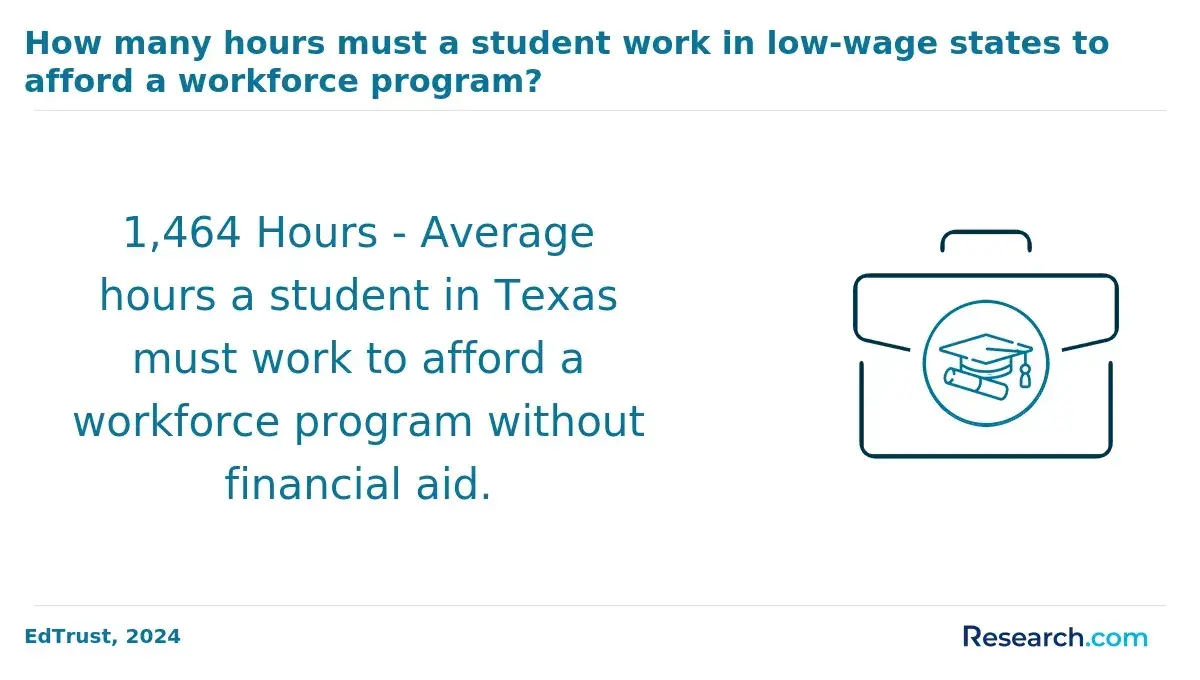
Financial aid can reduce upfront cost, but borrowing should be evaluated carefully. Federal student loan interest rates for new loans issued in the 2024-25 award year rose to 6.53% for undergraduate Direct Loans and 8.08% for graduate Direct Unsubsidized Loans, making repayment planning more important for students financing a large portion of the degree. If you borrow, estimate payments under realistic salary scenarios rather than assuming a best-case job offer immediately after graduation.
Accelerated options can be worthwhile for students who have strong transfer credits and can study full time. Part-time options may be better for working professionals who need income stability or employer tuition assistance. The trade-off is simple: faster programs can reduce time away from higher-level roles, but slower programs may reduce burnout and borrowing.
What mechanical engineering careers can you pursue with an online degree?
An online mechanical engineering degree can lead to many of the same broad career paths as a campus-based degree when the program is reputable, accredited where needed, and supported by strong projects or experience. Mechanical engineers design, test, improve, and maintain systems that involve motion, energy, materials, heat, fluids, manufacturing, or mechanical components.
The table below outlines common career directions and the type of work associated with each. It can help you connect degree choices and electives to realistic job targets.
| Career path | Typical responsibilities | Useful preparation |
| Mechanical design engineer | Designs components, creates CAD models, analyzes stress or motion, and works with manufacturing teams. | Machine design, CAD, finite element analysis, materials, and capstone design. |
| Manufacturing engineer | Improves production processes, tooling, quality, workflow, and equipment efficiency. | Manufacturing processes, quality systems, automation, lean methods, and materials. |
| Thermal systems engineer | Works on heat transfer, energy systems, HVAC, engines, cooling systems, or thermal management. | Thermodynamics, fluid mechanics, heat transfer, energy systems, and simulation. |
| Controls or automation engineer | Develops or supports automated systems, sensors, actuators, robotics, and control logic. | Controls, mechatronics, programming, dynamic systems, and instrumentation. |
| Test engineer | Plans experiments, collects performance data, troubleshoots failures, and validates designs. | Lab methods, statistics, instrumentation, technical writing, and data analysis. |
| Product development engineer | Turns customer needs into designs, prototypes, test plans, and manufacturable products. | Design methods, prototyping, project management, communication, and materials. |
| Field or applications engineer | Supports customers, installs or troubleshoots equipment, and translates technical requirements into solutions. | Mechanical fundamentals, communication, systems thinking, and industry-specific tools. |
Students with an online degree can strengthen their employment profile by building a portfolio of lab reports, CAD models, simulation results, design reviews, and capstone documentation. For early-career applicants, this portfolio can help show applied ability when they have limited full-time engineering experience.
Internships, co-ops, undergraduate research, military technical work, technician experience, and employer-sponsored projects can also improve career readiness. Online students should not wait until graduation to think about experience. They should ask programs how online students access career fairs, internship listings, faculty projects, alumni mentoring, and employer-sponsored capstones.
Mechanical engineering also connects with sustainability, environmental technology, and energy efficiency. Students who are deciding between engineering and environmental career paths may want to compare mechanical roles in renewable energy, HVAC efficiency, water systems, and manufacturing with high-paying jobs with environmental science degree options to see which path better matches their interests in design, field work, policy, or analysis.
One common mistake is assuming that the degree alone will create a career transition. Employers usually want evidence of tools, projects, internships, work experience, or domain knowledge. Online students can offset distance-learning concerns by documenting hands-on work clearly and practicing how to explain design decisions in interviews.
What salary ranges and job outlook can mechanical engineers expect in the United States?
Mechanical engineering salaries in the United States vary by industry, region, seniority, security clearance requirements, graduate education, and technical specialization. The most useful national benchmark is the BLS May 2024 median annual wage of $102,320 for mechanical engineers. Treat that number as a midpoint, not a guaranteed outcome. Entry-level roles, technician-to-engineer transitions, and jobs in lower-cost regions may fall below it, while specialized or senior roles in high-demand industries may exceed it.
Job outlook is also favorable but not uniform. BLS projections released for the 2023-2033 period expected mechanical engineer employment to grow 11%, which is faster than the average for all occupations. For students, this suggests healthy demand, but it does not remove the need for internships, technical software skills, communication ability, and a well-matched specialization.
The table below summarizes the salary and outlook context in a decision-focused way. It is designed to help you interpret labor market data rather than treat one national number as a personal forecast.
| Factor | What it can mean for salary or hiring | How students should interpret it |
| Industry | Aerospace, energy, defense, advanced manufacturing, and technology-heavy employers may pay differently from smaller local firms. | Compare your program's electives and employer network with industries you want to enter. |
| Region | Engineering pay often reflects local employer concentration and cost of living. | Review job postings in your target state or metro area before assuming national medians apply locally. |
| Experience | Internships, co-ops, technician experience, and capstone projects can affect competitiveness for entry-level roles. | Use the degree period to build evidence of applied skill, not just course completion. |
| Software and analysis skills | CAD, FEA, CFD, programming, data analysis, and controls tools may strengthen applications for specialized roles. | Choose electives and projects that produce demonstrable work samples. |
| Licensure or regulated work | Some roles in public infrastructure, consulting, or safety-critical work may value FE or PE progress. | Confirm whether your degree path supports the licensure rules in the state where you plan to practice. |
AI and automation are changing mechanical engineering work, but they are not eliminating the need for engineers who understand physical systems. AI-assisted design, generative design tools, predictive maintenance, and automated simulation workflows can speed up analysis. Engineers still need to define the problem, validate assumptions, interpret results, consider safety, and communicate trade-offs to non-engineers.
Students who want the strongest labor market position should combine the degree with practical experience. For example, a student interested in automation can pair controls coursework with a PLC or robotics project. A student interested in thermal systems can document heat-transfer modeling and testing. A student interested in manufacturing can show process improvement, quality analysis, or additive manufacturing work.
How can students choose a reputable online mechanical engineering program with strong lab options?
Choosing a reputable online mechanical engineering program requires more than comparing tuition and rankings. Because mechanical engineering is hands-on and often tied to licensure-sensitive career paths, students should evaluate accreditation, labs, transfer policies, faculty access, career support, and total cost together.
Use the following process before you submit a deposit. These steps are practical because they focus on the items most likely to affect cost, completion time, and career value.
- Verify the exact degree title and whether the specific program is ABET-accredited if you are pursuing a bachelor's degree in mechanical engineering.
- Ask for a complete lab plan that explains kits, simulations, remote equipment, campus visits, local lab approvals, and any required travel.
- Request a sample course sequence showing prerequisites, lab courses, design courses, and the expected timeline for full-time and part-time students.
- Get a written transfer credit evaluation before enrolling if you have prior college coursework.
- Compare total cost of attendance, including software, hardware, lab kits, proctoring, residency travel, and prerequisite courses.
- Ask how online students access faculty office hours, tutoring, engineering advising, career services, internships, and capstone teams.
- Review recent capstone examples or project descriptions to see whether students produce portfolio-worthy engineering work.
- Check whether the program's software, computer requirements, and internet expectations match your home setup.
Red flags deserve just as much attention as positive features. Watch for vague lab descriptions, unclear accreditation language, aggressive enrollment pressure, unusually short completion claims, missing faculty information, or refusal to provide written transfer evaluations. A reputable program should be willing to answer detailed questions before you commit.
Students should also think honestly about fit. Online mechanical engineering can be a smart investment if you are disciplined, comfortable learning technical material independently, and able to manage lab logistics. It may be a poor fit if you need daily in-person structure, lack reliable technology, cannot travel for required residencies, or are not ready for calculus-based engineering coursework.
The best final question is not "Is online mechanical engineering good?" A better question is: "Does this specific program give me the accredited credential, lab experience, support, cost structure, and career pathway I need?" If the answer is clear and documented, the program is easier to evaluate. If the answer depends on assumptions, keep asking questions or compare another school.
Other Things You Should Know About Mechanical Engineering
An online mechanical engineering degree can help bridge the gap for technicians aspiring to become engineers by providing the necessary theoretical knowledge and practical skills. Accredited programs usually offer a path towards obtaining professional engineering licensure, enhancing career advancement opportunities.
Most students need a reliable computer, strong internet connection, webcam, headset, and access to engineering software. CAD, simulation, and analysis tools may require more processing power than typical office software, although some schools provide cloud-based platforms or virtual labs.
It depends on the program. Some courses may require lab kits, measurement tools, safety equipment, microcontrollers, or small components. Other programs ship kits or provide remote lab access. Ask for a course-by-course estimate of required equipment before enrolling.
References
- Online Mechanical Engineering Degrees 2026: Costs & Salary Compared https://www.fernstudi.net/en/onlinestudies/technology/mechanical-engineering
- Are Online Degrees Respected by Employers? https://www.grace.edu/are-online-degrees-respected-by-employers/
- Best Colleges for Mechanical Engineering: Programs Where Students Thrive — Lantern College Counseling https://www.lanterncollegecounseling.com/insights/best-colleges-for-mechanical-engineering-how-to-find-the-right-fit-beyond-the-rankings
- 2025 Best Online Mechanical Engineering Degrees https://www.onlineu.com/degrees/mechanical-engineering
- Online Mechanical Engineering Degrees 2025 https://www.affordablecollegesonline.org/degrees/engineering-programs/mechanical-engineering/
- How to Become a Mechanical Engineer - Degree & Steps https://www.onlineengineeringprograms.com/faq/how-to-become-a-mechanical-engineer