2027 Online Mechanical Engineering Degrees That Help Build Lab and Measurement Skills

Co-Founder and Chief Data Scientist
Choosing an online mechanical engineering degree is harder when you need hands-on lab and measurement experience, not just lectures. The stakes are real, the U.S. Bureau of Labor Statistics reported a $99,510 median annual wage for mechanical engineers in May 2024, but employers still expect graduates to understand testing, sensors, materials, CAD, and real-world design validation.
This guide is for students comparing online programs, working adults finishing a degree, and career changers who want to know which formats, accreditation checks, lab courses, timelines, and career outcomes matter before enrolling.
Key Things You Should Know
- ABET accreditation is the first filter for an online mechanical engineering bachelor's degree, especially if you may pursue Professional Engineer licensure later; program accreditation matters more than whether the course delivery is online or campus-based.
- Strong online programs build lab skills through home experiment kits, remote instrumentation, simulation software, local proctored labs, short campus residencies, and design projects that require measurement, calibration, uncertainty analysis, and technical reporting.
- College Board's 2024 pricing data listed average published tuition and fees of $11,610 for in-state public four-year students and $43,350 at private nonprofit four-year institutions, so transfer credit, residency requirements, and equipment fees can change the real ROI.
What are online mechanical engineering degrees with lab skills?
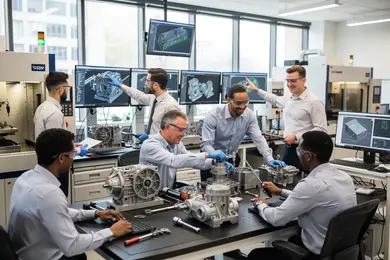
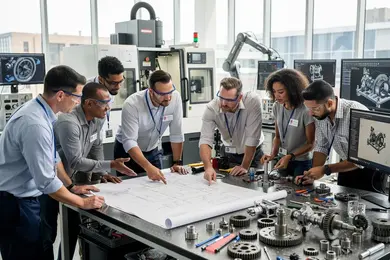
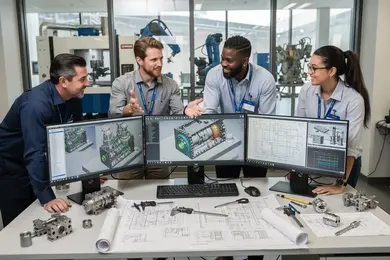
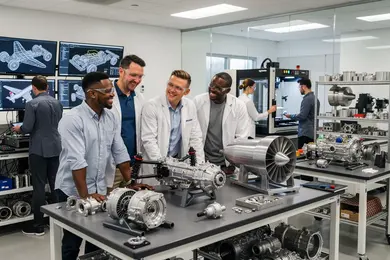
Online mechanical engineering degrees are bachelor's or master's programs that teach mechanics, thermodynamics, materials, fluids, manufacturing, controls, design, and engineering analysis through a primarily remote format. The phrase "with lab skills" matters because mechanical engineering is not only a math-and-design field; it also requires students to measure forces, temperatures, pressures, vibration, strain, flow, and material behavior, then use that evidence to improve a design.
At the bachelor's level, the most relevant credential is usually a Bachelor of Science in Mechanical Engineering or a Bachelor of Science in Engineering with a mechanical concentration. Some online programs instead award mechanical engineering technology degrees, which can be valuable for applied roles but may not satisfy the same licensing or graduate-school expectations as an engineering degree accredited by ABET's Engineering Accreditation Commission.
Students should expect several delivery models. Some programs are fully online for lectures but require in-person labs. Others ship lab kits, use remotely controlled equipment, or require short campus visits. A few allow students to complete approved labs near where they live. The right format depends on your schedule, location, equipment access, and whether you need a licensure-friendly engineering pathway.
This comparison shows how common online mechanical engineering formats differ and what each means for lab preparation.
| Program format | How labs are handled | Best fit | Main trade-off |
| Mostly online with campus residencies | Students complete lectures online and travel for concentrated lab sessions. | Students who want structured, instructor-supervised testing experience. | Travel time and lodging can raise the total cost. |
| Online with home lab kits | Students receive sensors, small test rigs, electronics, or measurement tools for guided experiments. | Working adults who need schedule flexibility. | Experiments may be smaller in scale than campus labs. |
| Online with remote labs | Students control real or simulated equipment through online platforms. | Students focused on instrumentation, controls, and data acquisition. | Less direct practice setting up physical hardware. |
| Hybrid engineering technology | Students study applied design, manufacturing, and testing with practical lab components. | Students targeting technician, technologist, manufacturing, or applied engineering roles. | May not be equivalent to an ABET EAC mechanical engineering degree for PE licensure. |
If you are exploring adjacent STEM fields because you want applied science but not a full mechanical engineering path, compare the lab expectations in options such as a nutritional science degree online, where laboratory work is usually tied to chemistry, biology, and human health rather than mechanical systems.
Which online mechanical engineering programs are ABET accredited?
ABET accreditation is the most important quality marker for online mechanical engineering bachelor's programs. ABET accredits specific programs, not entire universities, and the relevant accreditor for a traditional mechanical engineering bachelor's degree is usually the Engineering Accreditation Commission. Engineering technology programs may be accredited by ABET's Engineering Technology Accreditation Commission, which is useful but not always treated the same by licensing boards or graduate engineering programs.
Online ABET-accredited mechanical engineering options are limited compared with campus programs. Availability, delivery format, and accreditation status can change, so students should verify each program directly in the ABET public database and with the school before applying.
| School or program type | Credential to verify | Accreditation point to check | Why it matters |
| University of North Dakota | Bachelor's in Mechanical Engineering delivered online with required hands-on components | Confirm ABET Engineering Accreditation Commission status for the mechanical engineering program. | Often considered by students who need an online path that still supports traditional engineering outcomes. |
| Arizona State University Online | BSE in Mechanical Engineering | Confirm whether the online degree shares the same ABET-accredited program status and curriculum requirements listed by the institution and ABET. | Useful for students seeking a large public university online option with modern design and simulation coursework. |
| Mechanical engineering technology programs | BS in Mechanical Engineering Technology or similar | Check whether accreditation is ETAC rather than EAC. | Can be a strong applied option, but it may not satisfy the same PE or graduate engineering requirements. |
Before enrolling, use a simple verification process rather than relying on marketing language. First, search the ABET database by institution and program name. Second, confirm the exact degree title, campus, and delivery mode with the department. Third, ask whether graduates meet the educational requirement for the FE exam and PE licensure in your state. Fourth, save written documentation from the admissions or engineering department in case requirements change.
A common mistake is assuming that "accredited university" means "ABET-accredited mechanical engineering program." Regional or institutional accreditation is important for federal aid and transferability, but it is not the same as ABET program accreditation.
How do online and campus mechanical engineering degrees compare?
Online and campus mechanical engineering degrees can cover the same core curriculum, but the student experience differs most in lab access, peer collaboration, scheduling, and access to physical equipment. A strong online program can work well for disciplined students who already have work experience, live far from campus, or need to keep a job while studying. A campus program may be better for students who want daily access to machine shops, design studios, research labs, and student engineering teams.
Cost should be compared beyond tuition. College Board's 2024 Trends in College Pricing data showed average published tuition and fees of $11,610 for in-state public four-year students and $30,780 for out-of-state public four-year students. For online learners, that difference can matter if a school charges nonresident tuition, requires campus travel, or adds lab, software, and proctoring fees.
The table below summarizes the decision points that most often separate online and campus mechanical engineering programs.
| Factor | Online mechanical engineering degree | Campus mechanical engineering degree | Best decision rule |
| Lab access | May use kits, remote labs, local labs, or short residencies. | Usually offers direct access to full teaching labs and shops. | Choose online only if the lab model clearly builds measurement and testing skills. |
| Schedule | More flexible for working adults, military students, and caregivers. | More structured and usually tied to daytime class schedules. | Choose the format you can complete consistently, not the one that only looks convenient. |
| Collaboration | Team projects happen through video, shared CAD files, and asynchronous tools. | Teamwork is easier in person, especially for prototypes and competitions. | Ask how online students complete design teams and capstone work. |
| Career networking | May rely more on virtual advising, local internships, and employer connections. | Often includes on-campus recruiting, labs, clubs, and faculty research access. | Compare internship support, not just course delivery. |
| Total cost | Can reduce relocation and commuting costs but may include travel or equipment fees. | May include housing, transportation, and campus fees. | Calculate total cost to degree after transfer credits and required residencies. |
Online mechanical engineering makes the most sense when you need flexibility, can manage difficult quantitative coursework independently, and have a clear plan for labs, internships, and projects. Campus study makes more sense if you learn best through frequent face-to-face support, want daily shop access, or plan to pursue research-heavy graduate study immediately after the bachelor's degree.
If your interest is environmental systems, sustainability, water, or infrastructure rather than machines, energy systems, and product design, you may want to compare mechanical engineering with the cheapest online environmental science degree options before committing to a lab-heavy engineering curriculum.
What lab and measurement courses do mechanical engineering programs include?
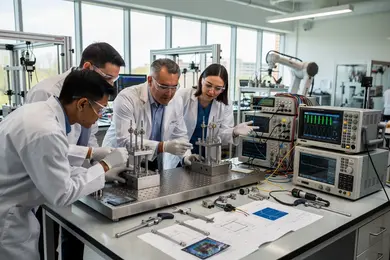
Mechanical engineering lab work teaches students how to turn theory into evidence. In a good program, students do not simply watch demonstrations; they measure physical behavior, evaluate error, compare results with models, and communicate findings in professional engineering reports.
Most online mechanical engineering programs with strong lab preparation include some combination of the following areas. These courses matter because they connect directly to engineering jobs in product testing, manufacturing, quality, robotics, aerospace, automotive, HVAC, energy, and medical devices.
| Lab or measurement area | What students typically measure | Skills developed | Career relevance |
| Instrumentation and measurements | Voltage, strain, force, pressure, temperature, displacement, and uncertainty | Sensor selection, calibration, data acquisition, signal interpretation, and error analysis | Testing, quality, product validation, and R&D roles |
| Materials laboratory | Stress, strain, hardness, fatigue, fracture behavior, and material properties | Tensile testing, materials selection, standards-based reporting, and failure analysis | Manufacturing, aerospace, automotive, and structural components |
| Thermodynamics and heat transfer lab | Temperature gradients, heat flux, efficiency, and energy balances | Thermal measurement, system modeling, and performance evaluation | HVAC, power systems, electronics cooling, and energy systems |
| Fluid mechanics lab | Flow rate, pressure drop, velocity, pump performance, and losses | Flow measurement, pump analysis, and comparison of experiment with theory | Aerospace, energy, water systems, process industries, and HVAC |
| Controls and mechatronics | Position, speed, vibration, response time, and feedback behavior | Control logic, sensors, actuators, microcontrollers, and dynamic system testing | Automation, robotics, manufacturing, and smart products |
| Manufacturing and metrology | Dimensions, tolerances, surface finish, and process variation | Measurement tools, GD&T awareness, quality control, and process improvement | Production engineering, quality engineering, and supplier management |
Current employer expectations increasingly blend physical measurement with digital tools. Students should look for programs that teach CAD, finite element analysis, computational fluid dynamics, MATLAB or Python, data acquisition software, and technical communication. AI-assisted design and simulation can speed up concept exploration, but engineers still need measurement skills to confirm whether a model reflects reality.
When comparing programs, ask admissions or the department these lab-specific questions before applying:
- Which courses require physical experiments, and which rely mainly on simulation?
- Are lab kits included in tuition, billed separately, or purchased by students?
- Do online students travel to campus for labs, and how often?
- What measurement equipment, sensors, and software will students actually use?
- How are safety, supervision, and technical troubleshooting handled for remote labs?
- Does the capstone project require prototype testing, data collection, and design validation?
What admissions requirements do online mechanical engineering programs have?
Admissions requirements vary by school and level, but online mechanical engineering programs are usually more selective than general online bachelor's programs because the curriculum depends heavily on calculus, physics, and engineering fundamentals. Transfer students may also need specific prerequisite sequences before entering upper-division engineering courses.
Most bachelor's programs ask for evidence that you are ready for a quantitative engineering curriculum. Review these requirements early because missing one math or science prerequisite can delay graduation by a full term.
- High school diploma, GED, or prior college credit with official transcripts.
- College algebra, trigonometry, precalculus, or calculus readiness, depending on entry level..
- High school or college physics and chemistry preparation.
- Minimum GPA requirements that may be higher for engineering admission than general university admission.
- Placement tests or transfer evaluations for math, writing, and science courses.
- Computer and software access that can support CAD, simulation, coding, and proctored exams.
- For transfer students, completed calculus, physics, chemistry, statics, dynamics, or introductory engineering courses may be required before major admission.
Master's programs usually require a bachelor's degree in mechanical engineering or a closely related engineering field. Applicants from physics, mathematics, engineering technology, or another discipline may be admitted conditionally, but they often need bridge coursework in thermodynamics, fluid mechanics, mechanics of materials, or controls.
One red flag is a program that makes online admission sound easy but does not clearly explain math placement, lab requirements, ABET status, or transfer-credit limits. Another is a program that accepts many credits but does not say whether those credits apply to the engineering major. A generous transfer policy is only useful if it shortens the actual path to graduation.
If you are comparing mechanical engineering with a less lab-intensive online graduate path that emphasizes information systems, archives, research support, and digital organization, an affordable library science degree online may be a better fit than engineering for students who do not want advanced calculus, physics, and design labs.
How long does an online mechanical engineering degree take?
A bachelor's degree in mechanical engineering usually requires about four years of full-time study for first-time students. Online students often take longer if they study part time, work full time, or enter without the full calculus and physics sequence. Transfer students with an associate degree in engineering or strong prior STEM coursework may finish faster, but only if the credits apply directly to the engineering degree plan.
Timelines depend less on the word "online" and more on course sequencing. Mechanical engineering programs are prerequisite-heavy, meaning calculus leads to physics, physics leads to statics and dynamics, and those courses lead to fluids, heat transfer, machine design, controls, and capstone.
The table below shows common timelines and the factors that can speed up or slow down completion.
| Student profile | Typical timeline | What can shorten it | What can delay it |
| First-time full-time student | About four years | Starting calculus-ready and following the engineering course map closely | Repeating calculus, physics, or mechanics courses |
| Part-time working adult | Often five to six years or more | Taking summer courses and using employer tuition support | Limited course availability and heavy work schedules |
| Transfer student from engineering associate program | Often two to three years after transfer | Articulation agreements and completed calculus-based physics | Credits that transfer only as electives |
| Master's student with engineering background | One and a half to three years | Full-time enrollment and a non-thesis option | Bridge courses, thesis work, or employer-funded part-time study |
To avoid timeline surprises, request a degree audit before enrolling. Ask the school to map your previous credits against the mechanical engineering plan, identify courses offered only once per year, and clarify when labs or residencies occur. This is especially important for online students who cannot easily rearrange work or travel plans at the last minute.
What can you do with an online mechanical engineering degree?
An online mechanical engineering degree can prepare students for many of the same roles as a campus degree when the program is rigorous, accredited, and includes meaningful design and lab work. Employers generally care about the degree title, accreditation, technical skills, projects, internships, and interview performance more than whether lectures were delivered online.
Mechanical engineering graduates work across industries that design, build, test, maintain, and improve physical systems. The strongest candidates can connect calculations to real constraints such as cost, manufacturability, safety, reliability, and measurement data.
| Career path | Typical responsibilities | Helpful lab or measurement skills | Industries hiring |
| Mechanical design engineer | Design parts, assemblies, mechanisms, and products using CAD and engineering analysis. | Tolerance analysis, materials testing, prototype validation, and failure analysis | Manufacturing, automotive, aerospace, consumer products, and industrial equipment |
| Test or validation engineer | Plan tests, collect data, compare performance with requirements, and document results. | Instrumentation, data acquisition, calibration, uncertainty analysis, and technical reporting | Automotive, aerospace, electronics, medical devices, and energy |
| Manufacturing engineer | Improve production processes, tooling, quality, throughput, and cost. | Metrology, process measurement, statistical quality control, and manufacturing methods | Advanced manufacturing, industrial machinery, semiconductors, and consumer goods |
| HVAC or energy systems engineer | Analyze heating, cooling, ventilation, energy efficiency, and thermal systems. | Temperature, pressure, flow, heat transfer, and performance testing | Building systems, utilities, consulting, and facilities engineering |
| Controls, robotics, or mechatronics engineer | Work with sensors, actuators, feedback systems, automation, and electromechanical products. | Controls labs, coding, signal measurement, motion testing, and sensor integration | Robotics, automation, manufacturing, logistics, and smart devices |
Students who want to stand out should build a portfolio, not just complete courses. Include CAD assemblies, lab reports, data visualizations, capstone documentation, test plans, and photos or videos of prototypes when allowed. For online students, this portfolio helps demonstrate hands-on ability during interviews.
Mechanical engineering is also becoming more data-intensive. If you are drawn to simulation, predictive maintenance, digital twins, robotics data, or AI-supported product design, compare mechanical engineering with analytics-focused options such as the best data science master's programs before deciding whether your long-term path should center on physical systems, data systems, or both.
What salary can mechanical engineering graduates expect?
The U.S. Bureau of Labor Statistics reported a median annual wage of $99,510 for mechanical engineers in May 2024. This figure is a national median, not a starting salary or a guaranteed outcome, so actual pay depends on location, industry, degree level, experience, security clearance, licensure, internships, and the technical depth of a candidate's portfolio.
Salary expectations should be evaluated by role and industry rather than by degree format alone. An online graduate from an ABET-accredited program with strong internships and test experience may compete well for engineering roles, while a graduate with weak projects or no applied experience may have a harder time even if the degree name is strong.
The table below shows how mechanical engineering career directions can differ in pay potential without implying that any path guarantees a specific salary.
| Career direction | Pay factors that often matter | Why lab skills can affect competitiveness |
| Entry-level design engineering | Internships, CAD skills, location, industry, and product complexity | Employers value candidates who can test whether a design works, not just model it. |
| Test and validation | Instrumentation experience, regulated-industry exposure, and technical reporting | Measurement, calibration, and uncertainty analysis are central to the job. |
| Manufacturing and quality | Process improvement experience, metrology, lean methods, and production scale | Measurement skills support defect reduction and process control. |
| Energy, HVAC, and thermal systems | Licensure path, regional demand, building codes, and system design experience | Flow, pressure, temperature, and efficiency testing connect directly to performance. |
| Advanced simulation or robotics | Programming, controls, data analysis, graduate study, and domain expertise | Physical testing helps validate models, algorithms, and automated systems. |
For ROI, compare net cost against likely entry paths, not only the national median wage. A lower-cost public online program with strong transfer credit may be the better investment for one student, while a more expensive program with excellent lab access, employer partnerships, and internship placement may be worth it for another.
What is the job outlook for mechanical engineers?
The BLS projected 11% employment growth for mechanical engineers from 2023 to 2033, which is faster than the average for all occupations. For students, this suggests that mechanical engineering remains a broad and durable field, but opportunities will not be identical across industries or regions.
Several trends are shaping demand. Manufacturers are investing in automation and robotics, energy systems are becoming more efficient and sensor-rich, vehicles are becoming more electrified, and product teams are using simulation and digital twins earlier in the design process. These trends favor mechanical engineers who can combine fundamentals with measurement, controls, coding, and data interpretation.
To improve your job outlook while studying online, focus on steps that make your skills visible to employers:
- Complete at least one internship, co-op, or local engineering project before graduation.
- Build a portfolio that includes CAD, calculations, test data, lab reports, and capstone results.
- Learn tools commonly requested in job postings, such as SolidWorks, AutoCAD, MATLAB, Python, ANSYS, LabVIEW, or similar software.
- Join professional organizations, online engineering communities, and local industry events to offset the networking gap that online students may face.
- Target industries that match your lab strengths, such as thermal testing, manufacturing quality, automation, or product validation.
One common mistake is treating the degree as the entire career strategy. Mechanical engineering hiring is often project-based: employers want evidence that you can solve messy design problems, work with constraints, communicate results, and learn unfamiliar tools quickly.
Do mechanical engineers need licensure or certification?
Many mechanical engineers do not need a Professional Engineer license for every job, especially in product design, manufacturing, robotics, automotive, or private-sector R&D. However, licensure can be important or required for engineers who offer services to the public, sign and seal engineering documents, work in consulting, or design systems where state law requires a licensed engineer.
The PE path varies by state, but it commonly includes an ABET-accredited engineering degree, passing the Fundamentals of Engineering exam, gaining qualifying supervised engineering experience, and passing the PE Mechanical exam. Because state boards set their own rules, online students should confirm requirements before enrolling, especially if considering an engineering technology degree or a non-ABET program.
Certifications can also help in specialized roles, although they do not replace a degree or license when those are required. The best option depends on your career direction.
| Credential | Who should consider it | How it can help | Important caution |
| FE exam and Engineer-in-Training status | Students near graduation or recent graduates considering PE licensure | Starts the formal licensure pathway and signals engineering fundamentals | Eligibility rules vary by state and education background. |
| PE Mechanical license | Engineers in consulting, HVAC, energy systems, public-facing design, or regulated work | May allow engineers to sign and seal work within legal scope | Not required for every mechanical engineering job. |
| Certified Manufacturing Engineer or related manufacturing credentials | Students targeting production, quality, process improvement, or operations roles | Can show applied manufacturing knowledge | Experience requirements may apply. |
| Software or tool-specific certificates | Students needing proof of CAD, simulation, programming, or controls skills | Can strengthen a portfolio and resume for technical screening | Tool certificates are supplements, not substitutes for engineering competence. |
Before choosing a program, ask whether graduates are eligible for the FE exam in your state, whether the degree is ABET EAC accredited, and whether engineering technology graduates follow a different licensure route. This is one of the most important checks for students who may want consulting, public infrastructure, HVAC design approval, or leadership roles later.
Other Things You Should Know About Mechanical Engineering
Yes, internships are possible for online mechanical engineering students in 2027. Many programs collaborate with industry partners to offer internship opportunities, providing practical experience to complement online coursework. Students should research options and network proactively to secure suitable positions that match their field of interest.
Most students need a reliable computer that can run CAD, simulation, coding, video meetings, and proctored exams. Requirements vary by school, so ask for the program's current hardware and software list before buying equipment.
Sometimes, but not always smoothly. Engineering technology credits may transfer as electives rather than core engineering courses, so students should request a course-by-course transfer evaluation before assuming the switch will save time.
References
- How Long to Become a Mechanical Engineer? | University of Bridgeport https://www.bridgeport.edu/news/time-to-become-a-mechanical-engineer/
- Licensure | NCEES https://ncees.org/licensure/
- Mechanical engineering careers guide https://www.imeche.org/careers-education/careers-information/mechanical-engineering-careers-guide/how-much-do-engineers-earn
- 2022 Job Outlook For Mechanical Engineering | Progressive https://www.progressiverecruitment.com/en-us/knowledge-hub/industry-insights/mechanical-engineering-job-outlook/
- Online ABET-Accredited Engineering Degree Guide - Educating Engineers https://educatingengineers.com/online-engineering-schools/abet-accredited-degree/
- Online Programs Search https://amspub.abet.org/aps/online-search
- Mechanical Engineering License https://www.harborcompliance.com/mechanical-engineering
- Online Mechanical Engineering Degrees 2026: Costs & Salary Compared https://www.fernstudi.net/en/onlinestudies/technology/mechanical-engineering
- What is a PE? https://www.nspe.org/about/about-professional-engineering/what-pe
- Do I Need a Professional Engineer License? | Career Guide https://peaktechnical.com/do-i-need-a-professional-engineer-license/