2027 Online Mechanical Engineering Degrees for Students Who Want Hands-On Technical Training

Co-Founder and Chief Data Scientist
Choosing an online mechanical engineering degree is harder than choosing a typical online major because labs, design projects, and licensure rules matter. The U. S. Bureau of Labor Statistics reported a May 2024 median annual wage of $102,320 for mechanical engineers, making program quality and accreditation especially important. This guide is for students who want flexible study without giving up technical training. You will learn how online labs work, when ABET accreditation matters, what programs cost, how licensure works, and how to compare schools before enrolling.
Key Things You Should Know
- Online mechanical engineering degrees can include real hands-on training through lab kits, simulation software, remote instrumentation, short campus residencies, employer-based projects, and senior design courses, but the format varies widely by school.
- ABET accreditation is the key screening factor for students who may pursue Professional Engineer licensure; a non-ABET program may still teach engineering, but it can create licensing, transfer, and employer-recognition obstacles.
- Cost and time depend heavily on transfer credit, residency requirements, and course load; College Board's 2024-25 data shows average published tuition and fees of $11,610 for in-state public four-year students and $30,780 for out-of-state public four-year students.
What are online mechanical engineering degrees with hands-on training?
An online mechanical engineering degree is a bachelor's or master's program that teaches the design, analysis, testing, and improvement of machines, energy systems, materials, manufacturing processes, and mechanical devices through a distance-learning format. "Hands-on training" means the program includes applied work rather than only recorded lectures and exams.
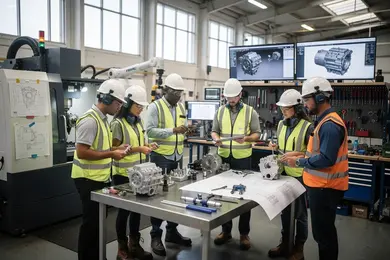
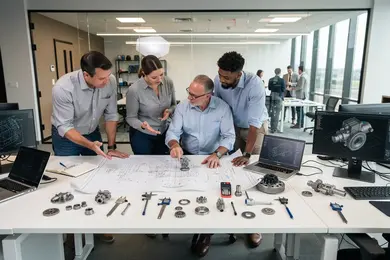
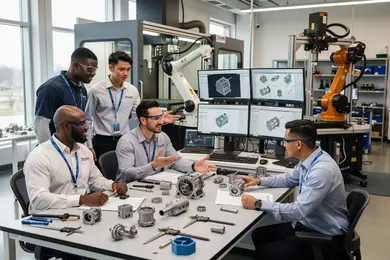
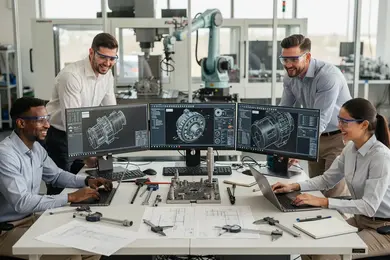
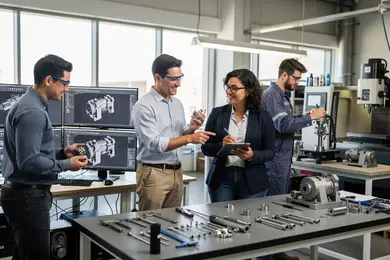
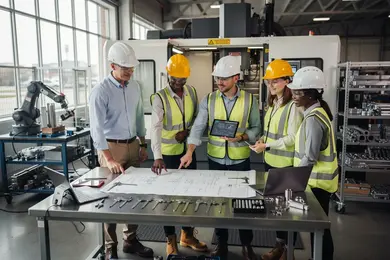
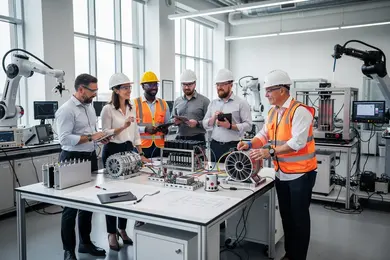
In mechanical engineering, hands-on learning is not optional background experience; it is how students learn to connect equations with real systems. A strong online program should explain exactly how students complete lab and design requirements before enrollment. Common delivery models include the following:
- At-home lab kits for circuits, measurement, materials testing, controls, or thermodynamics demonstrations
- Remote labs where students operate real equipment through an online interface
- Simulation tools for computer-aided design, finite element analysis, computational fluid dynamics, manufacturing, and heat transfer
- Short campus residencies that compress lab-intensive work into several days or weeks
- Local proctored labs, employer-based technical projects, or approved community college lab partnerships
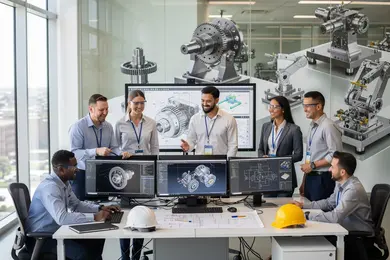
- Team-based capstone design projects that require prototyping, testing, documentation, and presentation
This degree is usually a strong fit for students who want engineering roles in design, manufacturing, energy, robotics, aerospace, automotive, HVAC, product development, or systems testing and who can handle advanced math and physics. It may not be the best fit for students who want a fully asynchronous, low-lab program or for those who primarily want software, business, or technician-level training.
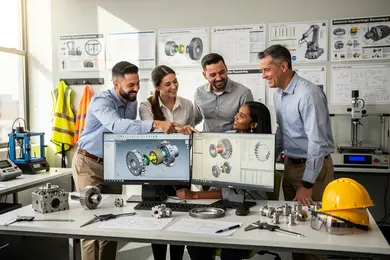
A current trend affecting mechanical engineering education is the rise of digital engineering. Employers increasingly expect graduates to understand CAD, simulation, sensors, automation, data analysis, and AI-assisted design workflows. That does not replace fundamentals like statics and thermodynamics, but it changes what "hands-on" means: students now need both physical experimentation and digital modeling experience.
Are online mechanical engineering programs ABET-accredited?
Some online mechanical engineering programs are ABET-accredited, but many are not. ABET accreditation is a program-level quality review used in engineering and engineering technology fields. It is not the same as institutional accreditation, and it is not automatically granted just because a university is well known.
ABET matters most for students who want the broadest path to engineering licensure, government engineering roles, graduate study, or employers that prefer accredited engineering programs. For a bachelor's degree in mechanical engineering, ABET accreditation is often the safest choice. For a master's degree, ABET is less common and usually less central because licensure boards typically focus on the undergraduate engineering degree, although rules vary.
Use this comparison to understand what each accreditation type does and does not tell you:
| Accreditation type | What it evaluates | Why it matters to students |
| Institutional accreditation | The overall college or university | Often required for federal financial aid, transfer credit review, and general degree recognition |
| ABET engineering accreditation | A specific engineering program, such as a bachelor's in mechanical engineering | Important for licensure pathways, employer recognition, and assurance that the curriculum meets engineering standards |
| ABET engineering technology accreditation | A specific engineering technology program | Can support applied technical careers, but may not be treated the same as an engineering degree by every licensing board or employer |
Before applying, verify accreditation directly rather than relying only on a marketing page. The safest process is to check the program name, degree level, campus or online modality if listed, and accreditation dates, then ask admissions whether the online version is covered under the same accredited program.
- Search the school's mechanical engineering program page for the exact degree title.
- Confirm that the institution is accredited by a recognized institutional accreditor.
- Use ABET's public program search to verify the exact program, not just the university name.
- Ask whether online students complete the same ABET-covered curriculum and outcomes as campus students.
- Request written clarification if the school offers both engineering and engineering technology degrees, because they can lead to different outcomes.
A common mistake is assuming that "online engineering" automatically means "less rigorous" or, on the other hand, assuming that every online program is equivalent because the diploma looks similar. Accreditation, lab access, faculty qualifications, and student outcomes are what make the difference.
Can you become a licensed mechanical engineer with an online degree?
Yes, it is possible to become a licensed mechanical engineer with an online degree, but the degree must fit your state's engineering licensure rules. In the U.S., the Professional Engineer path is regulated by state licensing boards, so requirements vary. The standard route usually includes an engineering degree from an acceptable program, passing the Fundamentals of Engineering exam, qualifying engineering experience, and later passing the Principles and Practice of Engineering exam.
The most important point is that an online format does not automatically block licensure. The bigger issue is whether the program is ABET-accredited, whether it is an engineering degree rather than an engineering technology degree, and whether your state board accepts it for the path you want.
Students who are considering licensure should follow these steps before enrolling:
- Identify the state where you may first seek licensure, even if you might move later.
- Review that state engineering board's education rules for mechanical engineering candidates.
- Confirm whether the board requires an ABET-accredited engineering degree or allows alternatives with added experience.
- Ask the university whether graduates have successfully pursued the FE exam and PE pathway.
- Keep syllabi, lab documentation, project records, and transcripts because boards may request detailed education evidence in nontraditional cases.
Licensure is most important for mechanical engineers who sign off on public-facing engineering work, consulting projects, building systems, infrastructure-related systems, or regulated designs. It may be less central in private manufacturing, product development, research, or software-heavy roles, although it can still improve credibility and advancement options.
A major red flag is a school that says licensure is "guaranteed" or gives one blanket answer for all states. A better program will state that licensure requirements vary and will direct students to the appropriate state board.
How do online and on-campus mechanical engineering programs differ?
Online and on-campus mechanical engineering programs can cover the same engineering fundamentals, but the student experience is different. The best choice depends on your schedule, need for lab access, location, budget, and comfort with remote collaboration.
The table below summarizes the practical differences that matter most when comparing formats. Use it to identify which trade-offs affect your learning style and career goals.
| Factor | Online mechanical engineering | On-campus mechanical engineering |
| Schedule flexibility | Often better for working adults, military students, parents, and students far from campus | Usually better for students who can attend classes and labs on a fixed weekly schedule |
| Lab experience | May use lab kits, remote labs, simulations, local labs, or short residencies | Usually offers regular access to campus labs, machine shops, and in-person testing spaces |
| Peer interaction | Depends on virtual teams, discussion boards, video meetings, and project management tools | Often easier for spontaneous study groups, clubs, design teams, and faculty interaction |
| Cost profile | May reduce relocation and commuting costs but can add technology, shipping, or residency expenses | May include housing, commuting, parking, and campus fees, but lab access is typically built into the experience |
| Career networking | Works best when the program has online career services, employer projects, and active alumni support | Often stronger for campus recruiting, student competitions, and local employer relationships |
Online programs are usually a better fit when you already have work obligations, live far from an engineering campus, or can complete labs through approved remote or local options. On-campus programs may be better if you want daily access to fabrication equipment, in-person design teams, undergraduate research, or a traditional college environment.
Cost comparisons should include more than tuition. Students comparing technical majors may also want to review the broader computer science cost landscape because engineering, computing, and data-focused degrees often differ in software, lab, and equipment expenses.
One common mistake is choosing an online program only because it is convenient. Convenience matters, but mechanical engineering is skill-intensive. If the program cannot clearly explain how you will complete labs, projects, and design reviews, keep looking.
What courses are in an online mechanical engineering curriculum?
An online mechanical engineering curriculum usually combines advanced math, physical science, engineering fundamentals, computer-based modeling, laboratory work, and design projects. At the bachelor's level, the goal is to build broad engineering competence. At the master's level, students usually specialize in areas such as thermal systems, robotics, materials, manufacturing, controls, aerospace, or computational mechanics.
Most bachelor's programs include a progression like this, although exact course titles vary by school:
- Calculus, differential equations, linear algebra, calculus-based physics, and general chemistry
- Statics, dynamics, mechanics of materials, fluid mechanics, thermodynamics, and heat transfer
- Materials science, manufacturing processes, machine design, vibrations, and mechanical measurements
- CAD, computer-aided engineering, numerical methods, programming, data analysis, and engineering computation
- Controls, mechatronics, robotics, energy systems, or electives aligned with the student's career interest
- Engineering ethics, technical communication, lab reporting, project management, and senior capstone design
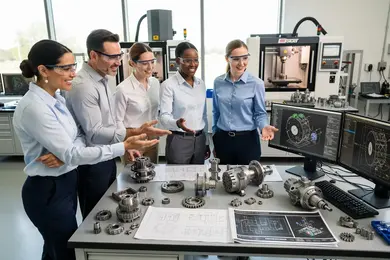
Hands-on training should appear throughout the curriculum, not only in a final project. A well-designed program asks students to measure, model, test, revise, and defend design choices. In online formats, that can happen through mailed equipment, remote instrumentation, simulation assignments, team prototypes, and short in-person lab sessions.
Students interested in AI, automation, or simulation-heavy roles should look for electives in programming, optimization, controls, machine learning applications, and data analytics. A structured data science learning path can also help mechanical engineering students identify complementary skills for digital engineering and predictive maintenance work.
When reviewing a curriculum, do not focus only on exciting electives. Make sure the program has enough core engineering depth. Employers and licensure boards are more likely to care that you completed rigorous fundamentals than that you took a narrow elective without the right foundation.
What admission requirements do online mechanical engineering programs have?
Admission requirements depend on the degree level. Bachelor's programs usually evaluate high school preparation, transfer credits, math readiness, and science coursework. Master's programs usually require a bachelor's degree in mechanical engineering or a closely related engineering field, although bridge courses may be available for students from adjacent STEM backgrounds.
For undergraduate applicants, schools commonly look for evidence that you can handle math-intensive engineering coursework. Typical requirements include the following:
- High school diploma, GED, or transfer standing from an accredited college
- College-preparatory math through precalculus or calculus, depending on placement
- Physics and chemistry preparation, especially for direct admission into engineering courses
- Official transcripts from all prior institutions
- Minimum GPA requirements, which may be higher for engineering than for general university admission
- Placement testing, prerequisite review, or completion of first-year engineering courses before full major admission
For master's applicants, requirements are usually more specialized. Programs may ask for an engineering bachelor's degree, prerequisite coursework in mechanics and thermodynamics, a resume, statement of purpose, recommendation letters, and sometimes GRE scores, although many universities have made GRE policies optional or program-specific.
Transfer students should be especially careful. Mechanical engineering curricula are sequenced, so missing one prerequisite can delay graduation even if many general education credits transfer. Before committing, ask for a written transfer evaluation that shows which credits apply to the engineering major, not just to overall elective credit.
Red flags include vague prerequisite language, no clear math placement process, promises of unusually fast completion without reviewing your transcript, and pressure to enroll before you receive a degree plan. A serious engineering program should be clear about difficulty, sequencing, and lab expectations.
How long does an online mechanical engineering degree take?
A bachelor's degree in mechanical engineering typically takes about four years of full-time study for first-time students. Transfer students may finish sooner, but engineering course sequencing can limit acceleration. A master's degree commonly takes one to two years full time or two to three years part time, depending on course load, thesis requirements, and whether prerequisites are needed.
Timeline planning is important because online flexibility does not always mean self-paced completion. Many engineering courses must be taken in order, and labs or design projects may be offered only in specific terms.
The table below shows common completion scenarios and what usually affects the timeline:
| Student situation | Typical timeline | Main factor that can speed up or slow down completion |
| First-time bachelor's student | About four years full time | Math placement and ability to follow the engineering course sequence |
| Community college transfer student | About two to three years after transfer | Whether calculus, physics, chemistry, and engineering prerequisites transfer cleanly |
| Part-time working bachelor's student | Often five or more years | Course load, lab availability, and term-by-term prerequisite chains |
| Master's student with engineering background | About one to two years full time | Choice of thesis, project, or coursework-only option |
| Master's student from adjacent STEM field | Often two or more years | Bridge courses in mechanics, thermodynamics, materials, or math |
Students who want to finish faster should not simply overload courses. Mechanical engineering classes often combine problem sets, labs, coding, design reviews, and exams. A practical acceleration plan is to complete math and physics prerequisites before starting upper-division courses, use summer terms strategically, and avoid skipping foundational subjects.
A common mistake is assuming that an online program can be completed at any pace. Many accredited engineering programs maintain fixed lab schedules, team project milestones, and prerequisite chains to protect academic quality.
How much do online mechanical engineering degrees cost?
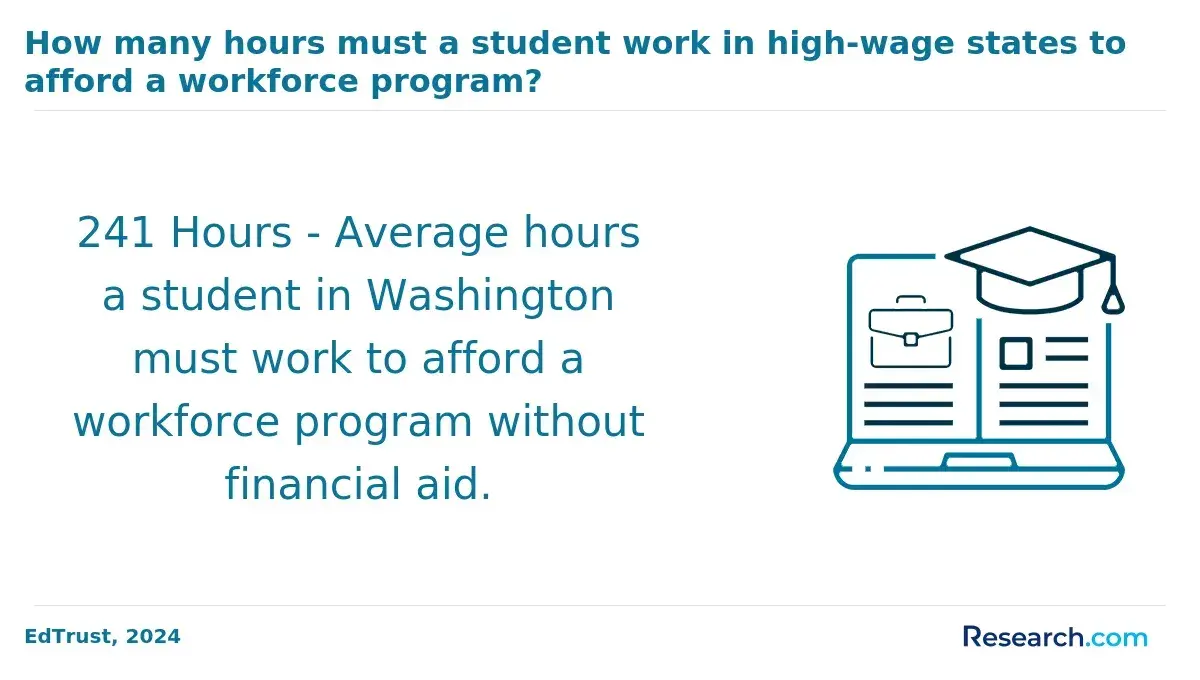
Online mechanical engineering degree costs vary by residency status, institution type, transfer credits, fees, software, lab materials, and required campus visits. Tuition is only one part of the total price. College Board's 2024-25 figures show average published tuition and fees of $11,610 for in-state public four-year students, $30,780 for out-of-state public four-year students, and $43,350 for private nonprofit four-year students. These are broad national averages, so your actual cost can differ substantially by school and aid package.
When comparing programs, build a total-cost estimate instead of looking only at the per-credit rate. Mechanical engineering students may face expenses that are less common in non-lab online degrees:
- Tuition charged per credit, term, or academic year
- Engineering program fees, distance-learning fees, and student service fees
- Lab kits, equipment shipping, safety materials, and replacement parts
- Software, computing hardware, graphing calculator, CAD tools, or cloud simulation access
- Travel, lodging, meals, and missed work time for required campus residencies
- Proctoring, transcript, graduation, and professional exam preparation costs
Students searching for the cheapest online engineering degree should still verify accreditation, lab quality, and transfer policies. A low tuition rate can become expensive if credits do not transfer, courses are not offered frequently, or the degree does not support the student's licensure or career goal.
Federal student loan costs also matter. For the 2024-25 award year, fixed interest rates were 6.53% for Direct Subsidized and Unsubsidized Loans for undergraduates and 8.08% for Direct Unsubsidized Loans for graduate students. That means borrowing more for a program with weak completion support or unclear outcomes can reduce long-term return on investment.
To control costs, ask schools for a full degree plan, not just a tuition quote. Then compare net price after grants and scholarships, the number of accepted transfer credits, residency travel costs, and whether software and lab equipment are included.
What jobs can you get with a mechanical engineering degree?
A mechanical engineering degree can lead to roles in design, testing, manufacturing, energy, aerospace, automotive, robotics, building systems, medical devices, and product development. The best job fit depends on your electives, internships, projects, software skills, and whether you pursue licensure.
The table below connects common job paths with the type of work students should expect. Use it to match a degree plan with the roles you are actually targeting.
| Job path | Typical responsibilities | Helpful preparation |
| Mechanical design engineer | Designs components, assemblies, tools, or mechanical systems and validates performance | CAD, machine design, materials, finite element analysis, prototyping |
| Manufacturing engineer | Improves production processes, tooling, quality, automation, and factory efficiency | Manufacturing processes, lean methods, robotics, controls, data analysis |
| Test engineer | Plans experiments, collects data, validates products, and investigates failures | Instrumentation, statistics, lab methods, programming, technical reporting |
| Thermal or energy engineer | Works on heat transfer, HVAC, engines, power systems, refrigeration, or energy efficiency | Thermodynamics, fluids, heat transfer, energy systems, simulation |
| Robotics or mechatronics engineer | Integrates mechanical systems with sensors, actuators, controls, and software | Controls, electronics, programming, dynamics, embedded systems |
| Quality or reliability engineer | Analyzes defects, improves product reliability, and supports compliance or safety testing | Statistics, failure analysis, manufacturing, materials, documentation |
Students who want to stand out should build a portfolio of projects, not just a transcript. Useful portfolio evidence can include CAD assemblies, simulation results, lab reports, design notebooks, test data, manufacturing plans, code repositories, and capstone documentation that explains constraints and trade-offs.
Mechanical engineering also overlaps with data science, especially in predictive maintenance, smart manufacturing, digital twins, robotics, energy analytics, and simulation automation. Students who later want graduate-level analytics training can compare best data science master's programs to see whether a data-focused degree would complement engineering experience.
Common career-planning mistakes include waiting until senior year to seek internships, choosing electives without a target industry, ignoring communication skills, and assuming the degree alone will secure a design role. Employers often look for evidence that candidates can solve messy real problems, work in teams, document decisions, and use industry tools.
What is the salary and job outlook for mechanical engineers?
The salary and job outlook for mechanical engineers are generally strong, but outcomes vary by industry, region, degree level, experience, licensure, and technical specialization. According to the U.S. Bureau of Labor Statistics, the median annual wage for mechanical engineers was $102,320 in May 2024. That figure is a midpoint, not a guarantee; entry-level salaries can be lower, while experienced engineers in high-demand industries or leadership roles may earn more.
The BLS projected employment for mechanical engineers to grow 11% from 2023 to 2033, which is faster than the average for all occupations. For students, this suggests continued demand across design, manufacturing, automation, energy, transportation, and technology-enabled engineering, but it does not remove the need for internships, strong projects, and relevant software skills.
Several market trends are shaping mechanical engineering careers. Automation is increasing demand for engineers who understand controls, robotics, sensors, and manufacturing systems. Energy efficiency and electrification are creating opportunities in HVAC, batteries, thermal management, and renewable systems. AI-assisted design and simulation tools are changing workflows, so students who combine engineering fundamentals with programming and data skills may be more competitive.
To evaluate return on investment, compare the total cost of the degree with your target role, local job market, and the program's career support. Ask schools for recent internship employers, graduate placement examples, FE exam support, capstone project partners, and whether online students receive the same career services as campus students.
Students should be cautious about salary claims that use only top-earner examples. A better way to assess value is to look at median labor-market data, program completion support, accreditation, debt level, and whether the curriculum aligns with the industries hiring in your region.
Other Things You Should Know About Mechanical Engineering
CAD, spreadsheet modeling, MATLAB or Python, simulation software, basic data analysis, and version control are valuable. Students targeting robotics, automation, or digital engineering should add controls, sensors, and programming depth.
The content is not necessarily harder online, but the format requires more self-discipline. Students must manage labs, team projects, software setup, and deadlines without the daily structure of campus attendance.
Yes, internships are crucial for online mechanical engineering students, even in 2027. They bridge the gap between theoretical knowledge and practical application, providing hands-on experience and networking opportunities that are essential for a successful career in the engineering field.
References
- How Long to Become a Mechanical Engineer? | University of Bridgeport https://www.bridgeport.edu/news/time-to-become-a-mechanical-engineer/
- Find Programs - ABET https://www.abet.org/accreditation/find-programs/
- Online mechanical engineering courses | edX https://www.edx.org/learn/mechanical-engineering
- Online Mechanical Engineering Degrees 2025 https://www.affordablecollegesonline.org/degrees/engineering-programs/mechanical-engineering/
- Online ABET-Accredited Engineering Degree Guide - Educating Engineers https://educatingengineers.com/online-engineering-schools/abet-accredited-degree/
- 2025 Best Online Mechanical Engineering Degrees https://www.onlineu.com/degrees/mechanical-engineering
- Online Mechanical Engineering Courses | WiredWhite https://wiredwhite.com/course-category/mechanical-engineering/
- What jobs can you do with a mechanical engineering degree? https://targetjobs.co.uk/careers-advice/engineering/what-jobs-can-you-do-mechanical-engineering-degree