
2027 Best Online Sports Psychology Degree Programs

Co-Founder and Chief Data Scientist
Choosing an online sports psychology degree is not just about finding a flexible program. It is about understanding what the credential can and cannot do for your career. Some programs prepare students for coaching, fitness, athlete wellness, or mental performance roles, while others are stepping stones toward graduate study, certification, research, or clinical licensure. That distinction matters because the path to becoming a licensed clinical sports psychologist usually requires doctoral training and state licensure.
This guide is for students, coaches, fitness professionals, psychology majors, and career changers who want to use psychology to improve athletic performance, support athlete well-being, or move into sport and performance consulting. You will learn how online sports psychology programs work, how much they cost, how long they take, what careers they may lead to, what accreditation means, and how to compare programs before enrolling.
Quick Answer: Are Online Sports Psychology Degree Programs Worth Considering?
Online sports psychology degree programs can be a strong option if you want flexible training in performance psychology, motivation, mental skills, athlete development, and the psychological side of sport. They are especially useful for students who need to study while working, coaching, training, or managing family responsibilities.
- A bachelor’s degree can support entry-level roles in coaching, recreation, fitness, athlete services, or graduate school preparation.
- A master’s degree may prepare students for applied sport and performance psychology roles, including mental performance consulting, depending on coursework, supervised experience, and certification goals.
- A doctoral degree, plus required supervised training and state licensure, is generally needed for clinical sports psychology practice.
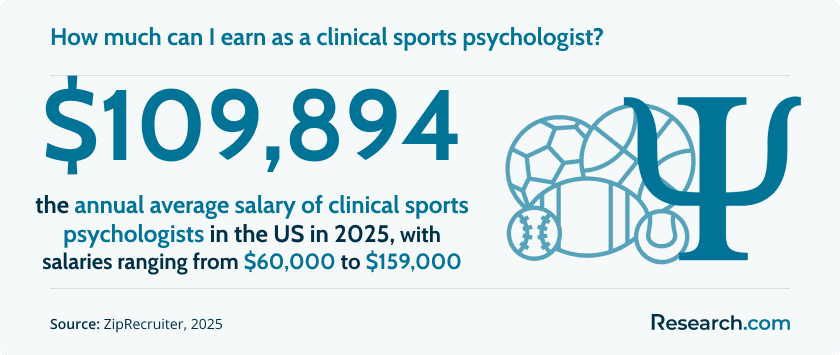
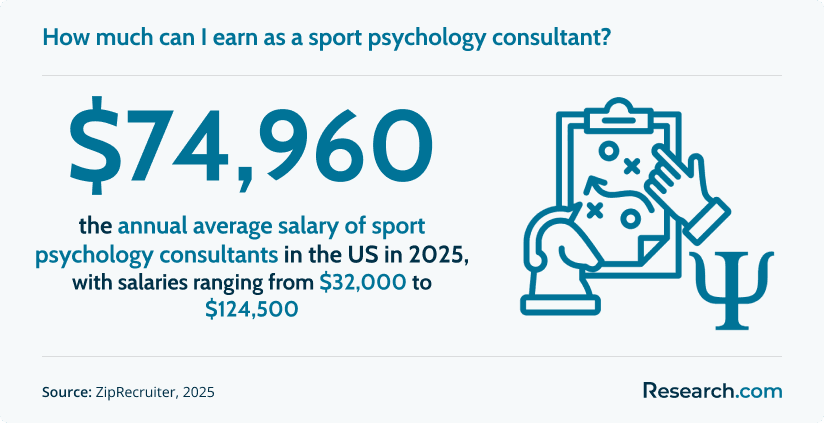
- Reported salaries vary widely: coaches and scouts average around $58,700 annually, sport psychology consultants average approximately $74,960 in 2025, and clinical sports psychologists average $109,894 in 2025.
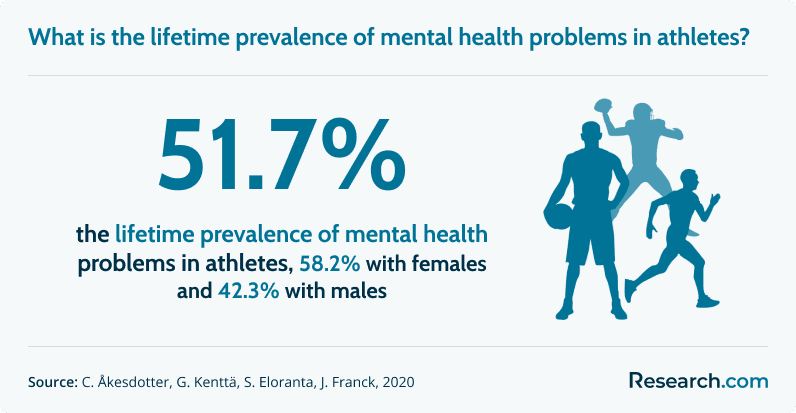
- Because 51.7% of athletes will experience mental health challenges in their lifetime, there is growing attention on athlete mental health, performance pressure, injury recovery, and resilience.
What are the main benefits of enrolling in an online sports psychology degree program?
- Flexible study format: Online delivery can make it easier to complete coursework while continuing to work, coach, train, or meet personal responsibilities.
- Career-relevant training: Students learn concepts used in performance enhancement, motivation, team dynamics, injury recovery, wellness, and athlete support.
- Multiple career directions: Graduates may pursue roles such as mental performance consultant, sports psychology consultant, coach, recreation worker, fitness and wellness coordinator, or athlete support specialist, depending on degree level and credentials.
- Graduate school preparation: A bachelor’s program can prepare students for master’s or doctoral study in sport psychology, counseling, psychology, kinesiology, or related fields.
- Potential salary growth with advanced credentials: Salaries tend to increase with graduate education, supervised experience, certification, licensure, and specialization.
What should I expect from the best online sports psychology degree programs?
The best online sports psychology degree programs teach students how psychological principles influence athletic performance, exercise behavior, team culture, motivation, recovery, and well-being. Programs usually combine general psychology courses with sport-specific topics, so students build both a broad behavioral science foundation and practical knowledge for athletic settings.
Common subject areas include sport and exercise psychology, performance enhancement, motivation strategies, counseling concepts, injury psychology, stress management, group dynamics, research methods, and ethics. Depending on the degree level, students may complete case studies, applied projects, research assignments, practicums, internships, or capstone projects.
Students should understand the difference between sport psychology education and clinical psychology licensure. A bachelor’s or master’s degree may help you work in coaching, performance consulting, wellness, athletic support, research assistance, or related roles. However, becoming a licensed clinical sports psychologist typically requires a doctorate, supervised clinical training, and state licensure.
Online programs can be rigorous, but they require self-direction. You may complete asynchronous lessons, attend live virtual classes, join discussion boards, work on group projects, and meet remotely with instructors or supervisors. The strongest programs clearly explain their fieldwork expectations, certification alignment, faculty qualifications, and career outcomes.
| Degree Level | Typical Purpose | Common Outcomes | Important Limitation |
| Bachelor’s degree | Build foundational knowledge in psychology, sport, exercise, and performance | Coaching support, recreation, fitness, wellness, athlete services, graduate school preparation | Does not qualify graduates for independent clinical practice |
| Master’s degree | Develop applied expertise in performance psychology, coaching, research, and athlete support | Sport psychology consultant, mental performance consultant, coaching leadership, wellness programming | May require supervised experience or certification for competitive consulting roles |
| Doctoral degree | Prepare for advanced research, teaching, clinical training, or licensure pathways | Clinical sports psychologist, researcher, professor, advanced consultant | Licensure rules vary by state and typically require doctoral-level clinical training |
Where can I work after completing an online sports psychology degree?
Your work setting will depend on your degree level, experience, certification, and whether you are licensed to provide clinical services. Graduates with bachelor’s degrees often begin in fitness centers, recreation departments, gyms, coaching programs, youth sports organizations, athletic departments, or wellness-focused roles. These positions may involve behavior support, motivation, programming, communication, or basic performance education rather than clinical treatment.
Master’s graduates may qualify for more specialized roles in sport and performance consulting, athlete development, team support, coaching education, wellness programming, and performance enhancement. Some professionals work with school teams, college athletic departments, sports clubs, private training organizations, military performance programs, or performing arts groups.
Doctoral graduates who complete clinical requirements and earn licensure may work in hospitals, clinics, university counseling centers, private practices, sports medicine programs, or integrated athlete care teams. They may support athletes with anxiety, depression, eating concerns, trauma, injury adjustment, performance pressure, or other mental health needs within their scope of practice.
| Work Setting | Possible Role | Best Fit For |
| College athletic department | Athlete wellness assistant, mental performance support, student-athlete services | Students interested in competitive sports environments and team-based support |
| Fitness or recreation organization | Wellness coordinator, coach, recreation worker, exercise support specialist | Bachelor’s graduates seeking entry-level roles connected to health and performance |
| Private consulting or performance practice | Sport psychology consultant or mental performance consultant | Master’s graduates with applied training, supervision, and strong client-development skills |
| Clinic, hospital, or counseling center | Clinical sports psychologist | Doctoral graduates who complete licensure requirements |
| Research center or university | Researcher, instructor, professor, graduate assistant | Students interested in evidence-based practice, teaching, and academic careers |
How much can I make with an online sports psychology degree or related credential?
Sports psychology earnings vary because graduates work in several different occupations. Education level, licensure, certification, experience, location, employer type, and client base all affect income. A bachelor’s degree typically leads to broader sports, fitness, recreation, or coaching roles, while graduate-level training can support more specialized consulting or clinical work.
For bachelor’s-level pathways, coaches and scouts average around $58,700 annually, exercise trainers and group fitness instructors earn about $51,270, and recreation workers earn around $36,270 per year. These roles may not have “sport psychologist” in the title, but they can use performance psychology skills in practical settings.
At the master’s level, sport psychology consultants average approximately $74,960 in 2025, with reported salaries ranging from around $32,000 to over $124,500. At the doctoral level, licensed clinical sports psychologists in the US can expect an average salary of $109,894, with salaries ranging from $60,000 to $159,000 or more, depending on experience, location, and practice setting.
| Career Area | Typical Education Path | Reported Salary Information |
| Coaches and scouts | Bachelor’s degree or relevant coaching experience | Average around $58,700 annually |
| Exercise trainers and group fitness instructors | Fitness training, certification, or related degree | About $51,270 annually |
| Recreation workers | High school diploma, associate degree, bachelor’s degree, or related experience depending on role | About $36,270 per year |
| Sport psychology consultant | Usually graduate training, applied experience, and possibly certification | Average salary of approximately $74,960 in 2025; range from $32,000 to $124,500 |
| Clinical sports psychologist | Doctoral degree, supervised clinical training, and licensure | Average salary of $109,894 in 2025; range from $60,000 to $159,000 |
- Best Online Sports Psychology Degree Programs for 2027
- How long does an online sports psychology degree take?
- Online vs. campus sports psychology programs: which format fits better?
- How much do online sports psychology degree programs cost?
- What financial aid options are available?
- What admissions requirements should applicants expect?
- What courses are included in sports psychology programs?
- What sports psychology specializations can students choose?
- What accreditation and industry support factors matter?
- How do online programs handle internships and hands-on training?
- Should you choose an accelerated online sports psychology degree?
- What trends are shaping online sports psychology education?
- What challenges should online students expect?
- What legal and ethical issues should students understand?
- How do you choose the best program?
- How do online programs support networking and mentorship?
- What careers are available after graduation?
- Are online PsyD programs APA accredited, and why does it matter?
- What is the job market for sports psychology graduates?
- How do programs prepare students to support young athletes?
- How do programs teach research and evidence-based practice?
Best Online Sports Psychology Degree Programs for 2027
How do we rank schools?
This ranking of the best online sports psychology degree programs for 2027 is based on research and analysis conducted by our analysts using Research.com’s detailed methodology.
To build the list, our team reviewed institutional and program data from several established sources. These include the IPEDS database from the National Center for Education Statistics, Peterson's database and its Distance Learning Licensed Data Set, and the College Scorecard database. We also used National Center for Education Statistics data for current institutional information.
Important note: This list includes bachelor’s and master’s programs. Bachelor’s degrees are typically best for students who want undergraduate preparation for coaching, performance, wellness, or graduate study. Master’s degrees are often better suited for students who already have a bachelor’s degree and want advanced sport and performance psychology training or a career change into applied work.
1. Faulkner University - BS in Sports Psychology
Faulkner University offers an online BS in Sports Psychology for students who want undergraduate preparation in athlete mental well-being, performance barriers, and the psychological demands of sport. The program focuses on foundational psychology and sport-related applications, helping students understand how mental and emotional factors influence performance across age groups, competition levels, and athletic settings. Students who want to become licensed sports psychologists should view this degree as an early academic step, since doctoral study is typically required for licensure.
- Program Length: 4 years
- Required Credits to Graduate: 121
- Cost per Credit: $325; $250 (military)
- Accreditation: Southern Association of Colleges and Schools Commission on Colleges (SACSCOC)
2. National University - BS in Sports Psychology
National University offers a BS in Sports Psychology that introduces students to psychology in sport, exercise, and performance settings. The online curriculum emphasizes performance improvement, motivation, psychological benefits of athletics, and the reasons people participate in physical activity. It can also serve as preparation for graduate-level study in psychology, sport psychology, coaching, counseling, or a related field.
- Program Length: 4 years
- Required Credits to Graduate: 180 quarter credits
- Estimated Tuition (total): $67,400
- Accreditation: Western Association of Schools and Colleges Senior College and University Commission (WSCUC)
3. California Baptist University - BS in Sport and Performance Psychology
California Baptist University provides a BS in Sport and Performance Psychology designed for students who want to apply psychological principles to human performance. The program emphasizes ethical practice, cognitive factors affecting performance, communication, strategic thinking, character development, and accountability. It is designed for students who have already completed general education requirements and may be completed in approximately 16 months with the right prerequisites.
- Program Length: 16 months (with the right prerequisites)
- Required Credits to Graduate: 49
- Cost per Credit: $520
- Accreditation: Western Association of Schools and Colleges Senior College and University Commission (WSCUC)
4. Kent State University - BS in Sport, Exercise, and Performance Psychology
Kent State University offers a BS in Sport, Exercise, and Performance Psychology focused on motivation, stress management, mental training, performance behavior, and social-psychological concepts. The program applies psychology to sports, exercise, wellness, and performance settings, including the performing arts. Graduates may use the degree for entry-level support roles or as preparation for graduate study and possible mental performance certification.
- Program Length: 4 years
- Required Credits to Graduate: 120
- Cost per Credit: $594.78 (in-state); $604.78 (out-of-state)
- Accreditation: Higher Learning Commission (HLC)
5. Arizona State University - BS in Counseling and Applied Psychological Science - Sport and Performance Counseling
Arizona State University offers an online BS in Counseling and Applied Psychological Science with a concentration in Sport and Performance Counseling. The program explores performance, well-being, stress management, motivation, counseling theories, team dynamics, injury and rehabilitation, and sport psychology foundations. It does not lead directly to licensure as a sports psychologist, but it can prepare students for graduate programs in sport psychology, kinesiology, counseling, and related fields, as well as roles that value resilience and performance preparation.
- Program Length: 4 years
- Required Credits to Graduate: 120
- Cost per Credit: $663 (in-state); $3,748 (out-of-state)
- Accreditation: Higher Learning Commission (HLC)
6. University of Western States - Master's in Sport and Performance Psychology
The University of Western States offers an online Master's in Sport and Performance Psychology for students from varied academic and professional backgrounds. The MS-SPP curriculum includes ten core courses, electives, and a capstone project. Students can choose optional concentrations in Applied Practice and Positive Coaching, and the program is designed to support career goals related to sport and performance psychology and preparation for the Certified Mental Performance Consultant (CMPC) exam.
- Program Length: 1.5 years (5-6 quarters)
- Concentrations: Applied Practice; Positive Coaching
- Required Credits to Graduate: 54
- Cost per Credit: $631
- Accreditation: Northwest Commission on Colleges and Universities (NWCCU)
7. Springfield College - Master's in Sport and Exercise Psychology
Springfield College offers an online MEd in Sport and Exercise Psychology built around the psychological, sociological, and physiological dimensions of sport and exercise behavior. Students study theory, measurement, applied sport and exercise psychology, and related fields. The program includes an applied internship experience and coursework intended to help students prepare for certification, making it a practical option for learners who want flexibility without losing applied training.
- Program Length: ~2.5 years
- Required Credits to Graduate: 36
- Cost per Credit: $745
- Accreditation: New England Commission of Higher Education (NECHE)
8. Grand Canyon University - BS in Psychology with an Emphasis in Performance and Sport Psychology
Grand Canyon University offers a BS in Psychology with an Emphasis in Performance and Sport Psychology in online and campus formats. The program combines general psychology with performance and sport psychology topics for students interested in athletes, performers, and performance artists. Coursework emphasizes evidence-based assessments and interventions, ethical decision-making, servant leadership, a Christian worldview, diverse populations, and a capstone research project focused on applied problems.
- Program Length: 4 years
- Concentration: Sport Psychology
- Required Credits to Graduate: 120
- Cost per Credit: $485
- Accreditation: Higher Learning Commission (HLC)
9. A.T. Still University - Master's in Kinesiology with a track in Exercise and Sport Psychology
A.T. Still University offers an online Master's in Kinesiology with an Exercise and Sport Psychology track for students pursuing leadership in kinesiology, exercise science, health, and fitness fields. The 42-credit hour program includes courses such as "Psychology, Physical Activity, and Health," "Applied Sport Psychology," "Exercise and Mental Health," and "Principles of Adherence and Motivation." The track focuses on behavior change, performance enhancement, exercise psychology, motivation, and the connection between movement and mental well-being.
- Program Length: 1.5 to 2 years
- Concentration: Exercise and Sports Psychology
- Required Credits to Graduate: 42
- Cost per Credit: $612
- Accreditation: Higher Learning Commission (HLC)
10. University of Denver - MA in Sport Coaching
The University of Denver offers an online MA in Sport Coaching for coaches across sports, competition levels, and performance environments, including strength and conditioning settings. The curriculum blends sport sciences with psychological, sociological, and ethical dimensions of coaching. Students complete interactive coursework designed around practical coaching problems, athlete development, team performance, and ethical performance enhancement.
- Program Length: ~2 to 3 years
- Required Credits to Graduate: 72
- Estimated Cost of Attendance: $43,924
- Accreditation: Higher Learning Commission (HLC)
How long does it take to complete an online sports psychology degree?
Program length depends mainly on degree level, transfer credits, enrollment pace, and whether the program uses standard or accelerated terms. A bachelor’s degree commonly takes about four years, though students with transfer credits or accelerated options may finish sooner. A master’s degree often takes around two years of full-time study, while part-time students may need longer.
Doctoral programs, including PhD and PsyD options, may take four to seven years depending on the structure, research requirements, clinical training, internship expectations, and whether the student enrolls full time or part time.
Online learning can shorten or extend the timeline depending on the student. Some programs offer asynchronous courses that allow students to move through weekly work more flexibly. Others use set deadlines, live sessions, cohort pacing, internships, or supervised experiences that determine the schedule. Students should ask whether courses are offered every term, whether prerequisites delay progress, and whether practicum or internship placements can be completed near their location.
The field is receiving more attention because athlete mental health is now a public concern. For example, 62% of US respondents agree that athlete mental health should be prioritized, which reinforces why well-trained professionals are needed across sport, exercise, and performance environments.
| Program Type | Typical Timeframe | Who It Fits Best |
| Bachelor’s degree | About four years | Students starting college or preparing for entry-level sport, fitness, coaching, or graduate school pathways |
| Accelerated bachelor’s completion program | 16 months with the right prerequisites | Transfer students who already completed general education or prerequisite coursework |
| Master’s degree | 1.5 years to ~2.5 years | Students seeking advanced applied training or career advancement |
| Doctoral degree | Four to seven years | Students pursuing clinical licensure, research, teaching, or advanced specialization |
How does an online sports psychology degree compare to an on-campus program?
Online and on-campus sports psychology programs can cover similar academic content, but the learning experience is different. The best choice depends on your schedule, learning style, need for in-person networking, access to local field placements, and career goals.
Online sports psychology programs from top online colleges are often best for students who need flexibility. Coursework may include recorded lectures, live virtual meetings, discussion boards, online group projects, digital libraries, and remote advising. This format can work well for students who are already coaching, competing, training clients, or working full time.
On-campus programs may offer more direct access to faculty, research labs, athletic departments, training facilities, internship sites, and peer interaction. Students who prefer face-to-face discussion, campus-based networking, or structured daily schedules may benefit from attending in person.
| Factor | Online Program | On-Campus Program |
| Schedule flexibility | Usually stronger, especially with asynchronous courses | More fixed class times and campus attendance requirements |
| Networking | Requires intentional participation in virtual events, faculty office hours, and professional associations | Often easier through in-person classes, campus events, labs, and athletics departments |
| Hands-on learning | May use local internships, virtual simulations, capstone projects, or hybrid requirements | May provide easier access to campus-based labs, clinics, teams, and practicum sites |
| Best for | Working adults, coaches, remote learners, and students needing flexibility | Students who want campus immersion and frequent in-person collaboration |
Both formats can be valuable if the institution is properly accredited and the curriculum matches your goals. Before choosing, ask how the program handles fieldwork, whether online students receive the same advising as campus students, and whether the degree title differs by format.
What is the average cost of an online sports psychology degree program?
Online sports psychology degree costs vary by school, residency status, credit requirements, transfer policies, and fees. In the programs reviewed, the cost per credit hour ranges between $485 and $745, with in-state students typically paying around $616 per credit and out-of-state students paying the same rate. Total tuition can range from $25,704 to $58,200, with in-state students averaging $37,744 and out-of-state students averaging around $43,924.
These costs may apply to bachelor’s programs in sports psychology or related options, such as an online kinesiology degree with a sport psychology focus. Students should compare total program price, not just per-credit tuition, because fees, transfer credits, textbooks, technology costs, internship travel, and certification preparation can change the real cost.
How should you think about ROI?
Return on investment depends on your intended career path. Bachelor’s graduates may enter roles such as coaches and scouts, with salaries around $58,700. Graduate education, certification, supervision, and experience may open opportunities in consulting, performance, and clinical pathways. A licensed clinical sports psychologist salary can reach up to $159,000 in 2025, but that path usually requires doctoral education and licensure, not just an undergraduate degree.
| Cost Question | Why It Matters |
| How many credits will I actually need after transfer evaluation? | Transfer credits can significantly change total tuition. |
| Are online students charged separate technology or distance learning fees? | Fees can make a lower tuition rate less affordable than it appears. |
| Does the program include internship or practicum costs? | Travel, background checks, supervision, and placement requirements may add expenses. |
| Will this degree support my next credential? | ROI is stronger when the program aligns with graduate school, certification, or licensure plans. |
What financial aid options are available for online sports psychology students?
Students in accredited online sports psychology programs may be able to use several forms of financial aid. The best approach is to apply early, compare award letters carefully, and ask each school which aid options apply to online learners.
- Federal financial aid: Completing the FAFSA may make students eligible for federal grants, loans, and work-study options.
- State grants and scholarships: Some states offer aid to residents who attend eligible in-state schools.
- Institutional scholarships: Colleges may offer merit-based, need-based, transfer, military, or program-specific scholarships.
- Private scholarships: Nonprofits, professional organizations, community groups, and businesses may fund students studying psychology, sport, health, coaching, or wellness.
- Employer tuition assistance: Coaches, trainers, recreation workers, and athletic staff should ask employers about reimbursement or tuition benefits.
- Veteran benefits: Veterans and qualifying dependents may be able to use GI Bill benefits or other military education support.
Do not assume the lowest tuition is automatically the cheapest option. A program with stronger transfer credit acceptance, scholarships, or employer reimbursement may cost less overall than a school with a lower sticker price but limited aid.
What are the prerequisites for enrolling in an online sports psychology degree program?
Admissions requirements depend on whether you apply to a bachelor’s, master’s, or doctoral program. Students should review prerequisites carefully because sports psychology may be offered as a major, concentration, track, or specialization within psychology, kinesiology, counseling, coaching, or exercise science.
- Bachelor’s degree programs: Applicants usually need a high school diploma or equivalent. Some degree-completion programs may expect prior general education coursework or transfer credits. Introductory psychology, basic statistics, biology, health science, or exercise science courses can be helpful.
- Master’s degree programs: Applicants typically need a bachelor’s degree in psychology or a related field. Some programs may prefer coursework in research methods, statistics, exercise physiology, counseling, kinesiology, or mental health. Coaching, athletic, fitness, counseling, or wellness experience may strengthen an application.
- Doctoral programs: PhD or PsyD programs may require a master’s degree in psychology, sports psychology, counseling, or a closely related field. Applicants often need strong research preparation, professional experience, clear specialization goals, and evidence that they understand clinical, applied, or academic pathways. Clinical licensure programs include practicum and internship requirements.
Students exploring a career in sports psychology often begin with undergraduate study in psychology, kinesiology, exercise science, or counseling-related fields before moving into more specialized graduate training.
In 2025, licensed clinical sports psychologists with doctorate degrees earned around $109,894.
What courses are typically included in an online sports psychology degree program?
Sports psychology programs usually combine psychology fundamentals, sport science concepts, research training, ethics, and applied performance work. Course titles vary by school, but students commonly encounter the following subjects:
- Introduction to Sports Psychology: Covers core theories, mental skills training, performance improvement, athlete well-being, and the relationship between psychology and sport.
- Psychology of Injury and Rehabilitation: Examines motivation, emotional response, coping strategies, identity disruption, and return-to-play concerns after athletic injury.
- Motivational Techniques in Sport: Teaches goal setting, self-talk, reinforcement, imagery, and other methods used to improve persistence and performance.
- Performance Enhancement Techniques: Focuses on concentration, imagery, arousal regulation, mental toughness, routines, and preparation for pressure situations.
- Group Dynamics and Team Cohesion: Studies communication, leadership, conflict, trust, team culture, and interpersonal factors affecting performance.
- Sport Counseling: Introduces counseling skills for athletes facing stress, anxiety, identity concerns, performance pressure, and life challenges outside competition.
Some students study sport psychology through broader programs, including online exercise science degree programs. This can be useful for students who want to connect mental performance with strength, conditioning, health behavior, rehabilitation, and physical activity.
The need for trained support is significant: 51.7% of athletes will experience mental health challenges in their lifetime, with the prevalence reported at 58.2% in females and 42.3% in males. Programs that address both performance and well-being can prepare graduates to recognize when athletes need skills coaching, referral, or clinical care.
What types of specializations are available in online sports psychology degree programs?
Specializations help students connect coursework to a specific career direction. Not every school offers every option, and some programs use concentration names that differ from the categories below.
- Clinical Sports Psychology: Focuses on mental health assessment, treatment, therapy, and clinical support for athletes. This path generally requires doctoral education and licensure for independent practice.
- Educational Sports Psychology: Emphasizes teaching mental skills such as confidence building, goal setting, focus, stress management, and preparation routines.
- Performance Enhancement: Prepares students to use imagery, attention control, relaxation, self-talk, and other techniques to help athletes and performers improve under pressure.
- Sport and Exercise Psychology for Youth: Centers on developmental needs, communication, confidence, stress, identity, motivation, and healthy sport participation for children and adolescents.
- Rehabilitation Psychology: Addresses the emotional and motivational challenges athletes face during injury recovery and return to competition.
- Research and Academic Sports Psychology: Prepares students for research, teaching, theory development, and doctoral study in sport, exercise, and performance psychology.
Students who want to work in sports organizations, performance analytics, or leadership may combine psychology training with business or data skills. For example, an affordable online MBA in data analytics may complement a sports psychology background for roles involving athlete data, program evaluation, or sports management decisions.
What accreditation and industry support factors should I consider for online sports psychology programs?
Accreditation is one of the first things to verify. Institutional accreditation means the college or university has been reviewed by a recognized accreditor and meets standards for academic quality, student support, finances, and governance. It can affect transfer credits, financial aid eligibility, graduate school admission, and employer recognition.
Students should also examine field-specific quality indicators. Look for faculty with sport and performance psychology experience, research activity, applied consulting backgrounds, or clinical expertise where relevant. Strong programs may also provide internship guidance, certification preparation, research opportunities, professional association involvement, and partnerships with athletic or health organizations.
Do not use salary comparisons alone to judge program quality. Benchmarks such as health psychologist salary information can help you understand related psychology careers, but career outcomes in sports psychology depend heavily on degree level, licensure, supervised experience, certification, and professional network.
How do online sports psychology programs integrate hands-on training and internships?
Applied training is essential because sports psychology is a practice-oriented field. Strong online programs may use virtual simulations, case analyses, supervised projects, capstones, internships, consulting practice, and partnerships with local sport organizations or clinics. Some programs require in-person or hybrid experiences, especially when clinical training, internship hours, or certification preparation is involved.
Before enrolling, ask how placements are arranged. Some schools help students identify sites near their home, while others expect students to secure their own opportunities. If your goal is applied consulting or clinical work, confirm whether the program offers supervision that aligns with your credential goals, including pathways connected to a master's degree in psychology online.
Is an accelerated online sports psychology degree right for me?
An accelerated program can be a good fit if you already have transfer credits, strong study habits, and enough weekly time to manage condensed coursework. It may help motivated students finish faster and move sooner into graduate school, coaching advancement, or performance-related roles.
The trade-off is intensity. Accelerated courses leave less room for falling behind, and students may have fewer opportunities for extended reflection, research, networking, or field experience. If you are working full time, coaching during busy seasons, or caring for family members, ask whether the pace is realistic before committing.
Students considering faster psychology pathways can compare options through Research.com’s guide to the fastest degree in psychology.
What are the emerging trends in online sports psychology education?
Online sports psychology education is being shaped by athlete mental health awareness, telehealth tools, digital learning platforms, performance data, and the growing use of technology in sport. Programs may incorporate virtual consultation practice, remote collaboration, digital assessment tools, mobile applications, and performance monitoring concepts.
Some curricula also include interdisciplinary topics such as neurofeedback, data analytics, behavior change, coaching science, and applied research. These additions reflect the reality that sport psychology professionals often work with coaches, athletic trainers, strength staff, physicians, counselors, administrators, and families.
Students interested in behavioral assessment and intervention may also explore related credentials such as ABA master's online options, although applied behavior analysis and sport psychology are distinct fields with different credentialing expectations.
What challenges might you face in online sports psychology programs?
Online study offers flexibility, but it also requires discipline. Students may struggle with time management, limited face-to-face interaction, technology issues, networking barriers, or finding local field placements. These challenges are manageable, but they require planning.
- Limited in-person access: Students may need to be more proactive about faculty meetings, peer collaboration, and professional networking.
- Self-paced workload pressure: Flexible courses can become difficult if students delay readings, assignments, or discussion posts.
- Fieldwork logistics: Internships, practicums, and applied projects may require local site approval, supervision, or travel.
- Credential confusion: Students may assume a degree automatically qualifies them for clinical or consulting work when additional steps may be needed.
Students considering advanced clinical pathways should compare cost, accreditation, supervision, and licensure alignment carefully. Research.com’s overview of the cheapest online PsyD programs can help students understand affordability considerations at the doctoral level.
What are the legal and ethical considerations in online sports psychology programs?
Legal and ethical training is critical because sport psychology professionals often work with sensitive performance, health, identity, injury, and mental health information. Students should learn how confidentiality, informed consent, scope of practice, referral obligations, cultural competence, boundaries, and digital privacy apply in sport and remote service environments.
Ethics also affects what graduates are allowed to call themselves. A professional who provides mental skills training is not automatically licensed to treat mental health conditions. Programs should teach students when to consult, refer, document, and stay within their training. Students seeking deeper clinical preparation may explore an online psychology PhD, keeping in mind that licensure requirements vary by state and program structure.
How do you choose the best online sports psychology degree program?
The best program is the one that matches your career goal, credential needs, learning style, budget, and timeline. A highly ranked program may still be a poor fit if it lacks the fieldwork, specialization, or licensure alignment you need.
- Confirm accreditation: Make sure the institution is accredited by a recognized accrediting body. This matters for financial aid, transfer credits, graduate study, and employer recognition.
- Match the degree level to your goal: Choose a bachelor’s degree for foundational preparation, a master’s degree for advanced applied training, and a doctoral degree for clinical, research, or academic pathways.
- Review the curriculum closely: Look for courses in sport psychology, performance enhancement, motivation, research, ethics, injury psychology, counseling concepts, and group dynamics.
- Check specialization options: Make sure the program supports your intended area, such as performance consulting, youth sport, coaching, rehabilitation, research, or clinical preparation.
- Evaluate faculty experience: Faculty with applied sport, research, coaching, consulting, or clinical backgrounds can add practical value to online learning.
- Ask about internships and supervision: Field experience can affect job readiness, certification preparation, and graduate school applications.
- Compare total cost: Include tuition, fees, transfer credits, books, technology costs, travel, certification preparation, and potential lost work time.
- Study the online format: Determine whether classes are asynchronous, synchronous, self-paced, cohort-based, full time, or part time.
| Common Mistake | Better Approach |
| Choosing a program because it has the lowest tuition | Compare total cost, aid, transfer credits, fees, completion time, and career alignment. |
| Assuming every sports psychology degree leads to clinical practice | Verify licensure requirements and understand that clinical practice typically requires doctoral training. |
| Ignoring accreditation | Confirm institutional accreditation before applying or using financial aid. |
| Skipping fieldwork questions | Ask whether internships, practicums, capstones, or supervised applied experiences are included. |
| Relying only on rankings | Use rankings as a starting point, then compare curriculum, format, cost, support, and outcomes. |
How do online sports psychology degree programs foster networking and mentorship?
Online programs can support networking through virtual office hours, faculty advising, discussion groups, alumni events, webinars, professional panels, group projects, and mentorship programs. However, online students often need to be more intentional than campus students about building relationships.
Ask whether the program connects students with alumni, sport organizations, research opportunities, internship supervisors, or professional associations. Students who are still deciding whether to major specifically in sports psychology or broader psychology may also compare the best affordable online psychology degree options to widen their academic and professional choices.
What career paths are available for graduates of online sports psychology degree programs?
Sports psychology graduates can pursue several career directions, but the right path depends on degree level, licensure, applied experience, and whether the student wants to work in performance, wellness, research, coaching, administration, or clinical care.
- Clinical sports psychology: Licensed professionals support athletes with mental health concerns, stress, performance anxiety, injury adjustment, and broader psychological needs. This path generally requires doctoral education, supervised clinical training, and licensure.
- Performance enhancement specialist: Professionals teach athletes and performers mental skills such as imagery, focus, goal setting, self-talk, and competition routines. Many work with individuals, teams, clubs, or performance organizations.
- Sport psychology research and academia: Students who enjoy research may pursue advanced degrees and work as professors, researchers, or instructors studying performance, motivation, exercise behavior, and athlete well-being.
- Sports organizational roles: Graduates may support athlete wellness programs, team culture, leadership development, coach education, or performance initiatives within sports organizations.
- Consulting and entrepreneurship: Some professionals build private consulting practices serving athletes, coaches, teams, corporate performers, youth sports organizations, or performing artists.
Students who want management, marketing, operations, or leadership roles in athletics may pair psychology training with an online sports management degree. This combination can be useful for careers in athletic administration, team operations, program leadership, or sports business.
For master’s graduates, sport psychology consulting can be a desirable pathway. As of 2025, the average salary for sport psychology consultants in the US is projected to be $74,960, with earnings ranging from $32,000 to $124,500 annually.
Are PsyD online programs APA accredited, and how does accreditation affect career outcomes?
Accreditation is especially important at the doctoral level because it can affect internship eligibility, licensure pathways, employer recognition, and professional credibility. Students considering clinical psychology careers should carefully verify whether a PsyD program meets the accreditation and training expectations required for their state and career goal.
Not every online doctoral program is structured the same way. Some include in-person residencies, supervised clinical training, practicum placements, internships, research requirements, or hybrid components. Students should examine whether the curriculum supports clinical competencies, ethical practice, assessment, intervention, supervision, and licensure preparation.
For a deeper comparison of doctoral options, review Research.com’s guide to PsyD online programs APA accredited.
What is the job market for graduates of online sports psychology degree programs?
The job market includes both sports psychology-specific roles and related occupations in coaching, fitness, recreation, wellness, and psychology. Fitness trainers and instructors are projected to see job growth of 14%, coaches and scouts by 9%, and recreation workers by 5%. Psychologists overall, including those specializing in sports psychology, are expected to experience 7% job growth, though psychologist roles generally require a doctorate and relevant credentials.
Students seeking specialized applied roles should understand the value of certification. The Certified Mental Performance Consultant® (CMPC) credential can improve credibility for professionals who want to work in mental performance consulting. Requirements should be reviewed directly through the certifying organization because eligibility depends on coursework, mentorship, applied hours, and other standards.
For a visual overview of job growth trends, see the chart below.
What graduates say about online sports psychology degree programs
- I was working in fitness when I realized I needed stronger training in the mental side of performance. The online format let me keep my schedule while learning how athletes handle stress, pressure, and confidence. That knowledge changed the way I work with clients and helped me move into performance-focused support. Alex
- My master’s program helped me connect theory with the athletes I was already coaching. I could apply lessons on motivation, focus, and resilience right away. After graduation, I felt prepared to build my own consulting work and support athletes beyond physical training. Rebecca
- I wanted a career that combined sports and psychology, but I needed a program that fit family life. Studying online made that possible. The coursework helped me understand performance anxiety, team communication, and mental preparation, and I now use those skills with a local soccer team. Jamal
How do online sports psychology degree programs prepare students to support young athletes?
Programs that address youth sport usually teach students how child and adolescent development affects motivation, confidence, communication, stress, identity, and sport participation. Young athletes may need different support than adults because they are still developing emotionally, socially, cognitively, and physically.
Students may study developmental psychology, parent-coach communication, burnout prevention, confidence building, healthy goal setting, performance anxiety, and age-appropriate mental skills. Those who want to work more broadly with children may also explore what can you do with a child psychology degree to understand related career pathways in child development and psychology.
How do online sports psychology degree programs integrate research and evidence-based practices?
Strong sports psychology programs teach students to evaluate research, interpret data, and apply evidence-based interventions rather than rely on motivational slogans or untested techniques. Coursework may cover research design, statistics, outcome measurement, literature review, assessment, and intervention evaluation in athletic contexts.
Students may complete research papers, capstone projects, applied case studies, or program evaluations. They may also learn to assess whether tools such as imagery, self-talk, relaxation, goal setting, and attentional strategies are appropriate for a specific athlete, team, or performance problem. Related evidence-based training models can also be explored through fields such as the best ABA programs, although ABA and sport psychology have different scopes and credentialing pathways.
Key Insights
- Online sports psychology degrees are best viewed as flexible pathways into performance, coaching, wellness, research, or graduate study—not automatic routes to clinical practice.
- Licensure matters. To work as a clinical sports psychologist, students generally need doctoral education, supervised clinical experience, and state licensure.
- Degree level changes career options. Bachelor’s programs support foundational roles and graduate preparation, while master’s programs can support applied consulting pathways and doctoral study.
- Reported earnings vary widely: sport psychology consultants average approximately $74,960 in 2025, while clinical sports psychologists average $109,894 in 2025.
- Program quality depends on accreditation, curriculum, faculty expertise, applied training, certification alignment, and student support—not just rankings or tuition.
- Online programs can be excellent for working adults, but students should verify internship logistics, mentorship access, and whether the format fits their learning style.
- Athlete mental health is a major reason this field matters: 51.7% of athletes will experience mental health problems during their lifetime, including 58.2% in females and 42.3% in males.
- Before enrolling, ask whether the program supports your specific goal: coaching, mental performance consulting, youth sport, rehabilitation, research, clinical psychology, or sports administration.
References:
- American Psychological Association. (2025). A career in sport and performance psychology. Retrieved January 29, 2025, from APA.
- American Psychological Association. (2022, July 11). Sport psychologists help professional and amateur athletes. Retrieved January 29, 2025, from APA.
- Bureau of Labor Statistics. (2024). Coaches and scouts. Retrieved January 29, 2025, from BLS.
- Bureau of Labor Statistics. (2024). Fitness trainers and instructors. Retrieved January 29, 2025, from BLS.
- Bureau of Labor Statistics. (2024). Occupational employment and wages, May 2023 - 27-2022 coaches and scouts. Retrieved January 29, 2025, from BLS.
- Bureau of Labor Statistics. (2024). Occupational employment and wages, May 2023 - 39-9031 exercise trainers and group fitness instructors. Retrieved January 29, 2025, from BLS.
- Bureau of Labor Statistics. (2024). Occupational employment and wages, May 2023 - 39-9032 recreation workers. Retrieved January 29, 2025, from BLS.
- Statista. (2022). Public opinion on whether it is acceptable for a professional athlete to not compete in an individual sporting event because of mental health issues in the United States as of December 2021. Retrieved January 29, 2025, from Statista.
- Smithsonian Magazine. (2020). What we’ve learned through sports psychology research. Retrieved January 29, 2025, from Smithsonian Magazine.
- ZipRecruiter. (2025). Clinical sports psychologist salary. Retrieved January 29, 2025, from ZipRecruiter.
- ZipRecruiter. (2025). Sport psychology consultant salary. Retrieved January 29, 2025, from ZipRecruiter.
Other Things You Should Know About the Best Online Sports Psychology Degree Programs
Many online sports psychology degree programs require a practicum or internship of 150 to 600 supervised hours. Graduate tracks often place students in schools, clinics, athletic departments, or wellness centers, and some programs require a site approval form before placement begins.
In 2027, leading online sports psychology programs integrate VR simulations and AI-based learning tools into their curricula to enhance learning experiences. These technologies allow students to engage deeply with real-world scenarios and personalize their study paths, fostering a more immersive educational environment.
In 2027, digital advancements like virtual reality for practical simulations and AI-driven personalized learning paths are significantly enhancing online sports psychology programs. These technologies offer immersive learning experiences and tailored curricula, making education more interactive and aligned with students' individual needs.
Graduates of top online sports psychology degree programs in 2027 can pursue roles such as sports consultants, mental performance coaches, or academic researchers. Employment opportunities exist in professional sports teams, collegiate athletics, and wellness centers, aided by a growing focus on athlete mental health.


