2027 Child Psychology Careers: Guide to Career Paths, Options & Salary

Co-Founder and Chief Data Scientist
Choosing a child psychology career means deciding how you want to support children through anxiety, trauma, learning differences, family stress, behavioral challenges, and developmental concerns. The need is clear: in the United States, approximately one in nine children and adolescents aged three to 17 years old have been diagnosed with attention-deficit/hyperactivity disorder or anxiety. Among these cases, roughly 53.6% received mental health treatment while only 31.2% had taken medication for mental health problems (Centers for Disease Control and Prevention, 2025).
Child psychology focuses on how children think, learn, behave, communicate, form relationships, and respond to their environments from infancy through adolescence. It can be a strong option if you are comparing college majors and want a career connected to mental health, education, family services, or child development. This guide explains the major child psychology career paths, education requirements, skills, salaries, work settings, certifications, advancement options, and practical steps for choosing the right route.
You will also learn where a child psychology background can lead beyond licensed psychologist roles, including schools, social services, research, counseling support, community programs, and related human services positions.
Child Psychology Careers Table of Contents
- Why pursue a career in child psychology?
- Child Psychology Career Outlook
- Required Skills for Child Psychology
- How to Start Your Career in Child Psychology
- How can I advance my career in child psychology?
- The Role of Continuing Education in Child Psychology
- Types of Work Settings Available for Child Psychologists
- Are there legal and ethical challenges in child psychology practice?
- What are the job satisfaction and emotional rewards in child psychology careers?
- How can advanced degrees boost career growth in child psychology?
- Can I transition into child psychology without a traditional psychology degree?
- Is a BCBA Certification Valuable for a Child Psychology Career?
- How can I finance my child psychology education?
- What education options are available for aspiring child psychologists?
- Can accelerated online programs fast-track a child psychology career?
- What are the emerging trends in child psychology?
- How Does Forensic Psychology Inform Child Psychology Practice?
- Alternative Career Options for Child Psychology
Quick Answer: Is Child Psychology a Good Career Path?
Child psychology can be a strong career path for people who want to work with children, families, schools, and healthcare teams to improve mental health and development. Licensed child psychologist roles usually require a doctorate, supervised clinical experience, and state licensure. However, a child psychology education can also lead to support roles in childcare, social services, special education, counseling assistance, community programs, and research.
The field is not a quick path to independent practice. It requires emotional resilience, strong ethics, advanced training for clinical roles, and comfort working with complex family, school, and healthcare systems. For readers who want a direct care career but are still comparing options, a dedicated child psychology degree guide can help clarify degree levels and program expectations.
Why pursue a career in child psychology?
A career in child psychology is worth considering if you want your work to address real developmental and mental health needs early in life. The children’s mental health crisis has increased attention on prevention, assessment, treatment, school-based support, and family-centered care. Child psychology professionals help identify concerns, interpret behavior, create interventions, support caregivers, and connect children with appropriate services.
In 2025, 40.2% of high school students reported persistent sadness or hopelessness, and 20.4% considered attempting suicide. The latest figures also show approximately 7.2 in 100,000 people aged 10 to 19 died by suicide according to the Centers for Disease Control and Prevention (2025). These figures show why early intervention and accessible mental health services matter.
A 2025 Pediatrics study, “The Sustained Crisis: Longitudinal Trends in Youth Mental Health Infrastructure,” emphasized that improving child and adolescent mental health requires prevention, identification, treatment, care coordination, attention to social determinants of health, trauma-informed care, antiracist practice, and stronger public health surveillance. For students and professionals considering the field, this means child psychology is not limited to therapy sessions. It also connects to public health, education policy, family support, school systems, and community resources.
People who succeed in child psychology usually want more than a stable profession. They want to help children build coping skills, improve relationships, manage symptoms, recover from adversity, and function better at home, in school, and in the community.
Child Psychology Career Outlook
The career outlook for child psychology-related work is shaped by two realities: many children need care, and access remains uneven. Among children in need of mental health professional services, only an estimated 15% received appropriate help (American Psychological Association, 2025). At the same time, many parts of the country face shortages of qualified mental health professionals.
For psychologists overall, employment is projected to grow by 7% through 2033, with 11,800 job openings for psychologists each year, on average, over the decade. The outlook for clinical and counseling psychologists is 11%, while the outlook for school psychologists is 7%. These roles help address needs in a country where 169 million Americans, or 50% of the population, live in areas with a mental health professional shortage (Health Resources and Services Administration, 2025).
Students comparing psychology degree jobs should understand that “child psychology career” can mean several different things. Some roles require doctoral training and licensure. Others are available with an associate, bachelor’s, master’s, certificate, or related human services background. Salary, autonomy, scope of practice, and job title vary widely by degree level and state rules.
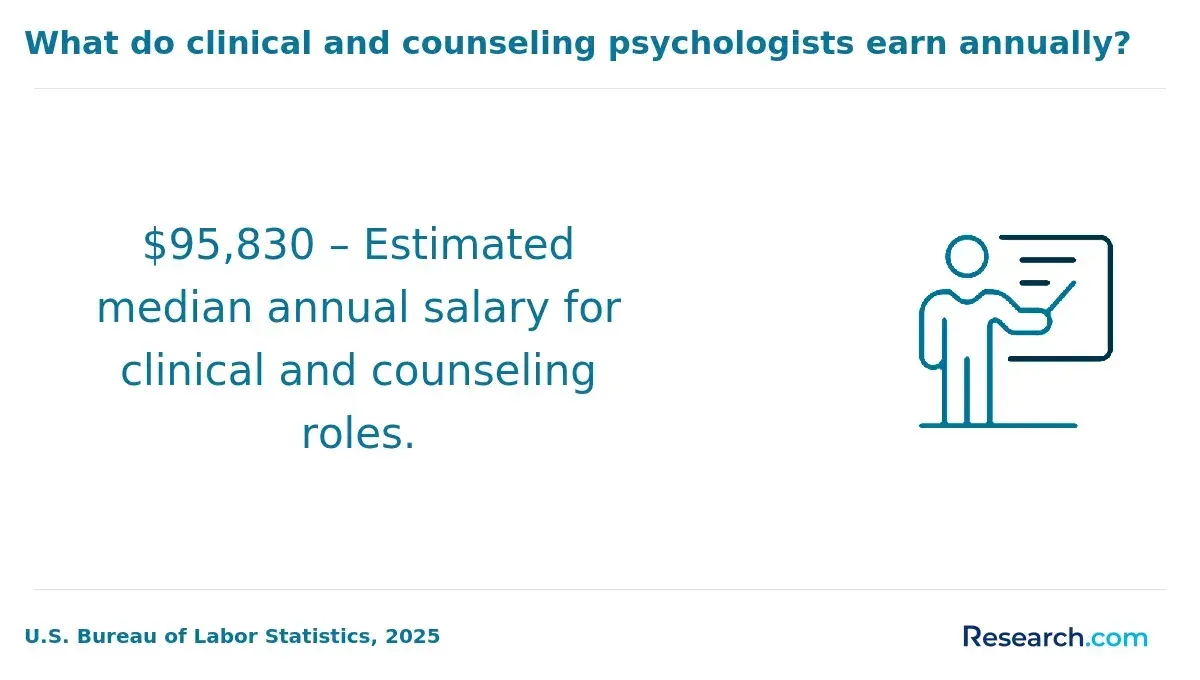
For example, the median annual pay for clinical and counseling psychologists is $82,510, while school psychologists earn $78,780. Psychologists in general have an average yearly wage of $81,040. These figures can help when you are deciding which degree to pursue, but they should not be treated as guaranteed earnings. Location, licensure, employer type, specialization, and experience can all affect compensation.
Some psychology students also consider adjacent fields. For example, business psychology may fit people who prefer workplace behavior, organizational consulting, employee performance, or leadership development rather than direct child mental health practice.
| Role | Salary | Demand |
| Childcare Workers | $29,320 | 6% |
| Preschool Teachers | $30,210 | 15% |
| Special Education Teachers | $61,820 | 4% |
| Rehabilitation Counselors | $38,560 | 11% |
| Child, Family, and School Social Workers | $49,150 | 9% |
| Recreational Therapists | $47,940 | 4% |
| Clinical and Counseling Psychologists | $82,510 | 10% |
| School Psychologist | $78,780 | 10% |
| Psychology Teachers, Postsecondary | $ 88,390 | 10% |
| Postsecondary Education Administrators | $96,910 | 7% |
Required Skills for Child Psychology
Child psychology work requires more than an interest in children. Professionals must observe behavior carefully, interpret developmental patterns, communicate with families, document accurately, and make ethical decisions when children may be at risk. The strongest candidates combine scientific thinking with patience, empathy, and emotional steadiness.
Core professional skills
- Assessment and analysis: Child psychology professionals review behavior, symptoms, developmental history, family context, school performance, and assessment results to understand what a child may need.
- Research literacy: Evidence-based practice matters. Professionals need to understand which interventions are supported by research and when a referral or different approach may be appropriate.
- Critical evaluation: Observation, interviews, standardized tools, and collateral information from parents or schools must be evaluated carefully before making recommendations.
- Documentation: Clear records protect clients and professionals. Notes, treatment plans, progress reports, referrals, and educational documentation must be accurate and confidential.
Interpersonal and practical skills
- Active listening: With 58% of high school students reporting emotional abuse by a parent or adult caregiver in the household (Centers for Disease Control and Prevention, 2025), professionals must listen to words, tone, body language, avoidance, play behavior, and changes in mood or engagement.
- Problem-solving: Children rarely present with one isolated issue. Professionals often help families address behavior, learning, anxiety, trauma, relationships, and school challenges at the same time.
- Communication with adults: Child-focused work usually includes parents, guardians, teachers, physicians, social workers, and administrators. The ability to explain concerns without blame is essential.
- Cultural humility: Family structure, language, disability, race, religion, immigration background, socioeconomic status, and community context can all shape how children experience care.
- Emotional resilience: Working with abuse, neglect, grief, self-harm, family conflict, or severe behavioral issues can be difficult. Professionals need supervision, boundaries, and healthy coping habits.
How to Start Your Career in Child Psychology
The best starting point depends on the kind of work you want to do. If your goal is licensed independent practice as a child psychologist, you should expect a long pathway that usually includes a bachelor’s degree, graduate study, doctoral training, supervised experience, and licensure. If your goal is to support children in educational, childcare, community, or social service settings, you may be able to begin with less than a doctorate.
An associate’s degree in child psychology, early childhood development, or a related field can prepare you for entry-level childcare, youth program, community outreach, or support roles. A bachelor’s degree in psychology, child development, education, social work, or a related field can open broader opportunities in social services, special education support, behavioral health programs, research assistance, and case management. Students comparing academic routes can review the different psychology degrees available and how they connect to career outcomes.
Some students enter the field through related disciplines. For example, healthcare-oriented students may compare psychology with programs such as affordable online nursing programs, then later specialize in pediatric behavioral health, mental health nursing, counseling, or graduate psychology.
| Career route | Best fit | Typical early roles | Long-term direction |
| Clinical and counseling path | Students who want to assess, diagnose, and treat children in mental health settings | Psychology Assistant ($53,274) | Clinical and Counseling Psychologists ($82,510), Mental Health Clinical Supervisor ($82,691), Director of Mental Health Services ($140,300) |
| Academic counseling path | Students who want to support school success, personal development, and academic planning | School Counselor Assistant ($52,322) | Middle School Counselor ($54,410), School and Career Counselors and Advisors ($60,510), School Psychologist ($82,770) |
| Social and community service path | Students who want to support families, connect children with resources, and work in community agencies | Childcare Workers ($29,320) | Health Education Specialists and Community Health Workers ($48,860), Social Work Supervisor ($63,836), Case Management Director ($104,556) |
| Teaching path | Students who want to work in education, special education, or higher education | Assistant Professor of Psychology ($60,000) | Special Education Teachers ($61,820), Psychology Teachers, Postsecondary ($88,390), Postsecondary Education Administrator ($96,910) |
| *Values are estimates. |
What can I do with an associate’s degree in child psychology?
Childcare Worker
Childcare workers supervise children, support routines, help with age-appropriate learning activities, and communicate with families about daily progress. In early childhood environments, they may help children build basic social, language, motor, and school-readiness skills.
Median salary: $29,320
Preschool Teacher
Preschool teachers educate children younger than five who have not yet entered kindergarten. They use play, songs, stories, movement, and structured lessons to build early language, motor, emotional, and social development.
Median salary: $30,210
What can I do with a bachelor’s degree in child psychology?
A bachelor’s degree can prepare you for several child-focused roles, although it usually does not qualify you to practice independently as a psychologist. If you are choosing between a Bachelor of Arts and Bachelor of Science, compare how BA and BS psychology degrees differ in coursework, research preparation, and graduate school alignment.
Special Education Teacher
Special education teachers work with students who have learning, developmental, emotional, mental, or physical disabilities. They identify student needs, adapt instruction, coordinate accommodations, and help learners participate in school as fully as possible. Demand remains an important issue, as schools continue to report a need for special education teachers.
Median salary: $61,820
Child, Family, and School Social Worker
Child, family, and school social workers help protect children, support families, and connect households with services such as childcare, housing, food assistance, and benefits. They may also intervene when a child faces abuse, neglect, or unsafe living conditions.
Median salary: $49,150
Recreational Therapist
Recreational therapists use activity-based interventions to support physical, emotional, cognitive, and social functioning. With children, this may include adaptive recreation, social skills development, coping strategies, and community participation.
Median salary: $47,940
Can you get a child psychology job with just a certificate?
A certificate can help you qualify for support positions, but it does not replace the education and licensure needed to work as a child psychologist. While 55% of professionals working in the child psychology field choose to finish a bachelor’s degree (Zippia, n.d.), doctorate-level preparation is typically required for licensed psychologist practice.
A child psychology certificate may still be useful for childcare workers, youth program leaders, psychiatric technicians, behavioral support staff, and child development specialists. It can also help professionals in education, social services, or healthcare add child development knowledge to an existing role.
How can I advance my career in child psychology?
Career advancement in child psychology usually requires graduate education, supervised experience, licensure, specialization, and continuing education. In most states, becoming a licensed psychologist requires a doctoral degree, passing the National Psychology Licensing Exam, and completing two years of clinical experience or supervised counseling.
Students preparing for doctoral study often complete a relevant master’s program first, such as a Master of Education in School Counseling or a Master of Arts in Clinical Mental Health Counseling. When comparing schools, check institutional accreditation from the Higher Learning Commission (HLE) or another regional accrediting organization, and verify whether the psychology program is accredited by the American Psychological Association (APA) or another appropriate accrediting body.
A master’s degree can move you into counseling, school-based, supervisory, or specialist roles depending on state rules. A doctorate can support licensure as a psychologist, clinical leadership, advanced assessment work, teaching, research, and private practice.
What can I do with a master’s in child psychology?
School Counselor
A master’s in child psychology or a related counseling field can lead to school counseling roles, depending on state credential requirements. School counselors help students with academic planning, personal concerns, college or career readiness, and social-emotional development. Students comparing service-oriented degrees may also review affordable online MSW programs if they are interested in social work licensure and family services.
Median salary: $60,510
School Psychologist
School psychologists apply psychology to learning, behavior, development, and school-based intervention. They conduct assessments, consult with educators and families, support individualized plans, and help students address academic and behavioral challenges. The industries with the highest employment of school psychologists are elementary and secondary schools, educational support services, and colleges, universities, and professional schools with 58,110, 2,830, and 1,810 positions, respectively (Bureau of Labor Statistics, 2025).
Median salary: $78,780
| Industry | Employment |
| Elementary and Secondary Schools | 48,380 |
| Educational Support Services | 2,250 |
| Colleges, Universities, and Professional Schools | 1,410 |
| Local Government, excluding schools and hospitals | 1,020 |
| Individual and Family Services | 1,000 |
What kind of job can I get with a doctorate in child psychology?
Clinical and Counseling Psychologist
Clinical and counseling psychologists assess, diagnose, and treat mental, emotional, and behavioral disorders. In child-focused practice, they may use interviews, observation, psychological testing, therapy, parent consultation, and collaboration with schools or medical providers. They may also work alongside professionals from healthcare programs, including those who completed pharmacy technician programs, when medication coordination or broader care planning is involved. Helping children develop resilience can include teaching skills such as understanding the value of hope. The states with the highest employment of clinical and counseling psychologists are California, New York, and Texas with 10,740, 4,490, and 4,380 employed, respectively (Bureau of Labor Statistics, 2025).
Median salary: $99,640
Postsecondary Psychology Teacher
Postsecondary psychology teachers educate college students, mentor undergraduate and graduate learners, design courses, and may conduct research. The industries with the highest level of employment for postsecondary psychology teachers include colleges, universities, and professional schools with 34,160 jobs. Junior colleges and technical and trade schools have 7,450 and 80 postsecondary psychology teacher positions, respectively (Bureau of Labor Statistics, 2025).
Median salary: $88,390
Postsecondary Education Administrator
Postsecondary education administrators oversee academic programs, student services, admissions policies, scholarships, fellowships, loan programs, and campus activities. A psychology background can be especially useful in student support, counseling services administration, disability services, or academic affairs.
Median salary: $96,910
Which certification is best for child psychology?
The best certification depends on your current degree, license status, work setting, and population. Certificates can strengthen a resume and support specialization, but they do not automatically authorize independent clinical practice. Always check whether a credential is recognized by employers, licensing boards, or professional associations in your state.
- Certified Autism Specialist (CAS)
- Certified Child and Adolescent Trauma Professional (CCATP)
- The National Certified Counselor (NCC)
- National Certified School Counselor (NCSC)
- Certified Clinical Mental Health Counselor (CCMHC)
The Role of Continuing Education in Child Psychology
Continuing education is essential in child psychology because research, assessment tools, treatment approaches, ethical standards, and state licensing rules continue to evolve. Many states require professional development for license renewal, and employers may expect training in areas such as trauma, suicide risk, mandated reporting, autism, behavioral intervention, telehealth, or culturally responsive practice.
Ongoing learning can also improve career mobility. Professionals who build expertise in trauma-informed care, neurodivergence support, pediatric behavioral health, school crisis response, or telehealth may be better positioned for specialized roles. If you are weighing long-term earnings and specialization, reviewing child and adolescent psychology salary information can help you compare options realistically.
Types of Work Settings Available for Child Psychologists
Child psychology careers differ significantly by workplace. Your ideal setting should match your preferred population, pace, schedule, documentation demands, collaboration style, and tolerance for crisis work.
| Work setting | What the work may involve | Best fit for |
| Private practice | Therapy, assessment, parent consultation, specialized treatment, and long-term client relationships | Licensed professionals who want autonomy and a defined clinical niche |
| Schools and educational institutions | Student assessment, counseling, intervention planning, behavior support, and collaboration with educators | Professionals who want to connect mental health with learning and school success |
| Hospitals and medical clinics | Care for children with complex mental health needs, chronic illness, trauma, crisis concerns, or medical conditions | Professionals comfortable working in interdisciplinary healthcare teams |
| Community mental health centers | Accessible therapy, crisis support, group services, outreach, and care for underserved families | Professionals committed to access, equity, and high-need populations |
| Research and academia | Studies on child development, intervention outcomes, cognition, behavior, or mental health programs | Professionals interested in teaching, publishing, and advancing evidence-based practice |
| Government agencies and nonprofits | Child welfare, foster care support, policy work, abuse prevention, family services, and community programs | Professionals who want systems-level impact beyond individual therapy |
Are there legal and ethical challenges in child psychology practice?
Yes. Child psychology involves serious legal and ethical responsibilities because clients are minors and many decisions involve parents, guardians, schools, courts, or healthcare systems. Professionals must understand informed consent, assent, confidentiality limits, mandatory reporting, custody issues, documentation standards, conflicts of interest, and culturally responsive care.
Common ethical challenges include deciding what information can be shared with parents, responding to suspected abuse or neglect, managing school requests for records, working with divorced or separated caregivers, and avoiding dual relationships in small communities. Advanced training, including an online doctorate in psychology, may help professionals build the legal, assessment, and ethical foundation needed for high-responsibility practice.
What are the job satisfaction and emotional rewards in child psychology careers?
Child psychology can be deeply meaningful, but it is not emotionally easy. Professionals may help children manage anxiety, trauma, grief, disability, family conflict, abuse, self-harm risk, or major life transitions. The reward comes from seeing children communicate better, build coping skills, reconnect with school, improve relationships, and regain a sense of safety.
- Helping children through difficult periods: Effective support can change how a child functions at home, in school, and with peers.
- Supporting families: Many interventions help caregivers understand behavior, respond more effectively, and reduce conflict.
- Working as part of a care team: Collaboration with teachers, physicians, social workers, and counselors can make treatment more comprehensive.
- Seeing long-term progress: Child-focused work often allows professionals to witness meaningful developmental growth over time.
- Contributing to prevention: Early support may reduce later academic, social, emotional, or behavioral difficulties.
Before committing, compare the emotional rewards with the training demands. Reviewing child psychologist education requirements can help you decide whether this path matches your goals and timeline.
How can advanced degrees boost career growth in child psychology?
Advanced degrees can expand your scope of practice, qualify you for licensure routes, improve assessment and intervention skills, and open doors to supervision, teaching, research, leadership, or private practice. A master’s degree may support counseling, school-based, or specialist roles, while a doctorate is typically needed for licensed psychologist practice.
When comparing graduate programs, examine accreditation, supervised experience opportunities, practicum placements, faculty expertise, licensure alignment, cost, online flexibility, and student outcomes. If flexibility and affordability are priorities, an accredited master’s in psychology online may be worth comparing with campus-based options.
Can I transition into child psychology without a traditional psychology degree?
Yes, but the path depends on the role you want. A non-psychology bachelor’s degree may still lead to graduate study in counseling, social work, education, behavior analysis, or psychology if you complete prerequisites. Professionals from teaching, nursing, social services, child welfare, youth work, or healthcare may already have relevant experience with children and families.
However, alternative routes do not remove licensure requirements. If you want to become a therapist, counselor, school psychologist, or licensed psychologist, you must meet the education, supervision, examination, and state credential requirements for that profession. For a broader look at nontraditional paths, review how to become a therapist without a psychology degree.
Is a BCBA Certification Valuable for a Child Psychology Career?
A Board Certified Behavior Analyst credential can be valuable for professionals who want to work with behavior assessment, intervention planning, autism services, developmental disabilities, school behavior support, or applied behavior analysis. BCBA training can complement child psychology by adding structured methods for understanding behavior, measuring progress, and designing interventions.
It is not the same as becoming a licensed psychologist, and it may not be necessary for every child psychology career. It is most useful if your target roles involve behavior analysis, autism services, intensive behavioral intervention, or school and clinical behavior programs. If affordability matters, compare low cost online BCBA degree programs before enrolling.
How can I finance my child psychology education?
Financing a child psychology education requires planning because the full path to licensure can involve several degrees. Start by comparing total program cost, not just tuition. Include fees, books, residency requirements, practicum travel, internship costs, exam fees, background checks, and lost income if you reduce work hours.
- Complete the FAFSA: Federal aid eligibility usually starts with this step.
- Compare public, private, online, and in-state options: The least expensive program is not always the best value, but cost should be weighed carefully.
- Ask about assistantships and tuition discounts: Graduate programs may offer teaching, research, or administrative assistantships.
- Check employer benefits: Schools, hospitals, nonprofits, and agencies may offer tuition support for job-related education.
- Use transfer credits strategically: Confirm transfer policies before enrolling, especially if you have prior college credits.
- Avoid borrowing based only on hoped-for salary: Use realistic salary ranges for your target role and location.
Students interested in related fields may also compare costs across programs such as an affordable master's in forensic psychology online, especially if they are considering work connected to assessment, courts, child welfare, or victim services.
What education options are available for aspiring child psychologists?
Aspiring child psychologists can choose from several academic routes, but the right choice depends on career goals. An associate degree may support early childhood or support roles. A bachelor’s degree can prepare you for graduate school or entry-level human services work. A master’s degree may lead to counseling, school-based, or specialist roles depending on state requirements. A doctorate is commonly required for licensed psychologist practice.
| Education option | What it can support | Important caution |
| Certificate | Skill-building for childcare, youth work, behavioral support, or continuing education | Usually not enough for licensed clinical practice |
| Associate degree | Childcare, preschool support, youth programs, and entry-level community roles | Career advancement may be limited without further education |
| Bachelor’s degree | Graduate school preparation, case support, social services, research assistance, and education-related roles | Does not generally qualify graduates to practice as psychologists |
| Master’s degree | Counseling, school counseling, behavioral health roles, or preparation for doctoral study | Licensure rules vary by state and profession |
| Doctorate | Licensed psychologist roles, advanced assessment, private practice, teaching, research, and leadership | Requires significant time, supervised experience, and licensing exams |
For students who need flexibility, online PhD psychology options may be worth reviewing, but always confirm accreditation, internship expectations, state licensure alignment, and in-person requirements before applying.
Can accelerated online programs fast-track a child psychology career?
Accelerated online programs can shorten the time to complete certain degrees, especially for students with transfer credits, previous graduate coursework, or the ability to study full time. They can be useful for career changers and working professionals who need flexibility.
However, faster is not always better in child psychology. Clinical preparation requires supervised practice, feedback, ethical training, and skill development that cannot be rushed. Before choosing an accelerated option, ask whether the program aligns with your state’s licensure rules, offers appropriate practicum or internship support, and has realistic expectations for working students. A 1 year psychology master’s online program may be appropriate for some goals, but it should be evaluated carefully against long-term career requirements.
What are the emerging trends in child psychology?
Child psychology is changing as mental health needs, technology, schools, and family systems change. Professionals entering the field should understand the trends shaping hiring, training, and service delivery.
- Greater demand for youth mental health services: Anxiety, depression, behavioral concerns, trauma, and school-related stress continue to drive demand for accessible support.
- Telehealth and hybrid care: Remote therapy and consultation can improve access for some families, especially in areas with limited providers, though it may not fit every child or clinical issue.
- Trauma-informed practice: More schools, clinics, and agencies are training staff to recognize trauma responses and avoid practices that can intensify distress.
- Technology-supported interventions: Digital tools, apps, games, and online resources may support engagement, skill practice, and emotional regulation when used appropriately.
- Neurodiversity-informed care: Demand continues for professionals who understand autism, ADHD, learning differences, developmental delays, and strengths-based support.
- Interdisciplinary collaboration: Child psychologists increasingly work with pediatricians, teachers, occupational therapists, speech-language pathologists, social workers, and family advocates.
Students comparing child-focused roles may also want to understand related occupations, including child life specialist salary and training requirements.
How Does Forensic Psychology Inform Child Psychology Practice?
Forensic psychology can support child psychology when legal questions overlap with child development, mental health, family safety, or custody. Examples include abuse allegations, neglect concerns, competency issues, trauma evaluations, family court matters, and child welfare cases.
Forensic-informed practice emphasizes careful documentation, structured assessment, awareness of legal standards, and clear communication about the limits of clinical conclusions. Professionals interested in this intersection can explore careers in forensic psychology to understand how legal systems and psychological assessment connect.
Common Mistakes to Avoid When Planning a Child Psychology Career
- Assuming every psychology degree leads to licensure: Many psychology programs are academic rather than licensure-focused. Always check your state’s requirements.
- Choosing a school without checking accreditation: Accreditation can affect licensure eligibility, transfer credits, graduate admission, and employer recognition.
- Looking only at tuition: Fees, internship costs, travel, exam costs, and time away from work can change the real price of a program.
- Ignoring supervised experience requirements: Clinical careers require more than coursework. Practicum, internship, and post-degree supervision matter.
- Relying only on rankings: A highly ranked program may still be a poor fit if it does not match your state, budget, schedule, or specialization.
- Assuming online programs are automatically accepted for licensure: Online delivery can be legitimate, but licensure boards may require specific accreditation, coursework, and supervised hours.
- Choosing the fastest program without checking outcomes: Speed is useful only if the program supports your actual career goal.
Questions to Ask Before Choosing a Child Psychology Program
- Is the institution regionally accredited?
- Is the psychology program accredited or recognized by the appropriate professional body for my career goal?
- Does the curriculum align with licensure requirements in the state where I plan to work?
- What practicum, internship, or supervised experience placements are available?
- Does the program specialize in child, adolescent, school, clinical, developmental, trauma, or neuropsychology topics?
- What are the total costs, including fees and clinical placement expenses?
- Can I transfer credits from previous coursework?
- What percentage of students complete the program and move into relevant roles?
- Are faculty members active in child psychology research or practice?
- Will the program support my long-term goal: support role, counseling, school psychology, clinical psychology, research, or teaching?
Alternative Career Options for Child Psychology
A child psychology background can be valuable beyond therapy and clinical assessment. The same training that helps you understand behavior, development, motivation, research, and communication can transfer into education, social services, research, advocacy, user experience, nonprofit leadership, healthcare support, and business roles.
What else can a child psychology graduate do?
Researcher
Researchers collect, organize, analyze, and interpret data to understand human behavior, development, learning, health outcomes, or social needs. In child-focused research, they may study interventions, developmental milestones, school programs, family systems, or mental health trends.
Brand Manager
Brand managers coordinate marketing strategy, research, messaging, content, design, and consumer insights. A psychology background can help with understanding audience behavior, motivation, and decision-making.
Data Analyst
Data analysts identify patterns and insights that help organizations solve problems. Psychology graduates with research methods and statistics training may apply these skills in healthcare, education, government, business, finance, science, or social impact organizations.
Find Fulfillment in a Child Psychology Career
A child psychology career can be demanding, but it offers the chance to support children during some of the most important years of development. If your goal is licensed practice, be prepared for a significant education timeline. Understanding how long it takes to earn a psychology degree can help you plan realistically.
The field offers several paths: direct clinical care, school psychology, counseling, social services, special education, research, community programs, administration, and related child development roles. The best path is the one that matches your preferred work setting, education level, licensure goals, financial situation, and emotional strengths.
Key Insights
- Child psychology addresses a real access gap: Many children experience mental health concerns, but only an estimated 15% of children in need of mental health professional services received appropriate help.
- Licensed psychologist roles require advanced preparation: A doctorate, supervised clinical experience, and licensing exams are typically required for independent psychologist practice.
- There are entry points at multiple education levels: Certificates, associate degrees, bachelor’s degrees, master’s degrees, and doctorates can all support child-focused careers, but they lead to different scopes of practice.
- Schools are a major employment setting: School psychologists and school counselors connect mental health, learning, behavior, and student support.
- Salary varies widely by role: Median salaries range from $29,320 for childcare workers to $99,640 for clinical and counseling psychologists in the roles discussed above.
- Accreditation and licensure alignment are critical: Before enrolling, confirm that a program meets the requirements for the state and profession you are targeting.
- The field rewards specialization: Trauma-informed care, autism support, behavior analysis, pediatric neuropsychology, school crisis response, and telehealth can strengthen career options.
- Emotional resilience matters: Helping children and families can be meaningful, but the work requires boundaries, supervision, ethical judgment, and strong self-care.
References:
- American Psychological Association. (2025). Careers in child psychology. https://www.apa.org/education-career/guide/subfields/child
- American Psychological Association. (2025). Clinical child psychology training. https://www.apa.org/education-career/guide/subfields/clinical-child
- American Psychological Association. (2025). Careers in school psychology. https://www.apa.org/education-career/guide/subfields/school
- Centers for Disease Control and Prevention. (2025). Data and statistics on children’s mental health. https://www.cdc.gov/childrensmentalhealth/data.html
- Bureau of Labor Statistics, U.S. Department of Labor. (2025). Psychologists. Occupational Outlook Handbook. https://www.bls.gov/ooh/life-physical-and-social-science/psychologists.htm
- Bureau of Labor Statistics, U.S. Department of Labor. (2025). Field of degree: Psychology. Occupational Outlook Handbook. https://www.bls.gov/ooh/field-of-degree/psychology/psychology-field-of-degree.htm
- Bureau of Labor Statistics, U.S. Department of Labor. (2025). Substance abuse, behavioral disorder, and mental health counselors. Occupational Outlook Handbook. https://www.bls.gov/ooh/community-and-social-service/substance-abuse-behavioral-disorder-and-mental-health-counselors.htm
- National Institute of Mental Health. (2025). Child and adolescent mental health. https://www.nimh.nih.gov/health/topics/child-and-adolescent-mental-health
- National Association of School Psychologists. (2025). Become a school psychologist. https://www.nasponline.org/about-school-psychology/becoming-a-school-psychologist
- Society of Clinical Child and Adolescent Psychology. (2025). Clinical child psychology careers. https://sccap53.org
Other Things You Should Know About Child Psychology Careers
In 2027, the average salary for a child psychologist in the United States varies based on factors such as location, experience, and workplace setting, but generally ranges from $65,000 to $100,000 annually. Child psychologists working in urban areas or specialized fields may earn towards the higher end of this range.
In 2027, to practice as a child psychologist, you typically need a doctoral degree and must be licensed by your state's licensing board. The Examination for Professional Practice in Psychology (EPPP) is often required, along with ongoing continuing education credits to maintain licensure.
To become a child psychologist in 2027, aspirants typically need a doctoral degree, like a Ph.D. or Psy.D., from an accredited program. Additionally, licensure requires a combination of supervised clinical experience and passing relevant exams. A bachelor's degree in psychology or a related field is the foundational requirement.
In 2027, the job outlook for child psychologists is positive. Factors such as increasing awareness of mental health in children and the growing demand for specialized psychological services contribute to a higher demand. Employment opportunities are expected to grow as more institutions prioritize mental well-being among youth.
Yes, aspiring child psychologists in 2027 must complete a supervised internship or fieldwork. This typically involves 1,500–2,000 hours of practical experience, overseen by a licensed psychologist, as part of the licensure process governed by state licensing boards.
Most states require 1,500 to 4,000 hours of supervised postdoctoral experience before licensure, completed after a doctoral degree and internship. The exact total is set by the state licensing board, along with the supervisor’s credentials and whether the hours must be full-time or part-time.