2027 School Psychology Careers: Guide to Career Paths, Options & Salary

Co-Founder and Chief Data Scientist
Choosing a school psychology career means preparing for a role that sits at the intersection of education, mental health, child development, family support, and special education law. The need is clear: the National Association of School Psychologists (NASP) reported a national ratio of one school psychologist for every 1,071 students, while the recommended ratio is 1:500. At the same time, schools are under pressure to respond to anxiety, depression, learning challenges, bullying, crisis events, and behavior concerns with limited staff and uneven funding.
This guide explains what school psychologists do, what education and licensure steps are typically required, where they work, how much they earn, what challenges to expect, and how to decide whether this career fits your goals. It is designed for students considering graduate school, psychology majors comparing career options, educators thinking about a transition, and working professionals who want to specialize in school-based mental health.
Quick Answer: Is School Psychology a Good Career Path?
School psychology can be a strong career choice if you want a student-centered mental health role, are willing to complete graduate training and state certification, and can handle complex caseloads in school systems. The profession offers meaningful work, demand tied to student mental health needs, and multiple career paths in schools, higher education, consulting, private practice, research, and community mental health. However, it also requires patience with paperwork, policy requirements, limited resources, and emotionally demanding cases.
What are the benefits of having a career in school psychology?
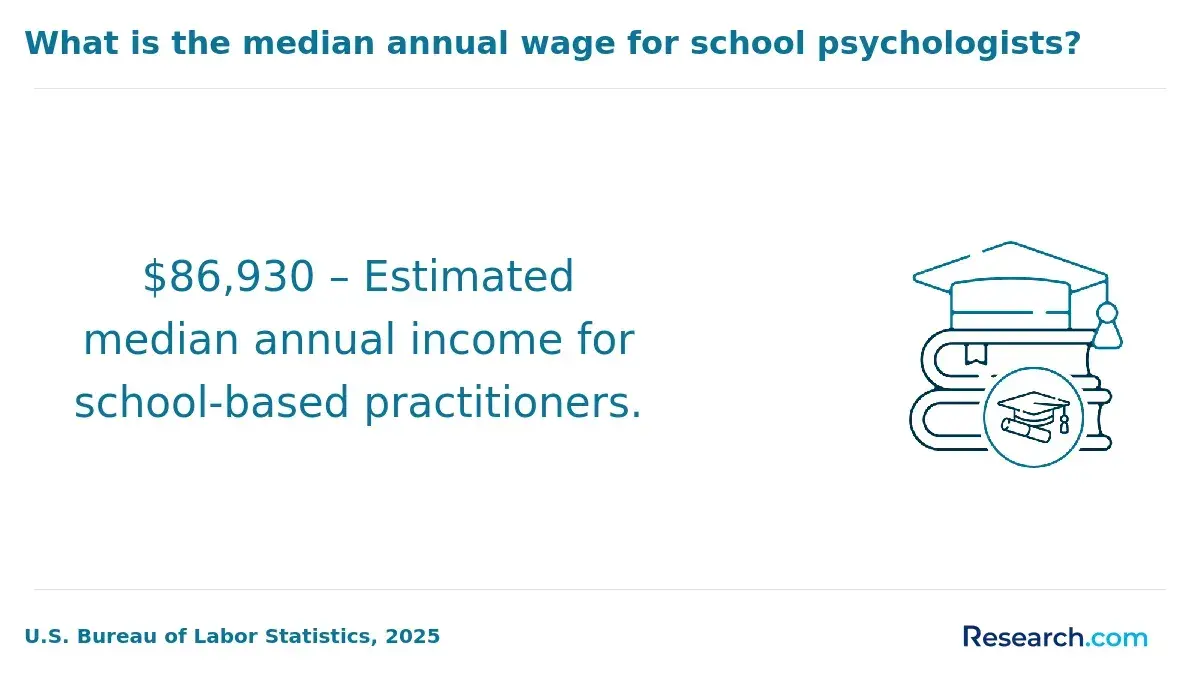
- School psychologists in the United States had a median annual wage of $86,930.
- Employment for all psychologists across the country has been projected to increase by 6% through 2034.
- School psychologists help students succeed by conducting assessments, designing intervention plans, providing counseling, supporting families, and helping schools respond to academic, behavioral, and emotional needs.
- What school psychologists do
- Degree options for becoming a school psychologist
- Licensure and certification requirements
- Common work settings
- School psychologist salary by setting
- Common school psychology interventions
- Most rewarding parts of the job
- Career advancement strategies for school psychologists
- Common challenges in the field
- Current demand and job outlook
- Career paths beyond traditional school practice
- How technology is changing school psychology
- Do you need a traditional psychology degree?
- Using behavior analysis in school interventions
- Forensic psychology training for school psychologists
- Forensic psychology as a career-expansion option
- Educational paths that can strengthen your career
- Transitioning from school psychology to sports psychology
- Educational policy and advocacy roles
- Advanced neuropsychological training
- Health psychology and school psychology careers
Here’s What Professionals Say About School Psychology Careers
- "As a school psychologist, I see the effect of my work when students build confidence, manage emotional challenges, and make academic progress. Partnering with teachers and families to create a better support system is one of the most meaningful parts of the job." —Emily
- "The work rarely feels repetitive. One day may involve assessments, the next may focus on counseling, intervention planning, or crisis response. I value the balance between direct student contact and problem-solving with school teams." —Alex
- "School psychology let me combine my interest in psychology with my desire to support young people. The career can offer stability and room to grow, but the most powerful reward is knowing that students and families are better supported because of your work." —Sarah
Key Points
- School psychologists evaluate student needs, provide counseling, support interventions, and collaborate with families, teachers, administrators, community partners, and other mental health professionals.
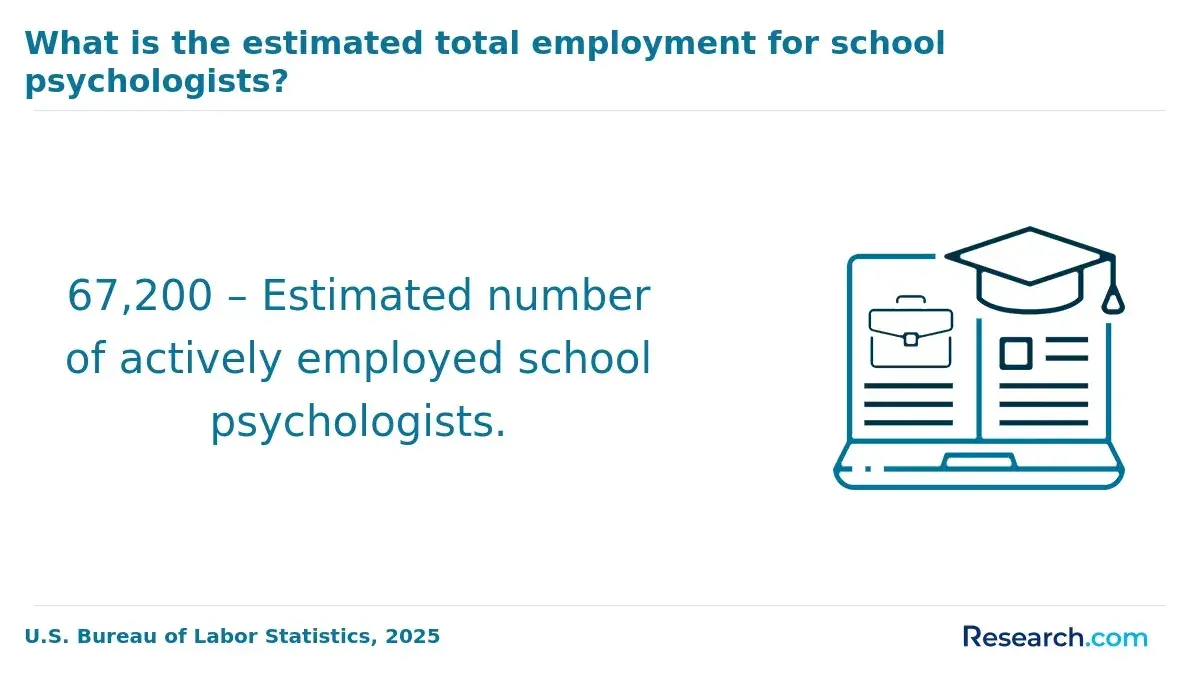
- About 53,600 school psychologists are employed in elementary and secondary schools.
- School psychologists earned $45.01 per hour, or $93,610 on a yearly average.
- Common areas of practice include behavioral support, academic intervention, counseling, crisis response, and social-emotional skill development.
- Major challenges include high caseloads, limited school resources, complex regulations, and the emotional demands of supporting students in crisis.
What is school psychology and what does a school psychologist do?
School psychology is a specialized field focused on helping children and adolescents learn, develop, and function well in school environments. It combines psychology, education, child development, assessment, counseling, behavioral science, and systems-level consultation. If you are comparing psychology careers more broadly, Research.com’s guide to clinical psychology job requirements can help clarify how school psychology differs from clinical practice.
A school psychologist’s work is not limited to one-on-one counseling. These professionals assess learning and behavioral concerns, help determine whether students need special education services, support intervention plans, counsel students, respond to crises, and advise teachers and families. They also apply the goals of psychology in practical school settings: describing student needs, explaining behavior, predicting challenges, and helping design interventions that improve outcomes.
The job often involves prevention as much as intervention. School psychologists may help schools address bullying, violence prevention, attendance problems, learning disabilities, trauma, anxiety, depression, behavior concerns, and social-emotional development. Because many cases involve teachers, caregivers, administrators, school districts, and outside providers, the role requires strong communication and collaboration skills.
| Core responsibility | What it can involve in practice | Why it matters |
| Assessment | Evaluating cognitive, academic, behavioral, emotional, and social functioning | Helps schools understand student needs and make informed support decisions |
| Intervention planning | Creating or recommending academic, behavioral, or mental health supports | Connects evaluation results to practical actions teachers and families can use |
| Counseling | Providing individual or group support for emotional, behavioral, or social concerns | Gives students tools to manage challenges that affect learning and well-being |
| Consultation | Working with teachers, parents, administrators, and specialists | Improves consistency across classrooms, homes, and support services |
| Crisis response | Supporting students and staff after emergencies, loss, violence, or trauma | Helps schools respond quickly and responsibly during high-stress events |
What degree do you need to become a school psychologist?
If you are asking, “What college degree should I get to become a school psychologist?” the usual starting point is a bachelor’s degree in psychology, education, child development, or a closely related field. Undergraduate coursework in statistics, research methods, developmental psychology, abnormal psychology, assessment, education, and learning theory can help prepare you for graduate admission.
Entry into the profession typically requires graduate education. When you are comparing school psychology graduate programs, focus first on whether the degree aligns with your state’s certification rules and your long-term career goals. Some students choose a master’s degree, some choose a specialist-level program, and others pursue a doctorate. A doctorate, such as a PhD in behavioral psychology, may be more relevant if you want to teach at the college level, conduct research, or expand into specialized clinical or leadership roles.
A master’s degree can be completed in three years of full-time study and usually includes an internship requirement. A specialist-level degree takes about three years to complete but is not accepted by some states when applying for a license for private or independent practice. Because rules vary, do not choose a program based only on convenience or price. Even if you are researching the cheapest online graduate programs, confirm that the curriculum, supervised fieldwork, and internship structure meet the requirements for the state where you plan to work.
You generally do not use the title “school psychologist” until you complete graduate-level preparation and obtain the required state credential. However, you can build related experience before or during graduate school through roles such as behavioral technician, paraprofessional, research assistant, case aide, academic intervention aide, or school-based mental health support worker. Some students begin with psychology graduate programs online or related graduate options, including online masters degree in organizational leadership programs, depending on their career direction.
| Education stage | Typical purpose | Best fit for |
| Bachelor’s degree | Builds a foundation in psychology, education, research, and child development | Students preparing for graduate study or related entry-level support roles |
| Master’s degree | Provides graduate preparation and may support school psychology credentialing depending on state rules | Students seeking a shorter graduate pathway where accepted by the state |
| Specialist-level degree | Common professional preparation route for school-based practice | Students who want to work in K-12 schools and meet state certification requirements |
| Doctoral degree | Supports advanced practice, research, higher education, leadership, and some independent practice goals | Students aiming for broader clinical, academic, supervisory, or research roles |
Are there specific licensure requirements for school psychologists?
In the US, school psychologist credentialing is handled at the state level. A doctorate is not always required; a master’s-level or specialist-level pathway can be sufficient in many cases. However, the exact credential, internship hours, exam requirements, and scope of practice depend on the state and the work setting.
- Internship. In most states, candidates complete 1,200 hours of internship training before licensure or certification. Graduate programs often build this supervised experience into the curriculum.
- Licensure examination. Public schools across the US require school psychologists to hold a state-issued credential. Prospective students should contact the Department of Education in the state where they plan to work before enrolling in a program.
Questions to ask before choosing a graduate program
- Does this program meet school psychologist certification requirements in the state where I plan to work?
- Is the internship approved or accepted by the relevant state agency?
- Does the program prepare graduates for public school practice, private practice, or both?
- What supervised field experiences are included before internship?
- How does the program support students with certification paperwork and exam preparation?
- Are online, hybrid, or out-of-state placements accepted for licensure in my state?
Where do school psychologists typically work?
Most school psychologists work in education settings. Elementary and secondary schools are the largest employers, followed by educational support services. Some professionals also work in colleges, universities, professional schools, local government, and offices of other healthcare providers.
| Work setting | Typical responsibilities | Who may prefer it |
| Elementary and secondary schools | Assessment, intervention, counseling, consultation, special education support, crisis response | Professionals who want direct impact in K-12 student services |
| Educational support services | Program support, consultation, testing, district-level services, intervention planning | Professionals who like serving multiple schools or districts |
| Colleges and universities | Student support, teaching, research, training, disability services, supervision | Professionals interested in higher education or research |
| Healthcare provider offices | Assessment, behavioral health support, consultation, collaboration with clinical teams | Professionals who want a more clinical or interdisciplinary environment |
| Local government | Policy, program administration, public mental health initiatives, school-community partnerships | Professionals interested in systems-level work and public service |
What are the salary ranges for school psychologists in different settings?
Psychology is often discussed among the highest paying college degrees, but salary outcomes vary by degree level, state, employer, contract structure, experience, and whether the role is school-based, clinical, administrative, or consultative. School psychologists had a median annual wage of $86,930, which is higher than the estimated $49,500 median annual wage of all full-time wage and salary workers in the US, according to the BLS.
For mean hourly wages, school psychologists across the country earned $45.01. Pay differs by employment setting:
- Other Schools and Instruction: $69.71
- Offices of Physicians: $62.74
- Offices of Other Health Practitioners: $54.26
- Child Care Services: $51.52
- Educational Support Services: $49.40
| Salary factor | How it can affect earnings |
| Employer type | School districts, healthcare offices, educational support services, and private organizations may use different pay structures. |
| Contract length | Some school-based roles follow academic-year contracts, while other settings may use year-round employment. |
| State and district funding | Local budgets and staffing shortages can influence pay, benefits, and workload. |
| Credentials | Advanced certification, doctoral training, or specialized expertise may support higher-level roles. |
| Experience and specialization | Professionals with experience in assessment, crisis response, autism services, behavior analysis, or leadership may qualify for broader opportunities. |
What interventions do school psychologists commonly implement?
School psychologists use evidence-informed interventions to support student learning, behavior, emotional health, and social functioning. The exact interventions depend on student needs, school resources, legal requirements, and collaboration with teachers and caregivers.
- Behavioral interventions. School psychologists help identify behavior patterns and design supports such as positive reinforcement systems, behavior intervention plans, classroom strategies, and progress monitoring.
- Academic interventions. They evaluate learning difficulties and help create instructional supports, individualized plans, and Response to Intervention (RTI) strategies for students who need academic help.
- Counseling services. They may provide individual or group counseling for concerns such as anxiety, depression, social skills, emotional regulation, stress, grief, or school adjustment.
- Crisis intervention. During emergencies, loss, violence, natural disasters, or other traumatic events, school psychologists help students and staff stabilize, process events, and connect with additional support.
- Social skills training. They support students in building communication, empathy, conflict resolution, relationship skills, and other competencies that contribute to a healthier school climate.
How school psychologists decide which intervention to use
- Clarify the concern using observations, records, interviews, assessments, and teacher or family input.
- Determine whether the main need is academic, behavioral, emotional, social, environmental, or a combination.
- Select an intervention that matches the student’s age, setting, strengths, and barriers.
- Define measurable goals and decide how progress will be tracked.
- Review data regularly and adjust the plan if the student is not improving.
What are the most rewarding aspects of a career in school psychology?
The best parts of school psychology often come from seeing a student move from struggle to stability. The work can be demanding, but it allows professionals to influence a student’s educational path, emotional development, family support system, and access to services.
- Visible student progress. School psychologists may see students learn coping skills, improve behavior, receive appropriate accommodations, rebuild confidence, or succeed academically after targeted support.
- Team-based problem solving. The role involves working with teachers, parents, administrators, counselors, nurses, and outside providers to create stronger support networks.
- Varied daily work. Assessments, counseling, crisis response, consultation, program planning, and data review create a career that is rarely one-dimensional.
Effective Strategies for Advancing Your Career in School Psychology
Career growth in school psychology usually comes from combining strong practice experience with targeted training, professional involvement, and thoughtful specialization. The most effective development plan depends on whether you want to remain in K-12 practice, move into leadership, enter private practice, teach, conduct research, or consult across districts.
Advanced education can be useful when it supports a specific goal. For example, accredited online PsyD programs may appeal to working professionals who want doctoral-level training while maintaining employment. Before enrolling, verify whether the degree supports the license, credential, or role you want in your state.
Professional networking also matters. Joining organizations such as the National Association of School Psychologists (NASP), attending conferences, and participating in workshops can expose you to current research, policy issues, assessment updates, and career opportunities. Networking is especially valuable for professionals interested in district leadership, consultation, or specialized practice.
Specialized training can strengthen your value in areas where schools often need support. Examples include trauma-informed care, behavior analysis, social-emotional learning, crisis response, autism assessment, threat assessment, and data-based decision-making. These credentials should be chosen strategically rather than collected at random.
Mentorship is another practical accelerator. A mentor can help you interpret district politics, manage difficult cases, prepare for leadership roles, avoid burnout, and choose professional development that aligns with your long-term plans.
| Career goal | Helpful strategy | Why it helps |
| Become a stronger school-based practitioner | Build expertise in assessment, intervention design, consultation, and progress monitoring | Improves day-to-day effectiveness with students and school teams |
| Move into leadership | Develop skills in program evaluation, policy, supervision, and systems change | Prepares you for district or administrative roles |
| Specialize clinically | Pursue advanced training that matches state scope-of-practice rules | Supports work with complex student needs and possible non-school settings |
| Teach or research | Consider doctoral study and research experience | Builds qualifications for higher education and scholarship |
| Consult independently | Strengthen credentials, document outcomes, and learn business basics | Helps translate school psychology expertise into advisory or program-development work |
What are some common challenges faced by school psychologists?
School psychology can be meaningful, but it is not an easy job. Many professionals balance urgent student needs with compliance timelines, limited resources, school politics, and large caseloads.
- High caseloads and heavy workload. School psychologists often manage assessments, meetings, counseling, crisis calls, documentation, and consultation at the same time. When caseloads are large, it can be difficult to provide the depth of service students need.
- Resource limitations. Some schools lack adequate funding, materials, intervention programs, mental health staff, or time for professional development. These shortages can limit what school psychologists can offer.
- Complex systems. School psychologists must work within education law, district policies, parent concerns, staff expectations, and administrative procedures. Navigating these systems requires diplomacy and strong advocacy skills.
Common mistakes aspiring school psychologists should avoid
- Choosing a program without checking state credentialing rules. A degree may be reputable but still fail to meet requirements in the state where you want to work.
- Looking only at tuition. Internship placement support, supervision quality, exam preparation, travel requirements, and time to completion can affect the real cost.
- Assuming online means flexible in every way. Many online or hybrid programs still require in-person practica, internships, or campus visits.
- Ignoring burnout risk. This work requires emotional resilience, boundaries, supervision, and peer support.
- Expecting counseling to be the whole job. Assessment, consultation, paperwork, meetings, and legal compliance are major parts of school psychology.
What is the current demand for school psychologists?
Students considering school psychology should evaluate demand realistically. If you are drawn to this profession, it may be more useful to focus on student need and school systems than to compare it only with questions like how much do private practice psychologists make. School psychologists are central to child and adolescent mental health support, but employment growth, budgets, and staffing policies can vary by state and district.
The current policy environment also affects the field. Funding for school mental health was revoked in early 2025 and was later on reinstated with limitations. Moreover, the federal budget proposal for 2026 will still impose a 15% cut to the Department of Education and 26% to the Health and Human Services (HHS), reducing access to student mental health support (FasPsych, 2026).
Employment for all school psychologists across the US has been projected to increase by less than 1% throughout the decade until 2034. This provides only 3,800 annual openings throughout the decade and brings the total projected school psychologist workforce to 67,700 by 2034, which falls short of the recommended ratio of 1:500. To address gaps, several efforts are being implemented, such as utilizing other mental health professionals, providing financial assistance from governments and organizations, and boosting recruitment efforts (APA, 2024).
| Demand factor | What it means for prospective school psychologists |
| Student mental health needs | Schools continue to need professionals who can assess, counsel, intervene, and coordinate support. |
| Staffing shortages | The NASP-reported national ratio suggests many schools are operating above recommended caseload levels. |
| Federal and state funding | Budget changes can influence hiring, services, and program availability. |
| Credential supply | Graduate program capacity, internship availability, and state certification rules can affect how quickly new professionals enter the field. |
What career paths can school psychologists pursue beyond traditional practice?
School psychology training can lead to more than one career direction. Some professionals remain in K-12 schools for their entire careers, while others move into counseling, clinical work, research, higher education, consulting, policy, or specialized assessment roles. Additional credentials may be required when moving into roles outside school psychology.
- College counselor. College counselors help students plan for life after high school, select academic programs, compare institutions, access academic support, and prepare essays or application materials. School and career counselors in the US had a median annual wage of $65,140.
- Child psychologist. Child psychologists often share an interest in child development and mental health, but their training and scope may differ from school psychologists. If this path interests you, compare options for further studies in child psychology and review certification or licensure requirements.
- Clinical and counseling psychologist. Clinical and counseling psychologists assess, diagnose, and treat mental health disorders and emotional concerns in settings such as private practices, hospitals, and community mental health centers. Clinical and counseling psychologists in the US had a median annual wage of $95,830.
- Social worker. Social workers help individuals, families, and communities address social, emotional, and economic challenges. They work in hospitals, schools, social service agencies, and community organizations. Social workers in the US had a median annual wage of $61,330.
- Psychometrician. Psychometricians administer and score psychological or neuropsychological assessments, often under the supervision of a licensed psychologist or neuropsychologist. The role requires accuracy, confidentiality, careful observation, and strong documentation skills.
People with related preparation in cognitive science may also explore cognitive science degree jobs. Cognitive science blends psychology, neuroscience, linguistics, computer science, and philosophy, which can support careers in research, user experience, data science, artificial intelligence, and cognitive science research.
The chart below compares median annual wages for school psychology and related roles.
The Impact of Technology on School Psychology
Technology is changing how school psychologists assess students, deliver services, communicate with families, track interventions, and collaborate with teams. It does not replace professional judgment, but it can improve access, documentation, and progress monitoring when used responsibly.
Telehealth and Virtual Counseling
Telehealth can help school psychologists reach students who have transportation barriers, limited local services, or scheduling challenges. It may be especially relevant for rural and underserved communities. However, virtual services must comply with state regulations, privacy rules, school policies, and ethical standards.
School psychologists may use remote platforms for consultation, counseling, follow-up meetings, or some assessment-related activities when appropriate. The key is to match the technology to the student’s needs rather than assuming virtual support is always equivalent to in-person service.
Digital Assessment Tools
Digital assessment platforms can streamline scoring, reporting, data collection, and record management. They may reduce administrative time and help school psychologists analyze patterns more efficiently. Still, professionals must understand test validity, administration rules, accessibility concerns, and the limits of automated scoring.
When used carefully, digital assessment tools can support more timely decision-making and better documentation. They should supplement, not replace, clinical reasoning, observation, interviews, and multidisciplinary team input.
Data-Driven Interventions
Schools increasingly use digital systems to monitor academic progress, behavior, attendance, and intervention response. This can help school psychologists identify trends, adjust supports, and evaluate whether interventions are working.
Data-based decision-making is especially important in RTI and multitiered systems of support. The value of these tools depends on data quality, staff training, and consistent follow-through.
Professional Development and Online Learning
Online professional development gives school psychologists more flexible access to training in crisis response, assessment updates, school bullying prevention, trauma-informed care, and other specialized topics. Students at earlier stages may also consider a 2-year psychology degree online as an entry point before pursuing advanced study.
Social-Emotional Learning Platforms
Social-emotional learning platforms can help schools teach skills such as self-awareness, emotional regulation, empathy, decision-making, and relationship-building. School psychologists may help evaluate whether these tools are appropriate, evidence-informed, developmentally suitable, and aligned with school goals.
Collaboration and Communication Tools
Cloud-based systems, learning management platforms, and secure communication tools can make it easier to share progress updates, meeting notes, intervention plans, and assessment information. Because student data is sensitive, privacy, consent, access controls, and documentation practices must be handled carefully.
Is a Traditional Psychology Degree Mandatory for a Career in School Psychology?
A traditional psychology major is common, but it is not the only possible starting point. Students from education, child development, counseling-related, social science, or behavioral science backgrounds may qualify for graduate programs if they complete required prerequisites. The important question is whether your academic record prepares you for graduate-level training in assessment, research, development, learning, and mental health.
If you are exploring adjacent mental health routes, Research.com’s guide on what degree to be a therapist can help you compare alternatives. For school psychology specifically, always check the graduate program’s admissions requirements and the credentialing standards in your state.
How Can School Psychologists Leverage Behavior Analysis for Enhanced Student Interventions?
Behavior analysis can help school psychologists create clearer, more measurable behavior plans. By identifying target behaviors, understanding environmental triggers, tracking data, and reinforcing replacement behaviors, professionals can design interventions that are easier for teachers and families to implement.
Applied behavior analysis can be especially useful when students have persistent disruptive behavior, autism-related support needs, skill deficits, or difficulty responding to traditional classroom strategies. Professionals interested in deeper training may compare low cost BCBA online programs, while also confirming how behavior analysis credentials fit with their state’s school psychology scope of practice.
Can School Psychologists Benefit from Forensic Psychology Training?
Forensic psychology training can strengthen skills related to risk assessment, crisis response, legal issues, documentation, and collaboration with child protection or legal systems. In schools, this may be relevant when cases involve threats, abuse concerns, custody disputes, violence risk, or complex behavioral evidence.
This specialization should be approached carefully because school psychology and forensic psychology have different scopes, ethics, and practice settings. Professionals who want to explore this area may review cheapest forensic psychology master's programs to understand available training options.
Could a Forensic Psychology Focus Expand School Psychology Opportunities?
A forensic psychology focus may broaden opportunities for school psychologists who want to work on safety planning, threat assessment, crisis response, court-adjacent consultation, or collaboration with legal and child protection agencies. It may also improve a professional’s ability to interpret behavioral evidence and document decisions clearly.
However, this path may require additional education, supervision, or licensure depending on the work performed. To compare broader market possibilities, see Research.com’s overview of the forensic psychology career outlook.
What Educational Paths Can Aspiring School Psychologists Pursue to Enhance Their Careers?
Aspiring school psychologists can strengthen their preparation through graduate programs in school psychology, specialist-level training, doctoral programs, and targeted coursework in areas such as trauma-informed practice, health psychology, social-emotional learning, assessment, and behavior support. Some students compare online psychology graduate programs before committing to a school psychology-specific pathway.
The best educational path depends on the role you want. If your goal is K-12 practice, prioritize state certification alignment and supervised school-based experience. If you want research, university teaching, clinical work, or independent practice, investigate whether a doctoral degree or additional licensure pathway is necessary.
Can School Psychologists Transition to Sports Psychology?
School psychologists already have training in motivation, stress, learning, assessment, behavior, and emotional regulation, which can translate into sports-related work. A transition into sports psychology would require learning performance psychology, athlete mental health, team dynamics, and the ethical boundaries of working in competitive settings.
This path may appeal to professionals who want to support student-athletes, consult with athletic programs, or work in performance environments. Research.com’s guide to sports psychologist salary can help you explore compensation and career considerations in that field.
How Can School Psychologists Influence Educational Policy and Advocacy?
School psychologists can influence policy by translating student needs into practical recommendations for staffing, funding, mental health access, special education services, safety planning, and prevention programs. Their firsthand experience with assessment data, student crises, and intervention barriers gives them valuable insight into what schools actually need.
Policy involvement can include serving on district committees, contributing to school board discussions, advising community organizations, supporting legislative advocacy, or helping design district-wide mental health programs. Professionals who want stronger academic grounding may explore options such as the cheapest online psychology conversion course, depending on their background and goals.
How Can Advanced Neuropsychological Training Elevate School Psychology Practice?
Advanced neuropsychological training can deepen a school psychologist’s understanding of brain-behavior relationships, cognitive processing, executive functioning, memory, attention, and learning differences. This knowledge can support more refined assessment interpretation and more targeted recommendations for individualized education planning.
Professionals interested in bridging school psychology with cognitive and clinical research may explore an online neuropsychology PhD. Before enrolling, confirm whether the program supports your desired practice setting, licensure path, and professional scope.
The Role of Health Psychology in Enhancing School Psychology Careers
Health psychology can strengthen school psychology practice by helping professionals understand how physical health, stress, behavior, family routines, and emotional well-being interact. This is especially relevant for students whose attendance, concentration, mood, or academic performance is affected by chronic illness, trauma, sleep problems, pain, disability, or health-related stress.
Why Health Psychology is Relevant in Schools
- Supporting students with chronic conditions. Students with asthma, diabetes, obesity, or other long-term conditions may need help with coping strategies, school adjustment, treatment adherence, and emotional resilience.
- Connecting mental and physical wellness. Health psychology can inform school programs focused on stress management, healthy routines, physical activity, nutrition, and prevention.
- Strengthening trauma-informed practice. Trauma can affect both the body and mind. Health psychology helps school psychologists consider the full impact of stress, safety, and regulation on learning.
Integrating Health Psychology Interventions
- Behavioral interventions for lifestyle change. School psychologists can use behavior-change strategies to support healthier routines that may improve focus, mood, and school participation.
- Mindfulness and stress reduction programs. Mindfulness-based approaches may help some students manage anxiety, improve attention, and regulate emotions when implemented appropriately.
- Collaboration with healthcare professionals. Working with school nurses, pediatricians, public health officials, and families can help create coordinated plans for students with complex needs.
Career Growth Opportunities
School psychologists with health psychology expertise may find opportunities in wellness programming, health education, student support consulting, community initiatives, or interdisciplinary care planning. To compare related career directions, review Research.com’s guide to health psychology careers.
How to Decide if School Psychology Is Right for You
| You may be a good fit if... | You may want another path if... |
| You want to work with children and adolescents in educational settings. | You prefer working only with adults or in non-school clinical environments. |
| You are comfortable with assessment, documentation, meetings, and collaboration. | You want a role focused almost entirely on therapy sessions. |
| You can handle emotionally difficult cases while maintaining professional boundaries. | You are not prepared for crisis response, trauma exposure, or high-stakes decision-making. |
| You value systems-level change as well as individual student support. | You dislike navigating policies, school procedures, and multidisciplinary teams. |
| You are willing to complete graduate training, internship hours, and state certification. | You want to enter a licensed professional role without additional graduate education. |
Practical Steps to Start a School Psychology Career
- Research your state’s requirements. Start with the state Department of Education or credentialing agency before choosing a graduate program.
- Choose an undergraduate foundation wisely. Psychology, education, child development, and behavioral science coursework can help prepare you for graduate study.
- Compare graduate programs by outcomes, not just cost. Look at certification alignment, internship placement support, faculty expertise, completion expectations, and fieldwork requirements.
- Gain school or child-focused experience. Volunteer, work, or intern in schools, youth programs, research labs, tutoring programs, special education settings, or behavioral health organizations.
- Build assessment and data skills. School psychology depends heavily on evidence-based decision-making and careful interpretation.
- Develop communication skills. You will need to explain complex findings to families, teachers, administrators, and students in plain language.
- Plan for long-term sustainability. Learn about workload expectations, supervision, peer consultation, and self-care before burnout becomes a problem.
References
- FasPsych. (2026). Federal Budget Cuts to School Mental Health Programs in 2025-2026: Telepsychiatry as a Scalable, Equitable Solution. https://faspsych.com/blog/federal-budget-cuts-to-school-mental-health-programs-in-2025-2026-telepsychiatry-as-a-scalable-equitable-solution/
- National Association of School Psychologists. (n.d.). State Shortages Data Dashboard. Retrieved February 2026, from https://www.nasponline.org/about-school-psychology/state-shortages-data-dashboard
- National Association of School Psychologists (n.d.). Why Become an NCSP. https://www.nasponline.org/standards-and-certification/national-certification/why-become-an-ncsp
- Sohn, E. (2024). There’s a strong push for more school psychologists. American Psychological Association. https://www.apa.org/monitor/2024/01/trends-more-school-psychologists-needed
- US Bureau of Labor Statistics. (2025). Occupational projections, 2024–2034, and worker characteristics, 2024. Retrieved February 2026, from https://www.bls.gov/emp/tables/occupational-projections-and-characteristics.htm
Key Insights
- School psychology is a graduate-level profession that blends assessment, counseling, intervention, consultation, crisis response, and systems-level support in schools.
- The NASP-reported national ratio of one school psychologist for every 1,071 students remains far above the recommended 1:500 ratio, highlighting the staffing gap schools face.
- A master’s, specialist-level, or doctoral route may lead to the field, but state credentialing rules should drive your program choice.
- School psychologists had a median annual wage of $86,930, but pay varies by employer, location, contract structure, experience, and credentials.
- The career is highly meaningful but demanding; high caseloads, limited resources, policy complexity, and crisis work are common realities.
- Technology, telehealth, digital assessment, data systems, and SEL platforms are changing practice, but ethical judgment and privacy compliance remain essential.
- The best candidates are not only interested in psychology; they are also prepared to work inside school systems, collaborate across teams, interpret data, and advocate for students over time.
Other Things You Should Know about School Psychology Careers
In 2027, school psychologists can expect to earn an average annual salary ranging from $60,880 to $132,320, depending on their location, experience, and the specific school district they work for. Salaries tend to be higher in urban areas due to the increased cost of living.
In 2027, a school psychologist typically needs a specialist-level degree (Ed.S.) or a doctoral degree (Ph.D. or Psy.D.) in school psychology. Additionally, individuals must obtain state certification or licensure, which may require passing the Praxis School Psychologist test or similar examinations, along with completing supervised internships.
Most states require a specialist-level degree in school psychology plus state certification or licensure, often tied to NASP standards. Many states also require a passing score on the Praxis School Psychologist exam and a supervised internship of about 1,200 hours. Specific rules vary by state education agency.