2027 What Can You Do With A Behavioral Psychology Degree: Costs & Job Opportunities

Co-Founder and Chief Data Scientist
A note from the author, Imed Bouchrika, PhD, career planning expert:
A behavioral psychology degree is worth considering if you want to understand why people act the way they do and use that knowledge in mental health, education, business, public service, or research. The decision is not simple. Tuition can be high, licensed clinical roles often require graduate education, and entry-level psychology jobs may not always match the expectations students have when they begin college.
At the same time, the need for behavioral health expertise is hard to ignore. As of January 2025, 177 million Americans live in areas with a mental health professional shortage, with over 8,500 additional professionals needed to meet demand. This guide explains what you can do with a behavioral psychology degree, how much it may cost, what degree level you may need, how licensing works, and how to compare programs before committing your time and money.
Quick Answer: What Is a Behavioral Psychology Degree Good For?
A behavioral psychology degree can prepare students for careers that involve analyzing, influencing, supporting, or improving human behavior. Common paths include counseling support, applied behavior analysis, human resources, training and development, market research, social services, education, and, with graduate study and licensure, clinical or counseling psychology. The best degree level depends on your goal: a bachelor’s degree can open entry-level roles, a master’s degree can support specialized practice or advancement, and a doctoral degree is typically required to become a licensed psychologist.
Key Takeaways
- Behavioral psychology is useful in mental health, education, business, public policy, social services, corrections, and organizational settings.
- As of January 2025, 177 million Americans live in areas with a mental health professional shortage, with over 8,500 additional professionals needed to meet demand.
- Mental health disorders are projected to cost the global economy $6 trillion annually by 2030, showing why behavioral health skills matter beyond clinical care.
- The field of psychology, including behavioral psychology, is expected to grow by 6% through 2032, which indicates steady demand for trained professionals.
- The average tuition for undergraduate programs in Behavioral Sciences is $9,747 for in-state and $31,048 for out-of-state students, while graduate programs cost $12,712 and $32,266, respectively.
- The starting salary for a bachelor's degree in psychology is $41,420, contributing to a lifetime earnings of $3.12 million.
Behavioral Psychology Degree Table of Contents
- Career options with a behavioral psychology degree
- Average cost of a behavioral psychology degree
- Types of behavioral psychology degrees
- Job market trends for behavioral psychology professionals
- Behavioral psychologist salary expectations
- How to build practical experience while enrolled
- Licensing requirements for psychology careers
- Ways to advance after earning the degree
- What to look for in a behavioral psychology program
- Benefits and limits of online behavioral psychology programs
- Whether a behavioral psychology degree is worth it
- How behavioral psychology and psychiatry work together
- Financial aid options for behavioral psychology students
- Accelerated online programs in behavioral psychology
- Behavioral psychology careers without a formal degree
- Combined degree options in behavioral psychology
- Digital tools in behavioral psychology education
- Accelerated counseling master’s programs for behavioral psychology professionals
- Why BCBA certification matters
- How to choose the right behavioral psychology program
- Master’s-level career paths in behavioral psychology
- How behavioral psychology supports economic productivity
- Key insights and next steps
What Is Behavioral Psychology?
Behavioral psychology focuses on observable behavior, learning, motivation, reinforcement, habits, decision-making, and the environmental factors that shape human actions. Students study how people acquire behaviors, how behaviors can be changed, and how evidence-based interventions can improve outcomes in schools, workplaces, clinics, communities, and families.
It overlaps with psychology, counseling, applied behavior analysis, neuroscience, education, public health, social work, and organizational development. The degree is especially relevant for students who want a practical understanding of behavior rather than a purely theoretical study of the mind.
| Question | Short Answer |
| Is behavioral psychology the same as clinical psychology? | No. Behavioral psychology is a field of study and practice focused on behavior and behavior change. Clinical psychology is a licensed professional pathway that usually requires a doctoral degree and supervised training. |
| Can I become a therapist with only a bachelor’s degree? | Usually no. Independent therapy roles generally require graduate education, supervised clinical hours, and state licensure. |
| Is an online behavioral psychology degree acceptable? | It can be, if the school is properly accredited and the program meets your career, graduate school, or licensing requirements. |
| Is this degree only for mental health careers? | No. Graduates also work in marketing, HR, training, education, research, public service, and community programs. |
What can I do with a behavioral psychology degree?
A behavioral psychology degree can lead to several career directions, but your options depend heavily on degree level, supervised experience, certification, and licensure. Students who complete a behavioral psychology degree online or on campus can apply their training in roles that require understanding behavior, motivation, assessment, communication, and intervention design.
If you are asking what can you do with a psychology degree, behavioral psychology gives you a more applied lens: you learn how behavior is shaped, measured, and changed in real-world environments.
| Career Area | How Behavioral Psychology Applies | Typical Degree Consideration |
| Marketing and consumer research | Professionals study buying patterns, decision-making, messaging, and customer behavior. Market research analysts and marketing specialists have a median annual wage of $74,680, a job growth projection of 8% through 2033, and around 918,200 jobs currently. | Bachelor’s degree for many entry-level roles; graduate study may help with research-heavy positions. |
| Counseling and behavioral health support | Graduates may support people dealing with substance use, behavioral disorders, stress, or mental health challenges under appropriate supervision. | Graduate degree and licensure are typically needed for independent counseling practice. |
| Training and development | Behavioral principles help organizations design learning programs, improve performance, and reinforce new skills. | Bachelor’s or master’s degree, depending on role seniority. |
| Education | Behavioral psychology supports classroom management, learning design, student support, and intervention planning. | Bachelor’s degree for support roles; graduate credentials may be required for specialized school roles. |
| Law enforcement and corrections | Behavioral training can support rehabilitation, probation planning, correctional treatment, and risk-related work. | Bachelor’s degree may qualify candidates for some roles; agency requirements vary. |
| Social work and community services | Graduates may help design programs that address family needs, addiction, disability services, housing instability, or youth support. | Bachelor’s degree for entry-level community roles; social work licensure requires specific social work education. |
| Human resources | Behavioral psychology can improve recruiting, onboarding, employee relations, culture, engagement, and workplace training. | Bachelor’s degree may be enough for entry-level HR roles; certifications and experience can help advancement. |
Behavioral psychology can also help address access gaps in mental health care. According to the Commonwealth Fund, the U.S. is experiencing a significant shortage of behavioral health professionals, which affects how quickly people can receive care. For students who want meaningful work, the field offers opportunities to contribute in both clinical and nonclinical ways.
The table below gives you insights into the salaries of roles that you can take after completing a bachelor's in psychology.
What Graduates Say About Studying Behavioral Psychology
- My coursework helped me see how environment, incentives, stress, and relationships influence behavior. That perspective changed how I communicate with clients, coworkers, and family members. Alex
- The online format made the degree realistic for me because I could keep working while studying. The most useful parts were the case discussions, virtual exercises, and projects tied to real behavioral problems. Jordan
- Behavioral psychology gave me practical tools for advocacy work. I learned how to connect research with interventions that can improve people’s daily lives. Taylor
What is the average cost of obtaining a behavioral psychology degree?
The cost of a behavioral psychology degree depends on degree level, residency status, school type, delivery format, and how many credits you can transfer. For undergraduate programs in Behavioral Sciences, average tuition and fees are $9,747 for in-state students and $31,048 for out-of-state students. Graduate programs average $12,712 for in-state students and $32,266 for out-of-state students.
Tuition is only one part of the full cost. Students should also compare fees, books, technology requirements, commuting or housing, internship travel, background checks, exam fees, and lost work time. Online programs may reduce relocation or commuting expenses, but they are not automatically cheaper.
| Cost Factor | Why It Matters | What to Ask Before Enrolling |
| Tuition and fees | Published tuition may exclude program, technology, and clinical placement fees. | What is the total estimated cost through graduation? |
| Transfer credits | Accepted credits can reduce both time and cost. | How many credits will transfer, and will they apply to major requirements? |
| Residency rate | Public universities may charge different rates for in-state and out-of-state students. | Do online students pay in-state, out-of-state, or separate online tuition? |
| Fieldwork expenses | Internships, practicum placements, and clinical requirements may add costs. | Does the school help arrange placements near my location? |
| Graduate school plans | Many psychology careers require education beyond the bachelor’s level. | Will this program prepare me for the graduate pathway I want? |
Students comparing regional options may want to review an online psychology degree in Ohio to understand how location, delivery format, and school type can affect fit. If your goal is community-based work, it may also be useful to compare psychology pathways with the cheapest online social work degrees.
What are the different types of behavioral psychology degrees available?
Behavioral psychology is available at several academic levels. The right choice depends on whether you want entry-level employment, graduate study, research, applied behavior analysis, counseling, or licensed psychology practice.
| Degree or Credential | Best For | Important Limitation |
| Bachelor's degrees | Students seeking foundational knowledge in psychology, research methods, behavior, development, and human services. | Most independent clinical roles require graduate education and licensure. |
| Master's degrees | Students who want specialized training in clinical psychology, counseling, applied behavior analysis, organizational behavior, or research. | Licensure eligibility depends on the program, state rules, supervised hours, and specific degree title. |
| Doctoral degrees, including Ph.D. or Psy.D. | Students who want to become licensed psychologists, conduct advanced research, teach at the university level, or lead clinical programs. | Doctoral training is time-intensive and often requires internship and postdoctoral supervised experience. |
| Certificates and diplomas | Professionals who need focused training in behavior analysis, addiction, organizational behavior, child development, or continuing education. | A certificate usually does not replace a required degree for licensure. |
If you are still deciding whether psychology is the right academic direction, reviewing whether psychology is a good major can help you compare career flexibility, graduate school requirements, and long-term value.
What are the latest job market trends for behavioral psychology professionals?
Behavioral psychology is being shaped by several labor market forces: rising demand for mental health services, broader use of behavioral interventions outside traditional clinics, increased interest in telehealth, and employer attention to workforce well-being. Employment of psychologists is expected to increase by 6% through 2032, which is faster than the average for all occupations.
Demand is not limited to therapy offices. Schools, hospitals, mental health centers, substance use programs, correctional systems, businesses, and public agencies all use behavioral expertise. However, a growing need for services does not mean every graduate automatically qualifies for every role. Licensure, supervised hours, specialization, and state rules still determine many professional opportunities.
Students interested in performance, athletics, motivation, and well-being may also consider a sports psychology degree, which applies psychology principles to athletic and performance settings.
How much do behavioral psychologists make?
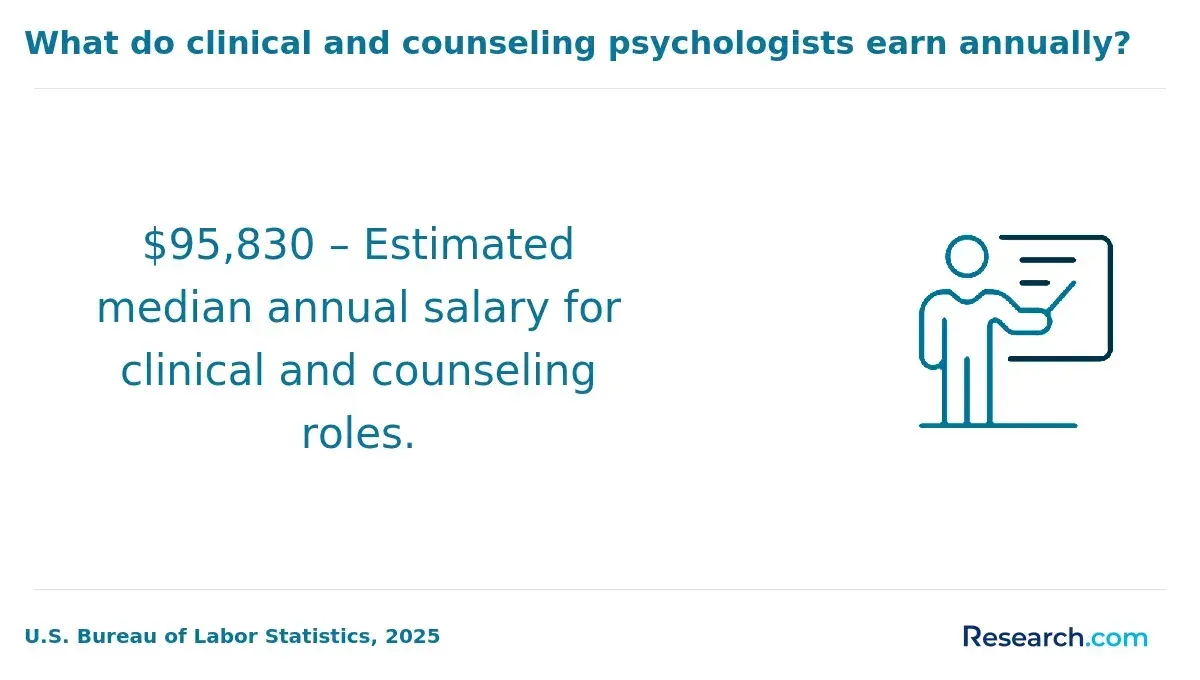
Pay depends on the role, degree level, work setting, state, licensure status, and specialization. Psychologists earn a median annual wage of $85,330. Industrial-organizational psychologists have a median annual wage of $139,280, while clinical and counseling psychologists earn a median annual wage of $90,130.
These figures should be interpreted carefully. A bachelor’s graduate in psychology usually does not earn the same salary as a licensed psychologist. Students who want clinical practice, psychological testing, or independent diagnosis should expect additional graduate education and supervised training. Students comparing psychology to related human services pathways can also review options such as an online bachelor’s degree in social work to understand differences in preparation and licensure.
| Salary Factor | How It Can Affect Earnings |
| Degree level | Graduate and doctoral education can open roles unavailable to bachelor’s graduates. |
| Licensure | Licensed professionals may qualify for clinical, supervisory, or independent practice roles. |
| Specialization | Industrial-organizational psychology, clinical psychology, counseling, and behavior analysis may lead to different compensation patterns. |
| Employer type | Hospitals, schools, private practices, government agencies, consulting firms, and corporations use behavioral expertise differently. |
| Location | State demand, cost of living, reimbursement systems, and local workforce shortages can influence pay. |
What are the best ways to gain practical experience while studying behavioral psychology?
Practical experience is essential because employers and graduate programs want evidence that you can apply behavioral concepts outside the classroom. Students should look for supervised opportunities that involve observation, data collection, communication, intervention planning, or research support.
- Apply for internships in mental health clinics, schools, social service agencies, behavioral health organizations, or research labs.
- Volunteer with crisis lines, youth programs, disability support organizations, addiction recovery programs, or community nonprofits.
- Join faculty-led research projects that involve behavioral observation, survey design, intervention evaluation, or data analysis.
- Attend workshops, professional conferences, and local psychology events to understand current practice standards.
- Seek part-time jobs that build transferable skills, such as peer mentoring, case aide work, classroom support, residential treatment support, customer service, or HR assistance.
If your interests center on young people, developmental concerns, school-based care, or family systems, learning about child and adolescent psychologist careers can help you choose more targeted experience.
What are the licensing requirements for behavioral psychology professionals?
Licensing rules depend on the exact profession and state. In general, behavioral psychology experts must be licensed to provide psychological services independently. This is true across many psychology specialties, including careers in organizational psychology when services fall under regulated psychological practice.
Typical psychologist licensure includes the following requirements:
- Educational background: Complete a doctoral degree in psychology from a regionally accredited program or, in some jurisdictions, a program specifically accredited by the American Psychological Association (APA).
- Supervised clinical hours: Complete supervised experience during internship and postdoctoral training. Requirements vary by state but often include around 2,000 hours for each phase.
- Examinations: Pass the Examination for Professional Practice in Psychology (EPPP). Some states or provinces may also require a jurisprudence exam or oral exam.
- Credential documentation: Keep complete records of coursework, supervised practice, internship training, postdoctoral hours, and examination results. Some states allow credential banking to simplify future applications.
Students should check state licensure requirements before choosing a program, especially if they plan to study online in one state and practice in another. Do not assume that every psychology degree leads to licensure.
How can you advance your career with a behavioral psychology degree?
Career growth in behavioral psychology usually comes from combining education, supervised experience, specialization, and professional credibility. The degree gives you a foundation, but advancement often requires targeted choices after graduation.
- Choose a specialty such as applied behavior analysis, counseling, organizational psychology, child development, addiction, research, or health behavior.
- Build evidence of applied skill through internships, research projects, supervised practice, and measurable workplace accomplishments.
- Pursue graduate education or certifications when your target role requires advanced preparation.
- Join professional associations, attend conferences, and develop relationships with supervisors, faculty, alumni, and practitioners.
- Track licensure or certification requirements early so you do not complete the wrong program for your intended role.
If you are comparing psychology with other fields before committing to graduate study, reviewing the best degrees to get can help you weigh flexibility, cost, and employment outcomes.
What do I look for in a behavioral psychology program?
The best behavioral psychology program is not simply the one with the most recognizable name. It is the one that fits your career goal, budget, schedule, state requirements, and preferred learning style.
| Program Feature | Why It Matters | Red Flag |
| Accreditation | Institutional accreditation affects credit transfer, graduate admission, employer recognition, and financial aid eligibility. APA accreditation is especially important for certain doctoral, internship, and residency pathways. | The school cannot clearly explain its accreditation status. |
| Curriculum | Strong programs cover research methods, statistics, learning theory, behavior modification, ethics, development, assessment, and applied practice. | The curriculum is vague or lacks research and ethics training. |
| Faculty expertise | Faculty with active research or practice experience can improve mentoring, research access, and graduate school preparation. | Faculty profiles are unavailable or unrelated to behavioral psychology. |
| Research opportunities | Research experience is valuable for graduate applications and evidence-based careers. | Students have few ways to participate in faculty projects or labs. |
| Internships or clinical placements | Applied experience helps students test career fit and build resumes. | The school expects students to find placements alone without guidance. |
| Career services | Career coaching, interview preparation, alumni connections, and placement support can help students move from degree to job. | The program cannot describe recent graduate outcomes. |
| Alumni network | Alumni can provide referrals, mentoring, field insight, and graduate school advice. | There is little evidence of alumni engagement. |
Students comparing bachelor’s pathways may also find it helpful to review a BA vs. BS in psychology comparison, especially if they are deciding between a research-heavy, science-focused, or liberal arts-oriented route.
What are the benefits of online behavioral psychology programs?
Online behavioral psychology programs can be a strong option for working adults, parents, military learners, rural students, and anyone who needs schedule flexibility. The main advantage is access: students can complete coursework without relocating or commuting daily.
- Flexible scheduling: Many online programs allow students to complete lectures, readings, and assignments around work or family responsibilities.
- Broader school choice: Students are not limited to nearby campuses, which can make it easier to find a program with the right specialization.
- Potential cost savings: Online study may reduce housing, transportation, and relocation expenses, although tuition and fees still vary by school.
- Digital learning tools: Discussion boards, simulations, online libraries, recorded lectures, and virtual collaboration can support applied learning.
- Graduate pathway options: Students seeking advanced clinical preparation may compare online PsyD programs accredited to understand doctoral-level possibilities and limitations.
Online programs also have limits. Some students need face-to-face structure, and many clinical, counseling, or behavior analysis pathways require in-person fieldwork. Before enrolling, ask whether the program helps students arrange local practicum, internship, or supervised experience.
How do behavioral psychology and psychiatry collaborate for improved mental health outcomes?
Behavioral psychology and psychiatry often work best when they are coordinated. Psychiatrists can diagnose mental health conditions, prescribe medication, and monitor biological or medical factors. Behavioral psychology contributes structured interventions, behavior tracking, coping strategies, environmental changes, and skills training.
This collaboration can be especially useful for complex cases involving anxiety, depression, substance use, neurodevelopmental conditions, chronic illness, trauma, or severe behavioral challenges. For professionals interested in the medical side of mental health care, learning how to become a psychiatrist can clarify how psychiatry differs from psychology in education, training, and scope of practice.
What financial aid options are available for behavioral psychology students?
Students should build a funding plan before choosing a behavioral psychology program. Start with federal and state aid, then compare institutional scholarships, grants, assistantships, employer tuition reimbursement, military benefits, payment plans, and program-specific scholarships.
Cost-conscious students pursuing graduate education may want to compare accelerated masters in psychology online options, but affordability should be judged by total cost, transfer policy, completion time, and whether the program supports your career or licensure goal.
| Funding Source | Best Use | Question to Ask |
| Federal or state aid | Baseline funding for eligible students. | Is the school eligible for federal financial aid? |
| Scholarships and grants | Reducing out-of-pocket cost without repayment. | Are awards renewable, and what GPA is required? |
| Employer tuition assistance | Working students whose employer supports career development. | Will I owe repayment if I leave my job? |
| Assistantships | Graduate students seeking tuition support and experience. | Are assistantships available to online or part-time students? |
| Payment plans | Students who want to spread costs across the term. | Are there fees or penalties attached to the plan? |
Can accelerated online programs fast-track your career in behavioral psychology?
Accelerated online programs can help some students complete a credential more quickly, especially if they already have transfer credits, relevant work experience, or a clear career goal. They may be useful for professionals who need a master’s degree to qualify for advancement, specialize in a behavioral field, or prepare for further doctoral study.
The trade-off is intensity. Shorter programs often require heavier weekly reading, writing, research, and project work. Students comparing fast pathways should review one year masters programs psychology options carefully and confirm whether the program includes the fieldwork, research preparation, or licensure-related coursework they need.
Can you build a successful behavioral psychology career without a formal degree?
You can work in some behavior-related support roles without a formal behavioral psychology degree, but your options will be more limited. Nondegree pathways may include certificates, workplace training, apprenticeships, peer support roles, case aide positions, research assistant work, human services experience, or specialized training in areas such as crisis support or community outreach.
However, regulated roles such as therapist, psychologist, licensed counselor, or independent clinical provider generally require formal education and licensure. If you are exploring nontraditional routes, review whether you can be a therapist without a degree so you understand the difference between helping roles and licensed mental health practice.
Can a combined degree enhance career prospects in behavioral psychology?
Combined graduate programs can reduce duplication between master’s and doctoral study, create a clearer research or clinical pathway, and provide earlier access to mentorship. They may appeal to students who are certain they want advanced practice, research leadership, or doctoral-level psychology training.
The main risk is commitment. Combined programs can be demanding, expensive, and difficult to leave midway without losing time or credits. Before choosing this route, compare admissions standards, funding, internship expectations, licensure alignment, and exit options. Students considering an integrated pathway can review a psychology masters and doctoral program combined to understand how these programs are structured.
How are digital tools transforming behavioral psychology education?
Digital tools are changing how students practice assessment, case analysis, collaboration, and intervention planning. Online simulations, telepractice exposure, virtual role-play, data collection software, and remote supervision tools can help students connect theory with applied decision-making.
These tools are especially relevant as behavioral health services increasingly use telehealth and digital documentation. Students who want a shorter route to graduate training may compare what an accelerated psychology masters program includes, but they should still confirm whether digital coursework is paired with meaningful applied experience.
How can accelerated online master's programs in clinical mental health counseling benefit behavioral psychology professionals?
Accelerated online counseling programs can help behavioral psychology graduates move toward more direct mental health roles when the curriculum, supervised practice, and state requirements align. These programs may combine counseling theory, ethics, assessment, multicultural practice, crisis response, and clinical skill development with online flexibility.
They are not interchangeable with every psychology program. Counseling licensure has specific course and supervision requirements, and students must verify state rules before enrolling. Professionals seeking a faster clinical pathway can compare accelerated online master's programs in clinical mental health counseling to see whether the structure fits their goals.
Why is BCBA certification important for behavioral psychology careers?
BCBA certification, or Board Certified Behavior Analyst certification, is important for students interested in applied behavior analysis. It signals specialized preparation in assessing behavior, designing interventions, collecting data, and supervising behavior-change programs.
- Expanded job options: Many applied behavior analysis roles require or strongly prefer BCBA certification, especially in autism services, schools, clinics, and healthcare settings.
- Specialized credibility: The credential shows that a professional has completed advanced requirements and passed a certification exam.
- Leadership potential: BCBAs may supervise behavior technicians, design intervention plans, consult with teams, and oversee service quality.
- Career focus: The credential helps distinguish behavior analysis from broader psychology, counseling, or human services roles.
A behavioral psychology degree can provide a strong foundation, but BCBA eligibility has specific coursework, supervised fieldwork, and exam requirements. Students interested in this path should compare specialized BCBA programs before choosing a degree.
Is a behavioral psychology degree worth it?
A behavioral psychology degree can be worth it for students who choose the right degree level for their career goal, control costs, gain experience while enrolled, and understand licensing requirements before graduation. It is less likely to pay off for students who assume a bachelor’s degree alone will lead directly to clinical practice or high psychologist-level earnings.
The return on investment may be uneven early in a career. The cited ROI is -73.8% at the 10-year mark, improves to 8.7% at 30 years, and reaches 72.3% at 40 years. This means students should think long term and factor in graduate school costs if their intended career requires advanced education.
Demand is another part of the value equation. As of January 2025, 172 million Americans live in areas designated as having a mental health professional shortage, with over 8,600 additional professionals needed to meet demand. Mental health disorders are projected to cost the global economy $6 trillion annually by 2030. Further education, such as a master's degree, can also expand career options and earning potential.
| A Behavioral Psychology Degree May Be Worth It If... | It May Not Be the Best Fit If... |
| You want to work with behavior, mental health, education, research, HR, public service, or organizational performance. | You want immediate independent clinical practice after only a bachelor’s degree. |
| You are willing to pursue graduate school or certification if your goal requires it. | You are not prepared for statistics, research methods, writing, and evidence-based practice. |
| You can choose an accredited, affordable program with practical experience. | You are choosing the degree without comparing costs, outcomes, and licensing rules. |
| You value work that combines human behavior, data, communication, and problem-solving. | You prefer a career path with a single fixed route and minimal continuing education. |
How to Choose the Right Behavioral Psychology Degree Program
Choosing a behavioral psychology program should start with your end goal. A student aiming for HR analytics, a student aiming for BCBA certification, and a student aiming for licensed psychology practice may need very different programs.
- Define your target role. Identify whether you want research, counseling, applied behavior analysis, education, social services, HR, marketing, or doctoral-level psychology.
- Check accreditation first. Confirm institutional accreditation and, when relevant, programmatic accreditation or recognition tied to doctoral training, internships, or professional practice.
- Match the curriculum to your goal. Look for courses in learning theory, behavior assessment, research methods, ethics, statistics, intervention design, and your intended specialization.
- Ask about field experience. Strong programs offer internships, practica, research labs, community partnerships, or supervised applied projects.
- Compare total cost, not just tuition. Include fees, books, travel, technology, time to completion, and potential graduate school costs.
- Review graduate outcomes. Ask where alumni work, what graduate programs they enter, and whether students pass relevant exams or secure placements.
- Confirm online requirements. If studying online, ask whether any campus visits, synchronous sessions, local fieldwork, or state-specific limitations apply.
Common Mistakes to Avoid
- Choosing a program without verifying accreditation.
- Assuming all psychology degrees meet counseling, psychology, or behavior analyst licensure requirements.
- Focusing only on tuition while ignoring fees, fieldwork costs, and graduate school expenses.
- Selecting an online program without confirming practicum or internship support.
- Relying only on rankings instead of comparing curriculum, outcomes, faculty, and career fit.
- Assuming salary outcomes are guaranteed regardless of location, degree level, licensure, or experience.
- Waiting until senior year to get research, volunteer, internship, or supervised experience.
What career paths are available with a master's in behavioral psychology?
A master’s degree can move graduates into more specialized roles than a bachelor’s degree, especially in applied behavior analysis, research coordination, organizational behavior, human services leadership, consulting, program evaluation, and some supervised clinical or counseling-related positions. The exact opportunities depend on the degree title, curriculum, accreditation, supervised experience, and state rules.
Students considering graduate study can review career outcomes for a masters in behavioral psychology to compare advanced roles, settings, and long-term options.
How can behavioral psychology contribute to economic productivity?
Behavioral psychology contributes to productivity by improving how people learn, work, make decisions, manage stress, follow treatment plans, and respond to incentives. Its value extends beyond mental health care into workplaces, schools, consumer behavior, healthcare systems, and public policy.
- Improving workplace efficiency: Behavioral principles can strengthen training, feedback systems, communication, motivation, and employee performance.
- Enhancing consumer insight: Businesses use behavioral research to understand decision-making, product adoption, messaging, and customer experience.
- Supporting mental health at work: Behavioral interventions can help organizations address burnout, stress, absenteeism, and employee well-being.
- Informing public policy: Policymakers can use behavioral insights to design programs that encourage healthier, safer, or more sustainable choices.
- Reducing healthcare costs: Behavioral strategies can support smoking cessation, chronic disease management, medication adherence, and preventive health habits.
Students motivated by both impact and income can explore psychologist salary pathways to see how specialization, licensure, and setting can affect career direction.
References:
- Bureau of Health Workforce. (2025). Designated Health Professional Shortage Areas Statistics: Health Resources and Services Administration. https://data.hrsa.gov/Default/GenerateHPSAQuarterlyReport
- Bureau of Health Workforce. (2025). Third Quarter of Fiscal Year 2025 Designated Health Professional Shortage Areas Statistics. Health Resources and Services Administration. https://data.hrsa.gov/Default/GenerateHPSAQuarterlyReport
- Centers for Disease Control and Prevention. (2025). Mental health in the United States. https://www.cdc.gov/mentalhealth
- Health Resources and Services Administration. (2025). Behavioral health workforce projections. https://bhw.hrsa.gov/data-research/projecting-health-workforce-supply-demand
- National Institute of Mental Health. (2025). Mental health information and statistics. https://www.nimh.nih.gov/health/statistics
- National Institute on Drug Abuse. (2025). Substance use and behavioral health statistics. https://nida.nih.gov/research-topics/trends-statistics
- Substance Abuse and Mental Health Services Administration. (2025). Behavioral health workforce projections. https://www.samhsa.gov/workforce
- U.S. Bureau of Labor Statistics. (2025). Psychologists. Occupational Outlook Handbook. https://www.bls.gov/ooh/life-physical-and-social-science/psychologists.htm
Key Insights
- A behavioral psychology degree is most valuable when it is tied to a specific career plan, such as applied behavior analysis, counseling, research, HR, education, social services, or organizational psychology.
- Degree level matters. A bachelor’s degree can support entry-level and adjacent roles, but licensed psychologist and many therapy pathways require graduate education, supervised hours, and exams.
- Cost should be evaluated by total program expense, not tuition alone. Transfer credits, residency rates, fees, fieldwork costs, and time to completion can change the real price.
- Online programs can be practical and reputable, but students must confirm accreditation, fieldwork support, and state licensure alignment before enrolling.
- Behavioral psychology has strong relevance in 2026 because mental health access, workforce well-being, digital care, and behavior-based decision-making are priorities across many industries.
- The safest decision is to work backward from your intended role: identify the credential required, verify the program meets that requirement, compare costs, and gain practical experience before graduation.
Other Things You Should Know About Behavioral Psychology Degree
In 2027, a Behavioral Psychology degree can lead to roles such as behavior analyst, research assistant, or mental health counselor. These positions are available in educational institutions, healthcare settings, and community agencies. Opportunities in private practice or non-profit organizations may also be pursued, depending on individual interests and additional certifications.
To practice professionally, you may need certifications from bodies such as the Behavior Analyst Certification Board (BACB), which requires passing a specified exam. Specific requirements can vary by state, including additional licenses or registrations in 2027.
The cost of a Behavioral Psychology degree in 2027 can be influenced by factors such as the choice between public and private institutions, in-state vs. out-of-state tuition, program length, and whether the program is pursued online or on-campus.
Most research-focused behavioral psychology positions require a master’s degree, and university or independent research roles often prefer a PhD in psychology or behavioral science. Doctoral programs usually take 5 to 7 years and include research methods, statistics, and a dissertation approved by faculty.