2027 How to Become a Psychiatrist

Co-Founder and Chief Data Scientist
Becoming a psychiatrist means choosing the medical route into mental health care. It is not the same path as becoming a counselor, therapist, psychologist, or behavioral specialist: psychiatrists are physicians who diagnose psychiatric conditions, prescribe medication, manage medical risk, and often coordinate care with other mental health professionals.
This guide is for students comparing mental health careers, pre-med students planning coursework, career changers evaluating the time and cost of medical training, and professionals considering related psychology or behavioral health credentials. You will learn the education path, exams, residency requirements, board certification process, work settings, salary expectations, job outlook, specialization options, common mistakes, and practical questions to ask before committing to psychiatry.
Quick Answer: How Do You Become a Psychiatrist?
To become a psychiatrist in the United States, you must earn a bachelor’s degree, complete medical school for an M.D. or D.O. degree, finish a psychiatry residency, pass the required medical licensing exams, obtain a state medical license, and usually pursue board certification through the American Board of Psychiatry and Neurology. Medical school is required because psychiatry is a physician specialty.
Key Things You Should Know About Becoming a Psychiatrist
- Demand is strong, especially where access is limited. There is a notable shortage of psychiatrists, particularly in rural and underserved areas. This can create employment opportunities in hospitals, outpatient clinics, community mental health centers, private practices, academic institutions, and telepsychiatry.
- The earning potential is high, but training is expensive and lengthy. As of 2024, the average annual salary for a general psychiatrist in the United States is approximately $230,000 to $250,000, although compensation depends on location, experience, practice model, and specialty.
- Psychiatry offers many practice environments. Psychiatrists may work in mental health clinics, hospitals, academic medical centers, government agencies, community programs, private practices, addiction treatment facilities, correctional systems, or telepsychiatry platforms.
- Steps to becoming a psychiatrist
- Reasons to consider psychiatry
- Best undergraduate majors for psychiatry
- Whether medical school is required
- Psychiatry certifications and subspecialties
- Exams required for licensure
- Board certification process
- Common psychiatrist work settings
- Average psychiatrist salary
- Psychiatrist job outlook
- Technology trends changing psychiatryjob outlook context
- Financial considerations before choosing psychiatry
- Psychiatrist vs. psychologist career prospects
- How interdisciplinary certifications may strengthen practice
- Common career challenges
- Fastest routes into psychiatry or therapy
- Why child psychiatry may be worth considering
- How counseling training can complement psychiatry
- How behavioral analysis training may support patient carecounseling-related training
- Whether an online PsyD can expand clinical skills
- How psychiatrists stay current
- Whether online child mental health education is useful
- How research training can improve psychiatric practice
- How forensic psychology can support psychiatric work
- Whether accelerated psychology doctorates are efficient
- How human services training may complement psychiatry
- Whether an online psychology PhD can strengthen research
- Whether combined master’s and PsyD programs are useful
- How accredited online PsyD programs relate to psychiatric practice
- How an online master’s in psychology may support clinical work
- How social work expertise may improve psychiatric outcomes
How do you become a psychiatrist?
A psychiatrist is a medical doctor, either an M.D. or D.O., who specializes in the assessment, diagnosis, treatment, and prevention of mental illnesses and emotional disorders. The key difference between psychiatrists and many other mental health professionals is medical training: psychiatrists can prescribe medication and evaluate how psychiatric symptoms connect with physical health, medications, substance use, neurological conditions, and other medical factors.
The standard path includes undergraduate study, medical school, psychiatry residency, medical licensure, and board certification. It is a demanding route, but it prepares physicians to treat complex conditions such as depression, anxiety disorders, bipolar disorder, schizophrenia, substance use disorders, trauma-related disorders, and co-occurring medical and psychiatric concerns.
Psychiatrists may also narrow their practice through subspecialties such as child and adolescent psychiatry, geriatric psychiatry, forensic psychiatry, addiction psychiatry, or consultation-liaison psychiatry. The right path depends on the patient population you want to serve, the work setting you prefer, and whether you want a clinical, academic, administrative, or research-focused career.
| Stage | What you complete | Why it matters |
| Undergraduate education | Bachelor’s degree with pre-medical coursework | Builds the academic foundation needed for medical school admission |
| Medical school | M.D. or D.O. degree | Provides broad physician training before specialization |
| Psychiatry residency | Four-year psychiatry residency | Develops supervised clinical competence in psychiatric diagnosis and treatment |
| Licensure | USMLE for M.D.s or COMLEX-USA for D.O.s, plus state requirements | Allows independent medical practice |
| Board certification | ABPN psychiatry certification exam | Signals professional competence and is often valued by employers |
Why should you consider a career in psychiatry?
Psychiatry may be a strong fit if you want to combine medicine, neuroscience, psychology, communication, and long-term patient care. More than one in five adults live with mental illness, and many communities struggle to access timely psychiatric services. For students interested in behavioral health but not necessarily medical school, applied behavior analysis degree programs can offer a different route into behavior-focused care.
Common reasons students choose psychiatry include:
- Meaningful patient impact: Psychiatrists help patients manage serious and often life-disrupting conditions. Their work may include medication management, psychotherapy, crisis intervention, diagnosis clarification, and coordination with families or care teams. Professionals pursuing a doctorate in behavioral health leadership may also contribute to mental health systems, but psychiatrists bring physician-level authority to diagnosis and medical treatment.
- Varied specialties: Psychiatry includes child and adolescent psychiatry, geriatric psychiatry, addiction psychiatry, forensic psychiatry, consultation-liaison psychiatry, and other focused areas. This variety helps physicians align their careers with specific populations or clinical problems.
- Need for mental health care: The demand for mental health professionals remains tied to access gaps, public awareness, insurance coverage, and the growing recognition that mental health is part of overall health.
You should also consider the trade-off: psychiatry requires medical school, residency, licensing exams, and substantial financial planning. If you want to provide therapy without becoming a physician, counseling, psychology, social work, or marriage and family therapy may be faster and less expensive alternatives.
What is the best undergraduate major for becoming a psychiatrist?
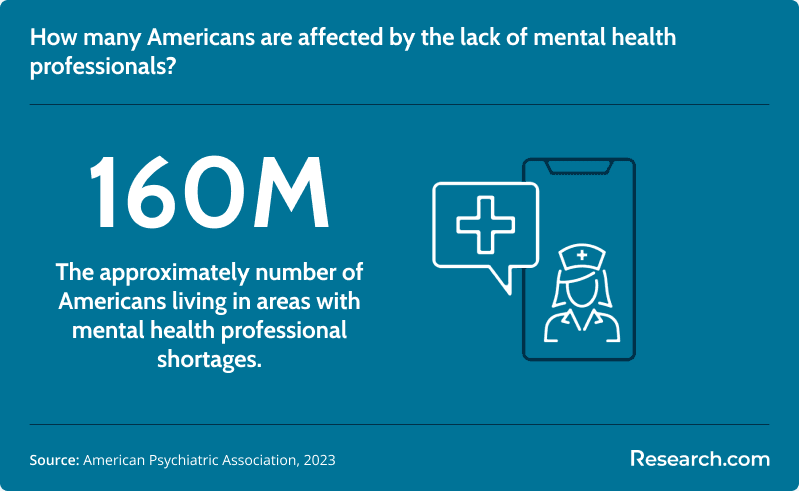
In 2023, approximately 160 million Americans live in areas with mental health professional shortages. That access gap is one reason many students are exploring psychiatry and adjacent mental health careers.
There is no single required undergraduate major for future psychiatrists. Medical schools typically care more about whether you complete prerequisite science courses, perform well academically, gain relevant clinical or service experience, and demonstrate readiness for medical training. Still, some majors can make the transition into medical school and psychiatric training more natural.
| Undergraduate major | How it helps aspiring psychiatrists | Best for students who... |
| Psychology | Introduces human behavior, cognition, development, abnormal psychology, and mental health concepts | Want early exposure to clinical and behavioral topics; students comparing graduate options may also review affordable master’s programs in psychology |
| Biology | Strengthens preparation in anatomy, physiology, genetics, and life sciences | Prefer a broad science foundation for medical school |
| Neuroscience | Focuses on the brain, nervous system, behavior, and biological mechanisms linked to psychiatric disorders | Are especially interested in brain-based explanations of behavior and illness |
| Chemistry or Biochemistry | Builds knowledge of chemical processes, pharmacology-related concepts, and laboratory science | Want strong preparation for medication-related and biomedical coursework |
| Pre-med or Health Sciences | Often packages medical school prerequisites, advising, and clinical preparation | Want a structured pre-med path; students exploring broader health fields may compare options such as an affordable online public health degree |
The best major is the one in which you can complete medical school prerequisites, maintain strong academic performance, gain meaningful experience, and explain clearly why psychiatry fits your goals.
Is medical school required to become a psychiatrist?
Yes. Medical school is required because psychiatrists are physicians. You cannot become a psychiatrist through a psychology degree, counseling degree, certificate, or non-medical doctorate alone. After medical school, you must complete psychiatric residency training and meet state licensing requirements. Some professionals also pursue continuing education or related credentials, including online certifications that pay well, but these do not replace medical school for psychiatry.
The pathway typically includes:
- Bachelor’s degree: Complete undergraduate study and required pre-medical courses such as biology, chemistry, physics, and mathematics. Students comparing youth-focused mental health paths can also review child psychologist education requirements to understand how psychology careers differ from psychiatry.
- Medical school: Earn a Doctor of Medicine or Doctor of Osteopathic Medicine degree. Medical school typically lasts four years. The first two years generally emphasize classroom and laboratory learning in areas such as anatomy, physiology, pharmacology, and pathology. The final two years usually include clinical rotations across medical specialties, including psychiatry.
- Psychiatry residency: Complete a psychiatry residency, which typically lasts four years. Residents treat patients under supervision, learn diagnostic interviewing, manage psychiatric medications, provide psychotherapy, respond to emergencies, and work across inpatient and outpatient settings.
- Licensing and certification: Pass the USMLE if you are an M.D. or the COMLEX-USA if you are a D.O., meet state licensure requirements, and consider ABPN board certification.
What are the different certifications and specializations within psychiatry?
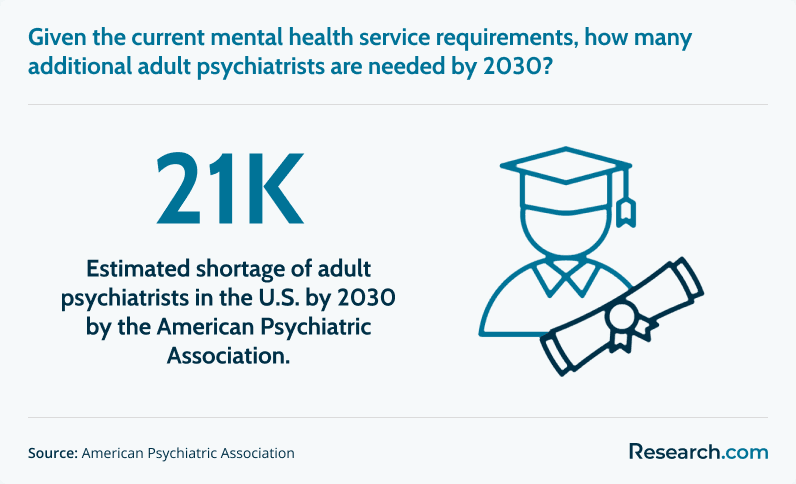
By 2030, a shortage of 21,000 adult psychiatrists in the U.S. is projected by the American Psychiatric Association. Subspecialty training can help psychiatrists serve specific populations and complex clinical needs.
Psychiatry certification is typically handled through the American Board of Psychiatry and Neurology in the United States. Many subspecialties require fellowship training after general psychiatry residency and a subspecialty board examination. This is different from counseling credentials, which may involve programs such as CACREP-accredited counseling programs online.
| Certification or subspecialty | Focus | Additional training noted |
| General Psychiatry | Broad diagnosis and treatment of psychiatric disorders across adult populations | Four-year psychiatry residency followed by the ABPN board examination |
| Child and Adolescent Psychiatry | Mental health care for children, teenagers, and families | Two-year fellowship after general psychiatry residency and a subspecialty board examination |
| Geriatric Psychiatry | Psychiatric care for older adults, including dementia, depression, and anxiety | Geriatric psychiatry fellowship, typically one year, and a subspecialty board examination |
| Addiction Psychiatry | Treatment of substance use disorders and co-occurring psychiatric conditions | One-year addiction psychiatry fellowship and a subspecialty board examination |
| Forensic Psychiatry | Psychiatric work involving legal questions, competency, risk assessment, and court-related evaluations | One-year forensic psychiatry fellowship and a subspecialty board examination; students interested in legal-science intersections may also explore forensic science colleges |
What exams do you need to pass to become a licensed psychiatrist?
Psychiatry requires exams at multiple points: admission to medical school, medical licensure, residency progress assessment, and optional but highly valued board certification. The required licensing exam pathway depends on whether you complete an M.D. or D.O. program.
| Exam | When it occurs | Purpose |
| Medical College Admission Test (MCAT) | Before medical school admission | Assesses knowledge of biological and physical sciences, critical thinking, problem-solving, and writing skills |
| USMLE Step 1 | M.D. pathway | Tests basic medical sciences, including anatomy, physiology, pathology, pharmacology, microbiology, and biochemistry |
| USMLE Step 2 Clinical Knowledge (CK) | M.D. pathway | Evaluates clinical knowledge across medical fields such as internal medicine, surgery, pediatrics, psychiatry, and obstetrics/gynecology |
| USMLE Step 3 | M.D. pathway | Assesses readiness to apply medical knowledge for unsupervised practice, with emphasis on patient management in ambulatory settings |
| COMLEX-USA Level 1 | D.O. pathway | Tests basic medical sciences with emphasis on osteopathic principles and practice |
| COMLEX-USA Level 2-Cognitive Evaluation (CE) | D.O. pathway | Assesses clinical knowledge and clinical decision-making |
| COMLEX-USA Level 3 | D.O. pathway | Evaluates independent patient management, ambulatory care, and continuity of care |
| Psychiatry Resident-In-Training Examination (PRITE) | During residency | Taken annually to measure resident knowledge and guide training |
| ABPN Psychiatry Certification Exam | After residency | Evaluates competence in general psychiatry; not required for state licensure but often important for employment and professional credibility |
How do you get board-certified in psychiatry?
Based on the American Board of Psychiatry and Neurology Data, 87% of Psychiatry certifications were active in 2023 while 94% renewed their certification by taking the continuing certification assessment.
Board certification is not the same as state licensure. Licensure allows you to practice medicine; board certification demonstrates that you have completed specialty training and passed a professional examination in psychiatry. Many employers, hospitals, insurers, and academic settings prefer or require it.
1. Complete undergraduate education
Earn a bachelor’s degree and finish medical school prerequisites, commonly including biology, chemistry, physics, psychology, and related coursework.
2. Graduate from medical school
Complete an accredited medical program and earn either an M.D. or D.O. degree.
3. Pass the required medical licensing exams
- M.D. pathway: Pass USMLE Steps 1, 2 (CK), and 3.
- D.O. pathway: Pass COMLEX-USA Levels 1, 2 (CE), and 3.
4. Finish an accredited psychiatry residency
Complete a four-year psychiatry residency program accredited by the Accreditation Council for Graduate Medical Education.
5. Use PRITE as a training benchmark
The Psychiatry Resident-In-Training Examination is not required for board certification, but it helps residents and programs identify strengths and knowledge gaps during training.
6. Apply through the American Board of Psychiatry and Neurology
After residency, candidates apply to the ABPN and provide documentation. Typical documentation includes:
- Proof of an M.D. or D.O. degree.
- Verification of completion of an ACGME-accredited psychiatry residency program.
- A valid, unrestricted, and active state medical license.
- A completed ABPN application and required application fee.
7. Pass the ABPN psychiatry certification exam
The exam covers major areas of psychiatric knowledge, including basic neuroscience, clinical psychiatry, psychotherapy, ethics, and professionalism. Preparation often includes review courses, practice questions, textbooks, and the ABPN content outline.
8. Maintain certification
ABPN certification in psychiatry is valid for 10 years. To remain certified, psychiatrists must participate in continuing medical education, complete self-assessment and performance-in-practice activities, and either pass a recertification examination every 10 years or participate in the Continuing Certification program with ongoing assessments.
Where do psychiatrists typically work?
Psychiatrists work across the health care system, from emergency departments and inpatient units to outpatient clinics and private practices. Considering the current state of mental health in the U.S., access needs strongly influence where psychiatrists are hired. In 2023, 40.3% were employed by outpatient mental health facilities while 20.8% worked in community mental health centers.
| Work setting | Typical responsibilities | Who may prefer it |
| Private practice | Outpatient evaluations, medication management, psychotherapy, family consultation, and coordination with other clinicians | Psychiatrists who want autonomy and business responsibility |
| Hospitals | Inpatient psychiatric care, emergency evaluations, consultation for medical teams, and acute stabilization | Physicians who prefer team-based, higher-acuity clinical work |
| Academic and research institutions | Teaching, supervising trainees, conducting research, publishing, and providing specialty care | Psychiatrists interested in education, research, and leadership |
| Community mental health centers | Outpatient care, crisis response, medication management, and collaboration with social workers and case managers | Clinicians committed to underserved populations and public mental health |
| Substance abuse treatment facilities | Addiction assessment, medication-assisted treatment, dual-diagnosis care, counseling coordination, and relapse prevention planning | Psychiatrists focused on substance use disorders and co-occurring conditions |
What is the average salary of a psychiatrist?
Psychiatry is not among the quickest degrees that pay well, but it can offer a strong financial return for physicians who complete the full training path. As of 2024, the average annual salary for a general psychiatrist in the United States is approximately $230,000 to $250,000. Actual earnings vary by location, employer, patient volume, specialty, payer mix, and experience.
Salary factors to compare before choosing a job
| Factor | How it may affect pay |
| Geographic location | Psychiatrists in urban areas and high-cost regions such as New York City, San Francisco, and Los Angeles often earn higher salaries. Salaries in these high-cost areas can exceed $300,000 annually. Rural or lower-cost regions may offer salaries ranging from $180,000 to $220,000. |
| Practice type | Private practice can offer higher income potential depending on patient volume and fee structure. Hospitals and academic institutions may offer salaries in the range of $200,000 to $240,000. |
| Experience | Early-career psychiatrists may start around $180,000 to $200,000. Experienced psychiatrists or those in senior roles may earn $250,000 or more. |
| Subspecialty | Child and adolescent psychiatry often falls in the range of $220,000 to $260,000. Forensic psychiatry may exceed $250,000. Addiction psychiatry may range from $220,000 to $250,000. |
| Work setting | Government and public sector roles may range from $200,000 to $220,000. Academic and research roles often fall within $190,000 to $230,000. |
Salary should not be evaluated in isolation. Compare loan burden, call expectations, malpractice coverage, benefits, schedule flexibility, supervision requirements, and whether the role aligns with your preferred patient population.
What is the job outlook for psychiatrists?
The job outlook for psychiatrists is generally positive because demand for mental health services remains high. The Bureau of Labor Statistics projects 6.7% employment growth for psychiatrists between 2022 and 2032.
Several factors support demand: growing awareness of mental health conditions, more patients seeking care for anxiety, depression, substance use disorders, and serious mental illness, and efforts to expand insurance coverage for behavioral health. These trends also influence demand for related professionals, including graduates of the most affordable online master’s in mental health counseling programs.
Shortages are especially important in rural and underserved regions. The psychiatrist workforce is also affected by retirements, geographic maldistribution, and the number of medical graduates choosing psychiatry. Integrated care models are expanding as well, placing psychiatrists alongside primary care physicians, psychologists, social workers, counselors, and care managers.
How Emerging Technologies Are Transforming Psychiatry
Technology is changing psychiatric care, but it does not replace clinical judgment, licensure, ethics, or the therapeutic relationship. For future psychiatrists, the practical question is not whether technology will matter; it is how to use it safely, legally, and effectively.
Telepsychiatry
Telepsychiatry allows psychiatrists to evaluate and treat patients remotely. It can improve access for patients who live far from specialty care, have mobility barriers, or need more flexible appointment options. Psychiatrists should still consider state licensure rules, privacy requirements, emergency protocols, and whether a remote visit is clinically appropriate.
Artificial intelligence in clinical support
AI tools may help organize records, identify patterns, support documentation, or assist with screening workflows. However, diagnosis and treatment decisions remain the responsibility of licensed clinicians. Psychiatrists should be cautious about bias, data privacy, transparency, and overreliance on algorithmic outputs.
Wearables and mobile mental health apps
Sleep trackers, mood logs, heart rate data, and app-based symptom monitoring can give patients and clinicians more information between visits. These tools are most useful when they supplement—not replace—clinical interviews, risk assessment, and evidence-based treatment planning.
Virtual reality for therapy support
Virtual reality may be used in structured exposure-based treatment for conditions such as phobias, PTSD, and social anxiety disorders. Psychiatrists using or referring for VR-supported interventions should evaluate the evidence base, patient safety, informed consent, and appropriate supervision.
Genomics and precision psychiatry
Pharmacogenomic testing may help clinicians consider how a patient metabolizes certain medications. It is not a standalone answer to psychiatric prescribing, but it can be one part of a broader clinical assessment that includes symptoms, medical history, side effects, family history, and patient preferences.
Ethical and access concerns
Digital psychiatry raises issues around confidentiality, cybersecurity, informed consent, equity, and the digital divide. Psychiatrists who want broader technology or health care career flexibility may also compare options such as the easiest online degrees that pay well, but technology credentials do not substitute for psychiatric licensure.
What financial considerations should I be aware of when pursuing a career in Psychiatry?
Psychiatry requires a major financial commitment because the path includes undergraduate education, medical school, residency, and possibly fellowship training. Before committing, compare tuition, living costs, exam fees, application expenses, relocation costs, interest on loans, and the opportunity cost of years spent in training.
Students trying to reduce early education costs may look at options such as the most affordable online psychology degree for undergraduate or related preparation, but psychiatry still requires medical school. A realistic financial plan should compare expected debt with the average salary ranges, benefits, loan repayment options, public service opportunities, and the type of practice you want after residency.
What distinguishes career prospects between psychiatrists and psychologists?
Psychiatrists and psychologists both work in mental health, but their training, scope, and career economics differ. Psychiatrists are physicians who can prescribe medication and manage medical aspects of psychiatric illness. Psychologists typically focus on psychological testing, psychotherapy, behavioral assessment, research, and non-medical clinical care, depending on licensure and specialization.
The choice depends on whether you want to attend medical school, prescribe medication, treat psychiatric illness from a medical model, or focus primarily on assessment and therapy. For a deeper comparison of scope and compensation, review Research.com’s guide to psychiatrist vs psychologist salary.
How Can Interdisciplinary Certifications Enhance a Psychiatrist’s Practice?
Interdisciplinary training can help psychiatrists collaborate more effectively and understand behavioral, social, developmental, and legal dimensions of care. For example, training connected to BCBA master’s programs online may help physicians better understand structured behavioral interventions, although it does not replace psychiatric training or medical licensure.
The best additional credential is one that solves a real practice need. A psychiatrist working with autism, severe behavioral challenges, children, schools, or intellectual and developmental disabilities may benefit from behavioral analysis knowledge. A psychiatrist focused on courts may benefit from forensic training. A psychiatrist in community care may benefit from social work and case management literacy.
What are the common challenges faced by psychiatrists in their careers?
Psychiatry can be meaningful work, but it also carries professional and emotional demands. Aspiring psychiatrists should understand these challenges before entering the field.
- Burnout risk: Treating patients with severe symptoms, trauma histories, suicidality, psychosis, addiction, and chronic illness can be emotionally taxing.
- Administrative burden: Documentation, prior authorizations, insurance communication, safety planning, and compliance tasks can reduce time available for direct care.
- Mental health stigma: Stigma may affect whether patients seek help, follow treatment, disclose symptoms, or maintain care.
- Reimbursement complexity: Psychiatrists in private practice may face claim denials, payment delays, and difficult payer negotiations.
- Continuing education: Maintaining competence requires ongoing learning in medications, psychotherapy, law, ethics, neuroscience, and emerging clinical evidence.
- Work-life balance: Call schedules, emergencies, high patient need, and academic or hospital responsibilities can make boundaries difficult.
Common Mistakes to Avoid When Planning a Psychiatry Career
| Mistake | Why it can hurt you | Better approach |
| Assuming psychiatry is the same as therapy | You may choose the wrong education path if you do not understand the medical role | Compare psychiatry, psychology, counseling, and social work before applying |
| Choosing an undergraduate major only because it sounds “pre-med” | A poor academic fit can weaken grades and motivation | Pick a major that lets you complete prerequisites while performing well |
| Ignoring medical school cost | Debt can shape your specialty, practice setting, and lifestyle choices | Estimate full cost, loan interest, repayment options, and expected earnings |
| Overlooking state licensure requirements | Licensure rules affect where and how you can practice | Review state medical board requirements early, especially for telepsychiatry |
| Assuming board certification is optional in practice | Some employers, hospitals, and insurers may expect it | Plan for ABPN certification and continuing certification requirements |
| Relying only on salary averages | A higher salary may come with call, workload, location, or administrative trade-offs | Compare total compensation, schedule, benefits, supervision, and patient mix |
What is the quickest way to become a psychiatrist or therapist?
There is no shortcut to becoming a psychiatrist because the role requires medical school, residency, licensing exams, and physician licensure. If your goal is specifically to prescribe psychiatric medication and practice as a physician, the medical route is required.
If your broader goal is to work in mental health care sooner, consider counseling, social work, marriage and family therapy, or psychology-related roles. These paths differ in scope and may not allow medication prescribing, but they can lead to licensed therapy careers more quickly than medical training. Research.com’s guide to the quickest way to become a therapist can help you compare non-physician options.
The key decision is scope. Choose psychiatry if you want physician training, medication authority, and medical responsibility. Choose therapy or counseling if you primarily want to provide psychotherapy and are comfortable working within a non-prescribing role.
Why Specialize in Child Psychiatry?
Child and adolescent psychiatry allows physicians to intervene during important developmental years. Specialists in this area may work with children, teenagers, parents, schools, pediatricians, therapists, and social service systems to address conditions early and support long-term functioning.
This path may fit you if you are interested in developmental psychology, family systems, school-related concerns, pediatric medication management, trauma, autism-related care, mood disorders, anxiety, and complex behavioral presentations. To compare overlapping non-physician youth mental health careers, review Research.com’s guide on how to become a child psychologist.
How can additional counseling training complement your psychiatric expertise?
Medication management is a major part of psychiatric practice, but strong counseling and psychotherapy skills can improve interviewing, treatment planning, patient trust, and adherence. Psychiatrists who develop advanced counseling abilities may be better equipped to handle complex emotions, ambivalence about medication, family conflict, grief, trauma, and long-term therapeutic relationships.
Additional counseling training is most useful when it directly supports the population you treat. For example, a psychiatrist in outpatient practice may benefit from psychotherapy training, while a psychiatrist in integrated care may focus more on brief interventions and motivational interviewing. If you are comparing counseling roles more broadly, see Research.com’s guide on how to be a counselor.
How can interdisciplinary behavioral analysis training enhance patient outcomes?
Behavioral analysis training can help psychiatrists understand observable behavior patterns, reinforcement systems, functional assessment, and structured intervention planning. This can be especially useful when working with children, developmental disabilities, autism-related needs, disruptive behavior, or interdisciplinary teams.
Psychiatrists do not need to become behavior analysts to collaborate effectively, but familiarity with evidence-based behavioral approaches can improve treatment coordination. Students and professionals comparing this area can review ABA schools to understand the training landscape.
Is an online PsyD program a viable option for expanding your clinical skills?
An online PsyD program may help some professionals deepen psychological assessment, therapy, supervision, or clinical leadership skills. For psychiatrists, however, a PsyD is not required to practice psychiatry and does not replace medical school, residency, or board certification.
This route may make sense for a physician who wants structured psychology training for a specific career goal, such as academic work, psychotherapy specialization, or interdisciplinary leadership. It may not be worth the time and cost if your goal can be met through CME, psychotherapy institutes, fellowships, or targeted continuing education.
How do you stay updated on the latest advancements in psychiatry?
Psychiatrists stay current through accredited continuing medical education, peer-reviewed journals, professional conferences, supervision or consultation groups, clinical guidelines, specialty society updates, and board continuing certification requirements. Staying updated is not optional; medications, safety standards, diagnostic practices, technology, and legal requirements evolve.
Some clinicians also pursue interdisciplinary graduate study. For example, a psychiatrist interested in psychology research or clinical theory might compare options such as the fastest master’s in psychology, although targeted CME may be more efficient for many practicing physicians.
Should psychiatrists pursue additional online education in child mental health?
Additional online education in child mental health can be useful for psychiatrists who treat younger patients but have not completed child and adolescent psychiatry fellowship training. It may strengthen knowledge of development, family systems, school collaboration, trauma-informed care, and age-appropriate communication.
However, online coursework should not be confused with subspecialty board certification. Psychiatrists seeking formal specialization should evaluate fellowship requirements. Those looking for supplemental knowledge may compare child and adolescent psychology master’s programs as one possible educational resource.
How can supplementary research training boost your psychiatric practice?
Research training can help psychiatrists evaluate evidence, interpret clinical studies, participate in trials, publish findings, and apply emerging science responsibly. This is especially valuable for academic psychiatrists, physician-scientists, residents considering fellowship, and clinicians working in specialized or treatment-resistant populations.
Not every psychiatrist needs another degree to become evidence-informed. Still, structured study in research methods can help. Professionals exploring flexible psychology training may compare options such as a 2-year psychology degree online as part of broader academic planning.
How can a forensic psychology perspective benefit your psychiatric practice?
Forensic knowledge can support psychiatrists who work with legal questions, risk assessment, competency, disability, custody, criminal responsibility, correctional care, or expert testimony. It can also improve documentation and clarify the boundary between treatment roles and forensic evaluation roles.
Psychiatrists interested in legal-mental health intersections may pursue forensic psychiatry fellowship training. Others may use psychology-based coursework to understand assessment frameworks and legal terminology. One related option to explore is an affordable master’s in forensic psychology online.
Are accelerated doctoral programs in psychology an efficient route to advanced clinical skills?
Accelerated psychology doctoral programs may appeal to professionals who want advanced clinical and research training in a shortened format. For psychiatrists, the value depends on the goal. If the purpose is better psychotherapy skill, a specialized therapy institute or CME pathway may be more direct. If the purpose is psychology licensure, research, assessment, or academic positioning, a doctoral program may be more relevant.
Before enrolling, compare accreditation, clinical placement expectations, licensure outcomes, total cost, and whether the credential adds something your medical training does not. Research.com’s overview of accelerated doctoral programs psychology can help you evaluate this category.
Can a human services degree complement your psychiatric expertise?
Human services training can broaden a psychiatrist’s understanding of poverty, housing instability, community resources, disability systems, public benefits, case management, and social determinants of health. This perspective is especially useful in community psychiatry, addiction treatment, correctional care, and integrated behavioral health settings.
A human services degree is not required for psychiatrists, but it may help clinicians who want leadership roles in public health, nonprofit programs, or community-based systems. Cost-conscious students can compare a cheap human services degree online when exploring complementary education.
Can an online PhD psychology program enhance your psychiatric research?
An online PhD psychology may support psychiatrists who want deeper training in research design, statistics, behavioral science, teaching, or academic writing. It can be useful for physicians pursuing research-heavy careers, but it is not necessary for most clinical psychiatry roles.
Before choosing this path, compare it with research fellowships, master’s-level research training, protected research time in academic medicine, and mentorship through clinical departments. The best choice depends on whether you need a credential, a skill set, or a research network.
Are combined master's and PsyD programs beneficial for your practice?
Combined master’s and PsyD programs can provide structured psychology training that integrates coursework, clinical experience, and research. For psychiatrists, this type of program may be beneficial only when it clearly supports a defined professional goal, such as psychotherapy specialization, psychological assessment, teaching, or interdisciplinary leadership.
Because psychiatrists already complete medical school and residency, adding another lengthy degree should be evaluated carefully. Ask whether the same outcome could be achieved through fellowship training, psychotherapy certification, CME, supervision, or focused workshops.
Are accredited online PsyD programs shaping the future of psychiatric practice?
Accredited online PsyD programs may expand access to psychology training through flexible delivery models, but they do not define the core future of psychiatry. Psychiatry remains a medical specialty governed by medical education, residency training, state licensure, and board certification.
That said, psychiatrists who want to strengthen clinical psychology knowledge should verify accreditation, practicum requirements, internship expectations, licensure alignment, and total cost. A useful starting point is Research.com’s guide to PsyD programs online APA accredited.
How can an online master's program in psychology advance your clinical practice?
An online master’s in psychology can help psychiatrists or pre-med students deepen knowledge of cognition, development, assessment, research methods, and psychological interventions. It may be useful for career changers building a foundation before medical school or for physicians who want structured exposure to psychology.
It is not a substitute for medical training, therapy licensure, or board certification in psychiatry. If speed and flexibility are priorities, compare options such as an online master’s in psychology one year program while checking admissions, accreditation, curriculum, and whether credits will support your actual goal.
How can interdisciplinary social work expertise enhance psychiatric outcomes?
Psychiatric symptoms are often shaped by housing, family stress, insurance access, disability benefits, trauma, employment, transportation, and community support. Social work expertise can help psychiatrists understand these realities and coordinate care more effectively.
Psychiatrists commonly collaborate with social workers in hospitals, community mental health centers, schools, addiction treatment, and crisis programs. Clinicians who want formal social work knowledge can compare accelerated MSW online programs, though most psychiatrists gain this perspective through team-based practice rather than earning an additional degree.
Questions to Ask Before Choosing Psychiatry
- Do I want to become a physician, or do I mainly want to provide therapy?
- Am I prepared for medical school, residency, licensing exams, and long-term training?
- Can I manage the financial investment and potential student debt?
- Which patient population interests me most: adults, children, older adults, addiction, forensic cases, or medically complex patients?
- Do I prefer outpatient continuity, inpatient acuity, academic work, public mental health, private practice, or telepsychiatry?
- How important are prescribing authority, medical diagnosis, and collaboration with other physicians to my career goals?
- What support systems will I need to manage stress, burnout risk, and difficult clinical work?
References
- American Psychiatric Association. (2023). APA.
- National Institute of Mental Health. (2022). Mental illness statistics. National Institute of Mental Health.
- Substance Abuse and Mental Health Services Administration. (2023). Quick statistics. SAMHSA.
- Substance Abuse and Mental Health Services Administration. (2022). 2022 mental health client-level data (MH-CLD) annual report. SAMHSA.
- Substance Abuse and Mental Health Services Administration. (2023). 2023 national survey on drug use and health: Annual national report. SAMHSA.
- Substance Abuse and Mental Health Services Administration. (2023). 2023 national survey on drug use and health: Companion report. SAMHSA.
Key Insights
- Psychiatry is a medical career, not a shortcut into therapy. You must complete medical school, psychiatry residency, licensing exams, and state licensure to practice as a psychiatrist.
- The Bureau of Labor Statistics projects 6.7% employment growth for psychiatrists between 2022 and 2032, and demand is especially important in underserved areas.
- As of 2024, the average annual salary for a general psychiatrist in the United States is approximately $230,000 to $250,000, but location, specialty, setting, experience, and workload can significantly affect compensation.
- By 2030, a shortage of 21,000 adult psychiatrists in the U.S. is projected by the American Psychiatric Association, making access to psychiatric care a major workforce issue.
- In 2023, 40.3% were employed by outpatient mental health facilities while 20.8% worked in community mental health centers, showing how important outpatient and community-based care are to the profession.
- Approximately 160 million Americans live in areas with mental health professional shortages, so students interested in psychiatry should consider where they want to practice and which populations need care most.
- Before choosing psychiatry, compare it with psychology, counseling, social work, and behavioral analysis. The best path depends on whether you want physician-level medical authority, therapy-focused practice, research, community care, or interdisciplinary mental health work.
Other Things You Should Know About Becoming a Psychiatrist
Psychiatrists must complete a four-year psychiatry residency accredited by the ACGME after earning an MD or DO. The residency includes supervised clinical training in inpatient, outpatient, emergency, and consult-liaison psychiatry, and it is required before board certification through the American Board of Psychiatry and Neurology.
To become a psychiatrist in 2027, you need to complete a bachelor's degree, attend medical school for an M.D. or D.O. degree, and finish a four-year psychiatry residency. Board certification and state licensing are also mandatory steps.