
2027 Most Affordable Master’s in Child and Adolescent Psychology Online

Co-Founder and Chief Data Scientist
Choosing an affordable online master’s in child and adolescent psychology is usually not just a tuition decision. It is a career decision, a licensure decision, and often a scheduling decision for adults who are already working in education, counseling, social services, healthcare, or youth programs. The need is real: between 2016 and 2023, the prevalence of diagnosed mental or behavioral health conditions among adolescents increased by 35%.
This guide explains what an online Master’s in Child and Adolescent Psychology can prepare you to do, how much programs may cost, how long they can take, what to check before enrolling, and how to compare affordable programs without overlooking accreditation, practicum expectations, state licensure rules, or career fit.
Quick answer: Is an affordable online Master’s in Child and Adolescent Psychology worth considering?
Yes, an affordable online Master’s in Child and Adolescent Psychology can be a practical option if you want graduate-level training focused on youth development, behavioral health, family systems, assessment, and intervention while keeping your current job or family schedule. However, the degree is not automatically a path to independent clinical practice in every state. Before enrolling, confirm whether the program meets your state’s licensure requirements, includes supervised field experience if your goal requires it, and aligns with the roles you want after graduation.
- Best fit: Working professionals in schools, youth services, counseling-adjacent roles, behavioral health, social services, or applied behavior analysis who need flexible graduate study.
- Main benefit: Online delivery can reduce relocation and commuting costs while allowing students to compare programs nationally.
- Important caution: Salary and licensure outcomes depend on job title, state regulations, supervised hours, certifications, and whether you later pursue doctoral study.
What can I expect from a Master’s in Child and Adolescent Psychology Online?
An online Master’s in Child and Adolescent Psychology is a graduate program focused on how children and teenagers develop emotionally, socially, cognitively, and behaviorally. Students examine how family relationships, school environments, trauma, learning differences, disability, culture, and mental health conditions can affect young people.
Typical programs include coursework in developmental psychology, child and adolescent psychopathology, behavioral assessment, family systems, research methods, ethics, intervention planning, and counseling-related practices. Some programs are more research-oriented, while others are designed for applied roles in schools, clinics, community agencies, or behavioral health organizations.
The degree can support careers in counseling-adjacent services, youth advocacy, behavioral intervention, education support, program coordination, case management, and research. For roles such as licensed psychologist, independent therapist, or school psychologist, students should verify whether additional licensure, supervised experience, certification, or doctoral education is required in their state.
Where can I work with a Master’s in Child and Adolescent Psychology Online?
Graduates may work in organizations that serve children, adolescents, and families. Common settings include schools, community mental health agencies, hospitals, residential treatment programs, youth nonprofits, social service organizations, juvenile justice programs, research centers, and government agencies.
The exact job options depend heavily on the program’s focus. A student in an applied behavior analysis track may pursue behavioral intervention roles, while a student in a developmental psychology or research-focused program may be better prepared for research assistance, youth program evaluation, or doctoral study. Students who want clinical counseling, school psychology, or independent practice should review state credentialing rules before choosing a program.
How much can I make with a Master’s in Child and Adolescent Psychology Online?
Earnings vary by position, location, employer, licensure status, and experience. Entry-level roles such as child counselor or behavioral therapist typically fall between $45,000 and $60,000 annually. School-based roles, including school counselors or special education specialists, may range from $55,000 to $70,000 per year depending on the district and state.
Clinical mental health roles may reach $65,000 to $75,000, especially when professionals hold appropriate licensure or specialized credentials. Advanced positions, including licensed psychologists who specialize in children and adolescents, may range from $80,000 to $120,000 annually, though these roles often require doctoral training and state licensure beyond the master’s degree.
| Career direction | Typical work setting | Salary range stated in this guide | Decision note |
| Child counselor or behavioral therapist | Community agencies, clinics, schools, youth programs | $45,000 to $60,000 annually | Check whether the role requires state licensure or supervised hours. |
| School counselor or special education specialist | K-12 schools and districts | $55,000 to $70,000 per year | State education credentials may be required in addition to the degree. |
| Mental health therapist | Clinics, hospitals, community behavioral health agencies | $65,000 to $75,000 | Clinical licensure requirements vary by state and professional title. |
| Licensed psychologist specializing in youth | Clinical practices, hospitals, schools, research settings | $80,000 to $120,000 annually | Often requires doctoral education and licensure beyond the master’s level. |
- Most affordable online Master’s in Child and Adolescent Psychology programs for 2027
- How long does an affordable online Master’s in Child and Adolescent Psychology take?
- Online vs. campus Master’s in Child and Adolescent Psychology: which format fits best?
- How much does an affordable online Master’s in Child and Adolescent Psychology cost?
- Financial aid options for online child and adolescent psychology master’s students
- Admission requirements for online Master’s in Child and Adolescent Psychology programs
- Common courses in an online Master’s in Child and Adolescent Psychology
- Specialization options in online child and adolescent psychology master’s programs
- How certifications can strengthen your career options
- Student support services to expect in online master’s programs
- Is an online psychology master’s a smart investment?
- How online programs handle clinical training
- Will an online master’s meet state licensure requirements?
- Can a master’s lead to a fully funded PsyD program?
- Should you pursue a doctoral degree in child and adolescent psychology?
- Psychologist vs. social worker in child and adolescent mental health
- Preparing to address co-occurring mental health and substance use concerns
- How to choose the best online Master’s in Child and Adolescent Psychology
- Can child and adolescent psychology training support forensic psychology careers?
- How to judge program quality and fit
- Career paths for graduates of online child and adolescent psychology master’s programs
- Job market outlook for child and adolescent psychology master’s graduates
- Trends shaping online child and adolescent psychology programs
Most Affordable Master’s in Child and Adolescent Psychology Online Programs for 2027
How do we rank schools?
Research.com evaluates programs with affordability, accessibility, academic quality, and student decision-making in mind. A low tuition rate matters, but it should not be the only factor. Prospective students should also compare accreditation, curriculum fit, credit requirements, concentrations, practicum expectations, and whether the program supports the career path they want.
This ranking follows a transparent ranking methodology and uses data sources such as the Integrated Postsecondary Education Data System (IPEDS), Peterson's education databases, including the Distance Learning Licensed Data Set, and the College Scorecard from the National Center for Education Statistics. These sources help readers compare schools using consistent data instead of relying only on marketing claims.
1. Missouri State University
Missouri State University offers an online Master’s in Applied Behavior Analysis with a child and adolescent psychology focus. The program, launched in 2017, is designed for students interested in behavioral assessment, intervention, and support for children and teenagers, including young people with autism spectrum disorders. Delivered fully online, it can suit working professionals preparing for behavior-focused roles and includes preparation related to the Board Certified Behavior Analyst exam.
- Program length: 2 years
- Track or concentration: Applied Behavior Analysis
- Cost per credit: $415 for Missouri residents; $830 for non-residents
- Credits required: 45 credit hours
- Accreditation: Higher Learning Commission (HLC)
2. University of Southern Mississippi
The University of Southern Mississippi offers an online Master of Science in Psychology with an emphasis in child and adolescent development. Available since 2015, the program is intended for students interested in education, clinical-adjacent work, research, or doctoral preparation. Asynchronous coursework allows students to study on a flexible schedule while covering development, family systems, intervention strategies, and research. Students considering doctoral study may value the optional thesis track.
- Program length: 2 years
- Track or concentration: Child and Family Sciences
- Cost per credit: $519.12
- Credits required: 36 credit hours
- Accreditation: Southern Association of Colleges and Schools Commission on Colleges (SACSCOC)
3. Liberty University
Liberty University offers an online Master of Arts in Applied Psychology with a developmental psychology focus. Established in 2014, the program is built for students who want to study how children and adolescents develop psychologically. Courses are fully online and offered in an eight-week format, which may appeal to students who prefer accelerated scheduling. The curriculum incorporates developmental and educational psychology and is taught from a Christian worldview.
- Program length: 1.5 to 2 years
- Track or concentration: Developmental Psychology
- Cost per credit: $565
- Credits required: 36 credit hours
- Accreditation: Southern Association of Colleges and Schools Commission on Colleges (SACSCOC)
4. University of South Florida
The University of South Florida offers an online Master of Arts in Child and Adolescent Behavioral Health. Launched in 2016, the program serves professionals in mental health, healthcare, social services, and youth-serving organizations. Students may choose full-time or part-time study and explore concentration areas such as developmental disabilities and leadership in child behavioral health. The curriculum combines evidence-based coursework with field experiences aligned to the student’s concentration.
- Program length: 2 years
- Track or concentration: Child and Adolescent Behavioral Health
- Cost per credit: $347.91 for in-state; $772.17 for out-of-state
- Credits required: 39 credit hours
- Accreditation: Southern Association of Colleges and Schools Commission on Colleges (SACSCOC).
5. Grand Canyon University
Grand Canyon University offers an online Master of Science in Psychology with an emphasis in child and adolescent developmental psychology. Launched in 2013, the program is designed for students interested in youth development, education-related roles, counseling-adjacent work, or research. The asynchronous online format covers developmental milestones, family dynamics, intervention approaches, and ethics in practice with children and adolescents.
- Program length: 2 years.
- Track or concentration: Child and Adolescent Developmental Psychology
- Cost per credit: $575
- Credits required: 36 credit hours
- Accreditation: Higher Learning Commission (HLC)
| School | Program focus | Credits | Cost per credit | Best for |
| Missouri State University | Applied Behavior Analysis | 45 credit hours | $415 for Missouri residents; $830 for non-residents | Students seeking ABA-focused behavioral intervention training |
| University of Southern Mississippi | Child and Family Sciences | 36 credit hours | $519.12 | Students interested in development, research, or doctoral preparation |
| Liberty University | Developmental Psychology | 36 credit hours | $565 | Students wanting an accelerated online format and faith-integrated curriculum |
| University of South Florida | Child and Adolescent Behavioral Health | 39 credit hours | $347.91 for in-state; $772.17 for out-of-state | Professionals in behavioral health, healthcare, and social services |
| Grand Canyon University | Child and Adolescent Developmental Psychology | 36 credit hours | $575 | Students focused on child development, education, or research pathways |
How long does it take to complete the most affordable Master’s in Child and Adolescent Psychology online program?
Most affordable online master’s programs in this field take one to two years for full-time students and two to four years or longer for part-time students. The timeline depends on required credits, course sequencing, practicum or fieldwork requirements, transfer policies, and how many courses a student can realistically complete each term.
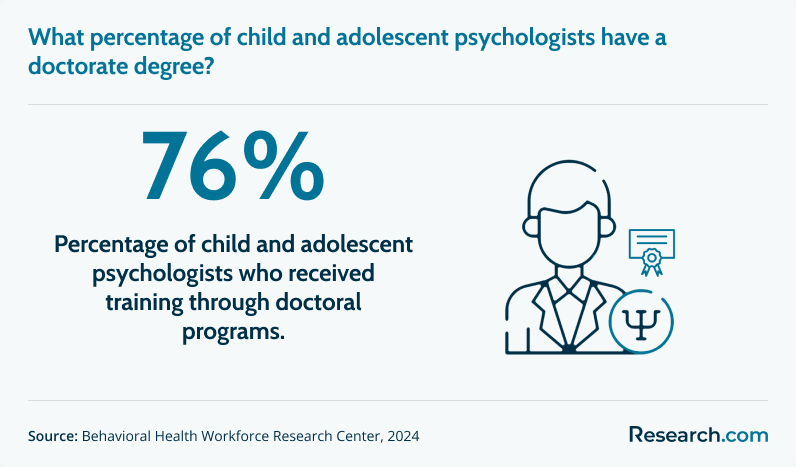
Among child and adolescent psychologists, 76% received training through doctoral programs and 77% through post-licensure training. This matters because students aiming for advanced clinical practice should understand that the master’s degree may be one step in a longer professional pathway rather than the final credential.
Factors that affect completion time
- Enrollment pace: Full-time study can shorten the timeline, while part-time study may better fit working professionals.
- Credit requirement: Programs in this guide range from 36 credit hours to 45 credit hours.
- Course format: Some schools use accelerated terms, and students comparing shorter options may want to review accelerated online psychology programs.
- Fieldwork: Practicum, internship, or supervised experience can extend the timeline, especially if placements must be arranged locally.
- Prior coursework: Students with relevant undergraduate preparation may move through prerequisite requirements more efficiently.
Before enrolling, ask the program for a sample degree plan for both full-time and part-time students. Also ask whether all required courses are offered every term, because limited course availability can delay graduation even in an online program.
How does an online Master’s in Child and Adolescent Psychology compare to an on-campus program?
The main difference is delivery format, but the better choice depends on how you learn, whether you need field placement support, and how much flexibility your life requires. Online programs can work well for students who need to keep a job, avoid relocation, or study from a region without nearby graduate options. Campus programs may be stronger for students who prefer face-to-face interaction, frequent faculty access, and in-person peer learning.
Students comparing shorter online formats may also explore 1 year master's in psychology online options, but speed should not outweigh accreditation, field training, and licensure alignment.
| Factor | Online program | On-campus program | Best choice if... |
| Schedule | Often more flexible, with asynchronous or hybrid coursework | Usually follows set class times and campus schedules | Choose online if you need to balance school with work or caregiving. |
| Location | May allow enrollment without relocation | Requires regular campus attendance | Choose online if moving is not realistic. |
| Interaction | Uses discussion boards, video meetings, and digital collaboration | Offers more face-to-face contact with faculty and classmates | Choose campus if in-person learning keeps you engaged. |
| Clinical or field experience | May require local placements arranged with program approval | May have established nearby placement relationships | Choose the format with stronger practicum support for your state and career goal. |
| Cost | May reduce commuting and relocation expenses | May include campus-related costs | Compare total cost, not tuition alone. |
Neither format is automatically better. A strong online program with clear practicum support and licensure guidance may be a better investment than a campus program that does not match your career goal. The reverse can also be true if a campus program offers stronger local placement networks.
What is the average cost of the most affordable Master’s in Child and Adolescent Psychology online program?
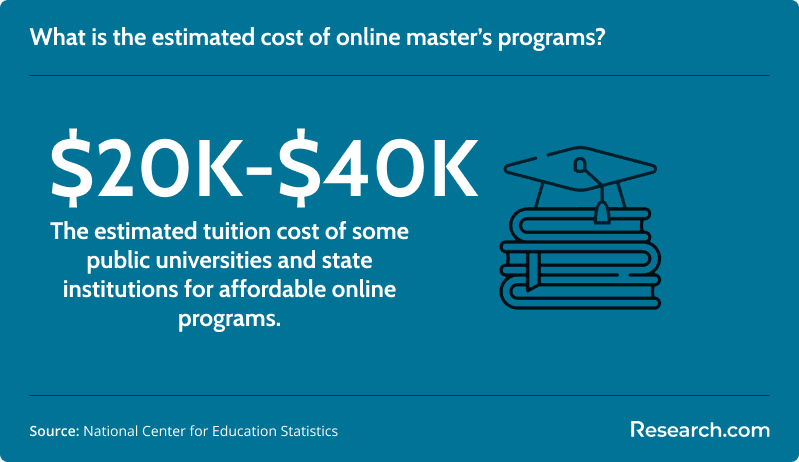
The most affordable online Master’s in Child and Adolescent Psychology programs may cost roughly $10,000 to $20,000 in total tuition. Programs at private institutions or programs with higher per-credit tuition can cost $30,000 or more. These figures can change depending on residency status, number of credits, fees, technology charges, textbooks, and fieldwork-related expenses.
When comparing costs, look beyond the advertised tuition. A program with a lower per-credit price but more required credits may not be cheaper than a program with a higher per-credit price and fewer credits. Students comparing psychology programs broadly can also review affordable online psychology degree options.
| Cost item | Why it matters | Question to ask |
| Per-credit tuition | This is the base cost used to estimate total tuition. | Is the online tuition rate the same for in-state and out-of-state students? |
| Required credits | More credits can increase total cost even when tuition is lower. | How many credits are required to graduate? |
| Fees | Online, technology, graduation, and student service fees can add up. | What is the full program cost including mandatory fees? |
| Books and materials | Psychology texts and assessment-related materials may raise costs. | Are digital materials included in tuition or billed separately? |
| Practicum expenses | Fieldwork may involve background checks, insurance, travel, or supervision costs. | Are there extra costs tied to practicum or internship placement? |
What are the financial aid options for students enrolling in an online Master’s in Child and Adolescent Psychology program?
Online graduate students may be able to use several forms of financial aid, but eligibility depends on the school, program, enrollment status, citizenship status, and whether the institution participates in federal aid programs. Start by confirming that the school is properly accredited and eligible for federal student aid.
Common funding options
- Federal Direct Loans: Eligible graduate students may apply through the Free Application for Federal Student Aid.
- Graduate PLUS Loans: These credit-based federal loans may help cover remaining graduate education costs.
- University scholarships: Some schools offer merit-based or need-based awards for graduate and online students.
- External scholarships: Professional associations, foundations, and community organizations may fund students in psychology, counseling, education, or behavioral health.
- Grants: Some government agencies and private foundations support graduate study in targeted mental health areas.
- Employer tuition reimbursement: School districts, healthcare organizations, nonprofits, and government agencies may help employees pay for relevant graduate training.
- Teaching or research assistantships: Some universities offer tuition support or stipends in exchange for academic work, though these may be less common in fully online programs.
- Military benefits: Veterans and active-duty service members may qualify for education benefits such as the GI Bill.
If you are comparing costs across helping professions, it can be useful to review funding structures for related graduate programs, such as online AGNP programs. Students comparing graduate education budgets across fields may also look at affordable MPA programs to understand how tuition models differ by discipline.
What are the prerequisites for enrolling in a Master’s in Child and Adolescent Psychology online program?
Admission requirements vary by school, but most online master’s programs require a completed bachelor’s degree from an accredited institution. Some programs prefer applicants with psychology, human development, education, social work, health sciences, or behavioral science coursework.
- Bachelor's degree: A degree from an accredited college or university is typically required.
- Relevant undergraduate coursework: Programs may expect prior study in psychology, statistics, research methods, human development, or related subjects.
- Minimum GPA: Many programs require a minimum undergraduate GPA, often 3.0 or higher.
- Letters of recommendation: Academic or professional references help programs assess readiness for graduate study.
- Statement of purpose: Applicants usually explain their goals, experience with youth populations, and reasons for choosing the program.
- Resume or CV: Relevant work, volunteer, research, or field experience can strengthen an application.
Applicants coming from healthcare, public health, or interdisciplinary science backgrounds may find that an affordable online health sciences bachelor's degree can provide useful preparation for graduate study in psychology-related fields.
What courses are typically in a Master’s in Child and Adolescent Psychology online program?
Coursework is designed to build a foundation in youth development, mental health, family context, ethical practice, assessment, and research. The exact course list depends on whether the program emphasizes clinical preparation, applied behavior analysis, developmental psychology, school-based services, or research.
- Child and adolescent psychopathology: Students examine the identification and treatment of mental, emotional, and behavioral disorders in children and adolescents, including anxiety, depression, ADHD, and conduct disorders.
- Developmental psychology: This course studies cognitive, emotional, social, and physical development from infancy through adolescence.
- Lifespan development: Students look at human development from early childhood through adulthood to understand age-related change over time.
- Research methods and statistics: Students learn how to evaluate studies, interpret data, and use evidence in practice. The same decision discipline applies in other fields; for example, career explorers may ask, what can you do with an associate in cybersecurity when comparing education-to-career pathways.
- Ethical and legal issues: Topics often include confidentiality, consent, mandated reporting, boundaries, documentation, and professional responsibilities when working with minors.
- Family systems theory: Students study how family structure, communication, conflict, attachment, and caregiving patterns affect child and adolescent well-being.
What types of specializations are available in Master’s in Child and Adolescent Psychology online programs?
Specializations allow students to align the degree with a specific population, work setting, or career objective. Among child and adolescent psychologists, 53% reported having a primary or secondary area of specialty, which reflects the importance of focused training in youth mental health careers.
| Specialization | What it emphasizes | Who should consider it |
| Child and adolescent psychopathology | Assessment and intervention for mental health disorders such as anxiety, depression, ADHD, autism spectrum disorder, and conduct disorders | Students interested in clinical-adjacent youth mental health work or further clinical training |
| School psychology | Student behavior, learning, emotional support, assessment, and school-based intervention | Students who want to work in educational environments |
| Family therapy | Family systems, communication, relational stress, and family-centered intervention | Students interested in working with caregivers and family units |
| Play therapy | Therapeutic use of play-based methods with children | Students who want child-centered intervention skills |
| Early childhood mental health | Development and well-being from infancy through early childhood, including the mental health and well-being of young children | Students interested in prevention, early intervention, and young child development |
How can additional certifications elevate my career prospects?
Certifications can help demonstrate focused expertise, but they should be selected strategically. Useful options may relate to evidence-based treatment models, trauma-informed care, autism support, behavioral analysis, crisis intervention, or family-centered practice. The value of a certification depends on employer demand, state rules, and whether the credential is recognized by respected professional bodies.
Students comparing broader clinical pathways may also review career options connected to a master's in clinical psychology. Certifications can strengthen a resume, but they do not replace required licensure when a role legally requires it.
What student support services do online Master’s programs offer?
Strong online programs support students before problems appear. Look for academic advising, technology support, online library access, writing assistance, research databases, career counseling, field placement guidance, resume support, and access to faculty office hours. Students interested in child psychology careers should also ask whether the program offers career coaching specific to schools, behavioral health agencies, child welfare organizations, or clinical pathways.
Online learning can feel isolating if support is limited. Before enrolling, ask how quickly advisors respond, whether students receive practicum placement help, how faculty communicate with online learners, and whether networking opportunities include remote students.
Is an online psychology master's degree a worthwhile investment for career advancement?
An online psychology master’s can be worthwhile when the program is affordable, accredited, career-aligned, and compatible with the credential you need. It is less likely to be a good investment if it does not meet state requirements for your intended role, lacks field experience, or forces you to take on debt without a clear employment plan.
To evaluate return on investment, compare the full cost of attendance with realistic salary ranges for your target job, the time needed for licensure or certification, and whether the degree can help you qualify for advancement. Students comparing broader affordable options can review online psychology master's degree programs.
How do online programs ensure effective clinical training?
Online programs that include clinical or applied practice usually combine remote coursework with local supervised experiences. Students may complete practicum or fieldwork at approved schools, clinics, community agencies, or behavioral health organizations near where they live. Programs may also use virtual simulations, case-based learning, tele-supervision, and structured faculty feedback.
For students planning advanced clinical education, some master’s programs may support later applications to accelerated PsyD programs. Before enrolling, ask whether the school helps students secure local placements or simply expects students to find their own sites.
Does an online master’s program satisfy state licensure requirements?
Some online master’s programs may support licensure pathways, while others are not designed for licensure. This is one of the most important questions to resolve before applying. Requirements vary by state and by professional title, including counselor, school psychologist, behavior analyst, therapist, social worker, and psychologist.
Students should confirm whether the curriculum includes required coursework, supervised clinical hours, ethical training, assessment preparation, and any state-specific practicum or internship rules. Programs related to behavior analysis may also connect with credentials discussed in online ABA programs. Never assume that “online” or “accredited” automatically means licensure-ready in your state.
Can I transition to a fully funded PsyD program after my Master’s in Child and Adolescent Psychology?
A master’s degree can strengthen preparation for doctoral study, especially when it includes research training, strong faculty recommendations, relevant field experience, and a clear focus on child and adolescent populations. However, admission to PsyD programs remains competitive and varies by institution.
Students interested in doctoral training should ask whether the master’s program offers thesis options, research assistant opportunities, faculty mentorship, and coursework that doctoral programs recognize. Cost-conscious students may also compare fully funded PsyD programs and other lower-cost doctoral pathways before committing to a long-term education plan.
Should I pursue a doctoral degree to further my career in Child and Adolescent Psychology?
A doctoral degree may be necessary if your goal is to become a licensed psychologist, lead advanced clinical assessments, conduct independent psychological research, teach at the university level, or hold higher-level clinical leadership roles. A master’s degree may be sufficient for some applied, educational, behavioral health, and youth services roles, depending on state regulations and employer requirements.
Before choosing doctoral study, compare the time commitment, cost, supervised training requirements, research expectations, and career payoff. Students exploring doctoral pathways can review online doctorate degrees in psychology for additional context.
What distinguishes a psychologist from a social worker in child and adolescent mental health?
Psychologists and social workers may both support children and families, but their training models, licensure pathways, and scopes of practice differ. Psychologists generally receive extensive training in psychological assessment, diagnosis, research, and therapy, often at the doctoral level. Social workers often focus on person-in-environment practice, family systems, case management, community resources, advocacy, and clinical services when appropriately licensed.
The right path depends on whether you want to emphasize psychological testing, therapy, school or community intervention, systems advocacy, or social services. For a deeper comparison, see this guide to psychologist vs social worker.
How can this Master’s program prepare me for addressing co-occurring mental health and substance use challenges?
Some children and adolescents experience both mental health symptoms and substance use concerns. A strong master’s program can help students recognize risk factors, understand adolescent development, apply early intervention strategies, and coordinate care with families, schools, medical professionals, and behavioral health providers.
Programs may include coursework in assessment, trauma, family dynamics, crisis response, and evidence-based interventions that are useful when concerns overlap. Students interested in this area can also compare related training through a substance abuse counseling degree.
How do you choose the best Master’s in Child and Adolescent Psychology online program?
In 2022, 18% of children aged 7 to 16 years and 22% of young people aged 17 to 24 years had a probable mental disorder. Studies also find that an estimated 70% to 80% of children with mental health disorders go without care. These figures make program quality important: students need training that prepares them responsibly, not just conveniently.
While prospective students often search for master's in child and adolescent psychology salary, pay should be only one part of the decision. The better question is whether the program leads to the credential, skills, and work setting you want.
Accreditation
Confirm institutional accreditation first. Then determine whether your intended career requires programmatic accreditation or state approval. Accreditation affects federal financial aid eligibility, transferability, employer recognition, and sometimes licensure pathways.
Curriculum and specialization fit
- Core coursework: Look for child development, psychopathology, research methods, ethics, family systems, assessment, and intervention content.
- Specializations: Choose a concentration that matches your intended setting, such as schools, ABA, family work, or youth behavioral health.
- Practicum or internship: If your career goal requires supervised practice, make sure the program includes or supports it.
Faculty and mentoring
- Faculty background: Review faculty credentials, research interests, clinical experience, and work with child or adolescent populations.
- Access: Ask how online students meet with instructors, receive feedback, and find mentors.
Technology and online learning quality
- Learning platform: The system should be accessible, reliable, and easy to use.
- Support: Confirm availability of technical help, library access, tutoring, advising, and career services.
Cost and financial aid
- Total price: Compare tuition, fees, books, residency costs, practicum expenses, and travel requirements.
- Aid options: Ask about scholarships, loans, employer reimbursement, assistantships, and military benefits.
| Before you enroll, ask... | Why it matters |
| Is the institution accredited? | Accreditation affects aid eligibility, employer recognition, and academic credibility. |
| Does the program meet my state’s licensure requirements? | Licensure rules vary, and not every online program qualifies graduates for every credential. |
| Who arranges practicum or internship placements? | Field placement support can determine whether you graduate on time. |
| What is the full cost of attendance? | Fees and required credits can change the real cost. |
| What jobs have graduates pursued? | Outcomes help you judge whether the program aligns with your goals. |
Can Child and Adolescent Psychology Training Enhance Forensic Psychology Careers?
Yes, child and adolescent psychology training can be useful in forensic settings that involve minors. Professionals with developmental expertise may contribute to juvenile justice work, custody-related evaluations, risk assessments, family court contexts, trauma-informed interviewing, or consultation with legal and social service teams.
This path requires careful attention to role boundaries, ethics, and credentialing. Students who want to combine youth psychology with legal systems may compare related programs such as a low-cost online master's in forensic psychology.
How can you assess the quality and fit of an online program?
Quality is not measured by tuition alone. A strong online program should have a coherent curriculum, qualified faculty, transparent outcomes, responsive advising, appropriate accreditation, and clear support for practicum or career placement when relevant. Look for evidence-based coursework and opportunities to apply theory to real youth-serving settings.
Students comparing counseling-related options may also review the most affordable online counseling degrees to see whether counseling, psychology, ABA, or social services training best fits their intended role.
Common mistakes to avoid
- Choosing by tuition alone: A cheap program can become costly if it does not meet licensure or career requirements.
- Assuming all online programs are licensure-ready: State boards set their own rules, and some programs are academic rather than licensure-focused.
- Ignoring field placement logistics: Students may face delays if practicum sites are hard to secure.
- Overlooking total cost: Fees, books, travel, background checks, and supervision costs can affect affordability.
- Relying only on rankings: Rankings help narrow choices, but the best program is the one that fits your state, schedule, budget, and career objective.
- Assuming salary outcomes are guaranteed: Pay depends on location, employer, credentials, experience, and job title.
What career paths are available for graduates of Master’s in Child and Adolescent Psychology online programs?
Graduates may pursue roles in child and family services, schools, behavioral health, research, advocacy, and community programs. Some paths require additional licensure, certification, or doctoral education.
- Clinical psychologist: Professionals in this role may provide therapy, assessment, and treatment planning for children and adolescents, but becoming a licensed psychologist typically requires doctoral education. Students interested in clinical preparation can compare online clinical psychology degree programs.
- School psychologist: School psychologists support student learning, behavior, assessment, and emotional well-being in educational settings. State education credentials are commonly required.
- Child life specialist: These professionals help children and families manage hospitalization, medical procedures, and healthcare-related stress.
- Family therapist: Family-focused practitioners work on communication, conflict, parenting stress, and child-related concerns; licensure requirements vary.
- Child and youth worker: These professionals provide support in residential treatment, group homes, community programs, and youth service agencies.
- Research assistant or program evaluator: Graduates with strong research training may support studies on child development, mental health, intervention outcomes, or youth services.
What is the job market for graduates with a Master’s in Child and Adolescent Psychology?
The treatment rate for major depressive episodes among adolescents increased from 57% in 2022 to 60% in 2023. Combined with rising awareness of youth mental health needs, this supports demand for professionals trained to work with children, adolescents, and families.
Even so, job competition can vary. Urban markets may attract more applicants, while rural or underserved areas may have different hiring needs. Graduates with supervised experience, strong assessment and intervention skills, familiarity with child development, and relevant credentials may be more competitive. Students planning for advanced clinical or research roles can also compare doctorate degree programs in psychology.
What emerging trends are shaping online Child and Adolescent Psychology programs?
Online child and adolescent psychology programs are increasingly shaped by digital learning tools, telehealth, remote supervision models, interactive case studies, and technology-supported simulations. These tools can help students practice decision-making, documentation, assessment reasoning, and intervention planning before entering supervised field settings.
Students should evaluate whether technology is used meaningfully or simply added as a feature. Strong programs connect online tools to real competencies, such as ethical telehealth practice, culturally responsive care, trauma-informed approaches, and collaboration with schools and community agencies. Students comparing related family-focused training can review online MFT degrees.
Key Insights
- Affordable online Master’s in Child and Adolescent Psychology programs can reduce barriers for working adults, but affordability should be measured by total cost, not only tuition.
- The most affordable programs may cost about $10,000 to $20,000 in total tuition, while private or higher-cost programs can reach $30,000 or more.
- Programs in this guide require 36 credit hours to 45 credit hours and commonly take 1.5 to 2 years for full-time students, though part-time study can take longer.
- Licensure is the most important decision point. Before enrolling, confirm whether the curriculum, practicum, and supervised hours match your state’s requirements for your intended role.
- A master’s degree can support work in schools, behavioral health agencies, youth programs, social services, research, and family-focused organizations, but advanced psychologist roles often require doctoral training.
- Among child and adolescent psychologists, 76% received training through doctoral programs and 77% completed post-licensure training, showing that many advanced careers require education beyond the master’s level.
- Between 2016 and 2023, diagnosed mental or behavioral health conditions among adolescents increased by 35%, and studies find that an estimated 70% to 80% of children with mental health disorders go without care.
- The best program is the one that fits your budget, schedule, state requirements, field placement needs, and long-term career plan—not simply the one with the lowest price or highest ranking.
References:
- American Psychological Association. (2023). Improving youth mental health: Trends and developments. APA Monitor on Psychology.
- Bureau of Health Workforce. (2024). State of the behavioral health workforce report 2024. Health Resources and Services Administration.
- Centers for Disease Control and Prevention. (n.d.). Children’s mental health data and research.
- Child Mind Institute. (2022). Children's mental health report 2022.
- Health Resources and Services Administration. (2023). Adolescent mental and behavioral health: Data brief from the National Survey of Children’s Health. Maternal and Child Health Bureau.
- Health Workforce Technical Assistance Center. (2023). Estimating the supply of psychologists: Policy brief. Behavioral Health Workforce Research Center.
- National Centre for Social Research. (2022). Children and young people’s mental health: Findings from the 2022 survey.
Other Things You Should Know About the Most Affordable Master’s in Child and Adolescent Psychology Online Programs
Graduates of an affordable online master’s in child and adolescent psychology in 2027 can pursue careers as child psychologists, school counselors, or behavioral specialists. These roles often require licensure, which varies by state, and may involve working in schools, clinics, or private practices.
Many affordable online master’s programs in child and adolescent psychology do not require the GRE in 2027. When it is required, schools usually ask for official GRE scores, a bachelor’s degree with about a 3.0 GPA, transcripts, letters of recommendation, and a statement of purpose.


