
2027 Most Affordable Online Bachelor’s in Health Sciences Degree Programs

Co-Founder and Chief Data Scientist
An online bachelor’s in health sciences can be a practical route into healthcare if you want a broad, non-nursing degree that can lead to roles in healthcare administration, public health, health education, informatics, wellness, or preparation for graduate study. The key decision is not whether online learning is “easier,” but whether the program is accredited, affordable after all fees, aligned with your career goal, and realistic for your schedule.
This guide explains what affordable online bachelor’s in health sciences programs typically include, how long they take, what they cost, what careers they may support, and how to compare schools without relying only on tuition or rankings. It is designed for working adults, transfer students, first-time college students, healthcare support workers, and anyone comparing flexible health-related bachelor’s degree options.
Quick Answer: Is an affordable online bachelor’s in health sciences worth considering?
An affordable online bachelor’s in health sciences can be worth considering if you want a flexible healthcare degree that does not require relocating or attending campus every week. It can prepare students for roles such as health educator, healthcare administrator, public health specialist, wellness coordinator, medical office manager, or health informatics support professional. The U.S. Bureau of Labor Statistics projects 13% growth in health-related job opportunities by 2031, and graduates may see median annual salaries around $70,000 depending on role, location, experience, and specialization.
The degree is most useful when the program is properly accredited, accepts transfer credits, offers career-relevant coursework, and fits your target field. It may not be the best choice if you need a direct clinical license, such as nursing, physical therapy, or pharmacy, unless the program clearly supports the required next step.
What are the main benefits of an affordable online bachelor’s in health sciences degree?
- Broad healthcare career preparation: A bachelor’s in health sciences can support several career directions, including health education, healthcare administration, public health, wellness programming, and health data roles in hospitals, government agencies, nonprofit organizations, and community health settings.
- Potential return on investment: Graduates with a bachelor’s degree in health sciences can earn a median annual salary of around $70,000, though pay varies by specialization, employer, region, and experience level.
- More flexibility than campus-based study: Online coursework can make it easier to keep working, manage family responsibilities, avoid commuting, and reduce housing-related education costs.
- Useful foundation for graduate education: The degree can help students prepare for advanced study in public health, healthcare administration, informatics, pharmacy, or other health-related fields.
- Lower opportunity cost for working adults: Because many online programs offer asynchronous or part-time options, students may be able to continue earning income while completing the degree.
What can I expect from an affordable online bachelor’s in health sciences degree program?
An affordable online bachelor’s in health sciences program usually combines general education, core science courses, healthcare systems coursework, and electives or concentrations. The degree is interdisciplinary, meaning it covers healthcare from several angles rather than preparing students for one narrow clinical role.
- Typical subjects: Students often study healthcare ethics, public health, anatomy and physiology, health informatics, healthcare management, epidemiology, medical terminology, and health policy.
- Cost range: Many online programs list competitive tuition, with average costs ranging from $10,000 to $30,000 per year depending on the school, residency status, fees, and credit requirements.
- Completion time: Most online bachelor’s in health sciences programs take 3 to 4 years for full-time students. Part-time students may take longer, while transfer students may finish sooner.
- Accreditation matters: Accredited institutions meet recognized academic standards, which can affect credit transfer, employer recognition, graduate school admission, and financial aid eligibility.
- Online support tools: Students commonly use virtual libraries, learning management systems, discussion boards, online tutoring, academic advising, and career services.
| Program feature | What it means for students | Why it matters |
| Asynchronous courses | Lectures and assignments can often be completed on a flexible weekly schedule. | Useful for students balancing work, caregiving, or unpredictable shifts. |
| Transfer credit policies | Prior college coursework may count toward the 120 credits commonly required for graduation. | Can reduce both time to completion and total tuition. |
| Concentrations | Options may include public health, healthcare administration, health promotion, or informatics. | Helps align the degree with a specific career path. |
| Practicum or internship options | Some programs include supervised field experiences or applied projects. | Can strengthen resumes and connect students with healthcare employers. |
| Regional accreditation | The institution is reviewed by a recognized accrediting agency. | Important for financial aid, transferability, and credibility. |
Where can I work with an affordable online bachelor’s in health sciences degree?
Graduates can work in many healthcare and health-adjacent environments, including hospitals, clinics, long-term care facilities, public health departments, nonprofit organizations, research centers, corporate wellness programs, and community agencies. The degree is especially relevant for roles that combine healthcare knowledge with communication, program coordination, administration, compliance, outreach, or data support.
Some graduates work in patient education, wellness promotion, care coordination, health advocacy, health services administration, or public health programming. Others use the degree as a stepping stone into graduate study or specialized credentials. With the expansion of telehealth and digital health systems, some roles in health coaching, case management support, and health informatics may also offer remote or hybrid work options.
How much can I make with an affordable online bachelor’s in health sciences degree?
Graduates can expect a median annual salary of around $70,000, but this figure should be treated as a general benchmark rather than a guaranteed outcome. Entry-level positions often start around $40,000 to $50,000 per year. Healthcare administration roles, including medical and health services managers, can pay more, with median earnings of approximately $104,000 per year according to the U.S. Bureau of Labor Statistics. Public health educators and community health workers may earn between $45,000 and $60,000, depending on employer, region, and experience.
Higher earnings are more likely in specialized or leadership-oriented areas such as healthcare management, health informatics, and healthcare operations. Salaries exceeding $90,000 annually may be possible with the right combination of experience, credentials, location, and responsibility level. Metropolitan areas often offer higher pay than rural areas, although cost of living and competition may also be higher.
| Career area | Typical roles | Salary information stated in this guide |
| Healthcare administration | Healthcare administrator, medical office manager, health services coordinator | Medical and health services managers have median earnings of approximately $104,000 per year. |
| Public health and community health | Public health educator, community health worker, health promotion specialist | Public health educators and community health workers may earn between $45,000 and $60,000. |
| Health informatics | Health informatics specialist, medical records analyst, healthcare data analyst | Specialized roles may exceed $90,000 annually with appropriate experience and credentials. |
| General health sciences roles | Health educator, wellness coordinator, patient educator | Graduates may see a median annual salary around $70,000 depending on specialization and experience. |
- Most Affordable Online Bachelor’s in Health Sciences Degree Programs for 2027
- Program length and completion timeline
- Online vs. on-campus health sciences programs
- Average cost of affordable online health sciences degrees
- Financial aid options for online health sciences students
- Admission prerequisites and application requirements
- Common courses in an online bachelor’s in health sciences
- Available health sciences specializations
- Student support services for online learners
- Advanced degree options after a health sciences bachelor’s
- How to choose the right affordable online program
- Accreditation and quality standards
- Career paths for health sciences graduates
- How programs teach emerging healthcare technologies
- Hands-on training in online health sciences programs
- Return on investment for an online health sciences degree
- Trends shaping online health sciences education ROI considerations
- Common challenges in affordable online health sciences degree programs
- Accelerated pathways for online health sciences students
- Career placement and networking support Online learning challenges
- Certification and licensure preparation
- Job market for online health sciences graduates Additional job market considerations
Most Affordable Online Bachelor’s in Health Sciences Degree Programs for 2027
How do we rank schools?
Research.com rankings are built from structured research and data analysis. The goal is to help students compare programs using information that is relevant to affordability, academic quality, student outcomes, and online learning access. Because a bachelor’s degree requires a major investment of time and money, the ranking process considers factors that can affect both the student experience and long-term value.
Our data sources include the IPEDS database from the National Center for Education Statistics, the Peterson’s database and its Distance Learning Licensed Data Set, the College Scorecard database, and other NCES data. These sources provide information on costs, graduation rates, online learning availability, outcomes, and institutional characteristics.
Students who want to understand the ranking process in more detail can review the Research.com ranking methodology, which explains how schools are evaluated and compared.
1. Rutgers University–New Brunswick - Online Bachelor’s in Health Sciences Degree
Rutgers University–New Brunswick offers an online Bachelor of Science in Health Sciences for students seeking a broad understanding of healthcare systems and health-related career pathways. The curriculum emphasizes healthcare leadership, administration, public health, and informatics, making it suitable for learners who want a flexible degree connected to non-clinical and administrative healthcare roles.
- Program Length: Typically 4 years (full-time)
- Tracks/Concentrations: General Health Sciences
- Cost per Year: $12,230 (in-state), $29,012 (out-of-state)
- Required Credits to Graduate: 120
- Accreditation: Middle States Commission on Higher Education (MSCHE)
2. University of West Florida - Online Bachelor’s in Health Sciences Degree
The University of West Florida provides a fully online Bachelor of Science in Health Sciences with career-focused study in healthcare policy, management, epidemiology, and health promotion. The program is designed for students who need online flexibility while developing analytical, leadership, and problem-solving skills for healthcare environments.
- Program Length: 4 years (full-time)
- Tracks/Concentrations: Public Health, Health Care Administration, Health Promotion
- Cost per Credit: $218.98 (in-state), $648.35 (out-of-state)
- Required Credits to Graduate: 120
- Accreditation: Southern Association of Colleges and Schools Commission on Colleges (SACSCOC)
3. Northern Kentucky University - Online Bachelor’s in Health Sciences Degree
Northern Kentucky University offers an online Bachelor of Science in Health Sciences that introduces students to health systems, wellness promotion, and disease prevention. The program can be a good fit for students who want a general health sciences foundation and may later pursue employment or graduate education in healthcare-related fields.
- Program Length: 4 years (full-time), accelerated options available
- Tracks/Concentrations: General Health Sciences
- Cost per Credit: $350
- Required Credits to Graduate: 120
- Accreditation: Southern Association of Colleges and Schools Commission on Colleges (SACSCOC)
4. Missouri State University - Online Bachelor’s in Health Sciences Degree
Missouri State University offers an online Bachelor of Science in Health Services for students interested in healthcare systems, policy, ethics, and organizational leadership. The program is especially relevant for learners aiming to move into healthcare operations or administrative roles while maintaining work or personal responsibilities.
- Program Length: 4 years (full-time)
- Tracks/Concentrations: Health Services
- Cost per Credit: $295
- Required Credits to Graduate: 120
- Accreditation: Higher Learning Commission (HLC)
5. University of Wisconsin-Milwaukee - Online Bachelor’s in Health Sciences Degree
The University of Wisconsin-Milwaukee offers an online Bachelor of Science in Biomedical Sciences with a Health Sciences concentration. Students study subjects connected to healthcare policy, patient care, and management while gaining a foundation that may support healthcare employment or continued education.
- Program Length: 4 years (full-time)
- Tracks/Concentrations: Health Sciences
- Cost per Credit: $337
- Required Credits to Graduate: 120
- Accreditation: Higher Learning Commission (HLC)
6. University of South Dakota - Online Bachelor’s in Health Sciences Degree
The University of South Dakota offers an online Bachelor of Science in Health Sciences that emphasizes interprofessional education and preparation for health care careers or graduate study. Coursework includes evidence-based practice, public health, healthcare ethics, and other foundational topics relevant to modern healthcare environments.
- Program Length: 4 years (full-time)
- Tracks/Concentrations: Clinical Informatics, Health Care Studies, Public Health
- Cost per Credit: $351.25
- Required Credits to Graduate: 120
- Accreditation: Higher Learning Commission (HLC)
7. Thomas Jefferson University - Online Bachelor’s in Health Sciences Degree
Thomas Jefferson University offers an online Bachelor of Science in Health Sciences for students planning to enter or advance in healthcare. The program includes interdisciplinary study in population health, healthcare leadership, and health informatics, and the completion timeline may depend on transfer credits.
- Program Length: 2-3 years (depending on transfer credits)
- Tracks/Concentrations: General Health Sciences
- Cost per Credit: $600
- Required Credits to Graduate: 120
- Accreditation: Middle States Commission on Higher Education (MSCHE)
8. Purdue University Global - Online Bachelor’s in Health Sciences Degree
Purdue University Global offers an online Bachelor of Science in Health Sciences that combines healthcare foundations with focused study in areas such as public health and health care administration. Students study leadership, ethics, informatics, and other topics intended to support varied healthcare career goals.
- Program Length: 4 years (full-time)
- Tracks/Concentrations: Health Care Administration, Public Health
- Cost per Credit: $371
- Required Credits to Graduate: 180 quarter credits (equivalent to 120 semester credits)
- Accreditation: Higher Learning Commission (HLC)
9. Nicholls State University - Online Bachelor’s in Health Sciences Degree
Nicholls State University provides an online Bachelor of Science in Health Sciences for students seeking flexible preparation for healthcare-related roles. The program includes study in health promotion, disease prevention, and healthcare management, making it relevant for careers in clinics, hospitals, and community health settings.
- Program Length: 4 years (full-time)
- Tracks/Concentrations: Health Sciences
- Cost per Credit: $279
- Required Credits to Graduate: 120
- Accreditation: Southern Association of Colleges and Schools Commission on Colleges (SACSCOC)
10. Wilmington University - Online Bachelor’s in Health Sciences Degree
Wilmington University offers an online Bachelor of Science in Health Sciences focused on healthcare systems, policy, leadership, and patient-centered knowledge. The program is structured for students who need flexible scheduling while preparing for roles in healthcare administration, public health, or related health fields.
- Program Length: 4 years (full-time)
- Tracks/Concentrations: Health Sciences
- Cost per Credit: $381
- Required Credits to Graduate: 120
- Accreditation: Middle States Commission on Higher Education (MSCHE)
What do graduates often value in affordable online health sciences programs?
“Choosing an online health sciences program helped me continue with work and family responsibilities while earning a degree I could afford. I finished with more confidence in healthcare systems and stronger preparation for the field.” – Sarah
“The online structure gave me a clear path through the coursework, and the lower cost reduced a lot of pressure. Faculty support and flexible pacing made it possible to stay engaged while studying from home.” – James
“The online bachelor’s format allowed me to keep my job while completing my health sciences degree. I built a stronger understanding of healthcare operations and felt more prepared for future opportunities.” – Maria
Key Findings
- The U.S. Bureau of Labor Statistics projects 13% job growth in health-related fields by 2031, which points to continued demand across healthcare occupations.
- Affordable online bachelor’s programs in health sciences may cost $10,000 to $30,000 annually, with total value depending on transfer credits, fees, format, and completion speed.
- Online programs can be especially useful for working adults, caregivers, transfer students, and students who need asynchronous coursework or part-time enrollment.
- Graduates may pursue roles such as health educator, healthcare administrator, public health specialist, health informatics specialist, or wellness coordinator, with median annual salaries around $70,000 and higher earnings possible in specialized or management roles.
- Core courses commonly include healthcare ethics, public health, anatomy and physiology, healthcare management, and health informatics.
How long does it take to complete an affordable online bachelor’s in health sciences degree program?
Most affordable online bachelor’s in health sciences programs take 3-4 years for full-time students. This timeframe is similar to many campus-based bachelor’s programs and usually includes general education, science courses, health sciences core requirements, electives, and any concentration coursework. Some students comparing healthcare degree timelines may also look at options such as the fastest RN to BSN program, especially if they already have nursing credentials.
Part-time students may need 5-6 years, depending on how many courses they take each term. Students with prior college credits, an associate degree, military training, or relevant professional coursework may be able to shorten the timeline through transfer credit. Some programs also offer accelerated formats that can reduce completion time to 2-3 years.
| Student situation | Possible timeline | What to check before enrolling |
| First-time, full-time student | 3-4 years | Required credits, course sequence, and summer course availability. |
| Part-time working student | 5-6 years | Maximum time limits, course rotation, and advising support. |
| Transfer student | May finish faster depending on accepted credits | How many credits transfer and whether they count toward the major. |
| Accelerated student | 2-3 years in some programs | Workload, term length, internship requirements, and financial aid rules. |
How does an affordable online bachelor’s in health sciences degree program compare to an on-campus program?
An online bachelor’s in health sciences is usually best for students who need schedule flexibility, want to avoid commuting, or plan to continue working while earning the degree. Online programs can also reduce relocation and housing expenses, although students should still compare tuition, fees, textbooks, technology costs, and any in-person requirements.
On-campus programs may be a better fit for students who prefer face-to-face instruction, structured class times, direct access to campus facilities, and more frequent in-person networking. Some campus programs may also provide easier access to labs, student organizations, research opportunities, or local healthcare partnerships. Students who value an immersive learning experience may prefer the campus format.
The right choice depends on learning style, work schedule, career goal, and whether the program includes clinical or fieldwork requirements. Students considering broader science pathways may also compare health sciences with the cheapest online biology degree, which can be relevant for research, environmental health, medical technology, or graduate science preparation.
| Factor | Online bachelor’s in health sciences | On-campus bachelor’s in health sciences |
| Schedule | Often more flexible, with asynchronous or part-time options. | Usually follows set class times and campus schedules. |
| Cost considerations | May reduce commuting and housing costs. | May include campus housing, transportation, and on-site fees. |
| Networking | Depends on virtual events, discussion forums, internships, and career services. | May offer more spontaneous peer and faculty interaction. |
| Hands-on learning | May use virtual simulations, local placements, or applied projects. | May provide easier access to labs and campus-based practical experiences. |
| Best fit | Working adults, caregivers, transfer students, and self-directed learners. | Students who want in-person structure and campus engagement. |
What is the average cost of an affordable online bachelor’s in health sciences degree program?
The average cost of an affordable online bachelor’s in health sciences typically ranges from $10,000 to $30,000 in total tuition. Actual cost depends on the institution, residency status, number of credits required, transfer credit, fees, and whether the school is public or private. Public universities often charge lower rates for in-state students, while private institutions may list higher tuition but sometimes provide institutional aid.
Students should compare the full cost of attendance, not just advertised tuition. Technology fees, books, lab materials, graduation fees, background checks, internships, and required in-person sessions can change the real price. Credit transfer and accelerated coursework may reduce both total cost and time to graduation.
Program quality is also part of affordability. Students should confirm institutional accreditation and consider whether the program’s curriculum supports their target career or graduate school plans. Some students comparing advanced healthcare pathways may also review AGNP online programs, which are designed for adult-gerontology primary care nursing preparation.
What are the financial aid options for students enrolling in an affordable online bachelor’s in health sciences degree program?
Online health sciences students may use several funding sources, including federal aid, scholarships, grants, employer tuition assistance, private loans, payment plans, and military or veteran education benefits. Availability depends on the student, school, program eligibility, enrollment status, and financial need.
Federal financial aid
Federal aid is often the first place to start because it may include grants, loans, and work-study support. Students usually need to complete the Free Application for Federal Student Aid (FAFSA) to determine eligibility.
- Pell Grants: Need-based federal grants that do not have to be repaid.
- Federal Student Loans: Subsidized and unsubsidized loan options with repayment terms set through federal programs.
- Work-Study Programs: Part-time jobs coordinated through eligible schools to help students earn money while enrolled.
Scholarships
Scholarships can reduce borrowing and may be based on academics, financial need, community service, healthcare interests, background, or other criteria.
- Institutional Scholarships: Awards offered by the school based on GPA, leadership, need, or program interest.
- Private Scholarships: Awards from foundations, professional associations, healthcare organizations, or community groups.
- Diversity Scholarships: Funding intended to support underrepresented students entering healthcare-related fields.
Grants
Grants may come from federal, state, institutional, or healthcare-specific sources and generally do not require repayment when eligibility rules are met.
- State-Based Grants: Some states offer assistance to residents pursuing healthcare-related education.
- Healthcare-Specific Grants: Organizations such as the Health Resources and Services Administration (HRSA) may support students committed to work in underserved communities.
Employer tuition assistance
Hospitals, clinics, insurers, healthcare systems, and other employers may offer tuition reimbursement for employees earning a related degree. Students already working in healthcare may also compare long-term pathways such as the fastest DNP program options if they later plan to pursue advanced nursing education.
Students whose interests include children’s health, family services, or early intervention may also review the most affordable online child development degrees, which can lead to roles in early childhood education, childcare administration, and social services settings.
Private loans and payment plans
Private loans may help cover remaining costs, but they often have different interest rates and borrower protections than federal loans. Many schools also offer payment plans that split tuition into scheduled payments across the term.
Military and veteran benefits
Eligible military members, veterans, and qualifying family members may use benefits such as the GI Bill® or military tuition assistance to pay for part or all of a degree.
Students interested in healthcare technology, data systems, and digital operations may also explore what to do with a masters in information systems, since information systems expertise can connect to healthcare informatics, cybersecurity, and IT leadership in medical settings.
What are the prerequisites for enrolling in an affordable online bachelor’s in health sciences degree program?
Admission requirements vary by institution, but most affordable online bachelor’s in health sciences programs ask applicants to show readiness for college-level work. Students comparing flexible nursing-adjacent options may also look at easy RN to BSN programs, although RN-to-BSN pathways have different admission requirements because they are intended for licensed nurses.
Common educational requirements
- High School Diploma or GED: Applicants generally need a completed high school credential or recognized equivalent.
- Minimum GPA: Many programs list minimum GPA expectations, often ranging from 2.5 to 3.0 on a 4.0 scale, with more selective programs using higher standards.
- College Preparatory Coursework: Coursework in biology, chemistry, mathematics, and English is often helpful and may be preferred.
- Transfer documentation: Transfer applicants usually need official transcripts from all prior colleges.
- Technology readiness: Online students should confirm computer, internet, software, webcam, and learning platform requirements.
What courses are typically in an affordable online bachelor’s in health sciences degree program?
Coursework in an online bachelor’s in health sciences usually blends general education with applied healthcare knowledge. Students develop communication, scientific literacy, ethical reasoning, administrative awareness, and data skills that can apply across several health-related careers.
General education courses
General education courses build the writing, quantitative, social science, and communication skills needed in healthcare workplaces.
- English Composition: Builds research, writing, and professional communication skills.
- Mathematics: May include College Algebra or Statistics for Healthcare.
- Social Sciences: Often includes Psychology, Sociology, or Human Development.
- Natural Sciences: May include Biology, Chemistry, or Anatomy & Physiology.
- Communication: Common options include Public Speaking or Interpersonal Communication.
- Ethics and Humanities: Often includes cultural competence, ethical reasoning, and healthcare-related humanities topics.
Core health sciences courses
Core courses introduce healthcare systems, patient-centered concepts, health data, management, law, and disease prevention.
- Introduction to Health Sciences: Covers healthcare systems, career pathways, and current issues in the field.
- Medical Terminology: Helps students understand clinical language used in healthcare settings.
- Human Anatomy and Physiology: Examines human body systems, structure, and function.
- Epidemiology: Introduces disease patterns, prevention strategies, public health data, and population health.
- Healthcare Management: Covers leadership, operations, finance, and organizational practices in healthcare.
- Health Informatics: Focuses on electronic health records, data management, and healthcare technology systems.
- Pathophysiology: Studies how disease affects the body.
- Healthcare Ethics and Law: Reviews legal responsibilities and ethical issues in healthcare settings.
Specialized electives and concentration courses
Electives allow students to connect the broad degree to a more defined career direction.
- Public Health: Similar to topics found in the best nutrition programs online, students may study community health, environmental health, and health policy.
- Healthcare Administration: Courses may include healthcare finance, leadership, and strategic planning.
- Health Education and Promotion: Students may study behavior change, health communication, and program planning.
- Gerontology: Coursework may focus on aging, chronic disease, long-term care, and older adult services.
- Clinical Research: Students may learn about clinical trials, research methods, and regulatory compliance.
What types of specializations are available in an affordable online bachelor’s in health sciences degree program?
Specializations help students turn a broad health sciences degree into a more focused academic plan. Not every school offers every concentration, so students should compare specialization options before applying.
Healthcare administration
This concentration prepares students for management and operations roles in healthcare organizations. Coursework may cover healthcare finance, organizational leadership, operations management, policy, and strategic planning. Graduates may pursue roles such as hospital administrator, medical office manager, or health services coordinator.
Public health
Public health focuses on prevention, community health, education, policy, and population-level health challenges. Students may study epidemiology, community health education, environmental health, and health promotion. Career options can include public health educator, community health coordinator, or health promotion specialist.
Health informatics
Health informatics combines healthcare, data, and information technology. Students learn about electronic health records, data analytics, privacy, healthcare cybersecurity, and digital health systems. Graduates may work in health informatics support, medical records analysis, or healthcare data roles.
Gerontology
Gerontology is designed for students who want to work with aging populations. Coursework may include long-term care administration, chronic disease management, aging psychology, and services for older adults. Possible roles include geriatric care coordinator, eldercare advocate, and senior services administrator.
Health education and promotion
This concentration prepares students to design, implement, and evaluate wellness and health education programs. Courses often cover behavioral health theory, program planning, health communication, and community outreach. Graduates may work as health educators, wellness coordinators, or corporate health program managers.
| Specialization | Best for students interested in | Possible career direction |
| Healthcare administration | Leadership, operations, finance, compliance, and management. | Medical office manager, healthcare administrator, health services coordinator. |
| Public health | Community health, prevention, policy, and outreach. | Public health educator, community health coordinator, health promotion specialist. |
| Health informatics | Healthcare data, electronic records, technology, and analytics. | Health informatics specialist, medical records analyst, healthcare data analyst. |
| Gerontology | Aging services, chronic disease, and long-term care. | Geriatric care coordinator, eldercare advocate, senior services administrator. |
| Health education and promotion | Wellness programs, behavior change, and patient education. | Health educator, wellness coordinator, patient educator. |
What student support services enhance online health sciences success?
Strong student support can make a major difference in an online health sciences program. Helpful services include proactive academic advising, responsive technical support, online tutoring, writing help, library access, career counseling, virtual study groups, and faculty office hours. Students should also look for career services that understand healthcare hiring, including resume support, interview coaching, internship guidance, and employer connections.
Some students may later build on a bachelor’s degree through focused administrative education, such as an accelerated healthcare administration degree online. In that case, it is especially useful to choose a bachelor’s program with advising that can help map courses, transfer credits, and graduate school prerequisites.
What advanced degree options complement my online bachelor's in health sciences?
A bachelor’s in health sciences can lead into several graduate pathways, depending on the student’s goals. Common next steps include graduate study in public health, healthcare administration, health informatics, pharmacy, clinical research, or other specialized healthcare fields. Students who want doctoral-level clinical or pharmaceutical training may compare options such as an online pharmacy doctorate, while also confirming prerequisite coursework, clinical requirements, accreditation, and career fit.
Before committing to graduate school, students should ask whether the advanced degree is required for the role they want, whether licensure is involved, and whether the expected career benefit justifies the added cost and time.
How to choose the best affordable online bachelor’s in health sciences degree program?
The best affordable online bachelor’s in health sciences program is the one that fits your budget, schedule, transfer credits, academic background, and career goal. A low tuition rate is important, but it should not be the only factor. Accreditation, student outcomes, curriculum relevance, support services, and fieldwork requirements can all affect the value of the degree.
1. Verify accreditation first
Choose a school with recognized institutional accreditation, such as accreditation from a regional accrediting agency including the Higher Learning Commission (HLC). Depending on the program type, students may also see references to organizations such as the Commission on Accreditation of Allied Health Education Programs (CAAHEP). Accreditation can affect financial aid eligibility, graduate school admission, credit transfer, and employer confidence.
2. Compare total cost, not just tuition
Review tuition, fees, textbooks, technology requirements, course materials, graduation fees, and possible internship costs. Public universities may be cheaper for in-state students, while some online programs use flat-rate tuition for all distance learners. Ask whether transfer credits, employer reimbursement, scholarships, or accelerated terms could reduce your total cost.
3. Match the program format to your life
Check whether courses are asynchronous, synchronous, accelerated, full-time, or part-time. Students with work shifts or caregiving responsibilities usually benefit from asynchronous learning, while students who need structure may prefer live sessions and set weekly class meetings.
4. Choose a curriculum that supports your career goal
Look closely at concentrations and required courses. Options may include public health, healthcare administration, health informatics, nutrition, or rehabilitation science. Students comparing clinical advancement pathways may also research 1 year nurse practitioner programs online, but they should remember that nurse practitioner programs typically require nursing credentials and graduate-level preparation.
5. Review transfer credit policies
If you already have college credits or an associate degree, ask how many credits can transfer and whether those credits apply to general education, electives, or major requirements. Some programs allow students to transfer up to 60–90 credits, which can significantly reduce cost and time to graduation.
6. Ask about career outcomes and employer connections
Request information about internships, practicums, job placement support, alumni networks, and employer partnerships. A program that is affordable but offers weak career support may not provide the best long-term value.
| Question to ask | Why it matters |
| Is the institution accredited by a recognized accrediting agency? | Accreditation affects financial aid, transfer credits, graduate school options, and employer recognition. |
| What is the total estimated cost after fees? | Tuition alone may not reflect the real cost of attendance. |
| How many credits can I transfer? | Accepted credits can shorten the degree and lower total tuition. |
| Are courses asynchronous or live? | The format must match your work schedule and learning style. |
| Does the program include a concentration aligned with my goal? | Specialization can strengthen preparation for targeted roles. |
| Are internships, practicums, or applied projects available? | Practical experience can improve career readiness. |
| Will this degree meet prerequisites for my intended graduate program? | Some advanced programs require specific science or clinical prerequisites. |
How do affordable online programs ensure accreditation and quality standards?
Affordable online health sciences programs support quality through institutional accreditation, faculty review, curriculum assessment, student support evaluation, and compliance with academic standards. Accreditation helps confirm that the school meets recognized expectations for instruction, governance, resources, and student learning.
Students should verify accreditation directly through the school and the accreditor rather than relying only on marketing language. They can also compare quality indicators with resources such as top accredited online medical billing and coding schools, especially if they are exploring healthcare programs that lead to specific technical or administrative roles.
What career paths are available for graduates of an affordable online bachelor’s in health sciences degree program?
Graduates can pursue clinical-adjacent and non-clinical roles across healthcare. The best fit depends on concentration, experience, location, certifications, and whether the role requires licensure. A health sciences bachelor’s is broad, so students should use electives, internships, and certificates to focus their career direction.
Healthcare administration
- Healthcare Administrator: Coordinates operations, budgets, staffing, and administrative systems in healthcare settings.
- Medical Office Manager: Oversees scheduling, billing coordination, records processes, and daily office workflows.
- Health Services Coordinator: Supports compliance, patient services, program coordination, and operational planning.
Public health
- Public Health Educator: Develops programs that teach communities about prevention, wellness, and health behaviors.
- Epidemiology Assistant: Supports data collection and research related to disease patterns and population health.
- Community Health Worker: Connects individuals and communities with services, education, and health resources.
Health informatics and data management
- Health Informatics Specialist: Supports electronic health records, data workflows, and healthcare IT systems.
- Medical Records Analyst: Reviews and manages patient records for accuracy, privacy, and compliance.
- Healthcare Data Analyst: Uses health data to identify trends and support better decisions in healthcare organizations.
Health education and wellness coaching
- Health Coach: Helps individuals set and follow wellness goals.
- Corporate Wellness Coordinator: Plans health and wellness initiatives for employees.
- Patient Educator: Explains health conditions, treatment steps, prevention strategies, and care instructions to patients.
How do affordable online programs integrate emerging healthcare technologies?
Many online health sciences programs now include healthcare technology topics such as telemedicine, electronic health records, health data systems, simulation software, and digital care coordination. These tools help students understand how healthcare organizations manage information, communicate with patients, and improve workflows.
Students interested in leadership and operations may compare technology-focused coursework with options such as a healthcare administration degree online accredited, which can provide more focused preparation for management roles in modern healthcare organizations.
How do affordable online programs facilitate essential hands-on training?
Health sciences programs vary in how much practical training they require. Some include applied projects, virtual simulations, internships, practicums, or local healthcare placements. These experiences can help students connect coursework to real healthcare settings, build confidence, and strengthen their resumes.
Students should ask whether placements are required, whether they must find their own site, and whether the program supports placements in their state or local area. Learners interested in patient education and nutrition-related care may also explore career-focused guidance on becoming a nutrition nurse, though nursing pathways require separate credentials and licensure preparation.
What is the return on investment for an affordable online bachelor’s in health sciences degree program?
The return on investment depends on the total cost of the degree, how quickly the student graduates, whether they keep working while enrolled, and what role they obtain after graduation. Affordable online programs may improve ROI by lowering tuition, reducing commuting or housing costs, and allowing students to maintain employment.
Students should compare expected debt with realistic career outcomes in healthcare management, health informatics, community health, and health education. They should also consider whether a bachelor’s degree is enough for their target role or whether graduate education will be needed. Students focused on population health may find it useful to review whether public health is a good major when comparing long-term stability, mission fit, and career options.
What emerging trends are shaping the future of online health sciences education?
Online health sciences education is increasingly shaped by digital healthcare, telehealth, electronic health records, virtual simulations, data-driven decision-making, and adaptive learning platforms. These tools can make online programs more interactive while helping students prepare for workplaces where patient care, administration, and data systems are closely connected.
Programs are also adding more exposure to analytics, health information systems, and population health data. Students who want deeper technical preparation may consider an online master bioinformatics after completing a strong undergraduate foundation in health sciences, data, or life sciences.
What challenges might I face in an affordable online bachelor’s in health sciences degree program?
Online learning offers flexibility, but it also requires discipline. Students may struggle with time management, limited face-to-face interaction, technology problems, fewer informal networking moments, or difficulty arranging local field experiences. Programs with clinical, practicum, or internship components may require extra planning, especially if the student lives far from approved sites.
Students should also be careful about assuming that a health sciences degree leads directly to licensure. Some healthcare professions require separate clinical degrees, exams, supervised hours, or state approval. Graduates who later want advanced clinical or pharmacy-related education may compare programs such as pharmacy school online, while confirming in-person, laboratory, and experiential requirements.
| Common mistake | Better approach |
| Choosing the cheapest program without checking accreditation. | Verify accreditation first, then compare net cost and curriculum fit. |
| Looking only at tuition. | Review fees, books, technology costs, transfer credits, and time to graduation. |
| Assuming online means self-paced. | Confirm whether courses are asynchronous, synchronous, accelerated, or term-based. |
| Ignoring fieldwork requirements. | Ask whether internships or practicums are required and how placements are arranged. |
| Assuming salary outcomes are guaranteed. | Compare roles, locations, experience requirements, and credential expectations. |
| Choosing a broad degree without a career plan. | Select electives, concentrations, and internships that point toward a specific role. |
Are there accelerated pathways in affordable online bachelor’s in health sciences degree programs?
Some schools offer accelerated online health sciences pathways through shorter terms, year-round enrollment, generous transfer credit, or structured degree-completion formats. Accelerated study can help motivated students finish sooner, but it may also require a heavier workload and stronger time management.
Students considering fast healthcare training should distinguish between bachelor’s completion pathways and short workforce certificates. For example, a medical assistant program online 6 weeks may provide quick exposure to practical healthcare skills, but it is not the same as completing a bachelor’s degree. The best path depends on whether the student wants immediate entry-level training, a bachelor’s credential, or preparation for graduate study.
How do affordable online programs support career placement and networking opportunities?
Career support can include resume reviews, interview preparation, virtual career fairs, internship assistance, alumni networks, employer panels, and job-search coaching. In health sciences, these services are especially useful because the degree can lead to many different roles, and students often need help translating coursework into a clear career story.
Students who want a shorter or more technical entry point into healthcare may also compare online medical assistant associate degree programs, which can support immediate healthcare employment while leaving room for future bachelor’s completion or advancement.
Do affordable online programs prepare me for health sciences certifications and licensure?
Some online bachelor’s in health sciences programs include coursework that helps students prepare for certifications in areas such as health education, health information, healthcare management, or public health support. However, certification and licensure rules vary by role and state, so students should verify requirements before enrolling.
Do not assume that every online health sciences degree leads directly to a license. Ask the program which credentials it supports, whether graduates meet exam eligibility requirements, and whether any state-specific rules apply. Students interested in health information careers may compare related options such as the quickest health information management online programs.
What is the job market for graduates with an affordable online bachelor’s in health sciences degree program?
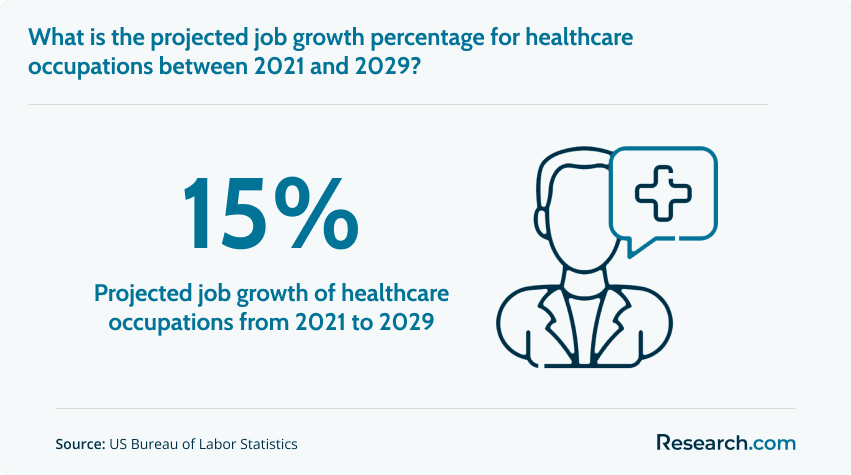
The job market for health sciences graduates is supported by demand across healthcare, public health, health data, administration, and community-based services. The U.S. Bureau of Labor Statistics projects employment in healthcare occupations to grow by 13% from 2021 to 2031. Demand is influenced by longer life expectancy, expanded healthcare services, chronic health conditions such as diabetes and heart disease, and increased attention to preventive care.
Job growth and demand
Graduates may find opportunities in hospitals, outpatient care centers, insurance companies, government health agencies, nonprofit organizations, and corporate wellness programs. The broad nature of the degree means students should build targeted skills through concentrations, internships, certifications, and relevant work experience.
High-demand career fields
- Healthcare Administration: Medical and health services managers are expected to grow by 28% through 2031, supporting strong prospects for students interested in healthcare operations and leadership.
- Public Health: Health educators and community health workers are projected to grow by 12%, reflecting the need for professionals focused on community wellness and prevention.
- Health Informatics: Demand connected to electronic health records and data-based decision-making has contributed to a 17% growth rate for health informatics specialists and medical records technicians.
- Rehabilitation and Allied Health Support: Aging population trends contribute to demand for rehabilitation specialists and physical therapy aides, with projected job growth exceeding 20% in many allied health fields.
Advancement opportunities
Career growth may require additional credentials, experience, or graduate education. Examples include Certified Health Education Specialist (CHES), Registered Health Information Administrator (RHIA), Certified Healthcare Manager (CHM), a Master of Public Health (MPH), a Master of Healthcare Administration (MHA), or other specialized healthcare degrees.
Key Insights
- An affordable online bachelor’s in health sciences is best for students who want broad healthcare preparation with flexibility, not necessarily direct clinical licensure.
- Accreditation, transfer credit, total cost, and concentration fit matter more than advertised tuition alone.
- Most full-time students complete the degree in 3-4 years, while part-time students may need 5-6 years and transfer students may finish sooner.
- Career options include healthcare administration, public health, health informatics, wellness coordination, and patient education, but salaries depend heavily on role, region, experience, and credentials.
- Students should ask programs direct questions about accreditation, fieldwork, online format, certification preparation, career services, and whether the curriculum supports their target job or graduate program.
- The strongest ROI usually comes from choosing a reasonably priced accredited program, transferring credits when possible, working while studying if feasible, and using electives or internships to build a focused career path.
References:
- Data USA. (2023). General allied health & health sciences. Data USA profile.
- National Center for Education Statistics. (n.d.). College tuition and fees. U.S. Department of Education. NCES tuition and fees data.
- U.S. Bureau of Labor Statistics. (2024). Healthcare occupations. BLS healthcare occupations overview.
- Zippia. (2023). Health sciences and services major. Zippia health sciences major data.
Other Things You Should Know About the Most Affordable Online Bachelor’s in Health Sciences Degree Programs
Many affordable online Health Sciences bachelor’s programs accept up to 90 transfer credits toward a 120-credit degree. Schools often require a minimum 2.0 GPA for transfer courses, and credits must come from regionally accredited colleges to count toward graduation.
Admission requirements typically include a high school diploma or equivalent, a minimum GPA, and completion of prerequisite courses in sciences. Some programs may require a personal statement or recommendation letters. Each institution sets its specific criteria for applicants in 2027.





