
2027 Is Public Health a Good Major?

Co-Founder and Chief Data Scientist
Choosing a public health major means choosing to study health at the population level: why communities get sick, which groups face higher risks, how prevention programs work, and how policy, environment, behavior, data, and healthcare systems shape outcomes. It can be a strong major for students who want a health-related career but do not necessarily want a clinical role such as physician, nurse, or dentist.
This guide explains what public health majors study, what careers they can pursue, how much graduates may earn, what skills employers value, and when this degree makes sense compared with other healthcare or policy pathways. It also covers specializations, internships, certifications, advanced degrees, affordability, accreditation, and trends such as telehealth, data analytics, health equity, and environmental health.
Quick Answer: Is Public Health a Good Major?
Public health can be a good major if you are interested in disease prevention, community health, health education, epidemiology, environmental health, healthcare policy, or health program management. It is especially useful for students who want a mission-driven career that combines science, data, communication, and social impact.
However, it is not the best fit for every student. Some public health roles require graduate education, specialized training, or field experience. Students seeking direct patient care, high starting salaries, or licensure-based clinical work may want to compare public health with nursing, allied health, healthcare administration, pharmacy, or other medical pathways before deciding.
What are the benefits of getting a public health major?
- A public health major can lead to several career directions, including epidemiology, health education, healthcare administration, environmental health, policy analysis, and community health programming.
- Graduates can work on health problems that affect whole communities, from disease prevention and emergency preparedness to health equity and environmental safety.
- Public health graduates typically earn a median annual wage of $77,760.
- What a public health major covers
- Core courses in public health programs
- Career outlook for public health majors
- Public health degree salary expectations
- Skills students build in public health programs
- Common admission requirements
- Public health concentrations and specializations
- Public policy and public health connections
- Student resources for public health majors
- How internships can support employment after graduation
- Certifications that can add public health career value
- Pharmaceutical education and public health outcomes
- Industries that hire public health graduates
- Why accreditation matters in public health education
- Health information management in public health
- Current trends affecting public health careers
- Short-term medical certificates for public health students
- Online DrPH programs and leadership preparation
- Lower-cost paths to a public health degree
- Graduate study options in public health
Key Findings
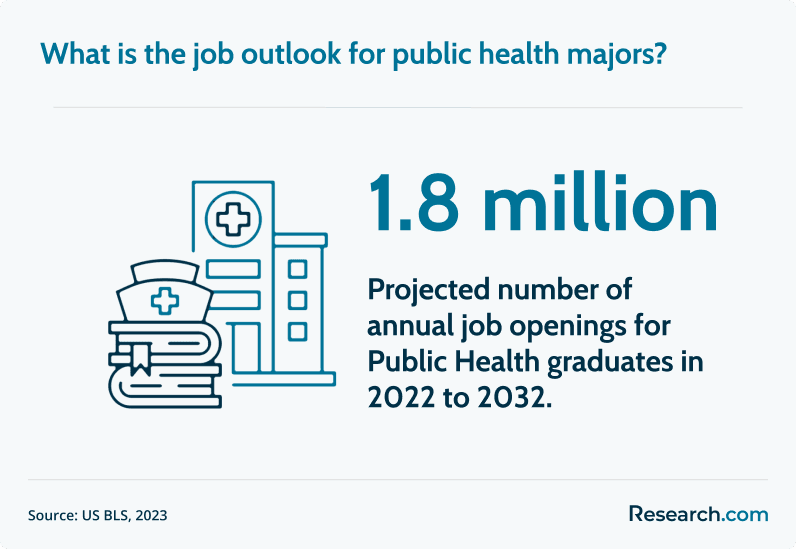
- Public health graduates can expect around 1.8 million annual job openings from 2022 to 2032.
- Healthcare practitioners and technical occupations have a median annual wage ranging from $30,180 to $159,530.
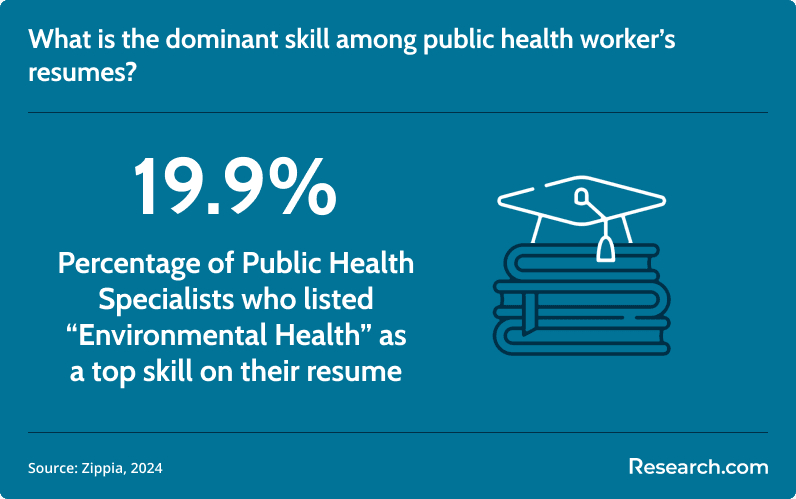
- 19.9% of public health specialists have environmental health on their resumes according to Zippia data.
- Audio-only telehealth urban usage in October 2023 was at 4.7%
- Audio-only telehealth rural usage in November 2023 ws o 5.9%.
What is a public health major?
A public health major is an undergraduate field of study focused on protecting and improving health across groups of people rather than treating one patient at a time. Students learn how diseases spread, how health behaviors form, how social conditions influence illness, and how public agencies and organizations design prevention programs.
The major is broad by design. A student may study vaccination campaigns, food safety, health communication, health policy, environmental hazards, data analysis, emergency preparedness, or community-based health promotion. This makes public health a flexible option for students who want to work in healthcare but are more interested in prevention, systems, research, policy, or outreach than bedside care.
A public health degree can also serve as a foundation for graduate study. Many students use it as preparation for an MPH, DrPH, medical school, nursing, health administration, public policy, social work, or environmental health programs.
What are the core subjects in a public health program?
Public health programs usually combine science, statistics, behavioral research, policy, management, and applied fieldwork. The goal is to help students understand health problems from multiple angles: biological causes, social conditions, environmental exposures, healthcare access, and public decision-making.
| Core subject | What students learn | Why it matters in public health work |
| Biostatistics | How to use statistical methods to interpret health data. | Supports disease tracking, program evaluation, and evidence-based decisions. |
| Epidemiology | How diseases and health conditions occur and spread across populations. | Helps identify risk factors, outbreaks, and prevention strategies. |
| Social and Behavioral Determinants of Health | How income, education, housing, culture, behavior, and environment affect health. | Guides interventions that address root causes instead of symptoms alone. |
| Management Sciences | How public health programs, teams, budgets, and organizations operate. | Prepares graduates to coordinate projects and improve service delivery. |
| Public Health Problem-Solving | How to define health problems, assess evidence, and choose interventions. | Builds practical decision-making skills for real community health challenges. |
| Computer Applications | How to use technology for research, data analysis, communication, and implementation. | Supports modern public health work that depends on digital tools and data systems. |
| Demography | How population size, age, migration, birth rates, and mortality shape health needs. | Helps agencies plan services for changing communities. |
| Environmental Health | How air, water, food, housing, climate, waste, and workplace conditions affect health. | Prepares students to assess and reduce environmental risks. |
| Biological Sciences | How pathogens, chronic disease processes, genetics, and human biology connect to public health. | Provides scientific context for prevention and disease control. |
| Public Health Policy | How laws, regulations, funding choices, and public programs influence health outcomes. | Equips students to analyze policies and advocate for effective health solutions. |
What are the job prospects for public health majors?
Students asking “is public health a good major?” should look closely at the labor market, but they should also understand that public health careers vary widely. Some positions are available with a bachelor’s degree, while others require a master’s degree, certification, or specialized experience.
According to the US BLS, healthcare occupations, including roles relevant to public health graduates, are expected to grow much faster than the average for all occupations from 2022 to 2032. This is projected to result in approximately 1.8 million job openings each year, due to both employment growth and the need to replace workers who leave their occupations.
| Career path | Typical focus | Best fit for students who enjoy |
| Epidemiologist | Studying disease patterns, causes, risks, and prevention strategies in populations. | Research, statistics, outbreak investigation, and scientific problem-solving. |
| Public Health Educator | Designing and delivering programs that encourage healthier behaviors. | Teaching, communication, community outreach, and prevention campaigns. |
| Health Policy Analyst | Evaluating healthcare policies, public programs, access barriers, and system performance. | Policy research, writing, advocacy, and systems thinking. |
| Biostatistician | Using statistical methods to analyze health data and support research findings. | Math, data interpretation, programming tools, and research design. |
| Environmental Health Specialist | Identifying and reducing hazards related to food, water, air, waste, workplaces, and other exposures. | Science, inspections, regulation, environmental protection, and safety. |
Public health graduates may also find roles in community organizations, hospitals, health departments, universities, consulting firms, insurance organizations, and nonprofit programs. The strongest candidates usually combine coursework with internships, research experience, data skills, or community-based projects.
How much can one expect to earn with a degree in public health?
Public health salaries differ by role, location, employer, degree level, and experience. A bachelor’s graduate working in community outreach will not have the same salary profile as a graduate-trained epidemiologist, healthcare administrator, biostatistician, or policy professional. Students should therefore evaluate likely jobs, not just the major title.
Some public health graduates also move into adjacent healthcare careers, including healthcare administration or nursing, which may overlap with some of the highest paying majors out of college. That said, no major guarantees a specific salary, and many higher-paying roles require additional education, licensure, management experience, or technical specialization.
According to 2023 data from US BLS, the median annual wage for healthcare practitioners and technical occupations was $77,760. The salary range across healthcare occupations is broad, from $30,180 for roles such as personal care aides to $159,530 for professions such as dentistry.
The chart below shows average annual earnings for selected occupations that may be relevant to students comparing public health career options.
Is a public health major worth it?
A public health major is most likely to be worth it for students who want a flexible health-related degree, are comfortable with interdisciplinary coursework, and are willing to build experience through internships, research, volunteering, or graduate study. It is less likely to meet expectations for students who want a clearly licensed clinical career immediately after graduation.
| Choose public health if... | Consider another path if... |
| You want to improve health at the community, national, or global level. | You mainly want direct patient care in a clinical setting. |
| You are interested in prevention, health behavior, policy, data, or environmental health. | You want a degree that leads directly to a licensed occupation without graduate school. |
| You like interdisciplinary work involving science, communication, systems, and equity. | You prefer a narrow technical program with one defined job outcome. |
| You are open to internships, fieldwork, and possibly an MPH or other graduate credential. | You need the fastest possible route to a high-paying healthcare role. |
What skills do public health majors acquire during their studies?
Public health students build skills that help them understand health problems, interpret evidence, communicate with different audiences, and design practical interventions. The strongest programs do not teach public health as theory alone; they require students to apply data, ethics, communication, and program planning to real populations.
Employer needs vary by field. For public health specialists, Zippia data from 2024 shows that the top three resume skills include environmental health, technical assistance, and community health. The same source reports that 19.9% of public health specialists have environmental health on their resumes.
- Data analysis. Students learn to interpret health information, identify trends, evaluate risks, and support evidence-based recommendations.
- Written and oral communication. Public health work often requires translating technical information into messages that communities, agencies, policymakers, and healthcare teams can use.
- Program planning and management. Majors learn how to organize interventions, manage resources, coordinate stakeholders, and evaluate whether programs are working.
- Cultural competency. Students examine how cultural background, language, trust, access, and lived experience influence health behaviors and outcomes.
- Ethical decision-making. Public health professionals must balance individual rights, community benefit, privacy, equity, and responsible use of data.
- Policy and systems thinking. Graduates learn to see how laws, funding, institutions, and social structures shape health opportunities.
What are the typical admission requirements for a public health program?
Before focusing on “what can you do with a public health degree?”, applicants should confirm the admission requirements for the specific school and degree level they are considering. Requirements differ between undergraduate public health majors, transfer pathways, MPH programs, and doctoral programs.
- Proof of graduation. Undergraduate applicants usually need documentation showing completion of high school or an equivalent credential.
- Official transcripts. Schools commonly ask for transcripts from high school and any colleges previously attended.
- Letters of recommendation. Some programs request recommendations from teachers, advisors, faculty members, supervisors, or professionals who can speak to the applicant’s preparation.
- Resume or CV. Applicants may need to summarize academic accomplishments, employment history, volunteer work, leadership, research, or relevant activities.
- Personal statement. Many programs ask students to explain why they want to study public health, what issues they care about, and how the degree fits their goals.
- Relevant work or volunteer experience. Experience in public health, healthcare, community service, research, education, or advocacy can make an application more competitive.
- Additional program requirements. Some schools may require interviews, writing samples, prerequisite courses, minimum GPA standards, or supplemental essays.
Are there opportunities for specialization within a public health major?
Yes. Public health is a broad discipline, and many programs allow students to focus on a concentration that matches their career interests. A specialization can help students choose electives, internships, research projects, and graduate programs more strategically.
| Specialization | Primary focus | Good fit for students interested in |
| Biostatistics | Applying statistical methods to health data. | Research, analytics, surveillance, and quantitative decision-making. |
| Community Health | Improving health outcomes through education, outreach, and local programs. | Community engagement, prevention, and nonprofit or public agency work. |
| Environmental Health | Studying how environmental conditions influence human health. | Food safety, water quality, air pollution, workplace hazards, and climate-related risks. |
| Epidemiology | Investigating disease distribution, risk factors, and population-level patterns. | Outbreak response, research, infectious disease, and chronic disease prevention. |
| Global Health | Addressing health challenges across countries, cultures, and resource settings. | International health, humanitarian work, global disease prevention, and health systems. |
| Health and Human Services | Supporting quality of life through advocacy, counseling, social services, and care coordination. | Social impact roles, community support, and service delivery. |
| Health Science | Applying scientific concepts to human health and disease prevention. | Health research, graduate health programs, and interdisciplinary healthcare roles. |
| Infectious Diseases | Studying prevention and control of communicable diseases. | Immunization, outbreak prevention, surveillance, and laboratory-connected public health work. |
| Leadership in Public Health | Preparing for management and organizational decision-making in health programs. | Students coming from public health or a bachelor of public administration who want leadership roles. |
| Social and Behavioral Science | Examining how behavior, social conditions, and institutions affect health. | Health promotion, behavioral interventions, equity work, and community research. |
How does public policy intersect with public health studies?
Public policy and public health are closely connected because many health outcomes are shaped by laws, budgets, regulations, and institutional decisions. Policies related to food access, clean water, housing, healthcare coverage, tobacco control, vaccination, emergency preparedness, and environmental protection can directly affect the health of entire populations.
Public health students benefit from learning how policies are created, implemented, funded, and evaluated. This knowledge helps them identify gaps, assess whether programs are equitable, and advocate for evidence-based changes. Policy training is especially important for students who want to work in government, nonprofit advocacy, health systems, or legislative research.
Students who want deeper preparation in this area may consider an interdisciplinary graduate option such as a distance masters in public policy. Combining public health and policy training can be valuable for roles involving health advocacy, program design, regulation, government affairs, and population-level strategy.
What resources are available to students pursuing a degree in public health?
Public health students should use more than classroom instruction to prepare for employment. Professional organizations, public agencies, faculty networks, scholarships, and field experiences can help students build contacts, learn current practices, and clarify which career path fits them best.
- Professional organizations. Groups such as the Center for Innovative Public Health Research can help students learn about research, networking, career development, and emerging topics in the field.
- CDC programs. The Centers for Disease Control and Prevention provides information about fellowships, internships, volunteer opportunities, and training resources for students and professionals pursuing public health careers.
- Scholarships and financial aid. Students should look for scholarships based on field of study, financial need, citizenship, minority status, service background, academic record, and career goals.
- Undergraduate Network for Academic Public Health. This network supports undergraduate public health education by helping faculty, staff, and academic leaders exchange ideas, resources, and teaching practices.
- Campus career centers. Career offices can help students find internships, improve resumes, prepare for interviews, and connect with alumni working in health departments, hospitals, nonprofits, or research organizations.
- Faculty research opportunities. Assisting with faculty-led projects can help students build data, writing, literature review, and research skills.
Can internships lead to job opportunities after graduation?
Yes. Public health internships can help students move from academic knowledge to practical experience, which is often critical for entry-level hiring. Internships allow students to build a portfolio of work, develop references, understand workplace expectations, and test whether a specialization is a good fit.
Internships can be especially useful in health departments, nonprofit organizations, hospitals, community clinics, research centers, policy organizations, and environmental health agencies. A strong internship may lead directly to a job offer, but even when it does not, it can strengthen a resume and expand a student’s professional network.
| Internship setting | Experience students may gain | Career value |
| Local or state health department | Disease surveillance, community outreach, emergency preparedness, inspections, or program support. | Useful for public agency and population health roles. |
| Nonprofit organization | Health education, grant support, advocacy, community engagement, and program delivery. | Good for students interested in equity, prevention, and community health. |
| Hospital or healthcare system | Quality improvement, patient education, population health initiatives, or administrative projects. | Helpful for healthcare administration and health systems careers. |
| Research center or university lab | Data collection, literature reviews, analysis, and study coordination. | Strong preparation for epidemiology, biostatistics, and graduate school. |
| Policy or advocacy organization | Policy briefs, legislative tracking, health communication, and stakeholder research. | Valuable for students interested in health policy and public affairs. |
What additional certifications can strengthen your public health expertise?
Certifications can add practical, job-specific skills to a public health degree. They are most useful when they match a student’s target role rather than being collected at random. For example, students interested in healthcare operations, compliance, claims data, or administrative roles may benefit from training in medical coding and billing.
Programs such as medical coding classes online can help learners understand healthcare documentation, reimbursement processes, and data handling. These skills can be relevant in healthcare administration, public health informatics, policy analysis, and quality improvement roles.
Can integrating pharmaceutical education elevate public health outcomes?
Pharmaceutical knowledge can strengthen public health work when medication access, drug safety, adherence, vaccination, antimicrobial resistance, or chronic disease management are central concerns. Public health professionals do not need to become pharmacists to understand how medication systems affect population outcomes, but additional pharmaceutical education can be valuable for specialized roles.
Students who want to connect pharmacy practice with broader public health strategy may explore options such as online pharmacy degree programs. This type of interdisciplinary preparation can support work involving medication policy, patient safety, health promotion, and collaborative healthcare planning.
What industries offer the most promising career opportunities for public health graduates?
Public health graduates can work in more than one sector. Government agencies, nonprofit organizations, healthcare systems, universities, consulting firms, insurance organizations, and private companies all use public health skills, though the job titles and required credentials may differ.
| Industry | Common public health work | What to build as a student |
| Government and public agencies | Surveillance, inspections, emergency response, health education, regulation, and program management. | Policy knowledge, data skills, communication, and internship experience. |
| Nonprofit and community organizations | Outreach, advocacy, prevention programs, grant-funded initiatives, and equity-focused services. | Community engagement, writing, program planning, and cultural competency. |
| Healthcare systems | Population health, quality improvement, patient education, care coordination, and administrative projects. | Healthcare operations knowledge, data interpretation, and project management. |
| Academic and research institutions | Research coordination, data collection, literature review, and study support. | Research methods, statistics, writing, and faculty project experience. |
| Private sector and consulting | Health analytics, workplace wellness, compliance, environmental health, and strategic planning. | Technical skills, communication, business awareness, and applied project experience. |
Students who want to combine public health with clinical or healthcare-sector preparation may also compare related options, including the highest paying medical bachelor's degrees.
How do accreditation standards impact public health program quality?
Accreditation helps students evaluate whether a public health program meets recognized academic and professional standards. It can affect curriculum quality, transfer options, employer perception, graduate school readiness, and eligibility for some opportunities. Students should verify accreditation before enrolling, especially in online or lower-cost programs.
Accreditation does not guarantee a job or salary, but it is an important quality signal. A program that meets established standards is more likely to offer appropriate public health coursework, qualified faculty, assessment practices, and continuous improvement processes.
Students considering interdisciplinary healthcare education can also review accredited options such as online doctorate in pharmacy programs, particularly if their goals involve medication policy, clinical systems, or pharmacy-related public health work.
How can health information management improve public health outcomes?
Health information management supports public health by improving the way health data is collected, organized, protected, analyzed, and shared. Strong information systems can help agencies track disease patterns, evaluate programs, coordinate care, identify disparities, and respond faster to emerging risks.
Students interested in the data and systems side of public health may benefit from studying health information management, privacy, interoperability, coding, analytics, and data governance. Programs such as health information management CAHIIM approved programs can help learners understand industry standards and the role of reliable data in healthcare and public health decision-making.
What are some current trends shaping the field of public health?
Public health is changing as technology, population needs, environmental pressures, and health system expectations evolve. Students deciding whether to major in public health should understand these trends because they affect coursework, internships, career options, and the skills employers may prioritize.
- Telehealth and digital access. Telemedicine, mobile health tools, and remote care models are changing how people access services. FAIR Health data from November 2023 shows audio-only telehealth usage at 5% in urban areas and 5.9% in rural areas.
- Health equity and social determinants. Public health organizations increasingly focus on how income, housing, education, environment, transportation, and discrimination affect health outcomes.
- Global health security. Recent health threats have reinforced the need for preparedness, surveillance, coordination, and rapid response to emerging infectious diseases.
- Climate change and environmental health. Extreme weather, air pollution, water safety, heat exposure, and environmental degradation are important public health concerns.
- Mental health awareness. Public health agencies and community organizations are placing more emphasis on prevention, access, stigma reduction, and well-being.
- Data analytics and epidemiology. Better data tools are improving surveillance, outbreak detection, risk modeling, and program evaluation.
- Community participation. Effective public health programs increasingly involve communities in defining priorities and designing interventions.
- Health policy and advocacy. Evidence-based policy work remains central to issues such as healthcare access, vaccination, prevention funding, and health promotion.
The table below shows audio-only telehealth usage in urban and rural areas during October 2023 and November 2023.
Audio-Only Telehealth Usage, Urban Versus Rural
| Urban | Rural | |
| October 2023 | 4.7% | 5.6% |
| November 2023 | 5% | 5.9% |
Source: FAIR Health, 2023
What are some short-term medical certificate programs that can complement a public health major?
Short-term medical certificate programs can help public health students add practical healthcare skills without committing immediately to another full degree. The best certificate depends on the student’s intended role. A certificate should support a clear career goal, such as health education, emergency preparedness, healthcare administration, coding, or community response.
- Certified Health Education Specialist (CHES). This credential is relevant for students who want to design, deliver, and evaluate health education programs in schools, community organizations, health agencies, or wellness settings.
- Medical Coding and Billing. This training can help students understand reimbursement, documentation, claims, and administrative healthcare processes, which may support public health roles connected to operations, policy, data, or compliance.
- Emergency Medical Technician (EMT). EMT training provides emergency response skills that may complement public health interests in disaster response, preparedness, and community safety.
Students comparing fast healthcare credentials can review this guide to quick medical certificate programs. Certificate programs can be useful, but students should confirm cost, time commitment, exam requirements, employer recognition, and whether the credential aligns with their career target.
How can online DRPH programs boost strategic leadership in public health?
A Doctor of Public Health is designed for experienced professionals who want advanced leadership preparation in public health practice. Unlike a bachelor’s degree, a DrPH usually emphasizes executive decision-making, applied research, policy implementation, program leadership, and cross-sector strategy.
Flexible online DRPH programs can be especially useful for working professionals who want to continue their careers while developing higher-level leadership skills. Students considering this path should compare accreditation, faculty expertise, applied project requirements, residency expectations, cost, and how well the curriculum fits their career goals.
What are the budget-friendly pathways to a public health degree?
Public health can be studied through several lower-cost routes, but students should compare total cost rather than tuition alone. Fees, commuting, housing, books, technology requirements, unpaid internships, and lost work time can all affect affordability.
- Start at a community college. Completing general education requirements before transferring can reduce total undergraduate cost if credits transfer cleanly.
- Choose an in-state public university. In-state tuition can make a bachelor’s or master’s degree more affordable.
- Consider online or hybrid programs. Online learning may reduce commuting and relocation costs, though students should still verify quality and accreditation.
- Use employer tuition benefits. Working students in healthcare, government, or nonprofit settings may have access to tuition assistance.
- Apply for scholarships early. Public health, healthcare, community service, minority-serving, and need-based scholarships may reduce borrowing.
- Compare graduate programs carefully. Students seeking affordable MPH options can review resources such as the cheapest MPH programs.
What are the options for advanced education in public health?
A bachelor’s degree in public health can qualify graduates for some entry-level roles, but many public health professionals pursue graduate education to specialize, qualify for advanced positions, or move into leadership. The most common graduate pathway is the Master of Public Health, often called the MPH.
An MPH can deepen training in epidemiology, biostatistics, health policy, environmental health, global health, community health, and program management. It can also help students build stronger research, data analysis, leadership, and applied practice skills. Working professionals who need flexibility may compare online options, including the most affordable master's degrees online.
Doctoral study is another option. A DrPH is typically practice-oriented and leadership-focused, while a PhD in Public Health is often more research-intensive and may be better suited for academic or advanced research careers. Students should choose based on whether they want to lead programs, conduct research, teach, shape policy, or manage large-scale health initiatives.
Common mistakes to avoid when choosing a public health major
- Assuming every public health job is available with only a bachelor’s degree. Some roles, especially in epidemiology, biostatistics, academia, and leadership, may require graduate education.
- Ignoring accreditation. Always verify program quality and recognition before enrolling, particularly for online degrees.
- Choosing a program based only on tuition. Total cost, internship access, faculty expertise, career support, and transfer policies also matter.
- Skipping internships or fieldwork. Public health employers often value applied experience, not just coursework.
- Picking a specialization too late. Students should use electives, projects, and internships to build toward a specific career direction.
- Assuming salary outcomes are guaranteed. Earnings depend on role, region, degree level, employer, experience, and credentials.
- Overlooking data skills. Even non-technical public health roles increasingly require comfort with evidence, metrics, and evaluation.
Questions to ask before enrolling in a public health program
- Is the program accredited or otherwise recognized by employers and graduate schools?
- What public health concentrations are available, and do they match my career goals?
- Does the curriculum include biostatistics, epidemiology, policy, environmental health, and applied practice?
- What internship, practicum, research, or community partnership opportunities are available?
- Where do graduates work after completing the program?
- Does the school offer career support for public health students specifically?
- Can I transfer credits or complete part of the program online?
- What is the full cost after fees, books, transportation, housing, and financial aid?
- If I plan to pursue graduate study, will this program prepare me for MPH, DrPH, PhD, or related health programs?
Key Insights
- Public health is a strong major for students who want to work on prevention, community health, policy, health data, environmental health, or health equity.
- The major is broad, so students should choose internships, electives, and specializations that point toward a specific career path.
- Healthcare occupations connected to public health are projected to generate approximately 1.8 million job openings annually from 2022 to 2032, according to US BLS projections cited in this guide.
- Salary potential varies widely. The 2023 US BLS median annual wage for healthcare practitioners and technical occupations was $77,760, with a broader range from $30,180 to $159,530 across selected healthcare roles.
- Graduate education, especially an MPH, can be important for advancement in epidemiology, policy, biostatistics, leadership, and specialized public health practice.
- Students should verify accreditation, compare total program cost, pursue field experience, and avoid assuming that a public health degree automatically leads to one specific job or salary.
References:
- FAIR Health. (2023). Monthly Telehealth Regional Tracker. https://www.fairhealth.org/fh-trackers/telehealth
- US BLS. (2023). Dentists. https://www.bls.gov/ooh/healthcare/dentists.htm
- US BLS. (2023). Healthcare Occupations. https://www.bls.gov/ooh/healthcare/home.htm
- US BLS. (2023). Home Health and Personal Care Aides. https://www.bls.gov/ooh/healthcare/home-health-aides-and-personal-care-aides.htm
- Zippia. (2024). Public Health Specialist Skills for your Resume and Career. https://www.zippia.com/public-health-specialist-jobs/skills/
Other Things You Should Know About Getting a Public Health Major
A public health major can lead to a Master of Public Health, Master of Science in epidemiology, or a related health policy degree. Most MPH programs require 42 to 48 semester credits, and some concentrations ask for an internship or capstone project before graduation.
In 2027, the job outlook for public health graduates is strong, with a growing demand in epidemiology, health policy, and community health roles. According to the Bureau of Labor Statistics, the field is expected to grow by 11% by 2027, providing diverse career opportunities.
Public health programs offer numerous opportunities for hands-on experience and internships, which are crucial for practical learning and career preparation. Students can participate in internships with local health departments, non-profit organizations, hospitals, and international health agencies. These internships provide real-world experience in areas like epidemiology, health education, community health assessment, and policy development. Many programs also include fieldwork components, allowing students to engage directly with communities to address public health issues. Additionally, collaborative projects with faculty on research initiatives offer valuable insights into public health practices. These experiences enable students to apply classroom knowledge, develop professional skills, and build a network in the public health field.


