2027 Best Accelerated Online Bachelor's Programs in Public Health

Co-Founder and Chief Data Scientist
Finding the most efficient way to earn a degree in public health is a challenge faced by many aspiring professionals. With the demand for public health experts rising and job growth projected at 6% from 2018 to 2028, students are increasingly seeking programs that combine flexibility with speed. However, the variety of online options can make it challenging to determine which accelerated programs offer both a high-quality education and career readiness.
This article, prepared by experts in career planning, explores the best accelerated online public health programs. It will guide readers toward finding the right program to overcome these challenges and achieve their career goals.
What are the benefits of earning an accelerated online bachelor’s in public health?
- Earning an accelerated online bachelor’s in public health offers access to diverse career paths such as health education, community outreach, and public health research.
- Public health professionals with a bachelor’s degree earn an average annual salary of approximately $79,657, with higher earnings possible for specialized or leadership roles.
- An accelerated online bachelor’s in public health offers flexible remote learning while providing practical experience through internships or community projects.
What can I expect from a fast-track online public health bachelor’s program?
Fast-track online public health bachelor’s programs feature core studies in epidemiology, health education, biostatistics, and policy, often including a capstone project and supervised internship hours. These programs are designed to be completed in 2–3 years, with tuition ranging from $300 to $700 per credit depending on the institution.
Online delivery is typically asynchronous, combining recorded lectures, interactive modules, and discussion boards. Some programs offer virtual simulations or live sessions, providing flexible learning while maintaining practical, real-world experience.
Where can I work after completing an accelerated online bachelor’s in public health?
An accelerated online bachelor’s in public health prepares graduates for roles in population health management, disease prevention, health education, and policy implementation across diverse sectors.
Public health professionals work in a wide range of industries, with employment distributed as follows:
- Government (31%): Many graduates work for federal, state, or local health departments, public health agencies, and organizations, focusing on community health initiatives and policy development.
- Health Care (22%): Roles include patient education, hospital administration, and community health coordination within hospitals, clinics, and healthcare systems.
- Education (14%): Opportunities exist as health educators, outreach specialists, or research assistants in schools, universities, and community-based programs.
- Professional Services (11%): Some work in consulting, corporate wellness, or private research organizations that address public health concerns.
- Nonprofits (6%): Graduates may join nonprofits or NGOs, supporting community outreach, advocacy, and global health initiatives.
- Technology (4%): A growing number work in health data analytics, informatics, and technology-driven public health solutions.
How much can I make with a bachelor’s in public health?
Earning a bachelor’s degree in public health can lead to diverse and stable careers in community health organizations, government agencies, and healthcare settings. Below is an overview of potential earnings:
- Average Salary: Public health professionals with a bachelor’s degree earn an average annual salary of approximately $79,657, which equates to about $38.30 per hour.
- Location-Based Earnings: In high-cost metropolitan areas, public health roles can exceed $90,000 annually. States like California and New York often offer higher median salaries compared to rural areas.
- Experience Levels: Entry-level positions such as community health workers start around $43,000 to $55,000 per year, while mid-level roles like program coordinators and analysts can earn between $70,000 and $84,000 annually.
- Industry Variations: Public health professionals in healthcare administration or data analytics tend to earn more, averaging $80,000 to $100,000 per year, compared to those in nonprofit organizations.
- Certifications and Specializations: Advanced certifications or specialized roles like epidemiology or occupational health can significantly boost salaries, often reaching $85,000 or more annually.
- List of the Best Accelerated Online Bachelor’s Programs in Public Health for 2027 List of Programs
- How long does it take to complete an accelerated online bachelor’s program in public health? Completion Time
- How does an accelerated online public health bachelor’s program compare to an on-campus program? How does an accelerated online public health bachelor’s program compare to an on-campus program?
- What is the average cost of an accelerated online bachelor’s program in public health? Program Cost
- What are the financial aid options for students enrolling in an accelerated online public health bachelor’s program? Financial Aid
- What are the prerequisites for enrolling in an accelerated online public health bachelor’s program? What are the prerequisites for enrolling in an accelerated online public health bachelor’s program?
- What courses are typically in an accelerated public health bachelor’s curriculum? What courses are typically in an accelerated public health bachelor’s curriculum?
- What types of specializations are available in an accelerated online public health bachelor’s program? What types of specializations are available in an accelerated online public health bachelor’s program?
- How to Choose the Best Accelerated Online Bachelor’s Program in Public Health How to Choose the Best Accelerated Online Bachelor’s Program in Public Health
- What career paths are available for graduates of an accelerated online public health bachelor’s program? What career paths are available for graduates of an accelerated online public health bachelor’s program?
- Is the Accelerated Online Public Health Program Accredited and Recognized? Is the Accelerated Online Public Health Program Accredited and Recognized?
- What networking and career support services are available for online public health students? What networking and career support services are available for online public health students?
- What is the job market for graduates with an accelerated online public health bachelor’s degree? Job Market
- What student support services are available to enhance the online public health experience? What student support services are available to enhance the online public health experience?
Best Accelerated Online Bachelor’s Programs in Public Health for 2027
An accelerated online bachelor’s degree in public health is designed for students who want to move into community health, disease prevention, health education, policy support, or public health program work without spending four traditional years on campus. The right program can help you finish faster, use prior college credits, study around work, and build practical skills in epidemiology, health promotion, environmental health, and population health.
This guide is for transfer students, working adults, healthcare support workers, military-affiliated learners, and first-time college students comparing fast online public health programs. You will find ranked program options, cost and credit details, accreditation information, curriculum expectations, career paths, financial aid options, and practical questions to ask before enrolling.
Quick Answer: What is the best accelerated online bachelor’s in public health?
The best accelerated online bachelor’s program in public health is the one that matches your transfer credits, budget, schedule, accreditation needs, and career goal. Programs with Council on Education for Public Health (CEPH) accreditation may be especially valuable for students who want a curriculum aligned with public health professional standards. Students should compare total credits, cost per credit, practicum requirements, online course format, and whether the program supports eligibility for credentials such as CHES or certification pathways through public health organizations.
How Research.com ranked these programs
Research.com evaluates accelerated online bachelor’s programs in public health using verified education data and publicly available institutional information. Our ranking review draws from the IPEDS higher education database, Peterson’s college data, the College Scorecard database, and The National Center for Education Statistics. We consider program availability, online delivery, tuition information, credits, institutional or programmatic accreditation, and student-focused factors. For a broader explanation of how Research.com evaluates schools and programs, see our ranking methodology.
At-a-glance comparison of ranked accelerated online public health bachelor’s programs
| Rank | School | Program Length | Cost Per Credit | Total Credits | Accreditation Listed |
| 1 | National University | 2–4 years | $370 | 180 | Council on Education for Public Health (CEPH) |
| 2 | Southern New Hampshire University | ~3-4 years | $342 | 120 | New England Commission of Higher Education (NECHE) |
| 3 | Oregon State University | ~2–4 years | $384 | 180 | Council on Education for Public Health (CEPH) |
| 4 | University of Arizona | 2–4 years | $525 | 120 | Council on Education for Public Health (CEPH) |
| 5 | Texas State University | 2–4 years | $404 | 120 | Southern Association of Colleges and Schools Commission on Colleges (SACSCOC) |
| 6 | University of Cincinnati | 2–4 years | $600 (resident); $615 (non-resident) | 120 | Higher Learning Commission (HLC) |
| 7 | Kent State University | 2–4 years | $559 (in‑state); $569 (out‑of‑state) | 120 | Council on Education for Public Health (CEPH) |
| 8 | University of Texas at Arlington | ~26 months | $315 | 120 | Southern Association of Colleges and Schools Commission on Colleges (SACSCOC) |
| 9 | University of West Florida | ~2–4 years | $218.98 (in‑state); $648.37 (out-of-state) | 120 | Southern Association of Colleges and Schools Commission on Colleges (SACSCOC) |
| 10 | California Baptist University | ~2–4 years | $700 | 120 | Council on Education for Public Health (CEPH) |
1. National University
National University offers a bachelor of science in public health for students who want an online route into community health leadership. The program covers core public health concepts, epidemiology, health promotion, and policy while allowing students to study fully online with optional hybrid elements. Applied learning is built into the degree through practicum or capstone experiences. Graduates may qualify to sit for the CHES exam and can pursue entry-level opportunities in government agencies, nonprofit organizations, healthcare-adjacent employers, and private health organizations.
- Program Length: 2–4 years
- Cost Per Credit: $370
- Total Credits: 180
- Accreditation: Council on Education for Public Health (CEPH)
2. Southern New Hampshire University
The online bachelor of science in public health from Southern New Hampshire University is built around population health, health policy, and community-based intervention work. Students study epidemiology, health education, and program planning while completing assignments connected to public health practice. The program is a practical fit for learners seeking entry-level work in health education, advocacy, outreach, and community wellness roles.
- Program Length: ~3-4 years
- Cost Per Credit: $342
- Total Credits: 120
- Accreditation: New England Commission of Higher Education (NECHE)
3. Oregon State University
Oregon State University provides an online bachelor of science in public health focused on health promotion, disease prevention, and the organization of health systems. Coursework includes community health, epidemiology, and health policy, with applied learning through virtual practicum simulations and community-centered projects. Students are prepared for public health education and health services coordination roles, and the program supports eligibility to pursue certification from the NBPHE.
- Program Length: ~2–4 years
- Cost Per Credit: $384
- Total Credits: 180
- Accreditation: Council on Education for Public Health (CEPH)
4. University of Arizona
The University of Arizona offers its online bachelor of science in public health through the Zuckerman College of Public Health. The online program follows the same academic direction as the campus curriculum, emphasizing epidemiology, health behavior, and systems-level public health interventions. Students complete a local practicum and participate in virtual public health simulations. Graduates may pursue health education and community health roles and may be eligible for certification as a health education specialist.
- Program Length: 2–4 years
- Cost Per Credit: $525
- Total Credits: 120
- Accreditation: Council on Education for Public Health (CEPH)
5. Texas State University
The Texas State University bachelor of science in public health is delivered online in an asynchronous format. The curriculum develops skills in epidemiology, community health, mental health promotion, and public health program planning. Students complete public health core coursework along with electives and general education requirements. Distinctive areas include mental health determinants and school-health initiatives.
- Program Length: 2–4 years
- Cost Per Credit: $404
- Total Credits: 120
- Accreditation: Southern Association of Colleges and Schools Commission on Colleges (SACSCOC)
6. University of Cincinnati
The University of Cincinnati offers a fully online, asynchronous Bachelor of Science in Public Health for students preparing to work in disease prevention and community-level health improvement. The program emphasizes interdisciplinary thinking and practical application, ending with a professional internship that gives students field-based experience. Graduates may seek roles connected to public health policy, education, epidemiology support, and management.
- Program Length: 2–4 years
- Cost Per Credit: $600 (resident); $615 (non-resident)
- Total Credits: 120
- Accreditation: Higher Learning Commission (HLC)
7. Kent State University
Kent State University provides an online bachelor of science in public health for learners who need flexibility, including working professionals. The curriculum covers public health foundations, epidemiology, biostatistics, environmental health, and health policy, and it includes a practicum internship. Students may benefit from credit-for-licensure options and connections to Ohio’s health network. Graduates are prepared for roles in health education, community outreach, and public health administration.
- Program Length: 2–4 years
- Cost Per Credit: $559 (in‑state); $569 (out‑of‑state)
- Total Credits: 120
- Accreditation: Council on Education for Public Health (CEPH)
8. University of Texas at Arlington
The University of Texas at Arlington offers a fully online, accelerated bachelor of science in public health. Students study epidemiology, biostatistics, environmental health, and health informatics. A supervised practicum or internship provides applied experience, helping graduates prepare for work in health education, community outreach, and policy development.
- Program Length: ~26 months
- Cost Per Credit: $315
- Total Credits: 120
- Accreditation: Southern Association of Colleges and Schools Commission on Colleges (SACSCOC)
9. University of West Florida
The University of West Florida offers an online bachelor of science in public health that develops knowledge in population health, epidemiology, environmental health, and health equity. Students complete applied community-based learning and a final capstone. Career outcomes may include health educator, community health worker, environmental health specialist, or leadership-oriented public health roles.
- Program Length: ~2–4 years
- Cost Per Credit: $218.98 (in‑state); $648.37 (out-of-state)
- Total Credits: 120
- Accreditation: Southern Association of Colleges and Schools Commission on Colleges (SACSCOC)
10. California Baptist University
California Baptist University delivers an online Bachelor of Science in Public Health for students interested in population health, wellness, and health promotion. The 100% online program uses flexible asynchronous coursework and includes study in community health, environmental wellness, epidemiology, and health promotion. Students also complete a local practicum with faculty oversight.
- Program Length: ~2–4 years
- Cost Per Credit: $700
- Total Credits: 120
- Accreditation: Council on Education for Public Health (CEPH)
How Long Does an Accelerated Online Bachelor’s in Public Health Take?
Accelerated online bachelor’s programs in public health typically take 18 to 36 months to complete. Your actual timeline depends on how many credits you bring in, whether the school accepts transfer coursework, how many courses you take each term, and whether the program runs year-round. Students with substantial transfer credits, an associate degree, military learning, or relevant professional training may be able to shorten the path significantly.
Full-time students often move fastest because they can take condensed courses in back-to-back terms. Part-time learners usually need more time, but online delivery can make the degree more manageable for students working full time or caring for family members. Many online programs also offer several start dates, so students do not always have to wait for a traditional fall or spring semester.
| Student Situation | Likely Timeline Impact | What to Ask Before Enrolling |
| You have 24–60 transferable credits | May reduce the number of required courses and shorten completion time | Will the school complete an official transfer evaluation before you commit? |
| You need to study part time | May extend the timeline beyond the fastest advertised pace | Is there a maximum time limit for finishing the degree? |
| You can attend year-round | Can help you finish faster by avoiding long breaks | Are public health courses offered every term or only in certain sessions? |
| You need a practicum near home | May affect timing if site approval takes longer than expected | Does the program help locate practicum sites in your area? |
Students planning to continue into leadership roles after graduation may later compare the fastest online master's degree in healthcare management programs as a graduate-level option in health administration.
Accelerated Online vs. On-Campus Public Health Bachelor’s Programs
Online and on-campus bachelor’s programs in public health usually cover similar academic foundations: epidemiology, health behavior, environmental health, program planning, policy, and community health. The bigger differences are pace, flexibility, fieldwork logistics, peer interaction, and how you access support services.
An accelerated online program often works best for students who need schedule flexibility, already have college credits, or cannot relocate. A campus program may be better for students who want frequent in-person interaction, campus-based organizations, and structured weekly routines. Students comparing accelerated learning models in other fields can also review the fastest online master's in data science to understand how condensed online formats work across disciplines.
| Aspects | Accelerated Online Public Health Program | On-Campus Public Health Program |
| Delivery Format | Online lectures, accelerated modules, and either self-paced or scheduled coursework | Face-to-face classes that usually follow a semester-based calendar |
| Hands-on Experience | Local internships or practicums arranged with school guidance or student participation | Campus-connected labs, local agency partnerships, and coordinated internship options |
| Cost Structure | May reduce commuting and campus-based expenses, though tuition and fees vary by school | May include housing, transportation, parking, meal plans, and other campus costs |
| Access to Support Services | Virtual advising, online tutoring, technology help, digital library access, and remote career services | In-person advising, tutoring centers, student organizations, libraries, and campus career offices |
| Career Placement | Online career coaching, virtual job fairs, remote networking, and internship support | Campus recruiting, employer events, local networking, and direct contact with faculty |
| Accreditation & Outcomes | Can offer the same academic standards when the online degree is part of an accredited institution or program | Can offer the same academic standards when the campus degree is part of an accredited institution or program |
How Much Does an Accelerated Online Bachelor’s in Public Health Cost?
The average cost of an accelerated online bachelor’s program in public health ranges between $300 and $600 per credit, with total tuition often falling between $35,000 and $70,000, depending on the number of credits required. Some public universities charge different rates for in-state and out-of-state students, while some online programs use flat tuition for distance learners.
Tuition is only one part of the cost. Students should also check technology fees, textbooks or digital materials, transfer credit limits, practicum fees, graduation fees, and whether repeated or dropped courses affect total cost. Accelerated programs can lower indirect costs by reducing time in school, but they can also require a heavier course load that may limit work hours.
| Cost Factor | Why It Matters | Question to Ask |
| Cost per credit | Determines the base tuition before fees and transfer credits | Is the listed tuition the same for online, in-state, and out-of-state students? |
| Total credits required | A 120-credit program and a 180-credit program can produce different total costs | How many credits will I personally need after transfer evaluation? |
| Transfer credit policy | Accepted credits can reduce both time and tuition | What is the maximum number of credits I can transfer? |
| Practicum or internship costs | Field placement may require travel, background checks, or documentation | Are practicum-related expenses included in tuition? |
| Financial aid and employer benefits | Grants, loans, scholarships, and tuition assistance can reduce out-of-pocket cost | Can I use federal aid, scholarships, or employer reimbursement for accelerated terms? |
Students interested in a fast graduate pathway after earning a bachelor’s degree may also compare fast track MBA sustainability programs online if their long-term goals include environmental policy, organizational leadership, or sustainability-focused health initiatives.
Financial Aid Options for Accelerated Online Public Health Bachelor’s Students
Students in accelerated online public health programs may qualify for the same major categories of undergraduate financial aid as campus-based students, provided the institution and program meet eligibility requirements. Always complete the FAFSA first, then compare school-based aid, state programs, employer support, and public health scholarships.
- Federal Pell Grants: These need-based grants are available to eligible undergraduate students who submit the FAFSA. Grant aid does not have to be repaid when students meet the terms of the award.
- Federal Direct Subsidized and Unsubsidized Loans: Undergraduate students may qualify for federal loans. Subsidized loans are based on financial need and do not accrue interest while the student is enrolled at least half time, while unsubsidized loans begin accruing interest when they are disbursed.
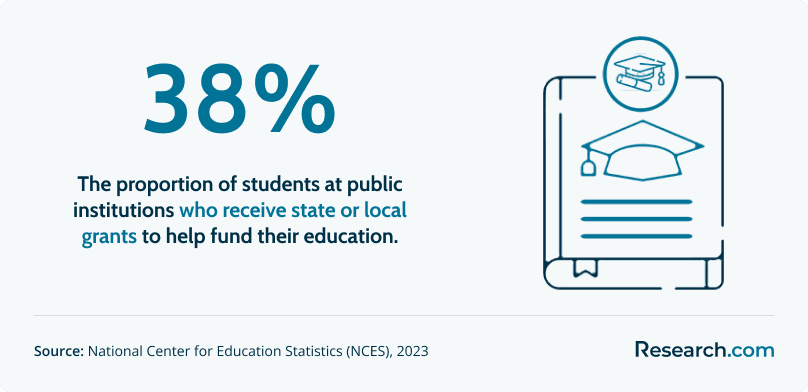
- State Grants and Scholarships: State aid can be an important funding source for residents. Around 38% of students at public institutions receive state or local grants, compared to just 9% at private-for-profit schools.
- Institutional Scholarships and Tuition Discounts: Colleges may offer academic scholarships, need-based awards, online learner discounts, or public health-related scholarships. Ask whether accelerated terms affect scholarship renewal.
- Work-Study Programs: Eligible students can use Federal Work-Study to earn income through part-time employment while enrolled, though accelerated schedules may affect how many hours are realistic.
- Private Scholarships and Public Health Grants: Public health associations, nonprofits, healthcare foundations, and community organizations may fund students preparing for careers in prevention, outreach, health equity, or community wellness.
Admission Requirements for Accelerated Online Public Health Bachelor’s Programs
Admission requirements vary by university, but most accelerated online public health bachelor’s programs evaluate academic readiness, prior credits, and the student’s ability to succeed in a fast-paced online format. Some programs accept first-year students, while others are designed primarily for transfer students or associate degree holders.
- High School Diploma or GED: Applicants generally need to show completion of high school or an equivalent credential before entering an undergraduate degree program.
- Minimum GPA Requirements: Many programs set a minimum cumulative GPA, typically ranging from 2.0 to 2.5, while more selective programs may ask for stronger grades or additional college coursework.
- Transfer Credits or Prior College Coursework: Accelerated options often work best for students who have already completed college courses. Having 24–60 transferable credits is common for students entering faster completion pathways.
- English Language Proficiency: Students whose first language is not English may need TOEFL or IELTS scores to show they can handle academic reading, writing, and health-related terminology.
- Official Transcripts: Schools usually require official transcripts from every high school and college previously attended so they can verify grades and award transfer credit.
- Optional Standardized Test Scores: Many accelerated online programs do not require SAT/ACT scores, but applicants may submit them if the school allows scores to support the application.
Students comparing flexible undergraduate pathways outside public health may also review a top bachelor's degree in history online, particularly if their interests include policy research, public service, archives, education, or community-focused work.
Common Courses in an Accelerated Public Health Bachelor’s Curriculum
An accelerated public health bachelor’s degree condenses the learning schedule, but it should not skip essential public health foundations. Students usually study how health problems are measured, how prevention programs are built, how policy shapes access to care, and how communities respond to health risks.
- Introduction to Public Health: Explains the history, purpose, core functions, and modern challenges of public health practice.
- Epidemiology Fundamentals: Teaches students how to examine disease patterns, understand outbreaks, and use data to guide prevention strategies.
- Health Policy and Systems: Covers healthcare laws, public health agencies, funding structures, and the relationship between policy and population outcomes.
- Environmental and Occupational Health: Looks at environmental hazards, workplace safety, sanitation, pollution, and climate-related risks that affect population health. Students interested in safety and emergency-response fields may also explore the shortest online public safety degree programs.
- Global Health Issues: Examines international public health challenges, infectious disease threats, health disparities, and cross-border health interventions.
- Health Communication: Focuses on how to create public health messages, design campaigns, communicate risk, and encourage healthier behaviors.
- Public Health Research Methods: Introduces research design, data collection, program evaluation, and evidence-based decision-making.
- Capstone or Field Experience: Gives students the opportunity to apply classroom learning through a final project, practicum, internship, or community-based experience.
Public Health Bachelor’s Specializations to Consider
Specializations help students connect the broad public health major to a more specific career direction. Not every online program offers every concentration, so compare specialization options before enrolling if you already know the type of public health work you want to pursue.
| Specialization | Best For Students Interested In | Possible Career Direction |
| Epidemiology | Disease patterns, outbreak investigation, public health surveillance, and research methods | Disease intervention, research support, public health data roles |
| Global Health | International health systems, infectious disease, cultural competence, and global health policy | Global health programs, nonprofit work, international health outreach |
| Health Promotion and Education | Behavior change, wellness campaigns, community education, and prevention programming | Health education, wellness coordination, community outreach |
| Environmental Health | Pollution, water quality, sanitation, climate change, and environmental risk | Environmental health, inspection support, occupational health roles |
| Health Policy and Management | Public health administration, policy development, program management, and systems planning | Program coordination, policy support, health organization administration |
| Community Health | Local outreach, health equity, preventive care, and community-based interventions | Community health work, outreach coordination, nonprofit health programs |
| Biostatistics | Statistical analysis, health data interpretation, and evidence-based public health decisions | Data support, research assistance, program evaluation |
Students who want to shape health laws, regulations, or public programs may also compare an accelerated public policy online degree with a public health major, especially if policy analysis is the primary career goal.
How to Choose the Best Accelerated Online Bachelor’s Program in Public Health
Choosing a program should start with fit, not brand recognition alone. The fastest or cheapest program is not always the best choice if it does not accept your credits, support your schedule, provide field experience, or align with your career plans.
- Confirm accreditation first. Look for institutional accreditation from a recognized accreditor and, when relevant to your goals, programmatic accreditation from the Council on Education for Public Health (CEPH).
- Request a transfer credit evaluation. Do not estimate your completion time based only on the school’s advertised pace. Ask exactly how many credits will transfer and how many remain.
- Review the public health core. A strong curriculum should include epidemiology, health policy, environmental health, research methods, health communication, and community health.
- Check practicum requirements. Ask whether you must find your own site, whether remote or local placements are allowed, and what documentation is required.
- Compare total cost, not just tuition. Include fees, materials, repeated courses, transfer credit limits, and the number of credits you still need.
- Ask about career support. Look for resume help, internship guidance, alumni connections, certification preparation, and job-search advising for online students.
- Match pacing to your life. Accelerated terms can be demanding. Make sure the weekly workload is realistic with your job, family responsibilities, and health.
| Choose This Path If... | Consider Another Option If... |
| You already have college credits and want to finish a bachelor’s degree faster. | You need a slower, highly structured learning environment with frequent in-person meetings. |
| You want entry-level work in health education, outreach, program coordination, or prevention. | You want a clinical healthcare role that requires nursing, physician assistant, or allied health licensure. |
| You can manage intensive online coursework and independent deadlines. | You struggle with self-paced learning or need daily face-to-face accountability. |
| You want a foundation for graduate study in public health, healthcare management, or policy. | You need a program that guarantees a specific salary or job title after graduation. |
If your career interests are shifting toward technology, analytics, or infrastructure, an online bachelor's degree in cloud computing may be worth comparing as a different high-demand online pathway.
Common mistakes to avoid when choosing a public health program
- Assuming every online program is accredited in the same way: Institutional accreditation and CEPH accreditation are not identical. Know which one matters for your goals.
- Looking only at cost per credit: A lower per-credit price can still cost more if the program requires more credits or accepts fewer transfer courses.
- Ignoring practicum logistics: Fieldwork can delay graduation if you do not confirm site placement rules early.
- Choosing speed over sustainability: Accelerated courses can help you finish faster, but taking too many courses at once can hurt grades and retention.
- Relying only on rankings: Rankings can narrow your search, but your final decision should include accreditation, cost, curriculum, support, and career fit.
- Assuming salary outcomes are guaranteed: Pay depends on role, employer, location, experience, credentials, and graduate education.
Career Paths With an Accelerated Online Bachelor’s in Public Health
Graduates of accelerated online public health bachelor’s programs can pursue roles focused on prevention, education, outreach, research support, environmental health, and disease control. Some roles are available with a bachelor’s degree, while others may require experience, certification, graduate education, or specialized training.
1. Health Education Specialist
Health education specialists create and deliver programs that help people make informed health decisions. Their work may include developing educational materials, leading workshops, coordinating wellness campaigns, and evaluating whether programs improve health behaviors. Employers may include schools, nonprofit organizations, public health agencies, hospitals, and community organizations.
Median salary: $65,860 per year.
2. Community Health Worker
Community health workers connect residents with health information, services, and local resources. They may support outreach events, help people navigate care systems, identify community needs, and advocate for underserved populations. Students interested in this role can review the community health worker salary and career path for more detail on duties and pay considerations.
Median salary: $44,925 per year.
3. Public Health Researcher
Public health researchers study health trends, risk factors, disease patterns, and the impact of public health programs or policies. Typical responsibilities include collecting data, analyzing results, supporting research design, and preparing reports that inform public health decisions. Roles may be found in universities, research centers, government agencies, and health-focused organizations.
Median salary: $113,102 per year.
4. Environmental Health Officer
Environmental health officers help identify and reduce health risks linked to environmental conditions. Their responsibilities may include inspections, hazard evaluation, sanitation review, food safety support, and enforcement of health regulations. These professionals may work for public agencies or private organizations concerned with safe living and working environments.
Median salary: $74,487 per year.
5. Disease Intervention Specialist
Disease intervention specialists support infectious disease prevention and control. Their work can include contact tracing, interviewing affected individuals, connecting people with testing or treatment, and supporting public health departments during disease investigations. The role requires communication skills, confidentiality, cultural awareness, and strong attention to detail.
Median salary: $54,744 per year.
| Career Path | Strong Fit For Students Who Like... | May Require or Benefit From... |
| Health Education Specialist | Teaching, campaign design, community programs, and prevention | CHES preparation, communication skills, program evaluation experience |
| Community Health Worker | Outreach, advocacy, direct community engagement, and resource navigation | Local knowledge, bilingual skills, field experience, community partnerships |
| Public Health Researcher | Data, research questions, trends, and evidence-based decision-making | Research methods, statistics, graduate study, or specialized data skills |
| Environmental Health Officer | Safety, inspections, environmental risk, and regulatory work | Environmental health coursework, inspection knowledge, agency training |
| Disease Intervention Specialist | Infectious disease control, interviewing, problem-solving, and public service | Confidentiality training, communication skills, public health department experience |
Is an Accelerated Online Public Health Program Accredited and Recognized?
Accreditation should be one of the first items you verify. At minimum, the college or university should hold institutional accreditation from a recognized accrediting body. For public health, CEPH accreditation can be important because it signals that the curriculum has been reviewed against public health education standards. Recognition also depends on the program’s curriculum, practicum quality, certification preparation, employer relationships, and graduate outcomes.
Before enrolling, confirm accreditation directly through the school and the accreditor. Also ask whether the online format is covered under the same accreditation status as the campus program. If you are comparing related healthcare administration options with a lower cost priority, review the cheapest online healthcare administration degree programs as a separate pathway.
Job Market Outlook for Public Health Bachelor’s Graduates
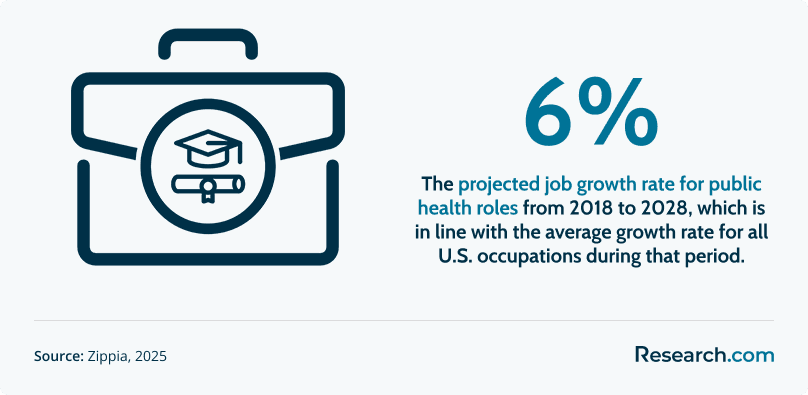
Graduates with an accelerated online bachelor’s in public health enter a labor market shaped by prevention, chronic disease management, public health preparedness, health equity, and data-informed decision-making. Public health roles are projected to increase 6% from 2018 to 2028, which aligns with average U.S. job growth trends. Demand is influenced by pandemic response needs, aging populations, and wider attention to chronic disease prevention.
Across U.S. healthcare occupations, about 1.9 million openings per year are expected because of both employment growth and replacement needs. Public health graduates may find opportunities outside hospitals and clinics, including local health departments, schools, nonprofit organizations, research institutions, community agencies, and corporate wellness programs.
The field is also changing because employers increasingly value skills in health data, risk communication, emergency preparedness, program evaluation, and culturally responsive outreach. Students who plan to move into advanced public health, policy, or management roles may eventually compare the MPH degree salary outlook to understand how graduate education can affect long-term career options.
Current trends affecting public health education and careers
- Greater emphasis on preparedness: Public health programs increasingly focus on emergency response, outbreak communication, and resilient health systems.
- More data-driven decision-making: Employers value graduates who can interpret public health data, evaluate programs, and communicate findings clearly.
- Health equity as a core skill area: Community-based work often requires understanding social determinants of health, access barriers, and culturally appropriate outreach.
- Blended public health and technology roles: Health informatics, digital communication, and surveillance tools are becoming more visible in public health practice.
- Continued need for field experience: Even in online programs, practicums, capstones, and community projects remain important for building applied skills.
Student Support Services in Online Public Health Programs
Strong support services can make the difference between simply enrolling and actually finishing an accelerated online degree. Because accelerated courses move quickly, students should look for proactive advising, accessible faculty, responsive technology help, and career support designed specifically for online learners.
- Academic advising: Helps students plan course loads, understand degree requirements, and avoid scheduling mistakes that delay graduation.
- Online tutoring and writing help: Supports students in statistics, research writing, public health analysis, and general education courses.
- Technology support: Assists with learning platforms, online exams, video tools, and course access issues.
- Career counseling: Provides resume reviews, interview preparation, internship search help, and job-search planning.
- Library and research access: Gives students access to databases, journals, citation support, and research guides.
- Mental health and wellness services: Can be especially useful for students balancing intensive coursework with work and family obligations.
- Alumni and mentoring networks: Help students connect classroom learning to real public health career paths.
For students comparing online healthcare training with different timelines and support models, Research.com also covers accredited medical billing and coding schools online.
What Graduates Say About Accelerated Online Public Health Bachelor’s Programs
- Jiad: "The accelerated online format helped me finish my public health degree sooner while continuing to work full time. The courses connected directly to real community health problems, so the material felt useful instead of abstract. I left the program feeling ready to support health initiatives and contribute to policy-focused projects."
- Ledi : "Earning my public health bachelor’s online gave me the flexibility I needed while caring for my family. The schedule was manageable, but the coursework still pushed me to build skills in outreach, health education, and population health. It helped me feel prepared for work that has a direct impact on communities."
- Vilma: "Choosing an accelerated online public health program helped me move forward without putting my career on hold. The focus on epidemiology, health promotion, and data analysis gave me practical tools I can use in public health settings. The pace was demanding, but it made the degree feel focused and career-relevant."
Key Insights
- Accelerated online public health bachelor’s programs are best for motivated students who need flexibility and can handle condensed coursework. They can be especially useful for transfer students with completed credits.
- Program length is highly personal. Although many programs take 18 to 36 months, your timeline depends on transfer credits, course load, start dates, and practicum timing.
- Accreditation matters. Verify institutional accreditation and check whether CEPH accreditation is important for your career or certification goals.
- Do not compare programs by tuition alone. Cost per credit, total credits, fees, transfer policies, and financial aid all affect the real price.
- Field experience is important, even online. Practicums, internships, simulations, and capstones help students turn public health theory into job-ready skills.
- Career outcomes vary by role, location, experience, and credentials. A bachelor’s degree can support entry-level roles, while advanced or specialized positions may require certification, graduate education, or additional experience.
- The best program is the one that fits your goal. Choose based on accreditation, curriculum, transfer credit acceptance, support services, practicum requirements, and realistic workload.
References:
- American Public Health Association. Public health workforce. Available from APHA public health workforce resources.
- Association of Schools and Programs of Public Health. Degrees. Available from ASPPH degree information.
- Association of State and Territorial Health Officials. Public health workforce. Available from ASTHO workforce resources.
- Centers for Disease Control and Prevention. Public health professionals gateway. Available from CDC public health workforce information.
- Department of Education. Grants and programs. Available from ED.gov grants and programs.
- Forbes Advisor. What can you do with a public health degree? Available from Forbes public health degree guide.
- Health and Human Services. Healthcare workforce financial assistance. Available from HHS.gov workforce financial assistance.
- Public Health Degrees. Public health certifications. Available from PublicHealthDegrees.org certification resources.
- Public Health Degrees. Public health degree programs. Available from PublicHealthDegrees.org.
- Johns Hopkins Bloomberg School of Public Health. (2024). Headlines in public health 2024. Available from JHU Public Health.
- U.S. Bureau of Labor Statistics. Epidemiologists. Available from BLS epidemiologists profile.
- White, M. (2024). 8 emerging trends in public health. Available from WorldHealth.net public health trends.
- Zippia. Community health worker salary. Available from community health worker salary data.
- Zippia. Disease intervention specialist salary. Available from disease intervention specialist salary data.
- Zippia. Environmental health officer salary. Available from environmental health officer salary data.
- Zippia. Health education specialist salary. Available from health education specialist salary data.
- Zippia. Public health researcher salary. Available from public health researcher salary data.
- Zippia. Public health specialist jobs demographics. Available from public health specialist demographics data.
Other Things You Should Know About Accelerated Online Bachelor’s Programs in Public Health
For 2027, top institutions offering accelerated online Bachelor's programs in Public Health include institutions like the University of Florida, Arizona State University, and the University of South Florida. These programs offer flexible schedules and are tailored to expedite students' paths to graduating efficiently.
Financial aid for 2027 accelerated online bachelor's programs in public health includes federal grants, scholarships specific to public health, and employer tuition assistance. Prospective students should explore the Free Application for Federal Student Aid (FAFSA) and consult individual schools for additional aid opportunities.
Most accelerated online public health bachelor's programs accept up to 60 lower-division transfer credits, and some cap transfer work at 90 total semester credits. Accredited courses from regionally accredited colleges are usually considered first, while major-specific public health classes may need department approval.
Yes, many online public health bachelor's programs are designed to accommodate working professionals. These programs typically offer flexible scheduling, allowing students to manage their work commitments alongside their studies. Accelerated options can further reduce time to completion, making it more feasible to balance both responsibilities.