
2027 Fastest Online Public Safety Degree Programs

Co-Founder and Chief Data Scientist
Choosing a fast online public safety degree is usually a practical decision: you want a credential that can help you move into law enforcement leadership, emergency management, homeland security, fire services administration, dispatch leadership, or a related role without stepping away from work. The need for trained public safety professionals remains visible in national crime data, with around 1,954 property crimes and 381 violent crimes occurring per 100,000 people in the U.S.
This guide explains what accelerated online public safety programs include, how quickly they can be completed, what they cost, how to compare schools, and which career paths may fit your goals. It is designed for working adults, first responders, military-affiliated students, career changers, and public service professionals who need a flexible route to a degree.
Quick Answer: Is a Fast Online Public Safety Degree Worth It?
A fast online public safety degree can be worth it if you already work in public service, want to qualify for promotion, need a bachelor’s or master’s credential for leadership roles, or want to shift into emergency management, homeland security, public administration, or criminal justice. The strongest programs are accredited, accept transfer or prior-learning credit, offer relevant concentrations, and provide support for online learners.
However, speed should not be your only priority. Before enrolling, confirm that the program’s accreditation, curriculum, field expectations, tuition, and transfer policies match your career plans. Some public safety jobs also require separate academy training, civil service exams, background checks, physical standards, certifications, or agency-specific requirements beyond the degree.
What are the main benefits of earning an online public safety degree?
- Broader career options: A public safety degree can support roles such as emergency management specialist, police officer, fire services administrator, homeland security analyst, dispatcher supervisor, corrections administrator, and security manager.
- Potential for advancement: The median annual wage for protective service occupations was about $50,580 as of May 2024, while experienced professionals in supervisory, federal, or specialized roles may earn more depending on location, agency, and responsibility level.
- Flexible completion: Online programs allow students to study around shifts, family obligations, military service, or full-time employment. Accelerated formats can shorten the path to graduation, especially for students with transfer credits.
What can I expect from an online public safety degree program?
An online public safety degree usually combines criminal justice, emergency response, public administration, ethics, risk management, homeland security, and leadership coursework. The goal is to prepare students for operational and supervisory responsibilities in agencies and organizations that protect people, property, infrastructure, and communities.
Many programs are built for adults already working in law enforcement, fire services, EMS, corrections, emergency communications, military service, private security, or government. Courses may be asynchronous, meaning students can complete weekly assignments without attending live class meetings. Accelerated programs often use five- to eight-week courses and multiple start dates, which can make it possible to finish in as few as 12 to 18 months when transfer credits, prior learning, or a full-time graduate schedule apply.
Who is this degree best for?
| Student profile | Why a public safety degree may fit | What to check first |
| Current first responders | Can help build leadership, policy, and administrative skills for promotion. | Whether the school awards credit for academy training, military service, or professional experience. |
| Military-affiliated students | Public safety coursework often aligns with emergency response, security, operations, and leadership experience. | Transfer credit policies, veteran benefits, and military tuition discounts. |
| Career changers | Can provide a structured introduction to criminal justice, emergency management, and homeland security. | Whether target jobs require academy training, certification, or prior agency experience. |
| Public agency employees | Can support movement from frontline roles into planning, compliance, supervision, or administration. | Whether the curriculum includes budgeting, policy analysis, personnel management, and crisis planning. |
Where can I work with a public safety degree?
Graduates may work in local, state, federal, nonprofit, and private-sector settings. Common employers include police departments, sheriff’s offices, fire departments, EMS agencies, emergency communications centers, correctional facilities, transportation systems, hospitals, colleges, municipal governments, disaster response organizations, and corporate security or risk management teams.
Federal employers may include organizations such as Federal Emergency Management Agency (FEMA), the Transportation Security Administration (TSA), or the Department of Justice. Private organizations may also hire public safety graduates for crisis planning, investigations support, loss prevention, physical security, emergency preparedness, and business continuity roles.
How much can I make with a public safety degree?
Pay varies by role, employer, geography, union structure, shift differentials, overtime, education level, and years of service. Entry-level jobs such as police officer or emergency dispatcher may start in the $45,000 to $55,000 range, while experienced professionals in roles such as emergency management director, fire chief, or senior agency administrator may earn $80,000 or more.
The U.S. Bureau of Labor Statistics (BLS) reports that protective service occupations earned a median wage of $50,580 as of May 2024. Supervisory or specialist roles, particularly those requiring postgraduate credentials or federal agency experience, can reach $90,000 or higher. Still, a degree does not guarantee a specific salary; compensation depends heavily on the position, agency, location, and experience required.
- Fastest Online Public Safety Degree Programs for 2027
- How long does it take to complete a fast online public safety degree?
- How does an online public safety degree compare to an on-campus program?
- What is the average cost of a fast online public safety degree program?
- What financial aid is available for online public safety students?
- What are the admissions requirements for fast online public safety programs?
- What courses are usually included in a fast online public safety degree?
- What specializations are available in online public safety programs?
- Can business skills strengthen a public safety career?
- Why do accreditation and industry partnerships matter?
- How can interdisciplinary education improve public safety leadership?
- How do you choose the best fast online public safety degree?
- What careers are available after an online public safety degree?
- What is the job market like for public safety graduates?
List of the Fastest Online Public Safety Degree Programs for 2027
The programs below are designed for students who want a shorter route to a public safety, criminal justice, homeland security, or related leadership credential. Some are graduate programs that can be completed in about one year with full-time study, while others are bachelor’s programs that become faster when students transfer substantial prior credit.
If you are comparing short-format credentials in other fields, it may help to understand how these programs differ from career-specific options such as the fastest online medical billing and coding certificate programs. Public safety degrees are broader and usually prepare students for agency, emergency, security, or leadership work rather than a single technical occupation.
How do we rank schools?
A fast degree is only useful if the school is credible, the curriculum is relevant, and the format realistically fits working students. Research.com evaluates programs using factors such as completion speed, tuition, online flexibility, accreditation, available concentrations, and academic quality.
Additional details about Research.com’s evaluation process are available in Research.com’s Methodology.
Program research draws from established education data sources, including the IPEDS database, Peterson’s Distance Learning Licensed Data Set, the College Scorecard database, and the National Center for Education Statistics (NCES).
Here are ten universities offering some of the fastest online public safety-related degree options for 2027.
| School | Online program | Fastest listed completion time | Credits | Accreditation |
| Arizona State University | Master of Public Safety Leadership and Administration | One year | 33 | Higher Learning Commission (HLC) |
| University of Cincinnati | MS in Criminal Justice | One year | 33 | HLC |
| Florida International University | MS in Criminal Justice | 12 months | 36 | Southern Association of Colleges and Schools Commission on Colleges (SACSCOC) |
| Liberty University | MS in Criminal Justice with Public Administration concentration | One year | 36 | SACSCOC |
| Sam Houston State University | MS in Homeland Security Studies | 12 to 18 months | 36 | SACSCOC |
1. Arizona State University
Arizona State University offers an online Master of Public Safety Leadership and Administration (PSLA) through the Watts College of Public Service and Community Solutions. Launched in 2019, the program is aimed at working professionals preparing for supervisory, command, or administrative responsibilities in law enforcement, fire services, emergency management, and related fields. Seven and a half-week courses allow full-time students to finish in as little as one year.
- Program Length: One year (full-time)
- Tracks/concentrations: Emergency Medical Services, Fire Service, Law Enforcement, Homeland Security
- Cost per Credit: $750
- Required Credits to Graduate: 33
- Accreditation: Higher Learning Commission (HLC)
2. University of Cincinnati
The University of Cincinnati offers an online MS in Criminal Justice that has been available online since 2001. The accelerated structure uses seven-week courses throughout the year, making a one-year completion timeline possible for students who can manage a full course load. Coursework emphasizes research methods, crime analysis, justice administration, and advanced criminal justice practice.
- Program Length: One year (accelerated)
- Tracks/concentrations: Analysis of Criminal Behavior, Law Enforcement and Crime Prevention, Corrections and Offender Rehabilitation
- Cost per Credit: $640 (in-state); $655 (out-of-state)
- Required Credits to Graduate: 33
- Accreditation: HLC
3. Florida International University
FIU offers an online MS in Criminal Justice through the Steven J. Green School of International and Public Affairs. The online version launched in 2012 and is structured for law enforcement officers, homeland security personnel, and public service professionals. Full-time students can complete the program in 12 months while studying criminological theory, public policy, ethics, and criminal justice systems.
- Program Length: One year (full-time)
- Tracks/concentrations: Generalist program
- Cost per Credit: $455 (in-state); $1,000 (out-of-state)
- Required Credits to Graduate: 36
- Accreditation: Southern Association of Colleges and Schools Commission on Colleges (SACSCOC)
4. Liberty University
Liberty University provides a fully online MS in Criminal Justice with a Public Administration concentration. The program uses eight-week courses and multiple start dates, which can help working students maintain momentum. It is designed for students interested in public service leadership, government administration, homeland security, and justice-related management roles.
- Program Length: One year (accelerated)
- Tracks/concentrations: Public Administration, Homeland Security, Forensic Psychology
- Cost per Credit: $565 (full-time); $615 (part-time)
- Required Credits to Graduate: 36
- Accreditation: SACSCOC
5. Sam Houston State University
Sam Houston State University offers an online MS in Homeland Security Studies through its Department of Security Studies. The program focuses on national security, disaster response, intelligence operations, and risk analysis. Depending on course load, students may complete the degree in 12 to 18 months.
- Program Length: 12 to 18 months
- Tracks/concentrations: General Homeland Security focus
- Cost per Credit: $509 (in-state); $590 (out-of-state)
- Required Credits to Graduate: 36
- Accreditation: SACSCOC
6. Columbia Southern University
Columbia Southern University offers an online BS in Criminal Justice Administration for first responders and working adults. Open enrollment, self-paced coursework, and transfer-friendly policies may help students shorten the time needed to finish. The program can be especially relevant for learners who already have college credits or professional training.
- Program Length: As few as 18 months (with transfer credits)
- Tracks/concentrations: Generalist program
- Cost per Credit: $270
- Required Credits to Graduate: 120
- Accreditation: Distance Education Accrediting Commission (DEAC)
7. Southern New Hampshire University
SNHU offers a fully online BA in Criminal Justice with a Homeland Security concentration. The program is structured for adult learners through asynchronous coursework, year-round terms, and generous transfer options. Students may transfer up to 90 credits and finish in as little as 15 months.
- Program Length: 15 to 18 months (with transfer credits)
- Tracks/concentrations: Homeland Security, Corrections, Police Administration
- Cost per Credit: $330
- Required Credits to Graduate: 120
- Accreditation: New England Commission of Higher Education (NECHE)
8. Wilmington University
Wilmington University offers a fully online MS in Administration of Justice with an emphasis on justice policy, ethical leadership, and administrative decision-making. Seven-week course blocks and rolling admissions support faster progress, with completion possible in under 18 months for students who maintain an accelerated pace.
- Program Length: 12 to 18 months
- Tracks/concentrations: Homeland Security, Criminal Behavior, Leadership and Administration
- Cost per Credit: $488
- Required Credits to Graduate: 36
- Accreditation: Middle States Commission on Higher Education (MSCHE)
9. University of Maryland Global Campus
UMGC offers an online MS in Homeland Security Management focused on security coordination, policy, planning, and operational response. The program uses real-world case studies and simulations, along with rolling admissions and multiple start dates. Students may complete the program within 12 to 18 months.
- Program Length: 12 to 18 months
- Tracks/concentrations: General Homeland Security
- Cost per Credit: $514 (in-state); $659 (out-of-state)
- Required Credits to Graduate: 36
- Accreditation: MSCHE
10. Purdue Global
Purdue Global offers a Bachelor of Science in Criminal Justice with a public safety focus. Students may accelerate through transfer credit, credit for work experience, or ExcelTrack™, a self-paced option designed for learners who can move quickly through material they already know.
- Program Length: 18 months (with prior credits/ExcelTrack)
- Tracks/concentrations: Public Safety and Security, Crime Scene Investigation, Forensic Psychology
- Cost per Credit: $371
- Required Credits to Graduate: 180 quarter credits
- Accreditation: HLC
How long does it take to complete a fast online public safety degree?
Completion time depends on degree level, course load, transfer credit, prior learning, and whether the program uses accelerated terms. Master’s programs are often the quickest for students who already have a bachelor’s degree and can study full time. Bachelor’s programs usually require more credits but may be shortened substantially when students transfer prior coursework.
Accelerated bachelor’s programs can be completed in as little as 18 months when students bring in enough accepted credits. Some master’s programs can be finished in 12 months with continuous full-time enrollment. These timelines are most realistic for disciplined students who can handle compressed courses, weekly deadlines, and year-round study.
Military-affiliated students and experienced first responders should ask whether academy training, certifications, professional development, or service experience can count toward credit. Students comparing public service pathways may also find related options in the best online military studies degree programs.
| Degree level | Fast completion timeline mentioned | Best fit | Main acceleration factor |
| Bachelor’s degree | As little as 15 to 18 months with transfer credits | Students without a completed four-year degree | Transfer credits, prior learning, self-paced options |
| Master’s degree | 12 months to 18 months | Students who already hold a bachelor’s degree | Full-time enrollment and short course terms |
| Self-paced or competency-based track | 18 months with prior credits/ExcelTrack | Experienced learners who can progress independently | Demonstrating mastery quickly |
How does an online public safety degree compare to an on-campus program?
Online and campus-based public safety programs may cover similar academic subjects, including emergency management, criminal justice, ethics, homeland security, and leadership. The bigger difference is how students learn, interact, build networks, and manage field-based requirements.
| Factor | Online public safety degree | On-campus public safety degree |
| Schedule | Often asynchronous and easier to fit around shift work or family obligations. | Usually follows scheduled class times and a standard academic calendar. |
| Speed | May offer five- to eight-week courses and multiple start dates. | Often follows semester or quarter pacing. |
| Networking | Relies on virtual discussions, online advising, and remote faculty access. | Offers in-person conversations, campus events, and local peer connections. |
| Cost considerations | Can reduce commuting, relocation, and housing expenses. | May involve transportation, parking, or living costs. |
| Best for | Working adults, first responders, military students, and students outside commuting range. | Students who prefer face-to-face learning or need campus-based resources. |
Flexibility and pace
- Online programs: Online formats are often better for students with rotating shifts, overtime, family responsibilities, or military obligations. Accelerated public safety programs resemble other compressed training options, such as fast-track CompTIA Security+ online training programs, in that they require consistent weekly effort and strong time management.
- On-campus programs: Campus programs may work better for students who want structured class meetings, in-person faculty contact, and local networking.
Interaction and learning style
- Online: Students usually interact through discussion boards, video lectures, email, live office hours, and digital group projects.
- On-campus: Students can learn through face-to-face discussion, local simulations, and in-person collaboration.
Cost and access
Online study can make more programs available without relocation. That matters for students who live far from a campus or need a concentration not offered locally. Students comparing public-facing careers may also want to review the difference between social worker and case manager, since education format and field experience can shape preparation for community-centered roles.
What is the average cost of a fast online public safety degree program?
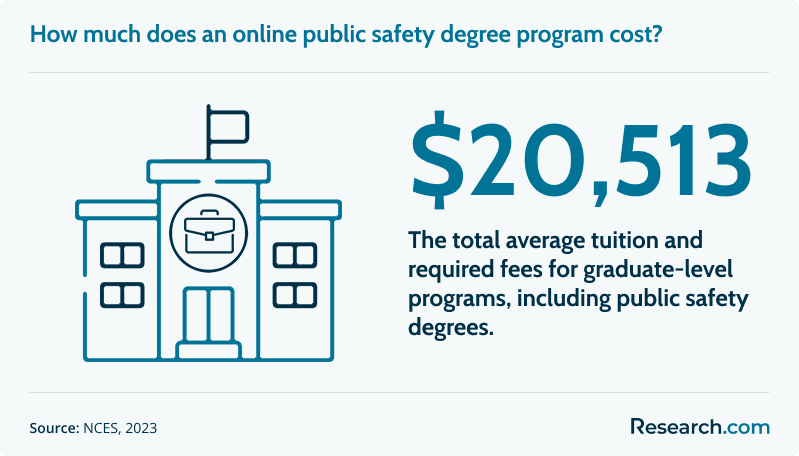
Program cost depends on degree level, public or private institution status, residency, transfer credits, fees, and the number of credits required. NCES data lists average tuition and required fees for graduate-level programs at U.S. institutions at approximately $20,513 per year. This number is a broad benchmark, not a guarantee of what an online public safety program will cost.
Some public universities and online-focused institutions charge less than that benchmark, while private institutions or out-of-state tuition rates can be higher. Public institutions may charge under $10,000 per year, while private universities could go beyond $25,000 depending on the program and reputation. Students comparing lower-cost accelerated options in adjacent fields can also review fast track online counselor education programs for examples of how format, pricing, and completion time vary across disciplines.
If homeland security is your main interest, compare tuition and total credit requirements in the most affordable online master's programs in homeland security.
| Cost factor | Why it matters | Question to ask |
| Cost per credit | The per-credit rate multiplied by required credits determines much of the total price. | Is the listed tuition the same for online, in-state, and out-of-state students? |
| Transfer credits | Accepted credits can reduce both time and tuition. | How many credits can I transfer, and how will they apply to the degree plan? |
| Fees | Technology, graduation, course, and online learning fees can add to the bill. | What is the full program cost, including required fees? |
| Course load | Taking fewer courses may extend the timeline and affect aid eligibility. | What is the cost difference between full-time and part-time enrollment? |
What are the financial aid options for students enrolling in an online public safety degree program?
Students in accredited online public safety programs may be eligible for several forms of financial aid. The best approach is to compare the net cost after grants, scholarships, employer support, military benefits, and transfer credits—not just the advertised tuition rate.
- Federal financial aid: Eligible students may use federal aid such as Pell Grants and federal student loans when attending qualifying accredited institutions.
- Institutional scholarships: Some colleges offer scholarships for online students, adult learners, public service employees, transfer students, or military-affiliated learners.
- Military and first responder discounts: Certain schools provide tuition reductions for veterans, active-duty service members, law enforcement personnel, firefighters, EMS workers, or dispatchers.
- Employer tuition assistance: Public agencies, municipalities, hospitals, private security firms, and emergency services employers may offer reimbursement for job-related education.
- State aid: Depending on residency and program eligibility, students may qualify for state-funded grants or scholarships.
Students focused on emergency management can compare additional budget-conscious pathways through the most affordable online bachelor's in emergency management.
What are the prerequisites for enrolling in a fast online public safety degree program?
Admissions requirements vary by school and degree level. Bachelor’s programs usually focus on high school completion, prior college transcripts, and transfer credit review. Master’s programs usually require a completed bachelor’s degree and may ask for work experience, a resume, recommendations, or a statement of purpose.
For bachelor's programs
- High school diploma or GED
- Official high school and college transcripts
- Minimum GPA, often 2.0 or higher
- Prior college credits when seeking an accelerated path
- Possible credit review for military, academy, or professional training
Students who are trying to maximize transfer credits can compare policies across fields, including options such as a fast track online history bachelor's degree.
For master’s programs
- Bachelor's degree in public safety, criminal justice, or a related field
- Resume showing relevant professional background
- Statement of purpose or career goals essay
- Letters of recommendation, depending on the school
- Relevant work experience in law enforcement, EMS, corrections, emergency management, military service, or public administration, when required or preferred
Zippia reports that a bachelor’s degree is the most common credential among public safety officers, held by 38% of professionals in the field. Associate degrees account for 27%, while high school diplomas account for 21%. These figures suggest that formal education is common in the field, but the right credential level depends on the role and employer.
If your background is in human services, casework, or community support, review how to become a social worker to understand how communication, crisis response, ethics, and public service skills can transfer across related careers.
What courses are typically in a fast online public safety degree program?
Fast online public safety programs usually combine theory, law, operations, leadership, and applied problem-solving. Courses are meant to help students understand how public safety agencies function, how emergencies are coordinated, and how policies affect communities and personnel.
Some criminal justice-heavy programs may share content with a fast track corrections degree online, especially when courses cover offender management, institutional security, and justice system administration.
Common courses include:
- Public Safety Administration: Covers leadership, budgeting, staffing, interagency coordination, and agency operations.
- Criminal Law and Procedure: Explains legal standards, constitutional rights, due process, investigations, and court processes.
- Emergency Management and Disaster Response: Focuses on preparedness, mitigation, response, recovery, and coordination during natural or human-made disasters.
- Ethics in Public Service: Examines accountability, discretion, professional conduct, use of authority, and public trust.
- Homeland Security and Terrorism: Introduces threat assessment, intelligence concepts, infrastructure protection, and counterterrorism policy.
- Data and Policy Analysis: Teaches students to interpret crime, risk, and operational data for decision-making and policy development.
Some programs also include interdisciplinary electives tied to health, community resilience, or emergency preparedness. Students interested in the public health side of community safety can explore how to become a public health nurse.
What types of specializations are available in online public safety degree programs?
Specializations allow students to align coursework with a specific career direction. This matters because a student preparing for fire service leadership may need different electives than someone targeting homeland security analysis, police administration, or corrections management. Concentrations work much like focused tracks in other accelerated fields, such as the fastest online master's in early childhood education, but the subject matter centers on safety, security, response, and justice systems.
| Specialization | Best for | Typical focus |
| Law Enforcement Leadership | Officers preparing for command, supervision, or administrative roles. | Police management, ethics, community policing, investigations, and policy. |
| Emergency and Disaster Management | Students interested in planning for hurricanes, wildfires, terrorist threats, public health emergencies, or infrastructure disruptions. | Preparedness, response coordination, recovery, mitigation, and interagency planning. |
| Homeland Security | Students targeting federal, state, local, transportation, or private security roles. | National security, intelligence, terrorism, border issues, infrastructure protection, and risk assessment. |
| Fire Services Administration | Firefighters and fire officers preparing for leadership. | Fire prevention, emergency operations, personnel management, and department administration. |
| Corrections and Rehabilitation | Students interested in correctional systems, reentry, supervision, or facility administration. | Offender rehabilitation, institutional safety, correctional policy, and justice reform. |
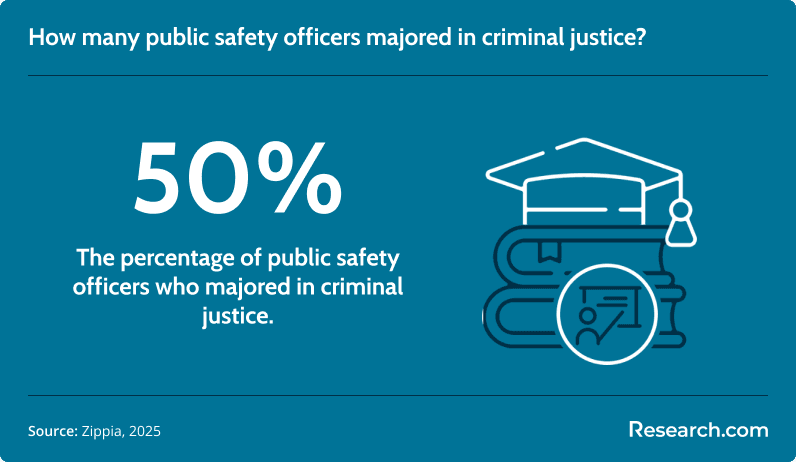
Zippia reports that about 50% of public safety officers major in criminal justice, making it the most common academic foundation in the field. Business and general studies are also common, particularly for students aiming at administration, management, or private-sector safety roles.
Can Complementary Business Skills Elevate Your Public Safety Career?
Business knowledge can be valuable for public safety professionals who want to manage budgets, lead teams, write grants, evaluate operations, oversee personnel, or coordinate large-scale programs. Public safety leaders often need more than field experience; they must understand finance, procurement, strategic planning, human resources, performance metrics, and organizational change.
Students who already hold a public safety-related degree and want broader leadership training may consider a business credential, including a least expensive online MBA, if it fits their budget and career goals. This path may be most useful for professionals moving toward agency administration, municipal leadership, emergency services management, or private security leadership.
What Accreditation and Industry Partnerships Support Online Public Safety Degree Programs?
Accreditation is one of the most important quality checks for an online public safety degree. It helps confirm that the institution meets recognized academic standards and may affect financial aid eligibility, credit transfer, graduate school admission, and employer perception. Always verify accreditation through the school’s accreditor and official federal or institutional sources before enrolling.
Industry partnerships can also strengthen a program. Relationships with police departments, fire agencies, emergency management offices, homeland security organizations, and public administration networks may support internships, guest lectures, simulations, case studies, and career connections. When comparing options, treat accreditation and employer relevance as seriously as you would in other career-focused programs, including the best 2 year construction management degree online.
How can interdisciplinary education enhance your public safety career?
Modern public safety work is increasingly interdisciplinary. Leaders may need to understand technology, data analysis, behavioral health, public communication, budgeting, cybersecurity, community relations, logistics, and emergency operations. A degree that allows electives or complementary training can help students prepare for complex roles that cross agency boundaries.
For example, a public safety professional working in disaster planning may benefit from coursework in data analytics, strategic management, public health, or business continuity. Someone preparing for a senior administrative role may benefit from management and finance coursework. Students who want deeper management training can compare options such as fully online MBA programs after completing or alongside public safety education.
How do you choose the best among the fastest online public safety degree programs?
The best fast online public safety program is not simply the shortest one. It is the program that helps you reach your goal at a reasonable cost, from an accredited institution, in a format you can actually complete. Students comparing accelerated degrees in any field, including the fastest online master's degree in educational counseling, should look beyond speed and ask whether the curriculum, support, and outcomes match the profession.
Key factors to compare before enrolling
- Accreditation: Confirm that the institution is properly accredited and that credits are likely to transfer if needed.
- Program level: Choose a bachelor’s degree if you need an undergraduate credential; choose a master’s degree if you already have a bachelor’s and want advanced leadership preparation.
- Completion time: Review whether the advertised fast timeline requires full-time enrollment, transfer credits, or year-round study.
- Transfer credit policy: Ask how prior college credits, military service, academy training, certifications, or work experience are evaluated.
- Concentrations: Match the specialization to your target role, such as homeland security, emergency management, law enforcement leadership, fire services, or corrections.
- Total cost: Compare cost per credit, required credits, fees, books, tuition discounts, and financial aid.
- Student support: Look for online advising, career services, library access, writing support, technical support, and faculty availability.
- Career requirements: Confirm whether your intended job requires a degree, academy training, licensure, certification, civil service testing, background screening, or agency-specific hiring steps.
Common mistakes to avoid
| Mistake | Why it can hurt you | Better approach |
| Choosing only the fastest program | A shorter timeline may not matter if the program lacks the concentration or support you need. | Balance speed with accreditation, curriculum fit, cost, and career alignment. |
| Ignoring transfer credit rules | You may assume you can finish quickly, then discover that fewer credits apply than expected. | Request a written transfer evaluation before committing. |
| Looking only at tuition per credit | Fees and required credits can change the total price. | Calculate the full cost to graduation. |
| Assuming the degree is enough for every public safety role | Many roles require additional exams, academy training, certifications, or background checks. | Research agency requirements for your target job before enrolling. |
| Overlooking online support | Accelerated courses can be difficult without advising, tutoring, and responsive faculty. | Ask about support hours, response times, and career services for online students. |
Questions to ask admissions advisors
- What is the realistic completion time for students with my transfer credits and work schedule?
- How many credits will I need to complete at your institution?
- Are courses asynchronous, synchronous, or a mix of both?
- Can I pause or reduce my course load during demanding work periods?
- Does the program include capstone projects, simulations, internships, or applied case studies?
- Which public safety employers, agencies, or professional organizations are connected to the program?
- What career services are available to online students?
What career paths are available for graduates of online public safety degree programs?
An online public safety degree can support several paths, but the right role depends on your prior experience, degree level, location, agency requirements, and willingness to complete additional training. Unlike counseling-related programs such as the fastest online master's programs in marriage and family counseling, public safety programs often lead to jobs tied to government hiring systems, civil service rules, physical standards, or agency-specific credentials.
BLS protective service occupations include:
- Correctional Officers and Bailiffs: Supervise people in correctional or court custody and maintain institutional or courtroom security.
- Fire Inspectors: Review buildings for fire risks and enforce fire safety codes.
- Firefighters: Respond to fires, rescues, hazardous materials incidents, medical calls, and other emergencies.
- Police and Detectives: Enforce laws, investigate crimes, respond to calls, gather evidence, and apprehend suspects.
- Private Detectives and Investigators: Conduct investigations for legal, financial, insurance, corporate, or personal matters.
- Security Guards and Gambling Surveillance Officers: Monitor property, protect people and assets, and identify unlawful activity.
Additional public safety-related roles include:
- Public Safety Telecommunicators (Dispatchers): Receive emergency calls, gather critical information, dispatch response units, and coordinate communications.
- Emergency Management Directors: Develop disaster plans, coordinate emergency response, lead preparedness efforts, and manage recovery strategies.
- Homeland Security Analyst: Supports risk assessment, security planning, policy review, or threat analysis for public or private organizations.
- Fire Services Administrator: Helps manage fire department operations, prevention programs, training, budgets, and personnel.
Below is a chart with average annual salaries for select public safety careers:
What is the job market like for graduates of an online public safety degree program?
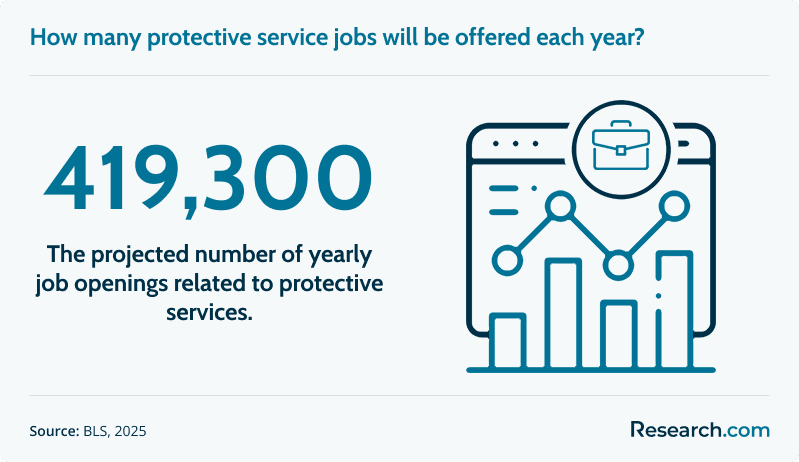
The public safety job market is broad because it includes law enforcement, corrections, fire services, emergency management, dispatch, security, investigations, and related government or private-sector roles. BLS projects about 419,300 job openings per year in protective service occupations through the next decade, including openings created by workers leaving occupations or retiring.
Demand may be strongest for professionals who combine field experience with specialized training in emergency management, homeland security, cybersecurity awareness for public agencies, data-informed policing, crisis planning, public communication, or organizational leadership. An accelerated online degree can help qualified students move faster, but career outcomes still depend on experience, hiring standards, location, and agency needs.
The degree can be most valuable when paired with practical experience, strong communication skills, clean background requirements where applicable, leadership ability, and knowledge of current emergency response and public safety systems.
How to Use Graduate Feedback When Comparing Fast Online Public Safety Programs
Student testimonials can be useful, but they should not be your main evidence when choosing a program. Look for patterns in what graduates mention: schedule flexibility, instructor responsiveness, practical assignments, career relevance, and whether coursework could be applied immediately in the field. Also check independent data, accreditation, tuition, and employer expectations before making a decision.
-
: "
“The strongest online programs for working public safety professionals tend to offer flexible deadlines, applied coursework, and faculty who understand shift work. The challenge is intensity: accelerated courses move quickly, so students need a weekly study plan before classes begin.”
"
Practical Steps Before You Enroll
- Define your target role: Decide whether you want law enforcement leadership, emergency management, homeland security, fire administration, corrections, dispatch supervision, or private security management.
- Check non-degree requirements: Confirm academy, certification, civil service, physical fitness, background, or agency-specific requirements.
- Verify accreditation: Review institutional accreditation and make sure the school is recognized by appropriate authorities.
- Request a transfer evaluation: Ask how many credits you can apply before estimating completion time.
- Calculate total cost: Include tuition, fees, books, transfer credits, aid, and employer reimbursement.
- Compare course formats: Decide whether asynchronous, live online, self-paced, or cohort-based learning fits your schedule.
- Ask about career support: Look for resume help, employer connections, internship guidance, and public safety-focused advising.
- Plan for the workload: Accelerated courses can be demanding. Set aside regular weekly study time before the term starts.
Key Insights
- Fast online public safety degrees can help working adults earn credentials for emergency management, homeland security, law enforcement leadership, fire services administration, corrections, dispatch, and security-related careers.
- Some master’s programs can be completed in 12 months, while bachelor’s programs may be shortened to as little as 15 to 18 months when students transfer enough credits.
- The median annual wage for protective service occupations is $50,580, but pay varies widely by role, location, agency, overtime, seniority, and leadership responsibility.
- Speed should never replace due diligence. Check accreditation, transfer policies, total cost, concentration fit, and job-specific requirements before enrolling.
- Common specializations include law enforcement leadership, homeland security, emergency and disaster management, fire services administration, and corrections and rehabilitation.
- BLS projects about 419,300 protective service job openings per year through the next decade, but graduates should expect hiring standards to vary by agency and occupation.
- The best program is the one that matches your career goal, accepts your prior learning, fits your schedule, and gives you practical skills you can use in real public safety settings.
References:
- BLS. (2025, April 18). Emergency Management Directors. bls.gov.
- BLS. (2025, April 18). Protective service occupations. bls.gov.
- BLS. (2025, August 28). Public safety telecommunicators. bls.gov.
- Gramlich, J. (2024, May 13). What the data says about crime in the U.S. Pew Research Center. pewresearch.org.
- NCES. (2023). Average and percentiles of graduate tuition and required fees in degree-granting postsecondary institutions, by control of institution: Academic year 1989-90 through 2021-22. nces.ed.gov.
- Zippia. (2025, January 8). Best Colleges and Degrees for Public Safety Officers. zippia.com.
Other Things You Should Know About the Fastest Online Public Safety Degree Programs
The fastest online public safety degree programs in 2027 generally require applicants to have a high school diploma or GED. Some programs may also require relevant work experience or previous coursework. Admission requirements vary, so it’s advisable to check with individual institutions for specific criteria.
Completing a fast online public safety degree in 2027 can lead to careers such as emergency management director, law enforcement officer, or homeland security specialist. The degree equips graduates with skills applicable in a range of public safety roles, enhancing career growth and job prospects in government and private sectors.
Many accelerated online public safety bachelor’s programs accept up to 90 transfer credits toward a 120-credit degree. Schools usually require official transcripts and a minimum 2.0 GPA. Core public safety courses still must be completed at the granting institution, especially upper-division classes.
Yes, many online public safety degree programs—especially accelerated ones—accept transfer credits from previous college coursework, military training, or relevant certifications. This can significantly reduce the time and cost required to graduate. Some schools also award credit for prior learning or work experience through evaluations or portfolio submissions.
However, transfer policies vary by institution, so it’s important to confirm how many credits are accepted and whether they meet degree requirements. Taking advantage of transfer credit options is one of the most effective ways to complete your degree faster.


