
2027 Best Accelerated Online Master’s in Early Childhood Education

Co-Founder and Chief Data Scientist
Choosing an accelerated online master’s in early childhood education is a practical career decision, not just an academic one. Early childhood educators work with children from birth through age eight, and Data USA reported around 5.11 million early childhood teachers in the U.S. in 2022. These professionals influence language development, school readiness, social-emotional growth, and family engagement during the years when children build many of their foundational learning habits.
An accelerated online master’s can help experienced educators move faster toward roles in curriculum leadership, early intervention, program administration, advocacy, teacher training, or advanced classroom practice. However, not every program serves the same purpose. Some are designed for licensed teachers seeking endorsements or advanced certification, while others are non-licensure degrees for professionals who want leadership, policy, or child development expertise.
This guide explains how accelerated online master’s in early childhood education programs work, which programs stand out, what they cost, how long they take, what careers they may support, and how to evaluate whether the degree is worth the time and money for your goals.
Quick answer: Is an accelerated online master’s in early childhood education worth it?
An accelerated online master’s in early childhood education can be worth it if you already work in education or child development and want to qualify for leadership, curriculum, specialized instruction, or advanced teaching roles without spending several years in graduate school. Many programs can be completed in around 12 months of full-time study, although timelines vary by school, practicum requirements, and enrollment pace.
The strongest candidates are licensed teachers, preschool educators, childcare leaders, early intervention professionals, and child development specialists who need a flexible graduate pathway. The degree may be less useful if your target job requires a different license, such as speech-language pathology, school counseling, or K–12 special education certification that the program does not provide.
What are the main benefits of accelerated online master’s in early childhood education programs?
- Faster credential completion: Many accelerated online master’s in early childhood education programs are structured for completion in around 12 months of full-time study, making them useful for professionals who want a shorter path to graduate-level credentials.
- Flexible study for working educators: Online coursework, short terms, and multiple start dates can make graduate school more manageable for teachers and childcare professionals who cannot relocate or attend daytime classes.
- Career mobility in a stable field: Employment in education tends to change gradually rather than dramatically, and qualified early childhood professionals remain needed in preschools, childcare centers, early intervention programs, Head Start settings, and school systems.
- Broader salary possibilities: Depending on role, location, employer, licensure, and experience, early childhood educators and related professionals can earn anywhere from $33,000 to $70,000, with some leadership and specialist roles paying more.
What can I expect from an accelerated online master’s in early childhood education program?
An accelerated online master’s in early childhood education is a graduate degree focused on advanced knowledge of young children’s learning, development, assessment, curriculum, family partnerships, inclusive education, and early learning leadership. The degree is usually intended for professionals who want to deepen their practice or move into roles with more responsibility.
The most important distinction is licensure. Some programs are non-licensure degrees, meaning they do not qualify graduates for initial teacher certification. Others are designed for licensed educators and may support endorsements, advanced licensure, or state-specific credentials. Before enrolling, confirm whether the program matches the exact credential requirements in the state where you plan to work.
| Program feature | What it usually means | Why it matters |
| Accelerated terms | Courses often run in six- to eight-week sessions instead of traditional semesters. | You can finish faster, but the weekly workload is heavier. |
| Online delivery | Classes may combine asynchronous assignments with scheduled live sessions. | You need strong time management and reliable technology. |
| Applied curriculum | Projects, case studies, field observations, practica, or capstones connect coursework to real early childhood settings. | Applied work helps you demonstrate skills to employers and may support licensure or endorsement requirements. |
| Student support | Online libraries, advising, faculty office hours, discussion boards, and career resources are common. | Support can make a major difference in an accelerated program where deadlines arrive quickly. |
| Licensure or non-licensure pathway | Some programs prepare licensed teachers for advanced credentials; others focus on leadership or child development without certification. | Choosing the wrong pathway can delay your career plans or require additional coursework later. |
Where can I work with an accelerated online master’s in early childhood education?
Graduates can work in settings that serve young children, families, educators, and early learning systems. The right workplace depends on your state license, prior experience, specialization, and whether your program included fieldwork or administrative preparation.
- Public and private schools: Licensed educators may continue teaching or move into curriculum, mentoring, instructional leadership, or early elementary roles, depending on state requirements.
- Childcare centers and preschools: Graduates may lead classrooms, supervise staff, manage programs, develop curriculum, or oversee quality improvement efforts.
- Head Start and early intervention programs: These settings serve children from underserved communities or children with developmental delays. Roles may include teacher, family liaison, inclusion specialist, coach, or program coordinator.
- Nonprofit organizations: Graduates may design family services, train early childhood workers, support community learning initiatives, or participate in policy and advocacy work.
- Museums, libraries, hospitals, and corporate childcare programs: These less traditional settings may involve educational programming, parent education, developmental support, or child-centered community services.
How much can I make with an accelerated online master’s in early childhood education?
Earnings depend heavily on role, employer, region, licensure, union contracts, experience, and whether the position is classroom-based, administrative, or specialist-oriented. According to the U.S. Bureau of Labor Statistics, preschool teachers earn an average of $41,450 yearly, while preschool SPED teachers earn $72,610 annually. Childcare workers are listed at around $33,14.
Across the broader field, salaries can range from approximately $22,000 to $133,000. Entry-level childcare and preschool roles are usually closer to the lower end, while administrators, specialists, and educators in higher-paying districts or government settings may earn more. Preschool and daycare administrators take home $62,640 annually, and kindergarten administrators can earn up to $113,360.
Location also matters. Professionals working in Washington, D.C., New York, or Massachusetts frequently earn above the national average, partly because of cost of living, public investment, and local compensation structures.
A master’s degree does not guarantee a specific salary. It can, however, help qualified professionals compete for roles with higher responsibility, such as program administration, curriculum coordination, early childhood special education, training, and leadership.
- Best Accelerated Online Master’s in Early Childhood Education for 2027
- How long does an accelerated online master’s in early childhood education take?
- Accelerated online vs. on-campus master’s in early childhood education
- Average cost of an accelerated online master’s in early childhood education
- Financial aid for accelerated online early childhood education master’s students
- Admission requirements for accelerated online master’s in early childhood education programs
- Common courses in accelerated online early childhood education master’s programs
- Specializations in accelerated online master’s in early childhood education programs
- Student support and networking opportunities
- How to manage common challenges in an accelerated online program
- Accreditation and quality standards to check
- How to choose the best accelerated online master’s in early childhood education program
- Specialization checklist before applying
- Is an accelerated online master’s in early childhood education a sound financial investment?
- Program comparison questions to ask schools
- Career paths for graduates
- Job market for graduates with an accelerated online master’s in early childhood education
Best Accelerated Online Master's in Early Childhood Education for 2027
The programs below are designed for students who want graduate-level early childhood education training in a faster online format. If you still need an undergraduate credential before applying, compare options such as an accelerated online bachelor’s in early childhood education before moving into a master’s pathway.
How do we rank schools?
Research.com evaluates accelerated online master’s programs with a focus on academic quality, affordability, accessibility, and student decision-making value. Our ranking process follows our published methodology and uses recognized data sources where available.
Sources include the Integrated Postsecondary Education Data System, Peterson’s database and its Distance Learning Licensed Data Set, College Scorecard, and the National Center for Education Statistics. Program details should still be verified directly with each university, especially tuition, licensure eligibility, fieldwork rules, and state authorization.
1. National University
National University offers an online MA in Early Childhood Education that can be a strong fit for educators interested in leadership, advocacy, research-informed practice, and professional training roles. The program asks students to examine policy, educational research, and the responsibilities of early childhood professionals in changing learning environments.
The curriculum incorporates Universal Design for Learning and is taught by faculty with advanced degrees. Graduates are prepared to evaluate instructional practice, support young children and families, and contribute to improvement efforts in early childhood organizations.
- Program Length: 10 months
- Tracks/Concentrations: Early Childhood Education
- Cost per Year: $10,045
- Required Credits to Graduate: 45 quarter units
- Accreditation: Western Association of Schools and Colleges (WASC), Association for Advancing Quality in Educator Preparation (AAQEP)
2. Eastern Washington University
Eastern Washington University offers an online MEd in Early Childhood Education with six-week courses and several start dates each year. The format is designed for working professionals who need a fast but structured path through graduate coursework.
The program is aligned with NAEYC standards and emphasizes evidence-based early childhood practice. Licensed educators may pursue an additional P–3 endorsement, while non-licensed students can use the program to build leadership capacity for Head Start, private preschool, and related early learning settings. The program does not provide initial teacher certification in the state of Washington.
- Program Length: 12 months
- Tracks/Concentrations: Early Childhood Education (0 to 8)
- Cost per Credit: $335
- Required Credits to Graduate: 49
- Accreditation: Northwest Commission on Colleges and Universities (NWCCU), Washington State Professional Educator Standards Board (PESB)
3. University of North Texas Online
The University of North Texas Online offers an accelerated MS in Early Childhood Education focused on inclusive, culturally responsive, and linguistically responsive approaches to working with young children. Students examine early learning environments through a critical lens and consider how care, instruction, family context, and culture shape child development.
The degree can support work in advocacy, research, policy, and child development roles. Courses are offered in eight-week formats in fall and spring, with shorter summer sessions available.
- Program Length: 12 months
- Tracks/Concentrations: Early Childhood Education
- Cost per Credit: $464.50 (resident); $538.41 (non-resident)
- Required Credits to Graduate: 30
- Accreditation: Southern Association of Colleges and Schools Commission on Colleges (SACSCOC)
4. Texas Woman's University
Texas Woman’s University provides an online MEd in Early Childhood Education for professionals who want to strengthen their teaching, leadership, and advocacy skills in schools, community programs, and home-based early learning environments. Small class sizes support closer interaction with instructors and peers.
The curriculum follows advanced standards from the National Association for the Education of Young Children. Students may also apply their learning through summer teaching experiences with children at the Pioneer Digital Days Camp.
- Program Length: 12 months
- Tracks/Concentrations: Early Childhood Education
- Cost per Credit: $323 (resident); $728 (non-resident)
- Required Credits to Graduate: 30–31
- Accreditation: SACSCOC
5. University of West Alabama
The University of West Alabama offers an accelerated online MEd in early childhood education for educators who want to deepen instructional expertise and prepare for expanded professional responsibility. The program emphasizes leadership in early learning and may support improved stability and advancement for qualified teachers.
This option is especially relevant for licensed teachers seeking graduate education and a Class A Professional Educator Certificate.
- Program Length: 12 months
- Tracks/Concentrations: Early Childhood Education (P to 3)
- Cost per Credit: $429
- Required Credits to Graduate: 33
- Accreditation: SACSCOC, Council for for the Accreditation of Educator Preparation (CAEP)
6. Arkansas State University
Arkansas State University offers an online MS in Education in Early Childhood Education for licensed teachers who want to strengthen leadership skills in public and private early learning settings. The curriculum covers instruction for children from birth through age eight, with attention to assessment, curriculum data, technology, and professional development.
Students complete a practicum capstone that can connect learning to their own classrooms. The program is built for working educators, with an accelerated format and several start dates during the year.
- Program Length: 12 months
- Tracks/Concentrations: Early Childhood Education (P to 3)
- Cost per Credit: $340
- Required Credits to Graduate: 30
- Accreditation: Higher Learning Commission (HLC), CAEP
7. Walden University
Walden University offers an online MS in Early Childhood Studies as a non-licensure program. The curriculum examines current early childhood topics such as creative play, trauma-sensitive practice, child development, and family support.
The program aligns with NAEYC standards and gives students a choice between instructor-led study and a self-paced format. It may fit professionals who want flexibility and do not need initial teacher licensure from the degree.
- Program Length: 11–15 months
- Tracks/Concentrations: Administration, Management, and Leadership; Early Childhood Administration, Management, and Leadership; Teaching and Learning in Early Childhood Settings
- Cost per Credit: $570
- Required Credits to Graduate: 50 quarter credits
- Accreditation: HLC
8. University of Mississippi
The University of Mississippi offers an online MEd in Early Childhood Education with two pathways. Licensed teachers can choose a route that includes field experience and may lead to advanced licensure in early childhood education. Non-licensed students can choose a pathway without fieldwork requirements.
Both options focus on reflective practice, diverse learners, and professional growth in early childhood settings.
- Program Length: 12–18 months
- Tracks/Concentrations: Early Childhood Education
- Cost per Credit: $514
- Required Credits to Graduate: 30
- Accreditation: SACSCOC
9. Eastern Michigan University
Eastern Michigan University offers a fully online, asynchronous MA in Early Childhood Education for professionals working with children from birth to age eight. The program is relevant for teachers, early intervention specialists, and program directors.
Courses use accelerated 7.5-week terms and multiple start dates. Coursework is online, but students must complete clinical hours and an internship locally, often at their current workplace if approved.
- Program Length: 18 months
- Tracks/Concentrations: Early Childhood Education
- Cost per Credit: $1,046–1,188.50
- Required Credits to Graduate: 30
- Accreditation: HLC, CAEP
10. Liberty University
Liberty University offers an online MEd in Curriculum and Instruction - Early Childhood Education. The program combines educational theory with instructional methods for young learners, including curriculum evaluation, lesson planning, technology integration, and developmental support.
Students also study special education topics, including instructional strategies, legal requirements, and documentation for learners with diverse needs.
- Program Length: 15–21 months
- Tracks/Concentrations: Early Childhood Education
- Cost per Credit: $430–$645
- Required Credits to Graduate: 36
- Accreditation: SACSCOC
How long does it take to complete an accelerated online master's in early childhood education program?
Most accelerated online master’s in early childhood education programs can be completed in 12 to 18 months, although the timeline depends on the number of credits, term length, start dates, transfer policies, practicum requirements, and whether you study full time or part time.
Accelerated courses can feel intense because the same graduate-level expectations are compressed into shorter sessions. The pace is similar in principle to other fast-format programs, such as a fast track software engineering bootcamp online, where success depends on consistent weekly effort rather than occasional studying before major deadlines.
| Enrollment pace | Typical timeline | Best for | Main risk |
| Full-time accelerated | 12 to 18 months | Students who can commit significant weekly time and want the fastest route. | Burnout if work and family responsibilities are not realistically planned. |
| Part-time accelerated | May extend to 20 months | Working educators who need a manageable schedule. | Longer time to credential completion and possible tuition changes. |
| Programs with practicum or internship | May add several weeks or months | Students seeking applied experience, endorsements, or licensure-related preparation. | Placement approval can delay progress if not arranged early. |
If your goal is classroom teaching, review state requirements early. Students researching how to become a preschool teacher should confirm whether a master’s program provides the right certification pathway or simply strengthens qualifications for already licensed educators.
How does an accelerated online master's in early childhood education program compare to an on-campus program?
Accelerated online and on-campus master’s programs may cover similar academic content, but they differ in scheduling, interaction, fieldwork logistics, and how students access support. Fast online degrees are designed for flexibility, much as accelerated online public safety degree programs compress professional coursework into a shorter and more convenient format.
| Factor | Accelerated online program | On-campus program | Best choice if... |
| Schedule | Often uses six- to eight-week courses and multiple start dates. | Usually follows a semester calendar and may take around two years. | Choose online if you need speed and flexibility; choose campus if you prefer a traditional academic rhythm. |
| Class interaction | Discussion boards, video meetings, email, group projects, and virtual office hours. | Face-to-face class meetings, campus conversations, and local cohorts. | Choose campus if in-person community is central to how you learn. |
| Fieldwork | Often completed in your local community or approved workplace. | May use university-affiliated schools or local partner sites. | Choose online if you need local placement flexibility. |
| Resources | Digital libraries, online tutoring, remote advising, and technology support. | Campus offices, in-person events, libraries, and physical facilities. | Choose online if digital access is enough; choose campus if you want in-person services. |
Neither format is automatically better. The better option is the one that fits your licensure needs, schedule, learning style, budget, and access to field placements.
What is the average cost of an accelerated online master's in early childhood education program?
Cost varies widely by institution type, residency status, credit requirements, and fees. On average, tuition and fees for a master’s program at a public institution cost $9,560. At private institutions, the figure is almost triple, at $31,930 (Ma et al., 2024). Individual online early childhood education programs may be lower or higher than these averages.
Schools may charge by credit, by term, or through a flat online tuition model. Some also add technology fees, course material fees, field placement fees, graduation fees, or out-of-state tuition charges. In some cases, transfer credits, prior graduate coursework, or certificates can reduce the total number of credits required.
| Cost factor | What to check before enrolling |
| Tuition model | Ask whether tuition is charged per credit, per course, per term, or as a flat online rate. |
| Residency pricing | Confirm whether online students pay resident, non-resident, or separate distance-learning tuition. |
| Fees | Review technology, course, fieldwork, graduation, and student service fees. |
| Credit requirements | Compare total program cost, not just per-credit price. |
| Transfer or prior credit | Ask whether prior graduate coursework, certificates, or professional learning can reduce the degree length. |
Students who want to limit debt should compare total cost alongside quality, accreditation, and career fit. A lower-cost program can be a strong choice if it is properly accredited and aligned with your state requirements. You can also compare affordable related options, such as the most affordable online early childhood development degree programs.
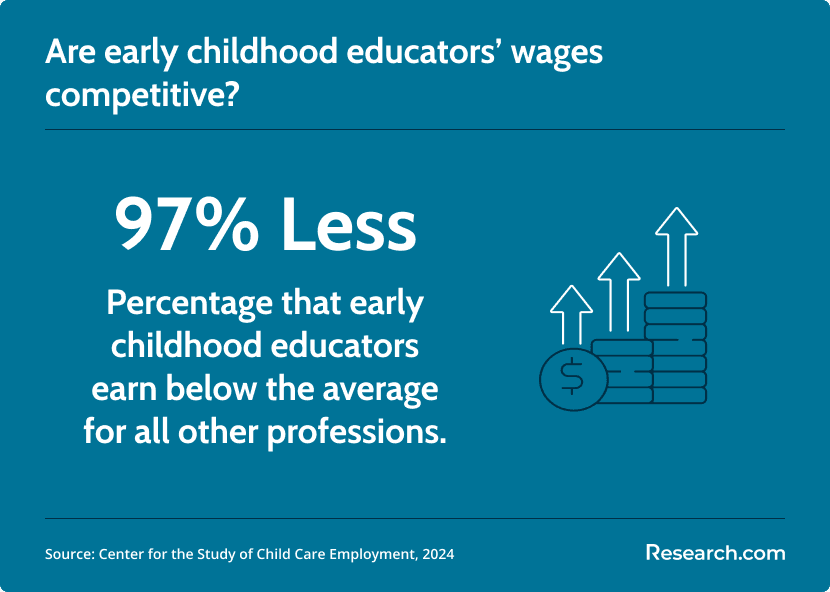
Cost matters even more because the early childhood workforce often faces low compensation. The Center for the Study of Child Care Employment reported in 2024 that the early childhood education workforce is among the lowest-paid in the U.S., earning less than 97% of all other professions. That reality makes program price, financial aid, and likely career payoff especially important.
A master’s degree may help educators move beyond wage ceilings by qualifying for leadership, specialist, administrative, or advanced teaching roles. The safest financial approach is to choose an accredited program with reasonable tuition, clear career relevance, and a pathway that matches your state and employer requirements.
What are the financial aid options for students enrolling in an accelerated online master's in early childhood education program?
Graduate students in accelerated online early childhood education programs may be able to combine several funding sources. Similar aid categories are common across education graduate programs, including accelerated master's in adult education online programs.
- Scholarships: These awards may be based on financial need, academic merit, professional goals, or service commitments. Universities, education associations, community organizations, and private foundations may offer relevant awards.
- Graduate assistantships: These are less common in fully online programs, but some schools offer tuition support or stipends in exchange for teaching, research, advising, or administrative work.
- Grants: Grants may come from federal, state, institutional, or private sources and usually do not require repayment. Completing the FAFSA is a key first step for determining eligibility.
- Employer tuition assistance: Schools, childcare organizations, nonprofits, and education agencies may offer reimbursement or tuition support for employees pursuing relevant graduate degrees.
- Loans: Federal and private loans can help cover remaining costs, but repayment terms, interest, and borrowing limits should be reviewed carefully before accepting funds.
Employer benefits are worth checking early. RAND reported that 58% of pre-K teachers receive continuing education benefits from their employers (Steiner et al., 2025). If your employer offers tuition assistance, ask whether you must stay employed for a certain period after completing the degree.
What are the prerequisites for enrolling in an accelerated online master's in early childhood education program?
Admission requirements differ by school and by licensure pathway, but most programs expect applicants to show academic readiness, professional interest in young children, and a clear reason for graduate study. Applicants considering how to become a kindergarten teacher should be especially careful because kindergarten teaching often requires state-specific certification.
- Bachelor’s degree and official transcripts: Most programs require a completed bachelor’s degree from an accredited institution and transcripts from all prior colleges.
- Prerequisite coursework: Some schools require previous study in child development, education, psychology, or related fields.
- Teaching license or certification: Programs leading to endorsements or advanced licensure may require applicants to already hold a valid teaching license.
- Minimum GPA: Many programs set a minimum undergraduate GPA of around 2.75 or 3.0 on a 4.0 scale.
- Letters of recommendation: Applicants are often asked for two to three recommendations from supervisors, professors, or education professionals.
- Resume or work history: Relevant experience in classrooms, childcare centers, early intervention programs, or family services may be required or strongly preferred.
- Personal statement: The essay usually explains your motivation, career goals, experience with young children, and reason for choosing the program.
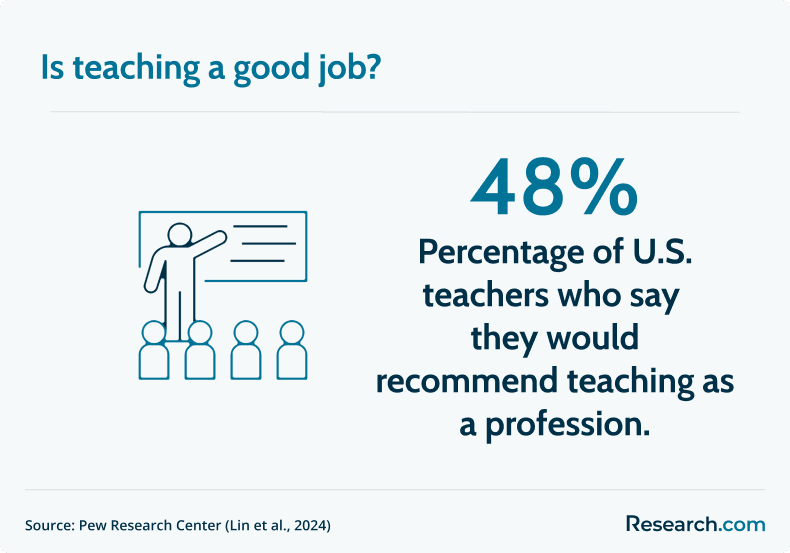
Graduate preparation is also relevant to workforce stability. Recent data shows that while 48% of U.S. teachers say they would recommend the profession, 18% of pre-K teachers planned to leave their roles by the end of the 2023-24 school year (Lin et al., 2024; Steiner et al., 2025). Programs that provide strong support, leadership preparation, and practical training may help educators build more sustainable careers.
What courses are typically in an accelerated online master's in early childhood education program?
Accelerated online master’s programs in early childhood education usually combine child development theory, curriculum design, assessment, inclusion, family engagement, and leadership. Course titles vary, but the themes below are common.
- Child Growth and Development in Early Childhood: Students study physical, cognitive, social, and emotional development from birth through age eight and connect developmental milestones to learning and behavior.
- Language Development for Young Children: This course examines early speaking, listening, vocabulary, pre-literacy, and communication skills. In some states, related literacy coursework may overlap with parts of reading specialist certification requirements.
- Family Engagement, Systems, and Theories: Students learn how family structures, culture, community context, and communication practices influence children’s learning and development.
- Curriculum Development in Early Childhood Education: This course focuses on designing, implementing, and evaluating developmentally appropriate curriculum, often with attention to play-based and standards-aligned learning.
- Multicultural Populations and Diversity: Students prepare to work with children and families from different cultural, linguistic, and socioeconomic backgrounds through inclusive and anti-bias approaches.
- Positive Learning Environments in Early Childhood Education: Coursework covers classroom climate, social-emotional learning, behavior guidance, safety, belonging, and respectful relationships.
These courses are especially important as public pre-K participation rebounds. The National Institute for Early Education Research reported that preschool enrollment dipped in 2021 and 2022, then rose to 44% in 2023 and 47% in 2024 (Friedman-Krauss et al., 2025).
As more families return to early learning programs, employers need educators who can design inclusive, high-quality learning experiences and support children with a range of developmental, linguistic, and family needs.
What types of specializations are available in accelerated online master's in early childhood education programs?
Specializations let students align a graduate degree with a specific career direction. This matters because “early childhood education” can lead to classroom, leadership, intervention, policy, coaching, or curriculum roles. In the same way that a fast track artificial intelligence degree online targets a specific technical niche, a specialization helps educators build focused expertise.
| Specialization | What it focuses on | Good fit for |
| Special Education | Inclusive instruction, early intervention, developmental delays, assessment, IEPs, and disability law. | Educators interested in the roles of special education teachers or early childhood inclusion work. |
| Curriculum and Instruction | Instructional design, assessment, standards alignment, learning materials, and classroom improvement. | Teachers who want to become curriculum coordinators, coaches, or instructional leaders. |
| Administration and Leadership | Program management, budgeting, supervision, policy, compliance, and staff development. | Professionals aiming for preschool director, childcare administrator, or program leadership roles. |
| Trauma-Informed Education | Adverse childhood experiences, emotional regulation, safe environments, resilience, and responsive teaching. | Educators serving children and families affected by stress, instability, or trauma. |
Before choosing a concentration, ask whether it leads to a formal credential, appears on the transcript, requires fieldwork, and aligns with your state’s rules for the jobs you want.
What student support and networking opportunities are available?
Strong online programs do more than post course materials. They provide the structure students need to succeed in a compressed timeline. Look for academic advising, online tutoring, faculty office hours, library access, technical help, writing support, and career services.
Networking also matters. Discussion boards, group projects, virtual events, mentoring, professional association connections, and alumni networks can help online students build relationships beyond their local workplace. For educators interested in broader intellectual development, related accelerated study options such as accelerated online philosophy degrees may offer a different lens on ethics, reasoning, and education leadership.
How can I overcome common challenges in an accelerated online master's in early childhood education program?
The biggest challenge in an accelerated online program is the pace. Short courses can move quickly, and falling behind in one week may affect the rest of the term. Students who succeed usually treat the program like a scheduled professional commitment rather than a flexible side project.
| Common challenge | Better strategy |
| Underestimating weekly workload | Block study time before the term begins and review all major deadlines in the first week. |
| Waiting to arrange fieldwork | Ask about placement rules, supervisor approval, and workplace eligibility before enrolling. |
| Feeling disconnected online | Attend live sessions when available, use office hours, and participate actively in peer discussions. |
| Technology problems | Test learning platforms early and save technical support contacts before assignments are due. |
| Unclear career fit | Meet with an advisor and compare the curriculum with job postings and state credential rules. |
Students comparing accelerated online programs in other fields, including online speech pathology programs masters, will notice the same pattern: fast programs reward planning, communication, and early problem-solving.
What accreditation and quality standards should I look for?
Accreditation is one of the most important checks before enrolling. At minimum, the institution should hold recognized institutional accreditation. For educator preparation, programmatic or state approval may also matter, especially if you want licensure, an endorsement, or salary-lane recognition.
Look for reputable education-related quality indicators such as CAEP accreditation, state educator preparation approval, NAEYC-aligned curriculum, qualified faculty, clear fieldwork expectations, transparent licensure disclosures, and strong online student support. Accreditation can also affect financial aid eligibility, transfer credit, employer recognition, and future doctoral study.
If your long-term goal includes senior leadership or research, you may eventually compare advanced pathways such as accelerated EdD programs online. For now, make sure the master’s program is recognized for the role you want next.
How to choose the best accelerated online master's in early childhood education program?
The best program is not always the fastest or cheapest. It is the program that fits your license status, career goal, budget, learning style, and timeline. Specialized graduate options, including accelerated online gifted education master's programs, show why alignment matters: the right concentration can strengthen outcomes, while the wrong one can add cost without helping your target career.
| Question to ask | Why it matters |
| Is the program licensure, endorsement, or non-licensure? | This determines whether the degree supports classroom certification or mainly professional advancement. |
| Is the institution properly accredited? | Accreditation affects financial aid, transferability, employer recognition, and credential value. |
| What is the total cost, including fees? | Per-credit tuition can be misleading if the program requires more credits or charges added fees. |
| Can fieldwork be completed where I live or work? | Placement flexibility is essential for online students, especially working educators. |
| Who teaches the courses? | Faculty experience in early childhood practice, policy, research, and leadership can shape the value of the program. |
| What support exists for online students? | Advising, tutoring, technical support, and career services can reduce the risk of falling behind. |
| Do graduates move into the roles I want? | Ask for career outcome examples, employer partnerships, and alumni pathways when available. |
Common mistakes to avoid when choosing a program
- Choosing only by speed: A 10-month or 12-month program is useful only if you can handle the workload and it meets your credential goals.
- Ignoring licensure disclosures: Online programs may not meet requirements in every state.
- Comparing tuition without total cost: Fees, credit requirements, and fieldwork costs can change the real price.
- Assuming online means easier: Accelerated graduate courses are often demanding because timelines are compressed.
- Relying only on rankings: Rankings can narrow your list, but accreditation, fit, cost, and licensure alignment should drive the final decision.
Is an accelerated online master's in early childhood education a sound financial investment?
An accelerated online master’s in early childhood education can be a sound financial investment when it leads to a role with higher responsibility, stronger job stability, salary-lane advancement, or eligibility for leadership and specialist positions. The investment is less clear if the program is expensive, non-licensure, and unrelated to your target job.
Evaluate return on investment by comparing total tuition and fees with realistic career outcomes, not just advertised possibilities. Consider whether your employer recognizes the degree for pay increases, whether your state requires a specific license, and whether the program can be completed without leaving your job.
Some educators use a master’s as a stepping stone toward senior leadership or doctoral study. If that is your plan, you may later compare cheap online doctoral programs for educational leadership. For the master’s degree itself, the best financial choice is usually the accredited program that provides the clearest path to your next role at the lowest manageable cost.
What career paths are available for graduates of accelerated online master's in early childhood education programs?
Graduates may qualify for classroom, specialist, administrative, curriculum, advocacy, and support roles depending on their prior credentials and state requirements. The degree can accelerate advancement in education in a way that is broadly comparable to how a fast track online cybersecurity bachelor's degree can shorten preparation for technical career entry or advancement.
| Career path | Reported pay | Typical responsibilities |
| Preschool and Kindergarten Teachers | $41,450–$67,020 | Teach early academic, social, emotional, literacy, numeracy, and motor skills to children ages three to six. |
| Child Life Specialists | $55,951 | Support children and families in healthcare settings through play, preparation, education, and emotional support. |
| Reading Specialists | $60,101 | Assess literacy needs, design reading interventions, and collaborate with classroom teachers. |
| Daycare Administrators | $62,640 | Manage childcare operations, staffing, budgets, licensing compliance, and curriculum quality. |
| Curriculum Coordinators | $64,281 | Develop instructional materials, align curriculum with standards, evaluate teaching practices, and train educators. |
| Preschool SPED Teachers | $72,610 | Support young children with developmental delays or disabilities through individualized instruction and collaboration with families and specialists. |
| Speech Therapists | $95,840 | Diagnose and treat speech and communication disorders. Educators considering a move from teacher to speech pathologist typically need additional specialized education and licensure. |
| Kindergarten School Administrators | $113,360 | Oversee school or early learning operations, budgets, curriculum implementation, staff, and regulatory compliance. |
The degree may be most valuable when paired with experience, licensure, administrative ability, or a specialization that matches employer needs.
This chart reveals the average wages of educators and similar careers.
What is the job market for graduates with an accelerated online master's in early childhood education?
According to the BLS, employment for preschool and kindergarten teachers is expected to grow by 3.4% between 2023 and 2033. Within that category, the outlook differs by role: kindergarten teachers and kindergarten SPED teachers are both expected to decrease by 0.7%, while preschool teacher roles are projected to grow by 4.4% and preschool SPED teachers by 1.6%.
These projections reflect changes in demographics, public funding, district hiring decisions, family demand for preschool, and state-level early childhood education policies. Demand may be stronger in communities expanding preschool access or early intervention services, and weaker in districts facing enrollment declines or budget constraints.
Compensation remains a major workforce issue. The National Association for the Education of Young Children has emphasized that low pay can discourage workers from entering the field and contribute to staffing shortages that affect program quality.
Labor market changes also affect other credential-focused careers, including fields such as fast track medical billing and coding certificate online programs, where job prospects can shift with regulation, funding, technology, and employer needs. For early childhood educators, the best strategy is to track state requirements, local hiring patterns, public pre-K investments, and employer preferences for advanced credentials.
Even with uneven job growth across roles, graduates with advanced early childhood education preparation may be competitive for leadership, administration, curriculum development, special education, advocacy, and training positions beyond traditional classroom teaching.
This chart reveals the job growth for early childhood educators.
Key insights
- An accelerated online master’s in early childhood education is best for professionals who want graduate-level preparation without a traditional two-year campus schedule.
- Licensure status is the most important decision point. Some programs are non-licensure, while others support endorsements, advanced licensure, or state-specific credentials.
- Many programs can be completed in 12 to 18 months, but fieldwork, internships, part-time study, and course sequencing can extend the timeline.
- Cost should be judged by total program price, not only per-credit tuition. Fees, residency rules, and credit requirements can change affordability.
- Salary outcomes vary widely. A master’s may improve access to leadership or specialist roles, but it does not guarantee a specific wage.
- Before applying, confirm accreditation, state authorization, field placement rules, faculty expertise, support services, and whether your employer or state recognizes the degree.
- The strongest program choice is the one that connects directly to your next career move: advanced classroom practice, early childhood leadership, curriculum work, special education, advocacy, or administration.
References:
- Data USA. (2022). Early Childhood Education & Teaching. https://datausa.io/profile/cip/early-childhood-education-teaching
- Friedman-Krauss, A. H., Barnett, W. S., Hodges, K. S., Garver, K. A., Duer, J., Weisenfeld, G., & Siegel, J. (2025). The State of Preschool 2024: State Preschool Yearbook. National Institute for Early Education Research. https://nieer.org/yearbook/2024/executive-summary
- Lin, L., Parker, K., & Horowitz, J. M. (2024, April 4). What’s It Like To Be a Teacher in America Today? Pew Research Center. https://www.pewresearch.org/social-trends/2024/04/04/whats-it-like-to-be-a-teacher-in-america-today
- Ma, J., Pender, M., & Oster, M. (2024). Trends in College Pricing and Student Aid 2024. https://research.collegeboard.org/trends/college-pricing
- PayScale. (2025, April 29). Average Reading Specialist Salary. Retrieved July 3, 2025, from https://www.payscale.com/research/US/Job=Reading_Specialist/Salary
- Steiner, E. D., Shapiro, A., & Levine, P. R. (2025, May 6). Pre-K Teacher Well-Being, Pay, and Intentions to Leave in 2024. RAND. https://www.rand.org/pubs/research_reports/RRA3279-5.html
- U.S. Bureau of Labor Statistics. (2024). Preschool Teachers, Except Special Education [Interactive data]. May 2024 OEWS Profiles, Occupational Employment and Wage Statistics (OEWS) Profiles. Retrieved July 3, 2025, from https://data.bls.gov/oesprofile
- U.S. Bureau of Labor Statistics. (2025b, April 18). Occupational projections, 2023–33, and worker characteristics, 2023 (Numbers in thousands). Employment Projections. https://www.bls.gov/emp/tables/occupational-projections-and-characteristics.htm
- ZipRecruiter. (2025, June 25). Child Life Specialist Salary. Retrieved July 3, 2025, from https://www.ziprecruiter.com/Salaries/Child-Life-Specialist-Salary#Yearly
Other Things You Should Know About Accelerated Online Master’s in Early Childhood Education Programs
These programs typically offer virtual or local practicum placements coordinated via online platforms, ensuring students gain practical experience. Requirements include completing 100-200 hours in a setting aligned with childhood education, supervised by accredited professionals and compliant with state regulations.
Yes. Many accelerated online master’s programs accept up to 9 transfer credits from regionally accredited graduate coursework, and some set a minimum grade of B or better. Programs usually require that the credits fit the curriculum and were earned within the past 5 to 7 years.


