2027 Reading Specialist Certification and Requirements

Co-Founder and Chief Data Scientist
Choosing a reading specialist certification is not just a credential decision. It affects where you can work, whether you qualify for state endorsement, how much supervised practice you may need, and whether the program prepares you to help students who struggle with decoding, fluency, comprehension, dyslexia, multilingual literacy, or content-area reading.
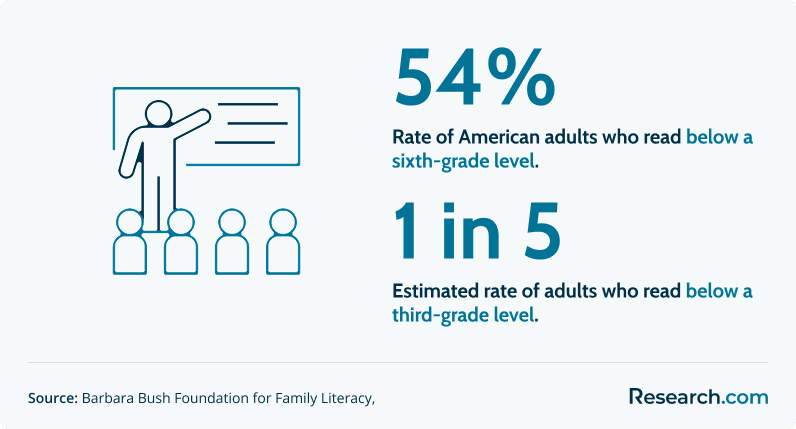
The need is real: over 60% of US public school students and a similar proportion of adults read below grade level, and over half of American adults read below a sixth-grade level, with almost one in five reading below a third-grade level. For teachers, interventionists, literacy coaches, and education professionals, reading specialist certification can be a practical path into advanced literacy instruction and schoolwide literacy leadership.
This guide explains what to expect from a reading specialist certification in 2027, how programs differ, what they cost, how online and campus options compare, what careers may be available, and how to choose a program without overlooking accreditation, licensure, practicum requirements, or long-term return on investment.
Quick Answer: Is a Reading Specialist Certification Worth Considering?
A reading specialist certification is worth considering if you are already an educator and want to move into literacy intervention, reading assessment, literacy coaching, curriculum support, or district-level reading leadership. Most programs are designed for licensed teachers and may require teaching experience, graduate coursework, and supervised practice. Salaries commonly fall within a broad range, with reported averages from several sources landing between about $43,000 and $76,000 annually, depending on location, employer, education level, and experience.
What are the main benefits of earning a reading specialist certification?
- More specialized roles: Certification can help educators qualify for positions such as reading specialist, literacy coach, reading interventionist, curriculum developer, or literacy program coordinator.
- Stronger literacy expertise: Programs usually emphasize assessment, intervention, literacy development, evidence-based instruction, and coaching strategies.
- Potential salary growth: Reading specialists and related professionals may earn a median salary ranging from $50,000 to $65,000 annually, with higher or lower pay depending on district budgets, state salary schedules, and experience.
- Flexible study options: Many programs are available online, allowing working teachers to complete coursework while remaining employed.
- Broader impact: Certified reading specialists can support individual students, classroom teachers, school literacy plans, and districtwide intervention systems.
What can I expect from a reading specialist certification?
A reading specialist certification prepares educators to diagnose reading difficulties, design literacy interventions, support classroom teachers, and lead reading improvement efforts. Instead of focusing only on general teaching methods, these programs go deeper into how students learn to read, why some students fall behind, and how educators can use assessment data to choose appropriate interventions.
Most certification programs include graduate-level coursework in literacy development, reading assessment, intervention design, research-based instruction, literacy leadership, and instruction for diverse learners. Some programs are standalone certificates, while others are embedded in a master’s degree in reading, literacy, curriculum and instruction, or education.
What does a reading specialist do?
Reading specialists work with students, teachers, families, and school leaders. Their responsibilities vary by school district, but the role often includes direct intervention and instructional leadership.
| Responsibility | What it looks like in practice | Why it matters |
| Assessing reading skills | Using screening tools, diagnostic assessments, progress monitoring, and student work samples | Helps identify whether students need support in phonics, fluency, vocabulary, comprehension, or written language |
| Providing intervention | Working one-on-one or with small groups of struggling readers | Gives students targeted help beyond regular classroom instruction |
| Coaching teachers | Modeling lessons, reviewing data, recommending strategies, and supporting literacy planning | Improves instruction across classrooms, not just for one group of students |
| Supporting curriculum decisions | Evaluating literacy materials, intervention programs, and assessment practices | Helps schools choose resources aligned with student needs and evidence-based practice |
| Leading literacy initiatives | Coordinating reading programs, family literacy efforts, or schoolwide literacy goals | Connects classroom instruction with broader school improvement plans |
Where can I work with a reading specialist certification?
Reading specialists most often work in K-12 schools, but the credential can also support roles in districts, education agencies, tutoring organizations, curriculum companies, and consulting. Public and private schools use reading specialists at the elementary, middle, and high school levels, although the role is especially common where early literacy and intervention services are priorities.
Common work settings include:
- Public elementary schools: Supporting early literacy, reading intervention, and small-group instruction.
- Middle and high schools: Helping students strengthen comprehension, vocabulary, academic reading, and content-area literacy.
- Private and charter schools: Providing literacy support, assessment, and teacher coaching depending on school staffing models.
- District offices: Coordinating literacy programs, analyzing assessment data, designing professional development, or supporting multiple schools.
- Curriculum and assessment organizations: Developing reading materials, intervention tools, professional learning resources, or literacy assessments.
- Educational consulting: Advising schools, families, or organizations on literacy instruction. Educators considering this route may also compare the requirements to become an educational consultant.
States such as New York, Massachusetts, and Connecticut are often noted for strong demand for reading specialists, partly because of their education standards and emphasis on literacy outcomes.
How much can I make with a reading specialist certification?
Reading specialist pay depends heavily on state, district salary schedules, years of experience, union agreements, degree level, and whether the role is school-based or district-level. Reported salaries vary across sources, with entry-level salaries around $43,000 and upper-end salaries around $76,000.
Several salary sources report the following annual figures:
- Zippia: $57,978 annually
- Glassdoor: $64,015 annually
- Indeed: $54,515 annually
- Comparably: $57,086 annually
- Salary.com: $38,797 annually
- ZipRecruiter: $52,750 annually
- Payscale: $57,764 annually
These numbers should be used as benchmarks, not guarantees. A reading specialist working in a high-cost urban district may earn more than a specialist in a smaller district, while a teacher moving into a reading role may remain on the same district pay scale but qualify for a stipend, lane change, or leadership assignment depending on local policy.
Article Guide
- Reading Specialist Certification Programs for 2027
- Admission Requirements for Reading Specialist Certification Programs
- Program Length and Completion Timeline
- Online vs. On-Campus Reading Specialist Certification
- Average Cost of Reading Specialist Certification Programs
- Financial Aid Options for Certification Students
- Typical Reading Specialist Certification Courses
- Reading Specialist Specializations
- Complementary Certifications for Reading Specialists
- Challenges That Can Affect Certification Success
- How to Check Accreditation and Program Quality
- Return on Investment: Is the Certification Worth It?
- Speech and Language Training for Reading Specialists
- Reading Specialist Pay Compared With Related Roles
- How to Choose the Right Reading Specialist Certification Program
- Trends Changing the Reading Specialist Role
- Research Support for Reading Specialist Certification
- Career Paths After Reading Specialist Certification
- Job Market for Reading Specialist Certification Graduates
- Using Certification as a Career Transition Tool
Reading Specialist Certification Programs for 2027
The following programs can help licensed or experienced educators build advanced literacy expertise. Use this list as a starting point, not a final decision. Before applying, confirm each program’s current tuition, state endorsement requirements, practicum expectations, testing requirements, and whether the credential aligns with the state where you plan to work.
How do we rank schools?
Research.com rankings and school guides use a structured methodology based on institutional data, program information, and outcome indicators. For higher education data, key sources include the IPEDS database from the National Center for Education Statistics, Peterson's database, including the Distance Learning Licensed Data Set, and the College Scorecard database, which provides information on costs and student outcomes.
For certification programs, rankings and recommendations should be interpreted carefully because state licensure rules vary. A strong program in one state may not automatically meet endorsement or certification requirements in another state.
| School | Program format and focus | Program length | Tuition | Credits or experience | Accreditation or approval listed |
| University of Pennsylvania | Reading Specialist Certification Program for non-degree-seeking students seeking Pennsylvania Department of Education certification; includes advanced literacy coursework and Reading Specialist Praxis Exam expectations | Variable; up to 6 years to complete | Approximately $34,476 per year (full-time) | 27 credits | Pennsylvania Department of Education |
| Drexel University | Online Reading Specialist Certification with literacy leadership preparation and Wilson Reading System training | 15 months | $1,111 per credit | 31 credits | Middle States Commission on Higher Education |
| Arcadia University | Master of Education with a concentration in Reading Education emphasizing assessment, intervention, and PK-12 reading specialist preparation | 1.5 to 2 years | $750 per credit | 30 credits | International Dyslexia Association |
| Texas A&M University | Reading Specialist certification through the College of Education & Human Development, designed for Texas educators and those considering broader credentials | Part of a 36-hour M.Ed program | $5,775.35 per semester (estimate) | 21 credits for certification + 160 hours of practical experience | State Board of Educator Certification and the Texas Education Agency |
| Eastern University | Online Reading Specialist Certification with flexible enrollment and starts every seven weeks | 12-24 months | $566 per credit hour | Credits not specified in the provided data | National Association for the Education of Young Children |
| University of South Alabama | Reading Specialist Certification for educators with initial teaching certification; includes literacy development, diagnostic instruction, remediation, coaching, and internship work | Not specified, estimated 2 years based on credit requirements | $480 per credit hour for in-state; $960 for out-of-state (as shown in the attached file) | 30 credits | Council for the Accreditation of Educator Preparation |
| University of Nevada, Reno | Fully online Reading Specialist Endorsement Certificate for educators who hold or are pursuing a Master’s degree; aligned with Nevada State requirements and International Reading Association standards | Not specified, estimated based on credit requirement | $345 per credit hour | 16 credits | Association for Advancing Quality in Educator Preparation |
| University of Houston | Fully online Reading Specialist Certification through an M.Ed. in curriculum and instruction focused on reading, language arts, and literacy for teachers with valid Texas certification who are currently teaching | Variable; includes 200+ hours of coursework and 160+ practicum hours | $989.41 - $886.00 per semester (as shown in the attached image) | 24 semester hours | Association for Advancing Quality in Educator Preparation |
| East Tennessee State University (ETSU) | Fully online Reading Specialist P-12 Certificate covering advanced reading research, instruction, and assessment for literacy coaching and supervisory roles | Estimated 1 to 2 years | $646 per credit hour for in-state students, $805.50 for out-of-state students online | 18 credits | National Association for the Education of Young Children |
| Northern Arizona University (NAU) | Reading Specialist K-8 Graduate Certificate with coursework in reading instruction, assessment, intervention, and fieldwork | Typically completed within a year | $11,688 per year (online, in-state tuition) | 24 credits | Council for the Accreditation of Educator Preparation |
If you want a degree-based route rather than a certificate-only option, compare these programs with the best online master’s in reading and literacy programs.
What are the requirements for enrolling in a reading specialist certification program?
Reading specialist certification programs usually target practicing educators. Requirements differ by state and institution, but most programs expect applicants to show academic readiness, teaching experience, and eligibility for advanced certification or endorsement.
| Requirement | What schools commonly expect | What to verify before applying |
| Degree background | A bachelor’s degree is generally required; some programs prefer or require a degree in education or a related field | Whether the certificate is standalone or tied to a master’s degree |
| Teaching license | Many programs require a valid teaching license or certificate | Whether your current license meets the program’s state-specific requirements |
| Teaching experience | Programs often require one to three years of professional teaching experience | Whether experience must be completed before admission, before practicum, or before certification |
| Prerequisite coursework | Some schools require prior coursework in child development, educational psychology, literacy, or teaching methods | Whether missing prerequisites can be completed after admission |
| Graduate exam scores | Some programs may request GRE scores, though this is becoming less common | Whether test waivers are available |
| Application materials | Official transcripts, recommendation letters, statement of purpose, resume, and possibly a teaching portfolio | Whether recommendations must come from supervisors, principals, or faculty |
| Interview | Some programs interview applicants to assess professional fit and readiness | Whether the interview affects admission, placement, or practicum approval |
Because literacy needs are substantial across age groups, certification programs are built to prepare educators for varied learners, including children with reading delays, adolescents with comprehension gaps, and multilingual students. The stronger programs connect theory with assessment, intervention, and supervised practice rather than treating reading instruction as a purely academic topic.
How long does it take to complete a reading specialist certification program?
Completion time varies widely. Drexel University’s program can be completed in 15 months, Arcadia University typically takes 1.5 to 2 years, and the University of Pennsylvania allows up to six years for completion. The right timeline depends on whether you study full time, part time, online, or through a master’s degree pathway.
| Program pace | Best for | Possible trade-offs |
| Accelerated | Educators who want to finish quickly and can handle heavier coursework | Less schedule flexibility; harder to balance with full-time teaching |
| Standard 1.5- to 2-year path | Working teachers who want a manageable pace | Longer time before certification-related career benefits may appear |
| Extended completion window | Educators balancing work, family, licensure testing, or district responsibilities | May increase total time in school and delay advancement |
| Master’s-integrated certification | Teachers who want both a graduate degree and reading credential | Usually requires more credits and a larger financial investment |
The timeline is similar to other specialized education or child-focused career pathways. For comparison, educators exploring adjacent roles may ask how long it takes to become a child life specialist, since specialized preparation in both fields depends on prior education, supervised experience, and credential requirements.
How does an online reading specialist certification compare to an on-campus program?
An online reading specialist certification can be as useful as an on-campus credential when the program is properly accredited, recognized for state certification or endorsement, and includes meaningful fieldwork or practicum experiences. The delivery format matters less than program quality, state alignment, faculty expertise, and employer recognition.
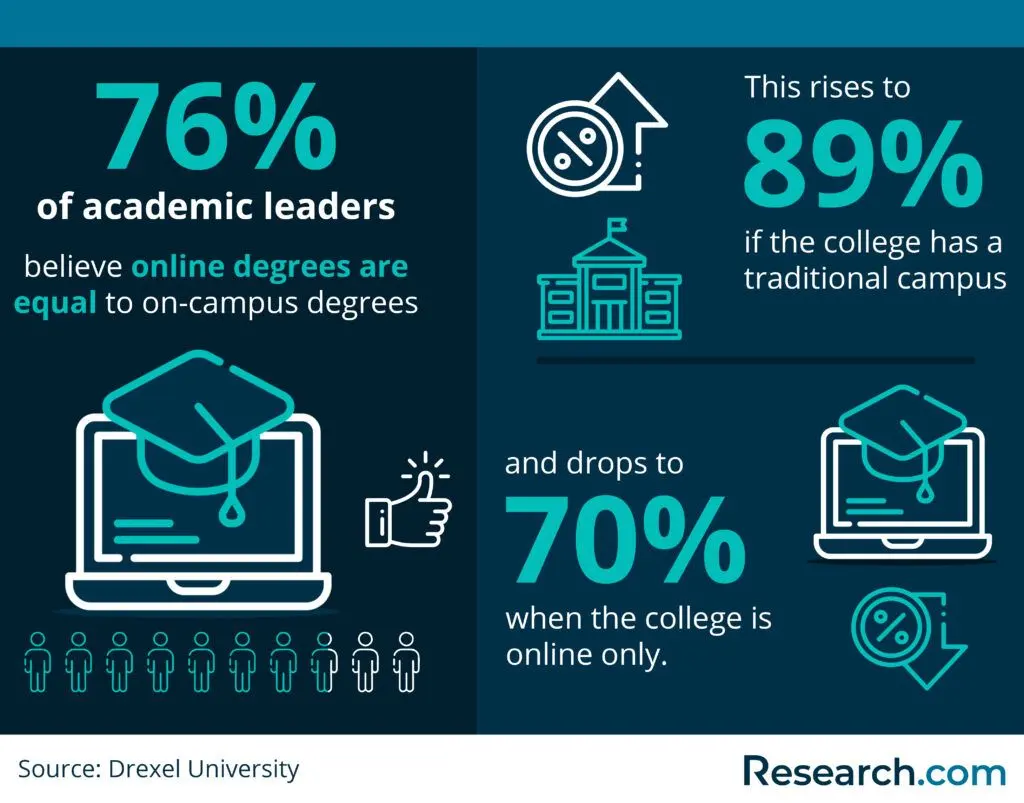
Research cited in the original source material found that 76% of academic leaders believe online degrees are equal to on-campus degrees if the institution also has a physical campus. That perception rises to 89% if the college has a traditional campus. Brand reputation also matters: online credentials from well-known institutions are often viewed more favorably than credentials from unfamiliar or poorly documented providers.
| Factor | Online certification | On-campus certification |
| Flexibility | Usually better for working teachers, especially those teaching full time | May require commuting, fixed class times, or campus attendance |
| Practicum | Often completed in the student’s local school or district, if approved | May be arranged through partner schools near campus |
| Networking | Can include virtual cohorts, online discussions, and remote faculty access | May offer stronger local professional networks and face-to-face collaboration |
| Employer perception | Strong when the school is accredited, established, and state-aligned | Strong when the institution has a good regional reputation |
| Best fit | Teachers who need schedule flexibility or live far from campus | Students who prefer in-person learning, local placements, and campus support |
Online education is now common across education fields. If you are comparing multiple teaching-related graduate options, you may also want to review online early childhood education master’s degree programs to understand how online delivery, accreditation, and fieldwork are handled in related areas.
What is the average cost of a reading specialist certification program?
Reading specialist certification costs vary by institution, credit count, public or private status, residency, and whether the certificate is part of a master’s degree. Based on the program examples above, costs can range from comparatively affordable per-credit options to tuition totals comparable to graduate degree programs at private universities.
| Cost factor | How it affects total price | What to ask |
| Per-credit tuition | Programs with higher per-credit rates can become expensive quickly, especially if they require 24 to 31 credits | Is tuition locked in, or can it increase during the program? |
| Credit requirement | A 16-credit endorsement may cost less than a 30- or 31-credit program, but may have narrower eligibility | Does the credit total meet my state’s endorsement rules? |
| Residency status | Public universities may charge different in-state and out-of-state rates | Do online students pay a separate online rate? |
| Fees and materials | Technology fees, assessment costs, background checks, textbooks, and exam fees can add to tuition | What is the full estimated cost of attendance? |
| Practicum requirements | Fieldwork may require time away from paid work or coordination with a school site | Can I complete practicum hours in my current school? |
| Degree vs. certificate | A master’s-integrated route may cost more but can support salary schedule advancement in some districts | Will my employer recognize this degree or certificate for compensation? |
For example, Drexel University charges $1,111 per credit for a 31-credit program, or approximately $34,441 in total. Eastern University lists tuition at $566 per credit hour. The University of Pennsylvania lists tuition at approximately $34,476 per year. These figures show why comparing only school names is not enough; the number of required credits and your eligibility for in-state, online, or employer-supported tuition can change the actual cost.
Reading specialist costs may be lower than, similar to, or higher than other education-related graduate pathways. If you are comparing broader child development and education options, review the best master’s in child development programs to understand how institutional type and program structure affect tuition.
What are the financial aid options for students enrolling in a reading specialist certification program?
Financial aid may be available for reading specialist certification students, especially when the program is graduate-level, part of a degree, or offered by an institution that participates in federal student aid programs. However, certificate-only programs can have different aid rules, so students should confirm eligibility before enrolling.
According to the NCES data cited in the original article, 74% of graduate students have received some form of financial aid. Grants were received by 43% of graduate students, and 42% used loans, including Direct Unsubsidized Loans and Direct PLUS Loans.
| Financial aid option | How it may help | Important caution |
| Grants | Can reduce out-of-pocket cost and generally do not require repayment | Availability may depend on program type, enrollment status, and institution |
| Federal loans | Can cover tuition and eligible education expenses not covered by grants or savings | Loans must be repaid with interest; compare borrowing against likely salary benefit |
| Employer tuition assistance | Some districts reimburse tuition for high-need credentials or graduate coursework | May require continued employment with the district after completion |
| Scholarships | May be offered by universities, education foundations, or literacy organizations | Deadlines can be earlier than program application deadlines |
| Graduate assistantships | May reduce tuition or provide a stipend | Less common for short certificate-only programs and may require campus availability |
| Payment plans | Can spread tuition over a term instead of requiring full payment upfront | Does not reduce total cost unless fees are waived |
Students considering other online education degrees, such as an online master’s in early childhood education, should use the same approach: confirm aid eligibility directly with the school, ask whether certificate students qualify for federal aid, and compare total program cost rather than tuition alone.
What courses are typically in a reading specialist certification program?
Reading specialist certification programs usually combine literacy theory, assessment, intervention, and leadership. Course titles vary, but the core academic areas are similar across many programs.
| Course area | What students learn | How it supports practice |
| Foundations of Literacy Development | How reading and writing skills develop across age levels | Helps specialists identify typical and atypical literacy growth |
| Literacy Assessment and Evaluation | How to use screening, diagnostic, formative, and progress-monitoring tools | Supports accurate placement and targeted intervention planning |
| Content Area Literacy | How to support reading in science, social studies, math, and other subjects | Helps older students access complex academic texts |
| Literacy Instruction for Diverse Populations | Strategies for multilingual learners, students with disabilities, and culturally diverse learners | Improves equity and helps prevent one-size-fits-all intervention plans |
| Reading Intervention Strategies | Structured approaches for students with significant reading difficulties | Prepares specialists for small-group and individualized intervention |
| Literacy Leadership and Coaching | How to mentor teachers, analyze schoolwide data, and lead professional learning | Prepares graduates for coaching, coordination, and district-level roles |
Some programs also include coursework or field experiences related to multilingual learners. Teachers who work with English learners may benefit from reviewing online ESL certification requirements alongside reading specialist requirements.
What types of specializations are available in reading specialist certification programs?
Specializations allow educators to align the certification with the student populations or leadership roles they care about most. Not every program offers formal concentrations, but many include electives, practicum placements, or projects that support a focused pathway.
| Specialization | Best for educators who want to focus on | Questions to ask the program |
| Dyslexia Intervention | Identifying and supporting students with dyslexia and related reading difficulties through evidence-based strategies | Does the curriculum include structured literacy, dyslexia screening, and supervised intervention practice? |
| Literacy Coaching and Leadership | Mentoring teachers, leading schoolwide literacy initiatives, and improving instructional systems | Does the program include coaching models, adult learning, and data-based decision-making? |
| Bilingual Literacy/ELL | Supporting English-language learners and bilingual literacy development | Does the program address second-language acquisition and culturally responsive literacy instruction? |
| Early Childhood Literacy | Building foundational literacy skills before students fall seriously behind | Are early phonological awareness, oral language, and emergent writing included? |
| Digital Literacy Integration | Using technology, multimedia texts, and digital learning tools in literacy instruction | Does the program teach how to evaluate digital tools rather than simply use them? |
Choose a specialization because it supports your literacy goals, not because it looks broad on a resume. For example, credentials such as physical education teacher certification serve a different instructional purpose and should only be pursued if they fit your actual teaching assignment or long-term career plan.
Percent of U.S. Students Reading Below Their Grade Level

Can complementary certifications enhance a reading specialist’s career?
Additional credentials can strengthen a reading specialist’s career when they add relevant expertise. The most useful complementary certifications are those connected to literacy assessment, multilingual learning, dyslexia intervention, special education, instructional coaching, curriculum leadership, or speech and language development.
Speech-language knowledge can be especially helpful because oral language, phonological processing, vocabulary, syntax, and comprehension are closely connected to reading. Educators who want a deeper clinical pathway may explore options such as the most affordable online speech-language pathology programs, but they should understand that speech-language pathology has its own accreditation, clinical, and licensure requirements.
What challenges could impact the success of my reading specialist certification?
The biggest risks are not usually the coursework itself. They are misalignment: enrolling in a program that does not meet your state’s requirements, underestimating practicum obligations, borrowing more than the credential is likely to repay, or assuming online convenience means low workload.
| Common challenge | Why it causes problems | Better approach |
| State requirements differ | A program approved in one state may not satisfy endorsement rules elsewhere | Check your state education agency before applying |
| Practicum hours are underestimated | Fieldwork may require scheduling, supervision, documentation, and approved placements | Ask whether hours can be completed at your current school |
| Workload conflicts with teaching | Full-time teachers may struggle during assessment, intervention, and practicum-heavy terms | Choose a pace that matches your school-year workload |
| Financial planning is incomplete | Tuition is only one cost; fees, testing, books, and time matter too | Request a full cost breakdown and compare aid options |
| Technology changes quickly | Digital literacy tools and assessment platforms evolve | Look for programs that teach evaluation of tools, not just tool use |
| Career expectations are vague | Certification does not guarantee a promotion or salary increase | Ask your district how the credential affects pay, placement, and leadership eligibility |
Some educators also consider interdisciplinary credentials. If you are comparing literacy with communication-focused roles, this explanation of what CCC-SLP stands for can help clarify how speech-language credentials differ from reading specialist certification.
How do I verify the accreditation and quality of a reading specialist certification program?
Accreditation and state approval are essential. A program can be academically respectable but still fail to meet your state’s reading specialist endorsement requirements. Before enrolling, verify both institutional quality and credential alignment.
- Check institutional accreditation. Confirm that the college or university is recognized by an appropriate accrediting body.
- Confirm state approval. Contact your state education agency or certification office to verify whether the program leads to the endorsement or license you need.
- Review practicum requirements. Ask how fieldwork is supervised, documented, and evaluated.
- Examine faculty credentials. Look for instructors with literacy research, K-12 reading, intervention, assessment, or coaching expertise.
- Ask about certification exams. Some states require exams such as a reading specialist Praxis or state-specific assessment.
- Request graduate outcome information. Ask where graduates work and whether completers have successfully earned certification.
- Review curriculum recency. Strong programs update coursework to reflect current literacy research, assessment methods, and technology.
The same quality-control mindset applies to related fields. For example, students researching accessible speech pathology programs should still evaluate accreditation, clinical training, and licensure alignment rather than relying only on admission difficulty.
Is a reading specialist certification worth the investment?
A reading specialist certification is most likely to be worth the investment when it meets three conditions: it qualifies you for the role you want, it is recognized by your state or employer, and its cost is reasonable compared with your likely career benefit. The certification may be less valuable if you enroll without confirming state requirements, already hold a similar credential, or work in a district that does not offer reading specialist roles or salary recognition.
| The certification may be worth it if... | It may not be the right move if... |
| You are a licensed teacher who wants to move into reading intervention or literacy coaching | You are not eligible for teacher certification and the program requires it |
| Your state or district recognizes the credential for reading specialist roles | The program does not meet the requirements in the state where you plan to work |
| You can complete fieldwork without leaving your job or losing income | Practicum scheduling would create major employment conflicts |
| Your district offers pay advancement, stipends, or leadership opportunities tied to graduate credits or certification | The credential would not affect your salary, assignment, or career path |
| You want to lead literacy improvement beyond your own classroom | You prefer general classroom teaching and do not want assessment, coaching, or intervention responsibilities |
Educators comparing literacy and communication careers may also want to understand whether speech-language pathologists are in demand, since SLP pathways involve different costs, clinical expectations, and licensure requirements.
How can integrated speech and language training enhance a reading specialist’s impact?
Reading and language development are closely connected. Students who struggle with oral language, vocabulary, phonological awareness, syntax, or comprehension may also struggle with reading. A reading specialist does not replace a speech-language pathologist, but language-informed training can improve collaboration and intervention planning.
Integrated speech and language knowledge can help reading specialists:
- Recognize when reading difficulties may be connected to broader language needs.
- Coordinate more effectively with speech-language pathologists, special educators, and classroom teachers.
- Support vocabulary, background knowledge, sentence comprehension, and oral language alongside decoding and fluency.
- Make better referrals when student needs fall outside the reading specialist’s scope.
Educators who want a faster route into deeper speech-language study may compare accelerated speech pathology programs, while remembering that SLP practice typically requires a separate clinical pathway.
How does a reading specialist’s compensation compare to related roles?
Reading specialist compensation overlaps with several education and communication roles. Differences often come from state funding, district pay scales, job level, graduate degree requirements, and whether the position is school-based, district-level, or clinical.
| Role | Typical focus | Salary information cited in this article |
| Reading Specialist | Student literacy assessment, intervention, and reading support | Often reported between $50,000 and $65,000 annually; broader source range is approximately $43,000 to $76,000 |
| Literacy Coach | Teacher coaching, professional development, and literacy instruction improvement | $54,000 to $75,000 annually |
| Reading Interventionist | Direct support for students with reading difficulties | Similar to reading specialists, depending on school district policies |
| Curriculum Developer | Designing and evaluating literacy curriculum and instructional materials | Usually around $62,000 per year |
| Literacy Program Coordinator | Managing literacy initiatives at the school or district level | $60,000 to $90,000 annually |
If you are comparing literacy careers with communication disorders careers, reviewing speech-language pathologist salary by state can provide useful context, but the roles have different licensure requirements and scopes of practice.
How to choose the best reading specialist certification program
The best program is not always the most prestigious, cheapest, fastest, or easiest. The right program is the one that matches your state requirements, career goal, schedule, budget, and preferred student population.
- Start with your state’s certification rules. Before comparing tuition or rankings, verify the exact endorsement requirements in the state where you plan to work.
- Decide whether you need a certificate or a master’s degree. A certificate may be faster and cheaper, while a master’s pathway may offer broader salary schedule or leadership benefits in some districts.
- Check the curriculum for evidence-based literacy instruction. Look for assessment, intervention, literacy development, diverse learners, dyslexia, coaching, and practicum components.
- Evaluate practicum quality. Ask who supervises fieldwork, how placements are approved, and whether you can complete hours in your current school.
- Compare total cost, not just tuition. Include fees, books, exams, background checks, travel, and potential lost income.
- Ask about graduate outcomes. Find out whether graduates pass certification exams, earn endorsements, and obtain reading specialist or literacy coach roles.
- Review support services. Online students should ask about advising, technology support, library access, career services, and practicum coordination.
- Confirm employer recognition. If you are already teaching, ask your district whether the program affects pay, role eligibility, or professional advancement.
Questions to ask before enrolling
- Does this program meet reading specialist certification or endorsement requirements in my state?
- Do I need a current teaching license before admission?
- How many years of teaching experience are required?
- Are practicum hours included, and where can I complete them?
- What certification exam, if any, will I need to pass?
- What is the total cost after fees, books, and testing expenses?
- Do certificate students qualify for federal financial aid?
- Can credits transfer into a master’s degree later?
- How recently was the curriculum updated?
- What roles have graduates obtained after completing the program?
What emerging trends are reshaping the role of reading specialists?
Reading specialists are increasingly expected to do more than provide pull-out intervention. Many schools now rely on them to interpret assessment data, coach teachers, support multilingual learners, evaluate digital tools, and help align instruction with evidence-based literacy practices.
- Data-driven intervention: Schools are using more screening and progress-monitoring tools, which means reading specialists must know how to interpret data without reducing students to test scores.
- Structured and evidence-based literacy instruction: Districts are paying closer attention to how reading is taught, especially for foundational skills and struggling readers.
- Technology-supported literacy: Adaptive platforms, digital texts, and assessment dashboards can help personalize instruction, but specialists must evaluate whether tools are instructionally sound.
- Multilingual literacy needs: Reading specialists increasingly support students who are developing English literacy while maintaining or building literacy in another language.
- Interdisciplinary collaboration: Reading specialists often work with special educators, speech-language pathologists, school psychologists, and classroom teachers to support students with complex needs.
Some educators interested in deeper interdisciplinary preparation compare literacy credentials with ASHA-accredited online and on-campus SLP programs, especially when they want to understand the overlap between language development and reading.
How does empirical research validate the impact of reading specialist certification?
Research on literacy intervention consistently points to the value of systematic assessment, targeted instruction, progress monitoring, and trained educators. Certified reading specialists are often central to that work because they are prepared to analyze reading needs and support instruction beyond general classroom practice.
The strongest case for certification is not that the credential alone improves student outcomes. It is that well-designed preparation can help educators use evidence-based practices more accurately and consistently. Programs with supervised practice, strong assessment training, and current literacy research are more likely to prepare specialists for meaningful impact.
Interdisciplinary research also matters. Educators studying reading development may benefit from understanding related fields such as communication sciences. Programs in online communication disorders degree pathways can provide context on speech, language, and communication issues that often intersect with literacy development.
What career paths are available for graduates of reading specialist certification programs?
Graduates can pursue several literacy-focused roles, especially in K-12 education. These positions connect closely with broader child and education careers, including roles listed in guides to careers in child development.
| Career path | Main responsibilities | Salary information cited | Best fit for |
| Reading Specialist | Assessing students, delivering intervention, and supporting literacy instruction | Typically between $50,000 and $65,000 per year | Educators who want direct student impact and specialized reading work |
| Literacy Coach | Mentoring teachers, modeling instruction, and improving schoolwide literacy practice | $54,000 to $75,000 annually | Teachers who enjoy adult coaching and instructional leadership |
| Reading Interventionist | Providing direct support to struggling readers through targeted instruction | Similar to reading specialists, depending on school district policies | Educators who prefer small-group or individualized intervention |
| Curriculum Developer | Creating, reviewing, or improving literacy materials and programs | Usually around $62,000 per year | Professionals interested in instructional design and curriculum quality |
| Literacy Program Coordinator | Managing literacy initiatives, data systems, interventions, and staff training | $60,000 to $90,000 annually | Educators aiming for district-level or program leadership roles |
What is the job market for graduates with a reading specialist certification?
The job market for reading specialist certification graduates is steady in K-12 settings, especially where schools are addressing reading proficiency gaps. Roles such as reading specialist, literacy coach, and interventionist remain relevant because districts need trained educators who can provide intervention, analyze reading data, and support teachers.
The U.S. Bureau of Labor Statistics data cited through Zippia projects modest growth for reading specialist roles, around 4% over a decade, with approximately 20,600 new jobs by 2028. In contrast, adult literacy teacher roles are projected to decline by about 6% over the coming decade.
Nationwide, more than 200,000 instructional coordinators, including reading specialists, are employed. Demand is especially visible in large states such as Texas, California, and New York, each employing tens of thousands of reading specialists. Major metropolitan areas such as Los Angeles and Atlanta also report thousands of literacy specialists on staff. Openings for literacy coaches in states such as Ohio, New Jersey, South Carolina, and New York reflect ongoing demand for literacy expertise.
Educators who want to move from literacy leadership into broader school administration may also compare reading specialist preparation with principal or administrative certification requirements.
The chart below illustrates how demand varies across education roles over the decade, with coordination and development roles showing different growth patterns from traditional teaching positions.
Can a reading specialist certification serve as a springboard for career transitions?
Yes. A reading specialist certification can support career movement beyond classroom teaching because it develops skills in assessment, intervention, data analysis, instructional coaching, curriculum review, and professional collaboration. These skills transfer well into literacy coaching, curriculum development, educational consulting, district leadership, tutoring program management, and some education technology roles.
It can also help educators decide whether they want to move into adjacent fields. For example, a teacher who becomes interested in language development, communication disorders, or clinical services may explore how to change from teaching to speech pathology. That transition requires separate preparation, but reading specialist training can provide a useful foundation in language, literacy, and assessment.
Common mistakes to avoid when choosing a reading specialist certification
- Choosing a program before checking state requirements: Always verify endorsement rules with your state education agency.
- Looking only at tuition: Compare total cost, including fees, books, testing, travel, and practicum expenses.
- Assuming all online programs qualify for licensure: Online format does not automatically mean state approval.
- Ignoring practicum logistics: Fieldwork can be difficult if your school, district, or schedule does not support it.
- Relying only on rankings: Rankings can be helpful, but state alignment and career fit matter more.
- Assuming salary increases are automatic: Ask your district whether the credential affects pay, lane movement, stipends, or job eligibility.
- Choosing the fastest program without reviewing quality: A shorter timeline is useful only if the program still prepares you well and meets certification requirements.
- Overlooking transfer credit policies: If you may pursue a master’s degree later, ask whether certificate credits can transfer.
Key Insights
- Reading specialist certification is best suited for educators who want advanced work in literacy assessment, intervention, coaching, curriculum support, or district-level literacy leadership.
- Program requirements vary, but many expect a bachelor’s degree, teaching license, teaching experience, graduate-level coursework, and supervised practice.
- Completion time can be as short as 15 months or extend up to six years, depending on the school, pace, and program structure.
- Online reading specialist programs can be credible when they are accredited, state-aligned, connected to an established institution, and include supervised fieldwork.
- Costs vary widely. Compare total cost, credit requirements, financial aid eligibility, and employer tuition support before enrolling.
- Reported reading specialist salaries range from about $43,000 to $76,000, with many roles commonly cited between $50,000 and $65,000 annually.
- The strongest programs combine literacy research, assessment, intervention, practicum experience, and coaching preparation—not just general education coursework.
- Before applying, confirm that the program meets the certification or endorsement rules in the state where you plan to work.
References:
- ABTABA. 59 Reading Statistics.
- Barbara Bush Foundation. Mapping America's Literacy Challenge.
- Bureau of Labor Statistics. Writing and Reading.
- Drexel University Online. Online Degree vs. Traditional Degree.
- National Center for Education Statistics. What's New.
- National Center for Education Statistics. The Nation's Report Card: Reading.
- SPARX Services North America. US Literacy Statistics - Literacy Rate & Average Reading Level.
- World Literacy Foundation. Early Intervention Reduces Illiteracy.
- ZipRecruiter. Literacy Coach Jobs.
- Zippia. Adult Literacy Teacher Jobs Trends.
- Zippia. Curriculum Developer Jobs Trends.
- Zippia. Literacy Coordinator Jobs Trends.
- Zippia. Literacy Teacher Jobs Trends.
- Zippia. Reading Specialist Jobs.
- Zippia. Reading Specialist Jobs Trends.
Other Things You Should Know About Reading Specialist Certifications and Requirements
No. Reading specialist certification is issued by individual state education agencies, and requirements vary by state. Some states require a master’s degree, a state-approved literacy program, teaching experience, and passing a licensure exam such as the Praxis Reading Specialist test.
To renew a Reading Specialist certification in 2027, educators must submit proof of completing 120 continuing education hours to their state's Department of Education. The renewal application, accompanying fee, and documentation are typically required every five years for most states.