
2027 Educational Consultants: What They Do & How to Become One

Co-Founder and Chief Data Scientist
Becoming an educational consultant is less about following one fixed career ladder and more about building credible expertise that schools, families, students, or organizations are willing to pay for. Some consultants help students choose colleges and careers. Others advise school districts on curriculum, support families navigating special education, train teachers, or help companies design learning programs.
For 2026, the opportunity is real, but the path requires careful planning. Education systems are under pressure to improve outcomes, students need clearer career guidance, and online learning has made program choice more complicated. This guide explains what educational consultants do, which credentials matter, how to enter the field with or without teaching experience, how much consultants earn, and how to build a sustainable practice.
Quick Answer: How do you become an educational consultant?
To become an educational consultant, you typically need a bachelor’s degree in education, psychology, counseling, policy, instructional design, or a related field; several years of hands-on experience in education or training; a clear consulting specialty; and strong communication, research, and business skills. Many consultants strengthen their credibility with a master’s degree, doctorate, professional certification, or a documented portfolio of successful projects.
Teaching experience is helpful but not always required. Former teachers often move into curriculum, teacher coaching, or school improvement consulting, while professionals from counseling, admissions, business, technology, or policy may specialize in college advising, edtech, workforce training, or education strategy.
Key Things You Should Know About Becoming an Educational Consultant
- Educational consultants earn an average salary of $79,608 in 2025, though income can vary widely by niche, location, employer type, and whether the consultant is self-employed.
- Employment for school and career counselors and advisors is projected to grow 4% from 2023 to 2033, which indicates steady demand for guidance-related roles.
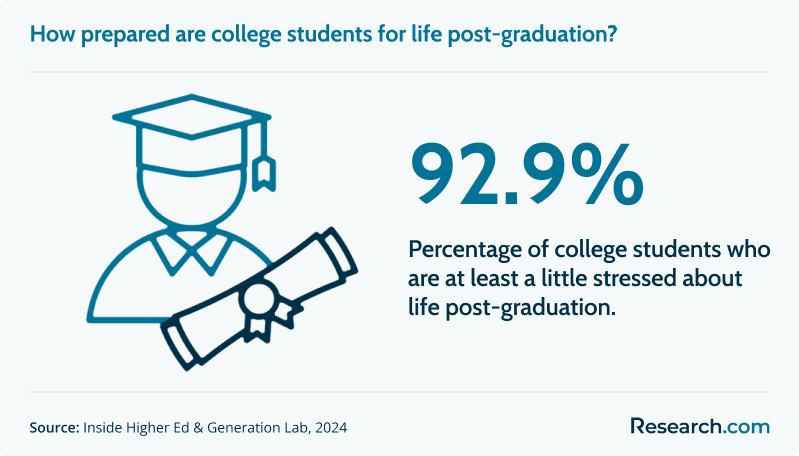
- 68% of college students say they feel at least somewhat stressed about preparing for life after graduation, creating room for stronger advising and career-planning support.
- Only 20% of recent public college graduates received full career coaching, showing a service gap that skilled consultants may be able to address.
- The highest-earning educational consultants are often those with advanced expertise, strong referral networks, and clients in higher education, private consulting, or specialized advisory work.
- What does an educational consultant do?
- What skills do educational consultants need in 2026?
- Why is educational consulting growing in 2026?
- What are the steps to become an educational consultant?
- Do you need teaching experience to become an educational consultant?
- Which certifications can help educational consultants?
- Can advanced education speed up your consulting career?
- How do advanced qualifications affect consulting success?
- What trends are shaping educational consulting?
- What legal and ethical duties do educational consultants have?
- How much do educational consultants make?
- How can educational consultants grow over the long term?
- How do educational consultants find clients?
- What challenges should educational consultants expect?
- What resources help aspiring educational consultants?
- How can educational consultants measure and improve performance?
- Can digital experience skills improve educational consulting?
- Can creative writing skills strengthen an educational consulting practice?
What does an educational consultant do?
An educational consultant gives expert advice to improve academic, career, instructional, or organizational outcomes. The client may be a student choosing a college, a family seeking special education support, a school district redesigning curriculum, a university improving student success systems, or a business building employee training programs.
The exact work depends on the consultant’s specialty. Common responsibilities include:
- College and career advising – Helping students compare schools, understand admissions requirements, strengthen applications, explore majors, and connect academic choices to career goals.
- Curriculum and instructional design – Creating or evaluating lessons, courses, assessments, training modules, and academic programs.
- Special education guidance – Supporting families and schools with learning plans, accommodations, advocacy, and student-centered strategies.
- Teacher coaching and professional development – Training educators on classroom methods, instructional technology, assessment practices, or student engagement.
- School and program improvement – Advising leaders on policy, operations, data use, technology adoption, student support, and learning outcomes.
The need for clear guidance is especially visible in higher education and career planning. A 2024 survey found that 68% of college students feel at least somewhat stressed about preparing for life after graduation. Consultants who combine advising expertise with labor-market awareness may find opportunities similar to other high-paying education careers for master’s graduates.
The chart below shows the industries with the highest employment levels for educational, guidance, and career counselors and advisors, based on BLS data from 2024.
Common educational consulting niches
| Consulting niche | Typical clients | Best fit for professionals with experience in |
| College admissions advising | High school students, parents, transfer students, adult learners | Admissions, counseling, college advising, financial aid literacy, essay review |
| Career and academic planning | College students, recent graduates, workforce programs | Career services, student success, coaching, labor-market research |
| Curriculum consulting | Schools, districts, publishers, edtech firms | Teaching, instructional design, assessment, standards alignment |
| Special education consulting | Families, schools, advocacy organizations | Special education, psychology, student support, disability services |
| School improvement consulting | K–12 schools, districts, education agencies | Administration, leadership, policy, data analysis, teacher development |
| Corporate learning consulting | Companies, nonprofits, workforce training providers | Training, adult learning, HR development, learning technology |
What skills do educational consultants need in 2026?
Successful educational consultants need more than subject knowledge. They must diagnose problems, communicate with different stakeholders, recommend practical solutions, and often manage the business side of consulting. The strongest consultants can translate research and policy into steps a student, family, school, or organization can actually use.
Core skills include:
- Educational judgment – Understanding learning theory, curriculum, student development, school operations, and education policy enough to make sound recommendations.
- Clear communication – Explaining complicated admissions, academic, legal, or instructional issues in language clients can understand.
- Analytical problem-solving – Reviewing data, identifying root causes, and separating symptoms from the real issue.
- Client management – Setting expectations, documenting advice, managing timelines, and handling difficult conversations professionally.
- Business development – Pricing services, writing proposals, networking, marketing, and maintaining referral relationships.
- Adaptability – Keeping up with changing admissions practices, education technology, online learning, state requirements, and employer expectations.
Many consultants build these skills through graduate study, professional development, and supervised experience. Professionals looking for leadership, policy, and school administration preparation may compare affordable online master’s programs in educational leadership as one possible pathway.
Skill checklist for new educational consultants
| Skill area | Why it matters | How to demonstrate it |
| Subject-matter expertise | Clients need evidence that you understand the problem they are paying you to solve. | Degrees, certifications, published work, case studies, prior roles, training projects |
| Research and data use | Consulting recommendations should be based on evidence, not guesswork. | Needs assessments, program evaluations, student outcome analysis, reports |
| Ethical advising | Families and institutions must be able to trust your guidance. | Written policies, transparent fees, confidentiality practices, conflict disclosures |
| Presentation and facilitation | Many consultants train groups or present findings to decision-makers. | Workshops, webinars, conference sessions, professional development materials |
| Business operations | Independent consultants must manage sales, contracts, billing, and client service. | Service packages, proposals, client onboarding process, referral plan |
Why is educational consulting growing in 2026?
Educational consulting is gaining attention because students, schools, and employers are trying to make better decisions in a more complex education market. Families need help comparing programs, colleges face pressure to improve student outcomes, schools are working to close learning gaps, and organizations increasingly rely on outside specialists for training and strategy.
Several factors support demand:
- Uneven access to career guidance – Only 1 in 5 recent public college graduates reported receiving full education-to-career coaching, which leaves many students without structured support.
- Higher need for individualized planning – Students may receive more information about pathways and earnings, but many still need help interpreting that information for their own goals.
- Growth of online education choices – In 2024, Southern New Hampshire University was the top distance learning institution, with 96% of its students enrolled online. As online options expand, students often need help comparing quality, flexibility, support, and fit.
- Pressure to improve school performance – Schools may bring in consultants for curriculum review, instructional coaching, technology planning, and student support initiatives.
- More demand for workforce-aligned education – Colleges and training providers are expected to show clearer links between programs, skills, and employment outcomes.
These trends do not guarantee easy client acquisition. They do, however, create opportunities for consultants who can solve specific problems, document results, and communicate value clearly.
What are the steps to become an educational consultant?
The best route depends on your background and niche, but most educational consultants follow a similar progression: build expertise, gain relevant experience, choose a specialty, prove your value, and develop a client pipeline.
- Earn a relevant degree. A bachelor’s degree in education, psychology, counseling, instructional design, public policy, or a related area is often the starting point. Many consultants later complete a master’s or doctorate. Professionals aiming for higher education leadership or policy consulting may consider an online doctorate in higher education.
- Gain practical education experience. Schools, colleges, nonprofits, and consulting firms usually value direct experience. At least 5 to 10 years in education can help establish credibility, especially for school improvement, curriculum, and teacher-training roles.
- Pick a defined specialty. “Educational consultant” is broad. You will be easier to hire if you focus on a clear problem, such as admissions strategy, special education advocacy, curriculum alignment, teacher coaching, college-to-career planning, or online program evaluation.
- Build evidence of results. Create work samples such as training agendas, advising frameworks, curriculum maps, evaluation reports, case studies, or anonymized examples of client outcomes.
- Develop consulting and business skills. Learn how to scope projects, price services, write proposals, create contracts, protect client data, and manage communication.
- Join professional organizations. Groups such as the Independent Educational Consultants Association (IECA) can provide training, networking, ethical guidance, and peer support.
- Choose your work model. You can operate independently, join an established consulting firm, work for an education company, support a nonprofit, or consult for government and institutional clients.
Educational consultant career path at a glance
| Stage | Main goal | What to focus on |
| Early career | Build education-related experience | Teaching, advising, counseling, training, admissions, instructional design, or school operations |
| Skill-building stage | Develop a marketable specialty | Certifications, graduate coursework, niche projects, professional development |
| Transition stage | Move from employee expertise to consulting value | Portfolio, service packages, testimonials, networking, pricing, legal setup |
| Growth stage | Scale reputation and revenue | Referral systems, speaking, publishing, partnerships, repeat contracts |
Do you need teaching experience to become an educational consultant?
You do not always need teaching experience, but it is one of the most common and credible starting points. Former teachers understand classroom realities, student learning challenges, curriculum standards, and school culture. That experience can be especially valuable in curriculum design, teacher coaching, student support, and school improvement consulting.
There are two realistic entry routes:
- Path 1: Entering from teaching or school administration
- Classroom and school leadership experience helps you understand the daily constraints educators face.
- Former teachers often transition into curriculum review, instructional coaching, academic intervention, or professional development.
- Districts and schools may prefer consultants who have direct experience with standards, licensure, and educator preparation, including areas such as physical education teacher certification requirements.
- Path 2: Entering from another professional background
- Professionals in counseling, psychology, admissions, policy, instructional design, business, workforce development, or edtech can also build consulting careers.
- Non-teachers should be especially clear about their niche and the evidence behind their expertise.
- Graduate education, supervised practice, certifications, and a strong portfolio can help close credibility gaps.
The right question is not only “Have I taught?” but “Can I credibly solve the client’s problem?” Teaching experience helps, but specialized knowledge and demonstrated results can also create a strong consulting profile.
The chart below shows the most common education levels among educational consultants, as reported by Zippia in 2025.
Which certifications can help educational consultants?
Certifications are not universally required for educational consultants, but they can help signal expertise, especially when clients are choosing among several advisors. The best certification depends on your niche, not on the title alone.
- Certified Educational Planner (CEP) – Offered by the American Institute of Certified Educational Planners (AICEP), this credential is most relevant for professionals focused on college planning, admissions advising, and academic guidance.
- Board Certified Educational Advocate (BCEA) – This option can support consultants who work with families, schools, and students in special education contexts.
- National Board Certification (NBC) – Although designed for teachers, it can strengthen credibility for consultants who focus on instruction, curriculum, assessment, and classroom improvement. Consultants working in literacy intervention may also evaluate reading specialist certification requirements.
- Project Management Professional (PMP) – This credential may be useful for consultants managing large school improvement projects, policy rollouts, education technology implementations, or multi-stakeholder initiatives.
- Certified Higher Education Professional (CHEP) – This certification may fit consultants who advise colleges, career schools, or higher education administrators.
How to choose the right certification
| If your niche is... | Look for credentials that prove... | Avoid choosing based only on... |
| College admissions or educational planning | Advising ethics, admissions knowledge, student planning experience | Name recognition without relevance to admissions work |
| Special education support | Advocacy knowledge, disability services familiarity, family communication skills | Generic coaching credentials with no special education depth |
| School improvement | Leadership, instructional strategy, data use, change management | Certificates that do not address school systems or implementation |
| Corporate learning or edtech | Instructional design, project management, user experience, adult learning | Education credentials unrelated to business or technology clients |
Can advanced education speed up your consulting career?
Advanced education can help if it directly supports your consulting niche. A graduate degree may increase credibility with school leaders, higher education clients, parents, or organizations that expect consultants to understand research, policy, leadership, and evaluation. It can also help consultants move from general advising into higher-value strategy work.
However, a degree alone does not create a consulting business. Before enrolling, compare the cost, time commitment, accreditation, curriculum, and whether the program gives you skills clients will pay for. Professionals who want doctoral-level preparation while continuing to work may review 2 year Ed.D programs online as one possible option.
How do advanced qualifications affect consulting success?
Advanced qualifications can improve consulting success when they build practical authority: research skills, data analysis, leadership judgment, ethical decision-making, and specialized knowledge. They are most valuable when paired with experience and a clear service offering.
For example, some consultants work with libraries, academic information systems, digital learning resources, or research support services. In those cases, an online MLIS degree may support a niche focused on information access, digital resources, and learning infrastructure.
What trends are shaping educational consulting?
Educational consulting is changing as technology, online learning, student support needs, and accountability pressures reshape education. Consultants who understand these shifts can offer more relevant services than those relying only on older advising models.
- AI and data-informed advising – Consultants increasingly need to interpret data, evaluate AI-supported tools, and help clients use technology responsibly.
- Online and hybrid program growth – Students and institutions need help comparing flexible programs, student support, quality indicators, and career fit.
- Career-outcome pressure – Colleges and training providers are under greater pressure to connect learning to employment, skills, and return on investment.
- Personalized learning support – Families and schools want more individualized strategies for students with different academic, social, and career needs.
- Policy and compliance awareness – Consultants must stay current on requirements that affect admissions, student privacy, special education, accreditation, and institutional practices.
Consultants who need stronger pedagogical preparation may compare online education degree programs to build a more formal foundation in teaching and learning.
What legal and ethical duties do educational consultants have?
Educational consultants often work with sensitive academic, personal, financial, and institutional information. Ethical practice is not optional; it is central to trust and professional credibility.
Key responsibilities include:
- Confidentiality – Protect student, family, and institutional information and explain how records will be stored or shared.
- Transparency – Disclose fees, services, limitations, referral relationships, and potential conflicts of interest before work begins.
- Honest representation – Do not guarantee admissions results, test scores, scholarships, school improvement outcomes, or employment results.
- Competence – Accept work only in areas where you have appropriate training, experience, or supervision.
- Fairness – Avoid steering clients toward choices that benefit the consultant more than the client.
- Compliance awareness – Understand relevant student privacy, disability, school, and institutional rules for your consulting area.
Consultants who want leadership preparation with a stronger ethics and systems focus may explore affordable online Ed.D. programs, but they should still verify that any program aligns with their actual consulting goals.
How much do educational consultants make?
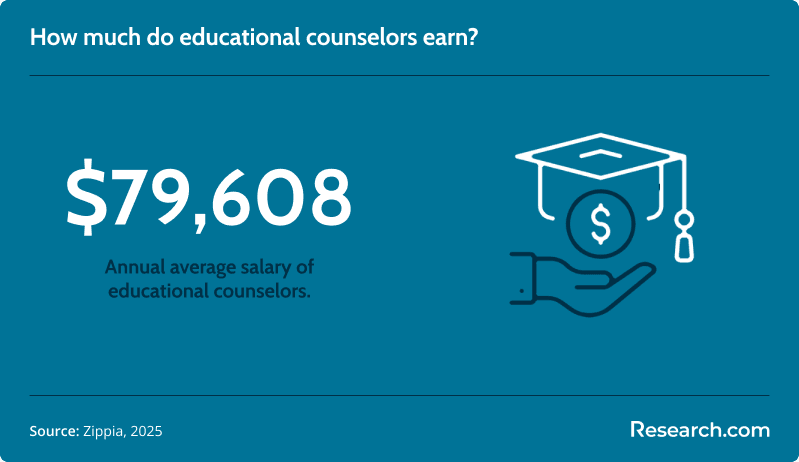
According to Zippia, educational consultants earn an average salary of $79,608 per year in 2025. Actual income depends on specialty, location, experience, credentials, client type, pricing model, and whether the consultant works for an employer or runs an independent practice.
Salary ranges commonly differ by career stage:
- Entry-Level (0–3 years) – New consultants typically earn between $50,000 and $65,000 per year. A master’s degree, strong niche, or specialized certification may help some professionals start closer to the higher end. Some education professionals also research the path to becoming a college professor when considering long-term credibility and income options.
- Mid-Career (4–9 years) – Consultants with more experience often earn $70,000–$90,000, especially if they have a reliable referral base, leadership background, or specialized expertise.
- Senior-Level (10+ years) – Experienced consultants, particularly those with a PhD or substantial leadership experience, may earn $100,000 or more. Consultants who operate successful firms can exceed $150,000 annually.
- Industry and Location Impact – Private practice and corporate settings may pay more than nonprofits or some school district roles. Higher-cost areas such as California, New York, and Massachusetts may also offer higher salaries.
Specialization matters. Consultants who solve high-stakes problems in admissions, special education, curriculum redesign, higher education strategy, or workforce learning may command higher fees than generalist advisors.
Salary factors to evaluate before entering the field
| Factor | How it can affect income | Question to ask yourself |
| Employment model | Employees may have steadier pay; independent consultants may have higher upside but less predictable income. | Do I want stability, entrepreneurial control, or a mix of both? |
| Niche | Specialized services often support higher fees than broad advising. | What problem can I solve better than a general consultant? |
| Client type | Families, schools, colleges, nonprofits, and corporations have different budgets and sales cycles. | Who can afford and benefit from my service? |
| Credentials | Degrees and certifications may strengthen trust, especially for institutional clients. | Will this credential help me win the clients I want? |
| Location and delivery | Local market rates and online service delivery can affect pricing. | Can I serve clients beyond my immediate area? |
How can educational consultants grow over the long term?
Long-term growth comes from becoming known for a specific result, not from trying to serve everyone. Consultants who build repeatable systems, track outcomes, publish useful insights, and maintain professional relationships are better positioned for sustainable work.
Strong growth strategies include:
- Develop a signature framework. Create a clear process for assessments, advising plans, school audits, curriculum reviews, or training engagements.
- Use continuing education strategically. Attend conferences, complete relevant credentials, and study policy or technology changes that affect your niche.
- Create useful content. Articles, webinars, guides, and case studies can show expertise before a client ever contacts you.
- Build referral partnerships. Counselors, school leaders, tutoring centers, therapists, admissions professionals, and workforce organizations can become referral sources.
- Improve written communication. Proposals, reports, client summaries, and thought leadership all shape trust. Consultants who want structured training in writing may compare online creative writing degree programs if communication is central to their brand.
How do educational consultants find clients?
Educational consultants attract clients through credibility, referrals, visibility, and clear service positioning. Independent consultants must be especially intentional because expertise alone does not guarantee a steady pipeline.
Common client acquisition methods include:
- Show visible expertise. Speak at events, publish practical resources, earn relevant credentials, and explain your consulting process clearly. Graduating from accredited online colleges and universities may also support credibility when the education is relevant to your niche.
- Network with aligned professionals. Build relationships with teachers, counselors, administrators, admissions officers, learning specialists, tutors, and nonprofit leaders.
- Create a professional website. Include services, credentials, ethical policies, testimonials where appropriate, pricing guidance if feasible, and a simple contact process.
- Use digital marketing carefully. Search-friendly articles, email newsletters, webinars, and social media can help clients understand your value before they book a consultation.
- Partner with organizations. Schools, colleges, tutoring companies, workforce programs, and nonprofits may need specialized consulting on a project or retainer basis.
- Deliver excellent service. Referrals from satisfied clients are often more persuasive than advertising, particularly in family-facing consulting.
Questions clients may ask before hiring you
| Client question | What your answer should clarify |
| What exactly do you help with? | Your niche, deliverables, timeline, and limits |
| What experience do you have with this problem? | Relevant work history, credentials, case examples, and outcomes |
| How do you charge? | Hourly fees, packages, retainers, payment terms, and cancellation rules |
| Do you guarantee results? | Ethical boundaries and what you can and cannot promise |
| How do you protect private information? | Confidentiality, recordkeeping, consent, and communication policies |
What challenges should educational consultants expect?
Educational consulting can offer flexibility and meaningful work, but it also comes with business risk, client pressure, and constant learning demands. New consultants should plan for these realities before leaving a stable role.
- Income uncertainty – Freelancers and business owners may experience uneven revenue. Marketing and relationship-building must continue even when client work is busy.
- Market competition – More professionals are entering education advising and consulting. A clear niche, ethical reputation, and documented expertise help you stand out.
- High expectations – Families, schools, and organizations may expect quick results. Consultants need to set realistic goals and avoid overpromising.
- Administrative burden – Contracts, invoicing, taxes, scheduling, recordkeeping, and legal questions can consume significant time.
- Constant policy and practice changes – Consultants must stay current on admissions practices, curriculum expectations, educational technology, privacy requirements, and school regulations. For K–12 specialists, tracking areas such as kindergarten teacher requirements can support more informed advising.
The chart below shows the types of information recent graduates received in a timely manner to support their careers, as reported by Strada Education in 2024.
Common mistakes aspiring educational consultants make
| Mistake | Why it causes problems | Better approach |
| Starting with a vague service offering | Clients may not understand what you do or why they should hire you. | Define a specific audience, problem, process, and outcome. |
| Choosing credentials without checking relevance | Some programs or certificates may not improve your marketability. | Match credentials to your niche and target clients. |
| Ignoring accreditation when pursuing degrees | Poorly chosen programs may not carry the credibility you expect. | Verify institutional and programmatic accreditation where applicable. |
| Underpricing services | Low prices can make the business unsustainable and reduce perceived value. | Price based on expertise, time, market, and deliverables. |
| Promising guaranteed outcomes | Guarantees can create ethical and legal risk. | Promise process quality, honest guidance, and professional effort instead. |
| Relying only on referrals | Referral flow can slow unexpectedly. | Build multiple channels: partnerships, content, speaking, and search visibility. |
What resources help aspiring educational consultants?
The best resources help you learn the field, follow ethical standards, build credibility, and meet potential mentors or clients. Choose resources based on your consulting niche rather than collecting memberships or courses at random.
- Independent Educational Consultants Association (IECA) – IECA offers professional development, ethical guidance, networking, and resources for independent consultants.
- National Association for College Admission Counseling (NACAC) – NACAC is especially relevant for consultants focused on college admissions, counseling, and postsecondary planning.
- University-based professional development – Short courses, graduate certificates, and advanced education degree pathways can strengthen subject knowledge and credibility.
- LinkedIn and professional communities – Networking groups can help new consultants learn from experienced professionals, find collaborators, and identify client needs.
- Conferences and webinars – Events can expose consultants to policy changes, admissions trends, curriculum practices, edtech tools, and school leadership issues.
How can educational consultants measure and improve performance?
Consultants should measure both client satisfaction and the quality of their work process. The right metrics depend on the service: a college advisor may track completed applications and client feedback, while a curriculum consultant may track teacher adoption, assessment alignment, or implementation milestones.
Useful performance indicators include:
- Client satisfaction surveys and testimonials
- Referral rates and repeat engagements
- Project completion timelines
- Quality of deliverables, such as reports, training materials, or advising plans
- Measurable improvements connected to the project’s goals
- Client retention and follow-up results
Consultants who want deeper training in organizational improvement, leadership, and evaluation may consider an online PhD in leadership if it aligns with their consulting focus.
How can effective personal branding drive client acquisition?
A strong personal brand helps clients quickly understand who you serve, what problem you solve, and why your guidance is credible. This is especially important in a field where titles can be broad and services vary widely.
Effective branding should include a clear niche, a consistent message, evidence of expertise, and professional writing across your website, proposals, reports, and public content. Consultants who rely heavily on storytelling, publishing, or persuasive communication may find that writing-focused graduate study, such as affordable online MFA programs, can support stronger messaging and client materials.
What do educational consultants say about the career?
-
: "
Moving into educational consulting helped me use my experience in a more focused way. I can choose the students and issues I care about, set a schedule that works for me, and see the direct effect of my guidance. – Amara
"
-
: "
After years in the classroom, I wanted to support students beyond daily instruction. Consulting gave me the chance to work closely with families and help them make clearer academic and career decisions. – Harry
"
-
: "
I was nervous about leaving a predictable job, but consulting helped me build new professional opportunities. The work is demanding, but helping students find direction while growing my income has been worth it. – Enid
"
Can digital experience skills improve educational consulting?
Digital experience skills can help consultants deliver services more efficiently and make their guidance easier for clients to use. This may include better client portals, clearer online resources, virtual workshops, interactive planning tools, or more user-friendly reports.
Consultants who work with online learning, edtech, student-facing platforms, or digital advising systems may benefit from understanding user experience principles. A program such as an online UX bachelor’s degree can build skills in designing digital environments that support clearer decisions and stronger client engagement.
Can creative writing skills strengthen an educational consulting practice?
Strong writing can improve nearly every part of an educational consulting practice: proposals, student summaries, college essays support, client reports, grant narratives, website copy, case studies, and thought leadership. Consultants who explain complex issues clearly are easier to trust and refer.
Creative writing is not a required credential for educational consulting, but advanced writing training can help consultants craft stronger narratives, especially if their work involves admissions essays, communications strategy, publishing, or brand-building. Professionals interested in this direction can review how MFA in creative writing careers may connect to communication-focused professional paths.
References
- Bureau of Labor Statistics (BLS). (2024a). 21-1012 Educational, Guidance, and Career Counselors and Advisors. Occupational Employment and Wage Statistics. BLS occupational employment data.
- Bureau of Labor Statistics (BLS). (2024b). School and Career Counselors and Advisors. Occupational Outlook Handbook. BLS Occupational Outlook Handbook.
- National Center for Education Statistics (NCES). (2024). About a Third of Public School Students Ended the 2023–24 School Year Behind Grade Level in at Least One Academic Subject, Principals Say. Press Release. NCES press release.
- Mowreader, A. (2024). Career Coaching Can Aid Student Success, but Not Every Student Receives Guidance. Life After College. Inside Higher Ed.
- Inside Higher Ed & Generation Lab. (2024). Student Voice Survey. Student Voice Survey question data; Generation Lab survey results.
- Strada Education. (2024). Quality Coaching. Strada Education report.
- UNESCO Institute for Statistics (UIS). (2024). World Education Statistics. UIS publication.
- Zippia. (2025a). Education Consultant Education Requirements. Zippia education requirements.
- Zippia. (2025b). Education Consultant Salary. Zippia salary data.
Key Insights
- Educational consulting is not one job. It includes college advising, career planning, curriculum work, special education support, school improvement, higher education strategy, and corporate learning.
- The strongest path into the field is to combine education-related experience, a defined niche, credible credentials, and evidence that you can solve real client problems.
- Teaching experience is valuable but not mandatory. Non-teachers can succeed if they bring relevant expertise in counseling, policy, admissions, instructional design, business, technology, or workforce development.
- Certifications and graduate degrees can help, but only when they match your consulting specialty and target clients.
- Income can be attractive, with an average salary of $79,608 in 2025, but independent consultants must manage variable revenue, marketing, pricing, contracts, and client expectations.
- Ethics are central to the profession. Avoid guarantees, disclose conflicts, protect confidentiality, and be honest about what your services can and cannot accomplish.
- Before entering the field, define your audience, choose a niche, build a portfolio, verify credential quality, and create a realistic plan for finding clients.
Other Things You Should Know About Becoming an Educational Consultant
No state issues a universal educational consultant license in 2027. Most consultants work without licensure, but they may need a business license and, if they market themselves as counselors or advisors in regulated settings, separate state credentials or employer approval may apply.
To become an educational consultant in 2027, a bachelor's degree in education or a related field is typically required. Additionally, many positions may require a master's degree and relevant experience in teaching or administration to demonstrate expertise.


