2027 How to Become a Substitute Teacher in North Carolina

Co-Founder and Chief Data Scientist
Becoming a substitute teacher in North Carolina is usually a district-based hiring process rather than a single statewide application. That means the basic pathway is straightforward—meet the education requirement, pass screening, complete required training, and apply to the school system where you want to work—but the details can differ from one county or district to another.
This 2026 guide is for career changers, college students, retirees, education majors, licensed teachers, and anyone considering flexible work in North Carolina schools. It explains the requirements, training options, application steps, pay expectations, schedule realities, legal considerations, and ways substitute teaching can lead to a longer-term education career. North Carolina reported over 1,200 vacancies for substitute teachers in 2023, so qualified and reliable substitutes remain important to school operations.
Quick answer: How do you become a substitute teacher in North Carolina?
To become a substitute teacher in North Carolina, you typically need at least a high school diploma or equivalent, a completed district application, a background check and fingerprinting as required by the North Carolina Department of Public Instruction, and any substitute training or orientation required by the local school district. Many districts accept applicants without a teaching license, but licensed teachers and applicants with college coursework may qualify for higher-paying or long-term assignments.
- Minimum education: Most districts require at least a high school diploma or GED equivalent; some prefer college credits or a degree.
- Application route: You apply directly through the local district or school system where you want substitute assignments.
- Screening: Expect employment verification, a criminal background check, and fingerprinting requirements.
- Training: First-time substitutes may need SETT, ETT, district training, or an orientation before being placed on the substitute list.
- Pay: Substitute teachers in NC earn between $85 and $110 per day depending on location and experience, while some listed district rates vary by licensure and assignment type.
- Basic requirements for substitute teachers in North Carolina
- Training required for first-time substitute teachers
- How the application process works
- Substitute teacher pay in North Carolina
- Renewal and eligibility maintenance
- Typical classroom responsibilities
- Schedule flexibility and assignment types
- Benefits and trade-offs of substitute teaching
- Legal rights and employment status
- Career growth opportunities
- Pathways from substitute teaching to full teacher certification
- Decision checklist before applying
- What substitutes say about the role
- Online substitute teacher training programs
- Whether substitute teaching counts as full-time work
- Skills you build as a substitute teacher
- Whether to substitute before becoming a full-time teacher
- References
What are the basic requirements to become a substitute teacher in North Carolina?
The main requirement is district approval. North Carolina school systems generally set their own substitute hiring rules within state employment and background-check expectations, so two nearby districts may ask for different documents, training certificates, or health forms.
| Requirement | What it usually means for applicants | Why it matters |
| Education | A high school diploma or GED equivalent is generally enough for many short-term substitute roles. Some districts prefer at least 60 semester hours of college coursework or a bachelor’s degree. | Higher education can make you more competitive and may qualify you for more assignments. |
| Age | Applicants are typically expected to be at least 18 years old. Some districts set the minimum at 19 or 20 depending on local policy and graduation status. | Districts use age requirements to confirm workplace readiness and eligibility for school-based employment. |
| Teaching license | A professional educator’s license is not required for most day-to-day substitute jobs. Current or expired licensed teachers may have access to long-term roles. | Licensure can affect pay, assignment type, and whether training requirements are waived. |
| Background screening | Candidates must complete employment verification, criminal history review, and fingerprinting as required. | Schools must verify that adults working with students meet safety and hiring standards. |
| Health documentation | Some districts may request a NC Health Certificate, TB test proof, or similar forms. | These documents help districts satisfy local employment and student-safety procedures. |
| Out-of-state credentials | North Carolina recognizes certain out-of-state substitute teaching credentials, and licensed substitutes from other states may apply for reciprocity and possibly obtain a state teaching license. | Applicants moving to North Carolina should ask the district how prior credentials will be reviewed. |
No specific college major is normally required for substitute teaching. However, applicants who want to move beyond short-term assignments should think strategically about education credentials. A future teacher may benefit from comparing online bachelor’s in education programs, especially if a district prefers candidates with college credits or a completed degree.
What training is required for first-time substitute teachers in North Carolina?
Training depends on your district and whether you already hold a teaching license. First-time applicants without a current or expired teaching license are often asked to complete a substitute teacher preparation course before they can accept assignments.
- Common training programs: Districts may require Substitute Effective Teacher Training (SETT) or Effective Teacher Training (ETT). These courses are often available online, including through platforms such as App-Garden University.
- Topics covered: Training usually addresses classroom management, instructional support, legal responsibilities, student supervision, and emergency procedures.
- Completion requirement: Candidates commonly finish a quiz or assessment to receive a certificate. The course may cost around $49.
- Local district rules: Districts such as Rutherford and Davidson County Schools may require their own online training and quiz certificate before substitutes are cleared to work.
- Orientation: After background screening, districts may require a virtual or in-person session on local policies, payroll, absence-management systems, reporting expectations, and school procedures.
- Possible exemptions: Applicants with a current or expired North Carolina teaching license, teacher assistant experience, or student-teaching experience in the state are often exempt from some substitute training requirements.
Substitute training is not the same as earning a full teaching credential. It prepares you to manage a classroom temporarily, follow lesson plans, and keep students safe. If your long-term goal is education leadership, research, or college-level teaching, advanced pathways such as a PhD in higher education online may be relevant later, but they are not needed for most substitute roles.
Training comparison: licensed vs. non-licensed substitutes
| Applicant type | Likely training expectation | Best-fit assignments |
| No teaching license | SETT, ETT, district training, orientation, and background screening may be required. | Day-to-day assignments, short-term absences, classroom coverage, and general substitute pools. |
| Current or expired licensed teacher | Some training may be waived, but district orientation and screening still apply. | Long-term assignments, subject-specific coverage, and higher-responsibility placements. |
| Teacher assistant or former student teacher | Some districts may recognize prior school experience and adjust training expectations. | Classrooms where familiarity with school procedures and student support is valuable. |
How do you apply to become a substitute teacher in North Carolina?
You apply through the district where you want to work, not through a single statewide substitute teacher portal. The process is usually online and can take time because schools must verify documents, complete background checks, and obtain final approval before adding you to the substitute list.
- Choose your district first. Review the substitute teacher page for the school system where you want assignments. Check whether the district uses its own HR portal or an outside substitute staffing provider.
- Collect required documents. Prepare proof of education, a government-issued ID, Social Security card, references, and any training certificate you already completed.
- Submit the online application. Complete every required field, upload documents in the requested format, and use an email address you check frequently.
- Provide health or local forms if required. Some districts ask for TB test proof, a health certificate, or additional employment paperwork.
- Complete the background check. After initial review, the district may send instructions for the criminal history check and fingerprinting process.
- Finish training and orientation. Applicants who are approved for the next stage may be directed to SETT, ETT, district training, or onboarding sessions.
- Wait for district or board approval. Some districts require school board review before an applicant is officially cleared for assignments.
- Set up your assignment system. Once approved, learn how to accept jobs, select schools, update availability, and communicate with school offices.
-
: "
A North Carolina substitute teacher who graduated from a local university said the online application was manageable, but gathering references and organizing documents took longer than expected. The background-check stage felt slow, but the district’s communication and virtual teaching guidance helped her feel ready to take over a classroom.
"
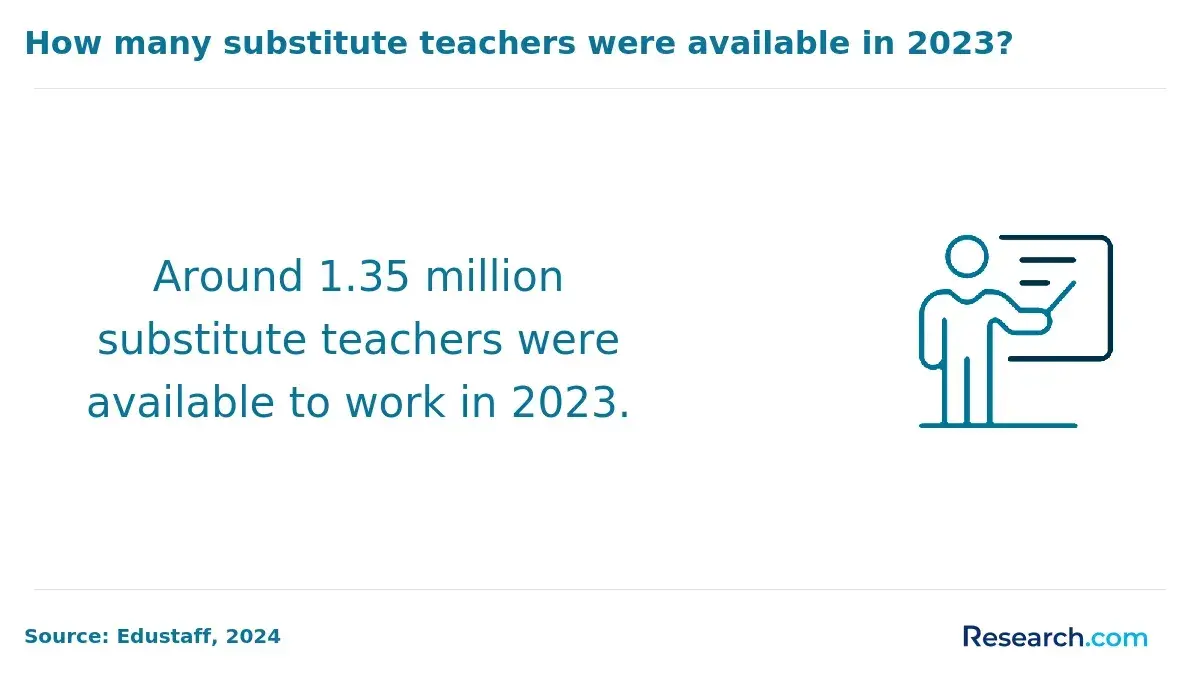
The infographic below puts the role into a broader workforce context: more than a million substitutes were available in 2023. For North Carolina applicants, that national scale is a reminder that substitute teaching is not casual babysitting; it is a structured education-support role that schools rely on when regular teachers are absent.
How much do substitute teachers in North Carolina make?
Substitute teacher pay in North Carolina varies widely by district, licensure status, assignment length, and the number of days worked. The average substitute teacher salary generally falls between $28,200 and $45,400 annually, while some top earners make up to $56,345. Lower annual earnings can be around $17,267, often because many substitutes work part time or accept assignments inconsistently.
Daily rates also differ. Non-licensed substitutes may earn around $90 per day, while long-term licensed positions can pay $200 or more. The median substitute teacher salary in North Carolina is near $32,420 annually, with an hourly wage of about $16. North Carolina ranks 50th nationally for substitute teacher salary, so applicants should compare districts carefully rather than assuming all school systems pay the same.
| Pay factor | How it can affect earnings | What to ask before accepting assignments |
| Licensure status | Certified substitutes often qualify for higher daily rates than non-certified substitutes. | Does the district pay different rates for licensed, expired-license, and non-licensed substitutes? |
| Assignment length | Long-term assignments may pay more than daily assignments, especially for licensed teachers. | When does a placement become “long-term,” and does the rate change automatically? |
| District location | Pay varies across North Carolina districts and may reflect local staffing needs. | What is the current daily rate for elementary, middle, and high school assignments? |
| Number of workdays | Annual earnings depend heavily on how often you accept jobs. | How many assignments are typically available each week? |
| Additional duties | Some roles may involve grading, lesson planning, or parent communication, especially in long-term placements. | Are extra responsibilities included in the rate, or compensated separately? |
Education credentials can influence long-term earning potential, particularly for substitutes who plan to become licensed teachers. If affordability is a concern, compare options such as the most affordable online degrees in education before committing to a program.
The wage chart below shows how higher educational attainment can correspond with higher earnings. In a state where substitute pay is already challenging compared with national levels, credentials and assignment strategy can make a meaningful difference.
How do you renew or maintain a substitute teaching certificate in North Carolina?
North Carolina substitute eligibility is often maintained through district compliance rather than a standalone statewide substitute certificate. However, if you hold a North Carolina professional educator license, renewal requirements matter because licensure can affect your pay category, long-term assignment eligibility, and future teaching plans.
- License cycle: Professional educator licenses are valid for five years and must be renewed before expiration to avoid losing licensed status.
- Continuing education: Licensed educators complete 8 Continuing Education Units (CEUs) or 80 clock hours every five years, with credit areas depending on grade level or licensure role.
- Accepted professional development: Graduate courses, approved workshops, district training, and role-aligned professional learning may count when properly documented.
- Renewal system: Licensed educators renew through the NCDPI Online Licensure System and may need LEA verification.
- Documentation: Keep certificates, transcripts, training records, and district confirmations because you may need them when renewing or changing districts.
- District eligibility: Even if you do not hold a teaching license, a district may require annual updates, refreshed background checks, retraining, or orientation to remain active in the substitute pool.
- Personal tracking: Do not rely only on HR reminders. Track expiration dates, training deadlines, and inactive-status rules yourself.
Renewal and maintenance checklist
| Item to track | Applies to | Why it matters |
| Teaching license expiration date | Licensed substitutes | Expired licensure can reduce assignment options or pay category. |
| CEUs or clock hours | Licensed substitutes | Renewal requires 8 Continuing Education Units (CEUs) or 80 clock hours every five years. |
| District training updates | All substitutes | Local rules may change from year to year. |
| Background check status | All substitutes | Districts may require updated screening before continued employment. |
| Availability in assignment system | All substitutes | Inactive profiles may stop receiving job offers. |
What are the responsibilities of a substitute teacher in North Carolina?
A substitute teacher’s job is to keep learning and supervision on track while the regular teacher is away. The work may look simple from the outside, but it requires quick judgment, clear communication, and the ability to manage a room of students you may be meeting for the first time.
- Follow lesson plans: Carry out the teacher’s instructions as closely as possible so students do not lose instructional time.
- Manage classroom behavior: Set expectations early, redirect disruptions, and maintain a respectful learning environment.
- Record attendance: Submit accurate attendance using the school’s required process.
- Adapt quickly: Move between grade levels, subjects, schedules, and classroom routines, sometimes with little notice.
- Supervise students outside class: Cover lunch, recess, hallway transitions, assemblies, or dismissal when assigned.
- Protect student safety: Follow emergency procedures, report concerns, and never ignore school safety protocols.
- Communicate with staff: Ask administrators, office staff, or nearby teachers for help when policies or student needs are unclear.
- Leave useful notes: Tell the regular teacher what was completed, what was not, which students were helpful, and whether any incidents occurred.
- Respect confidentiality: Avoid discussing student behavior, grades, health details, or family situations outside appropriate school channels.
- Follow district rules: Comply with dress code, technology policies, reporting procedures, and professional conduct expectations.
- Handle added duties carefully: Long-term or certified substitutes may be asked to grade, plan lessons, or communicate with families, depending on the assignment.
The chart below highlights common résumé skills for substitute teachers, including classroom management, subject-area knowledge, and bilingual education. Those skills align closely with the realities of North Carolina substitute work: the strongest substitutes are adaptable, calm under pressure, and able to keep students engaged even when the regular teacher is absent.
How flexible is a substitute teacher’s schedule in North Carolina?
Substitute teaching can be highly flexible, especially for day-to-day assignments. Many substitutes choose which days to work, which schools to accept, and sometimes which grade levels or subjects to avoid. That makes the role appealing for parents, college students, retirees, graduate students, and workers seeking supplemental income.
The trade-off is unpredictability. Work availability can change by season, district need, school calendar, weather closures, and teacher absences. If you need steady income every week, long-term assignments may be more reliable than day-to-day jobs, but they also reduce flexibility because you are expected to report consistently.
| Assignment type | Flexibility level | Best for | Main drawback |
| Day-to-day substitute | High | People who want control over when and where they work. | Income may be inconsistent. |
| Preferred school substitute | Moderate to high | Applicants who want familiar staff, routines, and student populations. | Fewer school choices may mean fewer job alerts. |
| Long-term substitute | Low to moderate | Future teachers or licensed educators who want deeper classroom experience. | More responsibility and a more fixed schedule. |
| Subject-specific substitute | Moderate | Candidates with strengths in math, science, language, arts, special education, or other areas. | Assignments may depend on demand for that subject. |
-
: "
One North Carolina substitute described the schedule as both freeing and uncertain. At first, choosing assignments through the online system felt intimidating, but he eventually learned how to build work around personal commitments instead of forcing life around work.
"
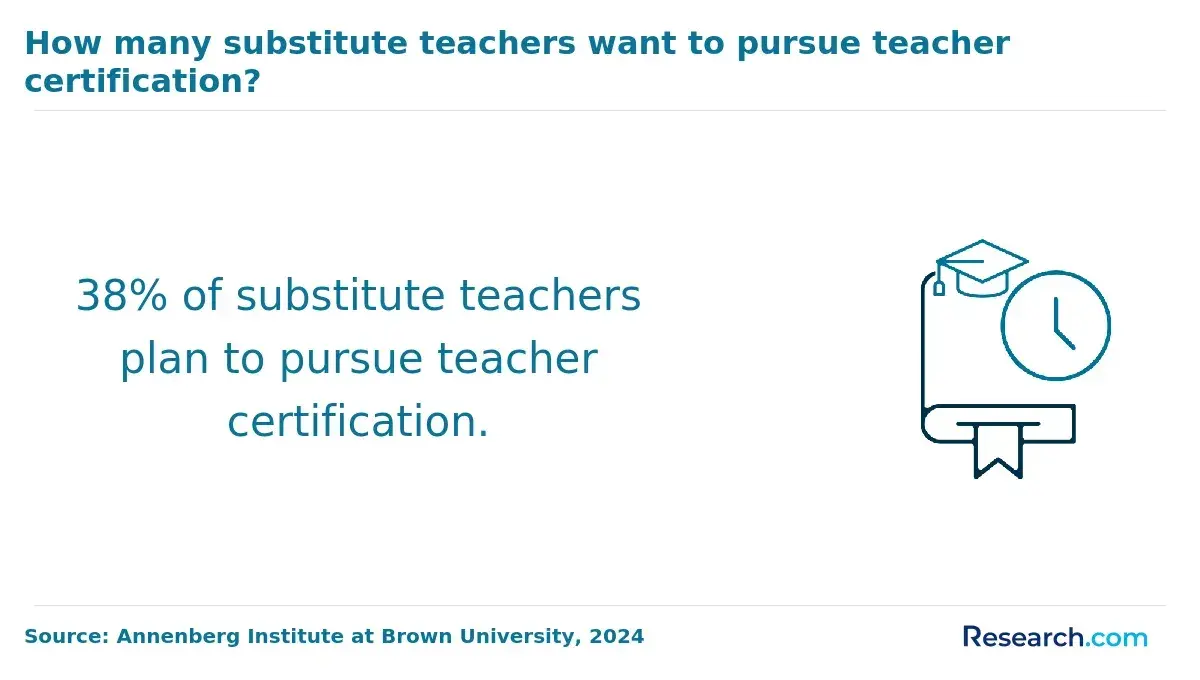
The infographic below notes that 38% of substitute teachers aim to pursue full teacher certification. For those substitutes, staying active, building strong school relationships, and meeting renewal or training expectations can help turn flexible work into a career pathway.
What are the benefits received by a substitute teacher in North Carolina?
The biggest benefits of substitute teaching in North Carolina are flexibility, classroom experience, and access to school networks. Traditional employment benefits may be limited for daily substitutes, so applicants should separate professional benefits from payroll or insurance benefits when evaluating the role.
- Flexible work schedule: You may be able to accept assignments around family, school, another job, or retirement plans.
- Entry point into education: Substitute teaching lets you test whether classroom work fits your personality before investing in a teaching degree or licensure program.
- Higher pay for certified substitutes: Certified substitutes may earn daily rates from $135 to $159 per day, while non-certified substitutes often earn between $90 and $120 per day.
- Chance to build a reputation: Reliable substitutes who arrive prepared, follow plans, and communicate well are more likely to be requested by schools.
- Professional development: Training such as Substitute Effective Teacher Training can improve classroom management and expand assignment opportunities.
- Career exploration: Substitutes can experience elementary, middle, high school, special education, and subject-specific classrooms before choosing a path.
Applicants should also ask direct questions about paid training, payroll timing, cancellation policies, retirement eligibility, health benefits, and whether long-term assignments are treated differently from daily assignments. If you are interested in related school-based roles beyond classroom teaching, it may also be useful to explore whether online master’s degrees in library science are affordable.
What legal rights do substitute teachers have in North Carolina?
Substitute teachers should understand that their rights depend on employment classification, district policy, assignment type, and whether they are hired directly by a school system or through a staffing partner. Most substitutes have fewer job protections than contracted full-time teachers, but they still have workplace rights.
- At-will employment: Many substitutes are treated as at-will employees, meaning assignments or employment may end unless the decision violates anti-discrimination laws or a specific agreement.
- Anti-discrimination protections: Substitutes are still protected by applicable employment laws related to discrimination, harassment, and retaliation.
- District grievance options: Some school systems offer complaint or grievance procedures, though access can differ for substitutes compared with full-time employees.
- Credential recognition: North Carolina may recognize out-of-state licenses when standards are met, which can support licensed educators seeking substitute work after moving.
- Policy-based protections: Union representation, teacher association support, or civil service protections may exist in some settings, but substitutes should verify this locally.
- Right to ask for clarification: If removed from the substitute list or denied assignments, ask HR for the applicable policy, documentation process, and appeal or review options.
- Legal advice when needed: For serious disputes involving termination, discrimination, pay, or unsafe working conditions, consult an employment attorney familiar with North Carolina law.
What are the career advancement opportunities for substitute teachers in North Carolina?
Substitute teaching can be a short-term income option, but it can also be a deliberate career step. Schools often notice substitutes who are dependable, calm with students, and willing to support difficult-to-fill classrooms. Those relationships can help when applying for teacher assistant, long-term substitute, or full-time teaching roles.
- Long-term substitute roles: These assignments offer more continuity, more responsibility, and often higher pay than day-to-day placements.
- Full teacher certification: Substitutes who decide to teach permanently can use classroom experience to confirm grade-level and subject preferences before pursuing licensure.
- Teacher assistant positions: Some substitutes transition into school support jobs that provide steadier schedules and deeper student relationships.
- Tutoring and intervention support: Classroom experience can support tutoring, academic recovery, and small-group instructional roles.
- Specialized education roles: Substitutes who work well with students with disabilities, English learners, or specific subject needs may pursue targeted training.
- School operations or support careers: Experience inside schools can lead some workers toward counseling, administration, media services, or education technology roles after additional education.
If you want the fastest practical route into teaching, compare degree requirements carefully. Some candidates start by researching accessible teaching degree options, then confirm whether the program aligns with North Carolina licensure expectations.
What do substitute teachers in North Carolina say about their careers?
Substitutes often describe the role as a mix of flexibility, uncertainty, and rapid professional growth. The most positive experiences tend to come from applicants who understand the trade-offs before starting: daily substitute work offers freedom, but it also requires patience, adaptability, and comfort with unfamiliar classrooms.
- Arnold: After completing the substitute teacher certification program at Raleigh Charter High School, Arnold said substitute teaching helped him enter a local school setting while balancing family responsibilities. He valued the chance to support students and test his long-term interest in education.
- Lucinda: Lucinda described working across urban and rural classrooms as a challenging but useful way to understand North Carolina’s school communities. She found that professional development helped her adjust to different student needs and teaching environments.
- Devin: Devin said the substitute teacher preparation program at Charlotte Mecklenburg Academy helped build confidence and classroom skills. He appreciated being able to work with students from varied backgrounds while exploring different grade levels and subjects.
What are the pathways to full teacher certification from substitute teaching?
Substitute teaching does not automatically make you a licensed teacher, but it can help you make better decisions about licensure. The classroom exposure can clarify whether you prefer elementary, middle, high school, special education, or a specific subject area before you invest time and money in a teacher preparation pathway.
- Use substitute work to identify your target role. Pay attention to which grade levels, subjects, and school environments fit your strengths.
- Check North Carolina licensure rules early. Review the subject area, testing, degree, and educator preparation requirements before enrolling in any program.
- Choose an approved or appropriate preparation route. A degree alone may not be enough if it does not meet licensure requirements.
- Build references inside schools. Principals, department chairs, and teachers who have seen your work can strengthen future applications.
- Seek long-term assignments when ready. These roles provide a clearer preview of planning, grading, classroom routines, and student progress monitoring.
- Document your professional development. Keep training certificates, observation notes, and evidence of education-related experience.
For a more detailed view of licensing options, compare your experience with North Carolina teacher certification requirements. The strongest pathway combines substitute experience with a formal credential route that meets state expectations.
Related Articles for Nearby States
- 2027 How to Become a Substitute Teacher in South Carolina
- 2027 How to Become a Substitute Teacher in Virginia
- 2027 How to Become a Substitute Teacher in Georgia
- 2027 How to Become a Substitute Teacher in Tennessee
- 2027 How to Become a Substitute Teacher in West Virginia
- 2027 How to Become a Substitute Teacher in Kentucky
- 2027 How to Become a Substitute Teacher in Florida
- 2027 How to Become a Substitute Teacher in Maryland
- 2027 How to Become a Substitute Teacher in Alabama
- 2027 How to Become a Substitute Teacher in Pennsylvania
Are online substitute teacher training programs in North Carolina legitimate?
Online substitute teacher training can be legitimate when the district you are applying to accepts it. The key is not whether the course is online; it is whether your target school system recognizes the provider, course title, certificate, and completion format.
- Confirm before paying: Ask the district whether it accepts SETT, ETT, App-Garden University, or another provider.
- Match the exact course: Some districts require a specific substitute training program, not just any classroom-management course.
- Save the certificate: Upload the completion document exactly as the district requests.
- Watch for outdated guidance: District pages can change, so rely on the current application instructions.
- Do not assume transferability: A certificate accepted by one district may not satisfy another district’s hiring process.
Is substitute teaching in North Carolina considered full-time employment?
Day-to-day substitute teaching is usually not the same as full-time employment. Many substitutes work only when assignments are available and accepted. Long-term substitute placements may feel like full-time work because they involve a consistent schedule, but employment classification, benefits, and protections still depend on district policy and the terms of the assignment.
| Work arrangement | How it usually works | Question to ask HR |
| Occasional day-to-day substitute | You accept jobs as needed and may work irregularly. | Is there a minimum number of days I must work to stay active? |
| Frequent day-to-day substitute | You may work many days in a month, but assignments can still vary. | Does frequent work affect eligibility for benefits or retirement participation? |
| Long-term substitute | You may report to the same class for an extended period and take on added duties. | Does this placement have a different pay rate, contract status, or benefit eligibility? |
What skills do you gain as a substitute teacher in North Carolina?
Substitute teaching builds practical workplace skills that apply inside and outside education. Even short assignments can strengthen communication, problem-solving, and leadership because substitutes must earn student cooperation quickly and manage unexpected situations professionally.
- Classroom management: Setting expectations, redirecting behavior, and maintaining order.
- Public speaking: Giving directions clearly to groups of students.
- Adaptability: Moving between subjects, grade levels, and school cultures.
- Conflict resolution: Responding calmly to disruptions or disagreements.
- Time management: Keeping lessons, transitions, and attendance on schedule.
- Professional communication: Leaving useful notes and reporting concerns to staff.
- Student support: Recognizing when students need encouragement, structure, or referral to school personnel.
- Technology use: Navigating assignment systems, digital lesson materials, and virtual learning tools when required.
Should you substitute teach before becoming a full-time teacher in North Carolina?
Substitute teaching is a smart trial run if you are unsure whether full-time teaching is right for you. It gives you direct classroom exposure without requiring an immediate commitment to a degree program or permanent contract. However, it should not be mistaken for a complete substitute for teacher preparation, supervised clinical experience, or licensure requirements.
Substitute teaching may be a good first step if you:
- Want to test different grade levels before choosing a licensure area.
- Need flexible income while studying or changing careers.
- Want school-based references before applying to teacher preparation programs.
- Are considering long-term work in education but want realistic classroom exposure first.
You may want a different path if you:
- Need predictable full-time pay and benefits immediately.
- Are uncomfortable with last-minute assignments or unfamiliar classrooms.
- Want a guaranteed route to licensure without completing formal requirements.
- Prefer structured training and mentorship before leading a classroom independently.
Decision checklist before applying
Before you submit applications, compare districts the same way you would compare employers. Pay is important, but it is not the only factor. Training support, assignment availability, school culture, and long-term goals can make one district a better fit than another.
| Decision area | Questions to ask | Common mistake to avoid |
| District requirements | What education level, training, health forms, and background checks are required? | Assuming all North Carolina districts use identical rules. |
| Pay | What are the daily rates for licensed, non-licensed, and long-term substitutes? | Looking only at the advertised rate without asking when it applies. |
| Assignment availability | How often do substitutes receive jobs, and which schools have the most need? | Expecting steady work without confirming demand. |
| Training acceptance | Which online or in-person substitute course does the district recognize? | Paying for a course before checking district approval. |
| Benefits and classification | Are substitutes eligible for paid training, benefits, retirement, or long-term assignment pay? | Assuming frequent substitute work automatically equals full-time employment. |
| Career goals | Will this district support your move toward licensure, teacher assistant roles, or long-term placements? | Treating substitute teaching as unrelated to your future career plan. |
Common mistakes to avoid when becoming a substitute teacher in North Carolina
- Applying without reading district instructions: Local requirements matter. Missing one form can delay approval.
- Choosing training too early: Complete only the course your target district accepts.
- Focusing only on daily pay: Also compare commute time, assignment volume, cancellation rules, and long-term opportunities.
- Ignoring licensure implications: If you plan to become a teacher, make sure your education path aligns with North Carolina requirements.
- Underestimating classroom management: Strong substitutes prepare routines, backup activities, and behavior strategies before entering the classroom.
- Failing to document experience: Keep records of training, assignments, and professional references for future applications.
- Assuming online programs are automatically valid: District acceptance is what matters.
- Expecting guaranteed income: Substitute work can be flexible, but job volume is not always predictable.
References:
- All Education Schools. Substitute teaching in North Carolina overview.
- Careers / Substitutes. Union County Public Schools substitute information.
- ESS. ESS & WSFCS, North Carolina substitute team information.
- Fasthire. Guide to becoming a substitute teacher in North Carolina.
- Guilford County Schools. Guilford County Schools substitute careers.
- HelloSubs. North Carolina: Become a substitute teacher in North Carolina.
- Mooresville Graded School District. Mooresville substitute positions.
- Tallo. Flexible childcare substitute teacher listing.
- Teachers of Tomorrow. How to become a substitute teacher in North Carolina.
- Wake County Public School System (WCPSS). Wake County substitute teacher careers.
Key Insights
- North Carolina substitute teaching is mainly a district hiring process, so always verify requirements with the school system where you want to work.
- A high school diploma or GED equivalent is often enough for entry-level substitute roles, but college credits, a bachelor’s degree, or a teaching license can improve assignment options.
- First-time substitutes without a teaching license may need SETT, ETT, district training, an orientation, and a completed background check before working.
- Pay varies significantly. North Carolina substitute teachers may see daily rates from around $90 for non-licensed assignments to $200 or more for some long-term licensed roles.
- Flexibility is the main advantage, but income can be unpredictable unless you secure frequent or long-term assignments.
- Substitute teaching can help future teachers choose a grade level, build references, and gain classroom confidence, but it does not replace formal North Carolina teacher certification requirements.
- The best applicants compare districts, confirm training acceptance before paying for courses, keep documents organized, and treat every assignment as a professional opportunity.
Other Things You Need to Know About Substitute Teachers in North Carolina
Yes, substitute teachers in North Carolina may be required to attend specific training programs offered by local school districts, focusing on classroom management, educational technology, and district policies. These programs help prepare substitutes for their roles effectively.
North Carolina school districts require a criminal history check before hiring substitute teachers. Districts usually review state and federal records through the North Carolina State Bureau of Investigation and the FBI, and some also require fingerprinting. A disqualifying record can block employment.