
2027 What Is the Easiest Teaching Degree?

Co-Founder and Chief Data Scientist
The “easiest” teaching degree is not the one with the fewest assignments or the fastest graduation promise. It is the program that best matches your teaching goal, state licensure requirements, existing credits, budget, work schedule, and comfort with fieldwork. A degree can look simple on paper but become difficult if it requires full-time unpaid student teaching, daytime school placements, multiple licensure exams, or advanced subject coursework outside your strengths.
This guide is for first-time college students, working adults, career changers, paraprofessionals, and childcare workers who want a realistic route into education. You will learn which teaching degrees are usually more manageable, what they can and cannot qualify you to do, how online and campus formats differ, what costs to expect, and how to choose a program that supports licensure instead of creating avoidable barriers.
Quick answer: What is the easiest teaching degree to get?
For students who want an entry-level education role, an associate degree in education or early childhood education is often the most accessible option. It can support jobs such as teacher assistant, childcare educator, paraprofessional, or substitute teacher where state and employer rules allow.
For students who want to become licensed K-12 classroom teachers, a bachelor’s degree in early childhood education or elementary education is commonly one of the more straightforward pathways. These programs usually emphasize child development, classroom routines, teaching methods, reading instruction, general subject knowledge, and supervised practice rather than deep specialization in one advanced academic subject.
That does not mean these degrees are effortless. Public school teaching usually requires a state-approved educator preparation program, supervised field experiences, student teaching, licensure exams, and background checks. Before you enroll, verify that the institution is accredited, the teacher preparation program is approved for the state where you plan to teach, and the concentration matches the grade level or subject area you want.
What are the main benefits of earning a teaching degree?
- Broader access to education careers: Depending on your degree level, specialization, and license, a teaching degree can prepare you for roles such as K-12 teacher, special education teacher, instructional support professional, curriculum specialist, educational consultant, or school-based student support worker.
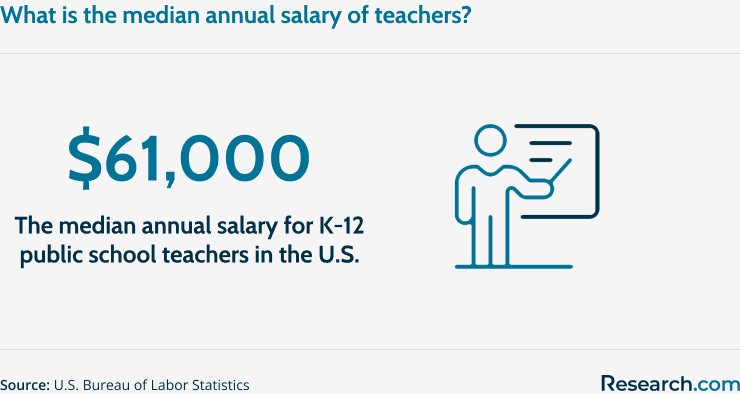
- A structured route into school employment: The median salary for K-12 teachers in the U.S. is around $61,000 per year, and earnings may be higher for teachers with advanced degrees, specialized credentials, or roles in fields such as special education or STEM.
- More flexible ways to study: Online teaching degrees can make coursework easier to manage for working adults, parents, and caregivers, although classroom observations, practicum hours, and student teaching are usually completed in person at approved schools.
What should you expect from a teaching degree?
A teaching degree blends academic study with practical classroom preparation. Most programs include child or adolescent development, educational psychology, lesson planning, instructional strategies, classroom management, assessment, inclusive teaching, and curriculum design. Your courses will vary based on whether you choose early childhood, elementary, secondary, special education, physical education, health education, or another concentration.
The hands-on part of the program is just as important as the online or classroom coursework. You should expect classroom observations, field experiences, and a student teaching placement where you gradually take on instructional responsibilities under supervision. During this stage, you plan lessons, teach students, receive feedback, and show that you can support learning in a real school setting.
Teaching programs also build transferable professional skills. Graduates often strengthen communication, leadership, organization, collaboration, patience, conflict resolution, adaptability, family engagement, and data-informed decision-making.
Where can you work with a teaching degree?
Teaching degree graduates work in public schools, private schools, charter schools, preschools, early learning centers, special education programs, tutoring organizations, online learning companies, nonprofits, after-school programs, and community education settings. The right workplace depends on your credential, state rules, desired age group, and whether you want a classroom teaching role or a broader education-related position.
State licensure is generally required for public school teaching. Private schools, childcare centers, education technology companies, and nonprofit programs may set different requirements, but a relevant teaching degree can still improve your qualifications and help demonstrate preparation for working with learners.
How much can you earn with a teaching degree?
The median annual salary for K-12 public school teachers in the U.S. is around $61,000, with elementary and middle school teachers earning $63,670, while high school teachers earn $65,220. Private school salaries may be lower, although compensation should be evaluated alongside benefits, class size, workload, school resources, and working conditions.
Specialization and location can affect pay and hiring opportunities. Teachers in high-need areas such as special education, STEM, and ESL may find stronger demand in some districts, with potential earnings closer to $65,000 or more depending on local budgets, union or district salary schedules, contract terms, and staffing needs.
- Easiest Teaching Degrees for 2027
- How long does the easiest teaching degree take?
- Online vs. on-campus teaching degrees
- Average cost of a teaching degree
- Financial aid for teaching degree students
- Teaching degree admission requirements
- Common teaching degree courses
- Teaching degree specializations
- Additional teaching certifications
- Online teacher certification programs
- Accelerated online EdD programs
- Diversity, equity, and inclusion in teacher preparation
- Why accreditation matters
- Advanced degrees for teachers
- Leadership training for educators
- Creative writing skills for teachers
- Challenges in teaching degree programs
- Teaching degree return on investment
- How to choose a teaching degree program
- Career paths for teaching degree graduates
- Teaching degree job market
- Technology trends in teacher preparation
Easiest Teaching Degrees for 2027
The degree options below are commonly considered more manageable because they either offer an accessible entry point into education support work or focus on broad classroom preparation rather than highly specialized subject expertise. Treat them as starting points for research, not automatic recommendations. Licensure rules differ by state, and a program that works in one state may not meet requirements in another.
How do we rank schools?
Research.com evaluates teaching degree programs by considering factors students actually use when making enrollment decisions, including affordability, program structure, academic quality, institutional information, flexibility, and potential alignment with teacher preparation goals.
This ranking follows the transparent Research.com methodology and uses sources such as the Integrated Postsecondary Education Data System (IPEDS), Peterson's databases, including the Distance Learning Licensed Data Set, and the College Scorecard from the National Center for Education Statistics. These sources help compare institutional and program characteristics using data rather than relying only on promotional claims.
| Teaching degree path | Who it usually fits | Decision point to verify |
| Associate degree in education | Students aiming for childcare, paraprofessional, substitute, or bachelor’s transfer pathways | It usually does not qualify graduates for full K-12 public school teacher licensure by itself |
| Bachelor’s in early childhood education | Students who want to teach young children and focus on early development | Approved age ranges and licensure outcomes vary by state and program |
| Bachelor’s in elementary education | Students who prefer broad classroom teaching across multiple subjects | Fieldwork, student teaching, and state exams are still required |
| Bachelor’s in physical education or health education | Students interested in wellness, movement, coaching, and school health programs | Programs may include performance-based requirements or extracurricular expectations |
| Special education, mild to moderate needs | Students committed to individualized instruction and inclusive classrooms | The work can be emotionally demanding and may involve added certification requirements |
1. University of Phoenix: Bachelor of Science in Elementary Education
The University of Phoenix offers a Bachelor of Science in Elementary Education with options in Early Childhood Education and Elementary Education. This program may work for adults and career changers who need a flexible teacher preparation route. The program typically takes 2-3 years to complete.
- Program Length: Typically 2-3 years
- Tracks/Concentrations: Early Childhood Education, Elementary Education
- Cost per Credit: $415
- Required Credits to Graduate: 120 credits
- Accreditation: Higher Learning Commission (HLC)
2. Western Governors University: Bachelor of Science in Elementary Education
Western Governors University offers a Bachelor of Science in Elementary Education with Early Childhood Education and Elementary Education options. Its self-paced format may suit disciplined students who can manage coursework independently while balancing jobs, caregiving, or other responsibilities. Students can complete the program in 2-3 years, depending on their individual pace.
- Program Length: Self-paced, typically 2-3 years
- Tracks/Concentrations: Early Childhood Education, Elementary Education
- Cost: $3,825 per term
- Required Credits to Graduate: 120 credits
- Accreditation: Northwest Commission on Colleges and Universities (NWCCU)
3. Arizona State University: Bachelor of Arts in Elementary Education
Arizona State University offers a Bachelor of Arts in Elementary Education with options in Early Childhood Education, Elementary Education, and Special Education. This route may appeal to students who want a more traditional undergraduate pathway with broad teacher preparation. The program typically takes 4 years to complete.
- Program Length: Typically 4 years
- Tracks/Concentrations: Early Childhood Education, Elementary Education, Special Education
- Cost per Credit: $561
- Required Credits to Graduate: 120 credits
- Accreditation: Higher Learning Commission (HLC)
4. National University: Bachelor of Arts in Liberal Studies with a Teaching Credential
National University offers a Bachelor of Arts in Liberal Studies with a Teaching Credential. This option may be useful for students who want preparation across subjects such as English, History, Math, and Science while following a credential-oriented plan. Program length varies based on transfer credits and course load.
- Program Length: Varies based on transfer credits and course load
- Tracks/Concentrations: Multiple subject areas
- Cost per Credit: $370
- Required Credits to Graduate: Varies
- Accreditation: Western Association of Schools and Colleges (WASC) Senior College and University Commission (WSCUC)
5. Purdue University Global: Bachelor of Science in Elementary Education
Purdue University Global offers a Bachelor of Science in Elementary Education with options in Early Childhood Education, Elementary Education, and Special Education. The self-paced structure may help working adults and career changers move through coursework in a way that fits their schedule. Students can complete the program in 2-3 years, depending on their individual pace.
- Program Length: Self-paced, typically 2-3 years
- Tracks/Concentrations: Early Childhood Education, Elementary Education, Special Education
- Cost per Credit: $371
- Required Credits to Graduate: 120 credits
- Accreditation: Higher Learning Commission (HLC)
How long does it take to complete the easiest teaching degree program?
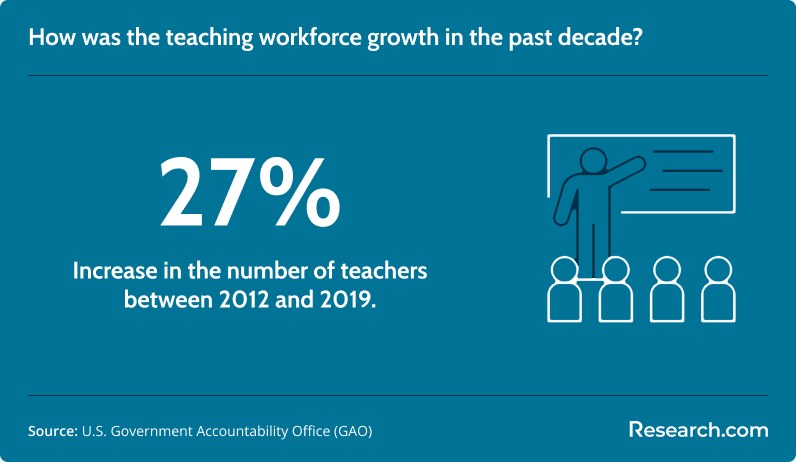
Your timeline depends on the degree level, transfer credits, enrollment pace, practicum requirements, student teaching availability, and whether the program is accelerated or self-paced. Demand for education support roles has also changed: between 2012 and 2019, the number of assistant teachers grew by 51%, while the number of teachers increased by only 27%.
If you are asking what is the easiest education degree to get, start by deciding whether you need a classroom teaching license or an entry-level education support credential. Those goals lead to different timelines.
| Degree path | Typical timeline | Common outcome | Best fit |
| Associate Degree in Education | Often shorter than a bachelor’s degree | Teacher assistant, childcare, substitute, or transfer pathway | Students seeking a lower-cost entry point into education |
| Bachelor’s in Early Childhood Education | Usually follows standard undergraduate completion timelines | Early childhood or pre-K-related roles, depending on state rules | Students who enjoy early development, routines, and young learners |
| Bachelor’s in Elementary Education | Full-time students can complete this in four years; accelerated options may reduce this to around 3 years | Elementary classroom teaching pathway | Students who want broad preparation across several subjects |
| Bachelor’s in Physical Education or Health Education | Similar to other bachelor’s degrees; some accelerated programs may take 3 years | PE, health, wellness, or related school roles | Students interested in activity-based instruction and student wellness |
| Special Education Programs for Mild to Moderate Needs | Often around 4 years, with some 3-year options when prerequisites or credits are already complete | Special education teaching pathway | Students ready for individualized instruction, documentation, and collaboration |
Associate Degree in Education
An associate degree is often the simplest academic starting point for students entering education. It may prepare graduates for roles such as teacher assistant, paraprofessional, childcare worker, or substitute teacher, depending on employer expectations and state rules. It can also reduce the cost of a future bachelor’s degree if credits transfer cleanly.
Bachelor’s in Early Childhood Education
Early childhood education programs focus on how young children grow, learn, communicate, and build foundational skills. Coursework commonly includes early literacy, play-based learning, family partnerships, child development, and classroom routines. Students who prefer developmental and practical coursework may find this path more approachable than a content-heavy secondary education major.
Bachelor’s in Elementary Education
Elementary education is often seen as one of the more accessible bachelor’s-level routes to licensure because it prepares teachers for general classroom instruction. The difficulty is breadth. Candidates must become comfortable teaching reading, math, science, social studies, classroom procedures, and behavior supports.
Bachelor’s in Physical Education or Health Education
Physical education and health education degrees can be a good fit for students who enjoy movement, fitness, coaching, wellness, and student motivation. They are not automatically easier, but they may feel more natural for students whose strengths involve hands-on instruction and active learning environments.
Special Education Programs for Mild to Moderate Needs
Special education can be deeply meaningful, but it should not be chosen only because schools need qualified teachers. This pathway requires patience, organization, legal and documentation awareness, collaboration with families and specialists, individualized lesson planning, and skill in supporting students with varied needs.
Accelerated and Online Options
Accelerated and online formats may shorten the path to graduation, particularly for students with prior college credits. They can also make weekly coursework easier to fit around employment or caregiving. Still, online delivery does not eliminate student teaching, field placements, licensure tests, or background checks. If you are comparing education with healthcare pathways, reviewing easiest medical degree programs can help you compare academic intensity, clinical requirements, and career preparation across fields.
How does an online teaching degree compare to an on-campus program?
An online teaching degree may be easier to schedule around work and family, while an on-campus program may provide more structure, face-to-face support, and established local school partnerships. The best format depends on your learning style, weekly availability, location, and how the school manages field placements.
| Factor | Online teaching degree | On-campus teaching degree |
| Schedule | Often uses asynchronous classes with weekly deadlines | Usually requires attendance at fixed class times |
| Fieldwork | Typically completed at approved schools near the student | Often coordinated through university relationships with nearby districts |
| Student support | Usually delivered through virtual advising, remote tutoring, and online faculty access | Provides in-person advising, campus resources, and peer interaction |
| Best fit | Working adults, parents, rural learners, and highly self-directed students | Students who prefer in-person learning and a predictable campus routine |
| Main risk | Local field placement coordination can be difficult if support is limited | Less convenient for students with full-time jobs, caregiving duties, or long commutes |
Flexibility and scheduling
Online programs frequently use asynchronous coursework, allowing students to complete lectures, readings, discussions, and assignments within weekly deadlines rather than at a fixed daily class time. Some programs include live sessions, but these are often scheduled in advance or recorded.
Campus programs create a more predictable academic routine because classes meet at set times. That structure can help students who benefit from regular face-to-face accountability, but it can be challenging for those working full time or managing family responsibilities.
Fieldwork and student teaching
Online teacher preparation still includes in-person classroom practice. Observations, practicum hours, and student teaching are usually completed at approved schools, with feedback from a cooperating teacher, supervisor, or program representative.
Campus programs may simplify placement because many education departments have long-standing relationships with nearby schools. If you are also exploring justice- or psychology-related fields, a guide to the difference between forensic psychology and criminology can help you compare fieldwork expectations, career environments, and professional preparation across disciplines.
Cost and time efficiency
Online study may reduce commuting, campus housing, parking, and relocation costs. Some online programs also use accelerated formats that allow prepared and motivated students to finish more quickly.
Campus programs may include added fees, but they can offer direct networking, in-person faculty access, local school connections, and scholarships connected to campus enrollment. Students comparing teaching with other licensed professions may also want to review the requirements for becoming a nurse, since both nursing and teaching require supervised practice and state-level credentialing.
What is the average cost of a teaching degree program?
The cheapest online teaching degree is not automatically the easiest or best investment. Tuition is only one part of cost. You also need to consider transfer credit acceptance, required school placements, books, fees, licensure exams, background checks, transportation, technology costs, and the possibility of unpaid student teaching time.
Common cost factors
- Program format: Online students may avoid commuting or housing costs, but they should check for technology fees, placement fees, and any required in-person sessions.
- Residency status: Public universities often charge different tuition for in-state and out-of-state students, although some online programs have separate pricing.
- Transfer credit policy: Accepted transfer credits can reduce both total cost and completion time if they apply directly to degree requirements.
- Licensure-related expenses: Teacher candidates may pay for state exams, fingerprinting, background checks, and credential applications.
- Aid and scholarships: Grants, scholarships, and teacher-focused awards can reduce out-of-pocket cost, especially for students preparing for high-need areas.
Estimated teaching degree cost ranges
| Degree type | Estimated cost range |
| Associate Degree | $6,000 - $15,000 |
| Bachelor’s in Early Childhood/Elementary/PE/Health Education | $20,000 - $55,000 |
| Bachelor’s in Special Education | $25,000 - $60,000 |
Community colleges and public universities are often cost-effective choices, especially for in-state students and learners who can transfer credits efficiently from an associate program into a bachelor’s degree.
What financial aid options are available for teaching degree students?
Teaching degree students may qualify for grants, federal student loans, scholarships, institutional aid, and teacher-focused funding programs. Completing the FAFSA is usually the first step because it allows schools to evaluate eligibility for federal, state, and institutional aid.
Federal Pell Grants
Eligibility: Pell Grants are generally available to undergraduate students with financial need. Awards depend on income, enrollment status, and the school’s cost of attendance.
Benefit: Pell Grants usually do not have to be repaid. In the 2023–2024 academic year, the maximum award was $7,395.
Federal Student Loans
Eligibility: Direct Subsidized and Unsubsidized Loans are offered by the federal government. Subsidized loans are based on financial need.
Benefit: Federal loans usually provide repayment protections and flexible repayment plans that private loans may not offer. Subsidized loans also do not accrue interest while the student remains enrolled in school.
Scholarships and teacher-focused aid
Eligibility: Scholarships may be awarded based on academic performance, financial need, education major, state residency, commitment to high-need schools, or service agreements. Awards may come from colleges, departments of education, nonprofits, districts, or private organizations.
Benefit: Scholarships do not need repayment. Some programs, including the TEACH Grant, include service requirements tied to high-need fields or schools, so read the terms before accepting funding.
| Aid type | Repayment required? | Best use | What to watch |
| Federal Pell Grants | No, in most cases | Lowering undergraduate tuition and fees | Eligibility depends on need and enrollment status |
| Federal Student Loans | Yes | Paying remaining costs after grants and scholarships | Borrow carefully and review repayment obligations |
| Scholarships | No | Reducing net price without increasing debt | Deadlines, renewal rules, and eligibility requirements vary |
| TEACH Grant | No if service obligations are met | Students committed to qualifying high-need teaching service | It can become a loan if service terms are not completed |
What are the prerequisites for enrolling in a teaching degree program?
Admission requirements differ by school, degree level, and licensure track. For bachelor degrees in education, there was a noted decline of 17% among graduates between 2009-2010 and 2019-2020, which makes accessible, well-structured teacher preparation pathways important for both future teachers and schools.
Common undergraduate requirements
- High school diploma or GED: Associate and bachelor’s programs generally require proof of high school completion or an equivalent credential.
- Minimum GPA: Many schools set GPA requirements, often around 2.5 to 3.0, especially before students enter the formal teacher preparation phase.
- Standardized test scores: Some colleges may request SAT or ACT scores, though many institutions have reduced or removed these requirements.
- Background checks: Students entering school-based fieldwork may need fingerprinting or background screening before being placed with children.
- Introductory coursework or basic skills requirements: Some programs require early education courses, writing classes, or basic skills assessments before admission to upper-level teacher preparation.
Additional requirements for graduate or certification pathways
- Bachelor’s degree: Master’s, post-baccalaureate, and alternative certification programs usually require a completed bachelor’s degree, sometimes in a related content area.
- Observation or volunteer experience: Some programs ask applicants to document prior classroom exposure before admission.
- Prerequisite courses: Career changers may need additional subject-area coursework, particularly for secondary education or specialized licensure routes.
- State-specific testing: Teacher preparation programs may require licensure exams before admission, during the program, or after student teaching.
Ask whether admission to the college or university automatically means admission to the teacher education program. At some schools, students must meet separate GPA, testing, coursework, and background check requirements before they can take upper-level methods courses or begin student teaching.
What courses are typically in a teaching degree program?
Most teaching degrees include general education courses, professional education coursework, subject or grade-level teaching methods, assessment training, and supervised field experiences. The exact curriculum depends on your chosen age group, subject, and licensure requirements.
Foundational education courses
- Introduction to Education: Reviews the role of schools, major educational philosophies, teacher responsibilities, and how education systems are organized.
- Educational Psychology: Explains how students learn and how development, motivation, behavior, environment, and classroom conditions influence instruction.
- Classroom Management: Covers routines, expectations, behavior supports, communication strategies, and methods for maintaining safe and productive classrooms.
- Diversity and Inclusion in Education: Prepares future teachers to support students from different cultural, linguistic, economic, family, and learning backgrounds.
Assessment and instructional decision-making courses
- Educational Assessment: Teaches candidates how to design assessments, interpret results, and use evidence of learning to adjust instruction.
- Data-Driven Decision Making: Shows teachers how to use classroom data, assessment results, and student progress information to improve learning outcomes.
Fieldwork and practicum courses
- Field Observations: Gives students early exposure to classrooms so they can connect theory with real school practice before taking on major teaching responsibilities.
- Student Teaching: Usually completed near the end of the program, this supervised experience places candidates in classrooms with licensed educators.
Graduate-level and advanced education courses
Students who already have a bachelor’s degree may compare advanced routes such as the cheapest online master's in education options or other graduate teaching programs. Advanced study may include curriculum design, leadership, research methods, policy, and specialized instructional practice.
- Educational Leadership and Administration: Examines school operations, leadership responsibilities, education policy, organizational decision-making, and learning environment management.
- Advanced Curriculum Theory: Focuses on curriculum development, implementation, evaluation, and improvement. Similar advanced curriculum work may also appear in a doctorate in education.
What types of specializations are available in teaching degree programs?
A significant decline of nearly 30% was observed in the number of individuals completing elementary education degrees between 2009-2010 and 2019-2020. Even so, elementary education remains a major teacher preparation field and is often considered one of the more accessible licensure-focused bachelor’s options for students who want broad classroom teaching.
| Specialization | Main focus | Best fit |
| Early Childhood Education | Teaching young children, typically from birth to age 8 | Students interested in early learning, development, play-based instruction, and family engagement |
| Elementary Education | Teaching multiple subjects in grades 1-5 or 1-6 | Students who want a broad classroom role rather than one specialized subject |
| Secondary Education | Teaching a subject such as math, science, English, history, or a foreign language | Students with strong knowledge and interest in one academic field |
| Special Education | Supporting students with disabilities and specialized learning needs | Students who are patient, organized, flexible, and comfortable adapting instruction |
| Science Education | Teaching biology, chemistry, physics, earth science, or related sciences | Students with strong science preparation and interest in lab or inquiry-based teaching |
| Mathematics Education | Teaching math concepts and problem-solving at different grade levels | Students confident in mathematics and skilled at explaining abstract ideas clearly |
| Physical Education | Teaching movement, fitness, health, and wellness | Students interested in activity-based instruction, coaching, and student health |
| Art Education | Teaching visual arts, design, and creative expression | Students with artistic ability and interest in studio-based learning |
| Music Education | Teaching music theory, performance, and ensemble skills | Students with music training, performance experience, or ensemble background |
Students drawn to general classroom teaching can compare elementary education degree online options. Those who expect to specialize in disability services may also review the cheapest masters in special education if graduate study could support their long-term goals.
What additional certifications can propel your teaching career?
Add-on certifications can help teachers move into specialized roles, respond to district staffing needs, and improve long-term career flexibility. Common endorsement areas include ESL, special education, reading instruction, gifted education, STEM-related fields, and instructional technology. The best choice depends on your current license, state rules, and local hiring demand.
Before choosing a certification, ask whether it leads to an endorsement, a certificate of completion, or actual licensure eligibility. To understand where additional credentials may have practical value, review patterns in education jobs in demand.
How can an online teacher certification program bolster my career prospects?
An online certification program may help aspiring or current teachers meet credential requirements without leaving the workforce. These programs often cover instructional methods, classroom management, assessment, supervised practice, and state-specific preparation. For career changers, certification may be faster than earning a second bachelor’s degree, but only if the program is approved for the license they need.
When comparing an online teacher certification program, confirm whether it includes supervised teaching, licensure exam preparation, placement support, and assistance with state paperwork. Flexibility helps, but state approval determines whether the credential will actually move you toward teaching eligibility.
Can an accelerated EdD online program fast-track my teaching career?
An accelerated EdD can support experienced educators who want to move into leadership, curriculum, district administration, policy, or higher education. It is usually not required for entry-level classroom teaching. The degree is most useful for educators who already know their advancement goals and need doctoral-level preparation for leadership or specialized roles.
When reviewing EdD online programs, compare dissertation or capstone expectations, faculty expertise, cohort structure, transfer credit rules, workload, and whether the accelerated pace is realistic alongside full-time work.
How do teaching degree programs address diversity, equity, and inclusion?
Effective teacher preparation programs train candidates to teach students from varied cultures, languages, abilities, family structures, and economic backgrounds. DEI-related coursework may include culturally responsive teaching, anti-bias instruction, inclusive curriculum design, multilingual learner support, special education collaboration, and equitable assessment practices.
The strongest programs connect these topics to actual teaching tasks, including lesson planning, family communication, classroom management, assessment, and fieldwork. Educators interested in expanding access to information and learning resources may also explore online MLIS programs, particularly if they are considering school library or media roles.
Why is accreditation vital for your teaching degree program?
Accreditation is one of the most important safeguards in choosing a teaching degree. Institutional accreditation can affect federal financial aid, credit transfer, graduate school eligibility, and employer recognition. For licensure-focused programs, state approval matters just as much because an accredited university can still offer a program that does not meet teacher licensing rules in every state.
Ask two direct questions before enrolling: Is the institution accredited, and is the teacher preparation program approved for licensure in the state where I plan to teach? Students evaluating online program quality in other fields can also review an accredited online history degree to see how accreditation details may appear during program research.
How can an advanced degree elevate my teaching career?
An advanced degree can help teachers grow after they have classroom experience. Master’s and doctoral programs may lead to instructional leadership, curriculum development, school administration, teacher coaching, policy analysis, higher education, or specialized roles in literacy, special education, educational technology, and leadership.
Graduate study is most valuable when tied to a clear professional goal. If you want district, organizational, or systems-level leadership, compare affordability, accreditation, dissertation or capstone expectations, faculty expertise, and career relevance among the best online EdD programs.
How can leadership training accelerate a teaching career?
Leadership training helps educators move beyond one classroom into roles that shape teams, curriculum, school improvement, professional development, or organizational strategy. Coursework may cover supervision, budgeting, policy, research methods, change management, ethics, and strategic decision-making.
This path is best suited to educators who want to mentor other teachers, lead departments, move into administration, or influence education programs at a broader level. A PhD leadership online may also fit educators interested in research, organizational strategy, and senior leadership outside traditional school administration.
Can creative writing skills enhance teaching performance?
Creative writing skills can strengthen lesson design, storytelling, student engagement, reflective practice, and classroom communication. Teachers who use narrative, prompts, and creative expression can help students build vocabulary, critical thinking, empathy, and confidence across subjects.
Creative writing does not replace formal teacher preparation, but it can complement it well for elementary teachers, English teachers, literacy specialists, and educators creating interdisciplinary lessons. Teachers interested in this skill area can compare online creative writing degrees to see how writing-focused study may support instructional work.
What challenges could you encounter in a teaching degree program?
Teaching degrees can be manageable, but they require sustained effort. Many students struggle with the combination of coursework, fieldwork, student teaching, part-time employment, family responsibilities, and licensure exams. Student teaching is often the hardest scheduling challenge because it may require full-time daytime availability.
Other obstacles include uneven field placement quality, changing state requirements, unpaid practicum hours, transportation to school sites, and the emotional demands of classroom work. Students with writing or arts backgrounds may find education-related pathways appealing, and those exploring creative alternatives can review jobs you can get with aN MFA in creative writing to compare education-adjacent career options.
What is the return on investment of a teaching degree?
The ROI of a teaching degree depends on total attendance cost, borrowing, local salary schedules, certification expenses, benefits, job stability, and advancement potential. Because teacher pay varies by state and district, students should estimate likely local starting salaries rather than relying only on national averages.
A lower-cost program with strong licensure support may deliver better value than an expensive program with weak advising or placement help. Non-financial returns also matter, including job stability, benefits, school-year schedule structure, public service, and long-term fit. For comparison with other creative and education-adjacent graduate routes, review cheap MFA degree programs online.
How do you choose the best teaching degree program?
The best teaching degree is not simply the one that sounds easiest. It is the program you can finish, afford, and use to qualify for the education role you actually want. Use the steps below before applying.
Step 1: Define your career goal
- If you want childcare or teacher assistant work: An associate degree or early childhood credential may be sufficient, depending on state and employer rules.
- If you want to teach in a public K-12 school: Choose a bachelor’s or certification pathway designed for state licensure.
- If you want to teach a high school subject: Confirm that the program includes enough content-area preparation for your state.
- If you want leadership roles: Expect to gain classroom experience first and then consider graduate study.
Step 2: Verify accreditation and licensure approval
- Check that the institution has recognized accreditation.
- Confirm that the teacher preparation program is approved for licensure in your state.
- Ask whether out-of-state online students receive licensure support.
- Request information on licensure exam pass rates, student teaching placement support, and completion requirements.
Step 3: Evaluate flexibility realistically
- Online format: Best for students who need flexible coursework and can stay organized independently.
- Campus format: Best for students who want in-person instruction, peer support, and nearby school partnerships.
- Accelerated format: Best for students with transfer credits, strong time management, and enough weekly study time.
- Part-time format: Best for students balancing work, caregiving, or other obligations, even if graduation takes longer.
Step 4: Calculate the full cost
- Compare total tuition instead of focusing only on cost per credit.
- Include books, fees, licensure exams, background checks, transportation, technology costs, and unpaid student teaching time.
- Ask exactly how many prior credits will apply to the degree.
- Use grants, scholarships, and institutional aid before relying heavily on loans.
Step 5: Ask schools direct questions
| Question to ask | Why the answer matters |
| Does this program lead to teacher licensure in my state? | A degree alone may not make you eligible for public school teaching. |
| Who arranges student teaching placements? | Placement support can affect whether you graduate on schedule. |
| Can I complete fieldwork near my home? | Online coursework does not always mean every requirement is remote. |
| What happens if my state changes licensure requirements? | You need current advising and compliance support throughout the program. |
| How many transfer credits will you accept? | Transfer policies can significantly change your cost and timeline. |
| What licensure exam support is available? | Exam preparation can affect how quickly you become licensed after graduation. |
Common mistakes to avoid
- Choosing only by speed: A fast degree that does not meet licensure requirements can cost more time and money in the long run.
- Overlooking accreditation: A poorly recognized or non-accredited school can create problems with aid, transfer credits, graduate study, and employment.
- Assuming online means fully remote: Teacher preparation programs usually require in-person classroom observations and student teaching.
- Comparing only tuition: Testing, fees, transportation, background checks, and unpaid placement time can raise the real cost.
- Selecting a specialization because it sounds simple: The most manageable path is the one aligned with your strengths, not necessarily the easiest-sounding title.
- Relying only on rankings: Rankings can help you shortlist schools, but licensure fit, placement support, affordability, and transfer policies matter more for your individual outcome.
What career paths are available for graduates of teaching degree programs?
Teaching degree graduates can pursue several career paths in schools, education organizations, curriculum development, and student support. Some roles require an initial teaching license, while others call for graduate education, endorsements, counseling credentials, or teaching experience.
- Classroom Teacher (K-12): This is the most direct path for many graduates. Teachers plan lessons, deliver instruction, assess student learning, communicate with families, and manage classroom routines in public, private, or charter schools.
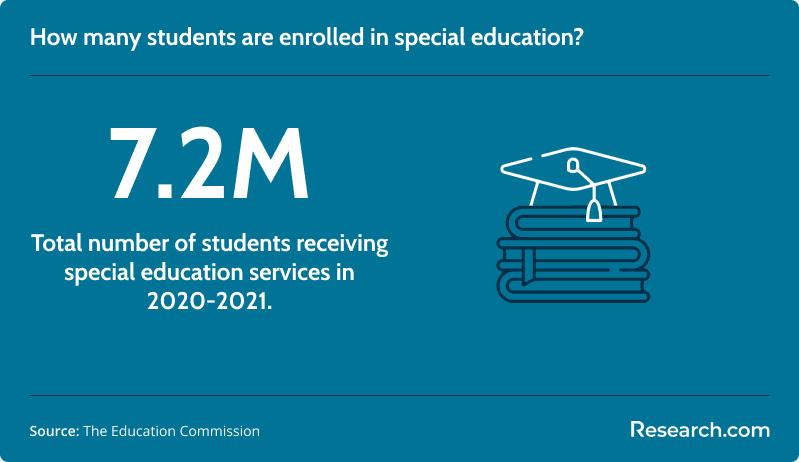
- Special Education Teacher: Special education teachers support students with disabilities and varied learning needs. Education data indicates an 11% increase in the number of students receiving special education services, rising from 6.5 million in 2009-2010 to 7.2 million in 2020-2021.
- School Counselor: This career usually requires additional counseling education and state certification. School counselors support students with academic planning, social-emotional needs, and future preparation.
- Instructional Coordinator or Curriculum Specialist: These professionals design curriculum, train teachers, review instructional data, and support school improvement. Many positions require teaching experience and often a master’s degree.
- Educational Consultant: Consultants may work with schools, families, nonprofits, districts, or education companies. This path usually requires strong classroom experience, specialized knowledge, and sometimes advanced preparation such as affordable online educational leadership programs.
What is the job market for graduates with a teaching degree?
The job market for teaching graduates is generally steady, with good demand in many regions and stronger opportunities in certain licensure areas. Hiring conditions depend on location, school funding, district staffing needs, subject area, grade level, and willingness to work in hard-to-staff schools.
K-12 teaching remains a stable employment field in many communities, especially where population changes, retirements, or persistent shortages create openings. Urban, suburban, rural, and lower-income schools may experience very different staffing conditions.
STEM, special education, and ESL are often stronger-demand areas because districts frequently need teachers with specialized preparation. Special education roles are especially important as schools serve students with a wide range of learning, developmental, emotional, and physical needs.
Teaching graduates with instructional technology, online learning, curriculum design, assessment, or data skills may also find opportunities beyond traditional classrooms. Education companies, online learning platforms, tutoring providers, nonprofits, and training organizations may hire candidates for instructional design, curriculum, student support, or learning operations roles.
The strongest candidates usually combine licensure, practical classroom experience, clear communication, adaptability, and a willingness to work where schools have the greatest staffing needs.
How can emerging technologies enhance teaching degree programs?
Technology is now central to teacher preparation. Programs may use virtual simulations, learning management systems, adaptive learning tools, digital assessment platforms, video-based feedback, online collaboration tools, and classroom data systems. These technologies help teacher candidates practice instruction, review student progress, and prepare for blended or technology-rich learning environments.
Teachers do not need to become programmers, but they do need digital fluency. Future educators should know how to choose tools responsibly, protect student privacy, support accessibility, evaluate digital resources, and design clear online learning experiences. Educators interested in digital learning design can compare an online user experience design degree with education technology pathways to decide which better fits their goals.
Key Insights
- The easiest teaching degree depends on your destination. An associate degree may be the most accessible route into education support roles, while early childhood or elementary education bachelor’s programs are often more manageable licensure-focused options for future classroom teachers.
- Speed should never be the only deciding factor. Public school teaching typically requires state-approved preparation, supervised fieldwork, student teaching, licensure exams, and background checks.
- A significant decline of nearly 30% was observed in the number of individuals completing elementary education degrees between 2009-2010 and 2019-2020.
- The number of individuals earning bachelor's degrees in education in 2019-2020 was 17% lower than it was in 2009-2010.
- Education data indicates an 11% increase in the number of students receiving special education services, rising from 6.5 million in 2009-2010 to 7.2 million in 2020-2021.
- Between 2012 and 2019, the number of assistant teachers grew by 51%, while the number of teachers increased by only 27%.
- The median annual salary for K-12 public school teachers in the U.S. is around $61,000, with elementary and middle school teachers earning $63,670, while high school teachers earn $65,220.
- Online teaching degrees can be more flexible than campus programs, but they still usually require in-person observations, practicum hours, or student teaching. Confirm field placement support before enrolling.
- Accreditation and state approval are essential. A program that is not aligned with your state’s licensure rules may not qualify you for the teaching job you want.
- The strongest program choice balances affordability, transfer credit acceptance, licensure eligibility, student teaching support, exam preparation, and a realistic schedule.
What graduates say about manageable teaching degree pathways
I wanted a teaching program that allowed me to keep working while building classroom skills. The workload still required discipline, but the structure helped me stay organized, and the practical assignments connected directly to teaching. Selma
As a career changer, I needed clear expectations and consistent support. The program was challenging, but the advising and course organization made it much easier to keep moving forward. Mike
The flexible schedule helped me complete coursework without putting the rest of my life on pause. I valued the focus on classroom-ready skills instead of theory alone. Laura
References:
- Bureau of Labor Statistics (2023). Kindergarten and elementary school teachers.
- Bureau of Labor Statistics (2023). High school teachers.
- Center for the Study of Child Care Employment (2024). The early childhood educator workforce: About the early childhood workforce.
- Education Commission of the States (2019). Transforming the education workforce: Executive summary.
- Education Commission of the States. (n.d.). Transforming the education workforce.
- Government Accountability Office. (2023). Teacher shortages: A persistent challenge for schools serving low-income students, minorities, and students with disabilities.
- Putman, H. and Walsh, K. (2021). Driven by Data: Using licensure tests to build a strong, diverse teacher workforce. National Council on Teacher Quality.
Other Things You Should Know About the Easiest Teaching Degrees
In 2027, an Associate of Arts in Early Childhood Education is often considered the most accessible teaching degree. This program is available at many community colleges and provides a good stepping stone into the field without the lengthy commitment of a bachelor's program.
The easiest route is usually an associate or bachelor’s teacher-preparation program, but the most common bachelor’s degree in education requires about 120 semester credit hours. Many states also require 12–16 weeks of supervised student teaching before licensure through the state education department.
The admission requirements for the easiest teaching degree in 2027 typically include a high school diploma or equivalent, a minimum GPA, and sometimes a background check. Specific programs might require an entrance exam or recommendation letters. Check individual institutions for detailed criteria.


