2027 Best Online General Studies Degrees for Students Seeking Employer-Friendly Credentials

Co-Founder and Chief Data Scientist
Choosing a flexible bachelor's degree can be hard when you need employer-friendly credentials but do not want to restart college from scratch. BLS data shows workers with a bachelor's degree had median weekly earnings of $1,543 in 2024, compared with $930 for high school graduates, making degree completion a practical career move for many adults.
This guide explains how online general studies degrees work, which programs stand out, what they cost, and how to choose one that fits your transfer credits, schedule, and career goals.
Key Things You Should Know
- Online general studies degrees are best for students with varied transfer credits, career changers, military learners, and adults who need a regionally accredited bachelor's credential rather than a tightly prescribed major.
- College Board's 2024 pricing data lists average public four-year in-state tuition and fees at $11,610, while private nonprofit four-year tuition and fees average $43,350 before aid.
- Employer value depends less on the words "general studies" and more on accreditation, relevant concentrations, measurable skills, internships, certifications, and whether the program accepts enough transfer credit to lower total cost.
What is an online general studies degree and how does it work?
An online general studies degree is a broad associate or bachelor's program that combines general education, upper-division electives, and one or more focus areas such as business, communication, social science, health administration, technology, humanities, or public service. At the bachelor's level, it is often designed for students who have already earned college credits but do not fit neatly into a single traditional major.
The format is usually fully online or mostly online. Courses may be asynchronous, meaning you complete weekly modules on your own schedule, or synchronous, meaning you attend live virtual meetings. Many programs include an academic advisor who helps you build a degree plan from previous coursework, required core classes, and career-focused electives.
General studies is not the same as "undecided." A strong program asks you to create an intentional academic pathway, often through concentrations, minors, a capstone, or a portfolio. If your main priority is finding the easiest bachelor degree to get online, be careful: the best choice is not always the easiest one, but the one that lets you graduate efficiently with a transcript employers can understand.
The table below shows how common online general studies credentials differ. This helps you decide whether you need a short completion pathway or a full bachelor's credential for advancement:
| Credential | Typical purpose | Best fit | Employer signal |
| Associate in General Studies | Complete lower-division college credits and transfer later | Students starting college or returning after a long break | Shows college-level communication, quantitative reasoning, and persistence |
| Bachelor of General Studies | Turn diverse transfer credits into a completed bachelor's degree | Adults with previous credits, military learners, and working students | Shows bachelor's-level completion plus broad interdisciplinary training |
| Bachelor of Interdisciplinary Studies | Combine two or more structured academic areas | Students with a defined cross-field goal, such as business plus communication | Shows intentional breadth and the ability to connect fields |
| Bachelor of Liberal Studies | Build a broad arts, humanities, social science, or professional studies pathway | Students seeking graduate school preparation or broad professional roles | Shows writing, analysis, research, and adaptable reasoning skills |
Are online general studies degrees respected by employers and worth it for careers?
Yes, an online general studies degree can be respected by employers when it comes from an institutionally accredited college and is presented as a coherent credential. Employers typically care about whether the school is legitimate, whether the degree is completed, and whether your coursework, experience, and skills match the role.
The degree is often worth it for students who already have credits and need a bachelor's degree to qualify for promotions, management tracks, federal jobs, corporate training programs, or graduate school prerequisites. It is less ideal for careers that require a specific accredited major, such as nursing, engineering, accounting licensure preparation, teacher certification, or clinical counseling.
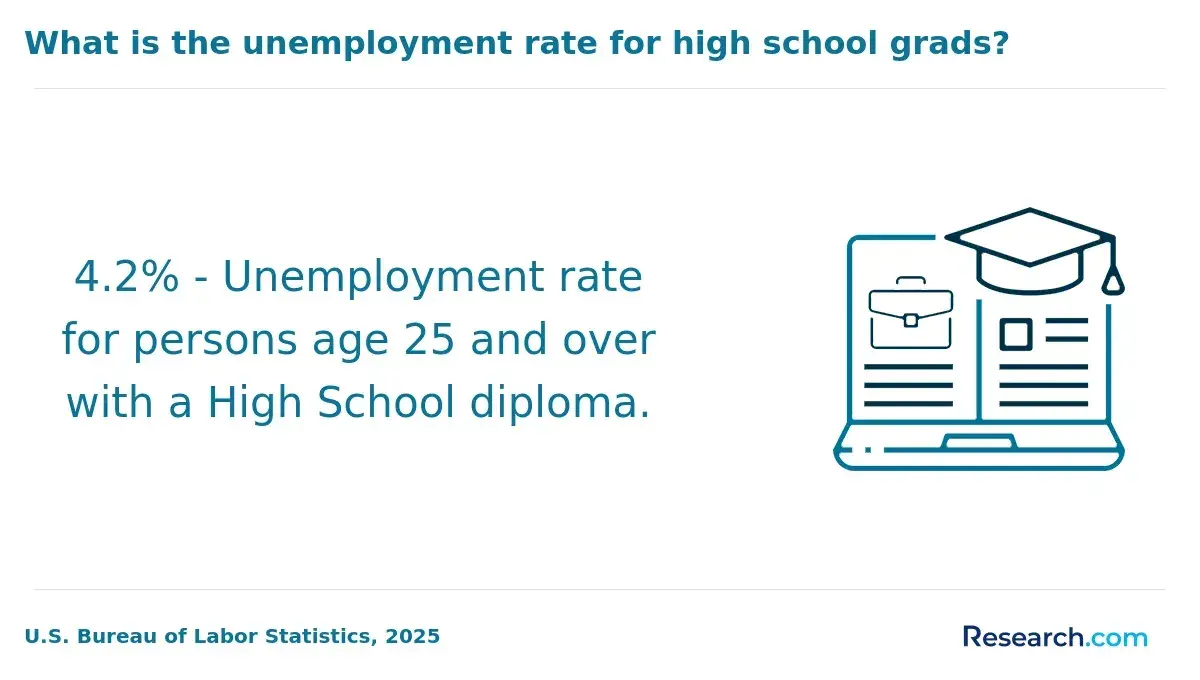
BLS 2024 education data is useful here: bachelor's degree holders had a lower unemployment rate than workers whose highest credential was a high school diploma. That does not mean a general studies degree guarantees a job, but it does show why finishing a bachelor's credential can remove screening barriers in many fields.
Think of employer value in three layers. The diploma gets you through degree filters, the concentration helps explain your direction, and the evidence you build through projects, work experience, certifications, or internships helps prove job readiness. A general studies graduate applying for operations, HR, sales, nonprofit, government, or customer success roles should tailor the degree toward the target field rather than listing it as a vague all-purpose major.
Before choosing this degree, use the following decision filter. It helps you separate strong use cases from situations where a specialized major is safer:
- Choose general studies if you have many transfer credits, need a bachelor's degree for advancement, and can build a concentration aligned with a realistic career target.
- Consider a specialized major if your goal has strict prerequisite courses, licensure rules, professional accreditation requirements, or technical skill expectations.
- Strengthen employer perception by adding a capstone project, internship, industry certificate, writing sample, data project, or supervisor-backed work achievement.
- Avoid programs that let you choose random electives without advising, because a scattered transcript can be harder to explain in interviews.
Which accredited schools offer the best online general studies programs in the U.S.?
The best online general studies program is not the same for every student. A strong option should be institutionally accredited, transfer-friendly, transparent about total cost, and structured enough to produce a clear career story.
The schools below are examples of U.S. institutions known for online bachelor's completion pathways in general studies, interdisciplinary studies, liberal studies, or closely related fields.
This comparison focuses on practical fit rather than a one-size-fits-all ranking. Use it to identify the kind of program model that matches your credits, budget, and career direction:
| School | Online program type | Why it stands out | Best for |
| Indiana University Online | Bachelor of General Studies | Large public university system, multiple academic areas, and a degree-completion orientation | Students who want a recognizable public university credential with flexible upper-level options |
| University of Missouri Online | Bachelor of General Studies | Interdisciplinary structure and access to courses across a major public university | Transfer students who want to combine prior credits into a coherent bachelor's plan |
| University of North Dakota | Bachelor of General Studies | Established online learning infrastructure and broad elective flexibility | Adults seeking a flexible public university pathway |
| Fort Hays State University | Bachelor of General Studies | Known for online affordability among public universities and multiple concentration options | Cost-conscious students who still want structured areas of emphasis |
| University of Louisiana Monroe | Bachelor of General Studies | Online completion format with concentration-style planning | Students who want an applied, transfer-friendly public university option |
| Southern New Hampshire University | Bachelor of Arts in General Studies | Frequent online start dates and adult-learner support systems | Students who value scheduling flexibility and centralized online advising |
When comparing these or other schools, check the current catalog, tuition page, transfer evaluation policy, and accreditation status before applying. Program names and delivery formats can change, and some schools may offer similar degrees under "interdisciplinary studies," "liberal studies," "professional studies," or "integrated studies."
How do online general studies programs compare to campus-based options for flexibility and support?
Online general studies programs usually offer more scheduling flexibility than campus-based programs, especially for students balancing full-time work, caregiving, military service, or irregular shifts. Campus-based programs may provide easier access to in-person networking, labs, student organizations, and local internships. The better choice depends on how much structure and face-to-face support you need.
Many adults choose online general studies because they are not trying to "experience college" in the traditional sense; they are trying to finish efficiently. Still, online learning requires consistent self-management. If you struggle without fixed class times, an online program with live sessions, proactive advising, and tutoring may be safer than a fully self-paced format.
The table below summarizes the trade-offs that matter most for degree-completion students. It can help you decide whether online convenience outweighs the benefits of campus access:
| Factor | Online general studies | Campus-based general studies | Decision point |
| Schedule | Often asynchronous with weekly deadlines | Usually fixed class times | Online is better for workers; campus is better if you need routine |
| Transfer planning | Often built for adult degree completion | May be less flexible if courses are term-limited | Online can be stronger when prior credits are central to the plan |
| Support | Virtual advising, tutoring, library access, and career services | In-person advising, tutoring centers, and faculty access | Ask how often advisors proactively contact online students |
| Networking | Discussion boards, virtual events, and online career platforms | Campus events, local employer visits, and student groups | Campus may help more if you need local professional connections |
| Technology | Requires reliable internet and learning-management-system comfort | Still uses digital tools but less dependent on remote access | Online students should test platform demos before enrolling |
A common mistake is assuming online means unsupported. Reputable online programs should offer academic advising, accessibility services, writing help, library databases, financial aid counseling, and career services. If a school cannot clearly explain how online students receive help, treat that as a warning sign.
What courses and concentrations are typically included in an online general studies curriculum?
An online general studies curriculum usually includes general education, upper-division electives, concentration courses, and a capstone. The strongest programs make the concentration visible on your advising plan, even if it does not appear as a separate major on the diploma.
Common courses include writing, public speaking, college algebra or statistics, humanities, social science, natural science, ethics, leadership, research methods, project management, information literacy, and a senior seminar. Many programs also let students group electives into applied focus areas.
Concentrations vary by school, but the options below are common enough to compare. The goal is to choose a track that gives your degree a recognizable professional direction:
| Concentration area | Typical courses | Career direction | Best paired with |
| Business and leadership | Management, marketing, organizational behavior, business communication | Operations, sales, customer success, HR support, supervision | Excel, project management, CRM, or HR certificate |
| Communication | Professional writing, persuasion, media writing, public relations | Marketing coordination, communications assistant, training support | Portfolio samples and analytics tools |
| Social science | Psychology, sociology, public policy, research methods | Human services, case support, community programs, government roles | Volunteer work, nonprofit experience, or data literacy |
| Technology and data basics | Information systems, data analysis, cybersecurity foundations, statistics | Business analyst support, operations reporting, technical coordinator roles | Spreadsheet, SQL, analytics, or help desk credentials |
| Humanities and culture | History, literature, ethics, philosophy, language, global studies | Writing, education support, public service, cultural organizations | Writing portfolio, language proficiency, or teaching-related experience |
If you discover that you need deeper quantitative preparation, a general studies plan may not be enough. For example, students targeting analytics, actuarial work, or graduate study in a quantitative field may be better served by an online bachelor in mathematics or a more technical major.
To make the curriculum employer-friendly, plan your electives backward from job postings. Identify repeated skills, then choose courses and projects that let you demonstrate those skills. A capstone on process improvement, community needs assessment, training design, or market research can become interview evidence if it is connected to your target field.
What are the admission requirements and transfer credit policies for online general studies?
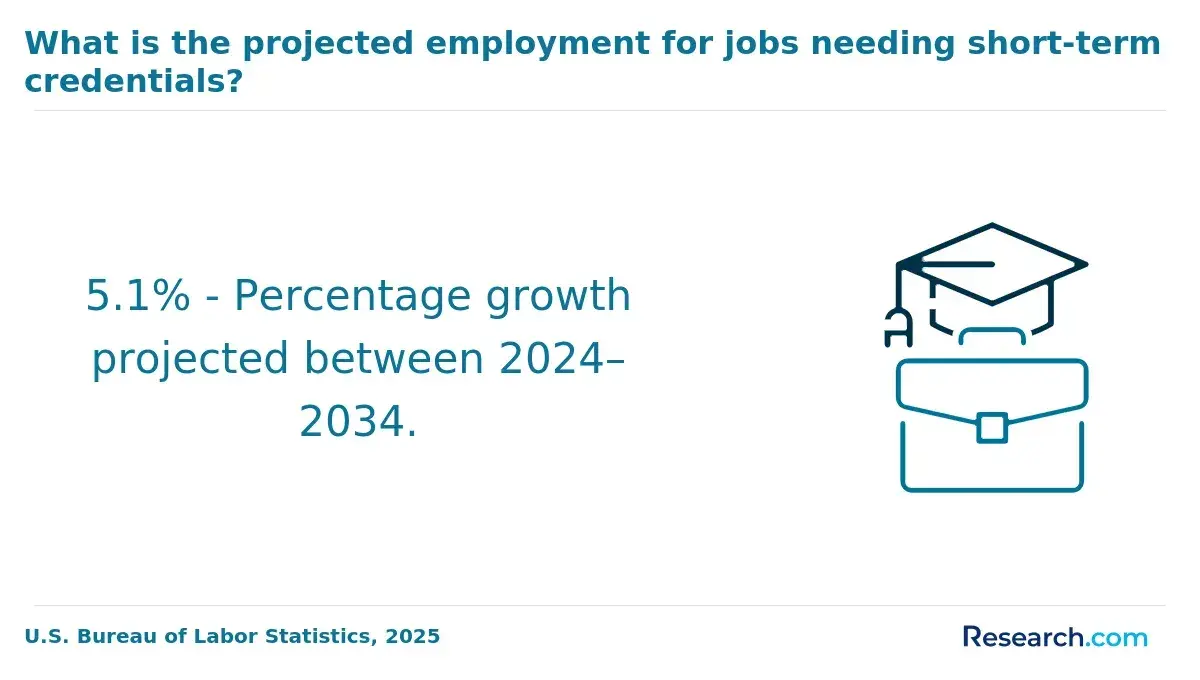
Admission requirements are usually accessible, but they vary by degree level and institution. Associate programs often require a high school diploma or equivalent. Bachelor's completion programs may require prior college credit, a minimum GPA, official transcripts, and sometimes a certain number of transferable credits before upper-division enrollment.
Transfer credit policy is one of the biggest ROI factors in general studies. A program that accepts more of your previous coursework can shorten your timeline and reduce tuition, while a restrictive policy may force you to repeat credits. Ask for an official transfer evaluation before you commit financially.
Most schools evaluate several types of prior learning. The list below shows what to ask about before enrolling because each category can affect time to completion:
- Regionally accredited college credits, including older credits and courses from community colleges.
- Military training evaluated through ACE recommendations or Joint Services Transcript review.
- Credit by exam, such as CLEP, DSST, AP, or school-approved challenge exams.
- Professional certifications, corporate training, police academies, fire academies, or healthcare training evaluated under institutional policy.
- Prior learning assessment portfolios that document college-level learning from work or life experience.
Military-connected students should also ask about tuition assistance, VA education benefits, deployment flexibility, and whether the school has staff trained in military credit evaluation.
Students comparing language-focused pathways may find related planning guidance in resources on online Spanish degrees for veterans, especially when deciding how prior service, language skills, and transfer credit can fit into an online degree plan.
Do not rely on a verbal estimate alone. Request a written degree audit showing accepted credits, remaining requirements, residency requirements, upper-division credit minimums, general education gaps, and the exact courses still needed to graduate.
How long does it take to finish an online general studies degree and what does it cost?
A full bachelor's degree typically requires about 120 semester credits, while an associate degree often requires about 60. The actual timeline for online general studies students depends heavily on transfer credit. A student entering with 75 accepted credits may finish in 12 to 24 months, while a student starting from zero may need about four years of full-time study or longer part time.
Cost varies by school type, residency status, tuition model, fees, and how many credits you must complete after transfer evaluation. College Board's 2024 pricing data reported average published tuition and fees of $11,610 for in-state students at public four-year institutions and $43,350 at private nonprofit four-year institutions. Online students may pay different rates, but those figures provide a useful benchmark when judging whether a program is truly affordable.
The table below organizes the major cost drivers. Use it to estimate total cost rather than comparing tuition per credit in isolation:
| Cost factor | How it affects total price | What to verify |
| Accepted transfer credits | More accepted credits usually mean fewer courses to pay for | Written transfer audit before enrollment |
| Per-credit tuition | Determines the base cost of remaining credits | Whether online students pay in-state, out-of-state, or special online rates |
| Mandatory fees | Technology, distance learning, graduation, and course fees can add up | Full fee schedule, not just tuition |
| Books and materials | Open educational resources can lower costs | Estimated textbook and software costs by course |
| Pace and withdrawals | Repeating or dropping courses can increase cost and delay completion | Refund deadlines and satisfactory academic progress rules |
| Financial aid eligibility | Accredited degree programs may qualify for federal aid if the school participates | FAFSA eligibility, grant options, employer tuition assistance, and scholarship rules |
To reduce cost safely, follow a sequence rather than enrolling first and solving problems later. These steps are especially important for adult students returning with old credits:
- Collect official transcripts from every college you attended, even if you completed only one course.
- Apply to more than one transfer-friendly program so you can compare written credit evaluations.
- Calculate total remaining credits multiplied by tuition and fees, not just the advertised per-credit price.
- Ask whether community college courses, CLEP exams, or prior learning assessment can satisfy remaining lower-division requirements.
- Confirm financial aid eligibility and employer reimbursement rules before your first term begins.
What careers can you pursue with an online general studies degree?
A general studies degree can support many roles that require a bachelor's degree but do not mandate a specific major. It is most useful in fields where communication, problem-solving, customer service, leadership, research, and coordination matter as much as specialized technical training.
Common paths include business operations, sales, human resources support, training coordination, nonprofit administration, government program support, communications, customer success, and entry-level management. The degree can also help working adults qualify for internal promotions when their experience already proves industry knowledge.
The table below connects broad career directions with typical responsibilities. Use it to identify where your concentration and work experience should point:
| Career area | Typical roles | What you may do | How to strengthen the degree |
| Business operations | Operations coordinator, administrative services assistant, project coordinator | Track processes, coordinate teams, prepare reports, support workflow improvements | Add project management, spreadsheet, and data visualization skills |
| Human resources and training | HR assistant, recruiting coordinator, training coordinator | Support hiring, onboarding, employee records, and learning programs | Add HR coursework, employment law basics, and presentation experience |
| Sales and customer success | Account coordinator, customer success associate, sales representative | Manage client communication, solve service issues, support renewals, track accounts | Add CRM experience, negotiation practice, and product knowledge |
| Nonprofit and public service | Program assistant, community outreach coordinator, case support specialist | Coordinate services, document outcomes, communicate with stakeholders | Add grant writing, volunteer experience, and cultural competency training |
| Communications | Communications assistant, content coordinator, public relations assistant | Write internal updates, manage content calendars, support campaigns | Build a portfolio with writing samples and campaign metrics |
If your main goal is a business-specific career, compare general studies with more targeted programs from online business schools. A business degree may be stronger for accounting, finance, supply chain, or formal management tracks, while general studies may be better if you already have experience and need a faster bachelor's completion route.
AI and automation are changing entry-level work by reducing some routine administrative tasks and increasing demand for digital fluency. General studies students should not rely on broad coursework alone. Add practical skills such as spreadsheet modeling, AI-assisted research ethics, customer relationship management systems, writing for digital channels, and basic data interpretation.
What salaries and job outlook can general studies graduates expect in different fields?
Salary outcomes for general studies graduates vary widely because the degree can lead into many fields. Your pay will depend on industry, location, previous experience, internships, technical skills, and whether the role requires a bachelor's degree. Use occupational wage data as a market reference, not as a promise.
BLS May 2024 wage data gives a clearer picture of the broad occupational groups that general studies graduates may enter.
The table below uses median annual wages for occupational groups rather than claiming a single "general studies salary," which would be misleading:
| Field | Relevant occupational group | May 2024 median annual wage | How to interpret it |
| Business operations, HR, and finance support | Business and financial operations occupations | $80,920 | Higher-paying roles usually require field-specific skills, analytical ability, or experience |
| Management track roles | Management occupations | $122,090 | This figure often reflects experienced managers, not typical entry-level outcomes |
| Community programs and social services | Community and social service occupations | $58,380 | Mission-driven roles may value experience, but some advanced roles require specialized degrees |
| Education support and training | Educational instruction and library occupations | $61,660 | Licensed teaching roles usually require state-approved preparation, not just general studies |
| Office and administrative pathways | Office and administrative support occupations | $47,990 | A bachelor's degree may help advancement, but routine roles can face automation pressure |
Job outlook also depends on the field you enter. BLS employment projections for the 2024 to 2034 period generally show stronger prospects in areas tied to business analysis, healthcare administration support, social services, and technology-enabled operations than in routine clerical work. For general studies students, that means concentration choice and skill-building matter as much as the degree title.
To improve career value, pair the degree with a concrete skill stack. Examples include project coordination plus Excel, HR coursework plus recruiting software, communication courses plus content analytics, or public service coursework plus grant writing. The more clearly you can connect your coursework to employer needs, the less likely the degree will appear unfocused.
How can you choose a reputable, accredited online general studies program safely?
Start with accreditation. A reputable online general studies program should be offered by a college or university with institutional accreditation recognized by the U.S. Department of Education or the Council for Higher Education Accreditation. Accreditation affects credit transfer, graduate school eligibility, employer recognition, and federal financial aid participation.
Next, evaluate fit. A low tuition rate is helpful, but it does not automatically make a program the best value. A slightly higher-cost school that accepts more transfer credits, offers stronger advising, and helps you build a career-relevant concentration may cost less in the end.
Use the following checklist before enrolling. It is designed to catch the most common mistakes students make when choosing online degree-completion programs:
- Verify institutional accreditation through an official accreditation database, not only the school's marketing page.
- Request a written transfer evaluation showing accepted credits, remaining requirements, and estimated graduation timeline.
- Confirm that online students receive advising, tutoring, library access, accessibility services, financial aid counseling, and career support.
- Ask whether the program allows concentrations, minors, certificates, internships, capstones, or portfolios that make the degree more career-specific.
- Compare total program cost after transfer credit, fees, books, and aid rather than focusing only on per-credit tuition.
- Check whether the degree meets any graduate school, employer, military, or licensure prerequisites relevant to your goal.
- Avoid schools that use high-pressure enrollment tactics, vague accreditation language, unclear tuition pages, or promises of guaranteed jobs.
Finally, ask admissions advisors specific questions instead of broad ones. For example, "How many of my credits apply to upper-division requirements?" is more useful than "Do you accept transfer credits?" Likewise, "What jobs have recent general studies graduates pursued?" is stronger than "Is this degree worth it?"
The safest choice is a program that lets you graduate with a recognized bachelor's credential, a clear academic focus, manageable debt, and evidence of practical skills. If a school cannot show how those pieces fit together, keep comparing options.
Other Things You Should Know About General Studies
Yes, students enrolled in a 2027 online general studies program often have the flexibility to switch to a specialized major. However, policies vary by institution, so it's important to consult academic advisors for guidance on transferring credits and meeting the new major's requirements.
Most online general studies degrees do not require an internship or practicum. Programs usually focus on general education, electives, and core skills, though some schools allow optional experiential learning. If an internship is included, it is often supervised locally and may require department approval before enrollment.
It can be useful for exploration, but it is strongest when used intentionally. If you are early in college and still deciding, meet with an advisor to avoid collecting unrelated credits that may not support a clear career or transfer plan.
References
- Best Online Colleges for Working Adults [2026] https://www.straighterline.com/blog/degree-completion-best-online-colleges-for-working-adults
- Online Bachelor's Degree: General Studies https://www.umgc.edu/online-degrees/bachelors/general-studies
- 7 Reasons to Pursue an Online Degree Program | University of Bridgeport https://www.bridgeport.edu/news/why-high-school-students-are-looking-to-online-degree-programs/
- General Studies Degree Jobs: 10 Careers + Salaries (2026) | Extern https://www.extern.com/post/general-studies-degree-jobs-career-guide
- How to Earn Your General Education Requirements Online | Onlinedegrees.com https://www.onlinedegrees.com/general-education/
- Best Online Universities With Generous Transfer Credit Policies https://www.collegetransitions.com/blog/best-online-universities-with-generous-transfer-credit-policies/
- Online Degree vs. Traditional: Choosing the Right Path https://beal.edu/online-degree-vs-traditional/
- How Online College Degree Programs Can Transform Your Life https://www.tuw.edu/school-news/online-degree-programs-transform-your-life/