2027 Best Online General Studies Degrees for Students Seeking a Flexible Major

Co-Founder and Chief Data Scientist
Choosing a major is harder when your goals span business, communication, technology, public service, or career advancement. An online general studies degree can turn prior credits into a flexible bachelor's path without locking you into one narrow discipline.
The stakes are meaningful: the U. S. Bureau of Labor Statistics reported in 2024 that workers age 25 and older with a bachelor's degree had median weekly earnings of $1,493 in 2023. This guide explains how online general studies programs work, how to compare accredited schools, what they cost, and which careers may fit after graduation.
Key Things You Should Know
- Online general studies degrees are best for transfer students, working adults, military learners, and undecided students who need a broad, customizable bachelor's degree rather than a tightly prescribed major.
- Cost varies widely: the National Center for Education Statistics' 2024 reporting shows average tuition and fees at public four-year colleges were far below private nonprofit averages, so residency, transfer credits, and fees can change total ROI.
- Career outcomes depend on how you shape the degree; BLS May 2024 wage data shows several bachelor's-level paths connected to communication, business, human resources, and project work have median salaries above many entry-level generalist roles.
What is an online general studies degree and who is it best suited for?
An online general studies degree is a broad undergraduate program that lets students combine courses from multiple fields instead of completing one traditional major such as accounting, biology, or psychology. At the bachelor's level, it usually includes general education courses, upper-division electives, and an interdisciplinary concentration or focus area.
The biggest advantage is flexibility. Students can often apply previous college credits, military training, professional learning, or community college coursework toward a degree plan that still meets institutional graduation requirements. That makes the major especially useful for adults who have credits from more than one school.
This degree is usually a strong fit for several types of students. The key is whether the program's flexibility supports a realistic goal rather than simply helping you finish any bachelor's degree.
- Transfer students with scattered credits: A general studies major may accept more electives than a traditional major, helping reduce time to completion.
- Working adults: Online, asynchronous courses can make it easier to study around job and family schedules.
- Military and veteran students: Some schools evaluate Joint Services Transcript credits and professional training for possible degree credit.
- Career changers: Students can combine courses in business, communication, data, leadership, or public service to support a new direction.
- Students planning graduate or professional study: The degree can work if prerequisite courses are carefully selected for the next program.
It is not the best choice for every goal. Students who need a highly technical or licensure-aligned path, such as nursing, engineering, accounting CPA preparation, or teacher certification, should verify whether a general studies plan satisfies those requirements. In many cases, a specialized major is the safer option.
| Student goal | General studies fit | Why it may or may not work |
| Finish a bachelor's degree with many transfer credits | Strong fit | Flexible elective space can help preserve credits that might not count in a traditional major. |
| Prepare for a licensed profession | Often limited | Licensure boards may require specific coursework, clinical hours, exams, or accredited professional programs. |
| Build broad workplace skills | Strong fit | Students can combine communication, leadership, business, technology, and social science courses. |
| Enter a highly technical field immediately | Mixed fit | Employers may prefer a specialized degree, portfolio, certification, or technical experience. |
How do online general studies programs compare to on-campus options?
Online and on-campus general studies programs usually lead to the same degree level, but the learning experience can feel very different. The best format depends on your schedule, learning style, access to campus services, and need for face-to-face networking.
Online programs are often designed for adult learners who need flexibility. Many use asynchronous courses, meaning students can watch lectures, complete assignments, and join discussions on their own weekly schedule. On-campus programs may offer more immediate access to faculty, student organizations, internships, and in-person advising.
| Comparison factor | Online general studies | On-campus general studies |
| Schedule flexibility | Usually stronger, especially with asynchronous courses | More fixed class times and commuting requirements |
| Networking | Can be strong if the program offers virtual career events and active discussion groups | Often easier through campus clubs, faculty office hours, and local events |
| Cost structure | May reduce commuting and housing costs but can include technology or distance-learning fees | May include campus fees, transportation, parking, and housing costs |
| Support services | Depends heavily on online advising, tutoring, library access, and career coaching quality | Often easier to access in person, though availability varies by campus |
| Best for | Working adults, caregivers, military learners, and students outside commuting distance | Students who want structured schedules, in-person interaction, or campus-based activities |
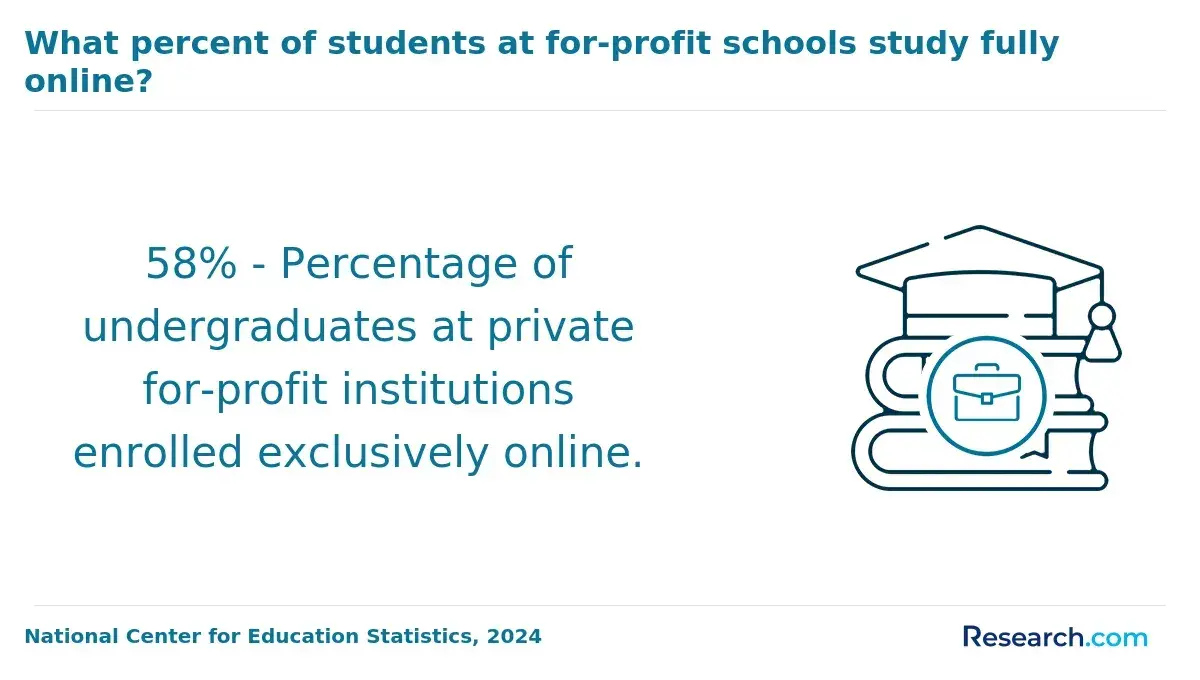
Online education is no longer a niche format. Federal education data released in 2024 continued to show that millions of U.S. college students take at least one distance education course, which means employers and universities are increasingly familiar with online learning. For the reader, the practical question is not whether the program is online, but whether it is accredited, well supported, and aligned with your career plan.
Common mistakes include choosing an online program only because it is convenient, overlooking mandatory synchronous sessions, or assuming every course will be available every term. Before enrolling, ask whether required courses rotate annually, whether exams require proctoring, and whether advising is available outside standard business hours.
Which accredited schools offer the best online general studies degrees?
The best online general studies degree is not the same for every student. A strong program should be institutionally accredited, transfer-friendly, transparent about total cost, and flexible enough to support a coherent academic or career focus.
The schools below are examples of accredited U.S. institutions that offer online or substantially online general studies, interdisciplinary studies, liberal studies, or closely related flexible bachelor's pathways. Use them as a comparison starting point rather than a universal ranking.
| School | Online degree option | Good fit for | What to verify |
| Indiana University Online | Bachelor of General Studies | Students who want a broad degree from a large public university system | Campus of record, tuition category, and upper-division course availability |
| Fort Hays State University | Bachelor of General Studies | Cost-conscious students seeking an established online public university option | Concentration choices and online course rotation |
| University of North Dakota | Bachelor of General Studies | Students who want a flexible public university bachelor's completion path | Residency requirements and transfer credit limits |
| Southern New Hampshire University | General studies or liberal arts-related online bachelor's pathways | Adult learners looking for frequent start dates and broad online support | Exact major title, transfer evaluation, and employer tuition partnership options |
| Eastern Kentucky University | Online general studies or individualized degree pathways | Students who want to combine prior coursework with career-focused electives | Program modality, concentration rules, and graduation requirements |
| University of Missouri Online | General studies or multidisciplinary online options, depending on campus | Transfer students who want a public research university system | Which campus grants the degree and whether all required courses are online |
If affordability is your main priority, compare general studies programs with related interdisciplinary options because the curriculum can overlap substantially. A guide to an online interdisciplinary studies degree ranking affordable can help you identify lower-cost flexible majors that may meet the same goal.
When comparing schools, do not rely only on brand recognition. A lesser-known public university with strong transfer policies and predictable online course scheduling may be a better fit than a high-profile institution that accepts fewer credits or charges higher out-of-state tuition.
What admissions requirements do online general studies programs typically have?
Admissions requirements vary by school and degree level, but online general studies programs are often built for transfer and adult learners. Many bachelor's completion programs expect applicants to have some prior college credit, while four-year online programs may admit first-time students directly.
Most applicants should be ready to provide academic records and basic enrollment documents. Some schools also request a personal statement or advising conversation to confirm that a general studies pathway fits the student's goals.
- High school diploma or GED: Required for first-time undergraduate admission and sometimes for transfer applicants.
- Official transcripts: Schools typically require transcripts from every college previously attended, even if credits are old or grades were low.
- Minimum GPA: Requirements vary, and some adult-focused programs offer conditional admission or academic renewal options.
- Transfer credit review: Advisors determine which prior courses apply to general education, electives, major requirements, or free electives.
- English proficiency documentation: Required for some applicants whose prior education was not in English.
- Technology readiness: Students may need reliable internet, a webcam, office software, and access to the school's learning management system.
Testing requirements are becoming less common for adult and transfer students, but policies differ. If you have fewer than 12 to 24 prior college credits, the school may evaluate you more like a first-year applicant.
A common mistake is applying before gathering every transcript. Missing transcripts can delay admission, financial aid packaging, and transfer evaluation. Before you pay an application fee, ask the admissions office whether they offer an unofficial transfer estimate and how long the official evaluation usually takes.
How long does it take to earn an online general studies degree and what does it cost?
A bachelor's degree typically requires about 120 semester credits. Full-time students starting from zero may need about four years, while transfer students with an associate degree or substantial credits may finish in one to two years if required courses are available online and offered frequently.
Cost depends on tuition rate, residency status, transfer credits, fees, books, technology requirements, and whether the school charges by credit or by term. The National Center for Education Statistics' 2024 reporting on undergraduate tuition and fees shows a large gap between public and private four-year averages, which is why public online programs and transfer-friendly policies can materially change total cost.
| Cost factor | Why it matters | How to evaluate it |
| Per-credit tuition | Small differences add up across 30 to 60 remaining credits | Compare online, in-state, out-of-state, and military rates separately |
| Transfer credits accepted | Accepted credits reduce both time and tuition | Request a written transfer evaluation before committing |
| Online fees | Technology, proctoring, and distance-learning fees can raise the real price | Ask for a total cost estimate, not just tuition |
| Course availability | Delayed courses can add semesters | Review a degree map and course rotation schedule |
| Financial aid eligibility | Accredited programs may qualify for federal aid if the student is eligible | Confirm institutional accreditation and complete the FAFSA if applicable |
Students who want to finish faster should compare credit loads carefully. Accelerated bachelor degree programs can be attractive, but the trade-off is workload: shorter terms often require more weekly reading, writing, and project time.
To estimate your timeline, follow a simple sequence before enrolling.
- List every completed college course, exam credit, military credit, and professional training record.
- Ask each school for a preliminary transfer review and degree plan.
- Compare how many credits remain, not just how many credits are accepted.
- Check whether required upper-division courses are offered every term or only once per year.
- Calculate total tuition, fees, books, and lost income risk if you need to reduce work hours.
What courses and concentrations are common in online general studies majors?
General studies programs usually combine a broad liberal education with a student-designed or school-defined focus area. The curriculum is meant to build adaptable skills: writing, analysis, quantitative reasoning, ethical decision-making, communication, and problem-solving across disciplines.
Common course categories include foundational general education and upper-division electives. The exact mix depends on the school's graduation requirements and the concentration you choose.
| Course area | Common subjects | Skill developed |
| Communication | Professional writing, public speaking, digital communication | Clear workplace communication and presentation |
| Social sciences | Psychology, sociology, political science, anthropology | Human behavior, institutions, and social analysis |
| Business and leadership | Management, organizational behavior, marketing, entrepreneurship | Team leadership, planning, and operational thinking |
| Data and technology | Statistics, information systems, data literacy, computer applications | Evidence-based decision-making and digital fluency |
| Humanities | Ethics, history, literature, philosophy | Critical thinking, cultural understanding, and argumentation |
| Capstone or portfolio | Applied project, research paper, professional portfolio | Integration of learning into a career-relevant outcome |
Many students use concentrations to make the degree more marketable. For example, a student aiming for office management might combine business, communication, and project management courses, while a future nonprofit professional might choose public administration, sociology, and grant writing.
If you are leaning toward business roles, compare a general studies concentration with online business degree programs accredited. A business major may be more direct for accounting, finance, or management-track roles, while general studies may be better if you need maximum transfer flexibility.
Because AI tools are changing entry-level office, writing, research, and analytics tasks, students should look for courses that require applied projects rather than only exams. Useful additions include data literacy, spreadsheet modeling, business communication, prompt evaluation, ethics of technology, and portfolio-based capstones.
How do accreditation and transfer credits work for online general studies programs?
Accreditation is one of the most important quality checks for degree programs. For most students, the baseline requirement is institutional accreditation from an agency recognized by the U.S. Department of Education or the Council for Higher Education Accreditation. This affects federal financial aid eligibility, credit transfer, graduate school admission, and employer confidence.
Programmatic accreditation is usually less central for general studies than it is for fields such as nursing, engineering, education, social work, or accounting. However, if you plan to use your electives to prepare for a licensed or regulated career, you still need to confirm whether the coursework meets external requirements.
Transfer credit policies deserve close attention because they can determine whether a general studies degree saves you time or costs more than expected. Schools may accept a course as transfer credit but apply it only as a free elective, which may not reduce the number of required courses you still need.
| Transfer issue | What it means | Why it affects your decision |
| Maximum transfer limit | The school caps how many outside credits can count | You may still need to complete a minimum number of credits at the degree-granting institution |
| Residency requirement | A required number of credits must be earned from the school | This can affect timeline even if many credits are accepted |
| Upper-division requirement | Some credits must be junior- or senior-level | Community college credits may not satisfy all advanced requirements |
| Age of credits | Older coursework may receive different treatment | Technology, business, and science courses may be reviewed more strictly |
| Prior learning assessment | Credit may be awarded for exams, portfolios, military learning, or professional training | This can reduce cost if the school has clear, affordable assessment policies |
To avoid problems, ask for written answers to a few specific questions before enrolling.
- Is the institution currently accredited, and by which recognized accreditor?
- How many of my credits apply directly to degree requirements, not just total electives?
- What is the minimum number of credits I must complete at this school?
- Will any credits expire or need departmental review?
- Can I change concentrations later without losing progress?
- Will this degree meet prerequisites for the graduate program, certificate, or professional pathway I am considering?
What careers can you pursue with an online general studies degree?
A general studies degree does not point to one single occupation. Instead, it can qualify students for bachelor's-level roles where employers value communication, problem-solving, organization, customer service, leadership potential, and the ability to learn across functions.
The strongest outcomes usually come from pairing the degree with a focused set of electives, internships, work experience, certifications, or a portfolio. A student who simply takes unrelated courses may have a harder time explaining the degree to employers than a student who built a coherent concentration around business operations, human services, communication, or data.
| Career direction | Typical responsibilities | Helpful degree focus |
| Administrative or operations coordinator | Scheduling, documentation, vendor coordination, office processes, reporting | Business, communication, project management |
| Human resources assistant or specialist pathway | Recruiting support, onboarding, employee records, training coordination | Psychology, business, organizational communication |
| Project coordinator | Tracking deliverables, communicating with stakeholders, maintaining timelines | Management, data literacy, technical writing |
| Marketing or communications assistant | Content support, campaign coordination, research, social media scheduling | Writing, digital media, marketing, analytics |
| Nonprofit or community program coordinator | Program logistics, outreach, client support, grant documentation | Public administration, sociology, communication |
| Customer success or account support | Client onboarding, problem resolution, product education, relationship management | Communication, business, technology basics |
Students who want more specialized careers should plan backward. For example, data analyst roles may require statistics, SQL, Python, or portfolio projects; teacher licensure may require an approved educator preparation program; and accounting roles may require specific accounting credits. A general studies degree can support these goals only if the curriculum is intentionally designed around them.
To improve employability, students should build evidence of skill while earning the degree. Practical options include internships, employer-based projects, volunteer leadership, industry certificates, writing samples, data dashboards, or a capstone portfolio that connects coursework to a real workplace problem.
What salary ranges and job outlook can general studies graduates expect?
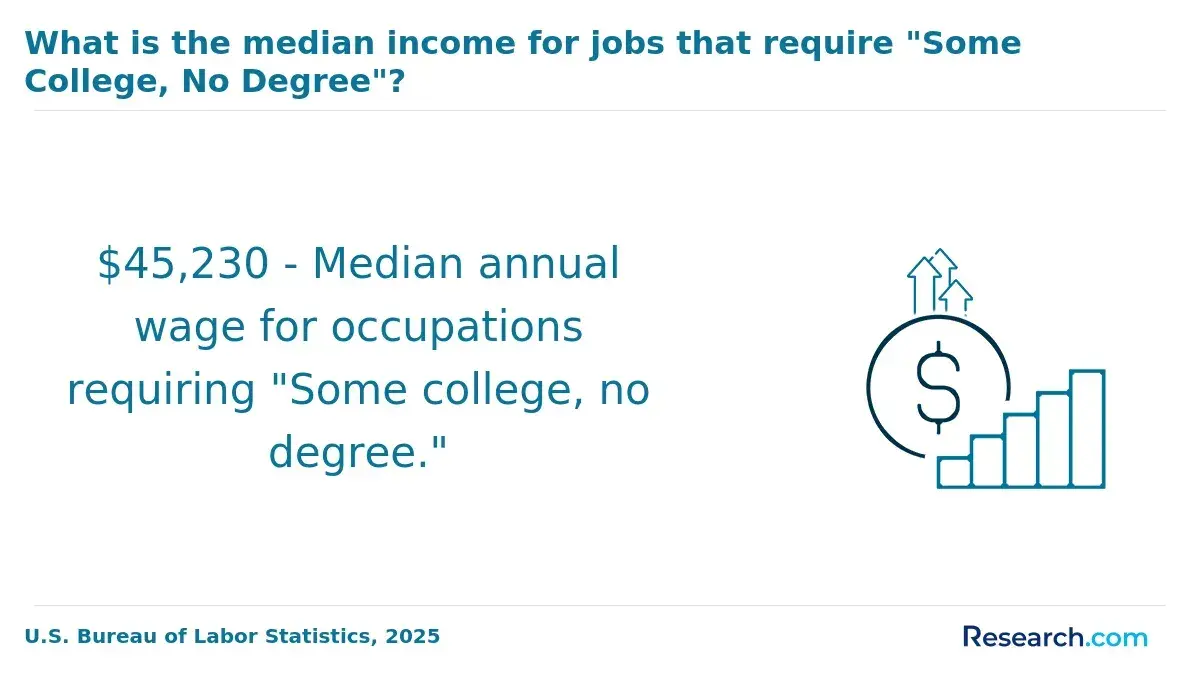
Salary outcomes for general studies graduates vary widely because the degree is broad. Employers typically pay for the role, industry, location, experience level, and demonstrated skills rather than the major title alone. For that reason, it is more useful to examine occupations that often value broad bachelor's-level preparation.
The table below uses U.S. Bureau of Labor Statistics May 2024 wage data and current occupational outlook information where available. These figures are not promises for graduates; they are national labor-market reference points that can help you compare possible directions.
| Occupation | Relevant connection to general studies | Median annual wage from BLS May 2024 data | Outlook context |
| Human resources specialists | Fits students with business, psychology, communication, and organizational coursework | $72,910 | Demand is supported by hiring, compliance, training, and workforce planning needs |
| Market research analysts | Fits students who add statistics, marketing, writing, and data interpretation | $76,950 | Projected growth is faster than average in BLS outlook data published in 2024 |
| Project management specialists | Fits students who build planning, communication, and operations experience | $100,750 | Opportunities vary by industry and often require experience or certification |
| Training and development specialists | Fits students with communication, education, HR, and technology coursework | $65,850 | Employer investment in reskilling and software adoption can support demand |
| Social and community service managers | Fits students focused on public service, nonprofit administration, or human services | $78,240 | Roles may require related experience and sometimes graduate education for advancement |
Students comparing ROI should be realistic. A general studies degree can help meet bachelor's requirements for many roles, but it may not compete with specialized degrees in high-paying technical fields unless you add targeted skills. If earnings potential is your top criterion, compare this major with guides to the top 10 highest paying degrees before committing.
AI and automation are also reshaping entry-level work. Routine administrative, research, and content tasks may become more automated, which makes adaptable human skills more important: judgment, communication, client interaction, ethical reasoning, process improvement, and the ability to use AI tools responsibly.
How can you choose a reputable, flexible online general studies program?
Choosing a general studies program requires more than finding the cheapest or fastest option. Because the major is flexible, you need to make sure that flexibility is structured enough to support graduation, employment, or graduate study.
A strong selection process starts with your goal. Decide whether you need the degree to finish quickly, qualify for promotion, prepare for graduate school, change careers, or build a specific skill set. Then compare programs based on how well they support that goal.
- Confirm institutional accreditation: Check the school's accreditation status and make sure it is current before applying.
- Request a transfer evaluation: Compare how many credits apply to requirements, not just how many credits the school accepts.
- Ask for a degree map: A clear plan should show remaining courses, course sequence, prerequisites, and expected graduation term.
- Compare total cost: Include tuition, online fees, books, proctoring, technology, transcript fees, and potential changes in work hours.
- Evaluate support services: Look for online tutoring, writing help, library access, career coaching, disability services, and responsive advising.
- Review concentration options: Make sure electives can form a coherent focus area that employers or graduate schools will understand.
- Check career outcomes carefully: Ask what services are available, but avoid schools that imply the degree guarantees a job or salary.
Red flags include unclear accreditation, aggressive enrollment pressure, vague transfer promises, missing tuition details, poor course availability, and no dedicated online advising. Another warning sign is a program that markets flexibility but cannot explain how your courses connect to a career path.
The best program is the one that helps you finish with a clear story: what you studied, what skills you built, and how the degree supports your next step. If you cannot explain that story before enrolling, keep comparing options.
Other Things You Should Know About General Studies
Transfer rules vary by university, but many regionally accredited online programs accept up to 90 credits toward a 120-credit bachelor’s degree. Lower-division general education and approved electives usually transfer first, while capstone, residency, and major-specific upper-division courses often must be completed at the degree-granting school.
Yes, if you meet the graduate program's admissions requirements. The important step is to complete any required prerequisites, maintain a competitive GPA, and build strong application materials related to your intended field.
Describe it as an interdisciplinary degree focused on your chosen theme, such as business operations, communication, public service, or data-informed decision-making. Use your resume to highlight projects, tools, internships, and measurable skills rather than only listing the major name.
References
- Online Bachelor's Degree: General Studies https://www.umgc.edu/online-degrees/bachelors/general-studies
- How to Choose Accredited Online Degrees for Career Growth https://thehorizonsunlimited.com/blog/how-to-choose-accredited-online-degrees-for-career-growth
- Importance of Accredited Online Degree Programs | TUW https://www.tuw.edu/school-news/importance-of-accredited-online-degree-programs/
- Online General Studies Degree | Programs & Career Options https://www.learnhowtobecome.org/best-online-bachelors-in-general-studies-degree-programs/
- Online Bachelor's in General and Liberal Studies Degree Programs (Liberal Arts Major) https://www.onlineeducation.com/liberal-arts/bachelors-in-general-studies-programs
- How to Choose an Online College in 10 Easy Steps https://www.straighterline.com/blog/choose-accredited-online-college-10-easy-steps
- General Studies Degree Jobs: 10 Careers + Salaries (2026) | Extern https://www.extern.com/post/general-studies-degree-jobs-career-guide
- Online Degree vs. Traditional: Choosing the Right Path https://beal.edu/online-degree-vs-traditional/
- Full Transfer Guide - OnlineDegree.com https://www.onlinedegree.com/full-transfer-guide/