2027 Online General Studies Degrees With Strong Professional Writing Training

Co-Founder and Chief Data Scientist
Choosing a flexible degree is harder when you also need marketable writing skills, not just a broad credential. An online general studies degree with professional writing training can help adults, transfer students, military learners, and career changers finish a bachelor's while building workplace-ready communication skills.
The timing matters: the U. S. Bureau of Labor Statistics reported a May 2024 median annual wage of $91,670 for technical writers, showing that specialized writing can carry real labor-market value. This guide explains programs, costs, courses, admissions, careers, and how to choose wisely.
Key Things You Should Know
- Strong programs combine broad general education with writing-intensive electives such as technical writing, business writing, editing, grant writing, digital content, or professional communication.
- Cost varies widely: College Board's 2024 Trends in College Pricing reported average published tuition and fees of $11,610 for in-state public four-year students and $43,350 at private nonprofit four-year institutions.
- Writing-focused outcomes are strongest when students graduate with a portfolio, internship or applied project experience, and skills in AI-assisted drafting, editing, audience analysis, and content strategy.
What is an online general studies degree with a strong professional writing focus?
An online general studies degree is usually a bachelor's completion or flexible interdisciplinary program that lets students combine credits from several fields. A strong professional writing focus means the student deliberately uses electives, concentrations, minors, certificates, or capstone projects to build practical writing ability for workplaces, not just academic essays.
This path is different from a traditional English major. English programs often emphasize literature, theory, and close reading, while professional writing focuses on clear communication for employers, clients, users, patients, donors, customers, or public audiences. Common writing applications include reports, proposals, web copy, instructions, policy summaries, newsletters, social media content, grants, training materials, and executive briefings.
The degree tends to fit students who have transfer credits, need maximum scheduling flexibility, or want to combine writing with another field such as business, healthcare, public service, technology, education, or nonprofit work. Students whose primary goal is literary scholarship, licensure-based teaching, journalism school, or graduate-level rhetoric research may be better served by a more specialized major.
For students primarily trying to finish affordably before adding writing electives, comparing an online general studies bachelor degree cheap can be a practical first step, especially if transfer credit policies will determine the real cost more than the advertised tuition rate.
At its best, this degree answers a common problem: "How do I turn scattered credits and broad interests into a completed bachelor's degree with a concrete professional skill?" The writing focus supplies that concrete skill, while the general studies structure supplies flexibility.
How does an online general studies program compare to campus-based options for writing training?
Online and campus-based general studies programs can both provide serious writing training, but they deliver it differently. The better choice depends on your schedule, need for peer feedback, access to internships, and how much structure you want from faculty and classmates.
The table below compares the decision factors that matter most for writing-focused students. Use it to decide whether convenience, interaction, campus resources, or pacing should carry the most weight in your search.
| Factor | Online general studies option | Campus-based option | Best fit |
| Writing feedback | Often delivered through learning platforms, annotated drafts, discussion boards, and virtual conferences | Often includes in-person workshops, office hours, and writing center visits | Online works for self-directed students; campus works for students who want more face-to-face critique |
| Schedule | Asynchronous or evening formats are common | Class meetings are tied to campus schedules | Online is usually better for working adults, caregivers, and military learners |
| Portfolio development | Can be built through digital projects, remote internships, workplace documents, and capstones | Can be built through student media, campus offices, and local placements | Both can work if the program requires polished, employer-facing writing samples |
| Networking | Requires intentional use of faculty meetings, LinkedIn, virtual events, and professional associations | Often easier through campus events, clubs, and local employers | Campus may help traditional-age students; online can work well for students already employed |
| Technology practice | Usually integrated into the learning experience through digital collaboration tools | Varies by course and instructor | Online may be stronger for remote-work communication habits |
One current trend affects both formats: AI writing tools have changed what "good writing training" should include. A reputable program should teach students how to draft, verify, revise, cite, and ethically use AI-assisted tools without outsourcing judgment, accuracy, or voice.
If your writing goals include data storytelling, technical documentation, or analytics-heavy communication, it may also be worth comparing an online math degree or adding quantitative coursework to a general studies plan.
What accredited schools offer online general studies degrees emphasizing professional writing?
Several accredited U.S. institutions offer online general studies, liberal studies, or interdisciplinary bachelor's degrees that can support a professional writing emphasis through concentrations, electives, minors, or closely related coursework. Because catalogs change, students should verify the current course list, delivery format, transfer policy, and accreditation status before applying.
The examples below are not a ranking. They show the kinds of accredited programs students can investigate when they want a flexible degree structure plus writing-heavy coursework.
| School | Relevant online degree path | How writing can fit | Accreditation note |
| University of Memphis Global | Bachelor of Liberal Studies | Students may pursue an interdisciplinary plan that can include professional writing or communication-focused coursework where available | Regionally accredited through SACSCOC |
| Indiana University Online | Bachelor of General Studies | Students can use elective space and concentration planning to include humanities, communication, and writing-related courses | Regionally accredited through the Higher Learning Commission |
| Fort Hays State University | Online Bachelor of General Studies | The flexible curriculum may allow students to combine general studies requirements with English, communication, or writing-relevant electives | Regionally accredited through the Higher Learning Commission |
| University of Maine at Presque Isle | Online liberal studies or individualized completion pathways | Students may use flexible degree planning to connect prior credits with writing, communication, or humanities coursework | Regionally accredited through NECHE |
| Northwestern State University of Louisiana | Online Bachelor of General Studies | Students can explore concentrations and electives that support communication, English, public service, or workplace writing goals | Regionally accredited through SACSCOC |
The strongest choice is not simply the school with the most flexible title. It is the school that can show you a written degree plan with upper-division writing courses, faculty feedback, portfolio production, and enough remaining credits to graduate without taking unnecessary classes.
If you are comparing writing with language-centered career paths, a cheapest online Spanish degree may be a better fit when your goal is bilingual communication, translation-adjacent work, or roles serving multilingual communities.
What courses and writing-intensive coursework are typically included in these programs?
Writing-focused general studies programs usually combine a broad bachelor's foundation with a custom set of writing-intensive courses. The exact mix depends on the school, but students should look for courses that produce portfolio samples, not just discussion posts or exams.
Common coursework falls into several practical categories. These course types matter because each develops a different kind of workplace writing judgment.
- Professional and technical writing: instructions, manuals, process documents, proposals, usability-focused content, and audience-specific explanations.
- Business and organizational writing: memos, executive summaries, reports, presentations, persuasive messaging, and internal communications.
- Editing and document design: grammar in context, copyediting, visual hierarchy, style guides, accessibility, and publication workflow.
- Digital content and content strategy: web writing, SEO-aware writing, social media planning, email campaigns, analytics interpretation, and brand voice.
- Grant and nonprofit writing: needs statements, project narratives, budgets, evaluation language, and donor-centered communication.
- Research methods and information literacy: source evaluation, ethical citation, fact-checking, primary research, and evidence-based argumentation.
- Capstone or portfolio course: revision of major projects into a polished collection that can be shown to employers or graduate programs.
A strong writing curriculum should also teach revision as a repeatable process. Employers rarely need a first draft; they need writers who can clarify messy information, adapt tone to an audience, collaborate with subject-matter experts, and produce accurate work under deadlines.
Students should pay special attention to upper-division requirements. A program with only one introductory composition class and many unrelated electives may satisfy degree completion needs but may not provide enough writing depth to compete for writing-centered roles.
What are the admission requirements for online general studies degrees in professional writing?
Admission requirements for online general studies programs are usually more flexible than requirements for cohort-based professional majors, but they still vary by institution. Many programs are designed for adults with prior college credit, although first-year applicants may also be accepted at some schools.
Applicants commonly need to prepare the following materials. These requirements help schools determine placement, transfer credit, and whether the student is close enough to completion for a general studies pathway to make sense.
- High school transcript, GED, or equivalent documentation for first-time college applicants.
- Official transcripts from every college previously attended, even if the student does not expect all credits to transfer.
- Minimum GPA, often applied either to cumulative college work or recent transferable credits, depending on the school.
- Application form and fee, although some adult-completion programs waive or reduce the fee during specific enrollment periods.
- Placement information for math or writing if the student has not completed required college-level general education courses.
- Military training records, professional certificates, or prior learning documentation if the school evaluates nontraditional credit.
- English proficiency documentation for applicants whose prior education does not meet the school's language requirements.
Some programs also ask for a degree-planning conversation with an academic advisor. This is especially important for writing-focused students because the advisor can confirm whether the student can fit the desired writing electives, minor, or certificate into the remaining credit hours.
A common mistake is applying before collecting all prior transcripts. Missing transcripts can delay admission, reduce transfer credit accuracy, or create financial aid complications later. Another mistake is assuming that "accepted" means "all my credits apply." Acceptance and degree applicability are separate decisions.
How long do these online general studies programs take, and what do they cost?
Most bachelor's degrees require about 120 semester credits, but the actual time to finish depends on transfer credits, course load, term length, and whether required writing courses are offered every term. A student entering with an associate degree may finish much faster than a first-time student starting from zero credits.
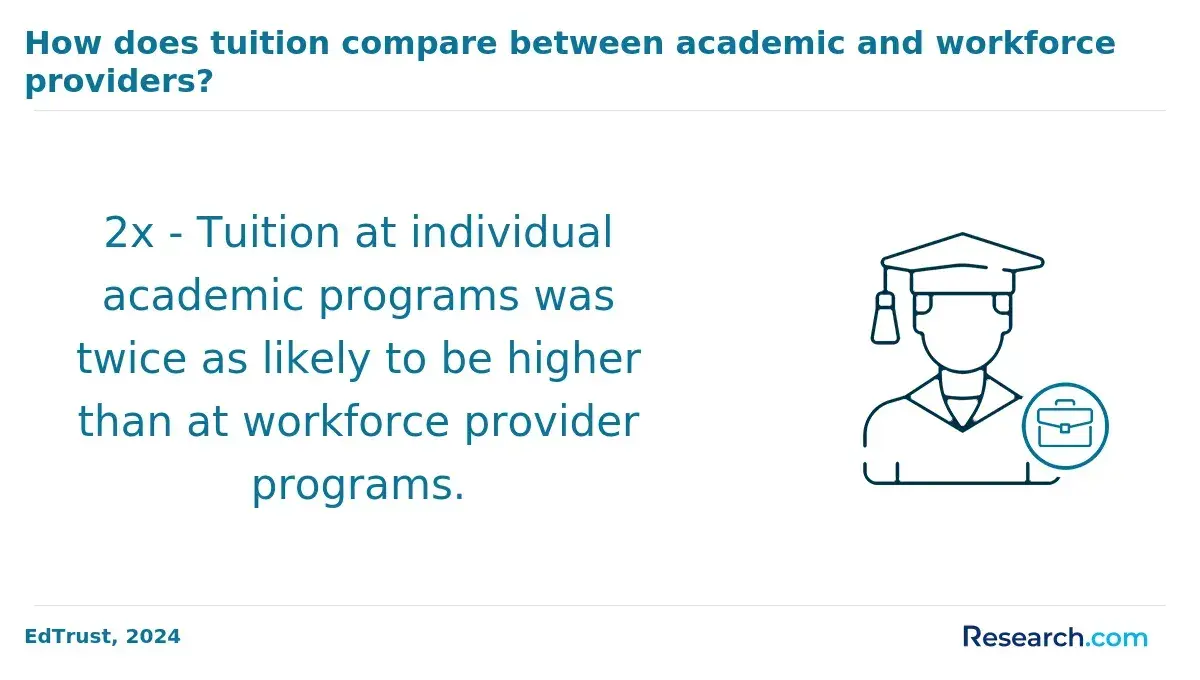
For cost context, College Board's 2024 Trends in College Pricing reported average published tuition and fees of $11,610 for in-state students at public four-year institutions. That figure is useful as a benchmark, but online students should calculate total program cost using their own credit needs, fees, books, technology costs, and transfer evaluation.
The table below summarizes common timeline and cost scenarios. It is a planning tool, not a promise, because each school sets its own tuition, fees, and transfer rules.
| Student profile | Typical remaining credits | Likely timeline | Main cost driver | Decision point |
| First-time bachelor's student | About 120 credits | About four years full time; longer part time | Total tuition across the full degree | Compare the full four-year cost, not just first-year tuition |
| Associate degree transfer student | Often about 60 credits, depending on transfer fit | About two years full time; longer part time | How many credits apply to requirements | Ask for an official or detailed preliminary degree audit |
| Adult with mixed prior credits | Highly variable | One to four years depending on usable credits | Lost credits and repeated requirements | Choose the program that applies the most credits toward graduation |
| Accelerated online student | Variable | Can shorten calendar time with year-round terms | Intensity, course availability, and financial aid pacing | Make sure speed does not weaken portfolio quality |
To estimate your real cost, request a degree audit before enrolling whenever possible. Then multiply remaining credits by tuition, add mandatory online fees, estimate books and software, and subtract confirmed grants, scholarships, employer benefits, military benefits, or transfer credit savings.
Do not choose only by the lowest per-credit tuition. A slightly higher tuition rate can be cheaper overall if the school accepts more transfer credits, offers needed writing courses regularly, and prevents extra semesters.
What careers can a general studies degree with professional writing preparation lead to?
A general studies degree with professional writing preparation can lead to roles where clear communication, research, editing, and audience awareness are central. It is usually strongest for entry-level or early-career roles that value a bachelor's degree plus a portfolio, rather than roles requiring a specific licensed major.
The table below connects common job directions with the writing tasks graduates may perform. It can help you decide whether your elective choices should lean toward business, technology, public service, marketing, or nonprofit communication.
| Career direction | Typical writing responsibilities | Helpful supporting coursework | Portfolio samples to build |
| Technical writing assistant or junior technical writer | Instructions, FAQs, user guides, process documentation, release notes, and knowledge-base articles | Technical writing, information design, basic technology, project management | User guide, procedure document, software help article |
| Content writer or digital communications specialist | Web pages, blog posts, email content, social media copy, and campaign messaging | Digital writing, marketing, analytics, media writing | Website copy, content calendar, SEO-informed article |
| Grant writing or nonprofit communications assistant | Needs statements, donor letters, program descriptions, impact summaries, and reports | Grant writing, nonprofit studies, public administration, research methods | Mock grant proposal, donor appeal, impact report |
| Administrative or operations communications role | Internal memos, policies, training materials, meeting summaries, and executive briefings | Business writing, management, organizational communication | Policy summary, training handout, executive memo |
| Editorial assistant or copyediting role | Proofreading, style guide enforcement, fact-checking, publication coordination, and revision tracking | Editing, grammar, publishing, media ethics | Before-and-after edited document, style sheet, fact-checking notes |
Students who want management, entrepreneurship, sales enablement, or corporate communication roles may benefit from pairing writing courses with business electives. In that case, comparing a business degree online can clarify whether a business major with writing electives would serve the goal better than a general studies major.
This degree is less ideal for careers with strict educational gates. For example, licensed K-12 teaching, clinical counseling, accounting licensure, and some public-sector classifications may require specific majors, supervised practice, exams, or state-approved programs.
What salary ranges and earning potential can writing-focused general studies graduates expect?
Salary potential depends on role, industry, location, experience, portfolio quality, and technical knowledge. A writing-focused general studies degree can support entry into communication-heavy jobs, but it should not be viewed as a guaranteed pathway to a specific wage.
The U.S. Bureau of Labor Statistics May 2024 wage data provides a useful national benchmark for several writing-related occupations. These medians reflect occupations, not degree majors, so students should use them to compare career directions rather than predict individual outcomes.
| Occupation | May 2024 median annual wage | What the figure suggests for students |
| Technical writers | $91,670 | Specialized writing tied to products, processes, software, science, or engineering can carry stronger wage potential when students build subject-matter fluency |
| Editors | $75,260 | Editing roles value precision, judgment, and publication experience, but entry can be competitive without strong samples |
| Writers and authors | $73,690 | Income varies widely because this category includes different industries, employment types, and freelance arrangements |
| Public relations specialists | $69,780 | Communication roles often reward writing ability combined with media relations, campaign planning, and organizational awareness |
The clearest ROI strategy is to pair writing with a domain. A generalist writer may face more competition, while a writer who understands healthcare workflows, software documentation, finance, public policy, logistics, or higher education operations may be easier for employers to place.
Students should also consider geography and work format. Remote roles can broaden the market, but they may also increase competition because applicants are not limited to one local area. Local internships, campus employer partnerships, and industry-specific portfolio projects can help offset that competition.
How is professional writing experience built through internships, portfolios, and real-world projects?
Professional writing experience is built through repeated practice with real audiences, not through course titles alone. The best online programs require students to draft, receive feedback, revise, and publish or present work in formats similar to workplace deliverables.
Students should look for several experience-building features before enrolling. These elements help turn a flexible degree into a credible career asset.
- Portfolio assignments that produce polished samples such as proposals, reports, web pages, instructions, grant narratives, policy briefs, or newsletters.
- Internships, practicums, or remote field experiences with nonprofits, businesses, campus offices, agencies, or publications.
- Client-based or community-based projects where students write for a real organization rather than only for an instructor.
- Capstone courses that require revision, reflection, and presentation of a coherent professional writing identity.
- Faculty feedback from instructors with experience in technical communication, editing, business writing, rhetoric, publishing, or digital media.
- Use of current tools such as content management systems, collaborative editing platforms, accessibility checkers, citation managers, and AI-assisted drafting tools with verification practices.
A practical portfolio should be focused, not huge. Five strong samples with short explanations of the audience, purpose, constraints, and revision process are usually more useful than dozens of disconnected class papers.
Students already employed can often build samples from workplace-adjacent projects, as long as they remove confidential information and get permission where needed. For example, a student might create a training guide, rewrite a public-facing FAQ, develop a grant proposal draft for a nonprofit, or redesign an internal procedure document.
How can students evaluate and choose a reputable online general studies writing program?
Choosing a reputable online general studies writing program requires more than checking whether the degree is online and affordable. The best program is the one that is accredited, accepts your usable credits, offers enough writing depth, fits your schedule, and helps you graduate with evidence of skill.
Use the following steps before committing. They are designed to reduce common mistakes such as overpaying, losing transfer credits, or choosing a program that is too broad for your career goal.
- Confirm institutional accreditation through the school's accreditor and the U.S. Department of Education's recognized accreditation resources.
- Request a transfer credit review or degree audit showing which credits apply to general education, major, elective, and upper-division requirements.
- Ask for a sample degree plan that includes the specific writing courses you want, not just a list of possible electives.
- Check whether writing courses are offered online often enough to avoid delaying graduation.
- Review faculty backgrounds for professional writing, technical communication, editing, rhetoric, media, or workplace communication experience.
- Ask whether the program includes portfolio review, internships, client projects, capstones, or writing center support for online students.
- Calculate total cost to completion after fees, books, software, transfer credits, grants, employer assistance, and loan interest considerations.
- Compare career services for online learners, including resume help, portfolio feedback, internship listings, and employer connections.
- Look for transparent policies on withdrawal, satisfactory academic progress, credit expiration, prior learning assessment, and academic integrity.
- Avoid programs that pressure you to enroll immediately, refuse to explain transfer credit, lack regional or recognized institutional accreditation, or cannot show writing-specific outcomes.
One useful test is to ask an admissions or academic advisor, "If I want to apply for junior technical writer, communications coordinator, or grant assistant roles after graduation, what exact courses and portfolio samples would this program help me complete?" A vague answer is a warning sign.
Students should also compare alternatives honestly. A certificate may be enough if you already have a bachelor's degree. A specialized English, communication, marketing, or technical communication major may be better if you are starting from scratch and want a narrower professional identity.
Other Things You Should Know About General Studies
Yes, many graduate programs accept applicants with general studies or liberal studies bachelor's degrees. The key is whether you completed the prerequisites, GPA expectations, writing samples, recommendations, or test requirements required by the specific graduate program.
Many 2027 online general studies programs with professional writing training require a 10 to 20 page portfolio or capstone writing sample before graduation. Students often submit revised essays, research papers, and workplace documents for faculty review, along with a rubric-based assessment of grammar, audience, and source use.
A 2027 Online General Studies Degree with a strong emphasis on Professional Writing typically offers a more structured focus on developing writing skills across multiple professions, while an interdisciplinary studies degree allows for a broader curriculum that integrates courses from various disciplines without necessarily emphasizing a particular skill.
Sometimes. Many adult-focused programs evaluate military transcripts, standardized exams, professional certifications, or prior learning portfolios, but credit awards and applicability toward graduation depend on the institution's policy.
References
- Writing Intensive Course Requirements Across the Nation https://wacclearinghouse.org/repository/exhibits/origins-of-wac-at-the-university-of-denver/artifact-5/
- Writing-Intensive (WI) Courses - Lakeland University Evening, Weekend and Online Programs https://catalog.lakeland.edu/content.php
- General Studies Degree Jobs: 10 Careers + Salaries (2026) | Extern https://www.extern.com/post/general-studies-degree-jobs-career-guide
- A General Studies Degree Is a Launchpad for Career Changers https://www.tuw.edu/gen-ed/general-studies-degree-benefits/
- Are Online Courses Better Than Community College? https://www.straighterline.com/blog/online-courses-better-than-community-colleges
- 2025 Best Online Writing Degrees https://www.onlineu.com/degrees/writing
- Online Degree vs. Traditional: Choosing the Right Path https://beal.edu/online-degree-vs-traditional/
- Professional Writing and Editing Bachelor's Degree | Malone University https://www.malone.edu/programs/professional-writing-and-editing/
- What Can You Do With a General Studies Degree? https://www.calcoast.edu/news/what-can-you-do-with-a-general-studies-degree
- Online vs. On-Campus: Which Mode of Learning Is Best for You? https://www.onlinemastersdegrees.org/student-resources/which-mode-of-learning-is-best/