2027 Choosing an Online Ed.D. in Leadership and Learning in Organizations for Leadership in Family-Owned Businesses
Audited and Verified:
Our Editorial and Data Verification Process
Research.com uses government datasets, official education statistics and primary institutional information to support its career and degree guides. Our review process checks factual accuracy, occupational definitions, source dates and the requirements associated with the credentials discussed.
How This Article Was Fact-Checked
Our editorial team verifies salary estimates, employment projections, education requirements and program information against original data providers and official organizations. Salary figures are checked against the relevant occupational definitions and reporting periods. Information about licensure, accreditation and required in-person training is reviewed separately.
Fact-checked and verified on:

Co-Founder and Chief Data Scientist
A family-owned business may need to develop future leaders, transfer knowledge across generations, and give nonfamily employees a fair path to advancement. An online Ed.D. in Leadership and Learning in Organizations could help a working leader address those challenges - but only if its curriculum, schedule, and applied research requirements fit the business.
This guide explains what the degree can and cannot do, how to compare programs, and when a shorter leadership or business-focused pathway would be the better investment.
Key Things You Should Know
- An Ed.D. is most useful when you can lead a sustained learning or organizational-change effort; it cannot resolve ownership disputes or replace legal and financial succession planning.
- Check institutional accreditation, live attendance and travel requirements, and whether the doctoral project can use your business as a site before enrolling.
- For salary context, the US Bureau of Labor Statistics reports a $133,000 median annual wage for training and development managers in May 2025 - not an expected salary for Ed.D. graduates.
What is an online Ed.D. in Leadership and Learning in Organizations?
An Ed.D. is a practice-oriented doctorate. A program focused on leadership and learning in organizations typically studies how adults develop skills, how leaders shape organizational systems, and how evidence can guide improvement. "Online" describes where much of the instruction occurs; it does not establish that classes are self-paced or that campus visits are optional. Exact degree titles, curricula, and doctoral projects vary by institution.
For a family-business leader, the distinction from other degrees matters. An Ed.D. fits a goal such as evaluating a successor-development process or improving how expertise passes from experienced staff to new managers. A DBA may better fit a business-research question; an MBA may be more direct for finance, operations, or general management preparation. A research-focused PhD is generally better aligned with an academic research career. If your main objective is a discrete skill, executive education, coaching, or a focused certificate may be sufficient.
Prior specialist-level study can affect which doctoral routes are worth investigating, but it does not automatically shorten an Ed.D. Applicants with that background can compare Ed.S.-to-Ed.D. admission and study options while asking each institution separately about eligibility and credit application.
How can an Ed.D. prepare leaders for family-owned businesses?
The strongest fit is a challenge the leader has authority to address and can examine with evidence. Family relationships can make decisions about succession, feedback, and advancement unusually sensitive. Doctoral study may strengthen organizational diagnosis and learning design, but it does not confer authority over relatives, ownership, or the board.
The following distinctions show where leadership-and-learning study can contribute - and where a different kind of expertise may be essential.
| Family-business challenge | Potential Ed.D. contribution | Important limit |
| Preparing successors | Assess role competencies and evaluate development experiences | Ownership transfer and estate planning require appropriate legal and financial advice |
| Retaining institutional knowledge | Design mentoring, documentation, and learning-transfer processes | Training cannot compensate for insufficient staffing or incentives to share knowledge |
| Advancing nonfamily managers | Examine promotion criteria, feedback, and leadership-development access | Fair processes require visible commitment from those with hiring authority |
| Managing change across generations | Engage stakeholders and evaluate whether a change is implemented as intended | A course project cannot settle a dispute over strategy or control |
For example, a leader might investigate why newly promoted managers struggle to make decisions independently. The cause could be a development gap, unclear authority, or owners reversing delegated decisions. An Ed.D. can help the leader distinguish those explanations before proposing training. If the central obstacle is governance rather than learning, governance work should come first.
How do you choose an accredited online Ed.D. program?
Start with the institution and the actual degree - not a program's leadership language alone. Confirm the institution's accreditation with the accreditor or US Department of Education recognition records, then read the program's current catalog and admissions materials. Institutional accreditation does not mean a general organizational leadership Ed.D. prepares graduates for a regulated education role.
For this particular goal, a useful comparison asks whether the program supports work in a privately held organization and whether its requirements are feasible alongside your responsibilities. Request written clarification on the following points:
- Academic fit: Required study in adult learning, organizational change, evaluation, and leadership, rather than electives that may not be offered during your enrollment.
- Applied work: The required dissertation, dissertation in practice, or capstone; whether a family business is an acceptable site; and who approves the scope and data access.
- Delivery: Live-class attendance, time zones, team meetings, campus convenings, and support available when a business deadline conflicts with coursework.
- Completion evidence: Published progression rules and any available completion outcomes, including how the institution defines and measures them.
If you may eventually work outside the business, assess whether projects and faculty expertise also translate to other employers. For a specifically college-based leadership goal, compare Ed.D. options for organizational improvement in colleges rather than assuming a family-business project and a higher-education career require identical preparation.
Relevant coursework commonly connects leadership decisions with adult learning, organizational culture, change implementation, and applied research. For a family-owned firm, the value lies in using those concepts together: defining the performance problem, identifying whose perspectives are missing, designing a workable response, and evaluating what happened. Check each program's required courses; shared degree terminology does not guarantee equal depth in every subject.
Research methods are especially important if you hope to study the business. Interviews might reveal how family and nonfamily managers understand decision authority; operational records might help assess whether a new onboarding process is used. Neither source alone proves that the process caused an improvement. Faculty guidance should help you select appropriate measures, acknowledge limitations, and meet any required ethical review.
Projects involving employees, customers, or proprietary records need organizational permission and suitable safeguards. Academic approval, permission to access company data, and permission to disclose findings are separate decisions. A family relationship with the owner does not substitute for them.
They can be effective when the format provides meaningful faculty feedback, peer discussion, and a workable path through the applied project. Online access alone is not enough. A family-business leader may face seasonal demand, unpredictable owner requests, and limited ability to delegate; scheduled seminars and group deadlines can therefore matter more than where lectures are viewed.
Before applying, compare a typical course week with a peak business period and ask how the program handles absences, leaves, and a change of employer or project site. If finishing sooner is important, examine shorter pathways through Ed.D. coursework, but compare their attendance and project demands as well as their advertised timelines. A compressed schedule is not necessarily easier to sustain.
Effective study also requires space to question existing practices. If relatives or senior managers will not permit candid feedback or any meaningful process change, a workplace-based doctoral project may be difficult even when the online classes fit your calendar.
Requirements differ by institution. Programs may evaluate prior degrees and transcripts, professional experience, recommendations, a statement of purpose, and evidence that the applicant can undertake doctoral-level work. Do not assume that a master's in education, a particular job title, or a fixed amount of family-business experience is universally required.
Show what you have actually led: decisions made, people supported, changes implemented, and problems you can investigate without claiming results you have not measured. A useful application goal might be to examine how new managers learn to exercise delegated authority. Explain why doctoral inquiry would help and whether you could realistically obtain organizational cooperation; do not present prospective access as an approved research agreement.
Applicants who previously completed substantial doctoral work should investigate returning to Ed.D. study after reaching ABD status. Ask the receiving institution for a written evaluation: prior study considered for admission is not necessarily credit applied to its degree, and neither guarantees a shorter project.
There is no reliable universal completion time or total price. Required credits, enrollment pace, dissertation or capstone progression, tuition model, fees, and any campus visits vary. An employer-sponsored student also needs to distinguish assistance promised informally from a written reimbursement agreement.
Build a program-specific estimate from published charges and requirements, then ask about expenses the advertised tuition figure may exclude. Compare budget-friendly online education doctorates on total expected cost and academic fit, not tuition alone.
For a family business, account for travel and lodging if convenings are required, technology and research expenses, and the cost of coverage while you study. If the company pays, agree in writing on the funding limit, continued-employment conditions, and who controls or may share project findings. A proposed salary increase or future ownership stake should not be treated as a return on investment unless it is part of a dependable agreement.
Inside a family business, the most plausible outcome is greater capability in an existing or planned role - not an automatic promotion. Depending on prior experience and the company's structure, a graduate might lead talent development, organizational improvement, manager training, or a cross-generational change initiative. An ownership or executive appointment remains a separate governance decision.
Outside the firm, the degree may support a move into organizational learning or consulting when paired with relevant experience. The roles below differ in what employers typically need to see beyond a doctorate.
| Possible direction | Core responsibility | Experience that strengthens candidacy |
| Training and development management | Lead workforce learning strategy and staff | Program delivery, evaluation, budgeting, and people management |
| Organizational consulting | Diagnose problems and advise on implementation | Documented projects, client communication, and sector knowledge |
| Internal organizational development | Support leadership, team, and change processes | Stakeholder facilitation and evidence of implemented improvements |
If you have not yet led people or improvement work, seek an internal project, mentor, or targeted training before expecting the doctorate to make you competitive for a senior role. Keep confidential company information out of any portfolio unless its release is authorized.
There is no single salary for graduates of an organizational leadership Ed.D. Pay depends on the job, location, employer, and prior responsibilities; compensation in a family firm may also reflect ownership arrangements that occupational wage figures do not capture.
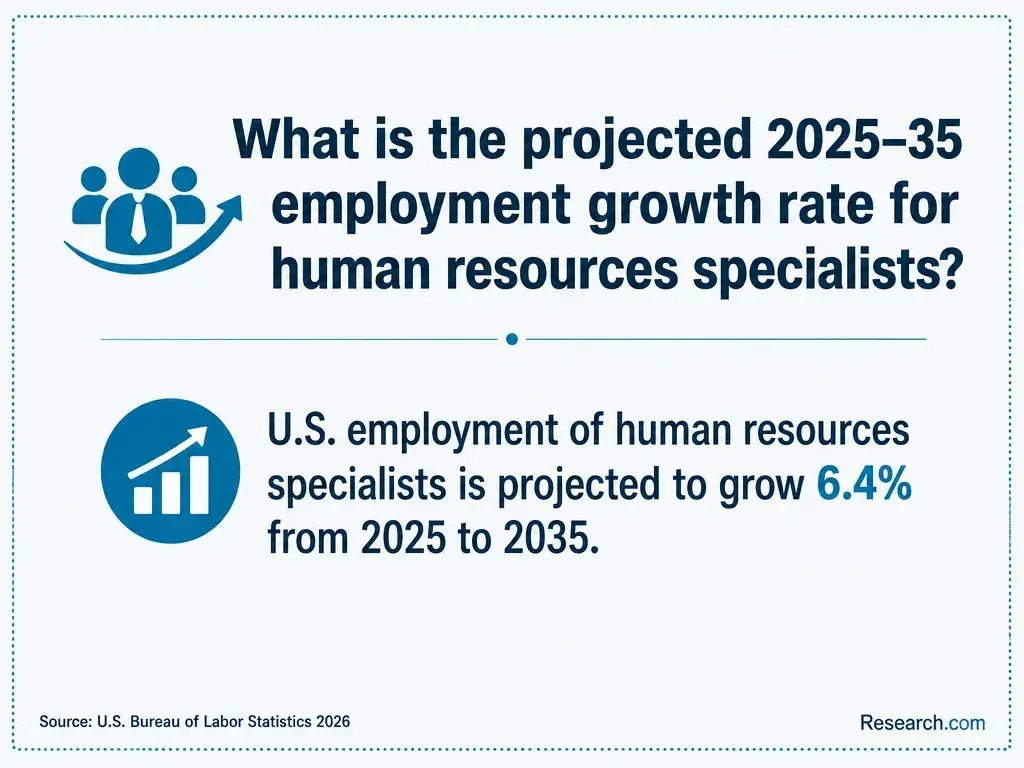
For a relevant US benchmark, the Bureau of Labor Statistics reports a May 2025 median annual wage of $133,000 for training and development managers and projects 6.4% employment growth for that occupation from 2025 to 2035. Those figures describe an occupation, not the pay or job prospects of Ed.D. graduates. Use a target role's duties and your experience - not the degree name - to judge whether its wage data is a meaningful comparison.
Does an Ed.D. require licensing or professional certification?
Leading learning and change in a family-owned business generally does not require a professional license solely because you hold an Ed.D. An organizational leadership doctorate also does not automatically award a coaching certification, HR credential, or permission to practice a regulated profession.
If your plans include a licensed role - such as school administration - check the specific program's licensure disclosure and the relevant state authority's requirements before enrolling. Choose an optional professional certification for a clearly defined skill or employer expectation, not on the assumption that it is included in the doctorate.
Other Things You Should Know About EdD Leadership
Only if each has a distinct learning goal and the business can support their combined time commitments. Shared enrollment does not replace an agreed decision-making process at work.
Potentially. Their authority, access, and project-site approvals matter more than their relationship to the owners; the program must approve the arrangement.
Discuss the project's purpose and boundaries before enrolling. If leaders will not permit a useful inquiry, ask the program whether another organization could serve as a project site.
It may help develop managers and document how work is learned, but transaction planning calls for qualified financial and legal advisers.
- Qualified Ed expenses | Internal Revenue Service https://www.irs.gov/credits-deductions/individuals/qualified-ed-expenses
- Cost of Attendance (Budget) | 2025-2026 Federal Student Aid Handbook https://fsapartners.ed.gov/knowledge-center/fsa-handbook/2025-2026/vol3/ch2-cost-attendance-budget
- Next-generation leadership development in family businesses | nih.gov https://pmc.ncbi.nlm.nih.gov/articles/PMC4255618/
- Types of Financial Aid: Grants, Work-Study, and Loans | studentaid.gov https://studentaid.gov/understand-aid/types
- Online EdD in Organizational Leadership | Pepperdine University https://gsep.pepperdine.edu/doctorate-organizational-leadership/
- Admissions, UC LEAD, Winter, Cohort | ucsd.edu https://eds.ucsd.edu/graduate/doctoral/ucleadedd/uclead-admissions.html
- Tuition and Financial Aid | bccc.edu https://catalog.bccc.edu/content.php
- EdD in Organizational Change and Leadership | USC Online https://online.usc.edu/programs/organizational-change-leadership/
- How Cost of Attendance is Determined | Financial Aid https://financialaid.umbc.edu/cost-of-attendance/
- Synchronous vs. Asynchronous Online Classes - ANU Alumni https://alumni.an.edu/synchronous-vs-asynchronous-online-classes-which-works-better-for-adult-learners/