2027 Top Schools with Online EdS to EdD Programs

Co-Founder and Chief Data Scientist
In the fall semester of 2024, the enrollment for graduate-level education degrees reached 428,075, making it the third most common major field among post-baccalaureate students (National Student Clearinghouse Research Center, 2024). Education programs at this level often focus on teaching specializations, leadership training, policy development, or advanced research skills that prepare you for higher-impact roles.
Among these options are online EdS to EdD programs, which allow educators to build on their specialist knowledge while advancing toward a terminal doctoral degree in a flexible format. Although an EdS is itself a respected post-master’s credential, earning an EdD positions you for top-tier leadership opportunities and expands your ability to shape policy and drive organizational change.
This guide will feature the leading institutions that provide an online EdS to EdD pathway. In addition, we will discuss the potential career directions, expected job growth, and other essential details that matter when planning your future in education.
Key Things You Should Know About Online EdS to EdD Programs
- Online EdS to EdD programs build on prior specialist coursework and typically shorten the path to a doctorate.
- Schools often accept up to 30 credits from an accredited EdS degree toward EdD requirements.
- Graduates earn anywhere between $70,000 to $100,000 or more, depending on the specific role, location, and employer type.
What can I expect from an online EdS to EdD program?
Online EdS to EdD programs are designed for education professionals who want to move on to leadership roles. They offer a streamlined pathway to a terminal degree by recognizing previous graduate-level work and building on that foundation to deepen students’ expertise.
You can expect the following in these programs:
- Topics: Coursework often covers leadership theory, organizational change, and research design. Students learn how to apply these concepts to real-world challenges, such as improving student outcomes or addressing systemic barriers.
- Main Requirements: Candidates typically produce a dissertation or applied research project. Many programs also require you to participate in residencies or seminars.
- Program Format: Classes are primarily online, using asynchronous or synchronous methods. Many also follow a cohort model that fosters collaboration and professional networking among peers.
By the time graduates complete the degree, they gain not only stronger research and leadership skills but also the professional credibility that comes with holding a doctorate in education.
Where can I work with an online EdS to EdD?
Graduates of online EdS to EdD programs are equipped for leadership and research roles across many sectors. Opportunities extend well beyond schools, allowing graduates to contribute to both education-focused and broader professional environments.
- Teaching and Administration: Many work as superintendents, principals, or deans who oversee schools and districts. Their responsibilities include shaping curriculum, managing faculty, and ensuring that institutions meet academic and operational standards.
- Public Policy: Some move into policy-making positions by advising on state or national education initiatives. They conduct research, evaluate programs, and recommend changes that improve student learning outcomes.
- Training and Development (T&D): In corporations or universities, graduates design professional development programs and leadership training. They create strategies to improve organizational culture and employee performance.
- Nonprofits and Government: Graduates can also contribute to organizations addressing social issues like literacy, access, and equity. They often manage grants, develop community programs, or lead advocacy campaigns.
- Research Centers and Human Resources: Some join think tanks or universities as researchers, producing data that informs education and workforce practices. Others move into HR leadership roles, where they oversee organizational learning and employee engagement.
How much can I make with an online EdS to EdD?
By completing online EdS to EdD programs, graduates can explore different roles with promising annual incomes. Generally, the average annual income for these positions land between $70,000 and $100,000 or more.
One of the most common career options, educational administrators in postsecondary institutions, provide yearly salaries at $124,450 annually. Their yearly salary ranges from $63,820 at the 10th percentile to a whopping $212,420 at the 90th percentile.
Administrators in the K–12 levels earn slightly less, at $113,360. The salary range is between $72,400 and $165,820. Meanwhile, professionals in high-level T&D and HR roles take home $140,590 and $160,480 respectively, with ranges between $75,000 and over $219 239.
However, location, additional credentials or certifications, and employer type also influence annual salaries. Typically, those in states with higher costs of living tend to earn more than peers in rural or less-populated regions. Educators and administrators who hold specialized certifications, like superintendent licensure or advanced instructional leadership credentials, may also see higher pay.
In addition, those working in large districts, prestigious universities, or corporate organizations often command stronger salaries compared to peers in smaller schools or nonprofits. Overall, the financial rewards for graduates are substantial and align with the leadership responsibilities these positions demand.
- Top Schools with Online EdS to EdD Programs Top Schools
- What is the difference between an EdS, EdD, and a PhD? EdS vs. EdD vs. PhD
- Should teachers pursue online EdS to EdD programs? Should teachers pursue online EdS to EdD programs?
- How long does it take to complete an online EdS to EdD program? Completion Time
- Can you skip an EdS and go directly to an EdD? Skipping EdS Programs
- What is the average cost of an online EdS to EdD program? What is the average cost of an online EdS to EdD program?
- What specializations are available in online EdS to EdD programs? What specializations are available in online EdS to EdD programs?
- How to choose the best online EdS to EdD program? Selection Tips
- What career paths are available for graduates of online EdS to EdD programs? Career Pathways
- What is the job market for graduates with an online EdS to EdD? Job Outlook
- Which one should you choose: EdS, EdD, or a PhD? Which one should you choose: EdS, EdD, or a PhD?
- How can you assess the accreditation and quality of online EdD programs? How can you assess the accreditation and quality of online EdD programs?
Online EdS to EdD Programs: Top Schools, Costs, Timelines, and How to Choose
An online EdS to EdD program is designed for educators who already hold an Education Specialist degree and want to convert part of that prior graduate work into a Doctor of Education. For principals, curriculum leaders, instructional coaches, district administrators, and higher education professionals, this bridge format can shorten the path to a terminal degree while keeping coursework flexible enough for full-time employment.
This guide explains how EdS to EdD programs work, which schools offer strong online or hybrid options, what the degree may cost, how long it can take, and which career paths it can support. It also compares the EdS, EdD, and PhD so you can decide whether a doctoral bridge program fits your professional goals or whether another credential would make more sense.
Quick answer: What is an online EdS to EdD program?
An online EdS to EdD program is a doctoral pathway that allows qualified students to apply credits from an Education Specialist degree toward a Doctor of Education. Many programs accept up to 30 EdS credits, although transfer policies vary by institution. Most students complete the remaining doctoral coursework, research sequence, and dissertation or capstone in two to three years, depending on transfer credits, enrollment pace, residency requirements, and dissertation progress.
This route is usually best for educators who want senior leadership, policy, curriculum, higher education, or organizational learning roles. It is less useful for professionals who want to remain only in classroom teaching and do not need a terminal degree for their career plans.
How do we rank schools?
Doctoral education requires a serious investment of time, money, and professional energy. To help readers compare options more clearly, Research.com uses a transparent ranking methodology that considers institutional quality, affordability, accessibility, and student-centered program features.
For additional context, we reviewed data and institutional information from the Integrated Postsecondary Education Data System, Peterson’s database, including the Distance Learning Licensed Data Set, College Scorecard, and the National Center for Education Statistics (NCES). These sources help students evaluate schools using comparable, publicly available information instead of relying only on promotional materials.
Top online EdS to EdD programs at a glance
| School | Program focus | Program length | Cost information | Credits required |
| Murray State University | EdS to EdD Bridge | 3 years | $618.50 per credit | 30–60 |
| Alverno College | EdS to EdD Bridge | 2 years | $40,677 estimated cost | 39 |
| Northwest Nazarene University | Educational Leadership | 26 months | $638 per credit | 30–66 |
| University of Bridgeport | International Education | 3 years | $720 per credit | 42–62 |
| University of Arkansas | Educational Leadership | 3 years | $512.66 per credit | 42 |
| William Carey University | Educational Leadership | 2–3 years | $525 per credit | 30–60 |
| Central Michigan University | K-12, higher education, curriculum, and technology tracks | 2 years | $550 per credit | 30–66 |
| Belhaven University | Educational Leadership | 2–3 years | $500–$635 per credit | 30–60 |
| Appalachian State University | Leadership concentrations across education settings | 2–3 years | $336.77 in-state; $1,290.72 out-of-state per credit | 30–60 |
| Regent University | K–12 School Leadership | 2–3 years | $820 per credit | 30–61 |
1. Murray State University
Murray State University offers an EdD in P-20 and Community Leadership for professionals who already earned an EdS from a regionally accredited institution. The program is built for educators who want to lead improvement efforts across schools, communities, and education-related organizations. With faculty approval, students may apply up to 30 transfer credits toward the doctorate. Most coursework is online, while cohorts participate on campus or by Zoom during several weekend meetings each semester. The program ends with a five-chapter dissertation.
- Program Length: 3 years
- Tracks/Concentrations: EdS to EdD Bridge
- Cost per Credit: $618.50
- Required Credits to Graduate: 30–60
- Accreditation: Southern Association of Colleges and Schools Commission on Colleges (SACSCOC)
2. Alverno College
The EdS to EdD option at Alverno College allows students to transfer 15 EdS credits into the doctoral program. Its format combines online coursework with one required weekend residency on campus, which may appeal to working educators who want flexibility but still value some face-to-face interaction. Students progress through the curriculum with a small cohort, creating consistent peer support. Course examples include Advanced Research Methods, Transformational Leadership, and Equity in Diverse Educational Settings.
- Program Length: 2 years
- Tracks/Concentrations: EdS to EdD Bridge
- Estimated Cost: $40,677
- Required Credits to Graduate: 39
- Accreditation: Higher Learning Commission (HLC)
3. Northwest Nazarene University
Northwest Nazarene University accepts students who hold an EdS or have completed previous doctoral-level coursework. Candidates transfer 30 EdS credits and complete 36 additional credits focused on leadership, research, and dissertation development. The curriculum is organized so that each course contributes to the student’s final research project. Faculty mentors work closely with small student groups, helping candidates develop research-informed solutions for educational problems and inclusive learning environments.
- Program Length: 26 months
- Tracks/Concentrations: Educational Leadership
- Cost per Credit: $638
- Required Credits to Graduate: 30–66
- Accreditation: Council for Accreditation of Educator Preparation (CAEP)
4. University of Bridgeport
The hybrid EdD in Educational Leadership at the University of Bridgeport includes an International Education specialization for students who already have a Sixth-Year credential or an EdS. Coursework is delivered online, but students attend two one-week summer residencies on campus during the first two years. These residencies are intended to strengthen collaboration, faculty engagement, and global peer connections. Students typically focus on the dissertation in the third year, and the university allows up to six graduate transfer credits.
- Program Length: 3 years
- Tracks/Concentrations: International Education
- Cost per Credit: $720
- Required Credits to Graduate: 42–62
- Accreditation: New England Commission of Higher Education (NECHE)
5. University of Arkansas
The University of Arkansas offers an EdD in Educational Leadership for educators preparing for advanced leadership responsibilities in schools and other education settings. Applicants with a master’s degree may be considered, and transfer credits are reviewed with departmental approval. The program blends online coursework, weekly live sessions, and three annual on-campus weekend seminars. These seminars include expert lectures, discussion, peer review, and research development activities that help students connect doctoral study to practical leadership work.
- Program Length: 3 years
- Tracks/Concentrations: Educational Leadership
- Cost per Credit: $512.66
- Required Credits to Graduate: 42
- Accreditation: Higher Learning Commission (HLC)
6. William Carey University
The EdD at William Carey University is intended for education professionals seeking leadership advancement. Students who hold an EdS in leadership or a closely related field may transfer the degree in full after completing two prerequisite courses. The curriculum emphasizes strategic planning, leadership practice, resource management, and applied research. Because the program is fully online and does not require live class meetings, it may fit educators who need maximum scheduling flexibility while completing a capstone project.
- Program Length: 2–3 years
- Tracks/Concentrations: Educational Leadership
- Cost per Credit: $525
- Required Credits to Graduate: 30–60
- Accreditation: SACSCOC
7. Central Michigan University
Central Michigan University offers a mostly online EdD in Educational Leadership with pathways for PK–12 and higher education professionals. Students study educational research, organizational change, ethics, leadership, and institutional culture while applying theory to professional practice. A one-week summer residency is required. Students may transfer up to 24 approved EdS credits and can shape coursework around professional interests before completing a dissertation that demonstrates advanced research and leadership ability.
- Program Length: 2 years
- Tracks/Concentrations: K-12 Leadership, K-12 Curriculum, Higher Education Leadership, Educational Technology
- Cost per Credit: $550
- Required Credits to Graduate: 30–66
- Accreditation: HLC
8. Belhaven University
Belhaven University offers an EdD in Educational Leadership and may accept up to 30 EdS credits after faculty review. The program is primarily online but includes two required campus residencies, giving students structured time with faculty, classmates, and dissertation advisors. Coursework connects leadership theory with applied decision-making for complex education issues. A 12-credit dissertation serves as the culminating requirement.
- Program Length: 2–3 years
- Tracks/Concentrations: Educational Leadership
- Cost per Credit: $500–$635
- Required Credits to Graduate: 30–60
- Accreditation: SACSCOC
9. Appalachian State University
Graduates of Appalachian State University’s EdS program may apply up to 30 credits toward the EdD in Educational Leadership. Applicants from other institutions can also request transfer credit review. The program may begin with an optional on-campus orientation before students move into live online courses held two evenings each week. Core leadership and research courses are paired with concentration options, and the curriculum emphasizes equity, sustainability, and applied improvement across education systems.
- Program Length: 2–3 years
- Tracks/Concentrations: Interdisciplinary Studies, Higher Education, Educational Administration, Instructional Technology Leadership, Literacy in Exceptionalities
- Cost per Credit: $336.77 (in-state); $1,290.72 (out-of-state)
- Required Credits to Graduate: 30–60
- Accreditation: SACSCOC
10. Regent University
Regent University offers an EdD in K–12 School Leadership for educators pursuing administrative endorsement and school leadership roles. The curriculum is aligned with the Professional Standards for Educational Leaders (PSEL) and is designed to meet Virginia Department of Education requirements for pre-K–12 Administration and Supervision. Students may transfer up to 49% of previous graduate degree credits after faculty evaluation. The program emphasizes research, analytical thinking, innovation, and institutional improvement.
- Program Length: 2–3 years
- Tracks/Concentrations: K–12 School Leadership
- Cost per Credit: $820
- Required Credits to Graduate: 30–61
- Accreditation: CAEP
What Is the Difference Between an EdS, EdD, and PhD?
The EdS, EdD, and PhD all serve advanced education professionals, but they are not interchangeable. The right choice depends on whether you want specialized practice, applied leadership, or research-intensive academic preparation.
| Degree | Main purpose | Typical structure | Best fit |
| Education Specialist (EdS) | Advanced post-master’s training for a focused education role | Usually one to two years and 30 credits; generally no dissertation | Educators seeking roles such as curriculum instructor, school psychologist, or PK–12 principal |
| Doctor of Education (EdD) | Applied doctoral study for solving real problems in schools, districts, higher education, or organizations | Most programs require 60 credits and last two to three years; usually includes a dissertation or capstone | Professionals aiming for superintendent, college dean or president, chief learning officer, or other senior leadership roles |
| Doctor of Philosophy (PhD) | Original research and theory development in education | Often 90 credits and three to six years; heavy research requirement | Future professors in higher education, researchers, and consultants focused on scholarship |
An EdS can be valuable for educators who want advanced applied expertise without the length and research expectations of a doctorate. The benefits of an EdS degree often include focused leadership preparation and role-specific training in a shorter timeframe.
The EdD is better suited for educators who want to lead change at the institutional or system level. The PhD is typically the stronger match for those who want to produce scholarly research, teach at the university level, or contribute to education theory.
In 2024, educational administration and supervision programs recorded 105,236 enrollments, making this the leading concentration across graduate education programs. That figure reflects continued interest in leadership-focused graduate pathways. For learners at an earlier stage of the education field, associates degree in early childhood education jobs can provide entry-level exposure to classrooms and early learning environments before pursuing graduate study later.
This chart displays graduate-level enrollment across education programs.
Should Teachers Pursue an Online EdS to EdD Program?
An online EdS to EdD program is worth considering if your career goals extend beyond your current classroom, campus, or department. Many teachers can succeed with a bachelor’s or master’s degree, and a doctorate is not necessary for every educator. The degree becomes more relevant when you want to influence policy, lead schools or districts, manage academic programs, design systems-level curriculum improvements, or move into higher education leadership.
This path can also help educators who already completed an EdS avoid starting a doctorate from the beginning. Transfer credits may reduce both time and cost, although each school decides how much previous coursework applies.
| An EdS to EdD may be a good fit if you... | You may want another option if you... |
| Want a terminal degree for leadership advancement | Plan to stay in classroom teaching and do not need doctoral credentials |
| Already hold an EdS and want to use prior credits | Do not want to complete a dissertation or capstone |
| Are preparing for district, higher education, policy, or organizational learning roles | Need a shorter credential for a specific endorsement or salary step |
| Can manage doctoral writing, research, and long-term independent work | Need immediate career movement and cannot commit to two to three years of study |
Applicants with only a bachelor’s degree usually cannot enter an EdS to EdD bridge directly. They may need a master’s degree or EdS first. Educators working in healthcare education may also need to understand RN to BSN course requirements if their teaching or administrative goals involve nursing programs, clinical education, or healthcare workforce development.
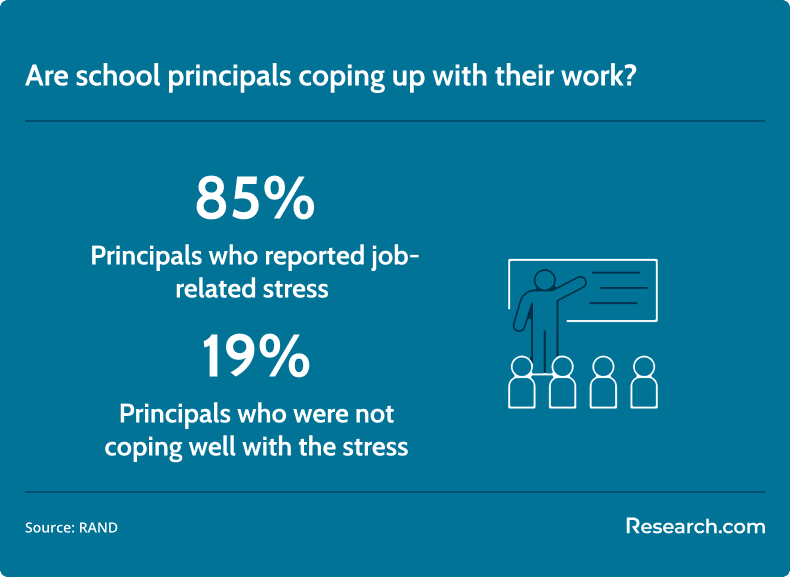
Leadership roles can be meaningful, but they also carry pressure. Steiner et al. (2022) reported that 85% of principals experienced significant job-related stress, and 19% were not coping well with that stress. A doctoral program cannot remove these demands, but strong programs can help educators build skills in decision-making, systems analysis, research use, communication, and organizational improvement.
The main question is not simply whether an EdD is impressive. The better question is whether the degree connects directly to the responsibilities you want next.
How Long Does an Online EdS to EdD Program Take?
Most online EdS to EdD programs take two to three years after the EdS, but the actual timeline depends on transfer credits, course load, residency requirements, research progress, and whether the student attends full time or part time.
Students who receive the maximum transfer credit may finish faster. Students who need prerequisites, pause enrollment, change dissertation topics, or take fewer courses each term may need more time. The dissertation or capstone is often the largest variable because it requires topic approval, research design, data collection or analysis, writing, faculty feedback, and revision.
| Timeline factor | How it affects completion |
| Transfer credits from the EdS | More accepted credits can reduce the number of doctoral courses required |
| Dissertation or capstone progress | Delays in research approval, data collection, or revisions can extend the program |
| Residency or seminar requirements | Required campus visits may affect scheduling, travel, and pacing |
| Full-time versus part-time enrollment | Part-time study may be more manageable for working educators but can lengthen the timeline |
| Prerequisite coursework | Students missing required background courses may need extra terms |
Students who still need an EdS before applying to a doctoral bridge program can look at accelerated specialist options, including the shortest EdS in special education online, if special education aligns with their career goals.
Before enrolling, ask the program director or dissertation coordinator for a realistic term-by-term plan. A two-year completion target may be possible, but it is most realistic when transfer credits are approved early and the dissertation process is tightly structured.
Can You Skip an EdS and Go Directly to an EdD?
Yes, some institutions allow applicants with a master’s degree to apply directly to an EdD program without first earning an EdS. This route can make sense for educators who already meet doctoral admission standards and do not need a separate specialist credential.
Applicants without an EdS usually need to satisfy graduate admission expectations such as a strong academic record, relevant leadership or administrative experience, and completed prerequisite coursework. They should also review master’s in education requirements if they are still planning earlier graduate steps. Because non-EdS students cannot apply the 20 to 30 credits that many EdS holders bring into bridge programs, they often complete a longer doctoral curriculum.
According to the Council of Graduate Schools (Lanier et al., 2024), doctoral degrees awarded increased by 9.8% between 2021–22 and 2022–23, slightly ahead of the 9% growth in master’s degrees. However, master’s programs remained the more common graduate pathway across the decade from 2012–13 to 2022–23. The EdD remains a strategic choice for professionals who need a terminal credential for senior leadership, but it should be chosen for a clear career reason rather than for prestige alone.
Online EdS to EdD programs are especially useful for principals, curriculum specialists, instructional leaders, and district administrators who want to move toward roles such as superintendent, provost, dean, or college president. Professionals whose work overlaps with healthcare education or mental health programming may also find it useful to understand psychiatric nurse practitioner responsibilities when leading interdisciplinary academic or clinical training initiatives.
Even when a school does not advertise a formal EdS to EdD bridge, it may still evaluate prior graduate coursework for transfer. Always request a written transfer credit review before committing to a program.
What Is the Average Cost of an Online EdS to EdD Program?
Costs vary widely by institution type, tuition model, transfer credit policy, and residency requirements. Ma et al. (2024) reported that tuition and fees for doctoral programs averaged about $12,270 at public four-year institutions and about $51,940 at private universities.
Many online EdS to EdD programs charge tuition per credit. Rates commonly appear in the program listings as figures such as $500, $525, $550, $618.50, $638, $720, or $820 per credit, while Appalachian State University lists $336.77 for in-state students and $1,290.72 for out-of-state students. Total cost depends heavily on how many EdS credits the school accepts and how many doctoral credits remain.
Tuition is only part of the total price. Students should also budget for technology fees, books, dissertation fees, research-related costs, travel for residencies, lodging for campus sessions, and possible graduation fees. Employer tuition assistance, scholarships, and federal financial aid may reduce out-of-pocket costs for eligible students.
| Cost factor | Why it matters |
| Accepted EdS transfer credits | More transfer credits can reduce total tuition |
| Residency requirements | Travel, lodging, and time away from work can add costs |
| Per-credit tuition | A lower per-credit rate may not always mean lower total cost if more credits are required |
| Dissertation support fees | Some programs charge separate fees during the research or continuation stage |
| Employer support | Districts, colleges, agencies, or companies may offer tuition reimbursement |
When comparing programs, calculate the full degree price after transfer credit review, not just the advertised tuition rate. Educators involved in health, counseling, or clinical training leadership may also benefit from learning how to be a good mental health nurse when their administrative work includes staff development, patient education, or interprofessional training.
What Specializations Are Available in Online EdS to EdD Programs?
Specializations help students connect doctoral coursework and dissertation research to the roles they want after graduation. The best concentration is the one that matches your target setting, whether that is a school district, university, nonprofit, government agency, or corporate learning department.
- PK–12 Leadership: This track supports educators preparing for principal, superintendent, curriculum director, or district leadership roles. Coursework often addresses instructional leadership, school operations, student outcomes, and organizational improvement.
- Higher Education Leadership: Students study college and university governance, student affairs, academic administration, enrollment challenges, access, and institutional strategy.
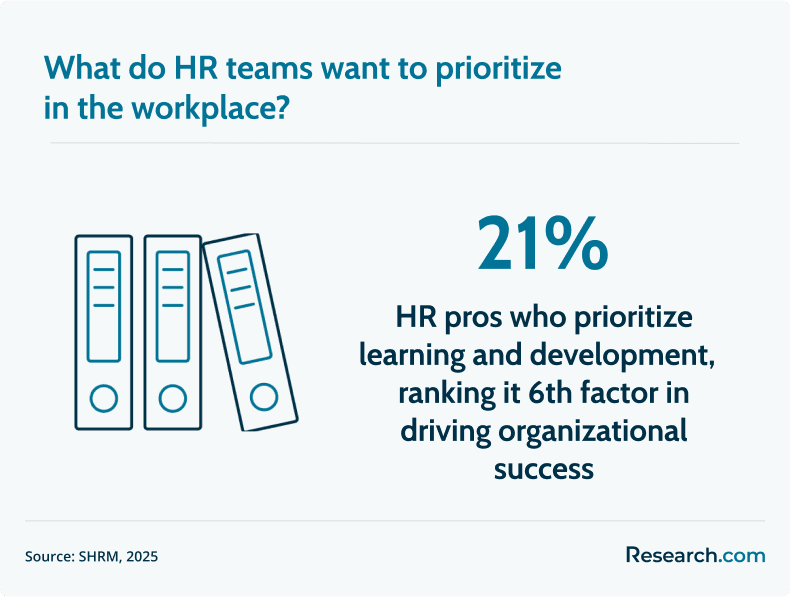
- Curriculum and Instruction: This concentration focuses on curriculum design, assessment, instructional strategy, and program evaluation. It can also apply to workforce learning because performance management (26%) and learning and development (21%) ranked among the top HR priorities in 2024.
- Educational Technology: Students examine digital learning tools, online course design, instructional media, learning platforms, and emerging technologies that influence teaching and training.
- Special Education Leadership: This option emphasizes inclusive education, intervention models, program design, compliance, and policy for diverse learners.
- Organizational Leadership: Similar to many online EdS programs in leadership, this concentration focuses on change management, ethics, policy, team development, and strategic planning across education, nonprofit, public, or corporate settings.
Do not choose a specialization only because it sounds broad or marketable. Review job postings for your intended role and check whether employers prefer administrative licensure, higher education experience, technology expertise, policy experience, or research skills.
How to Choose the Best Online EdS to EdD Program
The strongest EdS to EdD program is not necessarily the cheapest, fastest, or highest-ranked option. It is the program that accepts the right amount of prior credit, fits your schedule, supports your dissertation, meets accreditation expectations, and aligns with your target career path.
Key factors to compare before applying
- Accreditation: Confirm that the institution is accredited by a recognized accrediting body. Accreditation can affect financial aid eligibility, transfer credit, employer recognition, and confidence in academic quality.
- Transfer credit policy: Ask exactly how many EdS credits can apply, whether credits expire, and whether the review happens before enrollment.
- Licensure or endorsement alignment: If you need administrative endorsement, confirm that the program meets the requirements in the state where you plan to work.
- Curriculum and specialization fit: Compare required courses with your career goals. A future superintendent, college dean, instructional designer, and corporate learning executive may need different doctoral preparation.
- Online format: Check whether courses are asynchronous, synchronous, cohort-based, or self-paced. Live sessions can improve engagement but may be harder for educators with evening responsibilities.
- Residency requirements: Determine how often you must visit campus, how long each visit lasts, and whether travel costs are included in program estimates.
- Dissertation support: Ask about faculty advising, research methods preparation, milestone timelines, writing support, and completion expectations.
- Faculty expertise: Review faculty research, professional backgrounds, and experience in your area of interest.
- Total cost: Compare final cost after transfer credits, fees, travel, and aid. Do not rely only on per-credit tuition.
- Student support: Look for advising, library access, technology help, career services, and doctoral writing support.
Questions to ask admissions before you enroll
- How many of my EdS credits will transfer, and can I receive that answer in writing?
- Is the program fully online, or are residencies required?
- Are courses asynchronous, live, or a mix of both?
- What percentage of students finish the dissertation within the advertised timeline?
- How are dissertation chairs assigned?
- Does this program meet administrative licensure or endorsement requirements in my state?
- What fees are not included in the advertised tuition?
- Can working educators realistically complete the program while employed full time?
Common mistakes to avoid
| Mistake | Better approach |
| Choosing the lowest tuition rate without checking total required credits | Calculate total program cost after transfer credit review |
| Assuming all EdS credits will transfer automatically | Request a written transfer evaluation before enrolling |
| Ignoring accreditation | Verify institutional accreditation and any relevant education program accreditation |
| Assuming an online program meets licensure requirements everywhere | Confirm state-specific administrative endorsement rules |
| Underestimating the dissertation | Ask about dissertation milestones, advising structure, and research support |
| Relying only on rankings | Use rankings as a starting point, then compare fit, cost, support, and outcomes |
Students comparing accelerated doctoral options can also review online EdD programs to understand how fast-track structures differ from EdS bridge pathways.
What Career Paths Are Available After an Online EdS to EdD Program?
Graduates of online EdS to EdD programs often pursue leadership roles in K-12 education, higher education, government, nonprofit administration, educational consulting, and workplace learning. The degree may strengthen eligibility for senior roles, but salary and advancement depend on location, employer, experience, licensure, and the scope of responsibility.
| Career path | Listed salary | Typical responsibilities |
| Education Policy Analysts | $65,126 | Analyze trends, evaluate policy options, and recommend improvements that may address educational inequities related to income status, gender, race, and broader social conditions |
| Instructional Coordinators | $77,600 | Develop, assess, and improve curriculum while supporting teachers with instructional methods and technology integration |
| Education Consultants | $94,974 | Advise schools, agencies, or organizations on curriculum, technology, leadership, evaluation, or system improvement |
| College Academic Deans | $105,749 | Lead academic units, supervise faculty matters, guide curriculum decisions, and manage budgets |
| K-12 Principals | $113,360 | Oversee school operations, staff leadership, student discipline, family engagement, compliance, and academic performance |
| Training and Development Managers | $140,590 | Design employee learning programs, assess training needs, create development materials, and measure results |
| School Superintendents | $153,044 | Lead school districts, manage budgets and staffing, implement policy, and collaborate with school boards |
| Chief Learning Officers | $160,062 | Set learning strategy for organizations, align development programs with institutional goals, and oversee large-scale education initiatives |
These roles are not guaranteed outcomes of an EdD, but the degree can support advancement when paired with relevant leadership experience. The doctor of education salary can vary substantially by role, sector, location, and employer size, so students should compare expected earnings with total program cost before enrolling.
This chart compares wages across selected EdD-related careers.
What Is the Job Market for Online EdS to EdD Graduates?
The job market for EdS to EdD graduates is mixed but still offers meaningful opportunities. Some traditional education roles have limited projected growth, while leadership, training, and organizational development roles can provide additional pathways outside the classroom.
U.S. Bureau of Labor Statistics data indicate that several teaching and education leadership occupations are projected to grow slowly or decline between 2024 and 2034. Even so, annual openings continue because schools, colleges, and organizations must replace workers who retire, leave the profession, or move into other roles.
For example, K-12 principals are projected to experience -1.5% growth but still have 20,800 annual job openings. Instructional coordinators show 1.3% projected growth with nearly 21,900 yearly opportunities. In higher education, administrators are projected to grow by 1.7%, with 15,100 annual opportunities, while professors show 1.8% growth and 13,500 openings each year.
EdD graduates may also look beyond traditional school settings. Training and development managers are projected to grow with 3,800 openings annually, while HR managers show nearly 17,900 yearly job opportunities. These roles can be relevant for graduates who combine education expertise with organizational leadership, workforce learning, or talent development experience.
The practical takeaway is that an EdD can broaden leadership options, but students should not assume that the degree alone creates a direct promotion. Experience, licensure, networking, geographic flexibility, and demonstrated results remain important.
This chart shows annual opportunities for careers connected to EdS to EdD preparation.
Which Should You Choose: EdS, EdD, or PhD?
Choosing among the EdS, EdD, and PhD should start with the work you want to do, not the title of the degree. Each credential leads to a different level of specialization, research expectation, and career focus.
Choose an EdS if you want...
- A shorter post-master’s path than a doctorate
- Advanced professional preparation for a specialized education role
- Leadership or supervisory skills without a dissertation requirement
- A credential that may support K–12 administrative or specialist roles
Choose an EdD if you want...
- A terminal applied doctorate focused on practical education problems
- Preparation for system-level leadership in schools, colleges, agencies, or organizations
- A bridge from prior EdS coursework into doctoral study
- Research skills that support decision-making, program improvement, and institutional change
Choose a PhD if you want...
- A research-heavy doctoral experience
- Preparation for scholarly publishing, theory development, or academic research
- A pathway toward professor or researcher roles in higher education
- A longer program with deeper emphasis on original scholarship
If your goal is applied leadership, the EdD is usually the most direct match. If your goal is research and scholarship, the PhD is often stronger. If your goal is specialized professional advancement without doctoral study, the EdS may be enough.
How Can You Assess Accreditation and Quality in Online EdD Programs?
Start by confirming institutional accreditation through a recognized accrediting body. Then review the program’s curriculum, faculty qualifications, dissertation structure, student support, licensure alignment, and external reviews. Quality is not defined by online delivery alone; a strong online EdD should provide rigorous coursework, accessible faculty, clear research milestones, and meaningful support for working professionals.
Also check whether the program’s accreditation and curriculum match your career goals. For example, an educator seeking administrative endorsement should verify state requirements, while a higher education professional may care more about research mentoring, academic leadership coursework, and dissertation relevance.
What Graduates Say About Online EdS to EdD Programs
-
: "The online bridge format let me keep teaching while working toward the next stage of my career. Balancing school responsibilities, family commitments, and research was demanding, but transferring EdS credits helped me start further along. I now work as an assistant principal, and the program played a major role in helping me get there.
—Kerry"
-
: "The statistics courses pushed me, but I was not left on my own. My online cohort became an important support system, even though we lived in different places. I focused my dissertation on curriculum design, and I now apply that work directly as an instructional coordinator.
—Liamson"
-
: "I expected an online doctorate to feel disconnected, but my classmates became a real professional community. We exchanged feedback, shared resources, and kept each other motivated. Faculty support was especially valuable during the dissertation stage.
—Dianna"
Key Insights
- An online EdS to EdD program is best for educators who already hold an EdS and want a shorter route to a terminal applied doctorate.
- Transfer credit policy is one of the most important cost and timeline factors. Some programs accept up to 30 EdS credits, but approval varies by school.
- Most programs take two to three years, but dissertation progress can extend completion time.
- The EdD is designed for applied leadership; the PhD is better for research-intensive academic careers, and the EdS may be enough for some specialist or administrative goals.
- Program cost should be evaluated after transfer credits, fees, residency travel, and dissertation expenses are included.
- Accreditation, licensure alignment, dissertation support, and faculty expertise matter as much as tuition and program speed.
- Career outcomes depend on experience, location, employer, licensure, and leadership record. The EdD can strengthen advancement potential, but it does not guarantee a specific role or salary.
- Before enrolling, request a written transfer credit evaluation and ask detailed questions about dissertation timelines, residencies, total cost, and state requirements.
References
- Lanier, L., Zhou, E., Regio, A., & Hardy, T. (2024). Council of Graduate Schools report, Graduate Enrollment and Degrees: 2013 to 2023. https://cgsnet.org/data-insights/admissions-enrollment-and-completion/graduate-enrollment-and-degrees
- Ma, J., Pender, M., & Oster, M. (2024). College Board, Trends in College Pricing and Student Aid 2024. https://research.collegeboard.org/trends/college-pricing
- National Student Clearinghouse Research Center. (2024). CTEE Fall 2024 Dashboard, Enrollment in Top 5 Major Groups for Education Family at Graduate Institutions. https://public.tableau.com/app/profile/researchcenter/viz/CTEEFall2024dashboard/CTEEFall2024
- PayScale. (2025, August 5). Average School Superintendent Salary. Retrieved September 30, 2025, from https://www.payscale.com/research/US/Job=School_Superintendent/Salary
- Steiner, E. D., Doan, S., Woo, A., Gittens, A. D., Lawrence, R. A., Berdie, L., Wolfe, R. L., Greer, L., & Schwartz, H. L. (2022, June 14). RAND report, Restoring Teacher and Principal Well-Being Is an Essential Step for Rebuilding Schools: Findings from the State of the American Teacher and State of the American Principal Surveys. https://www.rand.org/pubs/research_reports/RRA1108-4.html
- U.S. Bureau of Labor Statistics. (2024). Occupational Employment and Wage Statistics Profiles, Instructional coordinators interactive data. Retrieved September 30, 2025, from https://data.bls.gov/oesprofile
- U.S. Bureau of Labor Statistics. (2025, August 28). Employment Projections, occupational projections, 2024–2034, and worker characteristics, 2024. https://www.bls.gov/emp/tables/occupational-projections-and-characteristics.htm
- ZipRecruiter. (2025, September 22). Educational Consultant Salary. Retrieved September 30, 2025, from https://www.ziprecruiter.com/Salaries/Educational-Consultant-Salary
Other Things You Should Know About Online EdS to EdD Programs
Yes, many online EdS to EdD programs require one or more short residencies, often for orientation, cohort building, or dissertation support. Some schools waive campus visits entirely, while others schedule intensive sessions of 2 to 5 days each year as a condition for graduation.
Entry requirements for 2027 top schools providing online EdS to EdD programs typically include a completed Education Specialist (EdS) degree, a strong academic record, and letters of recommendation. Many programs require a statement of purpose and a resume detailing relevant educational experience. Some may also require an interview or specific test scores.
In 2027, tuition costs for top online EdS to EdD programs vary widely. Typically, they range from $500 to $1,200 per credit hour. Additional fees may apply, including technology and residency fees. It's essential for prospective students to compare the total program cost and available financial aid options.
For 2027, top schools offer various financial aid options, including scholarships, grants, and federal student aid. Specific programs may also offer assistantships and tuition reimbursements. It's crucial to check each school's financial aid office for eligibility and application deadlines.