
2027 Fastest Online Early Childhood Development Degree Programs

Co-Founder and Chief Data Scientist
Choosing an accelerated online early childhood development degree is usually a time-and-money decision: you want a credential that helps you work with young children sooner, but you also need it to be recognized by employers, licensing agencies, and transfer-friendly colleges. The fastest option is not always the best option if it lacks accreditation, field experience, or alignment with your state’s requirements.
This guide explains how fast online early childhood development programs work, who they are best for, what they cost, which careers they can lead to, and how to compare programs without relying only on speed. You will also find a ranked program list, salary and job market context, decision tables, common mistakes to avoid, and practical steps for choosing a program that fits your schedule and career goals.
Quick answer: Is the fastest online early childhood development degree worth it?
The fastest online early childhood development degree can be worth it if the school is properly accredited, the curriculum includes supervised field experience when required, and the program matches the role you want. Certificates may support fast entry into childcare or assistant roles, while associate and bachelor’s programs offer broader preparation for preschool teaching, center leadership, public pre-K pathways, or graduate study.
| Best fit | Why it may work | What to verify before enrolling |
| Working childcare employees | Online classes can fit around shifts, and prior experience may support faster progress. | Ask whether your workplace can serve as a practicum or field placement site. |
| Students with transfer credits | Degree-completion programs may shorten the time to a bachelor’s degree. | Confirm how many credits transfer before you commit. |
| Career changers | Accelerated formats can build foundational knowledge quickly. | Check whether the credential qualifies you for your target role in your state. |
| Future lead teachers or directors | A bachelor’s degree may support advancement beyond entry-level childcare roles. | Review state licensing, teacher certification, and administrator requirements. |
What are the benefits of getting the fastest online early childhood development degree?
- An accelerated online child development degree can prepare you for roles such as preschool teacher, childcare center director, teacher’s aide, or early intervention assistant.
- According to the U.S. Bureau of Labor Statistics, preschool teachers earn a median salary of around $38,000 per year, while childcare center directors can earn over $50,000, depending on location and experience.
- Studying online allows you to complete your degree faster, often in 12–24 months, while balancing work or family responsibilities from the comfort of home.
What can I expect from the fastest online early childhood development degree?
An accelerated online early childhood development degree teaches how young children grow, learn, communicate, regulate emotions, and build early academic and social skills. Most programs focus on children from birth through age eight and combine child development theory with practical classroom strategies.
Coursework commonly covers developmental milestones, play-based learning, curriculum planning, observation and assessment, health and safety, family partnerships, inclusive education, and classroom management. Even when the academic coursework is fully online, many programs still require supervised fieldwork, practicum hours, or classroom observation that you complete at an approved site near you.
The “fastest” programs usually shorten the calendar through 5-week, 7.5-week, or 8-week terms, year-round enrollment, transfer-credit pathways, or competency-based pacing. Speed can be useful, but it also increases weekly workload. A program that takes fewer months may require more reading, assignments, lesson planning, and fieldwork each week.
Credential levels in early childhood development
| Credential | Typical purpose | Best for | Important limitation |
| Certificate | Builds entry-level childcare knowledge quickly. | Assistant teachers, childcare workers, or current employees meeting education requirements. | May not qualify you for lead teacher, director, or licensed teaching roles. |
| Associate degree | Provides broader preparation in child development and early learning. | Students seeking preschool, assistant teaching, or transfer pathways. | Some public school or leadership roles may require a bachelor’s degree. |
| Bachelor’s degree | Prepares for advanced classroom, program, or administrative pathways. | Students seeking stronger career mobility or graduate study options. | State licensure requirements vary and may require specific approvals or exams. |
| Graduate degree | Supports leadership, research, curriculum, policy, or specialist roles. | Experienced educators who want advancement beyond direct caregiving or teaching. | Costs and time commitments are higher, so ROI should be reviewed carefully. |
Where can I work with the fastest online early childhood development degree?
Graduates may work in settings that serve infants, toddlers, preschoolers, kindergarten-age children, and families. The exact job options depend on the credential level, state rules, employer requirements, and whether the program includes field experience.
Common employers include preschools, childcare centers, Head Start and Early Head Start programs, public pre-K classrooms, private early learning centers, nonprofit family-service organizations, and community programs focused on school readiness. Some graduates also work in elementary school support roles, early intervention environments, or parent education programs.
- Faith-based childcare centers and schools
- Home-based childcare programs
- State-funded early learning initiatives
- Hospitals or health centers offering family support services
How much can I make with the fastest online early childhood development degree?
Earnings in early childhood development vary widely by role, state, employer type, union coverage, public versus private setting, credentials, and years of experience. Graduates of an accelerated online early childhood development degree may start in childcare or preschool roles and later move into lead teacher, coordinator, family-support, or director positions.
As preschool teachers, the median annual wage was $37,120 in May 2024, with the middle 50% earning between $28,300 and $60,070. Teachers working in public schools, including pre-K programs, can earn significantly more, often over $60,000, depending on location.
Those moving into leadership roles, like childcare or preschool center directors, see higher earnings—the annual mean wage nationally falls around $68,000 to $74,000 in many regions. Overall, this degree can open doors to roles with median salaries ranging from $37K to $70K, but salaries are not guaranteed and should be checked against local job postings before enrolling.
| Role | Salary information stated in this guide | What affects pay most |
| Preschool teacher | Median annual wage was $37,120 in May 2024. | Public vs. private setting, state requirements, experience, and location. |
| Special education teacher | Annual median wage of $64,270 in 2024. | Licensure, degree level, school district, and specialization. |
| Childcare or preschool center director | Annual mean wage nationally falls around $68,000 to $74,000 in many regions. | Center size, management responsibility, licensing rules, and employer type. |
- Fastest Online Early Childhood Development Degree Programs for 2027
- How long does it take to complete the fastest online early childhood development program?
- How does the fastest online early childhood development program compare to an on-campus program?
- What is the average cost of the fastest online early childhood development program?
- What are the financial aid options for students enrolling in the fastest online early childhood development program?
- What are the prerequisites for enrolling in the fastest online early childhood development program?
- What courses are typically in the fastest online early childhood development program?
- What types of specializations are available in the fastest online early childhood development program?
- How do you choose the best among the fastest online early childhood development degree programs?
- How can advanced credentials support career growth in early childhood education?
- How can I maximize success in an accelerated online early childhood development program?
- What challenges could slow progress in accelerated online early childhood development programs?
- What career paths are available for graduates of the fastest online early childhood development degree programs?
- What is the job market like for graduates of the fastest online early childhood development degree program?
- What student support services are available in accelerated online early childhood development programs?
- Job market summary
- Key insights and next steps
Fastest Online Early Childhood Development Degree Programs for 2027
How do we rank schools?
Research.com evaluates online early childhood development programs to help students compare options using consistent, data-informed criteria. Because accelerated programs can differ significantly in cost, transfer policies, delivery format, and fieldwork expectations, rankings should be used as a starting point rather than the only reason to choose a school.
This ranking is based on a transparent methodology and draws from established education data sources, including the Integrated Postsecondary Education Data System (IPEDS), Peterson's databases including the Distance Learning Licensed Data Set, and the College Scorecard database from the National Center for Education Statistics.
Use the list below to compare program speed, tuition, required credits, accreditation, and delivery model. Before applying, confirm all details directly with the institution because tuition, admission rules, and program formats can change.
1. Appalachian State University (BS in Child Development - Birth through Kindergarten)
Appalachian State University offers an online Bachelor of Science in Child Development - Birth through Kindergarten for students preparing to support children from infancy through kindergarten. The part-time format combines synchronous and asynchronous coursework with practicum-based learning, making it a practical choice for students who want an online structure but still value guided interaction and field experience.
- Program Length: 12-1 months
- Tracks/Concentrations: Birth through Kindergarten
- Cost per Credit: $ 663.55
- Required Credits to Graduate: 120 credits
- Accreditation: Southern Association of Colleges and Schools Commission on Colleges (SACSCOC).
2. West Virginia University (BS in Child Development and Family Studies)
West Virginia University delivers an online Bachelor of Science in Child Development and Family Studies for students interested in working with children from birth through age eight. The asynchronous format supports independent scheduling while covering children’s academic, social, and cognitive development through theory, field experiences, and internships.
- Program Length: 3-4 years
- Tracks/Concentrations: Child Development and Family Studies
- Cost per Credit: $503 per credit
- Required Credits to Graduate: 120 credits
- Accreditation: Higher Learning Commission (HLC)
3. Central Michigan University (Bachelor of Early Childhood Development & Learning)
Central Michigan University offers a 100% online Bachelor of Early Childhood Development & Learning designed especially for transfer students. The program is aimed at learners who want to work in non-elementary school environments such as childcare centers and Head Start programs, and it may be faster for students who can bring in substantial prior coursework.
- Program Length: 12-18 months
- Tracks/Concentrations: Early Childhood Development and Learning
- Cost per Credit: $552
- Required Credits to Graduate: 120 credits (bachelor's)
- Accreditation: Higher Learning Commission (HLC)
4. Walden University (BS in Early Childhood Studies - Tempo Learning)
Walden University offers an online Bachelor of Science in Early Childhood Studies through the Tempo Learning® competency-based model. The format may appeal to disciplined, self-directed learners because progress is based on demonstrating competencies rather than following a fully traditional semester rhythm. The program is aligned with NAEYC standards and emphasizes children’s health, safety, and development.
- Program Length: 15 months (competency-based)
- Tracks/Concentrations: Early Childhood Studies
- Cost per Credit: Estimated total under $8,000 for 15 months
- Required Credits to Graduate: 180 quarter credits
- Accreditation: Higher Learning Commission (HLC)
5. Southern Oregon University
Southern Oregon University offers an online Early Childhood Development BA/BS degree-completion pathway for working adults who have already completed roughly two years of college coursework. Students typically finish lower-division requirements at a community college and then complete upper-division early childhood development coursework online through SOU.
- Program Length: 2 years
- Tracks/Concentrations: Early Childhood Development
- Cost per Credit: $151.41
- Required Credits to Graduate: 180 quarter credits (bachelor's total)
- Accreditation: Northwest Commission on Colleges and Universities (NWCCU)
6. University of the Potomac (Bachelor of Science - Early Childhood Development)
The University of the Potomac provides a fully online Bachelor of Science in Early Childhood Development. The program focuses on developmental needs and teaching approaches for children from infancy through the third grade, with flexibility for students who want a traditional bachelor’s path that may be completed in less time through accelerated options.
- Program Length: 3-4 years
- Tracks/Concentrations: Early Childhood Development.
- Cost per Credit: $240
- Required Credits to Graduate: 120 academic credits
- Accreditation: Middle States Commission on Higher Education (MSCHE)
7. Pacific Oaks College
Pacific Oaks College offers a 100% online Bachelor of Arts in Early Childhood Education with attention to inquiry, reflection, collaboration, cultural diversity, and the social factors that influence learning. Students may accelerate progress through the Credit for Learning from Experience option, which allows up to 24 credits for qualifying workplace experience.
- Program Length: 2 years
- Tracks/Concentrations: Early Childhood Education
- Cost per Credit: $712
- Required Credits to Graduate: 121 credits
- Accreditation: Western Association of Schools and Colleges (WASC) Senior College and University Commission.
8. Millersville University
Millersville University offers an online Early Childhood Education Bachelor of Science in Education degree-completion program for students with at least 30 transferable credits. The program is designed for candidates seeking Prekindergarten to Grade 4 certification in Pennsylvania and uses accelerated 7.5-week terms for major courses.
- Program Length: 7.5-week terms for those with at least 30 transferable credits.
- Tracks/Concentrations: Early Childhood Education PreK-4 Certification
- Cost per Credit: $605
- Required Credits to Graduate: 120 credits
- Accreditation: Council for the Accreditation of Education Preparation (CAEP), National Association for the Education of Young Children (NAEYC), and Pennsylvania Department of Education (PDE).
9. University of Arizona Global Campus (BA in Early Childhood Education)
The University of Arizona Global Campus offers an online Bachelor of Arts in Early Childhood Education using accelerated five-week courses. Students take one subject at a time while studying child learning, development, and instructional strategies for childcare-focused career paths.
- Program Length: Accelerated 5-week courses
- Tracks/Concentrations: Early Childhood Education
- Cost per Credit: $460.00 per credit
- Required Credits to Graduate: 120 credits
- Accreditation: WASC Senior College and University Commission (WSCUC)
10. University of Illinois Urbana-Champaign (Early Childhood Professional Education Program)
The University of Illinois Urbana-Champaign offers a fully online Early Childhood Professional Education Program for students who already hold an associate's degree in a related field. Coursework is online, but students complete required field experience locally. The program uses both eight-week and 16-week formats and can be completed in as few as 2.5 years.
- Program Length: 2.5 years (7 part-time semesters)
- Tracks/Concentrations: Birth-2nd Grade and Gateways Level 5 Credential
- Cost per Credit: $485 per credit hour
- Required Credits to Graduate: 120 credit hours
- Accreditation: Council for the Accreditation of Educator Preparation (CAEP) and Illinois State Board of Education (ISBE) approved.
How long does it take to complete the fastest online early childhood development degree program?
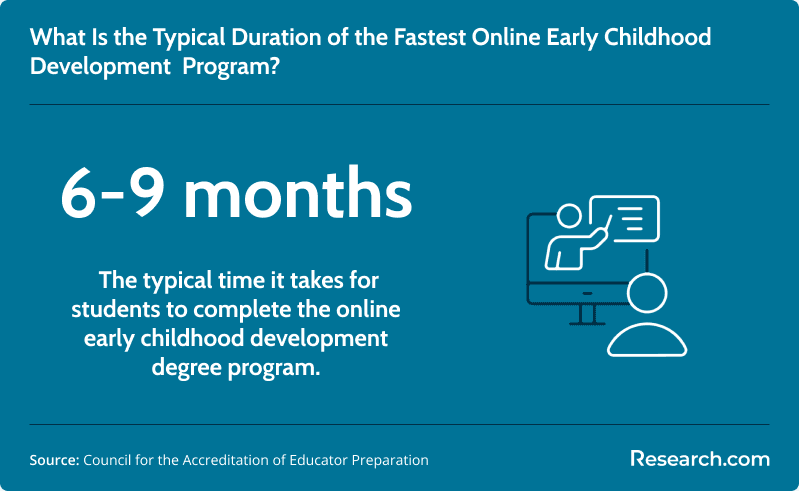
The shortest completion time depends on the credential. Certificate programs can take as little as six months to one year, especially when they are designed for quick workforce entry or for current childcare workers who need to meet minimum education requirements. Some certificates can be completed in 6 to 9 months with full-time, accelerated study.
Accelerated associate degrees usually take 12–18 months when students transfer credits, take heavier course loads, or study year-round. Bachelor’s degree-completion programs can sometimes be completed in about 18–24 months if you already have substantial college credit and the school accepts most of it.
Students who have experience with intensive online formats, such as the shortest data science bootcamp online or the shortest data analytics training courses online, may already understand the discipline required for compressed terms. However, early childhood programs add a practical element: you may need to coordinate field hours, background checks, and local site approvals.
If you are using an early childhood development degree as a first step toward advanced work with children, review future requirements early. For example, the child psychologist education requirements are much more extensive than those for entry-level childcare or preschool roles.
| Program type | Fast completion estimate stated in this guide | What can slow you down |
| Certificate | Six months to one year; often 6 to 9 months full time. | Part-time enrollment, practicum scheduling, or employer documentation. |
| Associate degree | 12–18 months with transfer credit or intensive course loads. | General education requirements and limited transfer credit. |
| Bachelor’s completion program | About 18–24 months when maximum transfer credit applies. | Missing prerequisites, fieldwork, state-specific requirements, or limited course availability. |
How does the fastest online early childhood development program compare to an on-campus program?
Accelerated online programs are usually built for flexibility and speed. They often use 5- to 8-week sessions, asynchronous coursework, year-round start dates, and transfer-friendly structures. This can be ideal if you are employed, parenting, or unable to commute to campus several days a week.
On-campus programs typically follow a more traditional semester calendar and may take two to four years depending on the degree level. They may offer more face-to-face mentoring, immediate classroom access, and stronger in-person peer networks. For some students, that structure makes learning easier and provides more accountability.
Online does not mean fully remote in every respect. Early childhood education is a hands-on field, so even online programs may require in-person practicums, observations, student teaching, or field placements. If you later plan to advance into leadership, curriculum, or administrative roles, an online Master's in Early Childhood Education may be a logical next step.
| Factor | Accelerated online program | On-campus program |
| Schedule | Often more flexible, with shorter terms and online coursework. | Usually follows scheduled class meetings and academic semesters. |
| Completion speed | Can be faster with transfer credit, year-round enrollment, or competency-based pacing. | Often takes longer because of standard term structures. |
| Field experience | Usually arranged locally if required. | May be coordinated through campus partner sites. |
| Best for | Working adults, transfer students, and self-directed learners. | Students who want in-person instruction, campus resources, and face-to-face support. |
| Main risk | Falling behind in condensed courses or choosing a program that does not meet state rules. | Less flexibility and potentially higher commuting or housing costs. |
What is the average cost of the fastest online early childhood development degree program?
The average cost of the fastest online early childhood development degree programs typically ranges from $3,000 to $10,000, depending on credential level, institution type, tuition model, fees, and transfer credit. Short-term certificate programs from community colleges or vocational schools are commonly the least expensive, often costing between $3,000 and $5,000 in total.
Accelerated associate or bachelor’s degree programs from regionally accredited universities tend to cost more, with expenses ranging from $7,000 to $10,000 per year. However, a low tuition rate does not always mean the lowest total cost. Transfer credit, prior learning assessment, course repetition policies, fees, practicum costs, books, and technology requirements can change the final price.
If you expect to continue into graduate study, compare bachelor’s costs with future graduate costs as part of your long-term plan. Students seeking leadership pathways may later explore the cheapest online master's degree in early childhood education to reduce the cost of advancement.
Understanding potential earnings matters when weighing cost. Special education teachers received an annual median wage of $64,270 in 2024 while preschool teachers earned $37,120. Salary outcomes depend on credentials, state rules, employer type, and experience, so use local job postings alongside national wage data.
This chart presents the annual median wage for professionals holding an early childhood development major, offering insight into typical earnings across various roles within the field.
What are the financial aid options for students enrolling in the fastest online early childhood development degree program?
Students in accredited online early childhood development programs may qualify for several forms of financial aid. Federal aid is often the first place to start. To be considered for Pell Grants, federal student loans, and other federal aid, complete the Free Application for Federal Student Aid (FAFSA) and verify that the program meets eligibility requirements.
Schools may also offer institutional scholarships, payment plans, online learner discounts, transfer scholarships, or tuition reductions for employees of partner childcare organizations. If you already work in early childhood education, ask your employer whether tuition assistance, credential support, or reimbursement is available.
Some states provide child development associate (CDA) credential scholarships or workforce development grants to help pay for certificates and associate degrees. Deadlines can be early, so contact the financial aid office before your intended start date.
If you are comparing child-focused careers outside early childhood classrooms, review related pathways carefully. For example, becoming a child life specialist has different education and experience expectations, and you can compare that path through this guide to child life specialist salary with bachelor degree.
What are the prerequisites for enrolling in the fastest online early childhood development degree program?
Admission requirements vary by credential level. Certificate programs usually require a high school diploma or GED, basic computer skills, and sometimes current employment in a childcare setting. Programs that include fieldwork may also require background checks, immunization documentation, or site approval before you begin working with children.
Associate and bachelor’s programs typically require official transcripts. Bachelor’s completion programs may expect prior college credits or an associate degree in early childhood education or a related field. Some schools also require a minimum GPA, often around 2.0–2.5, plus an application essay, personal statement, or letters of recommendation.
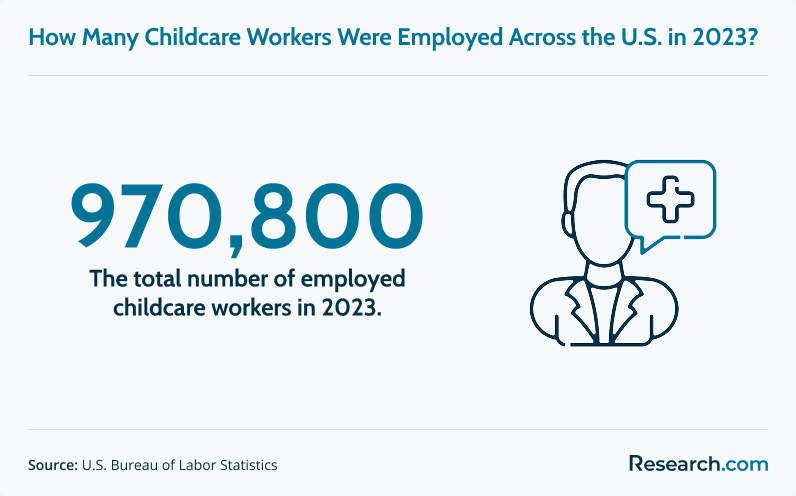
In 2023, there were 970,800 childcare workers employed in various sectors. That large workforce includes people with different education levels, but formal credentials can help applicants qualify for more structured roles and meet employer expectations.
If you want broader work with children and families, you may also compare early childhood development with careers in child psychology. Those careers often require additional education beyond a fast undergraduate credential.
What courses are typically in the fastest online early childhood development degree program?
Most accelerated early childhood development programs cover the same core competencies as traditional programs, but the work is compressed into shorter terms. Expect frequent assignments, discussion posts, lesson plans, observation reports, and applied projects.
- Child Development: Covers physical, emotional, cognitive, language, and social development from birth to age 8.
- Health, Safety, and Nutrition: Teaches safe supervision, wellness practices, nutrition basics, and risk reduction in early learning settings.
- Curriculum and Instruction: Focuses on developmentally appropriate learning activities, play-based instruction, and lesson planning.
- Observation and Assessment: Shows how to document developmental progress, identify milestones, and use assessment ethically.
- Family and Community Relationships: Builds skills for communicating with families and connecting children to community supports.
Additional classes may include Guidance and Discipline, Special Needs in Early Childhood, Language and Literacy Development, and Administration of Early Childhood Programs. Many programs also include practicum or supervised field experience that must be arranged locally.
Accelerated programs in any discipline require focus. Students comparing formats across fields, including the shortest online ethical hacking dual certification programs, should recognize that early childhood coursework adds child-safety, observation, and fieldwork responsibilities that cannot be treated like purely online academic tasks.
What types of specializations are available in the fastest online early childhood development degree program?
Specializations allow students to align coursework with a specific age group, service model, or career path. Not every accelerated program offers concentrations, especially at the certificate level, but bachelor’s programs often provide more room for focused study.
- Infant and Toddler Care: Emphasizes caregiving, attachment, developmental routines, and learning environments for children from birth to age 3.
- Preschool Education: Focuses on teaching strategies, classroom routines, early literacy, and learning experiences for ages 3–5.
- Special Needs and Inclusive Education: Prepares students to support children with disabilities, developmental delays, and diverse learning needs.
- Administration and Leadership: Covers childcare center operations, staff supervision, compliance, program planning, and family communication.
- Family and Community Engagement: Builds skills in parent partnerships, outreach, resource navigation, and community-based support.
Focused training can be useful when you already know your target role. Similar to students who choose the shortest cybersecurity training online programs for targeted technical preparation, early childhood students should choose a specialization only when it supports a clear employment or advancement goal.
This chart highlights the key sectors and organizations that are the largest employers of preschool and childcare center directors. As shown in the chart, 72% of employers are child day care centers. Understanding these employers can help you identify potential career paths and target your job search effectively within the early childhood education landscape.
How do you choose the best among the fastest online early childhood development degree programs?
The best accelerated program is the one that is recognized, affordable, manageable, and aligned with your state and career goal. Do not choose only because a program advertises the shortest timeline.
1. Verify accreditation first
Confirm that the institution is properly accredited through a recognized accreditor. The Council for Higher Education Accreditation lists regionally accredited organizations and can help you understand what legitimate accreditation looks like. For teacher-preparation pathways, also review whether the program has approvals such as CAEP, NAEYC alignment, or state education department recognition when relevant.
2. Match the program to state requirements
Early childhood requirements differ by state and employer. Ask whether the program qualifies graduates for childcare employment, lead teacher status, public pre-K roles, director credentials, or teacher certification in your state. If the answer is vague, keep looking.
3. Review speed honestly
Accelerated terms can help you finish faster, but they also concentrate the workload. Ask how many hours per week students typically spend on coursework and whether field experience must be completed during work hours.
4. Compare the total price, not just tuition
Review tuition per credit, required credits, transfer credit limits, technology fees, books, background checks, practicum-related expenses, and graduation fees. A higher per-credit price may still cost less overall if the school accepts more transfer credits.
5. Check student support and outcomes
Look for academic advising, tutoring, field placement guidance, technical support, career services, licensure guidance, graduation rates, and job placement information. Admissions counselors should provide clear answers, not pressure.
| Question to ask | Why it matters |
| Is the institution accredited, and by whom? | Accreditation affects transferability, financial aid eligibility, employer recognition, and graduate school options. |
| Will this program meet requirements in my state? | Online programs may not automatically satisfy state-specific childcare, teaching, or director rules. |
| How many of my credits will transfer? | Transfer credit can significantly reduce both completion time and total cost. |
| Where can I complete fieldwork? | Practicum logistics can delay graduation if site approval is difficult. |
| What support exists for online students? | Accelerated students need fast access to advising, tutoring, technical help, and placement guidance. |
How can advanced credentials support career growth in early childhood education?
Advanced credentials can help experienced early childhood professionals move beyond entry-level classroom or childcare roles into leadership, curriculum design, advocacy, training, administration, or policy work. A bachelor’s degree may support advancement to lead teacher or director roles, while graduate study may be useful for program leadership, higher education, research, or systems-level work.
Before pursuing an advanced degree, compare the cost with the specific role you want. If your goal is executive leadership in education, an option such as the most affordable online doctoral degree in educational leadership may be relevant later, but it is not necessary for most entry-level early childhood roles.
How can I maximize success in an accelerated online early childhood development program?
Success in a fast online program depends on planning before the term begins. Condensed courses leave little room for falling behind, especially when readings, lesson plans, observations, and fieldwork overlap.
- Map your weekly schedule before classes start. Block time for readings, discussions, assignments, and practicum tasks.
- Confirm technology requirements early. Make sure your computer, internet, camera, and learning platform access work before deadlines begin.
- Arrange fieldwork as soon as possible. Background checks and site approvals can take time.
- Use advising proactively. Ask which courses must be taken in sequence and which terms are most demanding.
- Build a peer network. Classmates can help with accountability, study routines, and navigating online systems.
- Connect coursework to practice. Apply concepts to real classroom scenarios, observations, and child-development examples.
If you are comparing accelerated degree pacing beyond education, reviewing programs such as the fastest online philosophy programs can help you see how different fields structure condensed online learning.
What challenges could slow progress in accelerated online early childhood development programs?
The biggest challenges are time pressure, self-directed learning, fieldwork scheduling, and balancing school with work or caregiving. Online students may also underestimate how much communication is needed with instructors, advisors, and practicum sites.
| Common challenge | Why it happens | Better strategy |
| Falling behind in short courses | Assignments arrive quickly in 5- to 8-week formats. | Use a weekly calendar and start major assignments early. |
| Practicum delays | Local sites may require background checks or approvals. | Ask about placement rules before enrollment and identify sites early. |
| Choosing by speed alone | Fast advertising can distract from accreditation and outcomes. | Compare accreditation, state alignment, support, cost, and transfer policies. |
| Underestimating total cost | Fees, books, and repeated courses can raise expenses. | Request a full cost estimate in writing. |
| Assuming online means easy | Accelerated online courses often require more independent discipline. | Treat the program like a scheduled commitment, not a flexible side task. |
If your main concern is affordability rather than speed, comparing cost-focused options in other fields, such as inexpensive MLIS online programs, can be a useful reminder to evaluate total cost, transferability, and career fit together.
What career paths are available for graduates of the fastest online early childhood development degree programs?
Career options depend on credential level and state requirements. A certificate may support assistant or childcare roles, while an associate or bachelor’s degree can improve access to preschool teaching, lead teacher, family support, program coordination, or administrative pathways.
- Preschool Teacher: Plan lessons and guide children ages 3 to 5 in private centers, Head Start, or public pre-K programs. About 61,400 job openings per year for preschool teachers are estimated through 2033.
- Childcare Center Teacher or Assistant: Support infants, toddlers, and preschoolers in daycare and early learning settings.
- Infant/Toddler Caregiver: Provide nurturing routines, developmental support, and responsive care for babies and very young children.
- Teacher’s Aide or Paraprofessional: Assist lead teachers with classroom activities, supervision, and child support.
- Family Support Specialist: Help families access services and strengthen healthy child development at home and in the community.
With additional education, such as a Master’s in Child Development, graduates may pursue program coordination, child advocacy, developmental research, curriculum roles, or leadership positions. Advanced roles usually require more experience and may have additional credential requirements.
What is the job market like for graduates of the fastest online early childhood development degree program?
The job market is supported by ongoing need for trained childcare workers, preschool teachers, and early learning staff. Demand is influenced by staff turnover, public pre-K expansion in some areas, family demand for childcare, and employer preference for candidates with formal preparation.
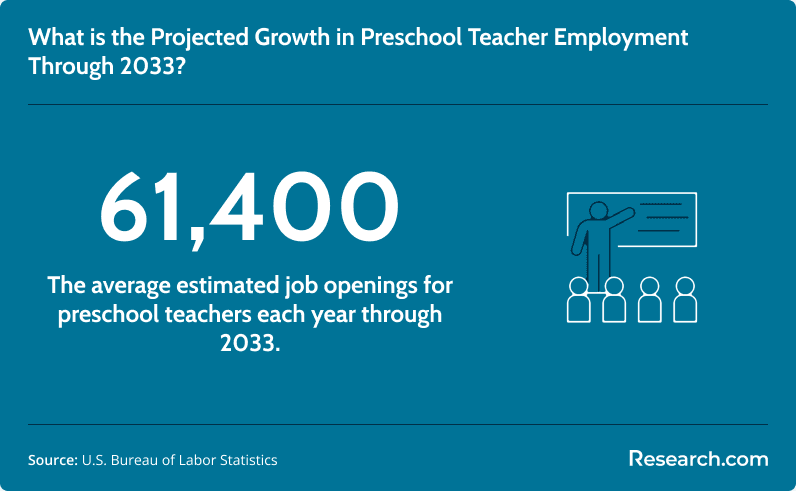
According to the U.S. Bureau of Labor Statistics, employment of preschool teachers is projected to grow about 4% from 2023 to 2033, which is about as fast as the average for all occupations. The field also has recurring openings, with about 61,400 job openings per year for preschool teachers estimated through 2033.
Graduates with accredited certificates or associate degrees may qualify for entry-level roles, while bachelor’s graduates may be more competitive for lead teacher, public pre-K, or leadership pathways depending on state rules. The child care sector has also faced hiring challenges, and the demand for qualified childcare workers and preschool teachers remains an important labor market issue.
What student support services are available in accelerated online early childhood development programs?
Strong student support is especially important in accelerated programs because short terms leave less time to recover from confusion, technology problems, or placement delays. Look for programs that offer fast responses and online-accessible services, not just campus-based resources.
- Academic advising: Helps with course sequencing, transfer credit, degree planning, and graduation timelines.
- Virtual tutoring: Supports writing, child development concepts, lesson planning, and assessment assignments.
- Technical support: Keeps students connected to learning platforms, video tools, and digital course materials.
- Field placement guidance: Helps students understand practicum requirements, documentation, and site approval.
- Career services: Supports resume writing, interview preparation, job searches, and employer connections.
- Mental health and wellness resources: Can help students manage stress during condensed terms.
Students comparing advanced online education formats may also review support structures in programs such as the shortest EdD program, where advising and pacing are equally important for completion.
Common mistakes to avoid when choosing a fast online early childhood development degree
- Choosing the shortest program without checking accreditation. A fast credential has limited value if employers, licensing agencies, or graduate schools do not recognize it.
- Assuming every online program meets your state’s requirements. State rules for childcare, public pre-K, teacher certification, and director credentials differ.
- Ignoring fieldwork logistics. Practicum hours may require daytime availability, background checks, and approved local sites.
- Comparing only tuition per credit. Required credits, fees, books, transfer limits, and repeated courses affect the real cost.
- Overloading your schedule. Accelerated courses can be intense, especially if you work full time or care for family members.
- Relying only on rankings. Rankings help narrow choices, but your best program depends on your location, goals, credits, budget, and state rules.
Current trends affecting early childhood development students
Early childhood education is being shaped by workforce shortages, demand for trained childcare professionals, expanded attention to school readiness, and growing employer preference for formal credentials. Public and private providers increasingly need staff who understand developmentally appropriate practice, inclusive classrooms, family engagement, and child safety.
Online education has also become more common for working adults, but the strongest programs still connect online coursework to real settings through field experiences and observations. Technology may support lesson planning, family communication, documentation, and training, but it does not replace the human relationship-building central to early childhood work.
Key Insights
- The fastest online early childhood development programs are useful only when they are accredited, state-aligned, and connected to your actual career goal.
- Certificates may be completed in as little as six months to one year, while bachelor’s completion programs can often take about 18 to 24 months for students with significant transfer credit.
- Accelerated formats usually rely on 5- to 8-week terms, year-round study, transfer credit, or competency-based pacing, so weekly workload can be heavy.
- Costs generally range from $3,000 to $10,000, with certificate programs often costing around $3,000 to $5,000 and accelerated associate or bachelor’s programs commonly ranging from $7,000 to $10,000 per year.
- Preschool teachers earned a median annual wage of $37,120 in May 2024, and employment is projected to grow about 4% from 2023 to 2033.
- About 61,400 job openings per year for preschool teachers are estimated through 2033, but pay and opportunity vary significantly by location, employer type, and credential level.
- Before enrolling, ask about accreditation, transfer credit, fieldwork, total cost, state requirements, student support, and job outcomes.
References:
- Council for Higher Education Accreditation. (n.d.). Regional accrediting organizations.
- National Association for Child Development. (n.d.). Research.
- National Association for the Education of Young Children. (n.d.). Accreditation research databases.
- U.S. Bureau of Labor Statistics. (2024). Childcare workers: Occupational outlook handbook. U.S. Department of Labor.
- U.S. Bureau of Labor Statistics. (2024). Preschool and childcare center directors: Occupational outlook handbook. U.S. Department of Labor.
- U.S. Bureau of Labor Statistics. (2024). Preschool teachers: Occupational outlook handbook. U.S. Department of Labor.
- U.S. Bureau of Labor Statistics. (2024). Special education teachers: Occupational outlook handbook. U.S. Department of Labor.
- U.S. Bureau of Labor Statistics. (2024). Teacher assistants: Occupational outlook handbook. U.S. Department of Labor.
Other Things You Should Know About the Fastest Online Early Childhood Development Degree Programs
Yes. Regionally accredited transfer credits can reduce the remaining coursework, and many accelerated programs accept up to 60 semester credits toward a 120-credit bachelor’s degree. Most schools require official transcripts and a minimum 2.0 GPA, and some cap transfer credit acceptance at the upper-division level.
Yes, prerequisites typically include a high school diploma or equivalent. Some programs may require prior coursework in psychology or child development. Check specific program requirements as these can vary significantly across institutions offering online courses in 2027.


