2027 Geology Careers: Degree Requirements, Cost & Salary

Co-Founder and Chief Data Scientist
If you are deciding whether a geology degree is worth pursuing, the real issue is not just whether you like rocks. It is whether the degree can lead to work you would actually enjoy and qualify for. Geology can open doors to fieldwork, laboratory analysis, environmental consulting, groundwater and hazard assessment, mining and energy, government research, GIS, and teaching. But the best path depends on your strengths, the kind of work environment you want, and whether you plan to pursue licensure or graduate study. This guide breaks down what geology is, what employers expect, how much the degree may cost, which careers are most common, and how to choose a path that fits your goals.
Quick answer: A geology degree can lead to careers such as geoscientist, engineering geologist, hydrogeologist, geophysicist, geochemist, oceanographer, seismologist, paleontologist, petroleum geologist, environmental consultant, and GIS analyst. Many roles are open to bachelor’s degree holders, but some research, leadership, and academic positions require graduate education. In 31 states, geologists who offer services to the public may also need a state license.
| What you want from a career | Geology paths that fit best | What to verify first |
| Outdoor work and site visits | Engineering geology, environmental geology, hydrogeology, mineral exploration | Travel expectations, safety training, fieldwork frequency, licensure rules |
| Data, maps, and technical analysis | GIS, geophysics, remote sensing, hazard modeling | Software training, math requirements, internship opportunities |
| Research or teaching | Geochemistry, paleontology, oceanography, seismology, climate-related geoscience | Graduate degree expectations, faculty expertise, lab access |
| Applied environmental work | Hydrogeology, remediation, consulting, compliance | Licensure, sampling methods, technical writing, employer connections |
Geology is a strong match for students who like science, field observation, and solving practical problems. It also appeals to people who notice landscapes, hazards, fossils, earthquakes, water systems, and environmental change. Still, interest alone is not enough. Employers expect quantitative reasoning, clear writing, and the ability to explain technical findings to engineers, regulators, clients, or the public.
That communication piece matters more than many students realize. DataUSA notes that geology-related occupations value workplace skills such as coordination, persuasion, negotiation, instructing, service orientation, and social perceptiveness. In other words, geologists do more than collect samples. They often translate Earth science into decisions that other people can use. DataUSA’s geological and earth sciences profile offers more detail on the skills commonly associated with the field.
What geology is and why it matters
Geology is the study of Earth’s materials, structure, history, and active processes. It covers rocks, minerals, fossils, sediments, tectonic plates, groundwater, landscapes, and the physical and chemical forces that continually reshape the planet.
Geologists ask practical questions: Where are the hazards? How did this landscape form? Is the groundwater safe? Can this site support construction? Where are resources located? Those questions make geology both a scientific field and an applied profession.
In practice, geology supports land-use planning, water management, infrastructure design, environmental cleanup, mineral and energy exploration, and natural hazard assessment. Like many environmental careers, it combines science, fieldwork, analysis, and decision-making.
| Geology focus | What it covers | Career value |
| Earth materials | Rocks, minerals, sediments, soil, fossils, and groundwater | Useful for construction, exploration, and environmental studies |
| Earth processes | Erosion, volcanism, earthquakes, sedimentation, groundwater flow, plate movement | Important for hazard planning and infrastructure risk |
| Earth history | How climates, landscapes, and life changed over geologic time | Central to paleontology, stratigraphy, and climate research |
| Applied geology | Using geoscience to solve real-world problems | Connects geology with engineering, policy, water, and resource management |
Geology employment outlook and job market facts
The Bureau of Labor Statistics uses the occupational category geoscientist for many geology-related roles. In its 2024 employment estimate, geoscientists, excluding hydrologists and geographers, held 25,100 jobs.
The cited industry figures show the largest employment counts in Professional, Scientific, and Technical Services with 175,558 jobs, Educational Services with 43,870, and Local Government with 47,363 jobs. The top-paying industries identified for geoscientists are Mining, including Oil and Gas Extraction, Federal Government, State Government, Architectural, Engineering, and Related Services, and Management, Scientific, and Technical Consulting Services (BLS, 2024).
One important job-search lesson: many geology graduates are hired under titles other than “geologist.” Common titles include geoscientist, environmental scientist, hydrogeologist, GIS technician, field scientist, research assistant, engineering geology assistant, and consultant. When job hunting, search by duties and skills, not just title.
What it takes to study geology
Preparation often begins before college. Students who do well in chemistry, physics, biology, mathematics, and general science usually enter geology programs with a stronger foundation. Research on science majors also suggests that students who move into science fields often have solid high school achievement and more advanced math and science coursework. Students can also build a path into geology through alternative routes, including online community colleges, if they choose courses carefully.
Once in college, geology programs typically combine lecture, lab work, mapping, quantitative analysis, and field methods. Common courses include mineralogy, petrology, sedimentology, structural geology, stratigraphy, paleontology, geochemistry, geophysics, geomorphology, hydrogeology, GIS, and environmental geology. Students may work with rocks, fossils, maps, groundwater samples, satellite imagery, and field notes.
That broad skill set is still relevant. Molinary (2003, cited in Santi & Higgins, 2005) argued that geology students should develop expertise in hydrogeology, geomorphology, GIS, imagery interpretation, field mapping, hazard identification, and technical communication, especially writing. That advice fits today’s job market well because employers still want geologists who can document, explain, and defend their findings.
| Preparation area | Why it matters | How to strengthen it |
| Science foundation | Geology builds on chemistry, physics, biology, and Earth systems science | Take lab-based science courses and practice evidence-based thinking |
| Math and quantitative skill | Modeling, mapping, geophysics, and hydrogeology depend on numerical reasoning | Get comfortable with algebra, calculus, statistics, and spreadsheets |
| Field experience | Many jobs require sampling, mapping, observation, and documentation | Look for field camps, field labs, and supervised site work |
| Communication | Reports and presentations influence engineering, environmental, legal, and policy decisions | Practice technical writing and visual explanation of data |
| Technology | GIS, remote sensing, drones, modeling, and databases are increasingly standard | Choose electives that build digital and analytical skills |
What geology degrees cost and what to budget for
The cost of a geology degree varies by country, state, school type, residency status, program length, housing, transportation, field trips, and equipment. OECD data show that the US has the highest average tuition cost among OECD countries (OECD, 2024). At American public institutions, bachelor’s programs average $9,596 annually, while the average in other countries is less than $4,000.
In the US, college pricing is affected by items such as student services, academic support, institutional support, and instruction. To compare costs more accurately, students can use the College Affordability and Transparency Center, which includes calculators and cost information for different institutions.
| Cost item | Why geology students should check it | Best question to ask |
| Tuition and fees | The advertised price may not match your actual bill | What will I pay after aid, residency, and discounts? |
| Field courses | Some programs charge for travel, lodging, or field camp fees | Are field expenses included or billed separately? |
| Equipment | Students may need boots, notebooks, tools, software, or safety gear | What materials are required in each year of study? |
| Transfer credits | Accepted credits can reduce total cost and time to finish | Which science and math credits transfer into the major? |
| Online or hybrid format | Remote study may work for lectures, but labs and fieldwork still matter | How are hands-on requirements handled? |
Licensure, accreditation, and professional recognition
In the US, you usually do not need a special accreditation credential just to work in geology. However, 31 states license geologists when they provide services to the public. That matters most for consulting, environmental compliance, public reports, and engineering-related work. States that regulate practice use the National Association of State Boards of Geology (ASBOG), Fundamentals of Geology Exam (FGE).
Professional certification can also strengthen a résumé. The American Institute of Professional Geologists (AIPG) certifies geologists and promotes competence, integrity, and ethics in the geosciences. Its membership categories include Certified Professional Geologist, Professional, Early Career Professional, Associate, and Student. Membership and certification can also help students build a network and learn what employers value.
| Credential | What it signals | Most relevant for |
| State licensure | Legal permission to provide certain public-facing professional geology services | Consulting, compliance, engineering-related, and public-report roles |
| ASBOG Fundamentals of Geology Exam | A key step in licensing states | Graduates planning to practice in regulated states |
| AIPG certification | Professional competence and ethical commitment | Geologists seeking credibility and networking |
| Graduate degree | Deeper specialization and stronger preparation for research or advanced technical work | Students aiming at leadership, research, or teaching |
How to think about geology school rankings
The institutions below are discussed in relation to The 2025 Times Higher Education World University Rankings for physical sciences. That category includes earth and marine sciences, geology, chemistry, physics and astronomy, and mathematics and statistics.
Princeton University is identified as the top institution in the 2020 ranking. Founded in 1746 and located in New Jersey, USA, Princeton is a major research university with undergraduate and graduate offerings across the natural sciences, social sciences, humanities, and engineering.
ETH Zurich is the only European university outside of the United Kingdom listed in the top 10. Founded in 1855 in Zurich, Switzerland, it is a public research university known for science and technology and has 16 departments spanning fields such as chemistry, architecture, physics, and engineering.
Peking University, founded in 1898, is one of China’s oldest universities and a leading center for academic research and scientific study.
National University of Singapore (NUS), founded in 1905, supports research priorities that include environmental and urban sustainability, energy, and prevention and treatment of common diseases among Asians.
Other institutions named in the top 10 are California Institute of Technology, University of Cambridge, Stanford University, Harvard University, Massachusetts Institute of Technology, University of Oxford, University of California, Berkeley, and University of Chicago.
Rankings can help narrow a school list, but geology students should look deeper. The real question is whether the department offers the specialization, field training, lab access, internship pathways, and licensure preparation you need.
| What to compare | Why it matters | Warning sign |
| Field training | Field methods and site work are central to many geology careers | No clear field course sequence or field experience requirement |
| Faculty expertise | Mentorship and research opportunities often depend on faculty specialization | No faculty in your intended area |
| Technology training | GIS, modeling, remote sensing, and data tools are widely used | Outdated software exposure |
| Employer links | Internships and applied projects improve readiness | Few agency, lab, or industry connections |
| Licensure alignment | Some states require specific coursework for professional geology licensure | Advisers cannot explain state requirements |
Geologist salary expectations
Many geology-related workers are counted in the geoscientist occupation. In May 2024, geoscientists had a median annual salary of $99,240 and a median hourly wage of $47.71 (BLS, 2025).
That number is only a starting point. Pay looks different depending on city, employer, and specialization. A larger metro may offer a higher salary but also higher housing and transportation costs. Smaller markets may pay less on paper but provide a better overall standard of living. The highest salaries in the US are in San Jose, San Francisco, and several large metros in California. When adjusted for cost of living, some of the strongest salaries appear in smaller-city metros such as BrownsvilleHarlingen, Texas; Forth Smith in the Arkansas-Oklahoma border; and Huntington-Ashland in the tri-state of West Virginia, Kentucky, and Ohio.
Geoscientists in oil and gas can earn strong salaries, and top-paying states include Texas, Oklahoma, Colorado, Louisiana, and Hawaii, with annual mean wages exceeding $100,000. Still, compensation is not guaranteed. Industry cycles, location, experience, graduate training, licensure, and technical specialization all shape pay.
| Pay factor | How it influences earnings | What to compare |
| Industry | Mining, oil and gas, consulting, government, and education pay differently | Look at total compensation, not only base pay |
| Location | High-paying metro areas may also be expensive to live in | Check cost of living before accepting an offer |
| Credential level | Graduate degrees, licensure, or certification can support advancement in some roles | Ask whether credentials affect promotion or billing |
| Field readiness | Employers value people who can collect data safely and accurately | Highlight field camp, internships, mapping, and sampling experience |
| Technical skills | GIS, coding, modeling, geophysics, and data analysis broaden options | Build a portfolio when possible |
Geology careers to consider in 2027
BLS projects 3% growth for geoscientists from 2024 to 2034. The outlook is tied to resource management, environmental protection, and the search for alternative energy sources such as wind and geothermal energy (BLS, 2025). Geology graduates also benefit when they add related skills in project management, regulatory documentation, public works, and stakeholder communication.
The best geology career for you depends on whether you want fieldwork, lab work, modeling, government service, engineering support, environmental protection, resource exploration, or academic research.
| Career | Main work | Best for students who like | Typical preparation |
| Engineering geologist | Site conditions, hazards, and infrastructure support | Construction, risk evaluation, working with engineers | Structural geology, geomorphology, soil and rock mechanics, mapping |
| Hydrogeologist | Groundwater flow, quality, supply, and cleanup | Water resources and environmental analysis | Hydrogeology, chemistry, GIS, modeling, sampling |
| Geophysicist | Earth’s physical properties and subsurface interpretation | Physics, math, instrumentation, modeling | Physics, advanced math, geophysical methods, programming |
| Geochemist | Chemical composition of rocks, minerals, water, and contaminants | Lab work and chemistry | Chemistry, mineralogy, geochemistry, analytical methods |
| Oceanographer | Ocean systems, seafloor processes, and climate interactions | Marine science and research | Marine geology, oceanography, chemistry, physics, research methods |
| Seismologist | Earthquakes, seismic waves, volcano monitoring, and hazards | Monitoring and data interpretation | Geophysics, seismology, programming, instrumentation |
| Paleontologist | Fossils and Earth’s history | Evolution, field collection, museums, or academia | Paleontology, stratigraphy, biology, sedimentology |
| Petroleum geologist | Oil and gas exploration and reservoir evaluation | Subsurface interpretation and energy work | Sedimentology, stratigraphy, geophysics, basin analysis |
Engineering geologists
Engineering geologists apply Earth science to construction, public works, infrastructure safety, and environmental review. They look at whether ground conditions can support structures, identify landslide or flood risk, and evaluate rock and soil behavior. Some strengthen their background through public policy, civil engineering, environmental regulation, or risk management.
Hydrogeologists
Hydrogeologists study groundwater movement, availability, and quality. Their work supports drinking water wells, irrigation, contamination cleanup, aquifer management, and monitoring programs. They may also contribute to geothermal energy projects, where subsurface water behavior affects heat systems.
Geophysicists
Geophysicists use physics, geology, and advanced math to study Earth’s interior and subsurface properties. Some begin in geoscience, while others come from a physics degree and specialize later. Their tools can include gravity, magnetics, electrical methods, and seismic data for hazards, resource exploration, and engineering work.
Geochemists
Geochemists blend geology and chemistry to study the composition of rocks, minerals, soils, water, oil, gas, and pollutants. Because of that overlap, they share some common ground with chemistry careers. They may help with resource discovery, contamination tracing, water quality, and understanding how elements move through natural systems. Employers include environmental agencies, oil companies, universities, government organizations, and research labs.
Oceanographers
Oceanographers study the ocean and seafloor, including currents, waves, water chemistry, coastal systems, climate interactions, plate tectonics, seafloor spreading, hydrothermal circulation, magma genesis, mantle circulation, and crustal formation. Their work often belongs in universities, research institutions, government labs, and other research-focused settings.
Seismologists
Seismologists analyze earthquakes, seismic waves, landslides, tsunamis, volcanoes, and eruptions. They may also use seismic data to help locate natural gas and petroleum deposits. Many work in observatories, universities, research centers, or government agencies, and some positions require irregular hours because events and monitoring needs can be unpredictable.
Paleontologists
Paleontologists use fossils to study ancient life, evolution, past environments, and geologic time. Fossils can reveal how organisms lived, how ecosystems functioned, and how climate changed. Work settings include museums, universities, research institutions, oil and gas companies, mining companies, consulting firms, and government agencies.
Petroleum geologists
Petroleum geologists evaluate fossil fuel resources using seismic information, geologic maps, rock records, and basin analysis. Their work centers on identifying likely oil and gas sites and estimating resource potential. They are most commonly employed in oil and gas, though some work for mining, engineering, or consulting firms.
Alternative careers for geology majors
Geology majors are not limited to traditional geologist titles. The degree also translates well into environmental consulting, GIS analysis, urban planning support, natural hazard analysis, science communication, technical sales, policy research, museum work, education, sustainability, resource management, and real estate-related environmental assessment.
Real estate is one nontraditional example. A geology background can help with landforms, drainage, soils, groundwater, hazards, and site constraints, all of which matter in property evaluation and development. Students who want to move in that direction may consider a real estate degree online to add business, valuation, property law, and market analysis skills.
| Alternative path | How geology helps | Skills to add |
| Environmental consulting | Site assessment, sampling, soil and water interpretation | Regulations, technical writing, project management |
| GIS or spatial analysis | Mapping land use, hazards, resources, and geologic features | GIS software, databases, remote sensing |
| Urban or regional planning support | Hazard awareness and land-suitability analysis | Planning law, public engagement, policy analysis |
| Science communication | Explaining water, climate, fossils, hazards, and Earth history | Writing, visual storytelling, audience adaptation |
| Real estate and land development | Understanding natural constraints and environmental risks | Finance, property assessment, zoning, market analysis |
How technology is reshaping geology work
Technology now plays a larger role in how geologists collect, store, analyze, and present information. Modern geology combines traditional field observation with digital mapping, spatial databases, sensors, models, and remote imagery.
- Geographic Information Systems (GIS): GIS helps geologists analyze spatial data such as terrain, geologic units, hazards, land use, infrastructure, and resource locations. It is widely used in environmental review, mapping, resource management, and risk work.
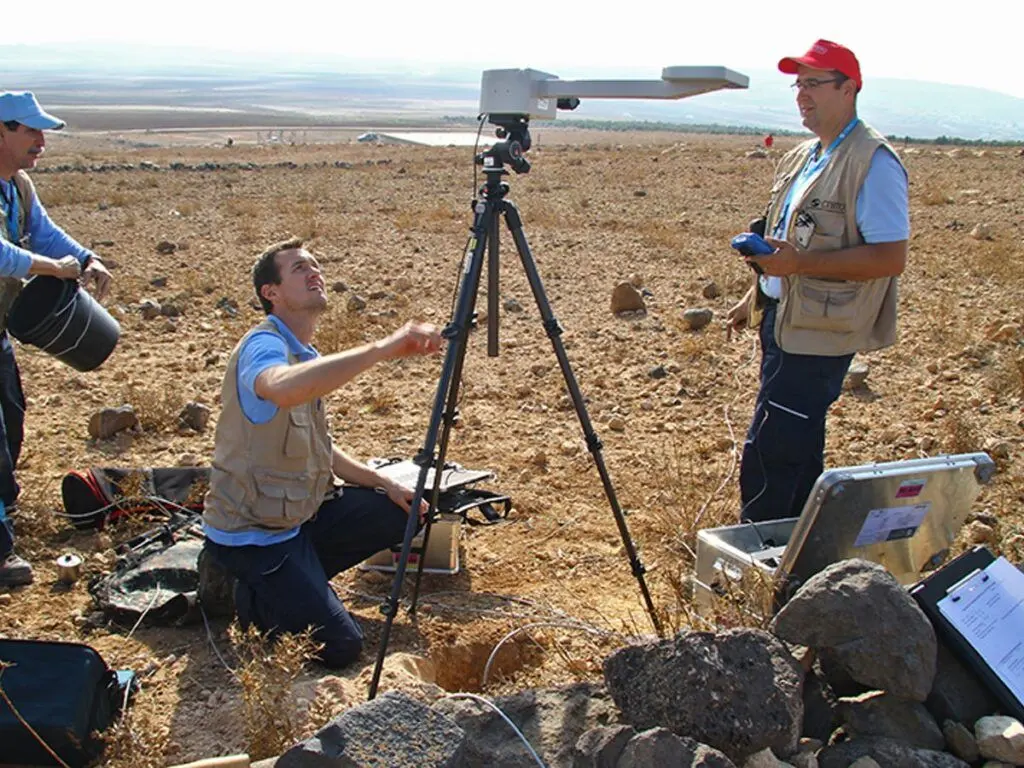
- Remote sensing and drones: Satellite imagery, aerial photography, and drones allow geologists to study large, remote, unstable, or dangerous areas. These tools are useful in volcano monitoring, fault studies, landslide mapping, coastal work, mining, and construction.
- Modeling and simulation software: Models can simulate groundwater flow, seismic behavior, slope stability, and contaminant movement. They help professionals test scenarios, support decisions, and communicate risk clearly.
Students should look for programs that teach current tools alongside field methods. An accredited online bachelor degree can work for some learners, but geology students should confirm how labs, fieldwork, and hands-on training are delivered.
A portfolio helps. GIS projects, maps, datasets, coding samples, remote sensing work, and modeling outputs can make a graduate more competitive and easier for employers to evaluate.
Famous people connected to geology
Several well-known figures helped shape geology. Charles Darwin, James Hutton, Charles Lyell, and Alfred Wegener all influenced how people understand Earth and life. Darwin is most associated with evolution, Hutton is often called the father of modern geology, Lyell advanced the idea of uniformitarianism, and Wegener proposed continental drift.
Leonardo da Vinci, known primarily as an artist, also observed erosion, sediment, fossils, and mountain layering in northern Italy. His observations led him to conclude that Earth was much older than a literal reading of Genesis would suggest, anticipating later ideas about deep geologic time.
More recent public figures also studied geology. Colin Powell, an American politician and retired US Army general, earned his geologist degree from the City College of New York in 1958. Kathryn Dwyer Sullivan, a former NASA astronaut and the first American woman to walk in space, and Sandra Postell, a freshwater environmentalist, also have geology backgrounds.
Professional certifications and why they matter
Certifications can help show technical ability, ethical commitment, and preparedness for specialized work. They do not replace experience, but they can support credibility in consulting, environmental assessment, engineering-related geology, and resource evaluation.
They are most valuable when they align with your target role. A student aiming for environmental work may benefit from training in sampling, compliance, GIS, or hazardous materials, while someone moving toward geophysics may want software, instrumentation, and modeling experience. Targeted online certificate programs can be useful when they teach job-relevant tools and are recognized by employers.
Internships and field experience that make you more employable
Internships, field camps, research assistantships, and supervised site work help students move from classroom learning to real job performance. Employers often want proof that a graduate can collect accurate data, follow safety rules, write clear notes, use technical tools, and work on a team.
Helpful experience can come from environmental consulting firms, geological surveys, water agencies, engineering companies, universities, museums, energy companies, mining organizations, laboratories, and public works departments. Some students also look at practical training routes connected to easy degrees that pay well, but geology students should make sure the program still provides rigorous science preparation and credible hands-on training.
| Experience type | What you gain | How to use it well |
| Field camp | Mapping, observation, field notes, teamwork, interpretation | Save maps, reports, and project examples |
| Internship | Workflow, safety procedures, employer expectations, references | Ask for real responsibilities and feedback |
| Undergraduate research | Methods, lab or field techniques, data analysis | Present at a campus event or conference if possible |
| GIS project | Spatial analysis, map production, data management | Create a portfolio with clear project descriptions |
| Volunteer or agency work | Exposure to applied geology and public science | Document tasks, tools, and outcomes |
Can accelerated study help you enter geology sooner?
Accelerated options can help some students finish prerequisites, general education, or career-focused credentials faster. That can reduce time and sometimes cost. But geology is a hands-on science, so speed should never replace lab work, field training, mathematics, or technical depth.
Programs such as an accelerated associates degree online can be a practical starting point for students who want to begin affordably. Before enrolling, verify whether geology, chemistry, physics, calculus, and lab credits will transfer into the bachelor’s program you plan to finish and whether online labs are accepted.
When advanced geology programs make sense
Graduate study can help geologists move into research, teaching, senior consulting, specialized technical work, and leadership roles. A master’s degree or doctorate is often the right choice for people who want to design studies, publish research, build models, or solve more complex problems in areas such as hydrogeology, geophysics, geochemistry, environmental geology, oceanography, paleontology, or energy resources.
Students considering online PhDs should check research expectations, advisor availability, dissertation support, and whether remote learning fits the specialization. Many geology research paths require field access, lab equipment, or highly specific data sources, so format matters as much as title.
The best graduate program is the one that matches the work you want to do. Someone aiming for environmental consulting may need remediation and groundwater expertise, while someone targeting seismology may need advanced math, geophysics, and computing. Choose by outcome, not just speed.
How climate change is affecting geology careers
Climate change is expanding the role of geologists in water management, hazard planning, coastal protection, remediation, and the energy transition. Geologists help measure physical change in Earth systems, evaluate risk, and inform decisions about infrastructure, land use, and environmental protection.
- Sustainable resource management: As demand grows for renewable energy and responsible resource use, geologists with training in hydrogeology, mineralogy, and conservation help evaluate groundwater, minerals, fossil fuels, and other Earth materials. Hydrogeologists are especially important in drought-prone areas and regions facing water-quality stress.
- Environmental remediation: Climate stress can worsen erosion, contamination, soil degradation, and habitat loss. Environmental geologists collect and interpret soil and water data, identify contaminants, and support cleanup or restoration work.
- Hazard assessment and mitigation: Flooding, sea level rise, landslides, volcanic activity, erosion, and seismic hazards all require careful geologic analysis. Geologists map risk areas, interpret site conditions, and help communities plan resilient infrastructure.
- Renewable energy exploration: Geologists support geothermal development and help assess environmental impacts for wind and solar projects. Their work may include site selection, subsurface evaluation, impact studies, and monitoring.
Geology careers are now spread across water security, climate adaptation, environmental restoration, and resilient infrastructure, not just traditional oil and gas.
How advanced research degrees can move your geology career forward
Advanced research degrees can prepare geologists for scientific leadership, university teaching, specialized consulting, government research, and technically demanding roles. A master’s degree or doctorate may be especially helpful for professionals who want to publish research, build models, design studies, or address complex challenges in resource management, environmental sustainability, climate impacts, and exploration technology.
Students considering online PhDs should review advisor support, research methods training, dissertation expectations, and whether remote study is realistic for the specialization. Many geology disciplines still depend on fieldwork, labs, instrumentation, or specialized datasets.
Can affordable online education help you start in geology?
Affordable online education can lower barriers for students who need flexibility, want to reduce commuting costs, or need to keep working while studying. It can be especially helpful for general education, introductory science, GIS, statistics, environmental policy, and professional certificates.
For a complete geology pathway, however, affordability should not come at the expense of quality. A low-cost online program still needs credible science instruction, labs, advising, transfer options, and field experience. Programs such as the online bachelor's degree cheapest can be a starting point for budget-conscious students, but the best choice balances cost with academic strength and career preparation.
Common mistakes to avoid when planning a geology career
| Mistake | Why it causes problems | Smarter approach |
| Choosing a school only because it is cheap | Low tuition does not guarantee field training, lab access, or employer recognition | Compare net cost, curriculum, fieldwork, faculty, and outcomes together |
| Ignoring licensure rules | Public-facing geology work in 31 states may require a license | Ask how the curriculum aligns with ASBOG and state requirements |
| Assuming online study covers everything | Geology usually needs hands-on labs, mapping, and field methods | Confirm how practical training is delivered |
| Waiting until graduation to gain experience | Employers often expect internships, field camp, or research experience | Start building experience early in college |
| Searching only for “geologist” job titles | Relevant roles often use different titles | Search for geoscientist, environmental scientist, hydrogeologist, GIS technician, and consultant roles |
| Underestimating writing skills | Technical findings must be understandable to non-geologists | Develop report writing, presentation, and client communication skills |
How to start building a geology career
Geoscience leaders have warned about a workforce challenge because roughly 27% of the U.S. geoscience workforce is expected to retire by 2029 (Latitude Media, 2024). At the same time, the Bureau of Labor Statistics projects 3% job growth in geosciences from 2024 to 2034. For new graduates, that means openings may exist, but your competitiveness will still depend on specialization, location, field experience, and technical skills.
Start by deciding which environment fits you best: consulting, government, energy, water, mining, academia, museums, research, engineering, or environmental work. Then build evidence that you can do the work. That evidence may include maps, lab reports, GIS projects, research posters, internships, memberships, and references from faculty or supervisors.
Your first job may not be your dream job. That is normal. Entry-level roles often involve field data collection, sample logging, mapping support, monitoring, report preparation, and helping senior staff. Those jobs build the experience that leads to better opportunities later.
Questions to ask before choosing a geology program or career direction
- Does the program include field methods, mapping, labs, and geologic data interpretation?
- Will the coursework support licensure in states that regulate geology practice?
- Which employers recruit from the department or offer internships?
- Are faculty active in the specialization I want, such as hydrogeology, geophysics, paleontology, or environmental geology?
- What software, instruments, databases, and modeling tools will I learn?
- How much will field camp, travel, housing, equipment, and fees add to the total cost?
- Can transfer credits reduce cost without weakening science preparation?
- What do recent graduates actually do after finishing the program?
Key Insights
- Geology leads to many different careers: A geology degree can support work in geoscience, engineering geology, hydrogeology, geophysics, geochemistry, oceanography, seismology, paleontology, petroleum geology, environmental consulting, GIS, and applied research.
- Most entry-level paths begin with a bachelor’s degree: Graduate education becomes more important for research, teaching, senior consulting, and some specialized roles.
- Licensure can be important: In 31 states, geologists who offer public-facing services may need a license, especially in consulting and compliance-related work.
- Salary depends on more than the title: In May 2024, geoscientists earned a median annual salary of $99,240 and a median hourly wage of $47.71, but pay varies by industry, location, credentials, and experience.
- The job outlook is steady, not automatic: BLS projects 3% growth for geoscientists from 2024 to 2034, with demand linked to environmental protection, resource management, and alternative energy.
- Field experience matters a lot: Internships, field camp, research, GIS projects, and supervised site work can make a graduate much more employable.
- Technology is now central to the work: GIS, remote sensing, drones, modeling, and data analysis are increasingly standard in geology roles.
- Climate change is broadening opportunities: Water security, hazard mitigation, remediation, renewable energy, and resilient infrastructure are all areas where geologists can contribute.
- Pick programs based on fit: The best geology program is the one that matches your specialization, budget, field training needs, licensure goals, and career plan.
References:
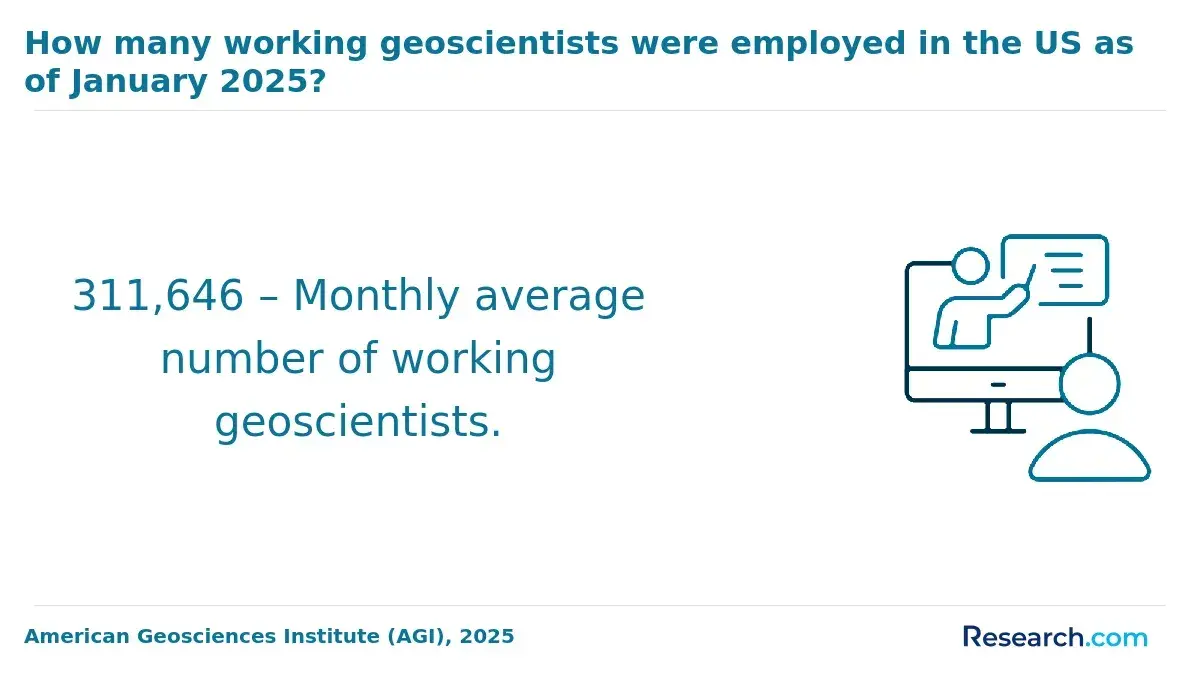
- American Geosciences Institute. (2025, March 17). Geoscience. Employment Monthly Data. https://profession.americangeosciences.org/research/data/
- Credence Research. (2025). Ecological Restoration Market Size, Share and Forecast 2032. Retrieved from https://www.credenceresearch.com/report/eological-restoration-market/
- DataUSA (n.d.) Geological and earth sciences. DataUSA.
- Grand View Research. (2025, June). Climate Tech Market Size & Share. https://www.grandviewresearch.com/industry-analysis/climate-tech-market-report
- BLS (2025). Geoscientists. Washington, DC: US Bureau of Labor Statistics.
- U.S. Bureau of Labor Statistics. (2024). Occupational Outlook Handbook: Geoscientists. https://www.bls.gov/ooh/life-physical-and-social-science/geoscientists.htm
Other Things You Should Know About Geology Careers
Yes. In many states, geologists who sign off on reports for public safety, groundwater, or environmental work must hold a Professional Geologist license. Requirements usually include a geology degree, 3 to 5 years of supervised experience, and passing the ASBOG Fundamentals and Practice of Geology exams.
Key skills for a geology career in 2027 include strong analytical abilities, proficiency in geographic information systems (GIS), and excellent communication skills. Understanding of earth sciences and a solid foundation in fieldwork are essential for success in this field.
In 2027, geologists can expect to earn a median annual salary of approximately $93,000. Entry-level positions may start around $50,000, while experienced geologists, especially those in specialized or high-demand areas, can earn over $150,000 annually.