2027 Best Careers To Pursue With an Environmental Science Degree

Co-Founder and Chief Data Scientist
An environmental science degree can lead to field research, regulatory work, consulting, sustainability strategy, conservation, data analysis, and public policy roles. The hard part is not whether the degree has value; it is choosing the path that fits your interests, salary goals, preferred work environment, and willingness to pursue graduate education or technical certifications.
This guide is for students, recent graduates, and working professionals who want a practical view of what they can do with an environmental science background. You will learn which careers are common, which roles tend to pay more, what skills employers look for, when a master’s degree makes sense, how GIS and data tools affect employability, and how to compare further education options without overpaying or choosing the wrong credential.
Quick answer: Is environmental science a good career path?
Environmental science can be a strong career path for people who want to work on pollution control, climate adaptation, water and soil quality, conservation, sustainability, or environmental compliance. The U.S. Bureau of Labor Statistics projects jobs for environmental scientists and specialists to grow by 7% from 2023 to 2033. Entry-level jobs often require a bachelor’s degree, while higher-paying research, policy, consulting, and management positions may require graduate study, specialized experience, or certifications.
What are the key things you should know about careers in environmental science?
- Career options are broader than fieldwork. Environmental science graduates work for government agencies, consulting firms, nonprofits, corporations, renewable energy companies, laboratories, utilities, and planning organizations.
- Employment demand is steady but role-specific. According to the U.S. Bureau of Labor Statistics, environmental scientists and specialists are projected to see 7% job growth from 2023 to 2033.
- Pay depends heavily on specialization. Environmental engineers have a median salary of $96,820 annually, while hydrologists earn $100,090, according to the U.S. Bureau of Labor Statistics. Experienced corporate sustainability officers and environmental managers may reach six-figure compensation in some organizations.
- Graduate education can improve access to senior roles. A bachelor’s degree may be enough for technician, analyst, compliance, or entry-level consulting jobs, but a master’s degree is often useful for research, policy, leadership, and specialized technical positions.
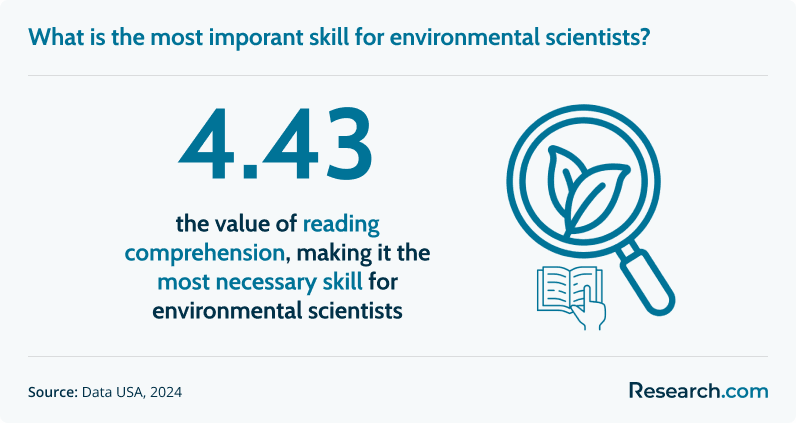
- Technical skills are no longer optional in many roles. GIS, environmental sampling, data analysis, technical writing, environmental impact assessment, and regulatory knowledge are common employer priorities.
- Sustainability-focused sectors are expanding. Renewable energy, waste management, land use planning, water resources, and corporate sustainability all need professionals who can connect environmental science with operations, regulation, and measurable outcomes. The U.S. Department of Energy reported that renewable energy employed over 8 million people globally in 2022.
- Best Careers to Pursue With an Environmental Science Degree
- How do I start a career in environmental science?
- What industries hire environmental science graduates?
- What are the highest-paying jobs for environmental science degree holders?
- Is a master’s degree necessary for higher-paying environmental careers?
- What technical skills do environmental scientists need?
- How important is GIS for environmental science careers?
- What are the top roles in corporate sustainability?
- Are affordable online education options worth considering for environmental science graduates?
- Should I pursue further education to advance my environmental science career?
- How do environmental science graduates influence government policy?
- What are the most exciting areas of research in environmental science?
- What online resources and tools can help build an environmental career?
- How Can Professional Networking and Mentorship Propel Your Environmental Science Career?
- How can accredited online programs accelerate your environmental science career?
- What certifications can boost your environmental science career?
- Is an Online Doctorate a Valuable Investment for Environmental Science Professionals?
- Are alternative degree pathways effective for launching an environmental science career?
- How Can Accelerated Online Master’s Programs Benefit My Career?
- Are Accelerated Online PhD Programs a Viable Option for Environmental Science Professionals?
- Common mistakes to avoid when planning an environmental science career
Best Careers to Pursue With an Environmental Science Degree
The best environmental science career for you depends on whether you prefer outdoor fieldwork, laboratory analysis, public policy, corporate strategy, engineering-adjacent work, teaching, or applied consulting. Some roles are accessible with a bachelor’s degree and strong internships. Others usually require graduate training, licensure, or several years of specialized experience.
| Career | Median annual salary | Job outlook | Best fit for | Typical preparation |
| Environmental Scientist | $78,980 | 7% | Graduates who want to investigate pollution, climate risks, conservation issues, or regulatory concerns | Bachelor’s degree for many roles; master’s or Ph.D. for advanced research or leadership |
| Environmental Science and Protection Technician | $50,660 | 7% | People who want hands-on sampling, monitoring, and compliance support work | Associate’s or bachelor’s degree; experience can lead to scientist or specialist roles |
| Environmental Science Educator, Postsecondary | $100,910 | 8% | Professionals interested in teaching, research, mentoring, and curriculum development | Master’s degree for many community college roles; Ph.D. commonly required at universities |
| Marine Biologist | $70,600 | 4% | Graduates focused on marine ecosystems, coastal conservation, fisheries, or ocean research | Bachelor’s degree for entry-level roles; master’s or Ph.D. for research and academic careers |
| Environmental Chemist | $64,718 | 8% | Students who like laboratory work, pollutant analysis, toxicology, and chemical safety | Bachelor’s degree in chemistry, biochemistry, or a related field; graduate degree for advanced work |
| Environmental Health Officer | $74,487 | 7% | Graduates interested in public health inspections, risk prevention, and environmental safety rules | Bachelor’s degree; some positions require certification or licensure |
| Environmental Consultant | $78,980 | 7% | Professionals who want client-facing work involving assessments, compliance, permits, and reports | Bachelor’s degree, field experience, regulatory knowledge, and strong writing skills |
| Environmental Specialist | $78,980 | 7% | Graduates who want applied work in pollution control, waste management, or sustainability projects | Bachelor’s degree; certifications or a master’s degree may support advancement |
| Environmental Geologist | $73,749 | 7% | People interested in groundwater, soil contamination, erosion, geology, and site assessment | Bachelor’s degree; master’s degree or licensure is often helpful for senior consulting roles |
| Environmental Manager | $112,353 | 7% | Experienced professionals who want to lead compliance, sustainability, or environmental programs | Bachelor’s degree at minimum; many employers prefer a master’s degree for leadership |
1. Environmental Scientist
Median Annual Salary: $78,980
Job Outlook: 7%
Environmental scientists collect evidence, interpret environmental data, assess hazards, and recommend ways to reduce pollution or manage natural resources. Their work may involve field sampling, report writing, regulatory analysis, or coordination with public agencies and private organizations.
If you are researching how to become an environmental scientist, start by building a foundation in biology, chemistry, geology, statistics, environmental law, and data tools. A bachelor’s degree is common for entry-level work, while advanced research, senior consulting, and leadership positions may call for a master’s degree or Ph.D.
2. Environmental Science and Protection Technician
Median Annual Salary: $50,660
Job Outlook: 7%
Environmental science and protection technicians gather samples, run tests, record results, and support investigations involving air, soil, water, waste, or workplace hazards. These roles are often a practical entry point for graduates who want direct experience before specializing.
Many technician roles require an associate’s or bachelor’s degree. With strong field experience, documentation skills, and additional training, technicians can move into analyst, specialist, or environmental scientist positions.
3. Environmental Science Educator, Postsecondary
Median Annual Salary: $100,910
Job Outlook: 8%
Postsecondary environmental science educators teach college-level courses, supervise student research, publish scholarship, and help shape academic programs. This path is best for people who enjoy research questions as much as classroom instruction.
A master’s degree may qualify someone to teach at some community colleges, while university faculty roles commonly require a Ph.D. Advancement may include tenure, research leadership, program direction, or department administration.
4. Marine Biologist
Median Annual Salary: $70,600
Job Outlook: 4%
Marine biologists study ocean organisms, coastal habitats, fisheries, coral systems, and the effects of human activity on marine environments. Their work may take place in laboratories, universities, aquariums, government agencies, conservation groups, or field sites.
A bachelor’s degree can support some entry-level roles, but independent research, university teaching, and senior scientific positions usually require a master’s degree or Ph.D.
5. Environmental Chemist
Median Annual Salary: $64,718
Job Outlook: 8%
Environmental chemists test and interpret chemical substances in soil, water, air, waste streams, and biological samples. They help identify contamination, evaluate chemical behavior, and support safer industrial or remediation practices.
A bachelor’s degree in chemistry, biochemistry, or a related discipline is usually expected. If you want a stronger laboratory science foundation, compare options such as the best online biochemistry degree programs before committing to a program.
6. Environmental Health Officer
Median Annual Salary: $74,487
Job Outlook: 7%
Environmental health officers inspect facilities, evaluate exposure risks, enforce public health and safety regulations, and help prevent environmental conditions that can harm communities. They may work in local government, public health departments, food safety, housing, sanitation, or occupational settings.
A bachelor’s degree is commonly required, and some employers may expect additional certification or licensure. Advancement often comes through supervisory responsibility, specialization, or public health expertise.
7. Environmental Consultant
Median Annual Salary: $78,980
Job Outlook: 7%
Environmental consultants help clients understand regulatory obligations, evaluate environmental risks, complete site assessments, prepare permit documents, and reduce environmental impacts. This role requires technical knowledge, but it also demands clear communication, client management, deadlines, and defensible reports.
A bachelor’s degree is a common starting point. To move into senior consulting or independent practice, professionals typically need project experience, specialized regulatory knowledge, strong professional networks, and a track record of reliable work.
8. Environmental Specialist
Median Annual Salary: $78,980
Job Outlook: 7%
Environmental specialists work on applied environmental problems such as waste handling, emissions controls, sustainability tracking, compliance reporting, habitat protection, and contamination response. The job title can vary widely by employer, so reviewing actual duties is essential.
A bachelor’s degree may qualify graduates for many roles. Certifications, GIS training, project management skills, and graduate coursework can make candidates more competitive for senior or managerial positions.
9. Environmental Geologist
Median Annual Salary: $73,749
Job Outlook: 7%
Environmental geologists apply geology to groundwater protection, soil contamination, erosion, construction planning, land restoration, and natural hazard assessment. Their work is especially relevant in consulting, remediation, mining, energy, and infrastructure projects.
A bachelor’s degree is the usual entry point, but senior consulting, project leadership, and certain regulated responsibilities may require a master’s degree or professional licensure.
10. Environmental Manager
Median Annual Salary: $112,353
Job Outlook: 7%
Environmental managers oversee compliance programs, sustainability initiatives, reporting systems, audits, staff, and organizational environmental strategy. They often translate environmental science into operational policies that executives, regulators, and employees can follow.
Employers usually expect a bachelor’s degree and substantial experience, while many leadership roles favor graduate training. If your goal is corporate sustainability leadership, compare options such as the best MBA sustainability programs to see whether a business-focused graduate credential fits your plan.
How do I start a career in environmental science?
Start by choosing a target role, then build proof that you can do the work. A general environmental science degree is useful, but employers often hire based on applied evidence: field methods, lab experience, GIS projects, environmental reports, internships, permits, compliance documentation, or research outputs.
- Identify the work setting you want. Field sampling, laboratory testing, policy analysis, corporate sustainability, consulting, education, and conservation require different skill mixes.
- Use your coursework as portfolio material. Save maps, lab reports, statistical analyses, environmental impact assessments, research posters, and capstone projects that demonstrate your abilities.
- Get experience before graduation if possible. Internships, seasonal fieldwork, volunteer monitoring projects, undergraduate research, and conservation programs can make your resume stronger than coursework alone.
- Join professional communities. The National Association of Environmental Professionals offers networking, events, and career resources that can help new graduates understand employer expectations.
- Apply first to realistic entry points. Environmental technician, field analyst, compliance assistant, research assistant, sustainability coordinator, and junior consultant roles can become stepping stones to higher-level work.
- Plan your finances early. Reviewing scholarship statistics and financial aid options can help reduce debt pressure, giving you more flexibility to accept internships or entry-level roles that build long-term career capital.
| If your goal is... | Prioritize these early experiences | Skills to highlight |
| Consulting | Site assessments, internships, report writing, permitting exposure | Technical writing, regulatory research, field sampling, client communication |
| Government or policy | Agency internships, public meetings, policy research, environmental impact review | Regulations, data interpretation, briefing documents, stakeholder communication |
| Research | Faculty labs, undergraduate research, statistical analysis, conference posters | Study design, data analysis, lab or field methods, literature review |
| Corporate sustainability | ESG projects, greenhouse gas inventories, operations internships, reporting work | Metrics, project management, communication, business literacy |
What industries hire environmental science graduates?
Environmental science graduates are hired wherever organizations must measure environmental risks, comply with rules, manage resources, reduce waste, or communicate sustainability performance. The same degree can lead to very different workdays depending on the sector.
- Government agencies: Federal, state, and local agencies hire graduates for monitoring, permitting, inspections, conservation, environmental planning, public health, and policy support.
- Nonprofit organizations: Conservation groups, watershed associations, land trusts, and advocacy organizations need staff for restoration, research, education, community engagement, and grant-supported projects.
- Private corporations: Companies employ environmental professionals for compliance, emissions tracking, waste reduction, sustainability reporting, risk management, and supply chain initiatives.
- Consulting firms: Consultants support environmental impact assessments, remediation, audits, permit applications, due diligence, and infrastructure or development projects.
- Renewable energy and utilities: Energy organizations need environmental review, siting analysis, wildlife studies, permitting, and compliance monitoring.
- Waste management, agriculture, and urban planning: These areas use environmental science to improve land use, water quality, waste systems, resilience planning, and resource efficiency.
Employer expectations are also changing as higher education, AI tools, and remote learning reshape skill development. Research.com’s overview of trends in higher education can help students understand why data fluency, online credentials, and interdisciplinary learning increasingly matter in technical fields.
What are the highest-paying jobs for environmental science degree holders?
The highest-paying paths usually combine environmental expertise with engineering, management, corporate strategy, specialized analysis, or advanced credentials. Pay can vary widely by employer, region, seniority, and whether the role is technical, managerial, or client-facing.
- Environmental engineers: These professionals design systems that address pollution, waste, water treatment, and environmental protection. The median salary of environmental engineers is $100,090 per year currently.
- Hydrologists: Hydrologists study water movement, quality, availability, and use. Their median annual salary is $88,770.
- Sustainability managers: These professionals lead company sustainability plans, reporting, goals, and cross-functional initiatives. If you are considering graduate study, review the best jobs to pursue with a sustainability management degree. Sustainability managers earn $107,000 to $192,000 per year.
- Environmental consultants: Consultants advise clients on compliance, site assessments, remediation, and environmental impact. Some salary reports indicate earnings can go as high as $113,00.
- Corporate sustainability officers: Senior sustainability leaders shape organization-wide environmental strategy, reporting, stakeholder engagement, and risk management, and they frequently occupy some of the higher-paying roles in the field.
Higher pay is rarely based on the degree title alone. It usually comes from a mix of experience, technical specialization, business judgment, regulatory knowledge, and leadership. If you are comparing education options for return on investment, Research.com’s guide to quick degrees that pay well may help you evaluate how credential speed, cost, and labor-market value interact.
Is a master’s degree necessary for higher-paying environmental careers?
A master’s degree is not mandatory for every environmental science job, but it can be important for specialized research, policy analysis, senior consulting, environmental management, university teaching, and technical leadership. The right question is not simply “Do I need graduate school?” but “Will this specific credential help me reach a role I cannot realistically reach with experience and certifications alone?”
| Career goal | Bachelor’s degree may be enough when... | A master’s degree is more useful when... |
| Entry-level environmental work | You are applying for technician, assistant, analyst, or junior field roles | You want to specialize quickly or compete for research-heavy roles |
| Consulting | You have strong internships, writing samples, field skills, and regulatory exposure | You want senior technical responsibility, niche expertise, or project leadership |
| Corporate sustainability | You can show experience with metrics, reporting, operations, or compliance | You are targeting management, strategy, or executive-track sustainability roles |
| Policy or research | You are supporting data collection, outreach, or administrative research tasks | You want to design studies, advise policy, publish research, or lead programs |
Environmental science is often discussed among the best college majors to pursue because it can support both immediate employment and further study. Still, graduate school should be evaluated against cost, accreditation, assistantship availability, career services, faculty expertise, and the job outcomes of the specific program.
If a master’s degree is not practical right away, consider targeted certifications in GIS, environmental auditing, renewable energy, project management, or regulatory compliance. A focused credential can sometimes produce a faster career benefit than a broad graduate degree, especially for professionals already employed in the field.
What technical skills do environmental scientists need?
Environmental science work is increasingly evidence-driven. Employers want candidates who can collect reliable data, analyze it correctly, explain limitations, and turn findings into decisions that regulators, clients, executives, or communities can understand.
| Skill area | Why it matters | Where it is used |
| GIS and spatial analysis | Helps map land use, contamination, habitats, flood risk, deforestation, and infrastructure impacts | Planning, conservation, consulting, public agencies, utilities |
| Data analysis | Supports trend detection, risk assessment, modeling, and defensible conclusions | Research, monitoring, sustainability reporting, policy analysis |
| Field sampling | Ensures air, soil, water, and biological samples are collected accurately and documented properly | Compliance, remediation, environmental monitoring, consulting |
| Laboratory methods | Allows professionals to test pollutants, nutrients, contaminants, and chemical indicators | Environmental chemistry, water quality, toxicology, public health |
| Technical writing | Turns data into reports, permits, impact assessments, and recommendations | Nearly every environmental science career path |
| Regulatory literacy | Helps professionals understand standards, permits, compliance obligations, and enforcement risks | Government, consulting, corporate environmental management |
| Programming or statistical tools | Can improve modeling, automation, visualization, and reproducibility | Research, climate analysis, hydrology, environmental data science |
Python and R are increasingly useful for candidates who want to work with large datasets, modeling, or automation. AI tools may also assist with literature review, data cleaning, mapping workflows, and report drafting, but professionals still need scientific judgment, source verification, field understanding, and ethical data practices.
How important is GIS for environmental science careers?
GIS, or Geographic Information Systems, is one of the most practical technical skills for environmental science graduates. It allows professionals to connect environmental data to location, which is essential for analyzing watersheds, habitats, land development, wildfire risk, contamination, coastal change, environmental justice concerns, and infrastructure planning.
GIS is especially valuable for roles such as environmental analyst, conservation planner, hydrology technician, urban planning assistant, sustainability analyst, and environmental consultant. Many job postings either require GIS experience or treat it as a major advantage. Building GIS competence early can also reduce uncertainty for students entering the labor market; Research.com’s student stress statistics resource provides broader context on the pressures students face while preparing for careers.
What are the top roles in corporate sustainability?
Corporate sustainability roles are designed for professionals who can connect environmental goals with business operations. These jobs often involve measurement, reporting, compliance, stakeholder communication, supply chains, energy use, waste reduction, and climate-related risk planning.
| Role | Primary focus | Good fit for candidates with... |
| Sustainability Manager | Leading sustainability programs, targets, reporting, and cross-department initiatives | Project management, metrics, communication, and environmental compliance experience |
| Corporate Social Responsibility Specialist | Connecting community, environmental, ethical, and brand-related initiatives | Writing, stakeholder engagement, public-facing communication, and program coordination skills |
| Environmental Compliance Officer | Keeping operations aligned with environmental laws, permits, and internal standards | Regulatory knowledge, audit experience, documentation skills, and attention to detail |
| ESG or Sustainability Analyst | Collecting, analyzing, and reporting environmental, social, and governance data | Data analysis, spreadsheet modeling, reporting frameworks, and research ability |
| Director of Sustainability | Setting strategy, managing teams, advising executives, and overseeing long-term goals | Leadership experience, business fluency, environmental expertise, and change management skills |
These roles can be attractive for environmental science graduates who enjoy strategy more than fieldwork. However, competition can be strong, so candidates should build experience with measurable outcomes, not just general interest in sustainability.
Are affordable online education options worth considering for environmental science graduates?
Affordable online education can be worthwhile when it helps you gain a specific skill, certification, degree, or advancement credential without taking on unnecessary debt. It is especially useful for working adults who need GIS training, environmental policy coursework, data analytics, sustainability management, or prerequisite courses for graduate study.
Do not choose an online program based on tuition alone. Check accreditation, course relevance, instructor background, field or lab requirements, software access, career services, transfer policies, and whether employers in your target field recognize the credential. Research.com’s guide to the cheapest online college options can help you start comparing affordability, but academic quality and career fit should remain central.
Should I pursue further education to advance my environmental science career?
Further education makes sense when it closes a clear gap between your current qualifications and your target role. For example, a GIS certificate may help an entry-level field technician become an analyst, while a master’s in environmental policy may support a move into government advising or nonprofit advocacy. A sustainability-focused MBA may be more relevant than a science-heavy degree for someone targeting corporate leadership.
Before enrolling, compare accredited options, including non profit colleges, and ask whether the curriculum matches the job postings you want. A program should help you produce portfolio evidence, not just complete coursework.
How do environmental science graduates influence government policy?
Environmental science graduates influence policy by translating scientific evidence into recommendations, reports, impact assessments, risk analyses, public comments, and regulatory guidance. They may work as policy analysts, environmental advisors, agency scientists, nonprofit researchers, legislative staff, or technical consultants.
Policy work requires more than scientific knowledge. Professionals must understand regulations, public budgets, stakeholder concerns, legal constraints, and how to present complex findings in language decision-makers can use. Environmental law coursework, policy internships, writing samples, and experience with public agencies can strengthen this career path.
What are the most exciting areas of research in environmental science?
Environmental science research is moving toward problems that require interdisciplinary tools: climate modeling, renewable energy systems, biodiversity conservation, water security, environmental genomics, plastic pollution, restoration ecology, public health exposure, and climate adaptation planning. These topics often combine field data, laboratory methods, remote sensing, statistics, and policy analysis.
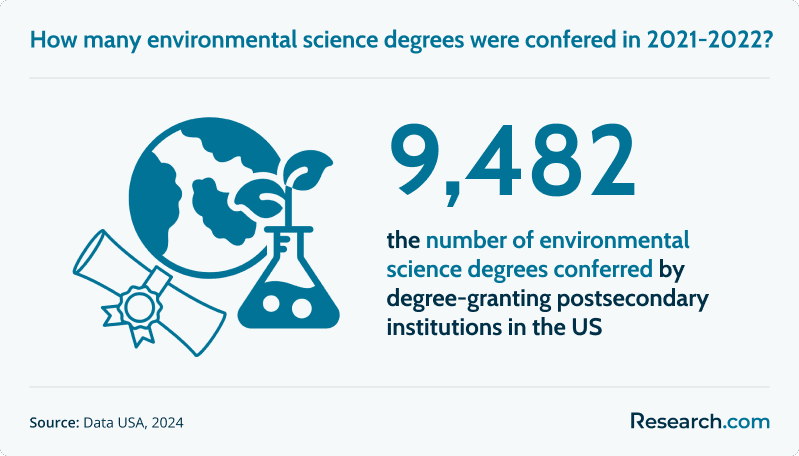
Students who want research careers should seek faculty mentorship, undergraduate research, thesis opportunities, conference presentations, and graduate programs aligned with their interests. If you are still comparing academic options, Research.com’s guide to the easiest college majors can help you think about complementary fields, although research careers in environmental science typically reward rigor, methods training, and persistence. A bachelor’s degree is the most common degree awarded to students graduating in environmental science.
What online resources and tools can help build an environmental career?
Online tools can help environmental science graduates find jobs, build technical skills, follow regulatory changes, and connect with professionals. Use them strategically rather than collecting credentials at random.
- Job platforms: LinkedIn and Indeed can help identify common job titles, required skills, salary signals, and employers hiring environmental graduates.
- Professional organizations: Groups such as the National Association of Environmental Professionals provide networking, webinars, job boards, and industry updates.
- Online course platforms: Coursera and edX offer training in GIS, data analysis, sustainability, and related technical topics.
- Agency websites: Government environmental agencies publish regulations, technical guidance, datasets, reports, and internship opportunities.
- Academic journals and environmental news sources: These help professionals stay current on research, technologies, policy debates, and emerging risks.
How Can Professional Networking and Mentorship Propel Your Environmental Science Career?
Networking is not just about asking for jobs. In environmental science, it helps you understand which employers are hiring, what skills matter in a specific region, which certifications are respected, and how people move from entry-level roles into consulting, policy, research, or management.
Start with professors, internship supervisors, alumni, local environmental groups, professional associations, and conference contacts. Ask targeted questions: What entry-level titles should I search for? Which GIS tools do you use? What writing samples matter? What certifications are worth the money? If you are a working adult considering additional education, compare online degree programs for working adults that include career support, peer collaboration, and employer-relevant projects.
How can accredited online programs accelerate your environmental science career?
Accredited online programs can help environmental professionals build credentials while continuing to work. They are most useful when they offer updated coursework, qualified faculty, applied projects, career advising, and flexibility without weakening academic expectations.
Before enrolling, verify institutional accreditation, financial aid eligibility, transfer policies, course sequencing, lab or field requirements, and whether the curriculum supports your target role. If financial aid is a priority, Research.com’s list of the best online colleges that accept FAFSA can help you identify programs to review more closely.
What certifications can boost your environmental science career?
Certifications can improve your credibility when they match the work you want to do. Strong options may include advanced GIS, environmental auditing, environmental law, renewable energy technologies, project management, safety training, or specialized data analysis. The value of any certification depends on employer recognition, practical content, assessment quality, and your ability to apply the skill on the job.
Flexible education pathways can also help professionals at different life stages. For example, an online university for seniors may provide accessible options for learners seeking formal study or career-relevant credentials later in life.
Is an Online Doctorate a Valuable Investment for Environmental Science Professionals?
An online doctorate can be valuable for professionals targeting research leadership, university teaching, high-level policy work, senior consulting expertise, or executive credibility in a specialized area. It is not usually necessary for most entry-level or mid-level environmental roles.
Evaluate the opportunity cost carefully. Review tuition, time commitment, dissertation support, faculty expertise, research fit, residency expectations, employer tuition benefits, and realistic career outcomes. Research.com’s guide to online PhD cost can help you compare affordability before making a long-term commitment.
Are alternative degree pathways effective for launching an environmental science career?
Alternative pathways can work when they provide practical skills, recognized credentials, and a clear route into entry-level employment. Certificate programs, vocational training, community college coursework, transfer pathways, and targeted online programs may help students enter roles such as environmental technician, field assistant, lab aide, or compliance support worker.
The risk is choosing a shortcut that employers do not value. Always confirm accreditation, transferability, faculty qualifications, hands-on components, and whether graduates actually move into relevant roles. If speed and simplicity are priorities, compare options such as the easiest bachelor degree to get, but do not sacrifice career relevance for convenience.
How Can Accelerated Online Master’s Programs Benefit My Career?
Accelerated online master’s programs can help working professionals gain advanced environmental, policy, sustainability, or analytics knowledge in a shorter format. They may be useful when you already know your target role and need a graduate credential to qualify for promotion, specialization, or leadership.
Look for programs with rigorous admissions standards, applied projects, expert faculty, career services, and courses aligned with current employer needs. If you want a time-efficient option, review Research.com’s guide to the shortest master degree programs and compare speed against accreditation, quality, and workload.
Are Accelerated Online PhD Programs a Viable Option for Environmental Science Professionals?
Accelerated online PhD programs may fit experienced professionals who have a focused research agenda, strong academic preparation, and a clear reason for needing a doctorate. They are less suitable for someone who is unsure about research, lacks time for intensive independent work, or simply wants a quick credential.
Before choosing this path, examine accreditation, faculty mentorship, dissertation structure, research resources, publication expectations, and how the doctorate supports your career plan. Research.com’s guide to the shortest online PhD options can help you compare accelerated formats while keeping quality and fit in view.
Common mistakes to avoid when planning an environmental science career
| Mistake | Why it can hurt you | Better approach |
| Choosing a program without checking accreditation | Credits, financial aid, employer recognition, or graduate admission may be affected | Verify accreditation before applying or paying deposits |
| Focusing only on tuition | A cheap program may lack labs, fieldwork, software, advising, or employer connections | Compare total cost, curriculum, outcomes, support services, and flexibility |
| Assuming every environmental job is outdoors | Many roles are office-based, data-heavy, regulatory, or client-facing | Read job descriptions carefully and talk to professionals in target roles |
| Ignoring GIS and data skills | Many analyst, planning, consulting, and agency roles expect technical fluency | Build portfolio projects using maps, datasets, and written analysis |
| Waiting until graduation to gain experience | Coursework alone may not distinguish you from other applicants | Pursue internships, research, volunteering, seasonal work, or capstone projects early |
| Assuming a master’s degree automatically raises salary | Graduate debt may not pay off if the credential is not tied to a clear career goal | Compare job postings, alumni outcomes, assistantships, and employer requirements first |
| Relying only on rankings | A highly ranked school may not be the best match for your region, budget, or specialization | Use rankings as one input, then evaluate fit, cost, faculty, field access, and career services |
Questions to ask before choosing your next step
- Which job titles am I targeting in the next one to three years?
- Do those roles require a bachelor’s degree, master’s degree, certification, licensure, or specific software skills?
- Can I show employers evidence of fieldwork, lab work, GIS ability, data analysis, or technical writing?
- Will a graduate degree create access to roles I cannot reach through work experience alone?
- Does the program or credential have proper accreditation and employer recognition?
- What is the total cost after tuition, fees, software, travel, field requirements, and lost work time?
- Does the program provide internships, research opportunities, career advising, or employer partnerships?
- How will AI, automation, remote sensing, and data analytics affect the type of environmental work I want to do?
Key Insights
- Environmental science careers are diverse: graduates can work in government, consulting, nonprofits, renewable energy, waste management, corporate sustainability, education, research, and public health.
- The U.S. Bureau of Labor Statistics projects 7% growth for environmental scientists and specialists from 2023 to 2033, but individual opportunities depend on specialization, location, and skill level.
- Technical skills can strongly influence employability. GIS, data analysis, environmental sampling, regulatory knowledge, and technical writing are especially valuable across many roles.
- Higher salaries often come from specialization or leadership. Environmental management, sustainability management, environmental engineering, hydrology, consulting, and corporate sustainability can offer stronger earning potential than general entry-level roles.
- A master’s degree can help, but it should be tied to a specific career target. Certifications or applied skills may be the smarter next step if you need faster, lower-cost advancement.
- Online and accelerated programs can be useful for working adults, but only if they are accredited, career-relevant, financially realistic, and respected by employers in your target field.
- The best strategy is to build proof of competence early: internships, fieldwork, lab reports, GIS maps, data projects, policy briefs, sustainability metrics, and strong professional references.
References:
- Glassdoor. (2024). Salary: Sustainability manager in the United States. glassdoor.com
- U.S. Bureau of Labor Statistics. (30 September 2024). Environmental scientists and specialists. bls.gov
- U.S. Bureau of Labor Statistics. (29 August 2024). Hydrologists. bls.gov
- U.S. Department of Energy. (2024). Job creation & economic growth. energy.gov
- Salary.com. (2024). Environmental chemist salary in the United States. salary.com
- ZipRecruiter. (2024). Salary: Environmental health officer. ziprecruiter.com
Other Things You Should Know About Careers in Environmental Science
Yes, some do. Environmental engineers need a Professional Engineer license for public sign-off, and many states require licensure for professional geologists and soil scientists. Requirements usually include an ABET-accredited degree, supervised experience, and passing the relevant exam from the state board or licensing agency.
In 2027, the demand for careers in renewable energy consulting, sustainable urban planning, and environmental policy analysis is growing. Graduates can contribute to climate change mitigation, pollution control, and resource conservation, making their skills increasingly valuable in both private and public sectors.
Certifications like the Certified Environmental Scientist (CES) or Leadership in Energy and Environmental Design (LEED) can boost your career in 2027. These credentials are recognized globally and can provide a competitive edge in roles like sustainability consultant or environmental manager.