
2027 Most Affordable Online Colleges for Working Adults

Co-Founder and Chief Data Scientist
Working adults usually do not choose online college because it sounds convenient. They choose it because they need a degree, certificate, or new credential without leaving a job, relocating, or putting family responsibilities on hold. The challenge is finding an online college that is affordable, accredited, flexible enough for a real adult schedule, and strong enough to be respected by employers.
This guide is for adults comparing online colleges while working full-time or part-time. It explains which degree fields are commonly available online, how affordable online colleges structure tuition and schedules, how to compare programs, what support services matter, and how to avoid costly mistakes. It also includes a ranked list of affordable online colleges for working adults, using Research.com’s school evaluation process and publicly available education data sources.
Quick Answer: What Is the Best Way to Find an Affordable Online College as a Working Adult?
The best affordable online college for a working adult is not always the school with the lowest advertised tuition. A better choice is an accredited institution that offers the degree you need, flexible course formats, transparent fees, transfer credit or prior learning options, financial aid eligibility, strong student support, and career services aligned with your goals.
For many adults, online learning can reduce costs tied to commuting, housing, and campus-based expenses. However, affordability should be evaluated alongside completion time, accreditation, credit transfer rules, program quality, and whether the degree will support your intended career path.
Key Things You Should Know About Affordable Online Colleges for Adults
- Online degrees in fields such as nursing, accounting, business, computer science, social work, and healthcare administration can help adults qualify for career advancement, career changes, or roles that require formal credentials.
- Online programs may lower total education costs by reducing expenses such as transportation, room and board, and some campus-based fees.
- The number of institutions with five or more fully online programs increased from 48% in 2013, to 76% in 2022.
- Around 85% of universities and colleges believe that one major strategic outcome of online learning is that it increases student access to their programs.
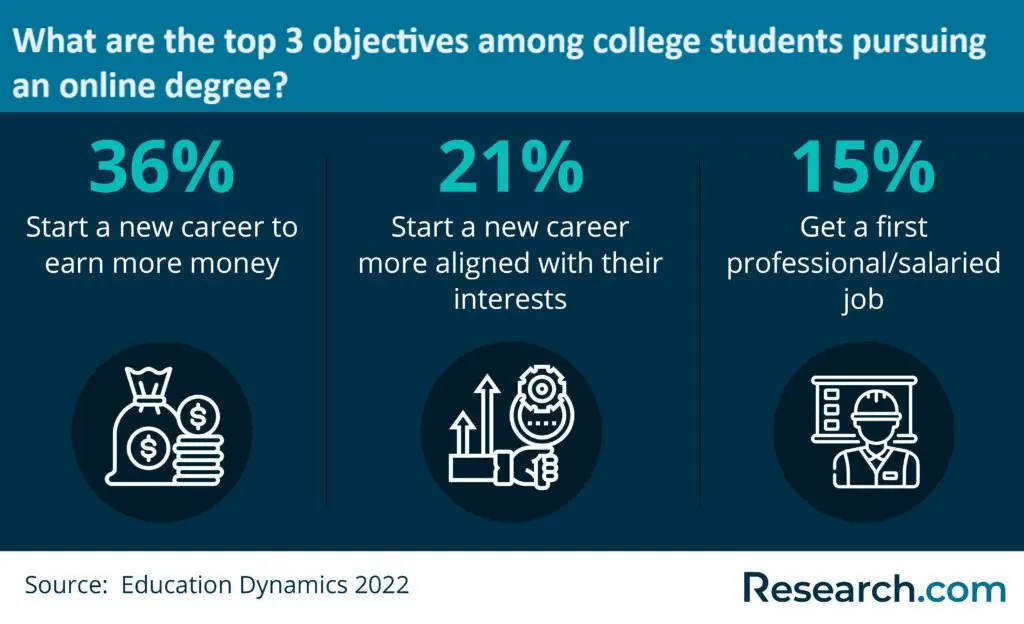
- 28% of undergraduate students enroll in online degree programs to start a new career, and 27% do so to earn more money with a new career.
Most Affordable Online Degree Programs
Adults often choose online programs that connect directly to promotion paths, licensure requirements, or high-demand professional skills. The right major depends on your current experience, the type of work you want, and whether your target role requires a specific credential.
| Online degree field | Best fit for working adults who want to... | Important decision point |
| Business Administration | Move into management, operations, entrepreneurship, or general business roles | Look for programs with practical projects, leadership coursework, and flexible pacing. |
| Psychology | Understand human behavior and prepare for roles in support services, research assistance, or graduate study | Check whether your career goal requires graduate education or licensure. |
| Counseling | Work toward helping roles in mental health, social services, human resources, or community programs | Verify whether the program meets licensing expectations in your state if you plan to become a counselor. |
| Social Work | Serve individuals, families, and communities through advocacy and support services | Confirm accreditation and field placement requirements before enrolling. |
| Nursing | Advance in healthcare or complete a degree pathway while already working in the field | Make sure clinical, practicum, and licensure requirements can be completed where you live. |
| Accounting | Build skills in taxation, auditing, reporting, and financial analysis | Check whether coursework supports CPA or other certification requirements in your state. |
| Computer Science | Enter or advance in software, IT, cybersecurity, data, or technical roles | Review whether the curriculum includes current programming, systems, and project-based work. |
| Healthcare Administration | Move into healthcare operations, policy, compliance, or management roles | Choose programs that connect coursework to healthcare systems and leadership practice. |
| Marketing | Develop skills in branding, consumer behavior, digital strategy, and campaign planning | Look for portfolio-building assignments and exposure to digital tools. |
| Finance | Study financial planning, investment analysis, risk, and modeling | Evaluate whether the program uses industry-relevant software and applied finance assignments. |
1. Business Administration
An online business administration degree is a practical option for adults who want broad career flexibility. These programs typically combine management, finance, marketing, operations, organizational behavior, and strategic decision-making. The degree can be useful for employees seeking supervisory responsibilities, entrepreneurs who need stronger business fundamentals, or career changers who want a versatile credential.
2. Psychology
An affordable online psychology degree introduces students to human behavior, research methods, development, cognition, and mental health concepts. It can support roles in human services, case support, research assistance, workforce training, and related fields. Students who want to become licensed psychologists or counselors should understand that additional graduate education and state-specific requirements may apply.
3. Counseling
An online counseling degree can prepare adults to support people facing emotional, personal, educational, or workplace challenges. Coursework often covers counseling theories, communication skills, ethics, mental health concepts, and assessment basics. Before enrolling, students should confirm whether the program is intended for non-licensed support roles, graduate preparation, or a licensure pathway.
4. Social Work
Online social work programs focus on social systems, human behavior, policy, advocacy, diversity, social justice, research, and intervention methods. This field is best suited for adults who want mission-driven work with individuals, families, communities, or public service organizations. Because social work roles may involve field education and licensure, accreditation and placement rules should be reviewed early.
5. Nursing
Online nursing degrees are often designed for healthcare workers who need flexibility while completing academic requirements. These programs may combine online coursework with local clinical or practicum experiences, depending on the degree level and program type. Working adults should verify schedule expectations, state authorization, and clinical placement procedures before applying.
6. Accounting
An online accounting degree builds knowledge in financial reporting, auditing, taxation, accounting systems, and data interpretation. It can prepare graduates for accounting, auditing, bookkeeping, financial analysis, and compliance-related roles. Students interested in CPA eligibility should compare the program’s credit hours and coursework with their state board’s requirements.
7. Computer Science
Online computer science degrees can help adults build technical skills in programming, systems, cybersecurity, databases, data analysis, and artificial intelligence concepts. This path fits students who enjoy problem-solving and are willing to keep learning as technologies change. Strong programs usually include hands-on projects, coding practice, and opportunities to demonstrate work through portfolios or capstone projects.
8. Healthcare Administration
Healthcare administration degrees prepare students for the business and operational side of healthcare. Coursework may cover healthcare policy, management, finance, regulation, quality improvement, and organizational systems. This option can be useful for clinical workers moving toward leadership or adults interested in administrative roles in hospitals, clinics, insurance organizations, or public health settings.
9. Marketing
An online marketing degree develops skills in consumer behavior, market research, branding, campaign strategy, digital marketing, and communication. It can serve adults aiming for roles in advertising, business development, content strategy, analytics, or brand management. Programs that require portfolio work may be especially valuable because employers often want to see applied campaign and communication skills.
10. Finance
Online finance programs cover financial analysis, investment concepts, planning, risk management, and financial modeling. Many programs also expose students to tools and software used in financial analysis and decision-making. This degree may suit adults interested in corporate finance, banking, planning, insurance, investment support, or financial operations.
- 10 Most Affordable Online Colleges for Working Adults 2027
- State of Online Higher Education in the United States
- Online Colleges vs. On-Campus Colleges for Working Adults
- How to Choose an Online College as a Working Adult
- Advantages of Online Colleges for Working Adults
- Requirements for Attending Online College While Working
- Challenges of Online College
- Support Services Available to Online Students
- Online Colleges for Military Personnel and Veterans
- How to Verify the Legitimacy of an Online College
- Career Services for Working Adults in Online Programs
- Completing an Online Doctoral Program While Working Full-Time
- Accelerated Online Degrees and Faster Completion
- How to Evaluate Online Degree ROI
- Balancing Work, Life, and Online Study
- How Online Colleges Keep Curricula Career-Relevant
- Employer Recognition of Online Degrees
- Financial Aid Options for Working Adults
- Strategies to Graduate Faster
- Is Online College Worth It for Working Adults?
- How to Find Affordable Accredited Online Colleges
10 Most Affordable Online Colleges for Working Adults 2027
How We Rank Schools
Choosing an online college is a major commitment of money, time, and attention. Research.com evaluates affordable online colleges for working adults using its methodology and education data from the IPEDS database, the National Center for Education Statistics, Peterson's database, specifically its Distance Learning Licensed Data Set, and College Scorecard. These sources help compare institutional costs, outcomes, and online learning availability.
Use this ranking as a starting point, not the only deciding factor. Before enrolling, confirm current tuition, accreditation, state authorization, program requirements, transfer credit rules, and whether the degree supports your career or licensing goal.
| School | Why it may work for adults | Cost or flexibility details stated |
| Capella University | Self-paced FlexPath structure and academic support team | One flat tuition rate per 12-week billing session for FlexPath |
| Western Governors University | Competency-based, self-paced bachelor’s and master’s programs | Same tuition rate for each six-month term |
| Purdue University Global | 100% online programs with monthly starts | 175 academic programs and a free three-week trial period |
| National University | Short course formats and multiple student support options | Undergraduate tuition costs around $12,284 per year |
| The University of Illinois Online at Urbana-Champaign | Self-paced virtual courses and year-round enrollment options | Online undergraduate tuition rate is $424 per credit hour |
| Franklin University | 100% online classes built around adult schedules | Undergraduate tuition costs $398 per credit hour |
| Columbia College | Fully online programs with eight-week courses | For at least 12 credit hours per semester online, cost of attendance per semester is $15,200 |
| Penn Foster College | Self-paced certificate, diploma, and degree options | Monthly payments as low as $49 for certificate programs and as little as $20 to start a diploma |
| Fort Hays State University | Over 200 online degree and certificate programs | Undergraduate tuition fee of $242.76 per credit hour |
| Oregon State University | E-Campus with low-cost learning materials and flexible online degrees | Free or low-cost learning materials plus innovative financing options |
1. Capella University
Capella University offers FlexPath, a self-paced format designed for students who want more control over assignment timing and course progress. Instead of following a traditional weekly schedule, students can move through material they already understand and spend more time where they need it. Students are also supported by an academic team that includes an academic coach and course instructor.
Cost-conscious students may benefit from the FlexPath billing model, which uses one tuition fee every 12-week billing session. For one flat tuition rate, students can take up to two courses at a time and begin another after completing a course, which can help motivated learners complete more work within a 12-month period. FlexPath offers over 160 self-paced online undergraduate and graduate programs in areas such as business, education, and health care. Students looking for an affordable psychology degree online may want to compare Capella’s program structure with other accredited options.
2. Western Governors University
Western Governors University offers self-paced bachelor’s and master’s degrees in information technology, business, education, healthcare, and teaching fields. Its model is built for students who want to demonstrate mastery rather than spend a fixed amount of time in each course. Courses are accredited by the Distance Education and Training Council (DETC), as well as four other regional accrediting agencies, but students should always verify current accreditation status directly before enrolling.
Western Governors University is often discussed among affordable online colleges because students pay the same tuition rate for each six-month term, regardless of how many credits they complete during that term. This can be valuable for disciplined working adults who can move quickly. Federal financial aid and scholarships may also help reduce out-of-pocket costs.
3. Purdue University Global
Purdue Global offers 175 academic programs built for working adults and delivered 100% online. The institution does not require test scores for admission, and most undergraduate students meet half their requirements through prior learning credits. Monthly course starts allow students to begin at different points throughout the year rather than waiting for a traditional semester.
Students who want to test the learning environment before committing can try a course for free for three weeks. This introductory 3-week period does not require a financial obligation, which can help adults decide whether the format, pacing, and platform are a good match.
4. National University
National University offers over 190 career-relevant programs and uses four- and eight-week course formats. The institution has long experience with distance learning and provides flexible online class options for adults balancing school, employment, and personal responsibilities.
Programs are structured to retain academic engagement while offering shorter terms and online access. National University also provides academic, financial, career, family, and emotional support services. Students may benefit from monthly start dates, accelerated course formats, scholarships, tuition reduction programs, and grants.
Undergraduate tuition at National University costs around $12,284 per year. Prospective students should still compare total cost, fees, financial aid, and transfer credit policies before making a decision.
5. The University of Illinois Online at Urbana-Champaign
The University of Illinois, Urbana-Champaign offers self-paced virtual courses that can serve students with demanding schedules. Enrollment is available throughout the year for certain online options.
The university serves multiple groups, including high school students seeking online math courses, residential students adding online coursework, working professionals pursuing certifications, career changers seeking fully online degrees, and learners exploring individual subjects. Its online academic options are broad and accessible to students in many locations.
UI at Urbana-Champaign also offers continuous, self-paced NetMath and Math Teacher Link courses. These options include short online courses for teachers with a degree in mathematics or math teachers working with 9-14th-grade levels.
UI at Urbana-Champaign’s online undergraduate tuition rate is $424 per credit hour.
6. Franklin University
Franklin University focuses on adults who want to strengthen their credentials while continuing to work. Courses are offered 100% online, allowing students to complete academic work at times that fit their schedules.
The undergraduate tuition at Franklin University costs $398 per credit hour. Tuition is locked from enrollment through degree completion as long as students remain enrolled in their program, which can help with financial planning.
7. Columbia College
Columbia College offers over 70 fully online programs. Its online courses are available 24/7, giving students control over when and where they study. Courses are delivered in eight-week formats across six academic sessions.
For students taking at least 12 credit hours per semester online, the cost of attendance per semester is $15,200. Working adults should compare this figure with available financial aid, employer tuition assistance, transfer credits, and expected completion time.
8. Penn Foster College
Penn Foster College offers self-paced online certificate, diploma, degree, and course options. Students can access coursework on a computer, tablet, or mobile device. Diploma students have up to two years to complete their programs, while college degree students have up to six years; extensions must be requested and approved. Penn Foster holds accreditation from the (DETC).
Students can enroll in a certificate program with monthly payments as low as $49. They can start working toward a diploma for as little as $20. Penn Foster also offers associate and bachelor’s degrees in more than 20 high demand areas.
9. Fort Hays State University
Fort Hays State University offers over 200 online degree and certificate programs. Courses may be available in eight-week or 16-week formats, and students use Blackboard for online learning. The university also awards credit for qualifying prior learning experiences.
FHSU has an undergraduate tuition fee of $242.76 per credit hour, making it a notable option for adults comparing low-cost online programs. Students researching affordable online nursing programs may want to include FHSU in their broader comparison process.
10. Oregon State University
Oregon State University offers E-Campus programs that aim to reduce financial pressure through free or low-cost learning materials and financing options. This can make online study more manageable for working adults.
Oregon State’s online degrees are designed to be flexible while still academically engaging. Students comparing lower-cost options may also review related pathways such as the cheapest online bachelor's in journalism offerings.
What Students Say About Affordable Online Degrees
- Online study gave me access to instructors from different parts of the country, including faculty with expertise I would not have found locally. The recorded lectures and digital resources helped me learn consistently, and the forums made it easier to connect with classmates. My online computer science degree gave me the skills and confidence to start a software development business. - Gerald
- A campus program was not realistic with my full-time job and family responsibilities. Online classes let me study after my children were asleep and complete assignments when my schedule allowed. The discussions were more useful than I expected, and earning my marketing degree helped me move toward a new career path without pausing my life. - Lisa
- The flexibility was the biggest benefit. I traveled often, so being able to access lectures and coursework from anywhere mattered. I missed some in-person interaction, but video meetings with classmates and professors helped me stay connected. My online HR management degree supported a promotion within my company. - Susana
What Is the State of Online Higher Education in the United States?
Demand for online education is continuously growing. Even before the pandemic, 94% of member institutions of the American Association of State Colleges and Universities (AACSU) already offered fully online programs. On average, these institutions offered 20 fully online programs and 16 hybrid programs. The number of institutions with five or more fully online programs increased from 48% in 2013 to 76% in 2022.
Colleges and universities have expanded online options, including accelerated finance programs, to reach students who need more flexible access. Around 85% of institutions believe that one major strategic outcome of online learning is that it increases student access to their programs. Online learning has also been associated with increased success among minority students, making access and student support especially important in program design.
The chart below shows strategic outcomes institutions report from offering online courses. Increased student access is the leading outcome, followed by stronger academic continuity during disruptions.
What Is the Difference Between On-Campus Colleges and Online Colleges for Working Adults?
Online and on-campus colleges can lead to the same credential level, but the experience is different. Working adults should compare not only tuition but also schedule structure, commute requirements, interaction style, support services, and hands-on requirements.
| Factor | On-campus college | Online college |
| Schedule | Classes usually meet at fixed times and locations. | Courses may be synchronous, asynchronous, self-paced, or hybrid. |
| Location | Students must attend campus-based classes or activities. | Students can study from any suitable location with reliable internet. |
| Interaction | Face-to-face contact with classmates, faculty, and campus groups is common. | Interaction happens through discussion boards, video meetings, group projects, and messaging. |
| Cost structure | Students may pay for commuting, housing, meals, and campus fees. | Students may save on commuting and housing but may need technology, software, or proctoring services. |
| Best fit | Students who want in-person structure and campus life. | Working adults, caregivers, remote learners, and self-directed students. |
Structure and Schedule
On-campus programs usually require students to attend lectures, labs, discussions, or exams at specific times. That structure can be helpful for some learners, but it can also be difficult for adults whose work shifts or family schedules change.
Online colleges may offer synchronous courses, asynchronous courses, self-paced courses, or hybrid formats. Synchronous courses meet online at scheduled times. Asynchronous courses allow students to access materials and complete work within stated deadlines. Self-paced formats give students more control over how quickly they move through the material. This flexibility applies across fields, whether a student is pursuing an online degree in healthcare management, business, education, accounting, or another discipline.
Location and Learning Style
Campus-based learning can be a strong option for students who benefit from face-to-face instruction, in-person labs, and frequent direct contact with instructors and peers.
Online learning works best for students who can manage independent study, communicate digitally, and create their own routines. It can also be the only practical option for adults who do not live near a campus or cannot commute regularly.
Social Interaction and Networking
On-campus programs naturally create opportunities for informal conversations, clubs, office visits, and in-person networking. Those experiences can be valuable, especially for younger students or learners entering a field for the first time.
Online programs can still offer networking through forums, group assignments, video meetings, alumni events, mentorship programs, and virtual career fairs. However, students may need to be more intentional about building relationships.
Cost and Resources
Campus programs can carry additional costs for housing, transportation, meals, parking, and campus services. Online programs may reduce some of those expenses, but students should still budget for books, software, technology, course materials, and possible fees.
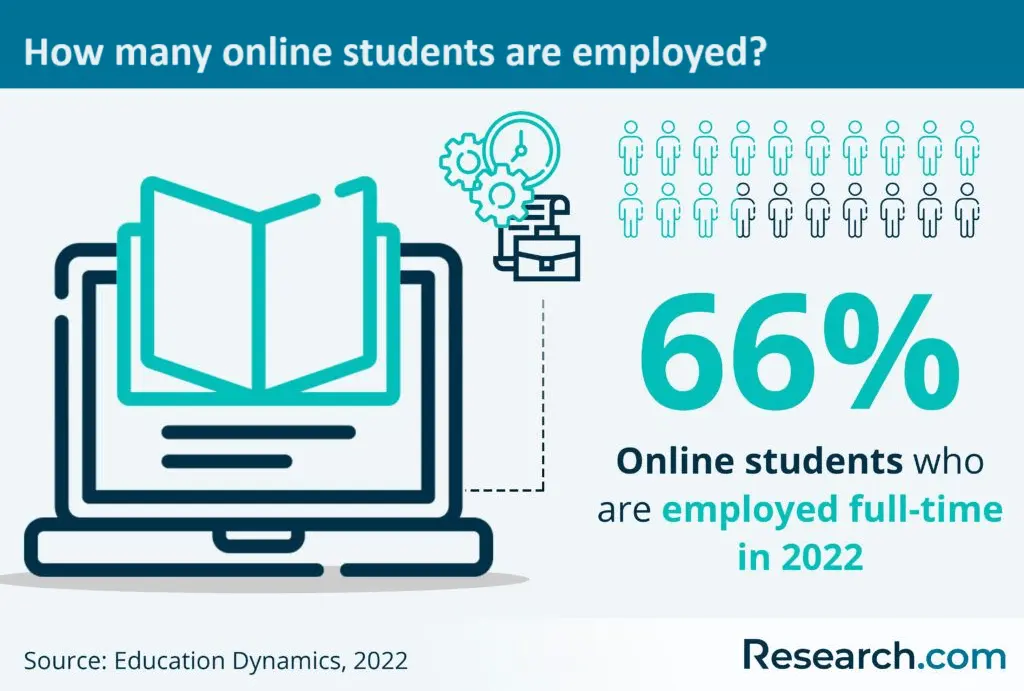
The image below shows the number of working adults employed full-time who are pursuing online education.
How Do You Choose an Online College for Working Adults?
There is no single “best” online college for every adult learner. The right choice depends on your career goal, budget, schedule, learning style, location, and how much college credit you already have. Use the steps below to compare options carefully.
1. Define the Outcome You Need
Start with the credential required for your target role. Are you trying to complete a bachelor’s degree, qualify for a promotion, change careers, meet licensing requirements, or prepare for graduate school? If you want an engineering, healthcare, education, business, or social services credential, confirm that the college offers the exact program you need.
Also decide how much structure you can handle. Some adults prefer weekly deadlines and regular instructor contact. Others need a self-paced program because their work schedule changes frequently.
2. Verify Accreditation and Program Fit
Check institutional accreditation first. Accreditation helps confirm that a school meets recognized quality standards and that your degree is more likely to be accepted by employers, graduate schools, and financial aid agencies.
Then review program-level details: required courses, learning outcomes, capstone projects, clinical or fieldwork expectations, exams, transfer policies, and any state authorization limits. If your field involves licensure, do not assume an online program automatically satisfies your state’s requirements.
3. Compare Total Cost, Not Just Tuition
Tuition is only one part of cost. Ask about technology fees, textbooks, course materials, exam proctoring, graduation fees, residency requirements, travel, and repeated course charges. Then compare financial aid, employer tuition assistance, transfer credits, and prior learning credits.
If federal aid matters to your budget, focus on online schools that accept FAFSA and verify that your specific program is eligible.
4. Review Student Support
Affordable tuition loses value if students cannot get help when they need it. Look for online academic advising, tutoring, library access, writing help, technical support, mental health resources, disability services, and career coaching.
5. Use Reviews Carefully
Student reviews and testimonials can reveal practical details about workload, communication, technology platforms, instructor responsiveness, and support services. However, do not rely only on reviews. Compare them with official data, accreditation records, and direct answers from admissions or program advisors.
6. Test the Learning Format When Possible
Some colleges offer trial periods, sample courses, or orientation modules. Use these to evaluate the learning platform, assignment style, instructor communication, and how much time coursework may require each week.
| Question to ask before enrolling | Why it matters |
| Is the institution accredited by a recognized accreditor? | Accreditation affects credibility, financial aid, transfer credit, and employer recognition. |
| Does the program meet licensing or certification requirements in my state? | Some careers require state-specific coursework, exams, fieldwork, or clinical experience. |
| How many credits can I transfer? | Transfer credit can reduce completion time and total cost. |
| Are courses asynchronous, synchronous, self-paced, or accelerated? | The format determines whether the program will fit your work schedule. |
| What fees are charged beyond tuition? | Hidden costs can change the true affordability of a program. |
| What support is available after business hours? | Working adults often study at night or on weekends. |
| What career services are available to online students? | Career support can help with promotions, job changes, and employer connections. |
What Are the Advantages of Attending Online Colleges for Adults Who Are Working?
The best online colleges can make higher education more realistic for adults who cannot pause their careers. The main benefit is flexibility, but strong online programs can also offer broad degree options, digital skill development, and lower indirect costs.
- Flexible access: Students can often study from home, work breaks, or another location with internet access.
- More program options: Online learning lets adults consider schools outside their local area without relocating.
- Reduced indirect expenses: Many students avoid commuting, campus housing, and some location-based costs.
- Digital workplace preparation: Online learning requires students to use learning management systems, video tools, shared documents, and digital communication.
- Personalized pacing in some programs: Self-paced and competency-based formats allow students to move faster through familiar material.
Some online colleges also offer competency based education programs. These programs focus on demonstrating skills and knowledge rather than completing a fixed number of class meetings, which can appeal to adults with relevant work experience.
The chart below uses data from the EducationDynamics 12th Annual Report to show preferences and demands among today’s online college students.
What Are the Pre-Requirements for Attending Online Colleges for Adults Who Work?
Admission and participation requirements vary by school and degree level, but working adults should be prepared for academic, technical, and time-management expectations.
- Technology access: Students need reliable internet and a computer that meets the program’s software and hardware requirements.
- Academic credentials: Undergraduate programs usually require a high school diploma or GED, while graduate programs require an undergraduate degree.
- Application materials: Schools may request an application, transcripts, letters of recommendation, personal statement, and application fee.
- Digital skills: Students should be comfortable with email, video conferencing, learning management systems, file uploads, and online research tools.
- Time management: Online learners must plan study time, track deadlines, and complete assignments without the daily structure of a physical classroom.
What Are the Challenges of Attending an Online College?
Online college can be flexible, but it is not effortless. Adults should understand the challenges before enrolling so they can choose the right format and prepare realistic study routines.
- Technology problems: Internet interruptions, platform issues, software conflicts, or device limitations can disrupt coursework.
- Less immediate interaction: Online students may not get the same instant feedback or informal conversation that occurs in a classroom.
- High need for self-discipline: Without a set class location, students must protect study time and maintain momentum.
- Hands-on learning limits: Programs in healthcare, science, engineering, and similar fields may require labs, practicums, clinicals, or other in-person components. This can also affect fields such as masters industrial engineering online.
- Digital learning curve: Students who are less comfortable with technology may need extra support during the first term.
What Support Services Are Available to Online Students at Affordable Colleges?
Support services can make the difference between enrolling and actually graduating. Working adults should look for services available outside standard business hours, especially if they study at night or on weekends.
- Academic advising: Advisors help students select courses, understand degree plans, evaluate transfer credits, and avoid delays.
- Career services: Online career offices may provide resume reviews, interview preparation, job boards, coaching, and networking events.
- Tutoring and study help: Writing centers, math tutoring, subject tutoring, online libraries, and research databases support academic progress.
- Technical support: Help desks assist with logins, course access, learning platforms, software, and troubleshooting.
- Mental health and wellness resources: Some colleges provide virtual counseling, wellness programs, or referrals for students managing stress.
- Peer networking and mentorship: Virtual study groups, discussion boards, mentorship programs, and student communities can reduce isolation.
Before enrolling, ask whether online students receive the same services as campus students and whether those services are included in tuition or charged separately.
How Can Military Personnel and Veterans Benefit from Online Colleges?
Online colleges can be especially useful for active-duty service members, veterans, and military families because coursework can often continue during relocation, deployment transitions, or changing schedules. Asynchronous courses may allow students to complete assignments without attending live sessions at fixed times.
Military students and veterans may also use education benefits such as the Post-9/11 GI Bill for accredited online programs, including those offered by military friendly colleges online. Some schools also offer military tuition discounts and credit for military training or experience, which may shorten degree completion.
Service members should prioritize institutions with military-trained advisors, benefit certification support, transfer-friendly policies, career transition services, and counseling resources. These services can help students avoid benefit errors and align the degree with civilian career goals.
How Can I Verify the Legitimacy of an Online College?
Start with accreditation. Confirm the school’s accreditation status through recognized accrediting agencies and compare the information with official institutional records. Then review graduation outcomes, student support, complaint history, transfer policies, and employer or graduate school recognition.
Do not rely only on a college’s marketing claims. Look for independent data, third-party evaluations, alumni feedback, and transparent cost information. Students interested in mission-driven institutions may also compare non profit colleges when evaluating institutional credibility and support.
Do Online Colleges Offer Specialized Career Services for Working Adults?
Many online colleges provide career services designed for adults who are already employed. These services may include resume reviews, interview coaching, career planning, employer networking, online job fairs, and support for career changers.
Working adults should ask whether career services are available to fully online students, alumni, and students outside normal business hours. Applicants who want to reduce upfront costs may also compare online colleges with no application fee as part of their search.
Can Working Adults Successfully Complete an Online Doctoral Program While Working Full-Time?
Some working adults can complete an online doctoral program while employed full-time, but it requires strong planning, employer or family support, and a realistic understanding of the workload. Doctoral study usually includes advanced coursework, research, writing, and long-term independent projects.
Programs built for professionals may offer flexible scheduling, competency-based learning, or accelerated coursework. Students comparing fast doctoral programs should still verify accreditation, faculty support, dissertation or capstone expectations, residency requirements, and whether the pace is realistic with their work obligations.
Is an Accelerated Online Degree Program Ideal for Optimizing My Education Timeline?
An accelerated online degree can be useful if you are organized, motivated, and able to handle compressed coursework. These programs often use shorter terms and more intensive assignments to reduce time-to-completion.
Choosing an accelerated online degree program may help students move faster toward career goals, but the format is not ideal for everyone. Adults with unpredictable work hours, caregiving responsibilities, or limited study time may find accelerated courses stressful. Compare workload, term length, course overlap, and support services before enrolling.
How Can I Evaluate the Return on Investment of My Online Degree?
Evaluating ROI means comparing the full cost of the degree with the career benefit you reasonably expect. Consider tuition, fees, books, technology, lost time, loan interest, transfer credits, completion time, and whether the credential is required for your target role.
Review graduation rates, job placement information, career services, employer recognition, and industry-specific salary expectations from reliable sources. Programs marketed as fast or career-focused, including options discussed among the quickest degree to make the most money, should still be judged by accreditation, outcomes, and fit with your actual career plan.
Simple ROI Checklist
- Will this credential qualify me for a specific job, promotion, license, or graduate program?
- How much will I pay after grants, scholarships, employer assistance, and transfer credit?
- How long will completion take if I study at a realistic pace?
- What happens financially if I need to pause or retake a course?
- Are salary expectations based on reliable labor market data, not school advertising?
How Can I Effectively Balance Work, Life, and Online Studies?
Balancing work, life, and online college starts with a realistic schedule. Adults should block study time before the term begins, communicate with family or employers when possible, and avoid taking too many courses in the first session.
Use calendars, task lists, reminders, and weekly planning sessions to stay ahead of deadlines. If cost and pacing are major concerns, compare flexible options such as the cheapest online bachelors programs while also checking academic quality and support.
Practical Weekly Study Strategy
- List every course deadline for the week before Monday begins.
- Reserve fixed study blocks, even if they are short.
- Complete reading and discussion posts early so larger assignments do not pile up.
- Tell your instructor quickly if work or family issues may affect deadlines.
- Use tutoring or advising before you fall behind, not after a course is nearly over.
How Do Online Colleges Design Their Curriculum to Match Evolving Industry Standards?
Strong online programs update coursework through employer input, advisory boards, faculty expertise, accreditation requirements, and applied assignments. Many programs use projects, case studies, simulations, and capstones to connect classroom learning with workplace expectations.
Adults who need a faster path to practical skills may compare quick degree programs, but speed should not replace quality. Ask whether courses teach current tools, whether faculty have relevant professional experience, and whether students graduate with projects, portfolios, certifications, or supervised practice that employers value.
Will Employers Recognize My Online Degree?
Employers are increasingly familiar with online degrees, especially when they come from accredited institutions. In many cases, the most important factors are the school’s reputation, accreditation, program quality, skills gained, and whether the degree meets the role’s requirements.
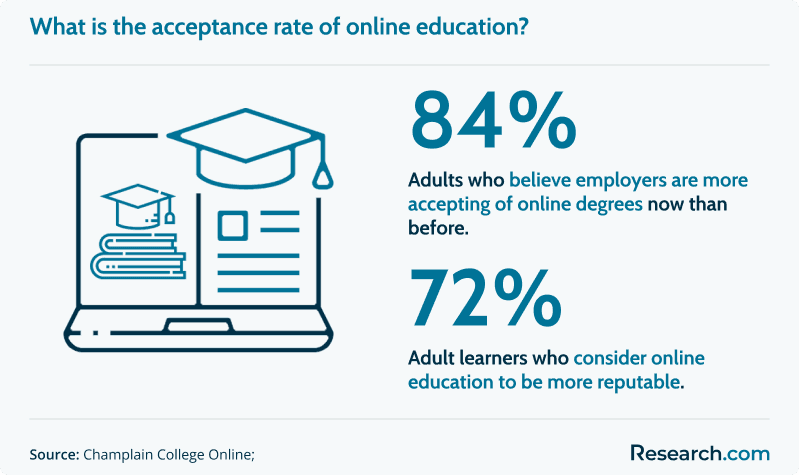
Recent insights show changing perceptions of online education. Surveys after the pandemic found that 84% of adults believe employers are more accepting of online degrees now than before, and 72% consider online education to be more reputable. These findings suggest that graduates from reputable online programs can be competitive, but students should still choose accredited schools and build strong evidence of skills through projects, experience, certifications, or portfolios.
What Are the Financial Aid Options for Working Adults Enrolling in an Online Degree Program?
Working adults may qualify for several forms of aid, but eligibility depends on the school, program, enrollment level, income, military status, and other factors. Always confirm aid eligibility before enrolling.
- FAFSA: The Free Application for Federal Student Aid is used to determine eligibility for federal aid for college or career school.
- Federal aid: Eligible online students may qualify for Pell Grants, work-study, and subsidized or unsubsidized loans.
- Foundation grants: Some foundations offer scholarships and grants based on field of study, background, or student profile.
- Government grants: Some government agencies beyond the federal level may support students in specific programs or fields.
- Institutional aid: Colleges may offer scholarships, grants, or loans for online students.
- Military aid: Active-duty service members, veterans, and eligible family members may use education benefits for approved online programs.
- Private loans: Private student loans may fill funding gaps, but borrowers should compare interest rates and repayment terms carefully.
- State aid: Some states offer grant or loan programs that may apply to online learners.
What Strategies Can Working Adults Use to Graduate Faster from Online Colleges?
Graduating faster can reduce opportunity costs and may lower total tuition, but speed only helps if the pace is sustainable. Working adults should choose acceleration strategies that match their experience, study time, and program rules.
Use Prior Learning Assessments
Some online colleges award credit for work experience, military training, certifications, professional achievements, or portfolios. This can help students avoid repeating material they already know.
Choose Accelerated Programs Carefully
Accelerated online programs, including the fastest bachelor's degree programs, may use condensed courses lasting 5–8 weeks. This allows students to complete more terms per year, but the workload can be intense.
Maximize Transfer Credits
Transfer credits from previous college coursework can significantly shorten the path to graduation. Some institutions allow students to transfer up to 75% of the required credits for a bachelor's degree.
Take Self-Paced Courses
Self-paced learning can help knowledgeable students progress quickly through familiar subjects. This format works best for disciplined learners who can set and meet their own deadlines.
Consider Competency-Based Education
Competency-based programs evaluate mastery of skills rather than time spent in class. Students can move forward once they demonstrate proficiency.
Use Year-Round Enrollment
Rolling admissions and multiple start dates can help students avoid long breaks between terms. Taking back-to-back sessions may speed completion if the workload remains manageable.
Is Attending an Online College Worth It for Working Adults?
Online college can be worth it for working adults when the program is accredited, affordable, aligned with a clear career goal, and realistic for the student’s schedule. It is less likely to be worth it if the school lacks recognized accreditation, the cost requires excessive debt, the program does not meet licensing needs, or the student cannot consistently dedicate time to coursework.
| Potential benefit | Potential drawback |
| Flexible access to coursework around work and family responsibilities | Requires strong self-discipline and time management |
| May reduce commuting, housing, and relocation costs | Technology problems can interrupt learning |
| Offers programs beyond what may be available locally | Less face-to-face interaction than campus programs |
| Can support promotion, career change, or credential completion | Some students may feel isolated without intentional networking |
| Self-paced formats may reward prior knowledge and motivation | Hands-on fields may still require clinicals, practicums, labs, or placements |
The image below shows why students pursue an online degree. The top objective is to start a new career.
Common Mistakes Working Adults Should Avoid When Choosing an Online College
| Mistake | Why it can be costly | Better approach |
| Choosing the lowest tuition without checking fees | Technology, proctoring, books, and graduation fees can raise total cost. | Ask for a full cost breakdown for the entire program. |
| Ignoring accreditation | Unrecognized credentials may limit financial aid, transfer options, employment, or graduate admission. | Verify institutional and programmatic accreditation before applying. |
| Assuming online means easier | Online courses can require significant reading, writing, projects, and independent work. | Start with a manageable course load and build from there. |
| Overlooking licensure requirements | Some online programs may not meet state rules for teaching, counseling, nursing, social work, or accounting. | Contact your state licensing board and the program advisor. |
| Not using transfer or prior learning credits | Students may pay for courses they do not need. | Request a transfer evaluation before committing. |
| Relying only on rankings | A highly ranked school may still be a poor fit for your schedule, budget, or career goal. | Use rankings as a shortlist, then compare program-level details. |
How Do I Find Affordable Accredited Online Colleges?
Finding cheap accredited online colleges requires more than searching for the lowest price. The goal is to find a school that combines recognized accreditation, manageable cost, flexible scheduling, reliable support, and a program that fits your career plan.
- Confirm accreditation: Verify that the institution is accredited by a recognized agency and, when relevant, that the specific program has the accreditation required in your field.
- Compare tuition and fees: Look beyond the advertised tuition rate and ask about registration, technology, materials, proctoring, and graduation fees.
- Review financial aid: Compare scholarships, grants, federal student aid, employer tuition assistance, military benefits, and institutional aid.
- Check flexibility for adults: Look for part-time options, asynchronous courses, self-paced formats, multiple start dates, and leave policies.
- Evaluate program specialization: Confirm that the school offers the concentration, practicum, certification preparation, or licensure pathway you need.
- Ask about transfer credit: A lower-cost school may become more expensive if it accepts fewer previously earned credits.
- Compare outcomes: Look at completion rates, graduate outcomes, career services, and employer connections where available.
References
- Aslanian, C. B., and Fischer, S. (2022). Online College Students Report 2022.
- Aslanian, C.B., Fischer, S., Kitchell R., & Lenexa, KS (2023). Online College Students. Report 2023. EducationDynamics. https://insights.educationdynamics.com/rs/183-YME-928/images/EDDY-online-college-students-2023.pdf
- Hanson, M. (August 2023). Cost of Online Education vs. Traditional Education. Education Data Initiative. https://educationdata.org/cost-of-online-education-vs-traditional-education
- Capranos, D., and Magda, A. J. (2022). Online learning at public universities 2022: Views of AASCU member institutions as COVID-19 transforms higher education.
- Diaz-Infante, N., Lazar, M., Ram, S., & Ray, A. (2022, July 20). Demand for online education is growing. Are providers ready? McKinsey & Company.
- Doak, M. (2022, March 7). Online learning can lead to increased success for minority students in higher education. Technology Solutions That Drive Education.
- Education pays, 2022: Career Outlook: U.S. Bureau of Labor Statistics. (2023, May 5). Bls.gov.
- Hanson, M. (2021, December 9). Is College Worth it? | Return on Investment Analysis of College Degree. Education Data Initiative.
- Hanson, M. (2023, August 23). Cost of Online Education vs. Traditional Education [2023]: Comparison. Education Data Initiative.
- Hanson, M. (2024, March 3). Student Loan Debt Statistics [2024]: Average + total debt. Education Data Initiative.
- National Center for Education Statistics (2022). Fast Facts: Distance Education.
- Finley, A. (2023). THE CAREER-READY GRADUATE, WHAT EMPLOYERS SAY ABOUT THE DIFFERENCE COLLEGE MAKES. American Association of Colleges and Universities. https://dgmg81phhvh63.cloudfront.net/content/user-photos/Research/PDFs/AACU-2023-Employer-Report.pdf
Key Insights
- The best affordable online college for a working adult is accredited, flexible, transparent about total cost, and aligned with a specific career or credential goal.
- Online college can reduce commuting, housing, and schedule-related barriers, but students still need reliable technology, self-discipline, and strong time management.
- Do not compare schools by tuition alone. Transfer credit, prior learning credit, fees, course length, financial aid, and completion time can change the real cost.
- Licensure fields such as nursing, counseling, teaching, accounting, and social work require extra caution. Always verify state and program requirements before enrolling.
- Self-paced, competency-based, and accelerated programs can help motivated adults finish faster, but they can be demanding for students with unpredictable schedules.
- Employer recognition depends heavily on accreditation, school reputation, program quality, and the skills you can demonstrate—not simply whether the degree was earned online.
- Before applying, ask each school about accreditation, total cost, transfer credit, course format, online student support, career services, and financial aid eligibility.
Other Things You Should Know About the Most Affordable Online Colleges for Working Adults
Yes. Many affordable online colleges for working adults use asynchronous courses, so students can log in and complete weekly readings, discussions, and assignments on their own schedule. Some programs also require occasional live sessions, proctored exams, or fixed deadlines for specific courses.
In 2027, working adults attending online colleges can access various financial aid options, such as federal grants, scholarships specific to adult learners, employer tuition reimbursement programs, and low-interest federal student loans. It's important to research each institution's offerings and eligibility requirements to maximize potential aid.
Typical admissions requirements for working adults in 2027 include a high school diploma or GED, a completed application form, and sometimes relevant work experience. Some programs may require standardized test scores, though many online colleges focus on prior education and professional background instead.


