
2027 Best Electrician Trade Schools

Co-Founder and Chief Data Scientist
Choosing an electrician trade school is a practical career decision: you need training that teaches safe electrical work, prepares you for state licensing or apprenticeship requirements, and fits your schedule and budget. The electrical field is also changing quickly as employers look for workers who understand traditional wiring, the National Electrical Code, renewable energy systems, automation, and modern diagnostic tools.
This guide is for students comparing electrician trade schools, adults considering a skilled-trades career change, and workers who want to move into electrical technician roles. You will learn what these programs teach, how long they take, how much they may cost, what career paths they can lead to, and how to compare schools before enrolling. The U.S. Bureau of Labor Statistics projects employment of electricians to grow 11 percent from 2023 to 2033, much faster than the average for all occupations, making program choice especially important for students who want a durable hands-on career.
Quick answer: Are electrician trade schools worth considering?
Electrician trade schools can be worth it when the program is accredited or otherwise recognized by employers, includes substantial hands-on training, prepares students for licensing or apprenticeship steps in their state, and offers clear cost and completion information. A good program should teach electrical theory, wiring methods, blueprint reading, safety procedures, troubleshooting, and National Electrical Code requirements. However, students should not assume that every certificate automatically leads to licensure; licensing rules vary by state and may require supervised work hours, exams, or apprenticeship completion.
What are the benefits of studying in an electric technician program?
- An electrical technician program can prepare graduates for entry-level work in residential, commercial, industrial, repair, or renewable-energy settings.
- Experienced electricians have a median annual salary of $61,590 per year.
- Online or hybrid coursework can make the theory portion more flexible, but students should still verify that the program includes the lab or field experience needed for employment, certification, or licensure.
What can I expect from an electric technician program?
Electrician and electrical technician programs usually combine classroom instruction with shop-based practice. Students learn how electricity works, how electrical systems are installed, and how to troubleshoot problems without compromising safety. Common training areas include wiring methods, conduit bending, electrical panels, motors, control systems, programmable logic controllers, and the National Electrical Code.
The best programs do more than teach definitions. They require students to work with tools, interpret diagrams, follow lockout/tagout procedures, identify hazards, and complete projects that resemble real jobsite tasks. Depending on the school, the program may prepare students for helper roles, technician positions, apprenticeship entry, or continued study in electrical technology.
| Training area | What students typically learn | Why it matters on the job |
| Electrical theory | Voltage, current, resistance, power, circuits, and load calculations | Helps technicians diagnose problems instead of guessing |
| Wiring and installation | Residential and commercial wiring methods, panels, devices, and conduit | Builds the hands-on skills employers expect from entry-level workers |
| Safety and code | Workplace safety practices, electrical hazards, and NEC requirements | Reduces risk and supports licensing or inspection compliance |
| Controls and motors | Motor operation, control circuits, relays, and automation basics | Prepares students for commercial, industrial, and maintenance environments |
| Troubleshooting | Testing equipment, reading schematics, and isolating faults | Supports repair, maintenance, and service work after graduation |
Where can I work with an electric technician program?
Graduates of electrician trade schools may work anywhere electrical systems are installed, maintained, inspected, or repaired. Common workplaces include construction sites, homes, apartment buildings, offices, hospitals, factories, warehouses, utilities, communications facilities, and renewable energy projects. Some graduates begin as electrical helpers or apprentices, while others pursue maintenance technician, repair technician, or installation-focused roles.
Work settings can differ sharply. Residential work may involve service calls, remodeling projects, and new home construction. Commercial work often includes larger buildings, more complex panels, and coordination with other trades. Industrial work may require comfort with motors, controls, automation, and production equipment.
How much can I make with an electric technician program?
Pay depends on job title, experience, state licensing level, location, union or nonunion employment, and specialization. The average annual salary for electrical technicians in the United States is approximately $61,267, with a typical range between $53,375 and $69,931. Entry-level roles may begin around $37,000 per year, while experienced technicians can earn up to $80,000 or more annually. Specialized positions, including Electric/Electronics Technician III roles or jobs in high-demand areas such as Virginia, may pay more.
Students should treat salary figures as planning benchmarks, not guarantees. A short certificate may help you enter the field, but higher earnings often depend on completing an apprenticeship, passing licensing exams, building experience, and developing skills in areas such as controls, renewable energy, maintenance, or industrial systems.
- Best Electrician Trade Schools for 2027
- How long does it take to complete an electric technician program?
- How does an electric technician program compare to an on-campus program?
- What is the average cost of an electric technician program?
- What are the financial aid options for students enrolling in an electric technician program?
- What are the prerequisites for enrolling in an electric technician program?
- What courses are typically in an electric technician program?
- What types of specializations are available in an electric technician program?
- How to choose the best electrician trade schools
- Can online certificate programs boost my electrician career?
- What career paths are available for graduates of an electric technician program?
- What job placement services and career support options are available for electric technician program graduates?
- Is it viable to pursue higher education after an electric technician program?
- How are emerging technologies integrated into electric technician programs?
- What is the job market for graduates with an electric technician program?
- What certifications and licenses should I pursue?
- Is the return on investment for an electric technician program justifiable?
- Can further education accelerate career growth in the electrical field? ROI considerations Licensing information Job market details Additional career planning
List of Best Electrician Trade Schools for 2027
The best electrician trade school for you is not always the shortest, cheapest, or most recognizable option. The right choice depends on your state licensing goals, how much hands-on training you need, whether you plan to enter an apprenticeship, and whether the program’s schedule matches your life. Before selecting a school, compare program length, total cost, curriculum, accreditation, lab facilities, employer partnerships, and career support.
How do we rank schools?
School research should begin with transparent, verifiable data. For electrician trade schools, useful comparison factors include accreditation status, program cost, completion expectations, hands-on training, credential type, and whether the curriculum aligns with electrical code, safety, and employer needs. The data sources below are commonly used to evaluate institutional information and student outcomes.
- Integrated Postsecondary Education Data System, available through the IPEDS database
- Peterson’s education database, including distance learning data
- College Scorecard for federal higher education information
- National Center for Education Statistics
1. Florida International Training Institute
The Electricity Technician Program at Florida International Training Institute prepares students for entry-level electrical construction work in residential and commercial environments. The program emphasizes electrical fundamentals, proper tool use, installation practices, and National Electrical Code requirements. Students receive a mix of classroom instruction and applied training designed to build baseline competence for the electricity industry.
- Program Length: 11-18 months
- Tracks/concentrations: Electricity Technician
- Estimated Cost per Credit: $10,120
- Required Credits to Graduate: 780 hours
- Accreditation: Southern Association of Colleges and Schools Commission on Colleges (SACSCOC)
2. Orleans Technical College
The Residential & Commercial Electricity program at Orleans Technical College in Philadelphia focuses on job-ready training for the building and construction trades. Students learn skills used in electrical work for homes and businesses, and the school offers 6-month classes with night school options for students who need scheduling flexibility. Graduates earn a trades diploma and may have opportunities to pursue industry-recognized certifications.
- Program Length: 6 months
- Tracks/concentrations: Electricity Technician
- Estimated Cost per Credit: $504
- Required Credits to Graduate: 26
- Accreditation: Accrediting Commission of Career Schools and Colleges
3. Michigan State University
The Electrical Technology program at Michigan State University provides electrical apprenticeship training covering residential, agricultural, commercial, and industrial wiring. The program is recognized by the U.S. Department of Labor and the Michigan Bureau of Construction Codes. Students study electrical principles, code requirements, installations, motor controls, solid-state electronic applications, energy efficiency, and alternative power systems.
- Program Length: 4 years
- Tracks/concentrations: Electricity Technician
- Estimated Cost per Credit: $506
- Required Credits to Graduate: 48
- Accreditation: Higher Learning Commission
4. Paris Junior College
The Electrician Program at Paris Junior College is designed to support demand for electricians in its five-county service area, where an average of 175 openings occur annually. The program prepares students for residential, commercial, and industrial electrical work in settings such as construction, hospitals, hotels, apartment complexes, offices, and manufacturing facilities. Coursework includes electrical principles, motors and controls, schematics, troubleshooting, facility maintenance, lighting, security systems, fire alarms, elevators, and computerized irrigation systems.
- Program Length: 10 months
- Tracks/concentrations: Electricity Technician
- Estimated Cost per Credit: $184
- Required Credits to Graduate: 24
- Accreditation: Southern Association of Colleges and Schools Commission on Colleges (SACSCOC)
5. Irvine Valley College
The Electrical Technology program at Irvine Valley College is built for students interested in electrical and solar technology careers. The program teaches students to design and troubleshoot residential, commercial, and solar wiring systems while using hands-on learning activities and transfer-level mathematics.
- Program Length: 1 year
- Tracks/concentrations: Electricity Technician
- Estimated Cost per Credit: $95
- Required Credits to Graduate: 9 units
- Accreditation: Accrediting Commission for Community and Junior Colleges (ACCJC)
6. James Rumsey Technical Institute
The Electrical Technician certificate program at James Rumsey Technical Institute is an 11-month full-time adult program for students pursuing residential and commercial electrical careers. Training requires 30 hours per week, with approximately 60% of time spent on classroom study in electrical theory and code practices and 40% devoted to shop and lab work. Graduates may be prepared for roles such as Maintenance Electrician, Journeyman Electrician, and Electrical Safety Inspector, and they may be eligible to take the WV Electrical Journeyman’s Test after completing the program.
- Program Length: 11 months
- Tracks/concentrations: Electricity Technician
- Estimated Cost per Credit: $7,532 total program cost
- Required Credits to Graduate: 1,215 hours
- Accreditation: Council on Occupational Education
7. CET-Soledad
The Electrician Residential & General certificate program at CET-Soledad trains students for electrical field work through instruction in electrical safety, residential electricity, commercial electricity, wiring, installation methods, and photovoltaic systems. The curriculum also includes customer service and employment preparation, including resume and interview skills.
- Program Length: 9 months
- Tracks/concentrations: Electricity Technician
- Estimated Cost per Credit: $15,375 total program cost
- Required Credits to Graduate: 900 hours
- Accreditation: Council on Occupational Education
8. Withlacoochee Technical College
The Electrical Technician certificate program at Withlacoochee Technical College prepares students for entry-level electrical work through practical training in wiring circuit breakers, installing electrical systems, and troubleshooting electrical problems. The program uses a competency-based model, allowing students to advance as they demonstrate mastery of required skills.
- Program Length: 10 months
- Tracks/concentrations: Electricity Technician
- Estimated Cost per Credit: $3,504 total program cost
- Required Credits to Graduate: 1,200 hours
- Accreditation: Council on Occupational Education
9. Washburn Institute of Technology
The Electrical Technology program at Washburn Institute of Technology teaches electrical theory, blueprint reading, wiring techniques, safety practices, and National Electrical Code concepts. Students complete lab work involving installation, troubleshooting, conduit bending, and electrical components, preparing them for residential and commercial electrical work.
- Program Length: 1 year
- Tracks/concentrations: Electricity Technician
- Estimated Cost per Credit: $215
- Required Credits to Graduate: 30
- Accreditation: Higher Learning Commission
10. College of the Canyons
The Electronic Systems Technology Program at College of the Canyons prepares students for automation systems and electrical services careers. Students study electromechanical systems, robotics, automatic identification and data capture, automated inspection, and methods for designing or reverse engineering automated systems. Although the program does not provide formal job placement services, the Career Services office supports students with resumes, job searches, workshops, and interview preparation. The program also maintains local industry connections that may support internships and job announcements.
- Program Length: 1 year
- Tracks/concentrations: Electricity Technician
- Estimated Cost per Credit: $46
- Required Credits to Graduate: 18
- Accreditation: Accrediting Commission for Community and Junior Colleges (ACCJC)
How long does it take to complete an electric technician program?
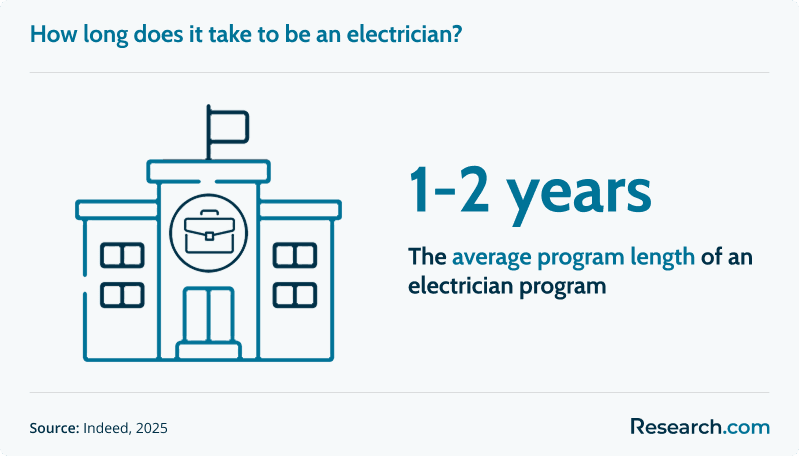
Completion time depends on the credential and training route. Certificate and diploma programs at trade schools often take between 4 months and 1 year and focus on electrical basics, safety, installation, and troubleshooting. An associate degree path, including options students may compare with the fastest associates degree online, usually takes about 1.5 to 2 years and adds broader technical coursework. Apprenticeships typically take 4 to 5 years and combine classroom instruction with approximately 2,000 hours of supervised on-the-job training annually.
| Path | Typical time commitment | Best for | Key trade-off |
| Certificate or diploma | 4 months to 1 year | Students seeking fast entry-level training | May not satisfy all licensing or apprenticeship requirements by itself |
| Associate degree | About 1.5 to 2 years | Students who want broader technical education | Takes longer but may support advancement or transfer options |
| Apprenticeship | 4 to 5 years | Students pursuing journeyman electrician status | Longer timeline but includes extensive paid supervised experience |
How does an electric technician program compare to an on-campus program?
The phrase “electric technician program” can refer to several formats, including trade school certificates, technical college programs, online theory courses, or campus-based degree programs. Shorter trade school programs usually emphasize practical skills such as wiring, testing, troubleshooting, and jobsite safety. They are often designed for students who want to enter the workforce quickly or qualify for an apprenticeship.
Campus-based electrical technology or related degree programs may take longer and include more theory, lab work, applied design, and general education. These programs can be useful for students who want a broader technical foundation, plan to work with engineers, or hope to move into production, maintenance, automation, or supervisory roles.
| Program type | Learning format | Typical strengths | Questions to ask before enrolling |
| Trade school certificate | Classroom plus shop or lab practice | Focused training, shorter completion time, job-ready skills | Does it count toward apprenticeship or licensing requirements in your state? |
| Online or hybrid program | Online theory with possible in-person labs | Flexible scheduling for working adults | Where and how will hands-on competencies be completed? |
| On-campus associate program | In-person lecture, lab, and technical coursework | Broader education and possible transfer opportunities | Does the credential align with your target job title? |
| Apprenticeship | Paid work plus classroom instruction | Extensive supervised experience and licensing preparation | What are the entrance requirements, wages, and completion expectations? |
What is the average cost of an electric technician program?
Costs vary by school type, location, credential, program length, and whether tools or exam fees are included. Tuition for certificate or diploma programs at trade schools ranges from $1,000 to $20,000. Shorter programs may cost less upfront, while longer programs can include more training hours and broader coursework. Students comparing technical fields may also review affordable options such as the cheapest construction management degree to understand how costs differ across skilled-trade and construction-related education paths.
Do not compare tuition alone. Ask for the full estimated cost, including registration fees, books, tools, safety gear, lab fees, certification exams, transportation, and lost work time if the schedule is full-time.
What are the financial aid options for students enrolling in an electric technician program?
Financial aid depends on the school’s eligibility, accreditation, program length, and the student’s financial situation. Some electrician trade schools participate in federal aid programs, while others rely on institutional scholarships, workforce grants, payment plans, employer sponsorship, or veteran benefits.
- FAFSA: Completing the Free Application for Federal Student Aid is the first step for students seeking federal aid such as Pell Grants or a Federal Student Loan.
- Workforce Innovation and Opportunity Act: WIOA may provide grants for eligible students based on need, employment status, or local workforce priorities.
- Military benefits: Veterans and active-duty service members may be able to use benefits such as the GI Bill for approved programs.
- School-based aid: Many trade schools offer scholarships, payment plans, or financial aid advising that can help students identify funding sources.
- Employer or union sponsorship: Some students reduce costs by entering apprenticeships or employer-supported training arrangements.
What are the prerequisites for enrolling in an electric technician program?
Most electric technician programs require a high school diploma or GED. Some schools may consider adult learners without a diploma if they meet age, experience, or assessment requirements. A foundation in math, physics, shop classes, and basic computer use can help students handle electrical calculations, diagrams, online coursework, and troubleshooting tasks. Admission requirements can vary widely across career programs, whether students are comparing electrician training or unrelated options such as a library degree.
Associate degree programs and apprenticeships may require stronger preparation in algebra or technical math. Some online or hybrid programs may also require access to a computer that meets minimum specifications. Before enrolling, ask whether placement tests, background checks, drug screening, physical ability standards, or driver’s license requirements apply to your intended path.
What courses are typically in an electric technician program?
Electric technician coursework is usually practical and sequential. Students begin with safety and electrical fundamentals, then move into wiring, code, motors, controls, troubleshooting, and systems applications. While some students research short credentials alongside options such as the easiest associates degree programs, electrical training should not be evaluated only by perceived difficulty; safety, supervised practice, and licensing relevance matter more.
- Basic electricity and electrical theory: Introduces voltage, current, resistance, power, circuits, and electrical measurements.
- DC and AC circuits: Teaches students how direct current and alternating current systems behave and how circuits are analyzed.
- Electrical wiring and installation: Covers residential and commercial wiring methods, conduit, panels, devices, and system installation.
- Blueprint reading and electrical codes: Builds skill in interpreting schematics, plans, and code-related requirements.
- Power electronics: Introduces components such as transformers, rectifiers, and inverters.
- Motors and controls: Explains motor operation, control circuits, automation basics, and maintenance practices.
- Safety practices: Focuses on hazard recognition, safe tool use, high-voltage precautions, and workplace procedures.
What types of specializations are available in an electric technician program?
Specializations help students align training with the work environment they want. Not every school offers every track, so students should compare curriculum details rather than relying only on a program title.
- Residential electrician: Focuses on wiring, service, and repairs in homes and multifamily housing.
- Commercial electrician: Covers larger building systems, power distribution, lighting, and commercial equipment.
- Industrial electrician: Prepares students for factories, plants, production facilities, and heavy equipment environments.
- Outside lineman: Centers on outdoor power line transmission and distribution work.
- Maintenance electrician: Emphasizes inspections, preventive maintenance, troubleshooting, and equipment replacement.
- Installation electrician: Specializes in setting up electrical systems for new construction, including lighting, heating, cooling, and security systems.
- Automotive electrician: Applies electrical knowledge to motor vehicle diagnostics and performance electronics.
- Marine electrician: Focuses on electrical systems used in boats, ships, and other watercraft.
How to choose the best electrician trade schools
Start with your end goal. If you want to become a licensed electrician, ask whether the program satisfies any state, local, or apprenticeship requirements. If you want a technician job in maintenance, automation, or manufacturing, look for training in motors, controls, PLCs, and troubleshooting. If you need flexibility, consider hybrid coursework, but verify that hands-on training is built into the program.
- Check accreditation and recognition: Confirm whether the school is accredited by a recognized accrediting body, such as the Accrediting Commission of Career Schools and Colleges or the Accrediting Council for Continuing Education & Training, and whether that status supports financial aid eligibility.
- Review the curriculum carefully: Look for electrical codes, blueprint reading, safety, wiring, troubleshooting, and lab practice. Practical training matters in skilled trades, whether you are comparing electrician training or researching how to become a locksmith.
- Ask about instructors: Faculty with field experience can explain jobsite expectations, common mistakes, and employer preferences.
- Evaluate career support: Strong programs help students connect with apprenticeships, employers, internships, unions, or local contractors.
- Compare total cost: Include tuition, fees, tools, exam costs, books, transportation, and schedule-related income loss.
- Verify licensing alignment: Contact the state licensing board or local authority before assuming a program meets requirements.
| Question to ask the school | Why it matters |
| Is the program accredited or recognized by employers, unions, or licensing bodies? | Recognition affects financial aid, transfer options, and employer confidence. |
| How many lab or shop hours are included? | Electrical work requires supervised hands-on practice, not theory alone. |
| Does this program count toward apprenticeship or licensure requirements? | Licensing rules vary, and a certificate alone may not be enough. |
| What tools, books, fees, and exams are not included in tuition? | The advertised price may not represent the full cost of attendance. |
| What career services are available before and after graduation? | Employer connections can influence how quickly students find relevant work. |
Can online certificate programs boost my electrician career?
Online certificate programs can help electrical workers strengthen theory-based knowledge, explore new technologies, or prepare for advancement. They are most useful as a supplement to hands-on electrical training, not as a full substitute for lab work, supervised field experience, or state licensing requirements. Online coursework may cover advanced electrical theory, energy management, digital controls, renewable energy, or diagnostic systems.
Students who need flexibility and financial aid should verify school eligibility before enrolling. Comparing FAFSA-approved online certificate programs can help learners identify options that may fit their budget while adding targeted skills to practical electrical experience.
What career paths are available for graduates of an electric technician program?
Graduates can pursue several electrical career routes, depending on training depth, licensing rules, and work experience. Many begin as helpers, apprentices, electrical technicians, or maintenance technicians. Others pursue residential, commercial, or industrial electrical work after meeting local licensing requirements. The Electrical Safety Foundation International provides an overview of how electrician career preparation can work.
Electrical technician roles may involve testing, repairing, maintaining, and installing equipment or systems. According to labor market profiles such as electrician employment data, electrical professionals work across construction, manufacturing, utilities, services, and other industries. Specialized paths may include solar photovoltaic installation, fire alarm and security systems, network cabling, instrumentation, manufacturing support, electrical drafting, testing, or technical sales.
| Career path | Typical work | Who it may fit |
| Residential electrician | Installs and repairs wiring, outlets, panels, lighting, and home electrical systems | Students who want service work and smaller-scale construction projects |
| Commercial electrician | Works on offices, retail buildings, hospitals, schools, and larger electrical systems | Students comfortable with complex buildings and coordinated jobsite work |
| Industrial electrician | Maintains motors, controls, production equipment, and plant electrical systems | Students interested in manufacturing, automation, and maintenance |
| Electrical technician | Tests, repairs, troubleshoots, and maintains electrical equipment | Students who want technical service or maintenance roles |
| Solar or renewable energy technician | Installs or services photovoltaic and related energy systems | Students interested in green-energy infrastructure |
What job placement services and career support options are available for electric technician program graduates?
Career support can make a major difference, especially for students entering the field without industry contacts. Many programs offer resume help, interview coaching, job boards, employer introductions, internship referrals, apprenticeship guidance, and networking events. Some schools maintain relationships with local contractors, utilities, manufacturers, or unions.
Ask for specifics before enrolling. A school that says it offers “career assistance” should be able to explain placement processes, employer partners, apprenticeship connections, and how long graduates can use services. Students balancing work and education may also compare flexible pathways such as an online accelerated associate's degree, but hands-on career preparation remains essential in the electrical field.
Is It Viable to Pursue Higher Education Following an Electric Technician Program?
Yes. Some graduates use an electric technician program as the first step toward broader technical education. Depending on the school, credits may transfer into an associate or bachelor’s program in electrical technology, engineering technology, industrial maintenance, renewable energy, automation, or construction management. Transfer is not automatic, so students should confirm articulation agreements and credit policies before enrolling.
Further study can support movement into supervisory, technical support, design-adjacent, or management roles. Students who want a faster academic pathway may compare accelerated bachelor's programs after confirming that credits from their trade program will be accepted.
How Are Emerging Technologies Integrated into Electric Technician Programs?
Modern electrical training increasingly includes topics beyond basic wiring. Programs may introduce smart grid concepts, solar systems, digital controls, automation, connected equipment, and advanced diagnostic tools. Some curricula also discuss cybersecurity concerns related to networked electrical systems and industrial control environments.
Students should look for evidence that a school updates its curriculum. Ask whether labs include current equipment, whether instructors have recent field experience, and whether students can add focused credentials. Some learners use certificate programs online for high paying careers to broaden their technical profile in areas such as automation, renewable energy, or controls.
What is the job market for graduates with an electric technician program?
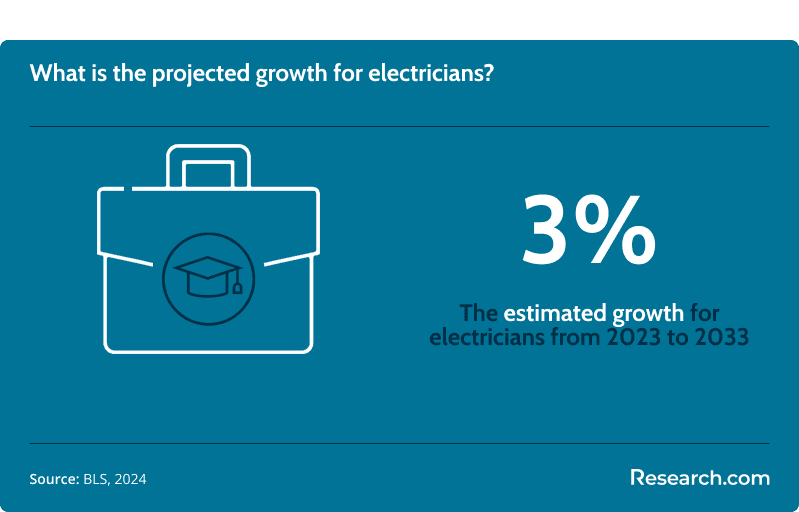
The job market depends on whether a graduate becomes an electrician, electrical technician, maintenance worker, installer, or specialist. For electrical technicians, the job growth rate is projected to remain flat at 3% from 2023 to 2033, with about 99,600 active job openings currently available in the U.S. and an average salary of $72,800 annually. Candidates with hands-on training, certifications, licensing progress, and experience in renewable energy, automation, or advanced electrical systems may be more competitive.
Infrastructure modernization, electrification, renewable energy, and building upgrades can create opportunities for skilled workers, but students should still research local demand. Electrical labor markets are regional, and licensing rules, union presence, construction activity, and employer needs vary by state and city.
What certifications and licenses should I pursue?
Licensing is one of the most important issues in electrical careers. Requirements vary by state and sometimes by city or county. Common milestones include apprentice registration, journeyman electrician licensing, and master electrician licensing. Many electricians also pursue OSHA safety training, manufacturer credentials, and specialized certifications related to solar, controls, fire alarm systems, or industrial equipment.
Before selecting a school, contact your state licensing board or local authority and ask what education, work hours, exams, and documentation are required. Some accredited programs include exam preparation or safety training, but students should not assume that graduation alone equals licensure. Workers who want to broaden their credentials may also compare fast degrees online as a supplemental path, especially if they plan to move toward supervision, technical management, or related fields.
Is the Return on Investment for an Electric Technician Program Justifiable?
An electric technician program can offer a strong return when it leads to employment, apprenticeship entry, licensure progress, or higher-paying technical work at a reasonable cost. To evaluate ROI, compare total program cost with realistic local wages, completion time, job placement support, licensing value, and whether you will need additional training after graduation.
A low-cost program with strong employer connections may be a better investment than a more expensive program with weak career support. Conversely, a longer program may be worthwhile if it includes more supervised practice, recognized credentials, and pathways into apprenticeship or advancement. Students comparing broader education options can also review the easiest online bachelor degree to understand how different credentials affect cost, flexibility, and career planning.
Can Further Education Accelerate Career Growth in the Electrical Field?
Further education can help electrical workers move beyond entry-level installation or service work. Additional coursework in automation, controls, renewable energy, project management, safety, estimating, or supervision may support advancement into lead technician, maintenance supervisor, technical specialist, trainer, inspector, or management roles.
Graduate-level education is not necessary for most electrician roles, but it may be relevant for professionals moving into technical leadership, operations, engineering-adjacent work, or management. Workers exploring advanced academic options can compare 1 year masters degrees as part of a long-term career strategy, while remembering that electrical licensure and field experience remain central in the trade.
Common mistakes to avoid when choosing an electrician trade school
- Choosing based only on speed: A short program is useful only if it teaches the skills and requirements employers expect.
- Ignoring licensing rules: State and local requirements can determine whether your training moves you toward journeyman status.
- Comparing tuition instead of total cost: Tools, safety gear, fees, exams, transportation, and missed work hours can change affordability.
- Assuming online training is enough: Electrical work requires hands-on practice and supervised experience.
- Overlooking accreditation: Accreditation can affect financial aid, credit transfer, and institutional credibility.
- Failing to ask about job outcomes: Career services should include concrete support, not vague placement promises.
- Relying only on rankings: A ranked school may still be the wrong fit if it does not match your state, schedule, budget, or career goal.
Key Insights
- The strongest electrician trade school is the one that aligns with your target job, licensing requirements, budget, and need for hands-on training.
- Certificate and diploma programs commonly take between 4 months and 1 year, while apprenticeships usually take 4 to 5 years and include approximately 2,000 hours of supervised on-the-job training annually.
- Tuition for certificate or diploma programs at trade schools ranges from $1,000 to $20,000, but students should also budget for tools, fees, books, exam costs, and transportation.
- The average annual salary for electrical technicians in the United States is approximately $61,267, but earnings vary by experience, location, specialization, and licensing progress.
- For electrical technicians, the job growth rate is projected to remain flat at 3% from 2023 to 2033, with about 99,600 active job openings currently available in the U.S.
- Online certificates can support career growth, especially in theory-heavy or emerging areas, but they should not replace required lab work, field experience, or licensure steps.
- Before enrolling, ask schools direct questions about accreditation, lab hours, licensing alignment, employer partnerships, career support, and total program cost.
References:
- BLS. (2023). Occupational Outlook Handbook: Electrician. U.S. Bureau of Labor Statistics electrician profile
- EBSCO. (2024). Electrician. EBSCO Research Starters electrician overview
- Indeed. (2025). Electrician Skills: Definition, Examples and How To Improve. Indeed electrician skills guide
- NCEES. (2020). FE Exam. Greenville, SC: National Council of Examiners for Engineering and Surveying FE exam information
Other Things You Should Know About the Best Electrician Trade Schools
Yes. In many states, approved trade school classroom hours count toward the apprenticeship or pre-licensure education requirement, often alongside 8,000 hours of supervised on-the-job training. State licensing boards set the exact rules, so students should confirm approval before enrolling.
Graduates of top electrician trade schools in 2027 often experience a job placement rate exceeding 85%. These schools partner with industry employers to facilitate job opportunities, ensuring graduates quickly transition into the workforce upon program completion.


