2027 Highest Paying Psychology Jobs and Careers?

Co-Founder and Chief Data Scientist
Choosing a high-paying psychology career is not just about picking the specialty with the largest salary figure. The best path depends on how much education you are willing to complete, whether you want to provide therapy, work in healthcare, consult for businesses, support legal cases, or apply behavioral science in schools, sports, technology, or government. Many of the highest paying psychology jobs require a doctoral degree, supervised clinical experience, state licensure, board certification, or highly specialized training.
This guide explains the top 10 highest paying psychology jobs for 2027, what each role does, how salaries differ by setting and specialization, and which education or credential choices can improve long-term earning potential. It is designed for students comparing psychology degree paths, graduates planning a specialty, and working professionals deciding whether advanced training is worth the time and cost.
Quick Answer: What Are the Highest Paying Psychology Jobs?
The highest paying psychology jobs are generally found in specialized clinical, medical, corporate, legal, and applied behavioral science settings. Based on the salary figures covered in this guide, neuropsychologist ranks highest, with an average salary of $292,431, followed by counseling psychologist at $168,870, industrial-organizational psychologist at $147,420, engineering psychologist at $146,000, and human resource manager at $136,350.
However, salary should not be the only deciding factor. Some roles require a doctorate and licensure, while others may be accessible through business, human resources, behavior analysis, counseling, or applied psychology pathways. The highest earning potential usually comes from matching a strong specialty with the right work setting, credentials, experience level, and geographic market.
Key Things You Should Know About the Highest Paying Psychology Jobs
- Psychologists in the U.S. earned an average annual salary of approximately $92,700 in 2023, which is 45% higher than the national median wage of $63,932.
- The highest-paid psychology roles usually require advanced education, specialized supervised training, licensure, certification, or expertise in a high-demand niche.
- Psychologists in corporate, healthcare, government, consulting, and specialized clinical settings often have stronger earning potential than those in some academic or entry-level service roles.
- Private practice can be lucrative, but income depends on client volume, reimbursement rates, specialization, location, and business expenses.
- Fast-track and online programs can help reduce time or cost, but students must verify accreditation, clinical placement requirements, and licensure alignment before enrolling.
- 10 Highest Paying Psychology Jobs for 2027
- How much do psychologists earn?
- What affects a psychologist’s salary?
- How much does a private practice psychologist make?
- What are the highest paying psychology jobs in government?
- What newer high-paying psychology specializations are growing?
- Which certifications can improve psychology earning potential?
- How can specialization in child psychology support career growth?
- Are there fast-track options for high-paying psychology careers?
- How can I find the highest paying psychology jobs?
- Which psychology fields have strong job outlooks?
- How can advanced skills and certifications help?
- Can affordable online master’s programs improve psychology career options?
- What are the benefits of accelerated psychology doctoral programs?
- What trends are shaping high-paying psychology careers?
- Can an online bachelor’s in psychology lead to high-paying careers?
- How can online BCBA programs support psychology careers?
- How can affordable online PsyD programs affect career growth?
- How should I evaluate online accelerated psychology programs?
- What challenges can affect long-term success in high-paying psychology roles?
- Can an online doctorate in psychology help with leadership roles?
10 Highest Paying Psychology Jobs for 2027
The psychology careers below vary significantly in training requirements. Some are traditional psychologist roles that typically require a doctoral degree and licensure. Others, such as human resource manager, are psychology-adjacent careers where knowledge of human behavior can be valuable in business leadership. Use the salary figures as a starting point, then compare the education, licensing, and work-setting requirements before choosing a path.
| Rank | Career | Average Salary | Best Fit For |
| 1 | Neuropsychologist | $292,431 | Students interested in brain-behavior relationships, neurological assessment, rehabilitation, and medical settings. |
| 2 | Counseling Psychologist | $168,870 | Future clinicians who want to help clients with life transitions, emotional concerns, relationships, and personal growth. |
| 3 | Industrial-Organizational Psychologist | $147,420 | People who want to apply psychology to hiring, leadership, workplace performance, and organizational strategy. |
| 4 | Engineering Psychologist | $146,000 | Those interested in human factors, product design, usability, technology, safety, and systems performance. |
| 5 | Human Resource Manager | $136,350 | Psychology graduates who want a business-focused leadership path involving talent, culture, training, and employee relations. |
| 6 | Health Psychologist | $125,266 | Students interested in the connection between mental health, physical health, chronic illness, prevention, and behavior change. |
| 7 | Forensic Psychologist | $120,099 | Those drawn to criminal justice, courts, correctional systems, assessments, expert testimony, and legal decision-making. |
| 8 | School Psychologist | $ 107,400 | Professionals who want to support children, families, teachers, learning needs, behavioral challenges, and school-based mental health. |
| 9 | Sports Psychologist | $105,892 | People interested in athlete performance, competition stress, motivation, recovery, and mental skills training. |
| 10 | Clinical Psychologist | $100,809 | Future licensed clinicians who want to diagnose and treat mental health conditions in hospitals, clinics, or private practice. |
1. Neuropsychologist
Neuropsychologists evaluate how brain function affects memory, attention, personality, language, decision-making, and behavior. They often work with patients affected by traumatic brain injuries, strokes, dementia, epilepsy, tumors, developmental disorders, or other neurological conditions. Because this field sits at the intersection of psychology, medicine, neuroscience, and assessment, it usually requires extensive graduate education, supervised training, and specialized clinical experience.
This path is demanding, and it is rarely considered one of the easiest psychology programs to get into. Still, it can be a strong option for students who want advanced clinical work, hospital-based collaboration, rehabilitation planning, and research-informed practice.
Average Salary: $292,431
2. Counseling Psychologist
Counseling psychologists help individuals manage emotional distress, relationship issues, identity concerns, career changes, grief, stress, and major life transitions. Their work may take place in private practice, colleges, healthcare systems, community agencies, or employee assistance programs. Earning potential can rise when counseling psychologists specialize, build a strong referral base, provide assessment services, or operate an efficient private practice.
Some professionals expand their scope by focusing on addiction treatment. If that route interests you, review the training and credentialing expectations in this guide to becoming a substance abuse counselor.
Average Salary: $168,870
3. Industrial-Organizational Psychologist
Industrial-organizational psychologists apply psychological research to the workplace. They may design hiring systems, improve leadership development, study employee engagement, reduce turnover, evaluate training programs, or advise executives on organizational change. This role is especially attractive for students who enjoy data, business strategy, employee behavior, and measurable performance outcomes.
Compensation can be strong because I-O psychologists often work with corporations, consulting firms, government agencies, and large institutions where their recommendations can influence productivity, retention, and workforce planning.
Average Salary: $147,420
4. Engineering Psychologist
Engineering psychologists, often connected with human factors psychology, study how people interact with tools, machines, software, vehicles, medical devices, consumer products, and complex systems. Their goal is to make products safer, easier to use, and better aligned with human attention, perception, cognition, and behavior.
This specialty can be valuable in technology, aerospace, defense, healthcare, manufacturing, research, and product design. It may suit psychology students who like applied research but do not necessarily want a traditional therapy career.
Average Salary: $146,000
5. Human Resource Manager
Human resource managers are not always licensed psychologists, but a psychology background can be useful in recruitment, employee relations, training, organizational culture, performance management, and leadership development. This path can appeal to psychology graduates who want to move into business operations rather than clinical practice.
Higher compensation is more common in larger organizations where HR leaders manage complex workforce policies, compliance issues, compensation strategy, employee development, and retention initiatives.
Average Salary: $136,350
6. Health Psychologist
Health psychologists focus on how behavior, stress, emotions, beliefs, and social conditions influence physical health. They may work with patients managing chronic illness, pain, recovery, lifestyle change, medication adherence, smoking cessation, sleep, diet, or stress-related health concerns.
This specialty is increasingly relevant in hospitals, integrated care settings, wellness programs, public health initiatives, and private practice. It is a strong option for students who want a healthcare role but prefer behavioral intervention, prevention, and patient education over medical practice.
Average Salary: $125,266
7. Forensic Psychologist
Forensic psychologists apply psychological expertise to legal questions. Their work may involve competency evaluations, risk assessments, custody-related evaluations, criminal behavior analysis, treatment in correctional settings, expert witness testimony, or consultation with attorneys and courts.
Students interested in this field should understand that legal credibility, documentation skills, assessment training, and ethical judgment are essential. Some begin with specialized graduate education, including affordable online master’s programs in forensic psychology, before deciding whether to pursue doctoral-level licensure or related legal-system roles.
Average Salary: $120,099
8. School Psychologist
School psychologists support students’ academic, emotional, behavioral, and developmental needs. They conduct evaluations, contribute to intervention plans, consult with teachers and families, respond to crises, and help schools improve student support systems.
This career may not always match the top clinical or corporate salaries, but it can offer stable demand, meaningful public-service work, and opportunities in school districts, private schools, educational consulting, and specialized student-support settings.
Average Salary: $ 107,400
9. Sports Psychologist
Sports psychologists help athletes manage performance pressure, confidence, focus, motivation, injury recovery, team dynamics, and competition stress. They may work with professional teams, college athletes, youth sports organizations, performance centers, or private clients.
This field can be competitive because the highest-paying opportunities often go to professionals with strong clinical skills, sport-specific knowledge, and a proven reputation. If you are comparing timelines, this guide explains how long it takes to become a sports psychologist.
Average Salary: $105,892
10. Clinical Psychologist
Clinical psychologists assess, diagnose, and treat mental health conditions. They may provide psychotherapy, psychological testing, crisis intervention, treatment planning, consultation, or program development. Common work settings include hospitals, mental health clinics, university counseling centers, private practice, community agencies, and integrated healthcare systems.
Many students begin with a psychology or behavioral science foundation before pursuing graduate training. A behavioral science degree online can help build early knowledge in human behavior, research, and intervention models, but independent clinical practice generally requires advanced graduate education and licensure.
Average Salary: $100,809
How much do psychologists earn?
In 2023, psychologists in the United States earned an average annual salary of approximately $92,700, according to the U.S. Bureau of Labor Statistics. That figure is well above the national median wage of $63,932 for all occupations, as reported by the U.S. Social Security Administration. The difference reflects the advanced education, supervised experience, ethical responsibilities, and specialized assessment or treatment skills required in many psychology roles.
Pay varies widely by specialty. Clinical psychologists averaged around $87,000, while industrial-organizational psychologists earned over $110,000 on average. Work setting also matters: psychologists in healthcare, corporate, consulting, and government environments often have different earning opportunities than psychologists in academic, school, nonprofit, or early-career roles.
What affects a psychologist’s salary?
A psychologist’s salary is shaped by more than job title. Two professionals with the same degree can earn very different incomes depending on specialty, employer, location, credentials, and years of experience.
| Salary Factor | How It Affects Earnings | What to Check Before Choosing a Path |
| Specialization | Fields such as neuropsychology, forensic psychology, health psychology, and I-O psychology can pay more because they require specialized expertise. | Ask whether the specialty requires a doctorate, postdoctoral training, board certification, or a specific license. |
| Education level | Doctoral degrees such as a PhD or PsyD are often required for licensure and higher-paying clinical roles. | If you are wondering what you can do with a master’s in clinical psychology, compare master’s-level roles with doctoral-level licensure requirements before committing. |
| Experience | Psychologists with over 10 years of practice typically earn more, especially in senior institutional roles or private practice. | For example, a forensic psychologist with a decade of experience can earn up to $146,000 annually, while entry-level professionals with less than a year of experience may start around $62,000. |
| Industry | Corporate, government, healthcare, and consulting settings may offer higher compensation than some education or nonprofit roles. | Compare salary ranges by employer type, not just by job title. |
| Location | Pay can differ by state and city because of living costs, licensing markets, and demand for services. | An industrial-organizational psychologist in California may earn about $136,300 annually, whereas the same role in North Carolina averages closer to $86,400 per year. |
| Practice model | Private practice can raise income but also adds marketing, billing, rent, insurance, and administrative costs. | Estimate net income after overhead, not just gross revenue. |
| Credentials | Board certifications and specialty credentials can improve credibility and access to higher-paying niches. | Check whether employers, insurers, courts, hospitals, or school systems value the credential you plan to pursue. |
How much does a private practice psychologist make?
Private practice psychologists typically earn between $100,000 and $150,000 per year, but that range can shift substantially. Gross income depends on specialization, location, referral network, weekly caseload, fee structure, insurance participation, and reputation. Net income is lower after expenses such as office space, telehealth platforms, malpractice insurance, billing support, taxes, continuing education, and unpaid administrative time.
Psychologists who specialize in clinical psychology, trauma recovery, couples therapy, psychological testing, or other high-demand services may be able to charge premium rates, especially in areas with strong demand and limited provider availability. According to U.S. Bureau of Labor Statistics data cited in the original source material, psychologists working in private hospitals can earn around $102,660 annually, showing that private-sector healthcare settings can also provide strong compensation.
Students should also consider the difficulty and length of training. If you are still early in your decision, read this overview of how difficult it is to get a psychology degree so you can weigh the academic demands against the long-term career payoff.
Private Practice Pros and Cons
| Potential Advantage | Potential Trade-Off |
| More control over schedule, specialty, client population, and clinical approach. | Income may fluctuate, especially when building a caseload or managing cancellations. |
| Opportunity to earn more than some salaried roles if demand and operations are strong. | Business expenses can reduce take-home pay. |
| Ability to build a niche in trauma, testing, couples therapy, child psychology, or other areas. | Requires marketing, billing, compliance, documentation, and practice management. |
| Greater autonomy than many institutional roles. | Less built-in team support can increase burnout risk if boundaries are weak. |
What are the highest paying psychology jobs in government?
Government psychology jobs can offer stable employment, structured benefits, defined pay systems, and opportunities to serve veterans, military personnel, incarcerated populations, public agencies, or federal research programs. Psychologists employed by government agencies had an average salary of around $115,400 in 2023, according to the U.S. Bureau of Labor Statistics.
- Clinical psychologists in the Veterans Affairs system: Licensed psychologists working with veterans through the VA system can earn approximately $170,000, including benefits. Actual earnings vary by education, training, licensure, certification, and experience, and these roles may include regular raises and pay increases.
- Forensic psychologists in federal law enforcement: Forensic psychologists working with agencies such as the FBI and the U.S. Department of Justice can earn $95,000 to $145,000, depending on experience.
- Industrial-organizational psychologists in government research: Professionals focused on organizational behavior, personnel selection, and policy improvement can make around $164,850 in federal settings.
- Military psychologists: Psychologists serving in the military or consulting with the Department of Defense can earn around $116,000 on average to more than $156,900 per year.
What newer high-paying psychology specializations are growing?
Psychology is expanding beyond traditional therapy and assessment roles. Newer or increasingly visible specialties are being shaped by healthcare integration, digital behavior, genetics, severe mental illness treatment, performance science, and technology use. The American Psychological Association’s specialty information provides context for recognized areas of specialization.
- Clinical psychopharmacology: Clinical psychopharmacology became an officially recognized specialty within clinical psychology in 2020. It focuses on psychotropic medications alongside psychological treatment to support mental health care. Professionals in this area can expect to earn an average annual salary of around $152,000.
- Cyberpsychology: Cyberpsychology examines how technology, social media, virtual environments, online behavior, and AI interactions influence people. Opportunities may exist in research, product design, digital wellness, user behavior, and corporate consulting.
- Genetic counseling psychology: As genomics becomes more relevant in healthcare, psychologists with genetic counseling knowledge may work with patients and families navigating risk, identity, decision-making, and emotional responses to genetic information. Psychologists trained in genetic counseling can earn upwards of $90,000, especially in healthcare settings.
- Serious mental illness psychology: Psychologists in Serious Mental Illness Psychology support people with severe mental health conditions through assessment, treatment planning, rehabilitation, community integration, stigma reduction, and systems-level advocacy.
- Sports psychology: Sports psychologists working with professional teams or elite athletes can earn between $80,000 and $120,000, reflecting the growing attention to mental health and performance in competitive sports.
Which certifications can improve psychology earning potential?
Certifications do not automatically guarantee a higher salary, but they can strengthen credibility, signal advanced competence, and help psychologists compete for specialized roles. The best credential depends on your target setting: hospitals may value board certification, courts may value forensic expertise, and schools or behavior intervention programs may value applied behavior analysis credentials.
| Credential or Certification | Where It Can Help | Why It May Affect Earnings |
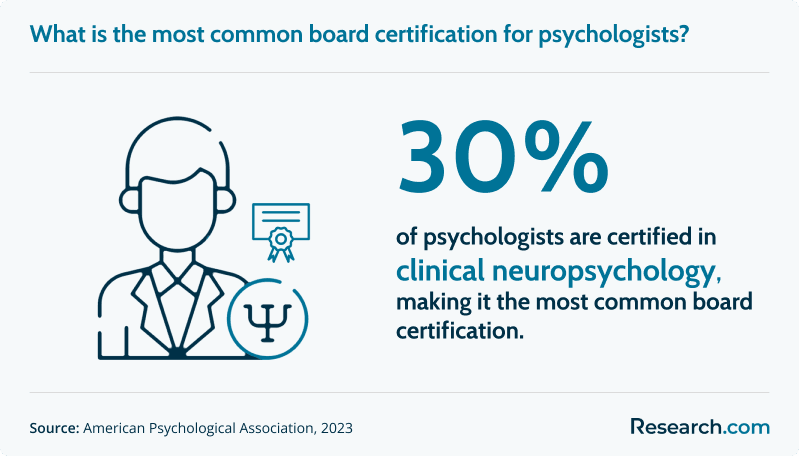
| Board Certification in Clinical Psychology (ABPP) | Clinical practice, hospitals, assessment roles, consulting, and expert positions. | ABPP board certification can strengthen professional credibility. In 2023, about 4% of licensed psychologists in the U.S., or approximately 4,400 individuals, held at least one ABPP board certification. |
| Certified Forensic Psychologist | Courts, law enforcement, correctional systems, legal consulting, and expert testimony. | Specialized legal knowledge can make a psychologist more competitive for forensic work. |
| Certified Addiction Specialist | Hospitals, treatment centers, community programs, private practice, and integrated care. | Addiction treatment remains a high-need area, and specialized training can expand service options. |
| Certified Neuropsychologist | Hospitals, rehabilitation centers, medical clinics, research institutions, and assessment practices. | Neuropsychological assessment is highly specialized and often requires advanced expertise. |
| Industrial-organizational psychology certification | Corporate consulting, leadership development, workforce analytics, and organizational change roles. | Credentials can support credibility when competing for business-facing psychology roles. |
How can specialization in child psychology support career growth?
Child psychology can improve career options by helping psychologists develop expertise in child development, behavioral concerns, learning differences, family systems, trauma, school collaboration, and pediatric mental health. This specialty may lead to work in private practice, hospitals, schools, early intervention programs, child advocacy organizations, or multidisciplinary pediatric teams.
Specialization can also make a clinician more visible to families, schools, pediatricians, and referral networks. If you are considering this direction, explore the range of careers in child psychology before choosing a degree or training plan.
Are there fast-track options for high-paying psychology careers?
There are accelerated and flexible routes into psychology-related careers, but “fast” does not always mean “better.” Clinical, counseling, school, and neuropsychology roles usually require supervised experience and licensure steps that cannot be skipped. Shorter programs may help reduce time in school, but students should confirm that the program meets accreditation, practicum, internship, and state licensing requirements.
- Master’s-to-PsyD pathways: Some institutions structure graduate study so students can move from master’s-level coursework into a PsyD sequence with fewer delays. Students comparing doctoral costs can review affordable PsyD program options.
- Online degree programs: Accredited online coursework can provide flexibility for working adults, but clinical training still requires supervised field experience. Be cautious with any program that suggests licensure is simple or automatic.
- Fast-track licensing options: Some states allow recent graduates to work under supervision before full independent licensure, which can help them gain experience earlier.
- Post-bachelor’s certification programs: For students who are not ready for a doctorate, credentials in areas such as behavior analysis or addiction counseling may lead to applied roles more quickly.
- Accelerated doctoral options: Some students search for accelerated PsyD programs, but any accelerated route should be evaluated carefully for accreditation, clinical placement quality, internship expectations, and licensure alignment.
When a Fast-Track Option Makes Sense
| Choose a Faster Option If... | Be Careful If... |
| You already know your target specialty and licensing requirements. | You are unsure whether you want clinical practice, research, consulting, education, or business roles. |
| The program is properly accredited and transparent about fieldwork. | The school does not clearly explain practicum, internship, or supervised experience requirements. |
| You can handle an intensive course load while maintaining strong academic performance. | You need more time to build research, assessment, or clinical readiness. |
| The reduced timeline also reduces total cost. | The program is faster but significantly more expensive or has weak outcomes information. |
How can I find the highest paying psychology jobs?
Finding high-paying psychology jobs requires more than browsing general job boards. The best opportunities are often tied to specialty networks, licensure status, institutional hiring systems, referrals, and evidence of advanced competence.
- Search specialty job boards. APA Career Center and PsycCareers can be useful for licensed, academic, clinical, and research-oriented roles.
- Use government job portals. Federal, state, VA, military, correctional, and public health roles are often posted through official agency hiring systems.
- Track corporate and consulting openings. I-O psychology, human factors, workforce analytics, and employee experience roles may appear under business, HR, research, or organizational development titles.
- Build a referral network. Professional associations, conferences, supervision networks, alumni groups, and specialty listservs can lead to roles that are not widely advertised.
- Work with recruiters when appropriate. Specialized recruiters may help with healthcare, executive consulting, or high-demand clinical placements.
- Translate your skills for nontraditional roles. Psychology training can be valuable in UX research, human resources, behavior analysis, program evaluation, training, and consulting.
Questions to Ask Before Accepting a High-Paying Psychology Job
- Is the salary base pay, total compensation, or an estimate that includes bonuses or benefits?
- Does the role require independent licensure, board certification, or a specific state credential?
- What is the expected caseload, billable-hour target, travel requirement, or documentation burden?
- Will the employer support continuing education, supervision, malpractice coverage, or certification costs?
- How much administrative support is provided?
- Is the salary high because the role has high turnover, heavy workload, or difficult conditions?
Which psychology fields have strong job outlooks?
Job outlook depends on specialty, location, licensure, funding, and employer demand. In general, psychology fields connected to healthcare, student mental health, workplace performance, digital behavior, and integrated care may offer strong opportunities for qualified professionals.
- Clinical psychology: Demand for mental health assessment and treatment supports continued need for licensed clinicians in hospitals, clinics, private practice, and community settings.
- Health psychology: Health systems increasingly recognize the role of behavior in chronic illness, stress, prevention, adherence, and recovery.
- School psychology: Student mental health, learning support, and behavioral intervention needs make this field important in public and private education. Students interested in school-based counseling and support roles can compare affordable online school counseling degree options.
- Cyberpsychology: Digital platforms, online communities, remote work, social media, and AI interactions create new questions about human behavior.
- Industrial-organizational psychology: Employers continue to focus on employee well-being, retention, leadership, productivity, and workplace systems.
How can advanced skills and certifications help high-paying psychology careers?
Advanced skills make a psychology professional more competitive when they solve specific problems employers and clients are willing to pay for. Useful skill areas include psychological assessment, data analysis, clinical documentation, evidence-based intervention, program evaluation, telehealth delivery, crisis response, leadership consulting, forensic reporting, and behavioral treatment planning.
Certifications and continuing education are most valuable when they are aligned with a clear career direction. A forensic credential may help in court-related work, while behavior analysis training may support roles in education, autism services, or rehabilitation. For a broader view of career options, compare different psychology careers before investing in additional training.
Can affordable online master’s programs improve psychology career options?
An affordable online master’s program can help students build graduate-level knowledge while reducing relocation barriers and, in some cases, total education costs. This can be useful for students pursuing research, human services, applied psychology, counseling-adjacent roles, or a stepping stone toward doctoral training.
The key is fit. Students should compare curriculum, faculty qualifications, practicum expectations, transfer policies, accreditation, state authorization, and whether the program supports their intended license or career path. If cost is a major factor, start by reviewing affordable online master’s in psychology programs.
What are the benefits of accelerated psychology doctoral programs?
Accelerated doctoral programs can shorten the academic timeline for students who are prepared for intensive study. They may be useful for focused learners who already understand their specialty, can manage a demanding schedule, and want to move more quickly toward clinical, leadership, or advanced applied roles.
The trade-off is workload. A compressed program can leave less time for research development, clinical skill-building, assistantships, and professional networking. Before enrolling, compare program length, internship structure, practicum quality, licensure outcomes, and total cost. Students exploring shorter doctoral routes can review accelerated psychology doctoral program options.
What trends are shaping high-paying psychology careers?
Several trends are influencing where psychology professionals can find higher-value opportunities. Telehealth has expanded access to care and changed how clinicians deliver services. Digital behavior and AI interactions are creating new applied research questions. Employers are paying closer attention to burnout, employee engagement, leadership development, and workplace mental health. Healthcare systems are also integrating behavioral health into broader patient care.
Education is changing as well. More students are comparing online, hybrid, affordable, and accelerated pathways, especially when graduate education costs are a concern. Professionals interested in youth mental health can explore online child and adolescent psychology master’s programs as one targeted way to build specialty knowledge.
Can an online bachelor’s degree in psychology lead to high-paying careers?
An online bachelor’s degree in psychology can be a strong starting point, but it is usually not the final credential for the highest-paying psychologist roles. A bachelor’s program can build foundational knowledge in research methods, statistics, human development, cognition, abnormal psychology, social behavior, and communication. Those skills can support entry-level roles in human services, research support, HR, case management, behavioral health support, or business settings.
For licensed psychologist roles, students should expect graduate education and supervised experience. The bachelor’s degree matters because it sets up future options. Students who want a lower-cost starting point can compare the most affordable online bachelor’s in psychology programs.
How can online BCBA programs support psychology careers?
Board Certified Behavior Analyst training can be valuable for professionals interested in applied behavior analysis, behavior intervention, autism services, education, rehabilitation, and data-based treatment planning. For some psychology graduates, BCBA preparation offers a more specialized applied pathway than a general psychology degree alone.
Online options may help working adults complete coursework while gaining field experience, but students should verify credential requirements carefully. To compare lower-cost options, review affordable online BCBA programs.
How can affordable online PsyD programs affect career growth?
A PsyD can support clinical career advancement when the program prepares students for licensure, supervised practice, and evidence-based service delivery. Affordable online or hybrid options may reduce some costs and improve flexibility, but students should be especially careful about clinical training quality, internship placement, accreditation, and state licensure alignment.
Before choosing a program, compare total tuition, required residencies, practicum support, internship expectations, faculty experience, student outcomes, and whether the program fits your intended state of practice. Students focused on cost can begin with this guide to the cheapest online PsyD programs.
How should I evaluate online accelerated psychology programs?
Quality matters more than speed. An accelerated online psychology program should be judged by accreditation, curriculum depth, faculty expertise, clinical or applied training requirements, student support, internship or practicum placement assistance, graduation expectations, and relevance to your career goal.
| Evaluation Question | Why It Matters |
| Is the institution properly accredited? | Accreditation can affect financial aid, transfer credits, employer recognition, and licensure eligibility. |
| Does the program match my state’s licensing requirements? | Online programs may not meet requirements in every state. |
| How are practicum and internship placements handled? | Clinical and school psychology careers often depend on supervised field experience. |
| What support is available for online students? | Advising, tutoring, library access, career services, and faculty responsiveness affect student success. |
| What are the total costs beyond tuition? | Fees, travel, residencies, books, technology, supervision, and lost work hours can change affordability. |
| What do alumni outcomes show? | Graduate success can indicate whether the program prepares students for real career advancement. |
For comparison points, consult this guide to accelerated psychology master’s programs.
What challenges can affect long-term success in high-paying psychology roles?
High-paying psychology careers can be rewarding, but they also come with pressure. Common challenges include long training timelines, student debt, competitive doctoral admissions, licensure exams, supervised-hour requirements, documentation demands, emotionally intense caseloads, and the need for ongoing continuing education.
Specialized fields may require additional credentials after graduate school. Private practice adds business risk. Government and healthcare jobs may involve complex systems. Corporate roles may require strong data, consulting, and communication skills beyond traditional psychology training.
Professionals can reduce risk by choosing accredited programs, building a clear specialty, seeking strong supervision, monitoring burnout, and investing in credentials that match their target role. Students interested in applied behavioral pathways can also compare ABA programs to understand how behavior analysis training fits into the broader psychology career landscape.
Can an online doctorate in psychology help with leadership roles?
An online doctorate in psychology can support leadership goals when it provides rigorous research training, advanced theory, ethical decision-making, and applied practice preparation. Graduates may use doctoral-level skills in clinical leadership, program administration, policy work, consulting, teaching, supervision, or research-informed organizational decision-making.
Online delivery can be helpful for working professionals, but leadership value depends on program quality, faculty mentorship, research expectations, practicum structure, and employer recognition. Students comparing doctoral routes can review online PhD psychology programs.
Common Mistakes to Avoid When Pursuing High-Paying Psychology Jobs
- Choosing a program without checking accreditation. Accreditation can affect licensure eligibility, financial aid, transferability, and employer trust.
- Assuming every psychology degree leads to licensure. Many bachelor’s and master’s programs are valuable but do not independently qualify graduates to become licensed psychologists.
- Looking only at average salary. Salary figures do not show debt, unpaid training time, overhead, cost of living, or job stress.
- Ignoring state requirements. Licensure rules vary, and online programs may not meet every state’s requirements.
- Choosing the fastest program without checking clinical training quality. A shorter timeline is not helpful if it weakens internship readiness or licensing eligibility.
- Underestimating business skills in private practice. Clinical competence is essential, but billing, marketing, scheduling, documentation, and client retention also affect income.
- Assuming certifications always raise pay. A credential helps most when it is respected in the specific setting where you want to work.
- Relying only on rankings. Rankings can be useful, but program fit, cost, licensure alignment, faculty expertise, and outcomes matter more.
References
- Glassdoor. (2024, June 6). How much does a military psychologist make? Glassdoor.com. Retrieved November 14, 2024.
- Glassdoor. (2024, June 6). How much does a sports psychologist make? Glassdoor.com. Retrieved November 14, 2024.
- Glassdoor. (2024, June 6). How much does an engineering psychologist make? Glassdoor.com. Retrieved November 13, 2024.
- Glassdoor. (2024, June 6). Total salary range for US Department of Justice forensic psychologist. Glassdoor.com. Retrieved November 14, 2024.
- Hedrih, V. (2024, March 27). Stipends for doctoral students of psychology have not kept pace with cost of living in the U.S., study finds. PsyPost - Psychology News. Retrieved November 13, 2024.
- Salary.com. (2024, November 1). Clinical health psychologist salary in the United States. Salary.com. Retrieved November 14, 2024.
- Salary.com. (2024, November 1). Clinical psychologist salary in the United States. Salary.com. Retrieved November 13, 2024.
- Salary.com. (2024, November 1). Forensic psychologist salary in the United States. Salary.com. Retrieved November 14, 2024.
- Salary.com. (2024, November 1). Neuropsychologist salary in the United States. Salary.com. Retrieved November 13, 2024.
- SSA. (2024). National average wage index. The United States Social Security Administration. Retrieved November 14, 2024.
- Szkody, E., Hobaica, S., Owens, S., Boland, J., Washburn, J. J., & Bell, D. (2022). “Financial stress and debt in clinical psychology doctoral students.” Journal of Clinical Psychology, 79(3), 835-853.
- U.S. BLS. (2024, April 3). Occupational employment and wages, May 2023: 19-3032 industrial-organizational psychologists. U.S. Bureau of Labor Statistics. Retrieved November 13, 2024.
- U.S. BLS. (2024, April 3). Occupational employment and wages, May 2023: 19-3033 clinical and counseling psychologists. U.S. Bureau of Labor Statistics. Retrieved November 13, 2024.
- U.S. BLS. (2024, April 3). Occupational employment and wages, May 2023: 19-3034 school psychologists. U.S. Bureau of Labor Statistics. Retrieved November 14, 2024.
- U.S. BLS. (2024, August 29). Occupational outlook handbook: Human resources managers. U.S. Bureau of Labor Statistics. Retrieved November 14, 2024.
- U.S. BLS. (2024, August 29). Occupational outlook handbook: Psychologists. U.S. Bureau of Labor Statistics. Retrieved November 13, 2024.
- VA News. (2021, February 12). Enjoy the total rewards of a psychology career at VA. U.S. Department of Veterans Affairs. Retrieved November 14, 2024.
Key Insights
- Neuropsychologist is the highest-paying psychology job in this guide, with an average salary of $292,431, but it also requires one of the most specialized training paths.
- Psychologists earned approximately $92,700 on average in 2023, which is 45% higher than the national median wage of $63,932.
- High salaries are most common in specialized clinical practice, corporate psychology, healthcare, government, consulting, forensic work, and private practice niches.
- A doctorate, licensure, supervised training, and board certification can improve access to top-paying roles, but requirements differ by specialty and state.
- Private practice can produce annual earnings between $100,000 and $150,000, but take-home pay depends on overhead, client volume, reimbursement, and business management.
- Government psychology roles can be financially competitive, with psychologists in government agencies averaging around $115,400 and some federal or VA-related roles paying substantially more.
- Online and accelerated programs can help reduce barriers, but students should never choose speed or low tuition without checking accreditation, licensure alignment, clinical placement quality, and total cost.
- The best high-paying psychology career is the one that matches your strengths, preferred work setting, tolerance for graduate training, and long-term professional goals.
Other Things You Should Know About the Highest Paying Psychology Jobs
Clinical psychologists need a state license, which usually requires a doctoral degree, supervised postdoctoral hours, and passing the Examination for Professional Practice in Psychology (EPPP). Most states also require a jurisprudence exam. Without licensure, many of the highest-paying private-practice and hospital roles are unavailable.
To qualify for the highest paying psychology jobs in 2027, you'll typically need a doctoral degree (Ph.D. or Psy.D.), state licensure, and extensive experience. Specializations like industrial-organizational psychology often require additional certifications for top positions and earning potential.
High-paying psychology careers, such as clinical psychologists specializing in neuropsychology, often require at least 5 years of experience. Professionals in industrial-organizational psychology may need experience in business settings, enhancing skills in performance assessment and organizational development to excel and maximize earnings in 2027.