2027 Best Online Behavioral Psychology Degree Programs

Co-Founder and Chief Data Scientist
Choosing an online bachelor’s degree in behavioral psychology is really a decision about career direction: do you want to study why people behave the way they do, apply research-based strategies to improve outcomes, and prepare for roles in human services, behavioral health, education, business, or graduate psychology study? This guide is for students comparing online behavioral psychology, behavioral science, applied behavior analysis, and psychology programs—and for working adults who need a flexible path into the field.
Behavioral psychology matters because employers across healthcare, schools, social services, and organizational settings increasingly need professionals who understand motivation, learning, intervention design, behavior change, and data-informed support. Autism alone affects one in 36 American children, and behavioral services are often part of care and educational planning. At the same time, many higher-level psychology and counseling roles require graduate education, supervised experience, certification, or licensure. That makes the bachelor’s degree an important first step, but not always the final credential.
This 2026 guide explains what to expect from an online behavioral psychology degree, how online and campus programs compare, what programs cost, which careers may be available, how to evaluate accreditation and licensure implications, and how to choose a program that fits your goals.
Quick answer: Is an online behavioral psychology degree worth it?
An online behavioral psychology degree can be worth it if you want a flexible bachelor’s program that prepares you for entry-level roles in human services, behavioral health support, case management, research assistance, education-related services, or graduate study in psychology, counseling, applied behavior analysis, or related fields. It is especially useful for students who need to keep working while earning a degree.
However, a bachelor’s degree alone usually does not qualify you to work independently as a licensed psychologist or therapist. If your goal is clinical practice, counseling, applied behavior analysis certification, or psychologist licensure, you should plan for graduate education, supervised fieldwork, and state-specific credential requirements.
Benefits of earning an online behavioral psychology degree
- Broad career relevance: Behavioral psychology training can help you understand behavior, motivation, learning, decision-making, and social interaction in settings such as healthcare, education, human resources, research, marketing, and community services.
- Graduate school foundation: The degree can help you move toward advanced study, including psychology, counseling, applied behavior analysis, neuropsychology, or a psychology doctorate. Psychologists have a listed median annual salary of $85,330.
- Flexible study format: Online coursework can make it easier to continue working, manage family responsibilities, or study from a location that does not have nearby campus-based programs.
What can I expect from an online behavioral psychology degree?
An online behavioral psychology degree introduces you to the scientific study of human behavior. Depending on the program, you may study learning theory, motivation, development, social behavior, abnormal psychology, biological psychology, research methods, statistics, assessment, and intervention planning. Programs with an applied behavior analysis focus may place more emphasis on observable behavior, environmental influences, behavior assessment, and intervention strategies.
Most online programs use a learning management system for lectures, readings, quizzes, discussion boards, assignments, and faculty communication. Some courses are asynchronous, meaning you can complete weekly work on your own schedule. Others are synchronous and require live attendance. You may also complete virtual labs, case analyses, group projects, research assignments, or field-related learning activities depending on the school.
The online format does not automatically make the degree easier. Successful students need strong time management, consistent study habits, reliable technology, and the ability to communicate clearly in writing. If your long-term goal involves licensure, certification, or clinical practice, you should also check whether the program connects students to supervised experience or prepares them for graduate-level requirements.
Where can I work with an online behavioral psychology degree?
A behavioral psychology or behavioral science bachelor’s degree can lead to several entry-level pathways, but the exact job titles depend on your state, employer, experience, and whether the role requires additional credentials. Common settings include behavioral health organizations, schools, community agencies, residential treatment programs, research teams, nonprofit organizations, healthcare offices, human resources departments, marketing teams, and social service agencies.
Graduates may support behavioral interventions, assist with case management, collect and organize research data, coordinate community programs, help clients navigate services, or contribute to workplace training and employee development. Students interested in more specialized work—such as counseling, independent psychological practice, or advanced behavior analysis—should expect to continue into graduate study.
| Work setting | How behavioral psychology applies | Typical preparation needed |
| Behavioral health and human services | Supporting clients, documenting behavior, assisting care teams, and coordinating services | Bachelor’s degree for many entry-level roles; graduate study for counseling or clinical roles |
| Education and child services | Helping design learning supports, observing behavior, and working with students who need structured interventions | Bachelor’s degree for support roles; certification or graduate training for specialized roles |
| Applied behavior analysis | Using behavior assessment and intervention principles, often with developmental or behavioral needs | Program alignment with BACB-related coursework and supervised experience may be important |
| Research and consulting | Collecting data, reviewing behavioral patterns, assisting with studies, and supporting program evaluation | Bachelor’s degree for assistant roles; graduate education for independent research leadership |
| Human resources and business | Applying motivation, training, organizational behavior, and communication principles | Bachelor’s degree plus HR, analytics, or organizational experience |
| Marketing and user experience | Studying consumer decision-making, user behavior, and messaging effectiveness | Bachelor’s degree plus research, analytics, design, or marketing experience |
How much can I make with an online behavioral psychology degree?
Earnings depend on job title, employer, location, education level, licensure, certification, and experience. A bachelor’s degree may qualify you for entry-level behavioral health, social service, or support roles, while higher-paying clinical and independent practice roles usually require graduate education and state licensure.
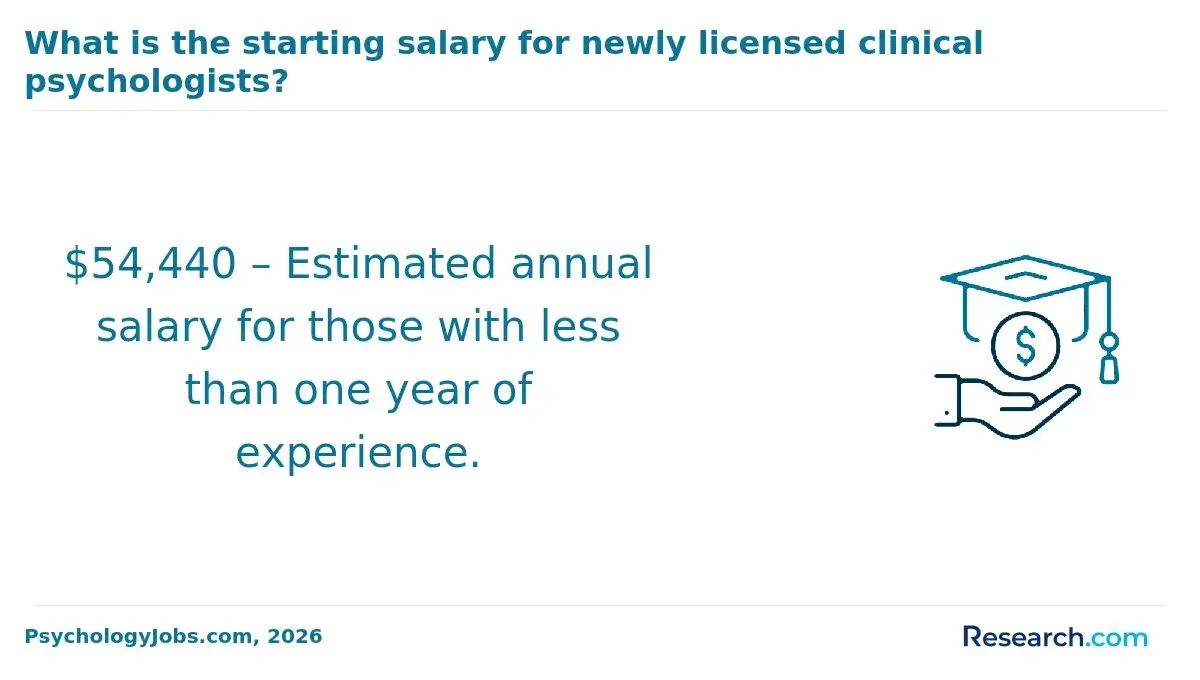
For reference, a behavioral psychology background can connect to roles such as psychiatric technician, with a yearly median pay of $37,330; substance abuse, behavioral disorder, and mental health counselor, with a median annual pay of $49,710; and psychologist, with a median annual salary of $85,330. These figures should be used as planning benchmarks, not guaranteed outcomes.
- 2027 ranked online bachelor’s programs in behavioral psychology
- Online behavioral psychology degree vs. campus program
- Reasons to consider an online behavioral psychology program
- Employer recognition of online behavioral psychology degrees
- How long behavioral psychology programs take
- How to pursue BCBA programs online
- Online behavioral psychology degree cost
- Job outlook for behavioral psychology graduates
- Admission, skill, and technology requirements
- Courses in an online behavioral psychology bachelor’s program
- How to choose the best online behavioral psychology program
- Financial aid options for behavioral psychology students
- ROI and cost-effectiveness
- How neuropsychology can strengthen behavioral practice
- Opportunities for behavioral health counselors
- Challenges of online behavioral psychology programs
- PsyD as an advanced practice pathway
- Support resources online students should look for
- Using the degree for career advancement
- Moving from a bachelor’s degree to a PhD in applied behavior analysis
- Why pursue an online doctoral degree in behavioral psychology?
- Accreditation and licensure requirements
- Emerging trends in behavioral psychology
- References and source links
2027 Best Online Bachelor’s Degree in Behavioral Psychology
How these programs were selected
Research.com reviewed online bachelor’s programs related to behavioral psychology, behavioral science, applied behavior analysis, and psychology with behavior-focused coursework. Because a bachelor’s degree is a major financial and time commitment, the list emphasizes verified program information and decision-relevant factors such as tuition, credits, format, transfer pathways, and accreditation.
Program information was evaluated using Research.com’s established methodology. Data sources included the IPEDS database, Peterson’s database, the Distance Learning Licensed Data Set, the College Scorecard database, and the National Center for Education Statistics.
| School | Program focus | Estimated cost per credit | Credits required |
| Central Methodist University | Applied Behavioral Analysis | $260 | 120 |
| Wilmington University | Behavioral Science | $409 | 120 |
| Saint Francis University | Behavioral Science | $485 | 128 |
| Mercy University | Behavioral Science | $892 | 120 |
| Bellevue University | Behavioral Science Human Services | $449 | 127 |
| University of Florida | Psychology with Behavior Analysis specialization | Resident: $129 | Non-resident: $552 | 120 |
| Northern Arizona University | Interdisciplinary Studies Applied Human Behavior | $455 | 120 |
| University of Houston | BA and BS in Psychology | Resident: $245 | Non-Resident: $653 | 120 |
| University of Utah | BS in Psychology | $260 | 122 |
| Indiana University | BS in Psychology | Resident: $250 | Non-Resident: $365 | 120 |
1. Central Methodist University
Central Methodist University offers an online Bachelor of Science in Applied Behavioral Analysis designed for students who want to work with individuals who have developmental and behavioral challenges, including autism. The curriculum focuses on behavioral assessment and the design, supervision, administration, and evaluation of behavior analytic interventions.
The program’s courses are part of CMU’s Verified Course Sequence (VCS), overseen by the Association for Behavior Analysis International (ABAI). After completing the course sequence and supervision hours, students may become eligible to sit for the Board Certified Assistant Behavior Analyst (BCaBA) exam.
- Location: Fayette, MO
- Type of Institution: Private
- Program Length: 4 years
- Estimated Cost per Credit: $260
- Required Credits to Graduate: 120
- Accreditation: Commission on Accreditation of Athletic Training Education
2. Wilmington University
Wilmington University provides an online Bachelor of Science in Behavioral Science through Blackboard. The degree is interdisciplinary, combining psychology, sociology, and cultural anthropology to help students examine how individual and group behavior is shaped by culture, social environments, and social issues.
The program may appeal to students interested in human services, government, business, and industry roles. It also connects to work with adolescents and teens, families, older adults, court systems, addictions, homelessness, government agencies, and crisis intervention.
- Location: New Castle, DE
- Type of Institution: Private
- Program Length: 4 years
- Tracks/concentrations: Case Management, Emotional Intelligence, Human Trafficking Awareness, Human Services, Social Justice Advocacy
- Estimated Cost per Credit: $409
- Required Credits to Graduate: 120
- Accreditation: Middle States Commission on Higher Education
3. Saint Francis University
Saint Francis University offers a fully online Bachelor of Science in Behavioral Science that includes coursework in social work, statistics, sociology, psychology, and political science. The program is designed for students who want to use prior college credits or an associate degree to move efficiently toward bachelor’s completion.
The curriculum is framed by a Franciscan approach that emphasizes compassion and ethics in behavioral science practice.
- Location: Loretto, PA
- Type of Institution: Private
- Program Length: Three to five years of part-time study
- Estimated Cost per Credit: $485
- Required Credits to Graduate: 128
- Accreditation: Middle States Commission on Higher Education, Higher Learning Commission
4. Mercy University
Mercy University, formerly Mercy College, offers an online bachelor’s degree in behavioral science built on psychology and sociology. The multidisciplinary major is designed for students interested in human behavior, teaching-related pathways, community health, services management, and aging-related work.
Required subjects include social psychology, methodology for social and behavioral science, computers for the social and behavioral sciences, and classics in the social and behavioral sciences.
- Location: Dobbs Ferry, NY
- Type of Institution: Private
- Program Length: 4 years
- Tracks/concentrations: Community Health, Health Services Management, Gerontology
- Estimated Cost per Credit: $892
- Required Credits to Graduate: 120
- Accreditation: Middle States Commission on Higher Education
5. Bellevue University
Bellevue University is a private nonprofit institution with a focus on adult education and educational outreach. Its online behavioral science human services program is designed for students seeking entry into or advancement within the human services field.
Major courses include applied psychology, introduction to human services, counseling theories, and treatment strategies.
- Location: Bellevue, NE
- Type of Institution: Private
- Program Length: 4 years
- Estimated Cost per Credit: $449
- Required Credits to Graduate: 127
- Accreditation: Higher Learning Commission
6. University of Florida
The University of Florida offers a Bachelor of Science in Psychology with a specialization in Behavior Analysis. The online psychology curriculum emphasizes psychological knowledge as both a natural science and a social science, preparing students for careers connected to psychology, business, education, and health-related fields.
The behavior analysis specialization focuses more closely on natural science-oriented psychology courses and the ways environmental conditions can be modified to influence behavior.
- Location: Gainesville, FL
- Type of Institution: Public
- Program Length: 4 years
- Estimated Cost per Credit: Resident: $129 | Non-resident: $552
- Required Credits to Graduate: 120
- Accreditation: Southern Association of Colleges and Schools Commission on Colleges
7. Northern Arizona University
Northern Arizona University offers a bachelor’s program in Interdisciplinary Studies Applied Human Behavior. The program builds a broad academic and applied foundation in human behavior, with attention to methods used to support individuals, families, and communities in human services contexts.
Although the program has an online option, students should note that it uses a semester-based calendar with assignment deadlines.
- Location: Flagstaff, AZ
- Type of Institution: Public
- Program Length: 4 years
- Estimated Cost per Credit: $455
- Required Credits to Graduate: 120
- Accreditation: Higher Learning Commission
8. University of Houston
University of Houston offers online BA and BS options in Psychology for students who have already completed Texas Core Curriculum coursework and are ready for upper-division degree completion. The psychology curriculum examines the roles of genetics, biology, society, and culture in human behavior, along with research-based prevention and intervention strategies for abnormal or maladaptive behavior.
The BA in Psychology is oriented toward social services, service-related industries, and public or private sector roles. The BS in Psychology is designed for students interested in psychology combined with computer technology, as well as medicine and industry-related pathways.
- Location: Houston, TX
- Type of Institution: Public
- Program Length: 4 years
- Estimated Cost per Credit: Resident: $245 | Non-Resident: $653
- Required Credits to Graduate: 120
- Accreditation: Southern Association of Colleges and Schools Commission on Colleges
9. University of Utah
The University of Utah offers a fully online BS in Psychology through its College of Social and Behavioral Sciences. Core study areas include courses such as the Psychology of Abnormal Behavior and Brain and Behavior.
Graduates may move into psychology-related work or apply to graduate programs in multiple fields. University of Utah psychology graduates have pursued careers in public policy, education, medicine, professional research, business, sales and marketing, human resources, therapy, health, law, and computer programming.
- Location: Salt Lake City, UT
- Type of Institution: Public
- Program Length: 4 years
- Estimated Cost per Credit: $260
- Required Credits to Graduate: 122
- Accreditation: Northwest Commission on Colleges and Universities
10. Indiana University
Indiana University offers a flexible, accelerated online BS in Psychology. The program can support students who want entry-level mental health-related employment or preparation for graduate school.
Course topics include behavioral neuroscience, sensation and perception, evolutionary psychology, the psychology of learning, the psychology of personality, abnormal psychology, and related areas. Potential career directions include psychology teacher, mental health counselor, school counselor, child custody worker, vocational placement analyst, social work associate, research scientist, human resource manager, psychological technician, and human services program specialist.
- Location: Bloomington, IN
- Type of Institution: Public
- Program Length: 4 years
- Estimated Cost per Credit: Resident: $250 | Non-Resident: $365
- Required Credits to Graduate: 120
- Accreditation: Higher Learning Commission
What students say they valued in behavioral psychology programs
-
: "
Online learning made graduate study manageable while I was raising a child. I could study around family routines and use what I learned to support children with learning challenges. Ashley
"
-
: "
The discussion boards became more than a course requirement. They helped me compare perspectives with classmates from different places, connect theory to practice, and build a professional network while working full time. David
"
-
: "
I lived in a small town and wanted access to specialized psychology courses. The online format gave me exposure to faculty, research, and case examples I could not have reached locally. Maya
"
Key findings for prospective students
- A survey of American students found that 20% “probably would" prefer online courses over in-person courses, while 17% say they “definitely" prefer online courses.
- A full-time online bachelor’s degree in behavioral psychology typically takes four years to finish.
- An online behavioral psychology degree can cost an average of $15,000 to $40,000, depending on school and program structure.
- Employment growth is projected for several occupations connected to behavioral psychology training, including psychiatric technicians, psychologists, and substance abuse, behavioral disorder, and mental health counselors.
- Among professionals in behavioral psychology, 47% hold a master’s degree, 17% have a doctorate degree, and 30% have a bachelor’s degree.
How does an online degree program in behavioral psychology compare to an on-campus program?
Online and on-campus behavioral psychology programs can cover similar academic material, but they differ in scheduling, learning environment, cost structure, and access to in-person experiences. The better choice depends on your learning style, work schedule, need for campus services, and long-term credential plans.
| Factor | Online behavioral psychology degree | On-campus behavioral psychology degree |
| Schedule flexibility | Often better for working adults, caregivers, and students who need location flexibility | Better for students who prefer a fixed schedule and face-to-face structure |
| Pacing | May include asynchronous courses, accelerated terms, or part-time options | Usually follows campus calendars and set class meeting times |
| Cost considerations | May reduce commuting, relocation, and campus housing expenses, though fees still matter | May include more campus-based costs but can provide direct access to facilities |
| Learning style | Requires independence, self-discipline, and comfort with technology | Provides in-person interaction, structured classroom time, and easier access to campus activities |
| Practical experience | Students may need to be proactive about internships, supervised hours, or local placements | Campus programs may provide more direct access to labs, clinics, and local partnerships |
Online course-taking can also affect time-to-degree. In the study “Increasing Success in Higher Education: The Relationships of Online Course Taking With College Completion and Time-to-Degree. Educational Evaluation and Policy Analysis," Fischer et al. reported that online course-taking was associated with more efficient college graduation and a higher likelihood of graduating within 4 years. The study also suggested that departments offering few online courses may consider keeping or expanding them to support completion.
Why should I enroll in an online behavioral psychology degree program?
An online behavioral psychology degree can make sense if you need a program that fits around work, military service, caregiving, transportation limits, or geographic constraints. Online learning has a long history, but it became much more visible after COVID-19 disrupted U.S. higher education and pushed many institutions to expand remote learning options.
Students comparing online psychology degree programs should look for curriculum quality, faculty access, academic support, accreditation, transfer policies, and career alignment rather than choosing solely by convenience. In many cases, online students complete the same credit requirements and similar coursework as campus students.
According to the National Center for Education Statistics, only a little over one in 10 postsecondary institutions in the United States offer courses primarily online. Still, a properly accredited online degree can carry comparable academic value to a campus-based degree. The key distinction is delivery format, not necessarily degree quality.
Online programs may be asynchronous, synchronous, or a mix of both. Campus programs require in-person attendance. Both formats may use the same faculty, academic standards, assignments, and degree requirements. However, students pursuing advanced credentials should know that many master’s programs in behavioral psychology and related fields require internships, practicum placements, or supervised field experience that cannot be completed entirely through coursework.
Will employers take my online degree seriously?
Employers are more likely to respect an online behavioral psychology degree when it comes from an accredited institution with clear academic standards. The word “online" is usually less important than whether the school is recognized, whether the degree is legitimate, and whether your coursework and experience match the job.
Educational technology has changed access to higher education, making online learning more common across undergraduate and graduate programs. Online enrollment has grown as students seek flexible options: 28.0% of the total student population were exclusively online students in postsecondary degree programs, and by early 2025, that number rose to 53.4%. Students enrolled in online master’s degrees reached 61.2%.
The Education Research Institute found that 25% of Americans reported that they probably prefer online courses over in-person courses. Another 20% said they definitely prefer online courses, while 22% were not sure.
For employer recognition, accreditation matters most. A degree from an institution accredited by the Department of Education or equivalent accrediting bodies is generally treated as more credible than an unaccredited credential. A school with an established campus presence and strong reputation may also be easier for employers to recognize. Students considering therapy-related careers may also want to read Research.com’s guide on becoming a therapist without a psychology degree.
With an advanced behavioral psychology degree, the Bureau of Labor Statistics salary figures below provide useful planning context.
How long does it take to complete a behavioral psychology program?
Completion time depends on degree level, enrollment intensity, transfer credits, course availability, and program design. A student transferring an associate degree may finish faster than a first-time college student, while a part-time student may need additional semesters.
- Bachelor’s degree: 4 years of full-time study; longer if part time and potentially shorter with accelerated or transfer-friendly formats.
- Master’s degree: 2-3 years of full-time study; 18 months to 4 years in some online or part-time formats.
- Doctorate: 4-6 years of full-time study.
How can you pursue BCBA programs online?
Students interested in applied behavior analysis may use an online bachelor’s degree as a foundation for BCBA-related graduate study. The Board Certified Behavior Analyst credential is offered by the Behavior Analyst Certification Board (BACB) and is intended for professionals who perform behavior analysis. Because credential rules can change, students should verify current BACB requirements before enrolling.
Step 1: Understand what the BCBA credential requires
- Credential purpose: The BCBA certification identifies professionals trained to conduct behavior analysis.
- Career value: BCBA certification can strengthen employability and may open specialized roles in schools, clinics, behavioral health organizations, and developmental disability services.
Step 2: Meet education requirements
- Bachelor’s degree: Complete a bachelor’s degree in behavioral psychology or a related field from an accredited institution.
- Graduate coursework: Enroll in a master’s or doctoral program that includes BACB-approved behavior analysis coursework, including ethics, assessment, intervention, and research methods.
Step 3: Complete supervised experience
- Practical hours: Accumulate supervised experience hours under a certified BCBA according to BACB rules.
- Remote options: Some programs may support online supervision, which can help working students complete requirements with more flexibility.
Step 4: Choose the right online BCBA pathway
- Accreditation and recognition: Select programs that align with BACB expectations and are offered by accredited institutions.
- Scheduling: Look for asynchronous or hybrid formats if you are balancing employment and school.
- Curriculum depth: Confirm coverage of assessment, intervention, ethics, research, and applied practice.
Step 5: Prepare for the BCBA exam
- Study plan: Use review courses, practice exams, and official content outlines.
- Registration: After completing required coursework and supervised experience, apply through the BACB process.
- Testing: Follow the BACB’s current testing procedures and approved testing options.
Step 6: Maintain the credential
- Continuing education: Complete renewal requirements and follow ethical standards.
- Specialization: Consider additional training in autism services, school-based behavior support, organizational behavior management, or clinical collaboration.
Students comparing online BCBA programs should evaluate cost, supervised experience support, BACB alignment, graduate admissions requirements, and state rules before committing.
How much does an online bachelor’s degree in behavioral psychology cost?
Cost should be evaluated using the full cost of attendance, not tuition alone. Online students may avoid room, board, commuting, or relocation costs, but they may still pay technology fees, course fees, textbooks, software, proctoring fees, and graduation fees.
In the academic year 2025 to 2026, the average published tuition and fees at a traditional four-year private nonprofit institution is $45,000 (College Board, 2025). By comparison, an online behavioral psychology degree can cost between $15,000 to $40,000.
Your final cost will depend on whether the school is public or private, whether you qualify for in-state tuition, how many transfer credits are accepted, whether you receive grants or scholarships, and whether you study full time or part time.
| Cost factor | Why it matters | Question to ask before enrolling |
| Tuition per credit | Small per-credit differences add up across 120 or more credits | What is the total tuition for all required credits? |
| Transfer credits | Accepted credits can reduce both cost and time | How many of my previous credits will apply to the major and general education requirements? |
| Online fees | Technology and course fees can raise the real price | Are online students charged platform, proctoring, or distance learning fees? |
| Residency rules | Public universities may charge different rates for residents and nonresidents | Do online students pay in-state, out-of-state, or separate online tuition? |
| Fieldwork requirements | Internships or supervised experiences may create travel, background check, or placement costs | Does the program require in-person placements or local site coordination? |
What is the job outlook for online behavioral psychology graduates?
A behavioral psychology degree can support multiple career directions, but outcomes vary by credential level. Bachelor’s graduates may qualify for support, technician, coordinator, or assistant roles. Students who pursue graduate education may move toward counseling, psychology, applied behavior analysis, or specialized research. Related paths may include neuropsychology careers, child psychology careers, social work, human resources, teaching, marketing, and research.
Like other healthcare-adjacent fields, including online nursing degrees, behavioral health-related careers can offer several points of entry. With a bachelor’s degree, possible roles include psychiatric technician or aide, healthcare administrator, laboratory assistant, health educator, or community service coordinator. Students seeking advanced practice may later pursue a master’s degree or compare a PsyD vs. PhD in psychology.
Employment is projected to grow for several occupations connected to behavioral psychology. Psychiatric technician employment is projected to grow 9% by 2032, with an average of 15,200 openings each year over the 10-year period. Substance abuse, behavioral disorder, and mental health counselor employment is projected to grow 18%, with an estimated 42,000 openings each year. Psychologist employment is projected to grow 6%, with 12,800 openings.
| Career | Median Annual Salary | Projected Employment Growth By 2033 | Projected Annual Openings |
| Psychiatric Technician | $37,330 | 9% | 15,200 |
| Substance Abuse, Behavioral Disorder, and Mental Health Counselor | $49,710 | 18% | 42,000 |
| Psychologist | $85,330 | 6% | 12,800 |
What are the requirements for an online bachelor’s degree program in behavioral psychology?
Before moving into advanced study, such as accredited online PsyD programs, students usually need a bachelor’s degree or equivalent preparation. Admission standards vary by institution, but most online behavioral psychology programs ask for academic records, proof of prior education, and sometimes test scores or recommendations.
Common admission requirements
- Proof of graduation and transcripts: Applicants usually submit a high school diploma, GED, or college transcripts if they have prior college credit.
- Prerequisite coursework: Some programs may expect preparation in Math, Sociology, Chemistry, Microbiology, Anatomy and Physiology I and II, and Statistics.
- SAT and ACT: Test policies differ by school. In general, the average SAT score for a degree in behavioral psychology is 1,474, while the median ACT score is 33.
- Additional materials: Some programs request recommendation letters from teachers, employers, or counselors. Others may value related work or volunteer experience.
Skills that help students succeed
- Communication: Behavioral psychology work often requires explaining information to clients, families, colleagues, students, or supervisors. A psychiatric aide reports that 86% of the work involves everyday face-to-face discussions.
- Active listening: Students should practice listening carefully, avoiding interruptions, and paying attention to what the speaker means rather than simply preparing a reply.
- Problem-solving: Behavioral work requires collecting information, evaluating patterns, and using evidence to choose possible interventions. With a 63% frequency in decision-making, careful judgment is important.
- Time management: Online students must manage deadlines independently, and behavioral services professionals often balance multiple clients, appointments, and documentation tasks.
- Digital literacy: Online learning depends on technology, virtual communication tools, learning platforms, and electronic research resources.
Technology requirements
Online behavioral psychology students should confirm technical requirements before enrollment. At minimum, most programs require reliable internet, a computer or compatible device, a webcam, a microphone, and basic software access.
- Stable internet connection: Eighty-seven percent of households have access to computers, smartphones, tablets, and other Internet-enabled devices, but only 73% have Internet access. Recommended internet speed should include at least 25 Mbps download speed and at least 3 Mbps upload speed.
- Computer or laptop: Students may use a PC, Mac, Chromebook, or tablet depending on program requirements. Software requirements may include Windows 10 or newer or Mac OS 10.14 or newer.
- Webcam and microphone: Live sessions, presentations, advising meetings, and proctored assessments may require video and audio access.
What courses are included in an online bachelor’s degree program in behavioral psychology?
Coursework varies by program title. A behavioral science degree may be more interdisciplinary, while a psychology degree may emphasize research methods and psychological theory. Applied behavior analysis programs may focus more closely on assessment, intervention, and behavior change. A Zippia study of behavioral psychology resumes found that 47% of professionals in the field hold a master’s degree, 17% have a doctorate degree, and 30% have a bachelor’s degree. Students planning for clinical or advanced behavioral practice should compare affordable graduate options, including the cheapest master’s degree online pathways.
- Introduction to Developmental Psychology: Covers how people grow, change, and adapt across the lifespan, including infancy, childhood, adolescence, adulthood, and aging.
- Introduction to Clinical Psychology: Introduces psychological therapy concepts and common mental health conditions such as depression, anxiety, and schizophrenia.
- Biological Psychology: Examines how biological processes relate to mental processes, emotions, and behavior.
- Social Psychology: Studies how groups, social environments, and interpersonal factors influence individual behavior.
- Psychology of Personality: Explores theories and research methods used to understand personality development and individual differences.
How do you find the best online bachelor’s degree program in behavioral psychology?
The best program is the one that fits your career goal, budget, schedule, transfer situation, and future credential plans. Before choosing, decide whether a BA or BS in psychology better matches your interests. A BA may provide broader liberal arts preparation, while a BS may include more science, statistics, or research-focused coursework.
Program selection checklist
- Verify accreditation: Choose a regionally or nationally accredited institution. For behavioral psychology-related programs, also check whether specialized accreditation or recognition is relevant to your career plan. Accrediting organizations may include the American Psychology Association or the Council for Accreditation of Counseling and Related Educational Programs (CACREP), along with institutional accreditors such as the Higher Learning Commission (HLC) and the Accrediting Commission for Community and Junior Colleges (ACCJC).
- Review student support: Strong online programs offer advising, tutoring, library access, IT help, career services, writing support, and accessible faculty communication.
- Match the teaching format to your learning style: Some courses rely on recorded lectures and readings; others require live attendance, group work, or scheduled discussions.
- Calculate the full cost: An online psychology degree cost may be lower than a campus program, but technology fees, materials, and required equipment can still affect affordability.
- Ask about financial aid: In a year, 31.8% of students borrow money for college. Ask whether the school participates in FAFSA-based aid and whether psychology or behavioral science scholarships are available.
- Check graduate school alignment: If you plan to become a counselor, psychologist, BCBA, or researcher, confirm that the bachelor’s curriculum prepares you for admission to the next degree level.
- Evaluate placement support: For fieldwork-heavy goals, ask whether the school helps online students find local internships, supervised hours, or community partnerships.
Behavioral psychology is no longer limited to one campus-based pathway. Many students now use credible online degrees to complete undergraduate preparation while maintaining work and family responsibilities.
What are the financial aid options for students enrolling in a behavioral psychology program?
Behavioral psychology can lead to meaningful work, but degree costs can be a barrier. Students planning for bachelor’s, master’s, PsyD, or PhD study should create a funding plan early. If you are considering advanced education, it may help to review examples of doctorate degrees and understand how long-term costs may change by credential level.
Federal grants and loans
- Federal Pell Grant: A need-based grant for undergraduate students with exceptional financial need.
- Federal Direct Loans: Federal student loans available in subsidized and unsubsidized forms. Loans must be repaid, so borrowing should be tied to a realistic completion and career plan.
Scholarships
- Psychology-specific scholarships: Options may include Psi Chi Undergraduate Scholarships, the American Psychological Association Minority Fellowship Program, or the National Institutes of Health Undergraduate Scholarship.
- University scholarships: Many institutions offer scholarships for students in behavioral psychology, psychology, behavioral science, or human services programs.
- General scholarships: Search for awards based on academic merit, financial need, background, location, service, or career goals.
Other funding options
- Employer tuition assistance: Some employers help pay for job-related degrees or career development.
- Military benefits: Veterans and active-duty military students may qualify for education benefits such as the GI Bill.
- Private loans: Private loans may fill funding gaps but can carry higher interest rates and fewer borrower protections.
Is an online behavioral psychology degree a cost-effective investment?
An online behavioral psychology degree can be cost-effective when it helps you complete a recognized bachelor’s credential at a manageable price and supports your next career or education step. To judge ROI, compare total program cost, transfer credit savings, likely entry-level roles, graduate school plans, and the credential requirements for your intended occupation.
The degree may be a stronger investment if you plan to use it as a foundation for counseling, psychology, applied behavior analysis, organizational behavior, or research. It may be a weaker investment if you expect a bachelor’s degree alone to qualify you for independent clinical practice. Students considering graduate study should also review cost comparisons such as how much it costs to get a master’s in psychology.
| Choose this degree if... | Consider another option if... |
| You want a flexible bachelor’s degree connected to behavior, psychology, and human services | You need immediate eligibility for licensed therapy or independent psychologist practice |
| You plan to continue to graduate school or certification | You do not want additional education beyond the bachelor’s level |
| You are comfortable learning online and managing deadlines independently | You need hands-on, in-person learning every week to stay engaged |
| You want a broad foundation that can apply across healthcare, education, business, and social services | You prefer a narrowly technical major with a more direct entry-level job pipeline |
Can integrating neuropsychology enhance your behavioral psychology practice?
Neuropsychology can strengthen behavioral psychology by helping professionals understand how brain function, cognition, and behavior interact. This can be useful when working with clients who have developmental, neurological, learning, emotional, or behavioral challenges.
Students interested in brain-behavior relationships may explore neuropsychology programs after completing undergraduate or graduate psychology preparation. This pathway can support more advanced diagnostic understanding, research involvement, and interdisciplinary collaboration with healthcare and mental health professionals.
What Are the Opportunities for Behavioral Health Counselors?
Behavioral health counselors support individuals dealing with mental health conditions, substance use concerns, behavioral challenges, and life stressors. If this career interests you, Research.com’s guide on how to become a behavioral health counselor explains the education, supervised experience, and credential steps in more detail.
A behavioral psychology degree can be a relevant undergraduate foundation, but counselor roles often require graduate study and state licensure. Students should check their state’s requirements before assuming that any single online program will meet licensing rules.
What are the potential challenges of pursuing an online behavioral psychology degree?
Online behavioral psychology programs are flexible, but they are not problem-free. Students must manage deadlines without a campus routine, stay engaged in virtual classes, and find ways to build practical experience. Some learners also struggle with isolation, technology problems, or limited access to in-person labs and internships.
Students who want a faster route should compare accelerated formats carefully. The quickest psychology degree online may save time, but only if the program is accredited, affordable, manageable, and aligned with your career plan.
| Common mistake | Why it can hurt you | Better approach |
| Choosing only by tuition price | A low price may not include fees, transfer limits, or weak support services | Compare total cost, graduation requirements, and student outcomes |
| Ignoring accreditation | Unaccredited credits may not transfer or qualify for graduate study | Verify institutional and program-level recognition before applying |
| Assuming online means self-paced | Many online programs still have weekly deadlines or live sessions | Ask whether courses are asynchronous, synchronous, or hybrid |
| Overlooking licensure rules | Psychology, counseling, and ABA credentials may require specific coursework and supervised hours | Check state requirements and certification rules before enrolling |
| Waiting too long to seek experience | Graduate programs and employers may value field exposure | Look for internships, volunteer roles, research assistant work, or supervised placements early |
Is a PsyD a compelling alternative for advancing your behavioral psychology career?
A PsyD may be a strong option for students who want advanced clinical practice training rather than a primarily research-focused doctorate. PsyD programs typically emphasize applied clinical skills, assessment, intervention, and patient-centered care. A PhD may be better for students who want a heavier research, academic, or scientific pathway.
Students comparing doctoral routes should review admission requirements, practicum expectations, internship placement, accreditation, licensure outcomes, and total cost. If affordability is a major concern, Research.com’s guide to cheapest PsyD programs may help you compare options.
What support resources are essential for success in an online behavioral psychology program?
Strong online programs do more than upload lectures. They help students stay on track academically, prepare for careers, and connect with faculty and peers. Before enrolling, ask how support works for online students specifically—not just for the campus population.
- Academic advising: Helps with course planning, transfer credits, graduation requirements, and graduate school preparation.
- Faculty access: Office hours, discussion forums, email response policies, and mentorship can affect learning quality.
- Tutoring and writing support: Research methods, statistics, and academic writing are common areas where students need help.
- Library and research tools: Psychology students need access to scholarly databases and citation support.
- Career services: Resume help, internship guidance, graduate school advising, and employer connections are especially valuable.
- Technical support: Reliable IT help is essential for exams, video sessions, and learning platform access.
Students who want to build clinical counseling expertise after a bachelor’s degree may also compare online mental health counseling master’s degree options.
How can you leverage your behavioral psychology degree for career advancement?
A bachelor’s degree can open the door, but advancement usually depends on experience, specialization, credentials, and graduate study. Students should treat the degree as part of a career-building strategy rather than a standalone guarantee.
- Pursue specialized certifications: Credentials such as BCBA can support more focused behavior analysis roles. Other training in addiction counseling, trauma-informed care, human resources, or behavioral health support may also strengthen your resume.
- Gain experience in multiple settings: Clinical, school, nonprofit, corporate, and research environments can help you identify the population and role that fit you best.
- Build a professional network: Professional associations, conferences, alumni groups, and faculty connections can lead to mentorship and job leads.
- Plan for graduate education: Master’s or doctoral study may be required for therapy, independent psychological practice, advanced research, or leadership roles.
- Develop complementary skills: Data analysis, documentation, counseling techniques, digital tools, and AI-supported research literacy can make you more competitive.
Transitioning from a Bachelor’s to a PhD in Applied Behavior Analysis
A PhD in Applied Behavior Analysis can be a good fit for students who want advanced expertise in behavior analysis, research, clinical leadership, teaching, or organizational consulting. This path is especially relevant for those interested in autism spectrum disorders, developmental disabilities, behavior intervention, and organizational behavior management.
Why consider a PhD in ABA?
- Board Certified Behavior Analyst-Doctoral (BCBA-D): A doctoral-level designation for professionals providing advanced behavior analytic services and supervising BCBA practitioners.
- Research scientist: A pathway for conducting studies on behavior change, assessment, and intervention strategies.
- Academic professor: A route for teaching future practitioners and contributing to ABA scholarship.
How to move from a bachelor’s degree toward a PhD
- Complete a relevant master’s degree: Many PhD programs expect graduate preparation in applied behavior analysis or a closely related area.
- Build practical experience: Supervised experience under a BCBA can show readiness for advanced ABA work.
- Choose an accredited PhD program: Programs approved by the Association for Behavior Analysis International (ABAI) are widely recognized in the field.
- Prepare for BCBA-D expectations: Doctoral study may include coursework and research aligned with advanced behavior analysis credentials.
Career value of doctoral ABA study
A PhD in ABA can support roles that influence policy, lead research, supervise practitioners, teach, and develop advanced interventions. For more detail on curriculum and career pathways, review Research.com’s guide to ABA PhD programs.
Why pursue an online doctoral degree in behavioral psychology?
An online doctoral degree in behavioral psychology may appeal to professionals who want advanced research, clinical expertise, teaching opportunities, leadership roles, or specialized practice while maintaining employment. Online doctoral study can provide flexibility, but students should carefully review residency requirements, practicum or internship expectations, dissertation support, accreditation, and licensure alignment.
For students comparing advanced psychology pathways, Research.com’s overview of online psychology doctoral programs can help clarify degree types and expectations.
What are the accreditation and licensure requirements for behavioral psychology professionals?
Accreditation and licensure are critical because psychology-related careers are regulated differently by state and by role. A bachelor’s degree from an accredited institution may support employment or graduate admission, but it usually does not qualify someone to practice independently as a psychologist or therapist.
Before enrolling, verify institutional accreditation, program recognition, supervised experience requirements, and whether the degree meets prerequisites for your intended graduate program or certification. Students planning for doctoral psychology study should prioritize accredited pathways, including options covered in Research.com’s guide to psychology doctoral programs.
| If your goal is... | What to verify |
| Entry-level behavioral health or human services work | Institutional accreditation, internship support, and employer expectations in your region |
| BCBA or behavior analysis practice | BACB coursework alignment, supervised experience rules, and state requirements |
| Counseling or therapy | Graduate program accreditation, state licensure rules, supervised clinical hours, and exam requirements |
| Psychologist licensure | Doctoral program requirements, accreditation, internship expectations, postdoctoral supervision, and state board rules |
| Graduate school admission | Prerequisite courses, GPA expectations, research experience, letters of recommendation, and statistics preparation |
What are the emerging trends in behavioral psychology?
Behavioral psychology is changing as technology, healthcare access, employer expectations, and public awareness of mental health evolve. Students entering the field should understand these trends because they affect course selection, internship choices, and long-term career planning.
Technology and telehealth
Telehealth has expanded access to counseling, behavioral consultation, and remote support. Behavioral professionals increasingly use video platforms, digital assessments, apps, and online communication tools. Students should develop comfort with ethical digital practice, privacy expectations, documentation, and remote client engagement.
AI and data-informed practice
Artificial intelligence and machine learning are beginning to influence behavioral data analysis, pattern recognition, risk screening, and personalized support planning. These tools do not replace professional judgment, but they can increase demand for workers who understand both behavior and data.
Evidence-based intervention
Employers and healthcare systems continue to emphasize interventions supported by research. Cognitive-behavioral therapy (CBT), dialectical behavior therapy (DBT), motivational interviewing (MI), and applied behavior analysis methods are examples of approaches where evidence, data, and outcomes matter.
Rising mental health awareness
Schools, workplaces, healthcare providers, and community organizations increasingly recognize mental health as part of overall well-being. This awareness supports demand for professionals who can help with prevention, assessment, support, and referral across settings.
Interdisciplinary collaboration
Behavioral psychology professionals often work with social workers, educators, nurses, physicians, counselors, administrators, and families. Students who learn to collaborate across disciplines can be better prepared for real-world service environments.
If you are asking what you can do with a master’s in psychology, these trends are especially important. Graduate education can help students develop the specialized skills needed for advanced practice, research, leadership, or interdisciplinary behavioral health work.
Key Insights
- An online behavioral psychology degree is best understood as a flexible foundation for behavioral health, human services, education-related support, research assistance, business roles, or graduate study.
- A bachelor’s degree alone usually does not qualify graduates for independent clinical practice as a psychologist, therapist, or counselor. Advanced degrees, supervised experience, certification, and licensure may be required.
- Program quality depends heavily on accreditation, curriculum fit, faculty access, support services, transfer policies, and alignment with your career goal—not simply whether the program is online.
- Cost should be calculated beyond tuition. Include fees, technology needs, textbooks, transfer credit acceptance, residency rules, and possible fieldwork expenses.
- Students interested in applied behavior analysis should check BACB-related requirements early, especially if they plan to pursue BCBA or BCaBA pathways.
- Online study works best for self-directed students who can manage deadlines, communicate clearly, and seek internships or practical experience proactively.
- The strongest career strategy is to pair the degree with experience, networking, specialized training, and a clear plan for graduate education if your target role requires it.
References:
- American Psychological Association. (2025). Explore online psychology degrees: programs, costs, and careers. https://www.psychology.org/online-degrees/
- Bureau of Labor Statistics. (2025). Field of degree: Psychology. U.S. Department of Labor. https://www.bls.gov/ooh/field-of-degree/psychology/psychology-field-of-degree.htm
- Bureau of Labor Statistics. (2025). Psychologists: Occupational employment and job outlook. U.S. Department of Labor. https://www.bls.gov/ooh/life-physical-and-social-science/psychologists.htm
- Council for Higher Education Accreditation. (2025). Accreditation overview for students. https://www.chea.org/
- College Board. (2025). *Trends in college pricing and student aid 2025*. https://research.collegeboard.org/media/pdf/Trends-in-College-Pricing-and-Student-Aid-2025-final_1.pdf
- National Center for Education Statistics. (2025). Fast Facts: Distance learning. U.S. Department of Education. https://nces.ed.gov/fastfacts/display.asp?id=80
- Society for the Teaching of Psychology. (2026). Teaching and resources for psychology educators. https://teachpsych.org/
- Society for Industrial and Organizational Psychology. (2026). SIOP professional association site. https://www.siop.org/
- U.S. Department of Veterans Affairs. (2025). VA Puget Sound psychology postdoctoral fellowship program. https://va.gov/puget-sound-health-care/work-with-us/internships-and-fellowships/va-puget-sound-seattle-psychology-postdoctoral-fellowship-program/
Other Things You Should Know About Online Behavioral Psychology Degrees
In 2027, the best online behavioral psychology degree programs employ virtual reality simulations for practical training, cloud-based tools for collaborative learning, and AI-driven analytics to personalize education paths. These technologies enhance access to hands-on experience and facilitate interactive learning environments for students.
Admission prerequisites typically include a high school diploma or equivalent, minimum GPA, and standardized test scores such as the SAT or ACT. Some programs may also require prior coursework in psychology or related fields. Always check specific program requirements for details.
In 2027, leading online behavioral psychology programs offer flexible schedules, part-time options, and asynchronous courses to accommodate working professionals. They often provide career services, like job placement assistance, to help students transition smoothly into advanced roles within their field, enhancing career advancement opportunities.
Many do require supervised practicum or fieldwork, often 100 to 300 hours, completed in approved schools, clinics, or community agencies. Programs usually require background checks, site approval, and a faculty supervisor before placement. Some fully online degrees waive this requirement only if the program is non-licensure.