
2027 Best Ph.D. Programs in Applied Behavior Analysis

Co-Founder and Chief Data Scientist
Choosing a Ph.D. in Applied Behavior Analysis is a major academic, financial, and career decision. Doctoral ABA programs are designed for professionals who want to move beyond direct service delivery into advanced research, university teaching, clinical leadership, supervision, program design, policy work, or specialized consulting. This guide explains what a Ph.D. in ABA involves, how programs differ, what they may cost, what credentials may be required after graduation, and how to compare schools without relying only on rankings or tuition.
Quick answer: Is a Ph.D. in Applied Behavior Analysis worth it?
A Ph.D. in Applied Behavior Analysis can be worth it if your goal is to conduct research, teach at the university level, supervise advanced ABA practice, lead clinical or organizational programs, or influence evidence-based policy. It is usually not necessary for entry-level ABA practice, where a master’s degree and appropriate certification may be sufficient. The degree typically takes three to four years, commonly ranges from around 48 to 93 credits, and may cost $10,000 to $30,000 per year depending on the school, residency status, funding, and program format.
What are the benefits of getting a Ph.D. in Applied Behavior Analysis?
- A doctorate can prepare graduates for faculty, research scientist, clinical director, policy, and senior consulting roles in behavior analysis.
- Salary potential can improve with advanced credentials, leadership responsibility, and specialized expertise; salary references in this guide include an average of $118,000 per year for some Ph.D.-level professionals, a median annual salary of $100,700 for all other psychologists, and an average behavior analyst salary of $72,630 per year.
- Online and hybrid Ph.D. options may help working professionals continue their education while managing employment, family, and fieldwork responsibilities, though students should verify research expectations, supervision requirements, and residency components before enrolling.
What can I expect from a Ph.D. in Applied Behavior Analysis?
A Ph.D. in applied behavior analysis is a research-centered doctoral degree focused on the scientific study of behavior and the design, evaluation, and improvement of behavioral interventions. Students usually study advanced behavior theory, experimental design, assessment, ethics, supervision, data analysis, intervention development, and dissertation research. Many programs also include supervised practice, teaching opportunities, lab work, or applied research in schools, clinics, community agencies, healthcare organizations, or workplace settings.
The strongest programs help students become scientist-practitioners: professionals who can read research critically, generate new evidence, apply ABA principles responsibly, supervise others, and adapt interventions to real-world needs. The experience can be demanding because doctoral students are expected not only to complete coursework but also to produce original scholarship and defend a dissertation.
Where can I work with a Ph.D. in Applied Behavior Analysis?
Graduates with a Ph.D. in ABA may work in universities, research centers, autism service organizations, hospitals, behavioral health agencies, public health programs, schools, government agencies, corporate training departments, and consulting firms. Common responsibilities include leading research projects, publishing studies, training practitioners, supervising behavior analysts, designing assessment systems, evaluating interventions, improving organizational performance, and advising agencies on evidence-based behavioral programs.
How much can I make with a Ph.D. in Applied Behavior Analysis?
Income varies by role, state, employer type, funding model, certification, licensure, and years of experience. Some professionals with a Ph.D. in applied behavior analysis earn an average of $118,000 per year. All other psychologists, including some professionals whose work overlaps with behavior analysis, earn a median annual salary of $100,700. The average salary of a behavior analyst per year is $72,630. Graduates working in organizational behavior management, higher education, research leadership, consulting, or administrative roles may see different earnings than those working primarily in direct social services.
- Best Ph.D. in Applied Behavior Analysis Programs for 2027
- How long does it take to complete a Ph.D. in applied behavior analysis?
- How does an online Ph.D. in applied behavior analysis compare with an on-campus program?
- What is the average cost of a Ph.D. in applied behavior analysis?
- What financial aid options are available for ABA doctoral students?
- What are the prerequisites for a Ph.D. in applied behavior analysis?
- What courses are usually included in a Ph.D. in applied behavior analysis?
- What specializations are available in ABA doctoral programs?
- How should you choose the best Ph.D. in applied behavior analysis?
- What licensing and certification may be required after earning a Ph.D. in applied behavior analysis?
- What careers are available with a Ph.D. in applied behavior analysis?
- Should I Pursue a Master’s or a Ph.D. in Applied Behavior Analysis?
- What is the job market for graduates with a Ph.D. in applied behavior analysis?
- Why does research matter in applied behavior analysis?
- How can career support and alumni networks advance my ABA career?
- How can I prepare effectively for a Ph.D. in Applied Behavior Analysis?
- How do interdisciplinary collaborations improve doctoral ABA training?
- How can a Ph.D. in ABA influence policy and systemic change?
- How does a Ph.D. in Applied Behavior Analysis compare to other psychology doctorates?
- What accreditation and ethical standards should I review?
- Can accelerated psychology programs online support ABA career preparation?
- Is an accelerated PsyD a realistic alternative to a Ph.D. in ABA?
- What are the latest trends in applied behavior analysis?
Best Ph.D. in Applied Behavior Analysis Programs for 2027
The right ABA doctoral program should match your research interests, professional goals, funding needs, and preferred learning format. Research.com reviews available program information and education datasets to help students compare schools more efficiently, but applicants should still confirm tuition, accreditation, admissions requirements, faculty availability, and certification alignment directly with each institution.
How do we rank schools?
Doctoral program research can be time-consuming because applicants must compare curriculum design, research fit, cost, student support, accreditation, and outcomes. Research.com uses education data sources and institutional information to support its rankings and program summaries. Sources considered include:
- Integrated Postsecondary Education Data System (IPEDS database)
- Peterson’s database, including the Distance Learning Licensed Data Set
- College Scorecard database
- National Center for Education Statistics
1. Caldwell University
Caldwell University offers a Ph.D. in applied behavioral analysis that prepares students for advanced work in behavior analysis through doctoral coursework, research, and applied training. The program emphasizes original scholarship and gives students practical experience through the university’s ABA center.
- Program Length: 4 years
- Tracks/concentrations: Applied Behavioral Analysis
- Cost per credit: $1,020
- Required credits to graduate: 90 credits
- Accreditation: Association for Behavior Analysis International
2. Columbia University
The Ph.D. in applied behavior analysis at Columbia University develops doctoral-level research skills in effective teaching, language development, observational learning, and scientific approaches to education. Students engage in advanced coursework, faculty collaboration, lab meetings, and independent research that can lead to original publications and dissertation work.
- Program Length: 4 years
- Tracks/concentrations: Applied Behavioral Analysis
- Cost per credit: $1,913
- Required credits to graduate: 75 credits
- Accreditation: Association for Behavior Analysis International Accreditation Board
3. Endicott College
Endicott College offers an ABA Ph.D. designed to train scientist-practitioners who use behaviorism principles to address applied problems. Students receive faculty mentorship, participate in research activity, and build the skills needed to conduct independent scholarship and contribute to the field through publication.
- Program Length: 4 years
- Tracks/concentrations: Applied Behavioral Analysis
- Cost per credit: $932
- Required credits to graduate: 60 credits
- Accreditation: New England Commission on Higher Education
4. Emory University
The Ph.D. in Applied Behavior Analysis program at Emory University prepares students to study, analyze, and intervene in public health issues through behavioral science. Students work toward independent research competence, participate in faculty-guided training, and develop scholarly work that may contribute to publications and field advancement.
- Program Length: 4 years
- Tracks/concentrations: Applied Behavioral Analysis
- Cost per semester: $22,900
- Required credits to graduate: 54 credits
- Accreditation: Southern Association of Colleges and Schools Commission on Colleges
5. Harvard University
Harvard University offers doctoral study connected to the Department of Social and Behavioral Sciences within the Doctor of Philosophy (PhD) Program in Population Health Sciences. Students build interdisciplinary expertise in population health, quantitative and qualitative methods, and social and behavioral research. An advisor is assigned in early to mid-May to guide students through the program.
- Program Length: 4 years
- Tracks/concentrations: Applied Behavioral Analysis
- Cost per academic year: $52,476
- Required credits to graduate: 64 credits
- Accreditation: New England Commission on Higher Education
6. Florida Institute of Technology
The Ph.D. in Applied Behavior Analysis at Florida Institute of Technology is structured to prepare behavior-analytic researchers, instructors, and practitioners grounded in the experimental analysis of behavior. Students complete advanced research and analysis while working closely with faculty.
- Program Length: 4 years
- Tracks/concentrations: Applied Behavioral Analysis
- Cost per academic year: $30,300
- Required credits to graduate: 48 credits
- Accreditation: Association for Behavior Analysis International
7. Simmons University
The Ph.D. in behavior analysis at Simmons University gives students an intensive doctoral experience built around faculty research groups, lab meetings, and collaborative scholarship. The program prepares graduates for leadership in implementing, evaluating, and administering applied behavior-analytic principles and methods.
- Program Length: 4 years
- Tracks/concentrations: Applied Behavioral Analysis
- Cost per credit: $1,135
- Required credits to graduate: 48 credits
- Accreditation: New England Commission on Higher Education
8. The Chicago School of Professional Psychology
The Ph.D. in Behavior Analysis at the Chicago School of Professional Psychology prepares students for advanced practitioner and research roles in education, clinical services, and business. The curriculum integrates philosophy, science, applied practice, multicultural factors, intersectionality, historical context, assessment, and intervention design. The program also offers a specialization in organizational behavior management.
- Program Length: 4 years
- Tracks/concentrations: Applied Behavioral Analysis
- Cost per credit: $1,622
- Required credits to graduate: 58 credits
- Accreditation: Association for Behavior Analysis International Accreditation Board
9. Western Michigan University
The Ph.D. in Behavior Analysis at Western Michigan University provides intensive preparation in conceptual, basic, and applied behavior analysis. Students study theoretical and applied issues while gaining experience through coursework, research, and specialty areas such as autism, developmental disabilities, behavioral pharmacology, and behavioral neuroscience.
- Program Length: 4 years
- Tracks/concentrations: Applied Behavioral Analysis
- Cost per credit: $731
- Required credits to graduate: 73 credits
- Accreditation: Association for Behavior Analysis International
10. University of Nebraska Medical Center - Munroe-Meyer Institute
The Ph.D. in applied behavior analysis at the University of Nebraska Medical Center's Munroe-Meyer Institute combines research preparation with clinical training. Students complete coursework, specialized practica, and research under faculty with expertise in behavior analysis.
- Program Length: 3 years
- Tracks/concentrations: Applied Behavioral Analysis
- Cost per credit: $1,041
- Required credits to graduate: 89 credits
- Accreditation: Association for Behavior Analysis International Accreditation Board
Key Findings
- A Ph.D. in applied behavior analysis typically takes three to four years.
- The typical PhD in Behavior Analysis program ranges from around 48 to 93 credits.
- A common annual cost range for a Ph.D. in applied behavior analysis is $10,000 to $30,000 per year.
- The full degree cost may range from $40,000 to $150,000, depending on program length, institution, residency status, and aid.
- Employment in psychology careers, including ABA-related paths, is projected to grow six percent from 2022 to 2032.
- The average salary of a behavior analyst per year is $72,630, while some Ph.D.-level professionals may earn an average of $118,000 per year.
How long does it take to complete a Ph.D. in applied behavior analysis?
Earning a Ph.D. in applied behavior analysis typically takes three to four years. The exact timeline depends on credit requirements, enrollment status, dissertation progress, fieldwork expectations, and whether the student enters with a closely related master’s degree. Programs commonly range from around 48 to 93 credits. A student enrolled full time with a clear dissertation topic and strong faculty match may finish faster than a part-time student balancing work, family obligations, and a complex research project.
| Timeline factor | How it affects completion | What to ask before enrolling |
| Credit load | Programs with more required credits generally take longer to complete. | How many credits are required after transfer or master’s-level review? |
| Full-time vs. part-time study | Full-time students may progress faster, while part-time formats can support working professionals. | Is there a maximum time limit for degree completion? |
| Dissertation scope | Original research can extend the timeline if recruitment, data collection, or analysis is complex. | How early do students select a dissertation chair and topic? |
| Residency or campus requirements | Hybrid and online programs may still require in-person intensives, labs, or meetings. | Are any campus visits required, and how often? |
How does an online Ph.D. in applied behavior analysis compare with an on-campus program?
Online and on-campus ABA doctoral programs can both be rigorous, but they serve different kinds of students. On-campus programs may offer easier access to faculty labs, in-person mentoring, teaching opportunities, peer collaboration, and local practicum settings. Online programs may work better for professionals who already have ABA experience and need a flexible schedule. However, online students should pay close attention to supervision, research mentoring, state authorization, dissertation support, and any required campus residencies.
Students comparing online formats across fields should remember that convenience does not mean the same thing in every discipline. For example, an accelerated healthcare pathway such as the fastest fnp program online has different clinical placement rules than an ABA doctorate, so applicants should evaluate ABA-specific fieldwork, certification, and research requirements rather than assuming all online graduate programs operate similarly.
| Format | Best for | Potential drawbacks |
| On-campus Ph.D. | Students who want intensive faculty access, lab participation, teaching experience, and a traditional doctoral community. | Less schedule flexibility and possible relocation costs. |
| Online Ph.D. | Working professionals who need flexible coursework and can manage independent research planning. | May require students to arrange local fieldwork or travel for residencies. |
| Hybrid Ph.D. | Students who want flexibility but still value periodic in-person collaboration. | Travel and scheduling requirements can add cost and complexity. |
What is the average cost of a Ph.D. in applied behavior analysis?
A typical range for a Ph.D. in applied behavior analysis is $10,000 to $30,000 per year, and the total degree cost may range from $40,000 to $150,000. Costs vary based on credit requirements, public or private status, in-state or out-of-state tuition, fees, books, dissertation expenses, travel, and whether the student receives assistantship funding, scholarships, or employer support. Doctoral tuition should not be compared directly with undergraduate online options such as a graphic design online degree, because doctoral programs often include research supervision, dissertation credits, and specialized professional preparation.
| Cost factor | Why it matters | How to evaluate it |
| Tuition model | Programs may charge per credit, per semester, or per academic year. | Calculate the full program cost using required credits, not only advertised annual tuition. |
| Residency status | Public universities may charge different rates for in-state and out-of-state students. | Ask whether online students qualify for in-state, distance, or separate graduate tuition rates. |
| Funding package | Assistantships, fellowships, and tuition remission can significantly change net cost. | Confirm whether funding is guaranteed, renewable, or competitive each year. |
| Travel and residencies | Online or hybrid programs may still require campus visits. | Budget for transportation, lodging, time away from work, and childcare if applicable. |
| Dissertation and research expenses | Data collection, software, incentives, and conference travel may add costs. | Ask whether the department offers research grants or travel funding. |
This chart shows the average cost of a Ph.D. degree through the years. There was a spike in costs from 2015 to 2016, but the tuition cost decreased since then.
What financial aid options are available for students enrolling in a Ph.D. in applied behavior analysis?
Funding can determine whether a doctoral program is financially realistic. ABA Ph.D. students should compare not only tuition but also assistantships, stipend availability, health insurance, fee waivers, loan eligibility, and external scholarship options. Many financial aid principles also apply to other graduate fields, including online mlis programs, but doctoral ABA applicants should pay special attention to research or teaching assistantship opportunities because these can also strengthen academic preparation.
- Federal Loans: Graduate students may use federal loan options such as Direct Unsubsidized Loans and Direct PLUS Loans. Eligibility is evaluated through the Free Application for Federal Student Aid (FAFSA).
- Scholarships: Students may find awards through universities, state organizations, professional groups, or ABA-related associations such as The Association for Behavior Analysis International. Deadlines, award amounts, and eligibility rules vary widely.
- Assistantships and Fellowships: Many Ph.D. programs offer teaching or research assistantships that may include a stipend, tuition reduction, or other support in exchange for work.
- Employer Assistance: Students already working in ABA, education, healthcare, or behavioral health should ask whether their employer offers tuition reimbursement or professional development funding.
- Grants: Research-focused students may pursue grants from agencies, foundations, or university research offices, especially when their dissertation topic aligns with funder priorities.
What are the prerequisites for enrolling in a Ph.D. in applied behavior analysis?
Admissions requirements vary, but most ABA doctoral programs expect applicants to show strong academic preparation, research readiness, professional maturity, and a clear fit with faculty expertise. A doctoral program is not simply a longer master’s degree; it requires independent inquiry, advanced writing, statistical reasoning, ethical judgment, and sustained commitment to a dissertation topic.
- Master's Degree: Most programs require a master’s degree in applied behavior analysis or a related field such as psychology, education, or special education.
- Board Certification: Some programs require or prefer applicants who are board-certified behavior analysts (BCBA) or licensed behavior analysts (LBA).
- Research and Academic Background: Applicants often need evidence of research potential, academic writing ability, and interest in applying scientific methods to behavioral questions.
- Admission Requirements: Programs may ask for a minimum GPA, letters of recommendation, a statement of purpose, writing samples, professional experience, and an interview.
- Specialization Fit: Applicants interested in areas such as organizational behavior management, autism, severe behavior disorders, or behavioral pediatrics should confirm that faculty can support their research goals.
Students who are still at the undergraduate planning stage may benefit from mapping the full pathway early. A bachelor’s degree, master’s degree, certification preparation, and doctoral study can take years, so researching options such as the fastest online bachelor degree programs may help some students begin sooner while still checking accreditation and transfer policies carefully.
What courses are usually included in a Ph.D. in applied behavior analysis?
ABA doctoral curricula usually combine advanced theory, research methods, specialized intervention coursework, supervision training, ethics, and dissertation research. Course titles differ by school, so applicants should review the current catalog and ask how the curriculum supports certification, licensure, and dissertation development.
- Behavior Analysis in Specific Populations: Coursework may focus on ABA applications for children with autism spectrum disorder (ASD), people with intellectual disabilities, or other populations with behavioral support needs.
- Organizational Behavior Management (OBM): These courses examine how ABA principles can improve workplace performance, training, safety, productivity, and systems-level outcomes.
- Behavioral Pharmacology: Students may study how medications can affect behavior and how behavior analysts interpret behavioral data in contexts involving medication.
- Advanced Intervention Techniques: Doctoral students may study complex interventions such as communication training, social skills programs, positive behavior support, and individualized assessment-based treatment.
- Research Design and Data Analysis: Strong programs train students to design studies, evaluate evidence, analyze data, and communicate findings clearly.
- Ethics and Supervision: Students learn to supervise responsibly, protect clients, use data ethically, and maintain professional boundaries.
ABA overlaps with psychology but is not identical to every psychology pathway. Students comparing behavioral science options may also review psychology certificate programs online and career guidance on what can you do with a PhD in Psychology to understand how broader psychology training differs from behavior-analytic doctoral preparation.
What specializations are available in a Ph.D. in applied behavior analysis?
Specializations allow doctoral students to align research, fieldwork, and career goals. Not every school offers every concentration, so applicants should look for faculty publications, lab areas, practicum partners, and dissertation topics that match their interests.
- Autism Spectrum Disorder (ASD): This focus prepares students to design, assess, and evaluate ABA interventions for individuals with ASD across ages and support needs.
- Behavioral Pediatrics: Students study behavioral approaches for children with developmental delays, disabilities, health-related behaviors, or challenging behavior.
- Organizational Behavior Management (OBM): This specialization applies behavior analysis to workplace systems, performance management, training, safety, and productivity.
- Community Outreach: Students learn to apply ABA in community settings and collaborate with families, schools, agencies, and public programs.
- Feeding Disorders: This area focuses on assessment and intervention for feeding difficulties in children or adults using behavior-analytic principles.
- Severe Behavior Disorders: Students develop advanced skills for assessing and treating high-intensity challenging behavior with careful attention to ethics, safety, and data-based decision-making.
How should you choose the best Ph.D. in applied behavior analysis?
Choosing an ABA doctoral program requires more than finding the lowest tuition or the most recognizable school name. As with any credential decision, including questions such as which bookkeeping certification is best, the strongest choice depends on your professional target, required credentials, cost, and evidence that the program can support your goals.
- Accreditation: Check institutional accreditation and whether the program has relevant behavior analysis accreditation or recognition. Confirm details directly with the school and the applicable accrediting or certification body.
- Program Type: Decide whether you want a research-focused Ph.D. or a more practice-oriented doctorate. A Ph.D. is usually better suited to scholarship, academia, and research leadership.
- Curriculum and Courses: Review whether required courses match your interests in experimental analysis, research methods, autism, developmental disabilities, OBM, behavioral pediatrics, or another focus area.
- Faculty Expertise: A strong dissertation match matters. Read faculty publications and ask whether prospective advisors are accepting new doctoral students.
- Online or On-Campus: Online programs may offer flexibility, while campus-based programs may provide stronger day-to-day research community and lab access.
- Funding and Net Cost: Compare assistantships, stipends, tuition remission, loan needs, and living expenses.
- Licensure and Certification Alignment: Ask whether the curriculum and supervised experiences support the credentials required in the state or setting where you plan to work.
| Choose this program feature if... | It may be a good fit when your goal is... | Be cautious if... |
| Strong faculty research labs | Publishing, dissertation quality, academic careers, or research scientist roles. | No faculty member studies your intended topic. |
| Online or hybrid delivery | Continuing full-time work while completing doctoral coursework. | Supervision, research mentoring, or residencies are unclear. |
| ABAI-related accreditation or recognition | Meeting behavior analysis field expectations and demonstrating program quality. | You cannot verify accreditation on the official source. |
| Assistantship funding | Reducing debt while gaining teaching or research experience. | Funding is only available for one year or is highly uncertain. |
What licensing and certification may be required after earning a Ph.D. in applied behavior analysis?
A Ph.D. alone does not automatically authorize someone to practice independently in every state or setting. Credential requirements depend on the services provided, client population, employer, insurance requirements, and state law. Prospective students should check the Behavior Analyst Certification Board, state licensing boards, and program advisors before assuming a degree will meet all professional requirements.
- Board Certified Behavior Analyst-Doctoral (BCBA-D): The BCBA-D is a doctoral-level designation for qualified behavior analysts with a doctoral degree. Requirements include meeting certification standards, passing the applicable exam, and satisfying supervised fieldwork requirements.
- State Licensure: Many U.S. states require licensure for behavior analysts, especially those providing clinical services. Requirements vary and may include certification, supervised experience, examinations, renewal, and continuing education.
- Licensed Psychologist (Optional): Some Ph.D. graduates pursue psychology licensure if their education and supervised experience meet state psychology board requirements. A Ph.D. in ABA does not automatically equal eligibility for psychologist licensure in every state.
- Specialty Certifications: Additional credentials in areas such as autism, developmental disabilities, or organizational behavior management may support specialized practice, but students should verify recognition and employer value before investing time and money.
What careers are available with a Ph.D. in applied behavior analysis?
A Ph.D. in ABA can support careers in research, teaching, clinical leadership, supervision, program evaluation, consulting, and systems improvement. The right path depends on whether you prefer direct client service, academic work, leadership, or organizational consulting.
- Board Certified Behavior Analyst - Doctoral (BCBA-D): This highest level of certification in ABA may support advanced supervision, complex intervention design, and leadership in behavior analysis practice. The average salary of a behavior analyst per year is $72,630, and this can increase to $118,000 per year.
- Clinical Behavior Analyst: These professionals assess behavior and design interventions for individuals with autism, developmental disabilities, or other behavioral needs.
- Organizational Behavior Management Consultant: OBM consultants use behavior analysis to improve performance, training, safety, and productivity in organizations.
- Early Intervention Specialist: These specialists support young children with developmental delays or disabilities using evidence-based behavioral strategies.
- University Professor: Faculty members teach, mentor students, conduct research, publish scholarship, and contribute to the development of future behavior analysts.
- Research Scientist: Research scientists may work in universities, agencies, healthcare systems, nonprofits, or private organizations studying ABA methods and outcomes.
Students who are weighing income across healthcare and behavioral health fields may also compare related career guides, such as psychiatric nurse practitioner salary private practice. Salary differences should be interpreted carefully because roles, licensure, patient care responsibilities, and education pathways differ substantially.
Psychologists are projected to grow by six percent. This chart from the Bureau of Labor and Statistics shows the projected growth of psychologists compared with other occupations.
Should I Pursue a Master’s or a Ph.D. in Applied Behavior Analysis?
The better choice depends on your end goal. A master’s degree is often the more direct route for students who want to enter applied ABA practice, qualify for certification pathways, and work with clients sooner. A Ph.D. is better suited to students who want to conduct original research, teach in higher education, lead programs, supervise at an advanced level, or shape policy and systems. If you are unsure whether doctoral study is necessary, review career options available with a master’s degree, including what can i do with a masters in applied behavior analysis, before committing to a longer and more expensive doctoral pathway.
| Degree path | Best for | Usually less ideal for |
| Master’s in ABA | Students seeking applied practice roles, certification preparation, and faster entry into the field. | Students whose primary goal is university teaching or independent research leadership. |
| Ph.D. in ABA | Students aiming for research, academia, leadership, supervision, program development, or policy influence. | Students who mainly want the fastest path to direct ABA service delivery. |
What is the job market for graduates with a Ph.D. in applied behavior analysis?
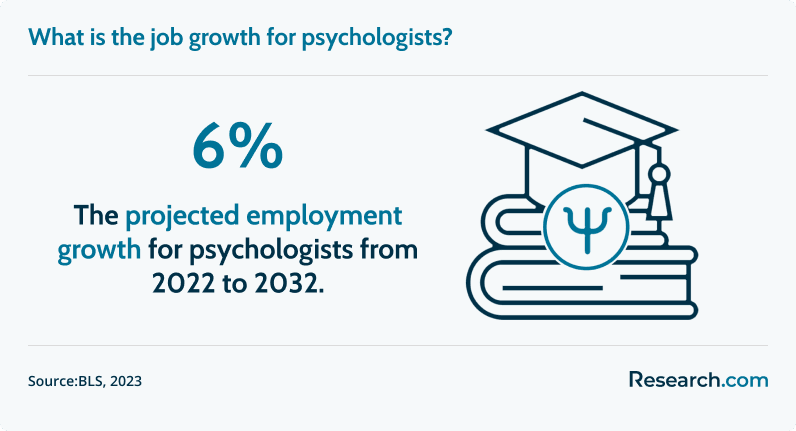
The job market for ABA doctoral graduates includes academic, clinical, research, consulting, and leadership opportunities. Employment in psychology careers, including ABA-related roles, is projected to grow six percent from 2022 to 2032. A Ph.D. may make graduates more competitive for research-intensive, supervisory, and university positions, but job outcomes still depend on location, credentials, experience, dissertation focus, publication record, networking, and employer demand.
Why does research matter in applied behavior analysis?
Research is central to ABA because the field depends on measurable behavior change, careful assessment, ethical intervention, and data-based decision-making. In a Ph.D. program, students learn to evaluate existing studies, identify gaps, design research, collect and analyze data, and translate findings into better practice.
- Improving Evidence-Based Practice: Research helps determine which interventions work, for whom, under what conditions, and with what limitations.
- Creating New Intervention Strategies: Doctoral students may test new approaches or adapt existing methods for different populations, environments, or behavioral goals.
- Influencing Policy and Standards: Research findings can inform school systems, healthcare providers, agencies, and policymakers about effective behavioral supports.
- Contributing to the ABA Literature: Publishing and presenting research strengthens professional credibility and helps the field refine its methods.
- Preparing Future Leaders: Research training prepares graduates to mentor students, supervise practitioners, manage programs, and evaluate outcomes responsibly.
Students who want a faster entry point before doctoral study may consider options such as the fastest online master's in applied behavior analysis, then decide later whether a research-intensive doctorate fits their long-term goals.
How can career support and alumni networks advance my ABA career?
Career services and alumni networks can help doctoral students turn research training into employment opportunities. Useful supports include faculty mentorship, dissertation-to-publication guidance, conference preparation, teaching development, internship connections, alumni panels, and employer introductions. Students comparing broader psychology doctoral options may also review online psychology doctorate programs to understand how career support differs across online, hybrid, and campus-based doctoral models.
How can I prepare effectively for a Ph.D. in Applied Behavior Analysis?
Strong applicants usually prepare before submitting applications. Helpful steps include gaining supervised ABA experience, strengthening research and statistics skills, reading faculty publications, clarifying a dissertation interest, preparing a writing sample, and contacting potential advisors professionally. Students earlier in their academic pathway may use options such as the quickest online psychology bachelor's degree to build foundational psychology knowledge, but they should still plan for master’s-level preparation and ABA-specific requirements.
- Identify whether your goal requires a Ph.D. or whether a master’s degree is enough.
- Build research experience through assistantships, thesis work, data projects, or conference presentations.
- Review certification and licensure requirements in the state where you want to work.
- Shortlist programs by faculty fit, not just ranking or tuition.
- Ask programs about funding, dissertation timelines, placements, and graduate outcomes.
How do interdisciplinary collaborations improve doctoral ABA training?
ABA research often intersects with education, neuroscience, public health, technology, pediatrics, organizational systems, and mental health. Interdisciplinary collaboration can expose doctoral students to new methods, broader research questions, and additional career possibilities. Students comparing practice-oriented psychology pathways may also encounter interdisciplinary models in the most affordable PsyD programs online, though PsyD programs and ABA Ph.D. programs typically differ in research intensity and clinical focus.
How can a Ph.D. in ABA influence policy and systemic change?
Doctoral-level ABA researchers can contribute to policy by producing evidence about interventions, implementation quality, supervision models, service access, and outcome measurement. Their work may inform schools, healthcare organizations, insurers, nonprofits, and government agencies. Related fields, including masters in mental health counseling degree pathways, can also contribute to broader behavioral health systems, but ABA’s distinctive strength is its focus on observable behavior, environmental variables, and measurable intervention outcomes.
How does a Ph.D. in Applied Behavior Analysis compare to other psychology doctorates?
Students considering doctoral study should compare the purpose of each degree carefully. A Ph.D. in ABA is usually best for students who want deep behavior-analytic research training and careers in ABA-focused teaching, research, supervision, consulting, or program leadership. A Psy.D. is usually more practice-oriented and designed for students focused on clinical service delivery. A Ph.D. in Clinical Psychology often combines research and clinical training with a broader focus on mental health assessment, diagnosis, and psychotherapy.
| Doctoral option | Main focus | Common career direction |
| Ph.D. in Applied Behavior Analysis | Behavior-analytic research, intervention design, supervision, data-based behavior change. | ABA professor, researcher, clinical director, BCBA-D, OBM consultant, policy or systems specialist. |
| Psy.D. | Clinical practice and application of psychological assessment and therapy. | Clinician, therapist, assessment professional, practice-focused psychologist where licensure requirements are met. |
| Ph.D. in Clinical Psychology | Research plus clinical assessment, psychotherapy, and mental health treatment. | Clinical researcher, licensed psychologist where requirements are met, professor, health system clinician. |
Students who are not ready for doctoral study may first explore flexible graduate options such as an online masters of psychology. A master’s can help clarify whether your interests lean toward ABA, counseling, organizational psychology, research, or clinical practice.
What accreditation and ethical standards should I review in a Ph.D. in Applied Behavior Analysis program?
Accreditation and ethics should be reviewed before applying. Students should verify institutional accreditation, behavior analysis-specific accreditation or recognition where applicable, faculty qualifications, supervision policies, client protection procedures, research ethics training, and whether the curriculum aligns with professional certification expectations. Ethical ABA training should emphasize informed consent, confidentiality, cultural responsiveness, data integrity, scope of competence, humane intervention, and careful supervision. Students comparing related graduate options may also review an online masters in psychology to understand how accreditation expectations differ by field and degree level.
Can accelerated psychology programs online support ABA career preparation?
Accelerated online psychology programs may help some students build background knowledge before pursuing advanced ABA study, especially if they need prerequisite coursework or want a faster route into graduate preparation. However, accelerated does not automatically mean better. Students should check accreditation, faculty support, course sequencing, transfer policies, and whether the program builds the research and statistics foundation needed for doctoral work. For comparison, review accelerated psychology programs online and evaluate whether the pace supports real learning rather than only speed.
Is an accelerated PsyD a realistic alternative to a Ph.D. in ABA?
An accelerated PsyD may be a better fit for students who want a shorter, practice-oriented doctoral route focused on clinical application. It is not a direct substitute for a Ph.D. in ABA if your goal is behavior-analytic research, ABA faculty work, or advanced ABA specialization. Before choosing between the two, compare practicum expectations, dissertation or research requirements, licensure alignment, faculty mentoring, cost, and long-term career goals. Students focused on clinical psychology timelines may find it useful to review the shortest PsyD programs, while remembering that PsyD and ABA Ph.D. outcomes are not interchangeable.
What are the latest trends in applied behavior analysis?
ABA continues to change as service delivery models, technology, research expectations, and client needs evolve. Doctoral students should understand these developments because they affect research topics, employment opportunities, ethical responsibilities, and supervision practices.
- Telehealth and Online Services: ABA services, supervision, consultation, and assessments are increasingly delivered through remote platforms, especially when access to in-person care is limited.
- Data-Driven Practice: Digital tools can support real-time data collection, progress monitoring, and intervention refinement, but practitioners must still interpret data carefully and ethically.
- Cultural Competency: ABA professionals are expected to design interventions that respect clients’ cultural, linguistic, family, and community contexts.
- ABA in New Industries: Behavior analysis is used beyond schools and clinics, including organizational behavior management, workplace performance, and sports-related settings.
- Specialized Certification: Some professionals pursue additional credentials or focused training, including options related to BCBA certification online, to strengthen qualifications in specific practice areas.
Common mistakes to avoid when choosing an ABA Ph.D. program
- Choosing by ranking alone: A highly ranked program is not useful if no faculty member can supervise your research area.
- Ignoring accreditation and credential alignment: Always verify whether the program supports your certification and state licensure goals.
- Looking only at tuition: Fees, travel, dissertation costs, lost wages, and funding availability can change the true cost.
- Assuming online means fully remote: Some online or hybrid programs still require residencies, campus visits, supervised experiences, or local placements.
- Underestimating the dissertation: Doctoral completion depends heavily on research planning, faculty fit, data access, and persistence.
- Expecting guaranteed salary outcomes: Salary depends on role, location, credentials, employer, experience, and specialization.
Questions to ask before applying
- Which faculty members are accepting doctoral students, and what are their current research areas?
- How many students complete the program in three to four years?
- What funding is available, and is it guaranteed beyond the first year?
- Does the program align with BCBA-D, BCBA, LBA, or psychologist licensure goals where applicable?
- What dissertation support, statistics training, and research labs are available?
- How are online students supported with supervision, research collaboration, and professional networking?
- What roles have recent graduates obtained?
- Are assistantships, teaching opportunities, conference funding, or publication mentoring available?
References:
- American Psychological Association. (2024). The Counseling Psychologist. Retrieved from: https://www.apa.org/ed/ce/resources/counseling-psychologist
- Behavioral Today. (2023). Unlocking the Mysteries of the Mind: Navigating the Intriguing Worlds of Behavior Psychology and Behavior Analysis. Retrieved from: https://www.behavioraltoday.com/blog/unlocking-the-mysteries-of-the-mind-navigating-the-intriguing-worlds-of-behavior-psychology-and-behavior-analysis
- Bureau of Labor and Statistics. (2023). Occupational Outlook Handbook: Psychologists. Retrieved from: https://www.bls.gov/ooh/life-physical-and-social-science/psychologists.htm
- Hanson, M. (2024). Average Cost of a Doctorate Degree. Retrieved from: https://educationdata.org/average-cost-of-a-doctorate-degree
- Orsillo, S. (2021). What can I do with my bachelor’s degree in psychology? A spotlight on applied behavior analysis. Retrieved from: https://www.apa.org/ed/precollege/psn/2021/09/applied-behavior-analysis
Key Insights
- A Ph.D. in Applied Behavior Analysis is best for students targeting research, academia, clinical leadership, supervision, consulting, or policy—not for those who only need the fastest route into applied ABA practice.
- Most ABA doctoral programs take three to four years and commonly require around 48 to 93 credits, but dissertation scope and enrollment pace can change the timeline.
- Program cost should be evaluated as net cost, not sticker price. Compare tuition, assistantships, stipends, fees, travel, and dissertation expenses.
- Faculty fit is one of the most important selection factors. A strong advisor match can shape your dissertation, publications, funding, and career network.
- Certification and licensure rules vary. Before enrolling, confirm whether the program supports the credentials required for the state and role you want.
- Online ABA Ph.D. programs can be flexible, but students must verify supervision, residencies, research mentoring, and fieldwork expectations before committing.
- Salary and job outcomes are not guaranteed by the degree alone. Credentials, experience, specialization, geography, and employer type all influence opportunities after graduation.
Other Things You Should Know About the Best Ph.D. in Applied Behavior Analysis
Admission to top Ph.D. programs in Applied Behavior Analysis typically requires a master’s degree in a related field, a strong academic record, letters of recommendation, and relevant research experience. Some programs also require GRE scores and a personal statement outlining career goals and research interests.
The best Ph.D. programs in Applied Behavior Analysis in 2027 typically require students to complete between 60 to 90 credit hours, depending on the university. These programs usually include core courses, electives, and research components designed to deepen students' expertise in behavioral analysis.
Most programs require a master’s degree plus prior coursework in behavior analysis, research methods, and statistics. Many also expect graduate-level classes in single-case research design, ethics, and assessment. Some require supervised ABA fieldwork or proof of BCBA certification before admission.


