
2027 Master’s in Social Work (MSW) Programs in New York (NY) – Online & On-Campus

Co-Founder and Chief Data Scientist
Choosing an MSW program in New York is not just a school-selection decision. It affects your licensing path, field placement options, total cost, specialization, and the kinds of clients or communities you may serve after graduation. New York has a large social service, healthcare, education, nonprofit, and public-sector ecosystem, which makes it a strong state for aspiring social workers—but it also means students need to compare programs carefully.
According to the Council on Social Work Education, there are at least 20 MSW programs New York institutions offer. These programs are designed to prepare students for professional social work practice through graduate coursework, supervised field education, and training in ethics, policy, human behavior, assessment, advocacy, and evidence-informed intervention. Students who are still exploring the broader field may also want to review related social sciences programs before committing to graduate social work study.
This guide explains how MSW programs in New York work, how long they take, what they may cost, which schools offer on-campus and online options, how licensure works, and how to decide whether an MSW is the right next step for your career goals.
MSW Programs in New York Table of Contents
- How to become a licensed social worker in New York
- How long MSW programs in New York take
- What MSW programs in New York cost
- New York schools with Master of Social Work programs
- Online Master of Social Work programs in New York for 2027
- Career options with an MSW in New York
- How an online social work degree can prepare you for graduate study
- Technology skills social work students need
- Job outlook for MSW graduates in New York
- Trends changing social work practice in New York
- How MSW programs support job placement and advancement
- How an online PhD in social work may expand career options
- Professional development opportunities for MSW students
- Social work vs. psychology careers
- One-year MSW options in New York
- MSW admissions factors in New York
- How advanced standing MSW programs shorten the path
- How a human services bachelor’s degree can support MSW preparation
Quick Answer: Are MSW Programs in New York Worth Considering?
MSW programs in New York are worth considering if you want to qualify for professional social work licensure, move into clinical or macro practice, work in schools, hospitals, mental health agencies, child welfare organizations, public agencies, or nonprofits, or pursue leadership roles in human services. The most important requirement is choosing a CSWE-accredited MSW program, because accreditation is tied to licensure eligibility and employer trust.
Most traditional MSW programs in NYC and across New York take two to three years, while advanced standing options may allow eligible BSW graduates to finish in about 12 months. Costs vary widely by institution, residency status, and format, so students should compare tuition, fees, field placement requirements, transfer-credit rules, scholarships, and whether the curriculum supports LMSW or LCSW goals.
How to Become a Social Worker in New York
The New York Office of the Professions oversees licensing for New York social workers. The two main graduate-level licenses are the Licensed Master Social Worker, or LMSW, and the Licensed Clinical Social Worker, or LCSW. The difference matters because each credential allows a different level of practice.
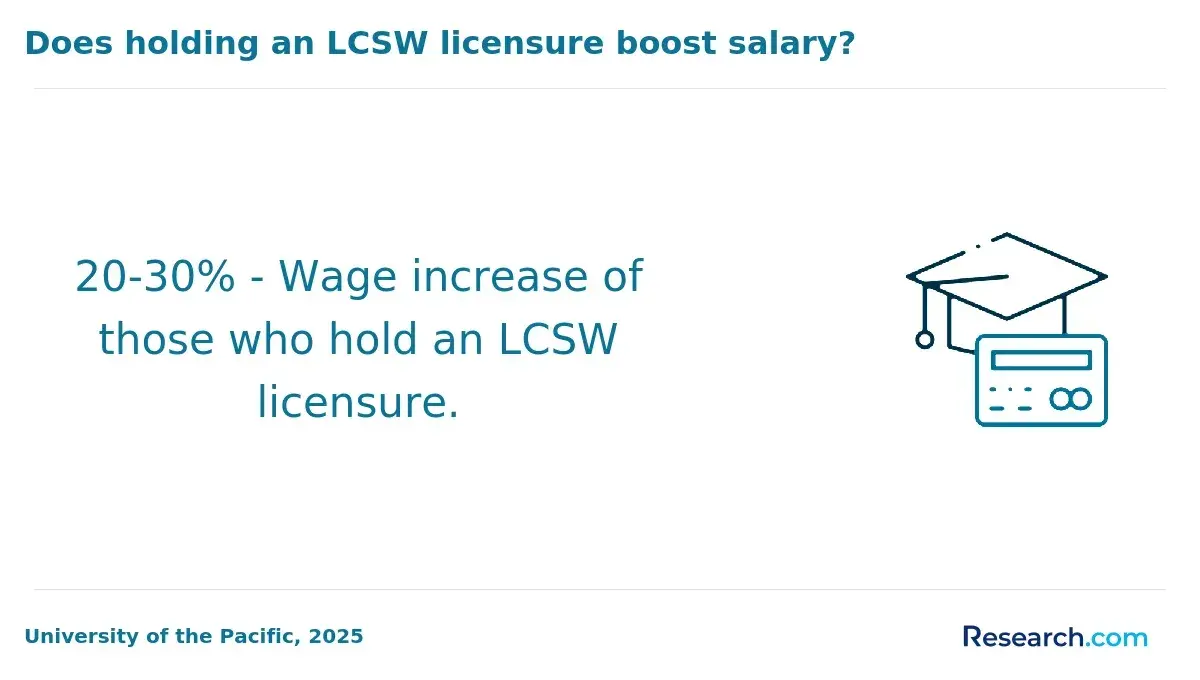
The LMSW is the first professional license many MSW graduates pursue. It generally supports supervised social work services such as assessment, case management, advocacy, counseling-related support, referral, and service coordination. The LCSW is an advanced clinical license that permits independent clinical practice, including diagnosis and psychotherapy, after additional supervised clinical experience and other requirements are met. Students interested in clinical behavioral health should compare this route with related careers such as becoming a mental health counselor.
| License | Best for | What it generally supports | Key additional requirement |
| LMSW | New MSW graduates entering supervised practice | Case management, advocacy, assessment, counseling-related services under appropriate supervision, and social service coordination | MSW degree, required coursework, application, and the Master’s Social Work licensure exam |
| LCSW | Social workers seeking independent clinical practice | Clinical assessment, diagnosis, psychotherapy, and independent clinical social work practice | At least three years of supervised clinical work after graduation and the Clinical Social Work licensure exam |
Steps to Become an LMSW in New York
- Earn a bachelor’s degree, ideally in social work or a closely related field.
- Graduate from one of the CSWE-accredited MSW programs in New York or another CSWE-accredited program that meets state expectations.
- Pass the Master’s Social Work licensure exam from the Association of Social Work Boards.
- Complete the required coursework in child abuse identification and reporting.
- Submit the required application materials to the New York Office of the Professions.
Steps to Become an LCSW in New York
- Complete an undergraduate degree before entering graduate study.
- Finish a CSWE-accredited MSW program with a minimum of 12 semester hours of clinical coursework.
- Complete at least three years of supervised clinical work after graduation.
- Pass the Clinical Social Work licensure exam administered by the Association of Social Work Boards.
- Complete the required child abuse identification and reporting coursework.
- Apply through the New York Office of the Professions.
How long does it take to complete MSW programs New York?
Most students should plan for a multi-stage timeline. A bachelor’s degree usually comes first and typically takes four years. After that, traditional MSW programs in NYC and other New York locations often take two to three years, depending on whether a student attends full time or part time.
Students who already hold a qualifying BSW and meet advanced standing criteria may be able to complete New York MSW programs within 12 months. These accelerated pathways are not usually designed for career changers without a social work bachelor’s background; they build on prior undergraduate social work coursework and field education.
Licensure can add time after graduation, especially for students pursuing the LCSW. In addition to coursework in child abuse identification and reporting, future clinical social workers need at least 12 semester hours in supervised clinical work as part of the educational preparation and at least three years of supervised work experience after the graduate degree.
| Path | Typical student | Estimated academic timeline | Important note |
| Traditional MSW | Students with a bachelor’s degree outside social work or without advanced standing eligibility | Two to three years | Usually includes foundation and advanced social work coursework plus field education |
| Advanced standing MSW | Students with qualifying prior social work education and transferable preparation | Within 12 months | Admission is selective and typically depends on BSW background, grades, and field readiness |
| LCSW preparation after MSW | Graduates seeking independent clinical practice | At least three years of supervised clinical work after graduation | Students should confirm clinical coursework and supervision requirements with New York licensing authorities |
What is the cost of an MSW program in New York?
The price of an MSW in New York can differ sharply by school type, residency status, enrollment format, and total credit requirements. Public social work schools in NYC can cost $11,630 for in-state students and $30,120 for out-of-state students (CollegeBoard, 2025). Private academic institutions can charge around $43,350 per academic year.
Online students should not assume online automatically means cheaper. For public social work schools in NY, online tuition can cost $16,400 for in-state students and $27,350 for out-of-state students (University at Buffalo, 2025). Private colleges in New York for social work can charge an average of $34,000 per academic year.
| Online Learning | In-campus Learning | |
| Public In-state | $21,190 | $10,940 |
| Public Out-of-state | $34,072 | $28,240 |
| Private | $33,800 | $39,400 |
| *Values are estimates |
Tuition is only one part of the total cost. Students should also ask about university fees, practicum-related transportation, technology requirements, books, licensure exam preparation, health clearance costs for field placements, and whether reduced work hours during practicum semesters will affect income.
Many students lower costs through financial aid, assistantships, employer tuition support, public-service programs, and social work scholarships. Some merit-based scholarships can grant students $2,000 to $5,000 per school year, while some need-based scholarships award as much as $30,000 per school year to eligible students.
Students who meet demographic, practice-area, or specialization criteria may also explore these scholarship options:
- National Association of Social Workers Association Scholarship
- CSWE Minority Fellowship Program
- CSWE Carl A. Scott Memorial Fund
- CSWE Substance Use Disorders Scholars Program
Questions to Ask Before Comparing MSW Costs
- Is the program CSWE-accredited, and does it meet New York licensure expectations?
- How many total credits are required for my pathway?
- Are field placement credits billed at the same tuition rate as classroom credits?
- Can I transfer graduate credits or qualify for advanced standing?
- Are scholarships renewable, or are they only available for the first year?
- Will the program’s practicum schedule allow me to keep working?
New York Schools Offering Master of Social Work (MSW) Programs
Students asking how to get a degree in social work should begin by confirming accreditation, then compare curriculum focus, field placement network, licensure preparation, cost per credit, scheduling flexibility, and specialization options. The following social worker schools in NY represent MSW options that differ in mission, structure, and professional emphasis.
1. College of Staten Island
The Master of Social Work program at the College of Staten Island focuses on social work practice with people with disabilities. Students examine approaches that support individual, family, and community well-being while addressing equity, access, economic justice, and social justice for people with disabilities.
- Program Length: One to four years
- Tracks/concentrations: Clinical and macro-practices in disability studies
- Cost per Credit: $855
- Required Credits to Graduate: 32 to 60 credits
- Accreditation: Council on Social Work Education
2. Long Island University Brooklyn
The Master of Social Work program at Long Island University Brooklyn prepares students for professional practice across health, human service, and community settings. The curriculum addresses social work history, values, purpose, philosophy, interdisciplinary collaboration, and work with diverse clients in New York City and beyond.
- Program Length: Two to four years
- Tracks/concentrations: Alcohol and substance abuse, child and family welfare, forensic social work, gerontology, and non-profit management
- Cost per Credit: $1,352
- Required Credits to Graduate: 60 credits
- Accreditation: Council on Social Work Education
3. Nazareth College of Rochester
The Master of Social Work program at Nazareth College of Rochester emphasizes ethical practice, cultural respect, leadership, social justice, and interprofessional collaboration. Students can build knowledge in specialized areas while preparing for direct practice, community work, and collaborative service delivery.
- Program Length: One to four years
- Tracks/concentrations: Family and community practice, interdisciplinary health care
- Cost per Credit: $1,075
- Required Credits to Graduate: 36 60 credits
- Accreditation: Council on Social Work Education
4. Syracuse University
The Master of Social Work degree at Syracuse University supports students interested in either advanced clinical practice or broader leadership roles in human services, policy, and organizational practice. The program connects social justice, human rights, policy awareness, and research-informed practice.
- Program Length: Two to four years
- Tracks/concentrations: Advanced integrated practice, advanced clinical practice
- Cost per Credit: $1,803
- Required Credits to Graduate: 60 credits
- Accreditation: Council on Social Work Education
5. Yeshiva University
Yeshiva University offers an MSW program for students who want to improve social service delivery and support individuals, families, and communities. The school reports over 600 placement sites in the Greater New York Area and across the United States, Canada, and Israel, which can be valuable for students comparing field education access.
- Program Length: One to four years
- Tracks/concentrations: The aging population, mental illness, and returning and retired veterans
- Cost per Credit: $1,138
- Required Credits to Graduate: 60 credits
- Accreditation: Council on Social Work Education
Online Master of Social Work (MSW) Programs in New York for 2027
Online MSW programs can be a practical option for students who need more flexibility because of work, caregiving, commuting, or location constraints. More than 50% of accredited MSW programs New York colleges and universities offer are available through online learning (Council on Social Work Education, n.d.).
Still, online does not mean less rigorous. CSWE-accredited online MSW programs must include supervised field education, and students should confirm how placements are arranged, whether in-person intensives are required, and whether the program supports the licensing pathway they intend to pursue. Employers often pay close attention to institutional reputation and programmatic accreditation rather than only the delivery format (AACSB, 2025).
| Choose online if... | Choose campus or hybrid if... |
| You need schedule flexibility and can manage independent learning. | You prefer face-to-face classroom interaction and local networking. |
| You live far from campus or want to reduce commuting time. | You want regular access to campus resources, faculty, and peer groups. |
| You can complete field placement requirements near your location. | You want the school to connect you closely with nearby agencies and organizations. |
| You are comfortable using digital platforms for coursework, advising, and collaboration. | You learn best through structured in-person discussion and on-site support. |
1. Adelphi University
The online Master of Social Work from Adelphi University blends social work theory with professional preparation and field learning. Students can shape their studies around areas such as healthcare-related practice, leadership, mental health, substance use, trauma, and human services management.
- Program Length: Three years
- Tracks/concentrations: Human services management, mental health, organization leadership, substance abuse, and trauma
- Cost per Credit: $905
- Required Credits to Graduate: 64 credits
- Accreditation: Council on Social Work Education
2. Columbia University
The online MS in Social Work from Columbia University offers graduate training connected to social work research, social welfare issues, policy awareness, and justice-focused practice. Students can explore specialized areas that reflect the needs of individuals, families, communities, and global populations.
- Program Length: Three to four years
- Tracks/concentrations: Aging, contemporary social issues, disabilities, family, international social welfare, mental health, school-based and school-linked services, services to immigrants and refugees, and youth and children services
- Cost per Credit: $1,425
- Required Credits to Graduate: 60 credits
- Accreditation: Council on Social Work Education
3. Fordham University
The online Master of Social Work at Fordham University begins with foundational social work concepts and progresses into advanced integrated practice. Students can use elective and curriculum choices to align the degree with career interests in crisis response, resilience, health services, and related practice areas.
- Program Length: Two to three years
- Tracks/concentrations: Crisis and resilience, health services
- Cost per Credit: $1,045
- Required Credits to Graduate: 31 to 62 credits
- Accreditation: Council on Social Work Education
4. Touro University
The online Master of Social Work from Touro University combines coursework with field experiences across varied communities and service environments. The program is especially relevant for students interested in clinical social work, trauma-informed practice, child welfare, substance use, aging, military populations, and school social work.
- Program Length: Two to four years
- Tracks/concentrations: Child welfare practice, creative arts and healing, credentialed alcoholism and substance abuse counselor (CASAC), gerontology and palliative care, school social work practice, social work practice with the military, and trauma-informed practice
- Cost per Credit: $820
- Required Credits to Graduate: 65 credits
- Accreditation: Council on Social Work Education
5. University of Buffalo (SUNY)
The online Master of Social Work at the University of Buffalo centers trauma-informed and human rights perspectives. Students study social work history, social welfare policy, human development, trauma, human rights, and integrative analysis for complex client and community needs.
- Program Length: Three years
- Tracks/concentrations: Trauma
- Cost per Credit: $706 (resident), $815 (non-resident)
- Required Credits to Graduate: 60 credits
- Accreditation: Council on Social Work Education
What can I do with an MSW degree in New York?
An MSW can lead to clinical, community, administrative, policy, school-based, healthcare, nonprofit, and public-sector roles. Students who are comparing adjacent options may also ask, “What can I do with a degree in human services?” Human services degrees can support entry-level and community support work, while the MSW is commonly tied to graduate-level social work licensure and advanced practice.
New York can be an attractive state for social work graduates because salaries are competitive in several social work categories. A New York-based child, family, and school social worker can earn an average of $70,690 annually. Other types of social workers can earn as much as $78,540 per year.
Salary should not be the only reason to choose the field. Social workers often help people navigate schools, healthcare systems, housing supports, behavioral health services, child welfare systems, public benefits, and crisis situations. The work can be meaningful, but it can also be emotionally demanding. Students should compare the mission of the profession with their own strengths, boundaries, and long-term goals. For wage context, students may compare these figures with the federal minimum wage.
| Career direction | Typical settings | Why an MSW helps |
| Clinical social work | Mental health clinics, hospitals, private or group practice settings, behavioral health programs | Supports LMSW preparation and, with further supervised experience, the LCSW pathway |
| Child, family, and school social work | Schools, child welfare agencies, family service organizations, youth programs | Builds assessment, advocacy, family systems, and service coordination skills |
| Healthcare social work | Hospitals, long-term care, hospice, community health organizations | Prepares students to support patients and families dealing with illness, care transitions, and resource needs |
| Macro practice and policy | Government agencies, nonprofits, advocacy organizations, foundations | Develops policy analysis, program planning, community organizing, and leadership skills |
| Human services administration | Nonprofits, social service agencies, public programs, community organizations | Strengthens supervision, program evaluation, budgeting, and organizational decision-making abilities |
How can an online social work degree serve as a foundation for advanced social work careers?
An online social work degree can give students early preparation in social work values, human behavior, ethics, policy, research, and introductory practice methods. This background is especially useful for students who plan to apply to MSW programs because graduate social work study expects strong writing, analysis, self-reflection, and readiness for supervised practice.
For students who already know they want advanced standing later, the most important question is accreditation and transferability. Not every undergraduate pathway produces the same graduate advantage, so students should confirm whether a bachelor’s program is accepted by the MSW programs they plan to apply to.
What technological skills are essential for social work students in today’s digital age?
Technology is now part of routine social work practice. Students do not need to become software engineers, but they do need to use digital systems responsibly, protect client information, and communicate effectively across online platforms.
- Telehealth and remote communication: Social workers may use Zoom, Microsoft Teams, or specialized telehealth tools for counseling, meetings, supervision, and client follow-up, especially when clients face transportation or access barriers.
- Case management and data systems: Many agencies use Electronic Health Records or client-management platforms to document services, track outcomes, coordinate care, and meet privacy requirements.
- Digital advocacy and outreach: Social media platforms such as Facebook, Twitter, and Instagram can support public education, community engagement, resource sharing, and policy advocacy when used ethically.
- Privacy and cybersecurity awareness: Social workers handle sensitive information, so they must understand secure communication, password hygiene, encrypted tools, and confidentiality obligations such as HIPAA-related practices.
- Basic data analysis: Tools such as Excel or SPSS can help students and practitioners evaluate program outcomes, review client trends, and support evidence-informed decisions.
What is the future job outlook for MSW graduates in New York?
MSW graduates in New York are likely to see continued need across mental health, healthcare, schools, child and family services, aging services, housing support, community programs, and nonprofit administration. Demand is shaped by complex community needs, stronger attention to mental health, and service models that combine clinical support, prevention, advocacy, and case coordination.
Students should treat job outlook information as a planning tool rather than a promise. Career outcomes depend on license level, specialization, location, field placement experience, language skills, professional network, and willingness to work in high-need settings. For compensation research by role and state, review this MSW salary guide.
What emerging trends are shaping social work practice in New York?
Social work practice in New York is being influenced by digital service delivery, interdisciplinary care teams, data-informed program evaluation, trauma-informed practice, and renewed attention to community-level advocacy. Telehealth can expand access, but it also creates responsibilities around privacy, documentation, informed consent, and equity for clients without reliable technology.
Social workers are also expected to collaborate across systems. A practitioner may coordinate with schools, hospitals, housing agencies, courts, behavioral health teams, benefits offices, and nonprofit partners. Students who want to understand the range of possible practice areas can explore this guide to MSW career paths.
How do MSW programs in New York support job placement and career advancement?
Strong MSW programs do more than deliver coursework. They help students build professional identity, complete field education, meet licensing expectations, and connect with employers. Career support may include practicum placement advising, employer events, resume support, interview preparation, alumni connections, licensure guidance, and referrals to community agencies.
Students should ask specific questions about placement support before enrolling. A large field network is useful, but the fit of the placement matters more than the number of agency partners. If your goal is clinical licensure, ask whether the school can help you access clinical placements. If your goal is policy or administration, ask about macro practice opportunities. Students considering future leadership or advanced clinical education may also compare most affordable CSWE-accredited online DSW programs.
How can pursuing an online PhD in social work expand your career opportunities?
An online PhD in social work is usually most relevant for professionals who want to move into research, higher education, policy analysis, advanced leadership, or scholarly work. It is not the same as an MSW, and it is not usually the first credential needed for direct social work licensure. Instead, it can build advanced research, theory, teaching, and leadership capacity after graduate-level preparation.
Possible career directions after a PhD in social work may include:
- University professor or researcher: Teaching social work students, conducting studies, publishing research, and contributing to the academic knowledge base.
- Social work administrator or executive director: Leading programs, supervising departments, managing strategy, and shaping organizational priorities.
- Policy analyst or advocate: Studying social policy, advising public agencies or nonprofits, and supporting systems-level change.
- Clinical social work supervisor: Providing advanced supervision, consultation, and clinical leadership when professional qualifications align with state requirements.
- Consultant or expert witness: Advising organizations, legal professionals, or agencies on complex social work issues.
What professional development opportunities are available for MSW students in New York?
New York MSW students can strengthen career readiness by using professional development opportunities throughout the program rather than waiting until graduation. Field placements, faculty relationships, alumni networks, and professional associations can all shape job prospects.
- Join professional organizations: Groups such as the New York Chapter of the National Association of Social Workers can offer events, workshops, advocacy updates, mentoring connections, and peer networking.
- Attend conferences and workshops: University events, NASW programming, nonprofit trainings, and local seminars can help students stay current on practice models, ethics, policy changes, and community needs.
- Use field placements strategically: Practicum sites in hospitals, schools, community centers, public agencies, and nonprofits can become sources of supervision, references, job leads, and specialization experience.
- Take advantage of career services: Resume reviews, interview coaching, job fairs, career counseling, and licensure workshops can make the transition from student to practitioner smoother.
- Participate in research or evaluation projects: Faculty-led research, program evaluation, and policy projects can help students prepare for roles in administration, advocacy, grant work, and doctoral study.
- Connect with alumni: Alumni can provide realistic insight into hiring, supervision, licensure steps, agency culture, and advancement opportunities.
- Volunteer with purpose: Community service can build experience, but students should choose roles that add relevant skills and do not create burnout on top of field placement demands.
If you are still deciding whether this field fits your goals, this discussion of whether is social work a good major can help you weigh the academic and career trade-offs.
What distinguishes a career in social work from a career in psychology?
Social work and psychology both support human well-being, but they approach problems differently. Social work often looks at people within families, communities, institutions, policies, and resource systems. Psychology focuses more directly on mental processes, behavior, assessment, therapy, and research in clinical or academic settings.
Students who want direct clinical practice should compare state licensing requirements carefully, because training pathways, supervised experience, titles, and scope of practice differ. For a clearer side-by-side explanation, review this guide on what is the difference between a psychologist and a social worker.
Are there 1-year MSW programs available in New York?
Yes, some students can pursue one-year MSW options through advanced standing programs. These programs are generally intended for students who already earned a BSW from an accredited institution and meet academic and professional criteria. Because they build on prior social work coursework and field education, they can focus more quickly on advanced practice, specialization, and professional transition.
Students should not choose a one-year program only because it is fast. The schedule can be demanding, and field placement requirements may be intensive. A shorter timeline is most beneficial when the student is academically prepared, has clear career goals, and can handle a concentrated graduate workload.
Students comparing accelerated formats can review this guide to 1-year MSW programs online to understand how these pathways are structured.
What are the key factors for successful MSW admissions in New York?
Competitive MSW applicants usually show academic readiness, strong writing, relevant volunteer or work experience, ethical maturity, and a clear reason for pursuing social work. Admissions committees often want evidence that applicants understand the profession—not just a general desire to “help people.”
| Admissions factor | What schools may look for | How to strengthen it |
| Academic record | Evidence that you can handle graduate reading, writing, and analysis | Address weak grades directly, highlight improvement, and complete relevant coursework when possible |
| Experience | Volunteer, employment, internship, advocacy, or community service exposure | Explain what you learned about systems, clients, ethics, and professional boundaries |
| Personal statement | Clear motivation, fit with the program, and realistic career goals | Connect your experience to social work values, not vague personal claims |
| Recommendations | References who can speak to maturity, communication, reliability, and field readiness | Ask supervisors, faculty, or professionals who know your work well |
| Program fit | Alignment between your goals and the school’s tracks, placements, and format | Apply to programs that match your intended practice area and licensure plans |
Applicants who need flexible admission options can also compare programs discussed in this guide to the easiest MSW program, while still checking accreditation, field placement quality, and licensure alignment.
How do advanced standing MSW programs expedite your professional transition?
Advanced standing MSW programs shorten the path by recognizing prior social work education. Instead of repeating foundational content, students move into advanced theory, specialized practice, and field placements more quickly. This can reduce time in school and may lower total tuition if fewer credits are required.
The trade-off is intensity. Advanced standing students often have less time to explore the field, adjust to graduate-level expectations, or change specialization. Students should choose this route only when their prior preparation is strong and their career direction is reasonably clear. For program options, review the best advanced standing MSW.
How can an online bachelor's degree in human services strengthen your MSW journey?
An undergraduate human services background can help future MSW students develop communication, ethics, case support, community engagement, and interdisciplinary problem-solving skills. It can be especially useful for students who are still exploring whether they want social work, counseling, nonprofit administration, advocacy, or public service.
However, students who want advanced standing should understand that a human services degree is not always treated the same as a BSW. Before enrolling, ask MSW programs how they evaluate undergraduate coursework and whether your bachelor’s degree supports admission, transfer credit, or advanced standing. Students focused on affordability can compare options in this guide to the cheapest online bachelor's degree in human services.
Common Mistakes to Avoid When Choosing MSW Programs in New York
- Choosing without confirming CSWE accreditation: Accreditation is central to licensing eligibility and employer confidence. Do not rely on marketing language alone.
- Looking only at tuition: Fees, practicum costs, transportation, lost work hours, books, and licensure preparation can change the real cost.
- Assuming every online MSW meets your licensure goals: Online programs still require field education, and students should confirm state-specific requirements before enrolling.
- Ignoring field placement fit: A program with the wrong placement options may slow your progress toward clinical, school, healthcare, or macro practice goals.
- Overvaluing speed: A one-year or advanced standing MSW can be efficient, but it may not be best if you need more time to build skills or manage work and family responsibilities.
- Relying only on rankings: Rankings can be useful starting points, but accreditation, cost, faculty fit, placement quality, and licensure preparation matter more for many students.
- Assuming salary outcomes are guaranteed: Pay varies by role, license, geography, employer, experience, and specialization.
How to Choose the Best MSW Program in New York for Your Goals
- Start with your intended license. If you want independent clinical practice, confirm that the program supports the LMSW-to-LCSW pathway and includes relevant clinical coursework.
- Verify CSWE accreditation. Use accreditation status as a non-negotiable screening factor.
- Compare total cost, not just sticker tuition. Include credit requirements, fees, transportation, technology, and field placement expenses.
- Study field placement support. Ask who finds placements, how far students travel, what agencies are available, and whether placements align with your specialization.
- Match the format to your life. Online programs can be flexible, but they still require discipline, reliable technology, and in-person practicum hours.
- Review admissions fit. Apply to programs where your academic background, experience, goals, and schedule align with expectations.
- Ask about career services. Look for licensure support, alumni networking, employer partnerships, and job-search preparation.
- Plan financing early. Research scholarships, assistantships, employer support, loan options, and cheap MSW programs accredited by CSWE.
Students who want to explore specialized social work careers can also compare paths such as military social worker salary expectations or the role of a child welfare social worker. If you are considering relocation or comparing licensing rules across states, this guide to how to get a social work license in Massachusetts may also be useful.
Key Insights
- Accreditation should come first: Choose a CSWE-accredited MSW program if you want a reliable path toward New York social work licensure.
- LMSW and LCSW are different career stages: The LMSW supports supervised professional practice, while the LCSW requires additional clinical preparation and at least three years of supervised clinical work after graduation.
- Program length depends on your background: Traditional MSW programs often take two to three years, while advanced standing students may finish within 12 months.
- Costs vary widely: Public, private, online, in-state, and out-of-state tuition can differ significantly, so compare full program cost rather than per-credit tuition alone.
- Field placement quality matters: Practicum experiences often shape your references, first job opportunities, specialization, and licensure readiness.
- Online MSW programs can be credible: Online format is not the issue; accreditation, field education, faculty support, and licensing alignment are what matter.
- New York offers broad career options: MSW graduates may work in clinical care, schools, healthcare, child welfare, aging services, policy, nonprofits, and public agencies.
- The best program is goal-specific: A strong choice for clinical practice may not be the best choice for macro policy work, and the fastest program is not always the smartest option.
References:
- AACSB. (2025). Trends in Higher Education: Employer Perceptions of Online vs. Traditional Degrees. https://www.aacsb.edu/insights/trends/2025-employer-perceptions-report
- Association of Social Work Boards. (2025). Licensed social work workforce study. https://www.aswb.org/wp-content/uploads/2025/07/Social-Work-Workforce-Study-Series-Report-2.pdf
- College Board. (2025). Trends in College Pricing and Student Aid. https://research.collegeboard.org/trends/college-pricing
- Council on Social Work Education (n.d.). Directory of Accredited Programs. Retrieved from https://www.cswe.org/accreditation/about/directory/?program_state=NY&program_level=Master%27s&program_status=Accredited
- National Association of Social Workers. (2025). NASW social work salaries. https://www.socialworkers.org/careers/career-center/kickstart-your-job-hunt/social-work-salaries
- University at Buffalo School of Social Work. (2025). Tuition and financial aid. https://socialwork.buffalo.edu/admissions/tuition-aid.html
- U.S. Bureau of Labor Statistics. (2025). Social workers: Occupational outlook handbook. https://www.bls.gov/ooh/community-and-social-service/social-workers.htm
- U.S. Bureau of Labor Statistics. (2025). Community and social service occupations. https://www.bls.gov/ooh/community-and-social-service/
- U.S. Bureau of Labor Statistics. (2025). Social and human service assistants. https://www.bls.gov/ooh/community-and-social-service/social-and-human-service-assistants.htm
- U.S. Department of Education, Office of Postsecondary Education. (2025). Public comment attachment on workforce growth. https://downloads.regulations.gov/ED-2025-OPE-0016-10403/attachment_1.pdf
Other Things You Should Know About Master’s in Social Work (MSW) Programs in New York (NY)
In 2027, MSW programs in New York require completion of 900-1,200 hours of field education. These internships are supervised by qualified professionals and provide hands-on experience, aligning with state regulations to prepare students for social work practice.
In 2027, MSW students in New York can explore scholarships from organizations like the New York State Chapter of NASW, which often offer funding based on academic merit or financial need. Additionally, universities may provide department-specific scholarships. Students should also consider federal aid options like FAFSA.
An MSW program in New York should hold accreditation from the Council on Social Work Education (CSWE). CSWE-accredited programs meet the educational standard used for New York licensure and for eligibility to sit for the ASWB exams after graduation.
Yes, after completing an MSW program in New York in 2027, graduates must pass the Association of Social Work Boards (ASWB) Master’s exam to become Licensed Master Social Workers (LMSW). This is a critical step in beginning professional practice in the state.


