
2027 Best Online Bachelor's in Sociology Programs

Co-Founder and Chief Data Scientist
An online bachelor's degree in sociology may not directly qualify someone to work as a sociologist, but it opens doors to community-based roles that connect individuals to healthcare and social resources. Graduates can serve in-demand positions like social service specialists, helping over 100 million Americans in underserved areas access essential services.
Graduates of online sociology programs can pursue well-paying careers supported by a strong educational foundation. This guide highlights the top online bachelor's in sociology programs available, along with essential details for each. It also provides an overview of the degree, including cost, duration, and potential career paths for graduates.
What are the benefits of getting an online bachelor's in sociology?
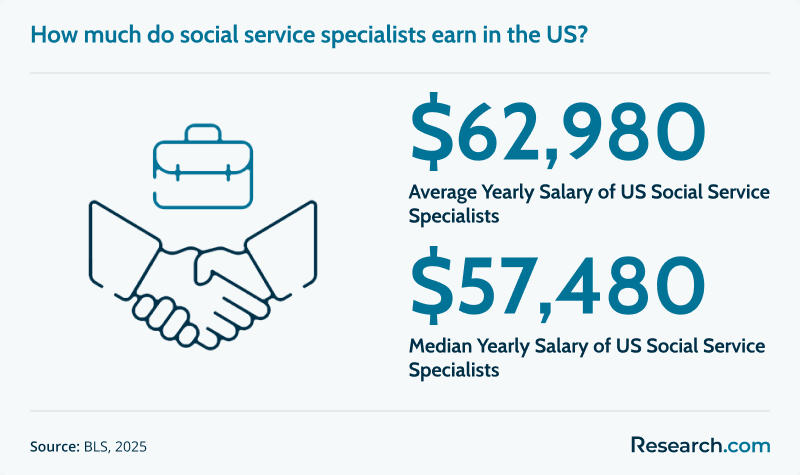
- The average yearly salary of social service specialists is $62,980, while their median yearly salary is $57,480.
- Completing an online bachelor's in sociology enables graduates to pursue careers as social service specialists, case managers, market research analysts, or human resources specialists.
- Online sociology programs offer more flexible coursework and schedules, more dynamic online learning experiences, and typically lower costs than traditional programs.
What can I expect from an online bachelor's in sociology?
A student pursuing an online bachelor's degree in sociology can expect a comprehensive program that delves into social behavior, institutions, and the complexities of societal issues using sociological theories and research methods.
Core coursework often covers topics such as social inequality, culture, gender, race and ethnicity, deviance, and social change. Students may also have opportunities to specialize in areas like criminology, social work, or social justice, tailoring their education to specific interests within the field.
The program emphasizes developing critical thinking, communication, data analysis, and applied research skills essential for understanding and addressing social challenges. With flexible and often asynchronous class schedules, students can balance their studies alongside work and personal commitments.
Graduates emerge prepared for diverse career paths in sectors such as social services, community outreach, human resources, research, or further academic study, equipped with a strong foundation in analyzing and impacting social dynamics and communities.
Where can I work with an online bachelor's in sociology?
A graduate with an online bachelor's degree in sociology can work in a wide range of fields that require strong skills in research, communication, critical thinking, and understanding of social behavior. While some roles may require additional training or graduate education, many entry-level opportunities are available across various sectors.
Below are the most common work settings:
- Social and Human Services Agencies: Graduates often work as case managers, support specialists, or program coordinators, helping individuals and families access social services, housing, healthcare, and counseling.
- Nonprofit Organizations: Many sociology graduates find roles in advocacy, fundraising, outreach, or program management for organizations focused on issues like poverty, education, human rights, or community development.
- Government and Public Sector: Graduates can work in local, state, or federal agencies as policy assistants, community outreach workers, or public health aides, supporting social research, planning, and service delivery.
- Education and Youth Services: With additional certification, some graduates become educators or work in administrative or counseling roles within schools, after-school programs, or youth development organizations.
- Criminal Justice and Law Enforcement: Those with a specialization in criminology may pursue roles such as probation officers, corrections counselors, or research assistants in criminal justice agencies.
- Market Research and Data Analysis: Graduates skilled in research and statistics may work in data collection, consumer behavior analysis, or public opinion polling for private firms, think tanks, or consulting agencies.
- Healthcare and Public Health: Sociology graduates may support health education, community health programs, or patient advocacy efforts, especially in roles focused on addressing health disparities and social determinants of health.
- Human Resources and Corporate Settings: In the business world, sociology graduates may work in recruitment, training, diversity and inclusion, or employee relations roles that require an understanding of workplace dynamics and social interaction.
- Urban Planning and Housing Services: Graduates may assist with planning, housing advocacy, or community development projects in city planning departments or nonprofit housing agencies.
- Media, Communications, and Public Relations: With strong writing and communication skills, sociology graduates can work in journalism, content creation, social media management, or public relations, especially on social issues.
How much can I make with an online bachelor's in sociology?
Sociology majors who have entered the working realm but have yet to earn a graduate degree usually become social service specialists. According to the United States Bureau of Labor Statistics (BLS), the average yearly salary of these professionals is $62,980, while their median yearly salary is $57,480. These are considered decent sums, given that the collective median yearly salary of all jobs in the country is $49,500.
Social service specialists typically earn between $37,830 and $96,620 per year in their careers. Entry-level jobs and starting job grades receive salaries at the lower end of the given pay range, as they work their way up financially through experience and promotions. On the other hand, tenured specialists who work in large enterprises likely earn far more than the average yearly salary.
Aspirants often pursue a graduate degree to become sociologists, who earn considerably more than social service specialists. The BLS reports that these professionals earn an average yearly salary of $111,670 and a median yearly salary of $101,690.
- Best Online Bachelor's in Sociology Programs for 2027 List of Programs
- How long does it take to complete an online bachelor's in sociology? Completion Time
- How does an online bachelor's in sociology compare to an on-campus program? How does an online bachelor's in sociology compare to an on-campus program?
- What is the average cost of an online bachelor's in sociology? Average Cost
- What are the financial aid options for students enrolling in an online bachelor's in sociology? Financial Aid
- What are the prerequisites for enrolling in an online bachelor's in sociology? Requirements
- What courses are typically in an online bachelor's in sociology? What courses are typically in an online bachelor's in sociology?
- What types of specializations are available in online bachelor's in sociology programs? What types of specializations are available in online bachelor's in sociology programs?
- How to choose the best online bachelor's in sociology? How to choose the best online bachelor's in sociology?
- What career paths are available for graduates of online bachelor's in sociology programs? Career Paths
- How does an online sociology degree compare with an affordable online psychology degree? How does an online sociology degree compare with an affordable online psychology degree?
- What additional credentials can boost your career prospects? What additional credentials can boost your career prospects?
- What is the job market for graduates with an online bachelor's in sociology? Job Market
- Are internship opportunities and practical experiences integrated into online sociology programs? Are internship opportunities and practical experiences integrated into online sociology programs?
Best Online Bachelor's in Sociology Programs for 2027
Choosing an online bachelor’s in sociology is not just about finding a flexible degree. It is a decision about cost, transfer credits, career direction, graduate school options, and whether the curriculum will help you build practical skills in research, communication, data interpretation, and social analysis. Sociology can lead to work in social services, community programs, public policy, human resources, criminal justice, nonprofit organizations, market research, and graduate study, but outcomes vary by program, location, experience, and additional credentials.
This guide explains how online sociology bachelor’s programs work, which schools stand out, how long the degree usually takes, what it costs, what courses and concentrations to expect, and how to evaluate whether this path fits your goals. It also compares online and campus formats, outlines financial aid options, highlights career paths, and identifies common mistakes to avoid before enrolling.
Quick Answer: Is an Online Bachelor’s in Sociology Worth Considering?
An online bachelor’s in sociology can be a strong option for students who want a flexible social science degree that develops research, writing, critical thinking, cultural awareness, and data analysis skills. It is especially useful for learners interested in social services, community health, public policy, human resources, nonprofit work, criminal justice, advocacy, or graduate study. However, students who want a licensed clinical role, such as social work counseling or therapy, should confirm whether they will need a graduate degree, supervised experience, or state licensure after completing the bachelor’s program.
Most online sociology bachelor’s programs require 120 credits and take 4 years for full-time students. Part-time students often need 5 to 6 years, while students with transfer credits or access to accelerated formats may finish in 2 to 3 years.
How We Ranked Online Bachelor’s in Sociology Programs
Because an online bachelor’s degree requires a major investment of time and money, our ranking emphasizes transparency, institutional quality, and decision-useful information. We considered data from established education sources, including the IPEDS database, College Scorecard, Peterson's database, and the National Center for Education Statistics. We also prioritized accredited institutions because accreditation affects financial aid eligibility, transferability, graduate school admissions, and employer recognition.
Readers can review our broader ranking process on the Research.com methodology page. Rankings should be used as a starting point, not the only factor in your decision. Before applying, compare each program’s tuition, transfer credit policy, online course format, academic support, career services, and fit with your intended career path.
Best Online Bachelor’s in Sociology Programs
| Rank | School and Program | Credits | Estimated Program Length | Cost per Credit | Accreditation |
| 1 | University of Florida — Bachelor of Arts in Sociology | 120 | 4 years | $129.18 (in-state); $552.62 (out-of-state) | Southern Association of Colleges and Schools Commission on Colleges |
| 2 | University of Central Florida — Online Sociology, BA/BS | 120 | 4 years | $179.19 (in-state); $715.80 (out-of-state) | Southern Association of Colleges and Schools Commission on Colleges |
| 3 | Florida International University — Online Bachelor of Arts Sociology Major, Global Studies | 120 | 4 years | $235.57 (in-state); $648.87 (out-of-state) | Southern Association of Colleges and Schools Commission on Colleges |
| 4 | Arizona State University — Online Bachelor of Science in Sociology | 120 | 4 years | $574 | Higher Learning Commission |
| 5 | Fort Hays State University — Bachelor of Science in Sociology | 120 | 4 years | $243 | Higher Learning Commission |
| 6 | University of Missouri — Bachelor of Arts in Sociology | 120 | 4 years | $597.60 | Higher Learning Commission |
| 7 | Kennesaw State University — Bachelor of Science in Sociology Degree | 120 | 4 years | $190 (in-state); $701 (out-of-state); $721 (international) | Southern Association of Colleges and Schools Commission on Colleges |
| 8 | University of North Alabama — Bachelor’s Degree in Sociology | 120 | 4 years | $340 (in-state); $680 (out-of-state) | Southern Association of Colleges and Schools Commission on Colleges |
| 9 | Fayetteville State University — Sociology Online BA | 120 | 4 years | $41.67 (NC resident); $104.17 (outside NC); $208.34 (non NC resident) | Southern Association of Colleges and Schools Commission on Colleges |
| 10 | Tennessee State University — Bachelor of Science in Sociology | 120 | 4 years | $291 (in-state); $836 (out-of-state) | Southern Association of Colleges and Schools Commission on Colleges |
1. University of Florida — Bachelor of Arts in Sociology
The University of Florida’s online Bachelor of Arts in Sociology is built around a liberal arts approach to social behavior, institutions, inequality, and human interaction. Students can explore subjects such as criminology, medical sociology, social psychology, and urban sociology, which can support careers in public health, human resources, criminal justice, marketing, and community-focused organizations.
- Program Length: 4 years
- Required Credits to Graduate: 120
- Cost per Credit: $129.18 (in-state); $552.62 (out-of-state)
- Accreditation: Southern Association of Colleges and Schools Commission on Colleges
2. University of Central Florida — Online Sociology, BA/BS
The University of Central Florida offers online Bachelor of Arts and Bachelor of Science options in sociology. The 120-credit curriculum focuses on human behavior, social systems, social theory, crime, deviance, research skills, and analytical reasoning. A capstone project centered on data analysis helps students connect sociological theory with practical research work.
- Program Length: 4 years
- Required Credits to Graduate: 120
- Cost per Credit: $179.19 (in-state); $715.80 (out-of-state)
- Accreditation: Southern Association of Colleges and Schools Commission on Colleges
3. Florida International University — Online Bachelor of Arts Sociology Major, Global Studies
Florida International University’s fully online sociology major with a Global Studies concentration examines society through international, cultural, political, economic, and environmental lenses. Students complete 120 credits while developing skills in research, data analysis, statistical sampling, and social mapping.
- Program Length: 4 years
- Required Credits to Graduate: 120
- Cost per Credit: $235.57 (in-state); $648.87 (out-of-state)
- Accreditation: Southern Association of Colleges and Schools Commission on Colleges
4. Arizona State University — Online Bachelor of Science in Sociology
Arizona State University’s online Bachelor of Science in Sociology emphasizes research and evidence-based analysis. Students study social behavior, group dynamics, institutions, race, class, gender, health, aging, technology, and workplace life while completing a 120-credit program grounded in sociological theory and data interpretation.
- Program Length: 4 years
- Required Credits to Graduate: 120
- Cost per Credit: $574
- Accreditation: Higher Learning Commission
5. Fort Hays State University — Bachelor of Science in Sociology
Fort Hays State University offers a fully online Bachelor of Science in Sociology with a broad mix of general education, sociology core courses, and electives. Topics may include gender, social inequality, medical sociology, nonprofit organizations, cultural understanding, research, and applied skills such as grant writing.
- Program Length: 4 years
- Required Credits to Graduate: 120
- Cost per Credit: $243
- Accreditation: Higher Learning Commission
6. University of Missouri — Bachelor of Arts in Sociology
The University of Missouri’s fully online Bachelor of Arts in Sociology prepares students to examine social patterns, human behavior, group dynamics, inequality, and social change. The program emphasizes research ability, cultural awareness, and critical thinking for students considering work in community planning, public policy, human resources, and related fields.
- Program Length: 4 years
- Required Credits to Graduate: 120
- Cost per Credit: $597.60
- Accreditation: Higher Learning Commission
7. Kennesaw State University — Bachelor of Science in Sociology Degree
Kennesaw State University offers its Bachelor of Science in Sociology online and in person. The program focuses on diversity, modernization, social change, communication, data analysis, problem-solving, and critical thinking. It may also be useful preparation for graduate study in sociology, public health, social work, law, or related disciplines.
- Program Length: 4 years
- Concentrations:
- Culture and Social Change
- Criminology
- Medical Sociology
- General Sociology
- Required Credits to Graduate: 120
- Cost per Credit: $190 (in-state); $701 (out-of-state); $721 (international)
- Accreditation: Southern Association of Colleges and Schools Commission on Colleges
8. University of North Alabama — Bachelor’s Degree in Sociology
The University of North Alabama offers Bachelor of Arts and Bachelor of Science options in sociology in online and campus formats. Students may choose from specializations in Family Life Education, Nonprofit Management, or Industrial Leadership. Graduates may apply their training in public health, criminal justice, policy, business, community nonprofits, research, advocacy, and support-oriented roles.
- Program Length: 4 years
- Concentrations:
- Family Life Education
- Nonprofit Management
- Industrial Leadership
- Required Credits to Graduate: 120
- Cost per Credit: $340 (in-state); $680 (out-of-state)
- Accreditation: Southern Association of Colleges and Schools Commission on Colleges
9. Fayetteville State University — Sociology Online BA
Fayetteville State University’s online Bachelor of Arts in Sociology follows the same academic expectations as its campus program. Students study core areas such as sociological theory, research methods, and social inequality while building transferable skills in writing, communication, cultural analysis, and research.
- Program Length: 4 years
- Required Credits to Graduate: 120
- Cost per Credit: $41.67 (NC resident); $104.17 (outside NC); $208.34 (non NC resident)
- Accreditation: Southern Association of Colleges and Schools Commission on Colleges
10. Tennessee State University — Bachelor of Science in Sociology
Tennessee State University’s online Bachelor of Science in Sociology examines how social forces influence beliefs, behavior, institutions, and group relationships. The 120-credit curriculum includes general education, sociology core courses, upper-division electives, and training in research and critical thinking.
- Program Length: 4 years
- Required Credits to Graduate: 120
- Cost per Credit: $291 (in-state); $836 (out-of-state)
- Accreditation: Southern Association of Colleges and Schools Commission on Colleges
How Long Does It Take to Complete an Online Bachelor’s in Sociology?
A typical online bachelor’s in sociology takes 4 years for full-time students because most programs require 120 credits. Those credits usually include general education courses, sociology core classes, statistics or research methods, electives, and a capstone or senior seminar.
Students enrolled part time often need 5 to 6 years, depending on how many courses they take each term. Learners who enter with substantial transfer credits or choose an accelerated format may be able to finish in 2 to 3 years, if the school accepts prior coursework and offers enough courses each term to support a faster pace.
Time to completion matters because it affects total tuition, loan borrowing, eligibility for financial aid, and when you can begin applying for full-time roles or graduate programs. If you are comparing sociology with healthcare or service coordination pathways, such as the best online MSN in care coordination programs, look closely at whether sociology courses in public health, community studies, or social services support your long-term plans.
| Student Situation | Likely Timeline | What to Check Before Enrolling |
| First-time full-time student | 4 years | Annual course availability, general education requirements, and whether required courses are offered online every term |
| Part-time working adult | 5 to 6 years | Maximum time to degree, evening or asynchronous options, and financial aid eligibility at part-time status |
| Transfer student | 2 to 3 years may be possible | Transfer credit limits, articulation agreements, and how many sociology major credits must be completed at the school |
| Accelerated online learner | 2 to 3 years may be possible | Course intensity, condensed term length, and whether the schedule is realistic with work or family obligations |
Community health workers, including social service specialists, often enter the field with undergraduate education. According to College Board, 51.88% earned a bachelor’s degree, 22.71% hold an associate degree, and 15.30% have a master’s or professional degree.
For sociologists in the United States, the education profile is more advanced: 60% have a doctoral degree or more, 30% earned a master’s or professional degree, and 10% completed a bachelor’s degree. This distinction is important. A bachelor’s in sociology can qualify graduates for many applied roles, but professional sociologist positions commonly require graduate education.
How Does an Online Bachelor’s in Sociology Compare to an On-Campus Program?
Online and on-campus sociology programs usually cover the same core academic areas: social theory, research methods, social inequality, culture, institutions, statistics, and applied analysis. The main differences are not necessarily what you study, but how you study, how much structure you receive, what types of networking are available, and how easily you can access field experiences.
| Factor | Online Sociology Degree | On-Campus Sociology Degree | Best Fit |
| Scheduling | Often includes asynchronous coursework, which allows students to complete lectures and assignments around work or family responsibilities | Usually follows scheduled class meetings with in-person attendance expectations | Online is better for working adults; campus is better for students who want fixed structure |
| Learning environment | Uses learning platforms, recorded lectures, digital discussions, and online assignments | Relies on classroom discussion, live interaction, and immediate in-person feedback | Online works for self-directed learners; campus works for students who prefer face-to-face engagement |
| Resources | May provide remote advising, virtual tutoring, online library access, and digital career support | Offers physical libraries, computer labs, student centers, faculty offices, and campus events | Both can work if the support services are strong and accessible |
| Research and fieldwork | May include remote research projects, local community assignments, or virtual internships | May offer easier access to faculty-led projects, campus research centers, and local partner organizations | Campus may offer more built-in research access; online students should verify field placement support |
| Cost and access | Can reduce housing, transportation, and relocation costs, though tuition varies widely | May cost more when housing and commuting are included, but provides a traditional college experience | Online is often more practical for students who cannot relocate |
Students who value maximum flexibility may prefer online sociology, much like learners comparing flexible technology options such as fast-track online data analytics degree programs. Students who need frequent in-person discussion, campus organizations, or direct faculty research opportunities may find a campus program more effective.
Questions to Ask Before Choosing Online or On Campus
- Are courses asynchronous, synchronous, or a mix of both?
- Can online students join research projects, internships, or community-based learning?
- Does the program help students find local field placements?
- Are online students charged different tuition or fees?
- Will the diploma or transcript identify the degree as online?
- What academic advising, writing support, tutoring, library access, and career services are available remotely?
What Is the Average Cost of an Online Bachelor’s in Sociology?
The total tuition for an online bachelor’s in sociology commonly ranges from $30,000 to $60,000, depending on the school, residency classification, and per-credit rate. Cost can be lower or higher based on transfer credits, institutional fees, course materials, and whether the student qualifies for grants, scholarships, employer support, or military benefits.
Cost comparisons should go beyond tuition. A program with a slightly higher per-credit rate may be more affordable if it accepts more transfer credits, offers generous aid, or charges fewer fees. A lower-cost program may become expensive if few credits transfer or required courses are not offered often enough to support timely graduation.
| Cost Factor | What It Means | Why It Matters |
| Public university tuition | Online sociology programs at public institutions usually cost between $300 and $500 per credit hour, with total tuition ranging from $30,000 to $45,000 for a 120-credit program | In-state students may receive lower rates, though some online programs use flat tuition regardless of location |
| Private college tuition | Private institutions often charge $500 to $800 or more per credit, with total costs between $45,000 and $60,000, or higher in some cases | Private colleges may still be affordable if scholarships or institutional aid are strong |
| Fees and materials | Students may pay technology fees, course materials, lab fees, graduation fees, or other charges | Fees can change the real cost of attendance, even when tuition appears low |
| Housing and transportation | Online students often avoid campus housing and commuting costs | These savings can make online study more practical for adults and place-bound students |
| Financial aid | Federal aid, institutional scholarships, grants, employer tuition assistance, and military benefits may reduce out-of-pocket costs | Net price is more important than sticker price |
Students interested in healthcare-focused careers, including those comparing the best online MSN adult-gerontology primary care NP programs, may find sociology coursework in aging, healthcare access, medical sociology, and community health useful for understanding patient populations and health systems.
What Financial Aid Options Are Available for Online Sociology Students?
Online bachelor’s students at accredited institutions may qualify for many of the same aid options as campus students. The most important first step is completing the Free Application for Federal Student Aid (FAFSA), which schools use to determine eligibility for federal, state, and institutional aid.
- Federal financial aid: Eligible students may access Pell Grants, Federal Work-Study, and Direct Subsidized or Unsubsidized Loans after completing the FAFSA.
- State grants and scholarships: Many states offer aid for residents attending approved colleges, including online programs at in-state public institutions.
- Institutional scholarships: Colleges may offer need-based, merit-based, transfer, adult learner, or program-specific scholarships for online students.
- Private scholarships: Foundations, community groups, employers, and professional associations may fund students studying social sciences, public service, advocacy, or community development.
- Employer tuition assistance: Some employers reimburse tuition or provide education benefits when the degree relates to the employee’s role or advancement plan.
- Military and veterans’ benefits: Veterans, active-duty service members, and eligible dependents may use education benefits such as the GI Bill® or Tuition Assistance.
- Payment plans: Many schools allow students to divide tuition across a semester instead of paying the full amount at once.
- Loan forgiveness programs: Graduates working in qualifying public service roles may be eligible for Public Service Loan Forgiveness (PSLF) or income-driven repayment options.
How to Reduce the Cost Before You Enroll
- Ask for a written transfer credit evaluation before committing to a school.
- Compare total program cost, not just cost per credit.
- Confirm whether online students pay out-of-state tuition or a separate online rate.
- Apply for institutional scholarships early, because deadlines may arrive before admission decisions.
- Check whether your employer offers tuition reimbursement.
- Avoid borrowing for living expenses unless necessary.
- Recalculate your expected cost if you plan to study part time, because fees and aid eligibility may change.
What Are the Prerequisites for Enrolling in an Online Bachelor’s in Sociology?
Admissions requirements for online sociology bachelor’s programs are usually similar to other undergraduate social science degrees and may resemble requirements for related online programs such as the fastest online counselor education degree programs. Schools use these requirements to evaluate whether applicants are prepared for college-level reading, writing, research, and analysis.
| Requirement | What Applicants Typically Need | Decision Tip |
| High school diploma or equivalent | A high school diploma or recognized equivalent such as a GED; some schools may expect a minimum GPA, often around 2.5 to 3.0 on a 4.0 scale | If your GPA is lower, ask about conditional admission or transfer pathways |
| Official transcripts | High school transcripts and transcripts from any prior college coursework | Transfer students should request a course-by-course evaluation |
| Standardized tests | SAT or ACT scores may be optional or waived at many schools, especially for adult learners or transfer applicants | Scores may still matter for scholarships at some institutions |
| Application form and fee | An undergraduate application through the school portal or a platform such as the Common App, plus a nonrefundable fee unless waived | Ask about fee waivers if cost is a barrier |
| Essay or personal statement | Some schools ask applicants to explain their goals, interest in sociology, and reasons for choosing online study | Use the essay to connect sociology to a clear academic or career plan |
| Letters of recommendation | Some programs request letters from teachers, counselors, supervisors, or employers | Choose recommenders who can speak to reliability, writing ability, and readiness for online learning |
| English language proficiency | International students may need TOEFL, IELTS, or another approved score | Confirm minimum scores before applying |
| Technology access | A reliable computer, internet connection, and basic digital literacy are usually necessary for online coursework | Check software, webcam, and exam proctoring requirements |
| Transfer requirements | Transfer applicants may need a minimum number of college credits or a specified college GPA | Ask how many credits can apply to general education, electives, and the major |
The chart below shows the industries that employ the most community health workers, including social service specialists.
What Courses Are Typically Included in an Online Bachelor’s in Sociology?
Online sociology programs usually combine broad social science training with research methods, statistics, theory, and electives focused on social institutions or social problems. The goal is to teach students how to interpret human behavior in context, evaluate evidence, understand inequality, and communicate findings clearly.
Students who later move into healthcare leadership or systems-focused roles, including those reviewing the best online MSN in nurse executive leadership programs, may benefit from sociology coursework in organizations, social policy, research methods, health disparities, and community systems.
| Course | What Students Learn | Why It Matters |
| Introduction to Sociology | Core concepts such as culture, socialization, institutions, social structure, and social change | Builds the foundation for upper-division sociology coursework |
| Social Problems | Issues such as poverty, crime, inequality, environmental challenges, and possible policy responses | Helps students connect social theory with real-world public concerns |
| Sociological Theory | Classical and contemporary thinkers such as Marx, Durkheim, and Weber | Provides frameworks for analyzing institutions, power, and social change |
| Research Methods in Sociology | How to design surveys, interviews, field studies, and qualitative or quantitative projects | Supports research, policy, nonprofit, and graduate school preparation |
| Statistics for Social Sciences | Tools for interpreting social data, evaluating findings, and using statistical software | Strengthens employability in research, analysis, and program evaluation roles |
| Race, Class, and Gender | How intersecting systems of inequality shape lived experience and social institutions | Useful for advocacy, diversity work, public service, and community programs |
| Sociology of the Family | Family patterns, marriage, parenting, gender roles, and cultural differences over time | Relevant to family services, youth programs, and human services roles |
| Criminology | Crime, deviance, prevention, punishment, and criminal justice systems | Can support criminal justice and legal services pathways; students can also review Research.com’s criminologist salary guide for related career context |
| Urban Sociology | Urbanization, housing, segregation, city policy, and metropolitan community life | Useful for community development, planning, advocacy, and local government roles |
| Capstone or Senior Seminar | A final research project, applied analysis, or integrative senior experience | Helps students demonstrate research, writing, and problem-solving skills to employers or graduate schools |
Electives may include environmental sociology, social movements, education, globalization, health and society, nonprofit organizations, aging, gender, public policy, or law and society. Choose electives strategically rather than randomly. They can help shape your resume and graduate school applications.
What Specializations Are Available in Online Bachelor’s in Sociology Programs?
Some online sociology programs offer formal concentrations, while others allow students to build an informal focus through electives. A specialization is most valuable when it aligns with a realistic career path, internship opportunity, or graduate program plan.
| Specialization | Focus Area | Possible Career Direction |
| Criminology and Criminal Justice | Crime, deviance, policing, corrections, law, and the justice system | Law enforcement support, corrections, probation-related roles, legal services, or graduate study; students focused on this path may also compare the cheapest criminal justice degree online options |
| Social Work and Human Services | Social welfare, case management, vulnerable populations, aging, poverty, and mental health systems | Human services, case coordination, community agencies, family services, and graduate social work preparation |
| Inequality and Social Justice | Race, class, gender, sexuality, rights, power, discrimination, and advocacy | Nonprofit advocacy, diversity and inclusion, policy support, and community organizing |
| Urban Studies | Cities, housing, gentrification, community development, and metropolitan policy | Urban planning support, public administration, community development, and local government |
| Health and Society | Health disparities, illness, healthcare access, public health, and medical sociology | Public health support, healthcare administration support, community health, and health advocacy |
| Education and Society | School systems, educational inequality, policy, and social development | Educational support services, youth programs, policy support, and graduate education pathways |
| Globalization and International Development | International inequality, development, migration, culture, and global institutions | NGOs, international organizations, policy research, and global advocacy |
| Environmental Sociology | Society, sustainability, environmental movements, and climate justice | Environmental advocacy, sustainability programs, public policy support, and nonprofit work |
Students who expect to work long term with disabled individuals may want to review a disability social worker career guide to understand how sociology, social work, licensure, and graduate education may connect.
How to Choose the Best Online Bachelor’s in Sociology
The best online sociology program is the one that fits your academic needs, budget, schedule, and career plan. A highly ranked program may not be the right choice if it does not accept your transfer credits, lacks your preferred specialization, offers limited online support, or costs more than you can reasonably afford.
Students who want to combine sociology with technology or data skills may also consider programs with research, statistics, analytics, or information systems electives. Related technical training, such as the best online Microsoft Azure dual certification bootcamps, may be useful for learners interested in data-driven social research, workforce analytics, or nonprofit technology roles.
Key Factors to Compare
- Accreditation: Choose a regionally accredited institution. Accreditation affects access to federal financial aid, transfer credit, graduate admissions, and employer recognition.
- Curriculum: Look for required courses in theory, methods, statistics, inequality, institutions, and applied sociology. A program should build both conceptual and practical skills.
- Specializations: Compare concentrations such as criminology, social justice, public health, nonprofit management, or medical sociology if you already know your direction.
- Faculty qualifications: Review whether instructors have advanced degrees, research experience, or applied expertise in sociology or related fields.
- Online format: Confirm whether courses are asynchronous, synchronous, accelerated, part time, or cohort-based.
- Total cost: Compare tuition, fees, materials, transfer credits, aid, and expected time to graduation.
- Student support: Strong online programs provide advising, tutoring, library access, writing help, technical support, and career services.
- Transfer policy: Ask how many credits will transfer and whether credits apply to general education, electives, or major requirements.
- Career preparation: Look for resume support, internship help, research projects, capstones, alumni networks, and graduate school advising.
- Technology requirements: Make sure you can meet software, hardware, internet, and proctored exam expectations.
- Student outcomes: Review graduation rates, retention, alumni pathways, and student reviews where available.
Common Mistakes to Avoid
| Mistake | Why It Can Hurt You | Better Approach |
| Choosing a school without checking accreditation | Credits may not transfer, financial aid may be unavailable, and graduate schools or employers may question the credential | Verify institutional accreditation before applying |
| Comparing only tuition per credit | Fees, transfer limits, and longer completion times can raise the real cost | Calculate total estimated cost to graduation |
| Assuming online means self-paced | Many online programs still have weekly deadlines, group work, or live sessions | Ask whether courses are asynchronous, synchronous, or accelerated |
| Ignoring career services | Sociology is broad, so students need help translating skills into job applications | Choose programs with career coaching, internships, capstones, or applied projects |
| Waiting too long to plan for graduate school | Some advanced paths require prerequisites, research experience, recommendations, or a strong GPA | Talk with advisors early if you may pursue graduate study |
| Assuming salary outcomes are guaranteed | Earnings vary by role, location, experience, graduate education, and industry | Research specific job titles in your region and build relevant experience while enrolled |
Sociologists in the country rated their career happiness 3.4 out of 5 stars, which may be encouraging for students drawn to the field. Still, career satisfaction depends heavily on role fit, work environment, compensation, and whether the person’s education aligns with the work they actually want to do.
What Career Paths Are Available for Online Sociology Graduates?
Graduates with an online bachelor’s in sociology can pursue roles that require understanding people, organizations, communities, social problems, and data. The degree is broad, so students should be intentional about internships, electives, volunteer work, research projects, and certifications that point toward a specific job family.
| Career Path | Typical Responsibilities | How Sociology Helps |
| Social services specialist | Help individuals and families access housing, employment, mental health resources, and community support | Provides understanding of inequality, institutions, vulnerable populations, and service systems |
| Case manager | Coordinate care plans, track client needs, and connect people with services across healthcare, social welfare, or justice systems | Builds skills in communication, documentation, social systems, and client advocacy |
| Human resources specialist | Support hiring, employee relations, training, workplace culture, and diversity initiatives | Applies knowledge of organizations, group behavior, inequality, and communication |
| Market research analyst | Collect and interpret data on consumers, communities, trends, and public opinion | Uses research methods, survey design, statistics, and social behavior analysis |
| Probation or correctional officer | Supervise individuals in correctional or probation settings and support rehabilitation and compliance | Connects criminology, deviance, social inequality, and institutional analysis |
| Community outreach coordinator | Build programs, organize events, connect communities with resources, and raise awareness about social issues | Uses cultural competence, communication, program planning, and community analysis |
| Public policy assistant | Support research, policy analysis, reports, and advocacy initiatives | Applies social research, statistics, inequality analysis, and writing skills |
| Youth counselor or program facilitator | Work with children or adolescents in schools, nonprofits, or community organizations | Draws on family, education, socialization, and community development coursework |
| Survey research assistant | Help design, administer, and analyze surveys on attitudes, behavior, demographics, or public issues | Uses methods, statistics, sampling, and data interpretation |
| Diversity and inclusion coordinator | Support training, policy, culture initiatives, and equity-focused programs | Applies coursework in race, class, gender, organizations, and social justice |
Some sociology graduates later pursue master’s or doctoral study to become professional sociologists, teach at the college level, conduct advanced research, or influence policy. Others move into social work, counseling, public administration, law, public health, education, or criminal justice. If you are deciding between helping-profession roles, Research.com’s social worker vs case manager comparison can clarify how duties, credentials, and career paths differ.
How Does an Online Sociology Degree Compare With an Affordable Online Psychology Degree?
An online sociology degree focuses on groups, institutions, culture, inequality, social systems, and collective behavior. An online psychology degree typically focuses more on individual behavior, cognition, development, mental processes, and mental health. Both fields study people, but they approach human behavior from different angles.
| Question | Sociology | Psychology |
| Primary focus | Society, institutions, groups, culture, social patterns, and inequality | Individuals, cognition, emotion, behavior, development, and mental health |
| Common undergraduate pathways | Social services, nonprofit work, policy support, community outreach, HR, research assistance, criminal justice support | Behavioral support, research assistance, human services, case support, graduate psychology or counseling preparation |
| Best fit for students who enjoy | Studying social problems, communities, systems, public issues, and group behavior | Studying individual thought, emotion, development, and behavior |
| Licensure considerations | Many applied roles are available, but clinical social work or counseling generally requires graduate education and licensure | Clinical psychology, counseling, and therapy roles generally require graduate education, supervised experience, and licensure |
Students comparing social science options should review curriculum depth, cost, transfer policies, career services, and graduate school requirements. For a related cost-focused comparison, see Research.com’s guide to an affordable online psychology degree.
What Additional Credentials Can Improve Career Prospects?
A sociology bachelor’s degree becomes more marketable when paired with targeted experience or credentials. The best add-on depends on the career direction. A student aiming for human resources may choose HR-related training, while a student interested in research may build data analysis skills. Someone focused on nonprofit leadership may benefit from grant writing, project management, or program evaluation experience.
- Data analytics or statistics training: Useful for survey research, policy analysis, market research, program evaluation, and workforce analytics.
- Human resources credentials: Helpful for students seeking HR assistant, recruiting, training, or diversity-focused roles.
- Project management training: Relevant to nonprofit programs, community initiatives, and public sector coordination.
- Grant writing experience: Valuable for nonprofit, advocacy, community development, and public service organizations.
- Graduate education: Often necessary for advanced research, college teaching, licensed clinical work, or specialized leadership roles.
Students interested in investigative research, legal systems, or social science applications in justice-related settings may compare sociology with graduate-level forensic psychology options, including a cheap online masters in forensic psychology. The right credential should match a specific job goal rather than simply add another line to a resume.
What Is the Job Market for Graduates With an Online Bachelor’s in Sociology?
The job market for sociology graduates depends on the role they pursue. A bachelor’s in sociology can support entry-level and midlevel applied roles in social services, community health, nonprofit organizations, public agencies, human resources, research support, and criminal justice-related settings. More advanced sociologist roles typically require graduate education.
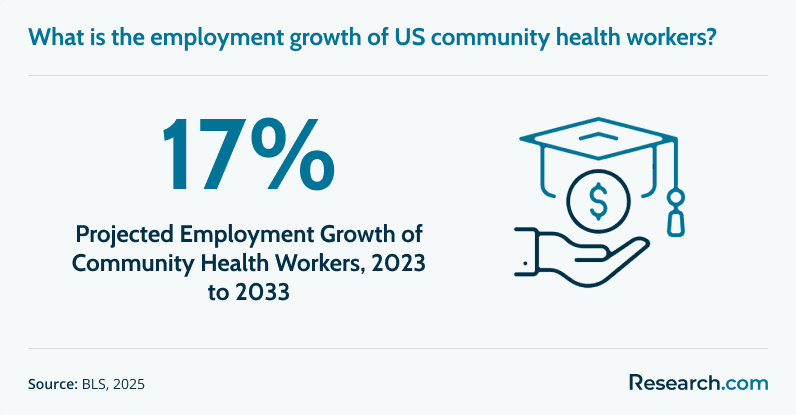
According to BLS data, employment of community health workers—including some roles filled by social service specialists—is projected to grow by 13% from 2023 to 2033, compared with the national average of 4%. This does not mean every sociology graduate will become a community health worker, but it shows demand in one related area where sociology training may be useful.
Indeed lists over 15,000 job openings for social service specialist roles in the United States. Sociology graduates may also pursue roles such as case manager, market research analyst, community outreach coordinator, HR specialist, survey research assistant, or public policy assistant.
The industries that employ the most community health workers are social assistance (21%), ambulatory healthcare services (19%), and local government (17%). The US states with the highest employment levels for community health workers are California (8,730), New York (6,380), and Texas (4,760).
Are Internships and Practical Experiences Included in Online Sociology Programs?
Many online sociology programs now include practical learning through internships, capstones, research projects, community-based assignments, service learning, or virtual collaboration. Availability varies widely, so students should not assume every online program includes field experience.
Before enrolling, ask whether internships are required or optional, whether online students can complete placements in their local communities, and whether the school helps locate approved sites. This is especially important for students aiming for human services, public health, criminal justice, nonprofit, or behavioral support roles. Learners comparing behavior-focused pathways may also review an affordable BCBA degree online to understand how applied behavioral credentials differ from sociology training.
What to Ask About Experiential Learning
- Does the sociology major require an internship, capstone, or applied research project?
- Can online students complete fieldwork near where they live?
- Who approves internship sites?
- Are placements available in social services, public health, nonprofits, criminal justice, or policy organizations?
- Can working students use their current workplace for an approved project?
- Will the experience produce a portfolio, writing sample, research report, or supervisor reference?
What Graduates Say About Online Bachelor’s in Sociology Programs
- : "Earning my sociology degree online helped me understand research, theory, and social issues while also improving my discipline and time management. Online discussions and group assignments made the program feel more connected than I expected, and I finished with stronger confidence for advocacy and social research work. Shannon"
- : "The online format made it realistic for me to return to college while raising a family. I could apply course concepts immediately at work and in my community, especially when thinking about group behavior, social support, and local needs. The degree gave me a clearer way to understand people and systems. Marie"
- : "I worried that online classes would feel detached, but the courses were interactive and well supported. Studying race, inequality, and global cultures through digital tools was engaging, and the experience helped me prepare for graduate school. Lisa"
Key Insights
- Most online sociology bachelor’s programs require 120 credits and take 4 years full time. Part-time students may need 5 to 6 years, while transfer or accelerated students may finish in 2 to 3 years.
- Accreditation should be nonnegotiable. It affects federal financial aid, transfer credits, graduate school options, and employer confidence.
- Total cost matters more than tuition per credit. Compare fees, transfer credit acceptance, financial aid, course availability, and time to completion.
- Sociology is broad, so career planning must start early. Use electives, internships, research projects, volunteer work, and certifications to point the degree toward a specific field.
- Online programs can be as academically rigorous as campus programs, but they require self-discipline. Confirm whether courses are asynchronous, synchronous, accelerated, or cohort-based before enrolling.
- A bachelor’s degree can lead to applied roles, but advanced sociology careers often require graduate education. Professional sociologist, college teaching, advanced research, clinical social work, and counseling pathways may require further study or licensure.
- Job opportunities vary by role and location. Related community health worker employment is projected to grow by 13% from 2023 to 2033, compared with the national average of 4%, but individual outcomes depend on experience, specialization, and local labor markets.
- The best program is not always the highest-ranked program. The right choice is the accredited, affordable, flexible program that supports your career goals and gives you enough practical experience to compete after graduation.
References:
- BLS (2024, April 3). 21-1094 Community Health Workers. BLS occupational employment data
- BLS (2025, April 18). Community Health Workers. BLS Occupational Outlook Handbook
- BLS. 21-1094 Community Health Workers. BLS wage and employment profile
- BLS (2025, August 4). Industry: Cross-industry, Private, Federal, State, and Local Government Period: May 2024. BLS industry employment data
- BLS (2025, April 18). Sociologists. BLS sociologists profile
- CareerExplorer. Are sociologists happy? CareerExplorer satisfaction data
- BLS industry data reference. BLS OES database
- College Board. What education level do Community Health Workers have? College Board career education data
- College Board. What education level do Sociologists have? College Board sociologist education data
- Congressional Health District Dashboard (2025, February 27). Designated Primary Care Shortage Area. Congressional Health District Dashboard
Other Things You Should Know About Online Bachelor's in Sociology Programs
In 2027, some schools renowned for offering top online Bachelor's in Sociology programs include Arizona State University, University of Florida, and Southern New Hampshire University. These institutions provide various flexible learning options and comprehensive curricula designed to prepare students for diverse sociology careers.
Yes, some online sociology bachelor's programs require a practicum or internship, often in the senior year, to connect theory with field experience. These placements are usually supervised by a faculty member and completed with a local agency, nonprofit, or community organization.
Students need a reliable internet connection, a computer with updated operating software, and access to specific platforms like Zoom or Blackboard. Some programs may require software for statistical analysis or data management, integral to sociology studies in 2027.


