
2027 Best Online MSN in Care Coordination Programs

Co-Founder and Chief Data Scientist
Health systems face a projected shortfall of 100,000 workers by 2028, while leadership roles such as medical and health services managers are growing 29%, making coordination vital.
This article ranks the best fully online, accredited MSN in Care Coordination programs, explains evaluation criteria, and outlines salary, demand, and career paths so readers can pick a program with clear upside. School comparisons include cost, on-campus equivalence, and student support. We focus on U.S. institutions with verified accreditation to avoid wasted time.
What are the benefits of completing an online MSN in care coordination program?
- Graduates become Nurse Care Coordinators earning a median $108,446 annually (mid-2025) after completing an online MSN in care coordination.
- Leadership roles like medical and health services managers are growing 29% from 2023 to 2033, signaling strong future demand.
- Career paths include care coordinator, patient navigator, population health manager, case manager, and clinical nurse leader.
What can I expect from an online MSN in care coordination program?
An online MSN in Care Coordination trains you to bridge clinical practice and system-level management. Expect coursework in patient-centered care planning, population health, quality improvement, health informatics, and leadership/administrative skills, plus interprofessional communication and ethics.
Most programs include a practicum or capstone to apply care coordination tools and technology in real settings, and typically require an active RN license. The format is fully online, with flexibility but an emphasis on data-driven coordination and outcomes.
Where can I work with an online MSN in care coordination program?
Graduates can land in both clinical-navigation and managerial care coordination roles: overseeing transitions, optimizing patient flow, and aligning care across settings. Common employers span direct care facilities and system-level organizations.
Top-employing industries:
- General Medical and Surgical Hospitals: 147,250 employed
- Offices of Physicians: 68,370 employed
- Outpatient Care Centers: 38,150 employe
- Nursing Care Facilities (Skilled Nursing Facilities): 28,100 employed
- Home Health Care Services: 25,750 employed
The states with the largest employment bases for these care coordination-related roles include:
- California: 57,310 employed
- Texas: 51,030 employed
- Florida: 35,950 employed
- New York: 25,910 employed
- Pennsylvania: 20,800 employed
How much can I make with an online MSN in care coordination program?
According to the U.S. Bureau of Labor Statistics, graduates moving into administrative/leadership care coordination roles (Medical and Health Services Managers) had a median annual wage of $117,960 in May 2024; those in more clinical coordination roles aligned with Registered Nurses saw a median of $93,600 in May 2024.
Other reported salary estimates:
- Zippia: Nurse Coordinator average salary about $79,040 per year.
- Salary.com: Nurse Coordinator roles report roughly $97,000 annually (typical range varies by specialization).
- ZipRecruiter: Clinical Nurse Coordinator sees about $99,600 per year (based on weekly averages).
- Indeed: Nurse Coordinator compensation averages $38.64/hour (≈$80,400 annually).
- Payscale: Nurse Care Coordinator roles are reported around $31.91/hour (≈$77,704 per year).
- Glassdoor: RN Care Coordinator salary ranges from $81K - $108K/yr, with an average base pay of about $93,015 per year.
- Best Online MSN in Care Coordination Programs for 2027 List of Programs
- How long does it take to complete an online MSN in care coordination program? Program Duration
- How does an online MSN in care coordination compare to an on-campus program? How does an online MSN in care coordination compare to an on-campus program?
- What is the average cost of an online MSN in care coordination program? Program Cost
- What are the financial aid options for students enrolling in an online MSN in care coordination program? Financial Aid
- What are the prerequisites for enrolling in an online MSN in care coordination program? Admission Requirements
- What courses are typically in an online MSN in care coordination program? What courses are typically in an online MSN in care coordination program?
- What types of specializations are available in an online MSN in care coordination programs? What types of specializations are available in an online MSN in care coordination programs?
- How do you choose the best online MSN in care coordination program? How do you choose the best online MSN in care coordination program?
- What career paths are available for graduates of an online MSN in care coordination programs? Career Paths
- What is the job market like for graduates of online MSN in care coordination programs? Job Outlook
- What are the future trends in online MSN in care coordination programs? What are the future trends in online MSN in care coordination programs?
- Is a bridge program necessary before pursuing an online MSN in care coordination? Is a bridge program necessary before pursuing an online MSN in care coordination?
Best Online MSN in Care Coordination Programs for 2027
Choosing an online Master of Science in Nursing in care coordination is a career decision, not just a school search. The right program can help an experienced RN move into nurse navigation, case management, population health, quality improvement, or care coordination leadership without leaving the workforce. The wrong program can create problems with accreditation, clinical placement, cost, scheduling, or employer recognition.
This guide is designed for registered nurses comparing online MSN pathways focused on care coordination, case management, population health, care transitions, and nursing leadership. You will find a ranked program list, side-by-side comparisons, admissions expectations, cost considerations, career outcomes, common mistakes, and practical questions to ask before applying. If affordability is your first filter, you may also want to compare these options with broader affordable online MSN programs.
Quick answer: What is the best online MSN in care coordination?
The best online MSN in care coordination is the one that is properly accredited, fits your current RN or BSN background, supports local practicum placement, offers courses in care transitions and population health, and has a total cost you can justify against your career goals. For most nurses, CCNE or ACEN accreditation, transparent tuition, flexible scheduling, and strong clinical support matter more than name recognition alone.
Online MSN care coordination programs are especially useful for nurses who want to improve patient transitions, reduce avoidable readmissions, coordinate interdisciplinary teams, and move into supervisory or systems-level roles. They are less appropriate for nurses seeking direct advanced practice licensure unless the curriculum is specifically built for a nurse practitioner or other APRN pathway.
How we evaluated these programs
Research.com rankings are built using a structured ranking methodology that reviews institutional quality, program availability, student support, affordability signals, and available student outcome data. For this guide, we prioritized online graduate nursing programs with clear relevance to care coordination, case management, population health, health systems leadership, or closely related roles.
Our research draws on recognized education and outcomes databases, including the IPEDS database from the National Center for Education Statistics, Peterson’s database and its distance learning data, and the federal College Scorecard database. These sources help verify institutional details, online availability, cost context, and student outcomes where available.
Rankings should be used as a starting point. Before enrolling, confirm current tuition, course sequence, clinical requirements, state authorization, accreditation status, and whether the curriculum matches your intended role.
Top online MSN care coordination programs at a glance
| Rank | School and program | Program cost | Program duration | Credits | Accreditation listed |
| 1 | Capella University – MSN in Care Coordination | $450 per credit | 12–28 months | 54 quarter credits | Higher Learning Commission (HLC); CCNE |
| 2 | Nebraska Methodist College – MSN Care Coordinator Track | $588 per credit | ~2 years | 39 credits | Higher Learning Commission (HLC); CCNE |
| 3 | University of Missouri – Master of Science in Care Management | $561.80/credit | 3 years | ~36 credits | Higher Learning Commission (HLC); Commission on Collegiate Nursing Education (CCNE) |
| 4 | Caldwell University – MSN in Population Health | $564 per credit | 2 years | 36 credits | Middle States Commission on Higher Education (MSCHE); CCNE |
| 5 | Robert Morris University – M.S.N. in Nursing Leadership: Care Coordination | $745/credit | ~1.5 years | 36 credits | Middle States Commission on Higher Education (MSCHE); CCNE |
| 6 | Western Governors University – RN-to-MSN Leadership & Management | ~$5,035 per 6-month term | ~1–2 years | Competency-based | Northwest Commission on Colleges and Universities; CCNE |
| 7 | Purdue University Global – MSN Executive Leader Track | $420 per quarter credit hour | ~2 years | 30–90 quarter credits | Higher Learning Commission (HLC); CCNE |
| 8 | Post University – MSN Case Management Specialization | $588/credit | 16–24 months | 36 credits | New England Commission of Higher Education (NECHE); CCNE |
| 9 | Chamberlain University – MSN in Population Health | $720 per credit | ~2 years | 36 credits | Higher Learning Commission (HLC); CCNE |
| 10 | Seton Hall University – MSN in Health Systems Administration with Case Management | ~$630 per credit | ~2 years | 30 credits | Middle States Commission on Higher Education; CCNE |
1. Capella University – MSN in Care Coordination
Capella University, located in Minneapolis, MN, is widely associated with online education for working adults. Founded in 1993, the university offers flexible graduate programs and is known for competency-based learning models in fields such as nursing and health sciences. Its MSN in Care Coordination is built for nurses who want a flexible route into patient-centered coordination, care transition management, and systems improvement.
- Program cost: $450 per credit
- Program duration: 12–28 months (flexible pace)
- Total credits: 54 quarter credits
- Accreditation: Higher Learning Commission (HLC); CCNE
2. Nebraska Methodist College – MSN Care Coordinator Track
Nebraska Methodist College in Omaha, NE, is a private health professions institution with a nursing history that dates back to 1891. Its healthcare-centered academic environment and connection to Methodist Health System may appeal to nurses who want a smaller college setting, focused advising, and a program designed around practical care coordination competencies.
- Program cost: $588 per credit
- Program duration: ~2 years
- Total credits: 39 credits
- Accreditation: Higher Learning Commission (HLC); CCNE
3. University of Missouri – Master of Science in Care Management
The University of Missouri, founded in 1839, is Missouri’s flagship public research university and is based in Columbia. Through the Sinclair School of Nursing, Mizzou offers a graduate care management pathway for nurses who want a public university option with research resources, interdisciplinary healthcare connections, and part-time online study.
- Program cost: $561.80/credit (in-state tuition for online students)
- Program duration: 3 years (part-time; can be accelerated)
- Total credits: ~36 credits (varies by prior coursework)
- Program/School Accreditation: Higher Learning Commission (HLC); Commission on Collegiate Nursing Education (CCNE)
4. Caldwell University – MSN in Population Health
Caldwell University is a private Catholic university in Caldwell, NJ, founded in 1939. Its MSN in Population Health may be a good fit for nurses who want to work beyond one-on-one patient care and focus on community outcomes, prevention, disparities, and coordinated care delivery across patient groups.
- Program cost: $564 per credit
- Program duration: 2 years (6 semesters part-time)
- Total credits: 36 credits
- Accreditation: Middle States Commission on Higher Education (MSCHE); CCNE
5. Robert Morris University – M.S.N. in Nursing Leadership: Care Coordination
Robert Morris University is a private university in Moon Township, Pennsylvania, founded in 1921. Its nursing leadership program with care coordination relevance is designed for nurses who want a career-focused graduate curriculum that combines leadership development, coordination skills, and a smaller-university learning environment.
- Program cost: $745/credit
- Program duration: ~1.5 years (accelerated full-time)
- Total credits: 36 credits (approximately)
- Program/School Accreditation: Middle States Commission on Higher Education (MSCHE); CCNE
6. Western Governors University – RN-to-MSN Leadership & Management
Western Governors University is a nonprofit online university based in Utah and founded in 1997 by U.S. governors. Its competency-based model can be attractive for experienced nurses who want to move efficiently through material they already know while building graduate-level leadership and management skills relevant to care coordination environments.
- Program cost: ~$5,035 per 6-month term (graduate portion)
- Program duration: ~1–2 years (self-paced)
- Total credits: Competency-based (no fixed credit count)
- Accreditation: Northwest Commission on Colleges and Universities; CCNE
7. Purdue University Global – MSN Executive Leader Track
Purdue University Global is Purdue University’s online branch and began operating in 2018 after its roots in Kaplan University programs. The MSN Executive Leader Track may suit nurses who want a leadership-oriented online graduate degree backed by a large university system and a curriculum focused on organizational decision-making.
- Program cost: $420 per quarter credit hour
- Program duration: ~2 years (varies by specialization)
- Total credits: 30–90 quarter credits (depending on specialization)
- Accreditation: Higher Learning Commission (HLC); CCNE
8. Post University – MSN Case Management Specialization
Post University, based in Waterbury, Connecticut, traces its origins to 1890 as a business school. It is a for-profit institution, a detail students should consider carefully when comparing cost, outcomes, and employer recognition; public profile information is available through U.S. News & World Report. Its American Sentinel College of Nursing & Health Sciences offers an MSN Case Management Specialization focused on care coordination, utilization review, advocacy, and complex patient support.
- Program cost: $588/credit (standard term-based track)
- Program duration: 16–24 months
- Total credits: 36 credits
- Program/School Accreditation: New England Commission of Higher Education (NECHE); CCNE
9. Chamberlain University – MSN in Population Health
Chamberlain University, established in 1889, focuses on nursing and healthcare education. Its online MSN in Population Health may work well for nurses who want a large nursing-focused institution, structured online support, and coursework tied to population-level planning, prevention, and healthcare delivery improvement.
- Program cost: $720 per credit (MSN non-NP tracks)
- Program duration: ~2 years (as few as 12 sessions full-time)
- Total credits: 36 credits (12 courses x 3 credits)
- Accreditation: Higher Learning Commission (HLC); CCNE
10. Seton Hall University – MSN in Health Systems Administration with Case Management
Seton Hall University, founded in 1856, is a private Catholic university in South Orange, NJ. Its College of Nursing offers an online graduate pathway that combines health systems administration with case management, making it relevant for nurses who want to move into program oversight, administrative leadership, or coordination roles that require both clinical and operational judgment.
- Program cost: ~$630 per credit (estimated for Nursing Administration track)
- Program duration: ~2 years (30–33 credits, including internships)
- Total credits: 30 credits (plus two clinical internships)
- Accreditation: Middle States Commission on Higher Education; CCNE
How long does it take to complete an online MSN in care coordination program?
Most online MSN care coordination programs take about 12 months to 3 years, depending on your prior degree, transfer credits, course load, and whether the program uses a traditional term schedule or a competency-based format. Nurses with a BSN can often move faster than nurses entering through a bridge pathway.
| Student pathway | Typical time frame stated in this guide | Best fit | What can slow completion |
| Accelerated MSN for BSN-prepared nurses | 12 to 18 months | Nurses who can manage a heavier course load | Clinical scheduling, capstone timing, or work demands |
| RN-to-MSN bridge track | 18 to 24 months | RNs who want to move from RN preparation into graduate study efficiently | Undergraduate bridge requirements or transfer credit limits |
| Traditional RN-to-MSN route | 2 to 3 years full-time | RNs who need a structured progression toward graduate-level coursework | Part-time enrollment or prerequisite gaps |
| Part-time online MSN | Up to three years | Working nurses balancing school, shifts, and family responsibilities | Limited course availability or practicum placement delays |
| Self-paced or competency-based option | Varies by student progress | Experienced nurses who can demonstrate competencies quickly | Insufficient weekly study time or difficulty completing assessments |
If speed is your top priority, compare program calendars with short online MSN programs, accelerated RN-to-MSN bridge options, and short RN-to-MSN pathways. For nurses who need a less selective bridge route, reviewing accessible RN-to-MSN online programs can also help clarify admissions expectations.
Be careful not to choose only by advertised completion time. Practicums, preceptor availability, work schedules, and capstone projects can affect your actual graduation date. Some of the best online RN-to-MSN programs provide strong flexibility, but you still need to confirm how clinical hours are arranged in your state.
How does an online MSN in care coordination compare to an on-campus program?
An accredited online MSN in care coordination can cover the same graduate nursing competencies as an on-campus program. The major differences are not usually academic level; they are scheduling, clinical placement logistics, interaction style, and the type of support you receive as a remote student.
| Factor | Online MSN in care coordination | On-campus MSN in care coordination | Decision tip |
| Schedule | Designed for working nurses who need asynchronous or flexible coursework | More likely to follow fixed class times and campus schedules | Choose online if shift work makes regular campus attendance difficult |
| Clinical experience | Usually completed locally with approved sites or preceptors | Often easier to coordinate through nearby institutional partners | Ask exactly who finds the practicum site before you enroll |
| Networking | May include students from many regions and healthcare settings | Often stronger for local hospital or regional employer connections | Choose based on where you want to work after graduation |
| Learning format | Uses online discussions, virtual meetings, simulations, and digital assignments | Relies more on face-to-face classroom interaction | Consider how self-directed you are as a learner |
| Employer perception | Generally accepted when the school and nursing program are properly accredited | Often familiar to regional employers | Accreditation and outcomes matter more than delivery format |
For a broader look at delivery models, this comparison of online and in-person nursing education explains why format affects logistics more than the need for hands-on preparation. Nurses comparing accelerated routes can also review fast online MSN in care coordination programs.
Graduates from either format can pursue similar care coordination roles when the curriculum, accreditation, and practical experience are comparable. If you are evaluating earnings, use role-specific information such as MSN care coordination career and salary pathways rather than assuming that online or campus delivery alone changes compensation.
What is the average cost of an online MSN in care coordination program?
Online MSN in care coordination tuition varies substantially. Surveyed 2024–2025 listings show total program costs from about $18,000 for the most affordable RN-to-MSN bridge tracks to roughly $57,000 for standard online MSN degrees, with a realistic average near $37,500. Many full MSN programs fall in the $35,000 to $70,000 range.
Per-credit tuition can range from $300 to over $1,000 per credit, especially when comparing public universities, private nonprofit institutions, for-profit universities, and specialized leadership tracks. Tuition is only one part of the bill. Technology fees, simulation software, background checks, immunizations, clinical placement fees, books, and travel to occasional required experiences can raise the total cost.
To estimate your real cost, multiply the required credits by the tuition rate, then add all required fees and clinical expenses. If the school charges by term rather than credit, estimate how many terms you are likely to need based on your realistic weekly study time. Nurses comparing return on investment may also look at adjacent leadership outcomes such as MSN clinical nurse leadership salary pathways.
What are the financial aid options for students enrolling in an online MSN in care coordination program?
The best way to lower the net cost of an online MSN is to combine several funding sources. Start by comparing tuition carefully, including broader low-cost online nursing programs, then review federal aid, employer benefits, scholarships, service programs, and veteran education benefits.
- Federal student loans: Graduate students may use Direct Unsubsidized Loans and Grad PLUS Loans through the FAFSA process. Grad PLUS can help cover remaining costs after unsubsidized loan limits, but borrowing should be weighed against expected career benefits.
- Scholarships and grants: Nursing associations, foundations, employers, and schools may offer awards for graduate nursing students, including applicants from rural areas, shortage regions, or underrepresented groups.
- Employer tuition reimbursement: Hospitals and health systems may help pay for graduate nursing education when the degree aligns with workforce needs. Under IRS Section 127 educational assistance rules, up to $5,250 per year can be excluded from income.
- Loan forgiveness and service repayment: Public Service Loan Forgiveness and service-backed repayment programs can support nurses working in eligible nonprofit, public, or shortage-area settings, but rules and qualifying employment requirements must be followed carefully.
- Veteran benefits: Eligible service members and veterans may use GI Bill benefits, and some students may receive Yellow Ribbon support for distance learning programs.
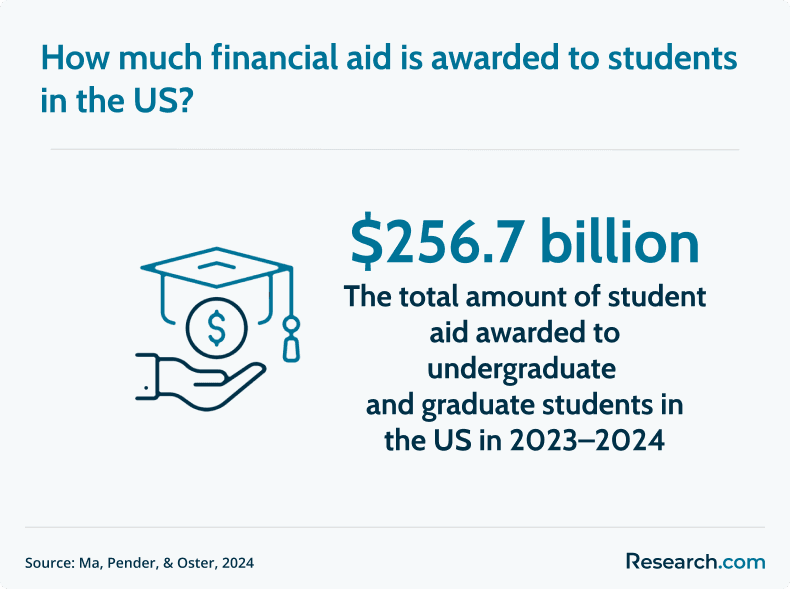
The graphic below shows that in 2023–2024 U.S. undergraduate and graduate students received $256.7 billion in student aid. That figure highlights the scale of available funding, but individual eligibility depends on your program, enrollment status, FAFSA results, employer policies, and benefit history.
What are the prerequisites for enrolling in an online MSN in care coordination program?
Admission requirements vary, but online MSN care coordination programs usually expect applicants to prove that they are licensed nurses prepared for graduate-level study. Before applying, confirm institutional accreditation through official sources and verify the nursing program’s specialized accreditation. Do not assume requirements from unrelated online degrees apply; for example, an online aerospace engineering degree follows a very different admissions and technical preparation model than graduate nursing.
- A BSN from an accredited institution, or eligibility for an RN-to-MSN bridge pathway if the applicant does not already hold a BSN.
- An active, unencumbered RN license that remains valid during enrollment and clinical experiences.
- A minimum cumulative GPA, often around 3.0, to show readiness for graduate coursework.
- Professional recommendations and a personal statement explaining career goals and relevant nursing experience.
- Clinical or professional nursing experience that demonstrates preparation for advanced coordination responsibilities.
- Prerequisite coursework, such as statistics or health assessment, if not already completed.
- Clinical clearance items, including background checks, drug screening, immunizations, and site-specific documentation.
- Comfort using learning management systems, digital communication tools, and electronic health record concepts.
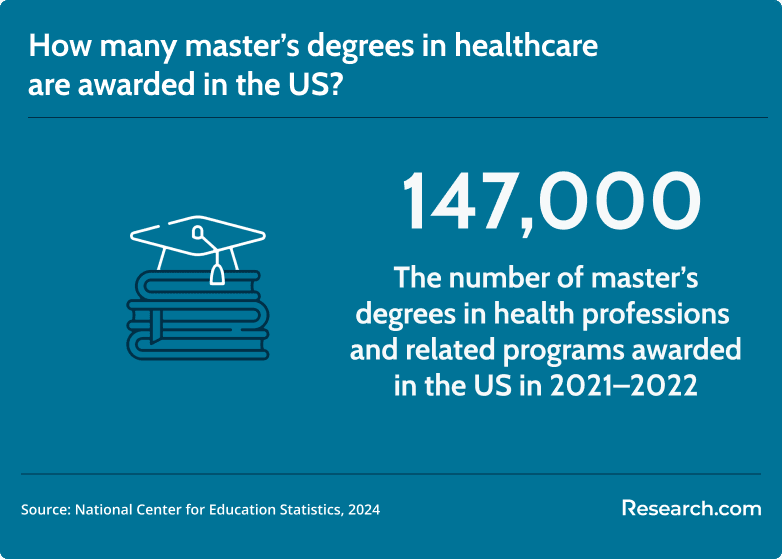
The image below shows 147,000 master’s degrees in health professions awarded in 2021–22. For applicants, that large peer pool is a reminder that a complete application, a clear professional goal, and verified RN readiness can matter as much as meeting the minimum requirements.
What courses are typically in an online MSN in care coordination program?
An online MSN in care coordination usually combines advanced nursing core courses with specialty work in patient transitions, population health, data use, leadership, quality improvement, and interprofessional collaboration. Nurses comparing related advanced credentials, such as an online adult-gerontology primary care NP graduate certificate, will notice some overlap in patient-centered care, informatics, and leadership, although NP certificates are built around different clinical practice outcomes.
| Course area | What you learn | Why it matters in care coordination |
| Care Coordination Leadership | How to design projects, align stakeholders, and guide change | Care coordinators often lead across departments without direct authority over every team member |
| Evidence-Based Practice & Population Health | How to apply research to improve outcomes for communities and patient groups | Population-level thinking helps identify gaps before patients fall through the cracks |
| Health Informatics / Data-Driven Decision Making | How to use EHRs, reporting tools, and analytics in care planning | Data supports risk stratification, follow-up planning, and communication across settings |
| Quality Improvement | How to measure performance and redesign processes | Coordination work often targets safer discharges, fewer errors, and smoother transitions |
| Ethical and Legal Issues in Coordination | How to handle privacy, consent, patient rights, and professional standards | Coordinators frequently manage sensitive information across multiple providers |
| Interprofessional Collaboration & Communication | How to work with physicians, social workers, pharmacists, therapists, payers, and families | Clear communication is central to preventing duplicated services and missed follow-up |
| Healthcare Policy and Systems | How financing, regulation, and organizational structures affect care delivery | System awareness helps nurses design realistic coordination processes |
| Practicum / Capstone | How to apply graduate learning to a real healthcare problem | Employers value evidence that you can translate coursework into practice improvement |
The resume-skill breakdown below shows why these courses matter. Leadership, informatics, quality improvement, and communication coursework can strengthen practical competencies such as patient focus, data collection, EMR use, service orientation, and cross-team coordination.
What types of specializations are available in an online MSN in care coordination programs?
Care coordination can appear as a dedicated MSN track, a case management specialization, a population health concentration, or part of a nursing leadership pathway. Understanding the broader types of master’s degrees in nursing can help you avoid choosing a track that sounds similar but leads to a different outcome.
| Specialization | Best for nurses who want to... | Common work settings |
| Population Health | Improve outcomes for communities, patient panels, and at-risk groups | Health systems, public health organizations, accountable care programs |
| Nursing Informatics | Use EHRs, data, and workflow tools to improve coordination | Hospitals, health IT teams, quality departments |
| Case Management | Coordinate services, referrals, coverage, follow-up, and patient advocacy | Hospitals, insurers, rehabilitation centers, community health programs |
| Quality Improvement & Patient Safety | Reduce errors, improve handoffs, and redesign care processes | Quality departments, patient safety teams, clinical operations |
| Healthcare Leadership / Health Systems Management | Lead teams, programs, and organizational coordination initiatives | Hospitals, managed care organizations, health system administration |
| Geriatric Care Coordination | Support aging adults with multiple chronic needs and care transitions | Nursing facilities, home health, primary care, senior care programs |
| Chronic Disease Management | Build proactive care plans for long-term conditions | Primary care, specialty clinics, population health teams |
| Transitional Care | Improve hospital-to-home handoffs and follow-up | Hospitals, discharge planning teams, home health services |
| Behavioral Health Integration | Coordinate physical and mental health services | Community health, integrated clinics, managed care |
The chart below shows leading industries hiring care coordination and health services managers. Use it to match your specialization to likely employers, such as hospitals, outpatient centers, nursing facilities, and home health services.
How do you choose the best online MSN in care coordination program?
To choose the best online MSN in care coordination, start with fit and verification rather than marketing language. A strong program should help you reach a specific career goal, meet recognized nursing education standards, and support you through the practical parts of online graduate study.
- Confirm nursing accreditation. Look for CCNE or ACEN accreditation, and separately verify the university’s institutional accreditation.
- Check whether the track truly matches care coordination. Some programs use related labels such as population health, case management, nursing leadership, or health systems administration. Review the actual courses and practicum expectations.
- Ask how clinical or practicum placement works. Find out whether the school helps secure sites, whether you must find your own preceptor, and whether your state is eligible.
- Calculate total cost, not just tuition. Add fees, books, software, clinical clearance costs, and the financial impact of reducing work hours.
- Compare pacing honestly. A 12-month option may not be realistic if you work full-time nights, rotate weekends, or have caregiving responsibilities.
- Review student support for online learners. Advising, writing support, technical help, library access, and career coaching can affect completion.
- Look for outcome transparency. Ask about graduation rates, employment outcomes, alumni roles, practicum sites, and employer partnerships where available.
- Clarify your entry route. If you are not yet a nurse or do not hold the expected background, compare options such as direct-entry MSN programs online, RN-to-BSN routes, or RN-to-MSN bridge pathways.
Questions to ask before applying
| Question | Why it matters |
| Is the nursing program CCNE or ACEN accredited? | Accreditation affects employer confidence, academic quality, and future education options. |
| Will the program authorize enrollment in my state? | Online nursing programs may have state-specific restrictions for clinical experiences. |
| Who is responsible for finding practicum sites and preceptors? | This can be the biggest hidden challenge for online students. |
| Does the curriculum prepare for care coordination, case management, or population health roles? | Similar-sounding MSN tracks may have different career outcomes. |
| What is the total estimated cost through graduation? | Per-credit tuition alone can understate the true price. |
| Can I attend part-time without losing access to required courses? | Course sequencing can affect how long you remain enrolled. |
| What roles have recent graduates moved into? | Alumni outcomes can show whether the program aligns with your goals. |
Common mistakes to avoid
| Mistake | Why it causes problems | Better approach |
| Choosing a program only because it is fast | Accelerated pacing can become unmanageable for full-time nurses | Match pace to your work schedule and clinical requirements |
| Ignoring accreditation | Employers and future schools may not recognize the credential as expected | Verify institutional and nursing accreditation before applying |
| Looking only at tuition per credit | Fees, terms, and credit counts can change the total price | Build a full cost estimate through graduation |
| Assuming online means no clinical component | Most graduate nursing programs still require applied practice experiences | Ask how practicum hours are completed in your area |
| Confusing care coordination with APRN preparation | Care coordination tracks generally do not lead to nurse practitioner licensure | Choose an NP pathway if your goal is direct advanced clinical practice |
| Relying only on rankings | A highly ranked school may not fit your schedule, budget, or state | Use rankings as a shortlist, then verify fit with admissions and program advisors |
What career paths are available for graduates of an online MSN in care coordination programs?
Graduates of online MSN care coordination programs often move into roles that combine clinical knowledge, communication, resource management, quality improvement, and leadership. Career progress is usually gradual: many nurses begin in direct coordination or navigation roles, then advance into program management or health services leadership.
| Career stage | Possible role | Typical focus |
| Entry or transition role | Nurse Care Coordinator / Nurse Navigator | Individual care plans, referrals, patient education, and transitions between providers |
| Experienced coordinator | Clinical Nurse Coordinator / Senior Care Coordinator | Program workflows, complex cases, team communication, and patient flow |
| Supervisor | Case Management Supervisor / Senior Case Manager | Oversight of care managers, quality checks, and continuity across patient groups |
| Manager | Care Coordination Manager / Population Health Manager | Department-level strategy, metrics, staffing, and cross-functional coordination |
| Director | Director of Care Coordination / Director of Case Management | Organizational initiatives, policy implementation, and interdisciplinary leadership |
| Executive pathway | VP of Care Management or Chief Nursing Officer | System-level strategy, resource planning, executive accountability, and care outcomes |
Advancement depends on experience, employer structure, leadership ability, and the scope of the role. The chart below compares 2024–2025 average annual wages for selected nursing roles and shows Clinical Nurse Coordinators earning nearly $100K, slightly above registered nurses and well above nursing instructors.
What is the job market like for graduates of online MSN in care coordination programs?
Graduates with an MSN degree in care coordination enter a healthcare environment where organizations are trying to manage complex patient needs, reduce fragmented care, improve outcomes, and use resources more efficiently. Care coordination skills are relevant in hospitals, outpatient systems, managed care organizations, accountable care models, nursing facilities, home health, and community-based programs.
One major advancement target is medical and health services management. The U.S. Bureau of Labor Statistics projects Medical and Health Services Managers to grow 29% from 2023 to 2033, much faster than average, and reports a median annual wage of $117,960 in May 2024. The same BLS occupational profile for Medical and Health Services Managers explains that demand is tied to the need to plan, direct, and coordinate healthcare services.
Data USA reported a U.S. workforce of roughly 755,712 for these roles in 2023. That does not mean every MSN care coordination graduate will become a health services manager, but it does show the scale of the management and coordination labor market connected to healthcare delivery.
What current trends are shaping online MSN care coordination programs?
Care coordination education is changing because healthcare delivery itself is changing. Online MSN programs increasingly emphasize digital care tools, data literacy, virtual collaboration, and system-wide thinking. Nurses entering these programs should expect more attention to telehealth, electronic health record workflows, quality dashboards, interdisciplinary communication, and population health metrics.
Artificial intelligence and automation are also affecting care coordination work. AI tools may help identify high-risk patients, flag gaps in follow-up, support documentation, and assist with resource planning. However, these tools do not replace nursing judgment. Coordinators still need to evaluate patient context, communicate with families, advocate for services, and manage ethical and privacy concerns.
Employer expectations are also becoming more outcomes-focused. Nurses in coordination roles may be asked to demonstrate impact on handoffs, avoidable utilization, patient education, equity, chronic disease follow-up, or discharge planning. Programs that include analytics, quality improvement, and applied capstone projects may better prepare students for that environment.
What are the future trends in online MSN in care coordination programs?
Future online MSN care coordination programs are likely to keep expanding virtual simulation, telehealth coursework, informatics, and healthcare analytics. More programs may also partner with health systems so students can complete practical projects tied to real care delivery problems. The most valuable curricula will be those that connect technology with patient-centered decision-making rather than treating digital tools as a separate skill set.
Nurses entering the field from earlier academic pathways should plan carefully. For example, students who still need prelicensure preparation may compare accelerated BSN programs in the USA before considering graduate care coordination study, while licensed RNs without a BSN may look at bridge routes that build toward MSN readiness.
Is a bridge program necessary before pursuing an online MSN in care coordination?
A bridge program may be necessary if you are an RN without a BSN and the MSN program requires bachelor’s-level nursing preparation. RN-to-MSN programs can combine missing undergraduate nursing content with graduate coursework, allowing qualified nurses to move toward advanced roles without completing a separate BSN first.
A bridge route is not automatically the best option for everyone. Some nurses prefer to complete an RN-to-BSN first, then apply to a wider range of MSN programs later. If you want a staged path, reviewing options such as the easiest online RN-to-BSN programs can help you compare flexibility, admissions requirements, and workload before committing to graduate study.
| Path | When it makes sense | Trade-off |
| RN-to-BSN, then MSN | You want a step-by-step route and more time to compare MSN options | May take longer than a bridge pathway |
| RN-to-MSN bridge | You know you want a graduate degree and meet bridge admissions requirements | Can be intense because it combines levels of study |
| BSN-to-MSN | You already hold a BSN and want to move directly into graduate care coordination | Requires readiness for advanced coursework and practicum expectations |
| Direct-entry MSN | You hold a non-nursing bachelor’s degree and want to enter nursing through a graduate route | Not the same as a care coordination MSN for already licensed nurses |
References
- Bureau of Health Workforce (HRSA). State of the Health Workforce Report 2024.
- U.S. Bureau of Labor Statistics. Medical and Health Services Managers, Occupational Outlook Handbook.
- U.S. Bureau of Labor Statistics. Occupational Employment and Wages, May 2023: Medical and Health Services Managers.
- Caldwell University. Online Master of Science in Nursing (MSN) – Population Health.
- Capella University. MSN in Care Coordination.
- Chamberlain University. MSN in Population Health.
- Data USA. Medical and Health Services Managers profile.
- Glassdoor. RN Care Coordinator Salary.
- Indeed. Nurse Coordinator Salaries.
- National Center for Education Statistics. Indicator: CTA.
- Nebraska Methodist College. MSN Care Coordinator program.
- Post University / American Sentinel College of Nursing & Health Sciences. MSN Case Management Specialization.
- Purdue University Global. Online Master of Science in Nursing.
- Robert Morris University. MSN Nursing Leadership & Global Health.
- Salary.com. Nurse Coordinator Salary Research.
- Seton Hall University. MSN in Health Systems Administration / MBA.
- Walden University. MSN Nurse Executive specialization.
- Western Governors University. RN-to-MSN Nursing Leadership & Management program.
- Zippia. Nurse Coordinator Salary overview.
Key Insights
- An online MSN in care coordination is best for licensed nurses who want to move into patient navigation, case management, population health, quality improvement, or care coordination leadership.
- Accreditation should be your first filter. Confirm both institutional accreditation and nursing program accreditation before comparing price or speed.
- Program length varies widely. BSN-prepared nurses may finish faster, while RN-to-MSN bridge students and part-time learners should plan for a longer timeline.
- Online programs can be just as credible as campus programs when they are accredited, but clinical placement support is critical. Ask who secures practicum sites.
- Tuition is only part of the cost. Fees, clinical clearance, software, books, and reduced work hours can change the real price of the degree.
- Care coordination is not the same as nurse practitioner preparation. Choose an APRN program if your goal is advanced clinical diagnosis and treatment authority.
- The strongest programs combine leadership, informatics, population health, communication, quality improvement, and applied practicum work.
- Use rankings as a shortlist, not a final answer. The best program is the one that fits your license status, state eligibility, schedule, budget, and career target.
Other Things You Should Know About Online MSN in Care Coordination Programs
Yes. Most programs require 300 to 600 supervised clinical hours, completed in approved settings with a preceptor. Some schools allow part of the experience to be virtual care coordination, but the hours must still meet graduate nursing and state board standards.
2027 online MSN in Care Coordination programs typically require a reliable internet connection, updated web browser, and access to a learning management system. Students may need a microphone, webcam, and specific software for virtual simulations and collaborative projects, as outlined by each institution's guidelines.


