2027 Most Affordable Online RN-to-MSN Degree Programs

Co-Founder and Chief Data Scientist
For registered nurses who want graduate-level career options without stepping away from work, an online RN to MSN program can be a practical bridge. These programs are built for licensed RNs—often those with an associate degree in nursing or nursing diploma—who want to move into advanced practice, leadership, education, informatics, administration, or other specialized roles without completing a separate BSN and MSN one after the other.
Affordability matters because graduate nursing education can vary widely in price, especially when comparing indirect care tracks such as nursing education or leadership with nurse practitioner pathways that require more clinical training. This guide explains what online RN to MSN programs include, how long they take, what they cost, how to compare accredited options, and which affordable programs may fit different career goals.
Quick answer: Is an affordable online RN to MSN degree worth it?
An affordable online RN to MSN degree can be worth it for licensed RNs who want to qualify for graduate-level nursing roles while continuing to work. The strongest candidates are nurses who already know whether they want an advanced clinical role, such as nurse practitioner, or an indirect care role, such as nurse educator, nurse administrator, informatics nurse, or nurse leader. The degree is less useful if the program is not properly accredited, does not support required clinical placements, or does not align with the student’s state licensure rules.
In general, lower-cost RN to MSN programs are more common in indirect care specialties. Nurse practitioner tracks tend to cost more because they include advanced clinical preparation and supervised practice hours. Before enrolling, compare total program cost, accreditation, specialization, clinical placement support, state authorization, transfer credit policies, and whether the program leads to the credential or licensure pathway you need.
What are the benefits of an affordable online RN to MSN degree?
- Work-friendly format. Many online RN to MSN programs use asynchronous coursework, allowing nurses to study around shifts, family responsibilities, and clinical schedules.
- Access to graduate-level nursing roles. MSN preparation can support advancement into nurse practitioner, clinical nurse specialist, nurse educator, informatics, administration, leadership, and public health roles, depending on the track.
- Shorter route than earning two separate degrees. RN to MSN bridge programs are often designed to combine BSN-level transition coursework with MSN-level study, which may reduce duplicate coursework.
- Potential salary growth. Salary outcomes depend on role, state, employer, experience, and specialization, but advanced practice and leadership roles often pay more than staff RN positions.
- Broader program choice. Online delivery lets students compare programs beyond commuting distance, although clinical requirements and state authorization still matter.
What can I expect from an affordable online RN to MSN degree program?
An affordable online RN to MSN program usually combines bridge coursework, graduate nursing core classes, specialization courses, and supervised clinical or practicum experiences. The exact structure depends on whether the program is designed for ADN-prepared RNs, diploma-prepared RNs, RNs with a non-nursing bachelor’s degree, or BSN-prepared nurses entering a traditional MSN pathway.
Program format and flexibility
Most online RN to MSN courses are delivered through a learning management system where students access lectures, readings, assignments, discussion boards, exams, and instructor feedback. Many programs use asynchronous classes, but some include scheduled virtual meetings, live seminars, simulations, group projects, or required campus visits.
Online does not mean self-paced in every case. Students usually complete weekly deadlines, clinical documentation, discussion posts, papers, exams, and practicum requirements. Nurses who work rotating or overnight shifts should confirm whether synchronous sessions are required and whether clinical hours can be arranged near their location.
Curriculum and clinical expectations
Common MSN core areas include advanced nursing theory, evidence-based practice, research methods, leadership, healthcare policy, ethics, population health, quality improvement, and systems-level care. Advanced clinical tracks may also require advanced pathophysiology, advanced pharmacology, and advanced health assessment.
Clinical and practicum requirements remain essential even when coursework is online. Nurse practitioner and other advanced clinical tracks require supervised practice with approved preceptors. Indirect care tracks may include practicums in education, administration, informatics, quality, or leadership settings.
Affordability considerations
Online programs may reduce costs tied to commuting, relocation, parking, or campus housing. However, students should look beyond tuition. Technology fees, clinical placement fees, background checks, immunizations, travel for campus intensives, books, certification exam preparation, and state authorization restrictions can affect the real price.
Where can I work with an online RN to MSN degree?
MSN-prepared nurses work across hospitals, outpatient care, long-term care, specialty practices, public health, education, telehealth, informatics, and healthcare administration. According to the US Bureau of Labor Statistics, California, Texas, Florida, New York, and Pennsylvania have the highest employment levels for RNs.
| Work setting | How MSN-prepared nurses may contribute | Best-fit MSN tracks |
| Hospitals | Lead units, coordinate care, support quality improvement, provide advanced clinical care, or educate staff. | Nurse practitioner, clinical nurse specialist, leadership, administration, education, informatics |
| Primary care clinics | Provide comprehensive patient care, manage chronic conditions, support preventive care, or coordinate care teams. | Family Nurse Practitioner, Adult-Gerontology Primary Care NP, leadership |
| Specialty clinics | Work in areas such as cardiology, oncology, dermatology, psychiatric mental health, pediatrics, or other focused fields. | Specialty NP tracks, clinical nurse specialist tracks |
| Nursing homes and long-term care facilities | Oversee care planning, manage teams, improve quality outcomes, and support complex patient needs. | Adult-gerontology, administration, leadership, education |
| Public health agencies | Support community health programs, disease prevention, health education, and population-level initiatives. | Public health nursing, leadership, education |
How much can I make with an RN to MSN degree?
Salary depends on specialty, location, experience, employer, certification, and scope of practice. According to the Bureau of Labor Statistics, RNs with an MSN who specialize as nurse practitioners earn an average of $128,490 per year, or $61.78 per hour.
More generally, the starting salary for nurses who have completed an MSN program typically hovers around $70,000. With a few years of experience, it can quickly surpass $110,000. Glassdoor reported in 2024 that the average annual MSN salary in the US is $103,577.
For comparison, RNs without an MSN have median pay of $81,220 annually. This does not guarantee that every graduate will earn more after completing an MSN, but it shows why many nurses consider graduate education when targeting advanced practice, leadership, or specialized roles.
- 2027 most affordable online RN to MSN degree programs
- How long does an online RN to MSN program take?
- Online RN to MSN vs. on-campus RN to MSN: what changes?
- How much does an online RN to MSN program cost?
- Financial aid options for online RN to MSN students
- Admission requirements for online RN to MSN programs
- Common RN to MSN courses
- RN to MSN specializations
- How to compare affordable online RN to MSN programs
- Accreditation, state authorization, and regulation
- Challenges of online RN to MSN programs
- Career paths after an online RN to MSN program
- Student support and career guidance
- Online MSN/MBA dual degree options
- Job market for online RN to MSN graduates
- Direct entry MSN programs for non-nurses
- Return on investment for an online RN to MSN degree
- Benefits of pursuing an RN to MSN online
- Healthcare technology in online RN to MSN programs
- Networking and mentorship in online RN to MSN programs
- Step-by-step guide to choosing the right online RN to MSN program
- Key insights
2027 Most Affordable Online RN to MSN Degree Programs
How do we rank schools?
Research.com reviewed affordable online RN to MSN options using a ranking process that considers online delivery, affordability, institutional quality, and available program information. Our approach follows Research.com’s published methodology and draws on data sources such as the Integrated Postsecondary Education Data System, Peterson’s database, College Scorecard, and the National Center for Education Statistics. Students should still verify current tuition, fees, accreditation, state authorization, and clinical placement policies directly with each school before applying.
| Rank | School | Program and tracks | Credits | Tuition | Minimum time or format | Accreditation |
| 1 | Ottawa University-Kansas City Overland Park, KS Private | RN-to-MSN Bridge Program Nurse Educator Specialization Concentration; Nurse Leadership Specialization | 36 | $499 per credit hour | 24 months | Commission on Collegiate Nursing Education (CCNE) |
| 2 | University of Southern Maine Portland, ME Public | RN-to-MSN Nursing Administration and Leadership; Nursing Education | 60 | $443 per credit hour | 24 months | CCNE |
| 3 | Jacksonville University Jacksonville, FL Private | RN-to-MSN Nursing Leadership; Healthcare Quality and Safety; Education; Informatics | Not stated | $325 per credit hour | 18 months; seven-week courses with multiple start dates | CCNE |
| 4 | University of Central Florida Orlando, FL Public | MSN Nursing and Health Care Simulation; Nurse Educator; Nursing Leadership and Management | 31-36 | $327.32 per credit hour (in-state); $1,151.72 (out-of-state) | 16-week terms | CCNE |
| 5 | Rivier University Nashua, NH Private | MSN-Psychiatric Mental Health Nurse Practitioner Psychiatric Mental Health Nurse Practitioner | 46 | $697 per credit; $1,088 per credit for clinical courses | 24 months; fully online with on-campus attendance for three weekends | Accreditation Commission for Education in Nursing (ACEN) |
| 6 | Western Governors University Millcreek, UT Private | RN to MSN Leadership & Management; Nursing Informatics; Nursing Education | 91 | $4,800 per 6-month term | 36-38 months; competency-based model | CCNE |
| 7 | The University of Texas at Arlington Arlington, TX Public | RN to MSN Administration; Education; Family Nurse Practitioner | Not stated | $19,500 | 36 months | CCNE |
| 8 | American College of Education Indianapolis, IN Private | MSN Nurse Administration; Nurse Educator | 55 | $19,775 | 31 months | CCNE |
| 9 | American Public University System Charles Town, WV Public | RN to MSN Nurse Leader; Nurse Educator | 147 | $350 per credit for the first 120 credits (BSN degree); $445 per credit for the remaining 27 credits (MSN degree) | 2 years | CCNE |
| 10 | Liberty University Lynchburg, VA Private | RN to MSN Nursing Administrator; Nursing Educator; Nursing Informatics; Community Health; Health Policy | Not stated | $20,790 | 4 years | CCNE |
Program notes to verify before applying
- Ask whether the listed tuition includes all fees, clinical costs, books, background checks, technology fees, and campus residency costs.
- Confirm whether the program accepts your current RN license state and whether you can complete clinical requirements where you live.
- For nurse practitioner tracks, verify certification eligibility and state licensure alignment before enrollment.
- For competency-based programs, estimate whether your work schedule realistically allows faster completion before assuming a lower total cost.
What online RN to MSN graduates often value most
Students who choose online RN to MSN pathways often point to three practical advantages: the ability to continue working, access to classmates and faculty outside their local area, and immediate application of graduate coursework to current nursing practice. Many also value discussion boards, virtual simulations, online collaboration, and flexible scheduling when they are balancing family, shifts, and clinical requirements.
The strongest experiences tend to come from programs with responsive faculty, clear clinical placement processes, reliable technology, and structured advising. Flexibility alone is not enough; online nursing students still need deadlines, faculty access, mentorship, and transparent expectations.
Key findings
- An online RN to MSN degree program can take about two years to complete, but completion time depends on transfer credits, specialization, enrollment pace, bridge requirements, and clinical scheduling.
- The cheapest online RN to MSN program can cost between $15,000 and $30,000, and these usually involve indirect care specialties.
- The more expensive RN to MSN programs can cost around $60,000 and these pertain to nurse practitioner tracks.
- An active, valid, and unrestricted RN license is typically required for admission to an RN to MSN program.
- According to the U.S. Bureau of Labor Statistics, employment of advanced practice registered nurses is projected to grow 38% from 2022 to 2032.
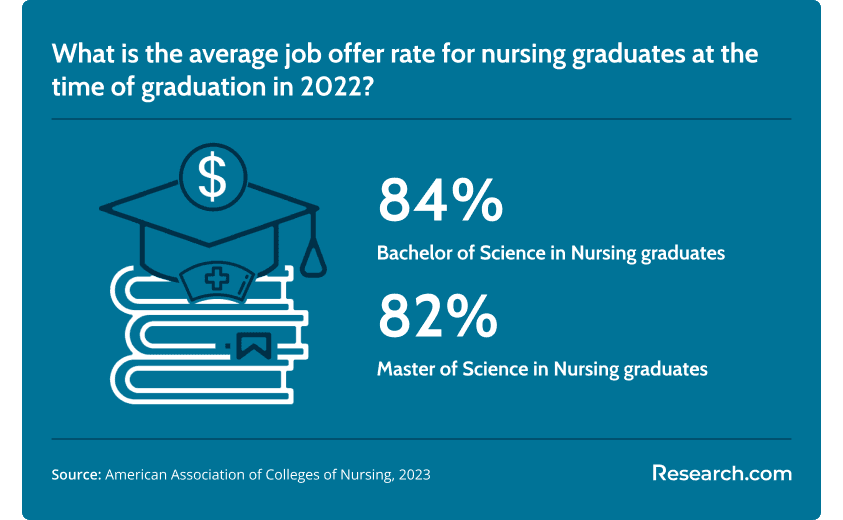
- According to data from the American Association of Colleges of Nursing, MSN graduates have an average job offer rate of 82%.
How long does it take to complete an online RN to MSN degree program?
An online RN to MSN program can take about two years in an accelerated format, while other programs are designed for three years of full-time study or longer if taken part time. The timeline depends on the student’s prior education, transfer credits, whether a BSN is awarded along the way, the chosen specialization, and the number of clinical or practicum hours required.
Students comparing timelines should understand the difference between an RN to MSN bridge and a traditional MSN. RN to MSN programs are generally built for licensed RNs with an associate degree in nursing or, in some cases, a nursing diploma. MSN or BSN-to-MSN programs usually serve nurses who already hold a Bachelor of Science in Nursing. Students looking for lower-cost master’s routes can also compare these options with the cheapest online MSN program lists.
ADN-to-NP pathways may take longer than non-clinical MSN tracks because they prepare students for advanced practice certification and clinical responsibilities. The extra time may be appropriate for nurses who want direct patient care authority, but it is not always necessary for nurses targeting education, informatics, or management roles.
In 2022, more than half of RNs in the U.S. (51.1%) have a BSN as their highest level of nursing education. This is followed by nurses with an ADN (24.3%), and nurses with an MSN (17.9%). The chart below provides additional context on the highest educational attainment of RNs in the U.S.
How does an online RN-to-MSN compare to an on-campus program?
The best choice between online and campus-based study depends on your schedule, location, learning style, clinical needs, and budget. Online programs are often better for working nurses who need flexibility, while campus programs may suit students who prefer face-to-face instruction, physical labs, and a more structured weekly routine.
| Factor | Online RN to MSN | On-campus RN to MSN |
| Learning format | Coursework is usually delivered through online modules, discussion boards, recorded lectures, readings, and digital assignments. | Students attend scheduled classes, labs, seminars, and campus-based activities in person. |
| Best for | Working nurses, rural students, parents, military-affiliated students, and learners who cannot relocate. | Students who want frequent in-person contact, campus resources, and a fixed class schedule. |
| Interaction | Communication happens through video meetings, discussion forums, email, virtual office hours, and group projects. | Students interact through lectures, labs, study groups, clinical preparation sessions, and campus events. |
| Hands-on learning | May include virtual simulations, case studies, telehealth tools, and local clinical placements. Students in online nursing degree programs should verify placement support. | May provide easier access to campus labs, simulation centers, and faculty-supervised in-person practice sessions. |
| Cost | May reduce relocation and commuting costs, though technology fees and clinical travel can apply. Students can also compare affordable online masters options. | May involve higher transportation, housing, parking, and campus-based costs, especially if relocation is required. |
| Clinical placement | Students often need approved placements near their location. Program support varies widely. | Programs may have established local clinical partners, but choices can still be competitive or limited. |
The chart below shows reasons why many MSN applicants are turned away, based on data from the National League for Nursing. One listed reason is lack of classrooms, a constraint that online delivery may help reduce when programs also have enough faculty and clinical capacity.
What is the average cost of an online RN to MSN degree program?
Online RN to MSN costs vary by institution type, credit requirements, residency status, specialization, clinical requirements, and fee structure. According to the National Center for Education Statistics, students pursuing graduate studies pay an average annual tuition of $20,513. Students attending private colleges and universities can expect to pay an average of over $28,000, while students attending public institutions can expect an average of over $12,500.
For RN to MSN programs in the United States, the least expensive options are usually indirect care tracks such as administration, education, and informatics. These programs cost between $15,000 and $30,000. Nurse practitioner tracks tend to be more expensive and can cost around $60,000.
| Cost factor | Why it matters | Question to ask |
| Tuition model | Programs may charge by credit, by course, or by term. | Is the published price tuition only, or does it include required fees? |
| Specialization | NP tracks often cost more than education, leadership, administration, or informatics tracks. | Are clinical course rates higher than non-clinical course rates? |
| Residency status | Public universities may charge different in-state and out-of-state rates. | Do online students pay in-state, out-of-state, or a separate online tuition rate? |
| Clinical requirements | Students may pay for health screenings, background checks, travel, placement services, or site fees. | Who finds clinical placements, and what costs are not included in tuition? |
| Transfer credits | Accepted credits can shorten time and reduce cost. | How many prior credits can transfer, and how are nursing diploma credits evaluated? |
What are the financial aid options for students enrolling in an online RN to MSN degree program?
Online RN to MSN students may qualify for several forms of aid if the school and program meet eligibility requirements. Because graduate nursing programs can be expensive, students should compare aid before committing to a school rather than after receiving the first bill.
- FAFSA. The Free Application for Federal Student Aid is the main starting point for federal aid eligibility, including loans and other aid programs for eligible students.
- Federal Direct Unsubsidized Loans. These loans are available to eligible graduate students and accrue interest from disbursement. Eligibility is not based on financial need.
- Federal Direct Graduate PLUS Loans. Graduate PLUS Loans are designed for eligible graduate students enrolled at least half-time in a qualifying program and require a credit check.
- State grants and nursing workforce programs. Some states support nurses pursuing advanced degrees, especially in shortage areas or public service roles.
- School-based scholarships and grants. Nursing schools may offer scholarships for online graduate students, alumni, employees of partner hospitals, or students in shortage specialties.
- Nursing scholarships and loan repayment programs. National organizations and public agencies may support nurses who commit to service, teaching, or work in underserved areas.
- Employer tuition assistance. Hospitals and healthcare systems may offer tuition reimbursement, scholarship programs, or career-ladder funding for RNs pursuing an MSN.
If your goal is to keep graduate school especially low cost, compare tuition with aid eligibility instead of tuition alone. Students searching for an online masters under 10k should apply the same strategy to nursing: review total cost, available aid, employer benefits, and the career value of the credential.
What are the prerequisites for enrolling in an online RN to MSN degree program?
Admission requirements vary, but most online RN to MSN programs are designed for licensed RNs who have completed previous nursing education and can document college-level coursework. Competitive programs may also review GPA, professional experience, recommendations, personal statements, and readiness for graduate-level study.
| Requirement | What it usually means | Why it matters |
| Associate’s Degree in Nursing (ADN) | Most programs require an ADN. Some accept a nursing diploma with additional bridge coursework. | Determines whether you need BSN-level transition courses before MSN coursework. |
| Current RN licensure | Applicants usually need an active, valid, and unrestricted RN license. | Licensure is essential for clinical participation and graduate nursing progression. |
| Official transcripts | Schools require records from all colleges and universities attended. | Transcripts confirm degree completion, GPA, prerequisites, and transferable credits. |
| Work experience | Some programs consider professional RN experience, especially for advanced practice or leadership tracks. | Experience can strengthen readiness for graduate clinical or administrative coursework. |
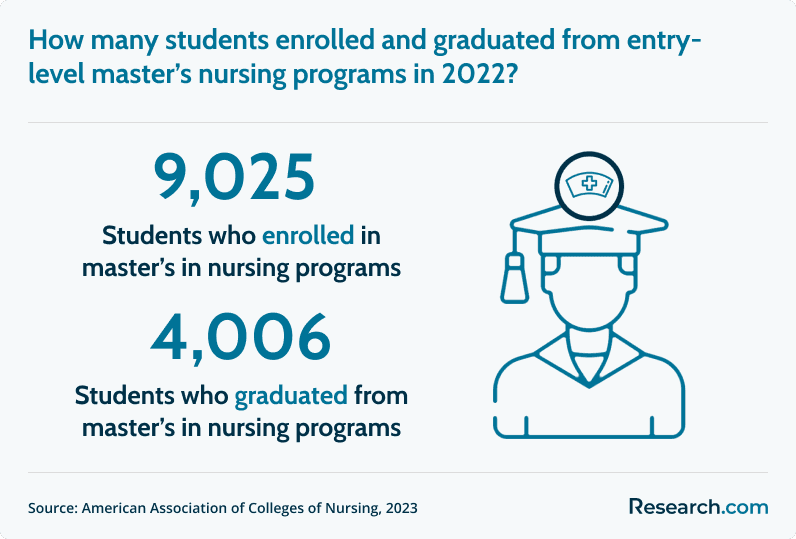
Data from the American Association of Colleges of Nursing show that 4,006 students graduated from entry-level RN to MSN programs in 2022 while 9,025 students were enrolled during the same year. There are nearly 200 RN to MSN programs in the U.S. to date.
What courses are typically included in an online RN to MSN degree program?
Coursework depends on the school and track, but most RN to MSN programs combine bridge content, graduate nursing core classes, specialty courses, and practicum experiences. Students in direct care tracks should expect more advanced clinical coursework than students in leadership, education, or informatics tracks.
- Advanced Nursing Theory. Explores nursing knowledge, evidence-based care, quality improvement, and professional decision-making at the graduate level.
- Research Methods. Builds skills in evaluating studies, analyzing evidence, applying data, and using research to improve nursing practice.
- Leadership and Healthcare Systems. Covers healthcare organizations, policy, ethics, resource management, interprofessional collaboration, and team leadership.
- Advanced Pathophysiology. Examines complex disease processes and how they affect assessment, diagnosis, and treatment planning.
- Advanced Pharmacology. Reviews medication mechanisms, safety concerns, adverse effects, prescribing considerations, and patient-specific medication management.
- Advanced Health Assessment. Often required for nurse practitioner and other advanced clinical tracks to prepare students for comprehensive patient evaluation.
- Clinical practicum or role practicum. Provides supervised experience in a setting aligned with the student’s specialty, such as primary care, psychiatric mental health, education, administration, or informatics.
What types of specializations are available in RN to MSN degree programs?
RN to MSN specializations generally fall into two broad groups: direct patient care and indirect care. Direct care tracks prepare students for advanced clinical responsibilities, while indirect care tracks prepare students for leadership, education, informatics, administration, quality improvement, or population health roles.
| Specialization type | Common options | Best for nurses who want to |
| Direct patient care | Adult-Gerontology Primary Care NP, Family Nurse Practitioner, Neonatal Nurse Practitioner, Pediatric Nurse Practitioner, Psychiatric Mental Health Nurse Practitioner | Assess, diagnose, manage conditions, prescribe when authorized, and provide advanced clinical care. |
| Clinical nurse specialist | Adult Critical Care CNS, Cardiac CNS, Neonatal CNS, Oncology CNS, Wound, Ostomy, and Continence (WOC) CNS | Develop expertise in a patient population or practice area and support patients, families, staff, and systems of care. |
| Nurse anesthetist | Certified Registered Nurse Anesthetist preparation | Administer anesthesia before, during, and after procedures. |
| Nursing education | Nurse educator, clinical educator, academic educator | Teach nursing students, train staff, develop curriculum, and mentor nurses. |
| Nursing informatics | Clinical informatics, health information systems, electronic health record optimization | Use data and technology to improve care processes, documentation, safety, and outcomes. |
| Nursing administration | Nurse leadership, executive leadership, healthcare management | Manage teams, budgets, staffing, quality initiatives, and operational strategy. |
| Public health nursing | Population health, community health, prevention-focused nursing | Work on disease prevention, health education, community programs, and policy advocacy. |
Specialization and work setting can influence earning potential. The chart below shows the difference in annual mean wage for APRNs working in offices of other healthcare practitioners compared with those working in hospitals.
How do you choose the best affordable online RN to MSN degree program?
The best affordable program is not simply the one with the lowest tuition. It is the lowest-cost accredited program that fits your license, state, career goal, schedule, clinical needs, and financial situation. Students comparing affordable MSN programs online should evaluate both academic fit and professional outcomes.
1. Start with the career outcome
- Choose a specialty first. Decide whether you want direct patient care, leadership, education, informatics, administration, or public health.
- Match the degree to the credential. If your goal is an NP role, confirm that the track prepares you for the relevant certification and licensure pathway.
- Avoid overpaying for the wrong track. A low-cost leadership MSN will not prepare you for NP practice; a higher-cost NP program may be unnecessary if you want education or administration.
2. Verify accreditation and approval
- Check nursing accreditation. Look for recognized nursing accreditation such as CCNE or ACEN. Even the cheapest RN to MSN online programs should meet recognized quality standards.
- Confirm state authorization. Online programs may not be available in every state or may not meet every state’s clinical or licensure rules.
- Ask about certification eligibility. This is especially important for nurse practitioner tracks.
3. Compare the full price
- Calculate total tuition. Multiply credit cost by required credits or review total program price if the school lists one.
- Add fees and indirect costs. Include books, technology, clinical compliance, travel, campus visits, exam fees, and lost work time.
- Review transfer policy. Prior nursing credits, diploma credits, and previous bachelor’s coursework can change both time and cost.
4. Evaluate clinical placement support
- Ask who secures sites. Some schools place students; others require students to find preceptors.
- Confirm local availability. Clinical placements can be harder in competitive regions or specialized tracks.
- Review backup plans. Ask what happens if a preceptor withdraws or a site becomes unavailable.
5. Review student support
- Advising. Strong programs offer clear degree maps and proactive academic support.
- Faculty access. Online students should know how quickly faculty respond and how office hours work.
- Career services. Resume support, certification guidance, interview preparation, and alumni connections can improve job readiness.
Is my online RN to MSN program accredited and regulated?
Accreditation is one of the first things to verify. A credible online RN to MSN program should hold recognized nursing accreditation, commonly through the Commission on Collegiate Nursing Education (CCNE) or the Accreditation Commission for Education in Nursing (ACEN). Accreditation helps signal that the curriculum, faculty qualifications, student outcomes, and clinical standards meet accepted nursing education expectations.
Regulatory fit is just as important as accreditation. Online nursing programs must comply with state authorization rules, and advanced practice tracks must align with the student’s intended state of practice. Before enrolling, ask whether the program is approved for your state, whether it meets clinical hour expectations, and whether graduates are eligible for the relevant certification exam. Nurses who already hold an MSN and want to move into family practice may also compare post-master’s options such as a 1 year post master's FNP online pathway.
What are the potential challenges in online RN-to-MSN programs?
Online RN to MSN programs can be convenient, but they also require strong planning. Common challenges include managing graduate coursework around nursing shifts, finding clinical placements, staying engaged in an online environment, and completing practicum documentation on time.
| Common challenge | Why it creates problems | Better approach |
| Assuming online means easier | Graduate nursing work is reading-heavy, writing-heavy, and clinically demanding. | Ask for a sample weekly workload and plan protected study time. |
| Waiting too long to plan clinicals | Preceptors and sites may be limited, especially for NP tracks. | Ask about placement support before applying and start networking early. |
| Ignoring technology expectations | Online exams, simulations, video visits, and EHR exercises may require specific systems. | Review hardware, software, webcam, testing, and internet requirements. |
| Choosing only by tuition | A cheap program may cost more if credits do not transfer or clinical support is weak. | Compare total cost, time to completion, support, accreditation, and licensure fit. |
| Overlooking alternative routes | Some students may need a different entry pathway depending on prior education. | Compare bridge programs with options such as the easiest direct entry MSN programs to get into if you are not already a nurse. |
What career paths are available for graduates of online RN to MSN programs?
Graduates of online RN to MSN programs from nationally accredited online schools can pursue a range of advanced nursing roles. The exact options depend on specialization, certification, licensure, employer requirements, and state scope-of-practice rules.
Advanced clinical roles
- Nurse Practitioner. NPs may provide primary or specialty care, manage chronic conditions, order diagnostic tests, prescribe medications where authorized, and perform selected procedures. Common areas include Adult-Gerontology, Family Practice, Pediatrics, and Psychiatric Mental Health.
- Clinical Nurse Specialist. CNSs work within a patient population, specialty, or care setting to improve outcomes, educate teams, consult on complex cases, and support evidence-based practice.
- Nurse Anesthetist. Certified Registered Nurse Anesthetists administer anesthesia before, during, and after surgeries and procedures.
Leadership, education, and systems roles
- Nurse Educator. Educators teach in academic, clinical, staff development, and continuing education environments.
- Nursing Informatics Specialist. Informatics nurses improve documentation, electronic health record workflows, clinical data use, and technology-supported care processes.
- Nurse Administrator. Administrators manage teams, budgets, operations, staffing, quality initiatives, and organizational policy.
Public health and care coordination roles
- Public Health Nurse. Public health nurses focus on prevention, education, community wellness, disease control, and population-level interventions.
- Case Manager. Case managers coordinate services across providers, settings, insurance systems, and community resources.
If an RN to MSN program is not the right fit, nurses and career changers can compare other affordable graduate or nursing-related pathways, including affordable online AACSB MBA degrees, cheap online MBA business analytics programs, cheap online MBA entrepreneurship programs, and affordable online RN to FNP programs.
How do online RN-to-MSN programs provide effective student support and career guidance?
Strong online RN to MSN programs support students from admission through graduation and career transition. Academic advising helps students understand degree maps, transfer credits, course sequencing, and practicum timing. Faculty mentorship helps students connect coursework to practice, specialty expectations, and professional goals.
Career support may include resume reviews, mock interviews, certification exam planning, alumni networking, job search strategy, and guidance on advanced practice requirements. Students should also check whether technical support is available during evenings or weekends, since many working nurses study outside standard business hours. For broader cost context across nursing education, students can compare resources such as the average cost of LPN program.
Is it possible to earn an MSN/MBA dual degree online?
Yes. Some registered nurses pursue online MSN/MBA dual degree programs when they want advanced nursing knowledge combined with business, finance, strategy, operations, and healthcare management skills. This option may fit nurses aiming for executive leadership, healthcare administration, consulting, policy, or system-level management rather than a purely clinical advanced practice role.
An online dual degree can be more time- and cost-intensive than a standalone MSN, so students should compare the extra business coursework with their career goals. Nurses considering this route can review MSN/MBA dual degree programs online for details on program structure, admissions, curriculum, and possible outcomes.
What is the job market for graduates of online RN to MSN degree programs?
The job outlook for many advanced nursing roles is strong. According to the U.S. Bureau of Labor Statistics, advanced practice registered nurses, including nurse midwives, nurse anesthetists, and nurse practitioners, can expect employment growth of 38% from 2022 until 2032.
Demand is influenced by nursing shortages, access-to-care needs, chronic disease management, an aging population, and healthcare systems’ need for advanced clinical and leadership capacity. Hospitals have also reported high RN vacancy rates. In fact, 62% had registered nurse vacancies of over 7.5%, and less than 25% had fewer RN vacancies than 5%.
Data from the American Association of Colleges of Nursing also indicate that graduates of MSN degrees have an average job offer rate of 82%. Individual outcomes still vary by region, specialty, employer demand, experience, certification, and licensure.
What is the return on investment for an online RN to MSN degree?
The ROI of an online RN to MSN degree depends on the relationship between total program cost, time to completion, lost work hours, financial aid, employer tuition support, and post-graduation career opportunities. A low-cost indirect care MSN may have strong ROI for a nurse moving into leadership or education, while a more expensive NP pathway may make sense if it leads to an advanced practice role the student is prepared and licensed to pursue.
Students should calculate ROI with conservative assumptions. Compare your current salary with likely local salaries for your target role, then subtract total educational costs, loan interest, certification fees, licensing expenses, and any reduced work income during school. Nurses focused on advanced practice can also compare bridge options such as RN to NP online programs.
What are the benefits of pursuing an RN to MSN degree online?
Online RN to MSN programs are designed for nurses who need graduate education to fit around real work schedules. The main benefits are flexibility, access, potential cost savings, and the ability to choose specialized tracks that may not be available locally.
- Flexibility for working nurses. Asynchronous courses, online assignments, and remote faculty interaction can make graduate study more manageable for nurses working full time.
- Less commuting and relocation pressure. Online students can often stay in their communities while completing coursework, although clinical experiences may still require travel.
- More specialization choices. Online delivery can expand access to tracks such as Nursing Administration, Executive Nursing Leadership, Family Nurse Practitioner, Psychiatric Mental Health Nurse Practitioner, Nursing Education, and Nursing Informatics.
- Technology preparation. Online learning often uses virtual simulations, telehealth tools, electronic health record activities, digital case studies, and collaborative platforms that reflect modern healthcare workflows.
- Potentially better alignment with work-life balance. Students exploring advanced clinical options can also compare the least stressful nurse practitioner specialty when evaluating long-term fit.
Alternative Pathways for Non-Nurses: Direct Entry MSN Programs
RN to MSN programs are not intended for people who are not already registered nurses. Individuals with a non-nursing bachelor’s degree who want to enter nursing may need a direct entry MSN, accelerated BSN, or another prelicensure nursing pathway before becoming eligible for advanced nursing roles.
Direct entry MSN programs are intensive because they combine foundational nursing preparation with graduate-level coursework. They usually include substantial clinical training and may prepare graduates for roles such as Nurse Practitioner or Clinical Nurse Leader, depending on the program structure and state requirements. Students looking for faster routes can compare the shortest online direct entry MSN programs for non-nurses, but should confirm licensure eligibility before enrolling.
How are emerging healthcare technologies integrated into online RN to MSN programs?
Modern online RN to MSN programs increasingly use healthcare technology to prepare students for digital clinical environments. Common tools include virtual simulations, telehealth scenarios, electronic health record exercises, remote collaboration platforms, digital case studies, and data-driven quality improvement assignments.
These technologies are especially relevant as nurses work with electronic documentation, remote patient monitoring, clinical decision support, patient portals, analytics dashboards, and virtual care models. Students comparing online programs should ask how technology is assessed, whether simulation tools are included in tuition, and whether the program provides technical support. For broader nursing school access questions, review Where is the easiest nursing school to get into?.
How can networking and mentorship enhance your online RN-to-MSN experience?
Networking and mentorship can make an online RN to MSN program more career-focused. Virtual mentorship, faculty office hours, alumni panels, professional association connections, clinical preceptor relationships, and online peer groups help students learn about certification, job openings, leadership expectations, and specialty practice realities.
Students should ask whether the program offers formal mentorship, alumni networking, virtual career fairs, student nursing organizations, or specialty-specific advising. Nurses who are still deciding between bridge routes may also compare streamlined undergraduate completion options such as an easy RN to BSN program.
How to Choose the Right Online RN-to-MSN Program
Choosing an online RN to MSN program is a professional decision, not just an academic one. The program should help you reach the role you want, meet your state’s requirements, fit your schedule, and make financial sense.
- Confirm your target role. Decide whether you want advanced clinical practice, education, leadership, informatics, administration, public health, or another path.
- Check accreditation. Verify CCNE or ACEN accreditation and confirm that the program is recognized by employers, certification boards, and licensing authorities relevant to your goal.
- Verify state authorization and licensure fit. Ask whether the school can enroll students from your state and whether the track meets requirements where you plan to practice.
- Compare total cost. Include tuition, fees, clinical expenses, technology, books, campus visits, exam preparation, certification, licensing, and loan interest.
- Review transfer credit rules. Ask how ADN, diploma, bachelor’s, and prior graduate credits are evaluated.
- Evaluate the clinical placement process. Find out whether the school provides placements, assists with placements, or requires students to locate preceptors independently.
- Assess flexibility honestly. Compare course length, required live sessions, practicum scheduling, part-time options, and assignment deadlines with your work schedule.
- Review faculty and support. Look for faculty with relevant specialty experience, responsive advising, technical help, career services, library access, and certification guidance.
- Ask about outcomes. Request graduation rates, certification pass rates where applicable, job placement information, and alumni feedback.
- Compare alternatives. If you are not yet an RN or need a different timeline, consider options such as online accelerated BSN programs.
Common mistakes to avoid when choosing an online RN to MSN program
| Mistake | Why it can be costly | What to do instead |
| Choosing the lowest tuition without checking accreditation | Unaccredited or poorly recognized programs may limit certification, licensure, employment, or further education options. | Verify CCNE or ACEN accreditation and confirm recognition with your state board and certification body. |
| Assuming all online programs work in every state | State authorization and advanced practice licensure rules vary. | Ask the school, your state board, and the certification body before applying. |
| Ignoring clinical placement support | Delayed placements can delay graduation and increase costs. | Get written details about placement responsibilities and timelines. |
| Comparing tuition but not total cost | Fees, travel, books, background checks, and clinical compliance can add up. | Build a full program budget before accepting admission. |
| Selecting a specialization too quickly | The wrong track may not lead to the role you want. | Interview nurses in your target specialty and review job postings before choosing. |
| Assuming salary increases are automatic | Pay depends on specialty, geography, certification, employer, and experience. | Research local salaries and hiring demand for your intended MSN role. |
References
- United States Bureau of Labor Statistics. (2024, April 17). Occupational Outlook Handbook: Nurse Anesthetists, Nurse Midwives, and Nurse Practitioners. BLS.
- United States Bureau of Labor Statistics. (2022, September 8). Registered Nurses: Occupational Outlook Handbook. BLS.
- United States Bureau of Labor Statistics. (2024, April 3). Occupational Employment and Wages, May 2023: 29-1171 Nurse Practitioners. BLS.
- American Association of Colleges of Nursing. (2021). Nursing Shortage Fact Sheet. AACN.
- American Association of Colleges of Nursing. (2023b, October). Employment of new nurse graduates and employer preferences for baccalaureate-prepared nurses. AACN Research Brief. AACN research brief.
- Bailey, V. (2022, June 8). 200K to 450K Nursing Shortage Expected by 2025 Without Action. RevCycleIntelligence.
- Buerhaus, P. I., Staiger, D. O., Auerbach, D. I., Yates, M. C., & Donelan, K. (2022). Nurse Employment During The First Fifteen Months Of The COVID-19 Pandemic: Study examines nurse employment trends during first fifteen months of the COVID-19 pandemic. Health Affairs, 41(1), 7985.
- Chan, G., Bitton, J., Allgeyer, R., Elliott, D., Hudson, L., & Moulton Burwell, P. (2021). The Impact of COVID-19 on the Nursing Workforce: A National Overview. OJIN: The Online Journal of Issues in Nursing, 26(2).
- Drexel University. (2023). Online Degree vs On-Campus Degrees. Drexel Online.
- Glassdoor. (2024, January 22). How much does a RN, MSN make? Glassdoor.
- Kurtzman, E. T., Ghazal, L. V., Girouard, S., Ma, C., Martin, B., McGee, B. T., Pogue, C. A., Riman, K. A., Root, M. C., Schlak, A. E., Smith, J. M., Stolldorf, D. P., Townley, J. N., Turi, E., & Germack, H. (2022). Nursing Workforce Challenges in the Postpandemic World. Journal of Nursing Regulation, 13(2), 4960.
- Malas, M. (2022, August 8). What the demand for nurses with master’s degrees means for their salaries. Fortune.
- Morris, G. (2022, March 3). Post-Pandemic Nursing Shortage. What It Means For Aspiring Nurses.
- Stoffle, A. (2023, May 15). Nursing School 411 Welcomes You. Nursing School 411.
- Wilkes University. (2022, May 30). Nursing Shortage Statistics and Solutions: 2022. Wilkes University.
Key Insights
- An affordable online RN to MSN program is most valuable when it is accredited, authorized in your state, aligned with your intended role, and realistic for your work schedule.
- Indirect care tracks such as education, administration, leadership, and informatics are usually less expensive than nurse practitioner tracks, which require more advanced clinical preparation.
- Do not compare programs by tuition alone. Total cost should include fees, transfer credits, clinical expenses, books, technology, campus visits, certification, licensure, and potential lost work time.
- Clinical placement support can make or break the online MSN experience. Ask whether the school finds placements, helps you find them, or leaves the process mainly to you.
- Salary and job outcomes are promising for many MSN-prepared roles, but they are not guaranteed. Local demand, specialization, certification, experience, and state scope-of-practice rules all affect ROI.
- The right program should answer four questions clearly: Can I legally enroll from my state? Will it prepare me for the credential I want? Can I complete the clinical requirements? Is the total cost justified by my career plan?
Other Things You Should Know About Online RN to MSN Programs
Yes. Many employers reimburse tuition for accredited RN-to-MSN programs if the nurse keeps an active RN license and earns passing grades, often a B or better. Some require an employment commitment, proof of enrollment, and yearly reimbursement caps, such as $3,000 to $5,250 under common workplace plans.
Yes, online RN to MSN programs allow registered nurses to bypass the BSN and directly pursue a master’s degree in nursing. These programs are designed specifically for RNs with an associate degree or diploma in nursing, enabling a streamlined educational pathway.
Yes, many affordable RN-to-MSN online programs in 2027 require clinical practice components. These typically include a certain number of supervised hours in a healthcare setting, ranging between 300 and 600 hours depending on the institution's guidelines.