2027 How to Become a Medical Biller & Coder in Toledo, OH: Education Requirements & Certification

Co-Founder and Chief Data Scientist
Becoming a medical biller and coder in Toledo, OH, is a practical healthcare career option for people who want to work in healthcare administration without providing direct patient care. The role matters because hospitals, clinics, physician offices, insurers, and billing companies rely on accurate coding, clean claims, and compliant records to receive payment and maintain patient documentation.
For 2026 career planning, the biggest questions are not just “How do I get started?” but “Which training path is worth the cost, which certification should I pursue, how long will it take, and what jobs can I realistically target in Toledo?” This guide answers those questions using the figures and program details available in the source material, including local education options, certification routes, salary expectations, remote work possibilities, advancement paths, and mistakes to avoid.
Quick answer: How do you become a medical biller and coder in Toledo, OH?
To become a medical biller and coder in Toledo, you generally need a high school diploma or GED, formal training through a certificate, diploma, or associate degree program, and strong preparation for a professional certification exam such as the CPC from AAPC or the CCS from AHIMA. Ohio does not legally require certification for medical billing and coding jobs, but many employers prefer or require it because it signals knowledge of medical terminology, CPT, ICD, HCPCS, claims processing, compliance, and electronic health records.
The fastest training options may take as little as five months, while community college certificates often take 9 to 12 months and associate degree routes typically take two years. Toledo-area wages cited in the source material range from about $17.24 per hour and roughly $41,384 per year on average, with higher pay possible for certified, experienced, specialized, or auditing-focused coders.
Key facts before choosing this career in Toledo
- Toledo’s healthcare employers continue to need billing and coding staff because accurate documentation, insurance claims, compliance, and electronic health records are central to modern revenue cycle operations.
- The average annual salary for medical billers and coders in Toledo is approximately $45,000, with other cited local pay figures showing about $17.24 per hour, roughly $41,384 per year, and total compensation around $44,424 annually.
- Credentials from organizations such as AAPC or AHIMA can make an applicant more competitive, especially for coding-heavy, auditing, outpatient, inpatient, or compliance-related positions.
- Students in the Toledo area can consider local schools such as Davis University, Stautzenberger College, Owens Community College, and Mercy College of Ohio, along with online training options that may offer more scheduling flexibility.
- What education is needed to become a medical biller and coder in Toledo, OH?
- How do I get certified as a medical biller and coder in Toledo, OH?
- How much do medical billers and coders make in Toledo, OH?
- What medical billing and coding specialties pay the most in Toledo, OH?
- Is there a high demand for medical billers and coders in Toledo, OH?
- How long does it take to become certified in medical billing and coding in Toledo, OH?
- How can medical billers and coders advance their careers in Toledo, OH?
- How do evolving healthcare regulations shape medical billing and coding practices in Toledo, OH?
- Should medical billers and coders pursue complementary healthcare certifications in Toledo, OH?
- What resume and interview tips boost job success for medical billers and coders in Toledo, OH?
- What’s the average cost of a medical billing and coding program in Toledo, OH?
- What does a medical biller and coder in Toledo, OH do on a daily basis?
- What are the most in-demand tech skills for medical billers and coders in Toledo, OH?
- Can medical billers and coders work from home in Toledo, OH?
What education is needed to become a medical biller and coder in Toledo, OH?
The minimum entry point is a high school diploma or GED, but most Toledo employers are more likely to consider candidates who have completed structured postsecondary training. That training may be a short certificate, a diploma, or an associate degree, depending on how quickly you want to enter the workforce and how much broader health information education you want.
Certificate and diploma programs are usually the quickest route. The source material notes that programs at Stautzenberger College and Davis University may take about 10 months to a year, while Owens Community College offers a three-semester Medical Coding Certificate that may also connect to an associate degree in Health Information Technology. Associate degree programs usually take two years and tend to include broader healthcare, records, and administrative coursework that may support future advancement.
A good medical billing and coding curriculum should prepare you to read clinical documentation, assign accurate codes, understand reimbursement rules, submit claims, and protect patient information. Common subjects include medical terminology, anatomy, CPT, ICD, HCPCS, insurance billing, claim processing, medical law and ethics, electronic health records, private insurance billing, and hospital billing practices.
| Training option | Typical timeline stated in source material | Best fit | Decision point |
| Certificate | Three semesters at Owens Community College; 9 to 12 months noted for some options | Students who want focused coding preparation without a full degree | Check whether credits can transfer into an associate degree later |
| Diploma | About 10 months to a year at examples such as Stautzenberger College and Davis University | Career changers who want job-focused training in diagnostic coding, procedural coding, and billing | Ask which certification exams the program is designed to prepare you for |
| Associate degree | Usually two years | Students who want a broader health information foundation and more room for advancement | Compare the added cost and time against your target job and long-term career goals |
Local options named in the source material include Davis University, Stautzenberger College, Owens Community College, and Mercy College of Ohio. Before enrolling, confirm whether the school is accredited, whether the curriculum uses current code books, whether instructors have industry experience, and whether career services include resume help, internship guidance, employer connections, or certification exam preparation.
Students can strengthen their training by using current ICD-10-CM and CPT manuals, practicing with coding scenarios, attending workshops when available, and joining professional organizations such as AHIMA or AAPC. These steps matter because coding is a rules-based skill; memorizing terms is not enough if you cannot interpret documentation and apply payer requirements accurately.
How do I get certified as a medical biller and coder in Toledo, OH?
The usual certification path starts with completing a medical billing and coding program, then taking a recognized exam from a professional organization. In Toledo, students often begin with a certificate, diploma, or associate degree from a local or online program that teaches medical terminology, CPT, ICD, HCPCS, electronic health records, compliance, and claims workflows.
Two commonly recognized credentials are the Certified Professional Coder (CPC) from AAPC and the Certified Coding Specialist (CCS) from AHIMA. Ohio does not require medical billers and coders to hold a state license, and clinical hours are not typically required for this administrative career. Still, certification can improve credibility with employers and may help applicants qualify for better coding-focused positions.
- Finish a high school diploma or GED if you have not already done so.
- Choose a certificate, diploma, or associate degree program that teaches current coding systems and billing rules.
- Practice with CPT, ICD, and HCPCS manuals instead of relying only on lecture notes.
- Select a certification target, such as CPC or CCS, based on the jobs you want.
- Use practice exams, instructor feedback, study groups, and career center support before scheduling the exam.
- Apply for entry-level roles such as medical biller, medical coder, coding specialist, billing specialist, or revenue cycle support role.
One practical strategy is to schedule your certification exam soon after completing your coursework. The material will be fresher, and you are less likely to lose momentum. Students who work while studying should also ask instructors about office hours, online forums, and extra coding practice because limited access to updated manuals outside class can make exam preparation harder.
| Certification route | Organization named in source material | What it can signal to employers | When it may make sense |
| CPC | AAPC | Professional coding knowledge and readiness for physician or outpatient-related coding work | You want a widely recognized entry credential for coding roles |
| CCS | AHIMA | Strong coding knowledge for more technical or facility-focused roles | You want to compete for coding positions where employers mention AHIMA credentials |
| CCS, RHIA, or RHIT | AHIMA-related credential paths named in the source material | Preparation for specialized roles such as Outpatient Coder when employers request these credentials | You are aiming beyond basic billing work and toward health information or specialized coding roles |
How much do medical billers and coders make in Toledo, OH?
Medical billing and coding pay in Toledo depends on certification, experience, employer type, specialty, and whether the role is primarily billing, coding, auditing, or revenue cycle management. The cited Toledo average is about $17.24 per hour, or roughly $41,384 per year. With bonuses and additional compensation included, total annual compensation is cited at around $44,424, or about $3,449 per month.
For broader context, the source material lists Ohio’s statewide average at about $20.88 per hour and around $43,430 annually. That means Toledo wages may sit below some statewide figures, but local cost, employer mix, and remote opportunities can affect the true value of an offer.
Entry-level workers in Toledo may start near $17 per hour, especially if they are still building experience or preparing for certification. Nationally, certified professionals are cited as starting at about $19.93 per hour, or $41,450 per year. Certification does not guarantee a specific wage, but it can help candidates compete for roles with stricter coding requirements.
| Pay figure | Amount stated in source material | How to interpret it |
| Average hourly pay in Toledo | $17.24 an hour | A general local benchmark for billing and coding work |
| Average annual pay in Toledo | Roughly $41,384 a year | Useful for comparing full-time roles, but benefits and remote flexibility also matter |
| Total compensation in Toledo | Around $44,424 annually | Includes bonuses or other added compensation cited in the source material |
| Monthly equivalent | About $3,449 | A planning figure, not a guaranteed take-home amount |
| Ohio statewide average | $20.88 per hour and around $43,430 annually | A comparison point for evaluating whether a Toledo offer is competitive |
| National certified starting figure | About $19.93 an hour, or $41,450 per year | A reminder that certification can influence starting opportunities |
To increase earning potential, focus on certification, accuracy rates, denial prevention, EHR proficiency, and specialties such as inpatient coding, outpatient facility coding, physician coding, auditing, compliance, or risk adjustment. For a broader salary breakdown, review Research.com’s guide to medical billing and coding salary requirements.
What medical billing and coding specialties pay the most in Toledo, OH?
The highest-paying opportunities in Toledo are generally tied to specialization, compliance responsibility, and experience. Basic billing roles may focus on claims submission and payment follow-up, while higher-paid coding roles often require deeper knowledge of documentation, payer rules, reimbursement models, and audit standards.
| Specialty | What the work involves | Pay figure stated in source material | Who should consider it |
| Inpatient Hospital Coding | Assigning diagnosis and procedure codes for admitted patients, including work connected to ICD-10-CM and DRG assignment | Experienced inpatient coders in Toledo can reach or exceed $51,420 a year | Coders who are comfortable with complex charts, hospital documentation, and detailed reimbursement rules |
| Outpatient Facility Coding | Coding services from emergency rooms, clinics, and same-day surgery settings using CPT, ICD-10-CM, and HCPCS | Around $24.88 per hour | People who can work quickly and accurately across varied outpatient encounters |
| Professional or Physician Coding | Coding physician visits, consultations, office procedures, and minor treatments | Median annual pay of about $46,267 in Toledo | Coders who want to work with medical practices, group clinics, or billing companies |
| Medical Coding Auditing | Reviewing coded records for accuracy, compliance, and reimbursement risk | Average salaries of $62,633 annually or about $30.11 per hour as of mid-2025 | Experienced coders who enjoy investigation, quality control, and compliance analysis |
| Risk Adjustment Coding | Identifying chronic conditions and other risk factors tied to insurance reimbursement, especially Medicare Advantage and value-based care models | Above the regional average | Coders interested in payer-side work, chronic condition documentation, and value-based reimbursement |
| Compliance and Education Coding | Training staff, leading workshops, reviewing coding quality, and supporting organizational standards | Usually matches or exceeds other coding specialties, depending on experience and employer | Coders who communicate well and want to move into training, oversight, or leadership |
If your goal is higher pay, do not choose a specialty based only on the salary figure. Ask whether you enjoy the documentation type, whether employers require specific credentials, and whether the role demands production quotas, audits, appeals, or staff training.
Is there a high demand for medical billers and coders in Toledo, OH?
Demand in Toledo appears active based on the job figures cited in the source material. As of 2025, there were around 38 open medical coding positions in the area, plus roughly 35 additional openings for related titles such as medical biller, coding specialist, revenue cycle specialist, and billing specialist.
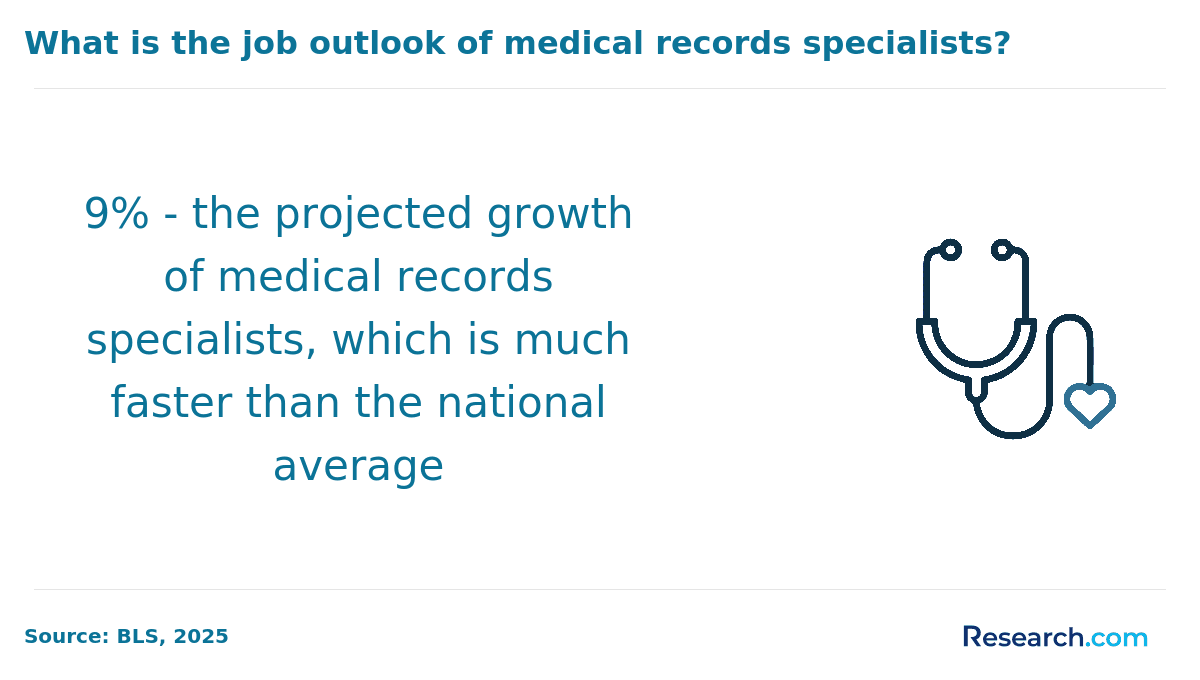
Nationally, employment for medical records and health information specialists, including billers and coders, is projected to grow about 9% from 2023 to 2033. The source material also cites an earlier local expectation of approximately 8% growth over the next decade as of 2023. These projections point to steady need, but local hiring can still vary by employer budgets, remote competition, certification requirements, and healthcare volume.
Compared with larger Ohio cities such as Columbus or Cleveland, Toledo may have fewer total openings. However, local hospitals, clinics, physician offices, outpatient facilities, billing companies, and remote employers can still provide multiple entry points for trained applicants.
Employers commonly look for formal education, familiarity with electronic health records, coding software ability, medical terminology, and certification from AAPC or AHIMA. Some specialized roles, including Outpatient Coder positions, may request credentials such as CCS, RHIA, or RHIT. If you are asking whether the field remains in demand, Research.com’s discussion of the pros and cons of being a medical biller and coder can help you weigh stability against workload, accuracy pressure, and certification expectations.
How long does it take to become certified in medical billing and coding in Toledo, OH?
The time required depends on your program format, study pace, prior healthcare experience, and exam schedule. The source material lists training timelines ranging from as little as five months to just under a year for faster certificate or diploma routes, while associate degree paths usually take two years.
Owens Community College offers a Medical Coding Certificate that takes around 9 to 12 months across three semesters. Stautzenberger College has an online diploma designed for completion in 10 months. Mercy College of Ohio offers a three-semester program with coding simulations. U.S. Career Institute provides a self-paced online option that some students complete in as little as five months.
| Program example | Timeline stated in source material | Format or feature | Best for |
| Owens Community College | Around 9 to 12 months across three semesters | Medical Coding Certificate with a more traditional structure | Students who want local academic support and a pathway that may connect to further study |
| Stautzenberger College | 10 months | Online diploma | Learners who want a relatively fast, career-focused program |
| Mercy College of Ohio | Three semesters | Program with practical coding simulations | Students who want structured practice before certification exams |
| U.S. Career Institute | As little as five months | Self-paced online program | Highly self-directed students who can study consistently without a fixed classroom schedule |
To finish faster, choose a program with a clear certification-prep sequence, set weekly study targets, use practice exams, and avoid long gaps between coursework and the exam. If cost is a concern, compare schools that may support aid or payment options, including programs discussed in Research.com’s guide to medical billing and coding online schools with financial aid.
How can medical billers and coders advance their careers in Toledo, OH?
Advancement usually comes from moving beyond basic claim entry into specialized coding, auditing, compliance, denial management, revenue cycle management, training, or health information roles. In Toledo, that may mean starting as a biller or coding assistant, earning a credential, gaining experience with EHR and payer systems, and then pursuing more complex roles in hospitals, outpatient facilities, physician groups, insurers, or billing companies.
- Earn an advanced or specialized credential. CPC and CCS can be starting points, while later credentials may support auditing, risk adjustment, compliance, or health information work.
- Build a measurable accuracy record. Employers value coders who reduce denials, catch documentation issues, and maintain compliance under changing rules.
- Learn the revenue cycle. Understanding registration, eligibility, coding, billing, payment posting, denials, appeals, and collections can prepare you for supervisory work.
- Move into auditing or education. Experienced coders who can explain guidelines clearly may qualify for training, quality review, or compliance roles.
- Consider adjacent healthcare careers carefully. If you want a clinical or medication-focused role instead of administrative coding work, compare the requirements in Research.com’s guide on how to become a pharmacist in Toledo.
The best advancement plan is specific: choose a target role, identify the credential employers request, and build experience in the coding setting that matches that role. A coder aiming for inpatient hospital work needs different preparation than someone aiming for physician coding, billing management, or risk adjustment.
How do evolving healthcare regulations shape medical billing and coding practices in Toledo, OH?
Medical billers and coders in Toledo must work within changing compliance expectations, payer rules, HIPAA privacy requirements, ICD coding updates, and electronic documentation standards. These changes affect how claims are coded, how documentation is reviewed, how denials are handled, and how patient data is protected.
The practical impact is simple: coders who stop learning become riskier hires. Employers need staff who can follow updated code books, protect electronic patient information, recognize documentation gaps, and respond to audits. Staying current through continuing education, AHIMA or AAPC resources, employer training, and workshops can reduce errors and support career growth.
If you are comparing administrative healthcare roles with clinical roles, keep in mind that each path has different regulatory responsibilities. For example, the education and practice expectations described in Research.com’s guide on how to become a nurse practitioner in Toledo are very different from the compliance-focused responsibilities of billing and coding.
Should medical billers and coders pursue complementary healthcare certifications in Toledo, OH?
Complementary certifications can be useful when they support a specific career goal, but they are not automatically worth the cost. A billing and coding professional should first build core competency in coding systems, claims, documentation, compliance, and EHR platforms. After that, additional training may help if it connects to a target role such as auditing, risk adjustment, compliance, patient access, revenue cycle management, or behavioral health billing.
For example, a coder who works with behavioral health services may benefit from understanding how mental health documentation and billing differ from general medical encounters. That does not mean a coder needs to become a counselor, but reviewing related healthcare pathways such as Toledo mental health counselor certification can help clarify how clinical roles, documentation practices, and administrative billing functions intersect.
| Additional training area | When it may help | When to skip it |
| Compliance | You want auditing, quality review, or regulatory oversight responsibilities | You are still learning basic coding and have not passed an entry credential |
| Risk adjustment | You want payer-focused work tied to chronic condition documentation and value-based care | You prefer front-office billing or general claims follow-up |
| Behavioral health billing knowledge | You work with mental health, substance use, or counseling services | Your target employers do not bill for those services |
| Revenue cycle management | You want supervisory or operations roles | You are focused only on coding production roles |
What resume and interview tips boost job success for medical billers and coders in Toledo, OH?
A strong Toledo medical billing and coding resume should show employers that you can code accurately, use current systems, protect patient data, and handle claims without creating compliance problems. Avoid vague statements such as “detail-oriented” unless you support them with concrete coursework, tools, certifications, or results.
- Put certifications near the top. List CPC, CCS, CBCS, RHIA, RHIT, or other relevant credentials if you hold them or are scheduled to test.
- Name the systems and code sets you know. Include ICD-10-CM, CPT, HCPCS, EHR platforms, claims systems, Excel, and billing software when accurate.
- Match the job posting. A physician office coding role, outpatient facility role, and billing specialist job may emphasize different skills.
- Use examples in interviews. Be ready to explain how you would handle a denied claim, unclear documentation, missing insurance information, or a possible HIPAA issue.
- Show ongoing learning. Employers value applicants who understand that coding rules, payer policies, and documentation standards change.
If you have interdisciplinary healthcare training, mention it only when it strengthens the application. For example, knowledge gained from exploring how to become a substance abuse counselor in Toledo may be relevant when applying to organizations that provide behavioral health or substance use services, but it should not replace core billing and coding qualifications.
What’s the average cost of a medical billing and coding program in Toledo, OH?
The cited cost range for medical billing and coding certificate or diploma programs in Toledo and nearby Ohio options is about $3,600 to $7,500. Community college and technical school programs may be on the lower end for in-state students, while out-of-state tuition and private programs can cost more.
The source material notes that in-state tuition at schools such as Belmont College or Cuyahoga Community College usually falls between $3,600 and $4,000, while out-of-state students may pay closer to $7,500. Terra State Community College is cited as offering an online certificate for about $4,442 in-state and $7,000 out-of-state, with completion possible in under a year. Some private online programs may advertise monthly plans around $79 a month, though students should calculate the full cost before enrolling.
| Cost factor | What to check before enrolling |
| Tuition | Compare the full program price, not only the monthly payment or per-credit rate |
| Residency status | In-state and out-of-state tuition can differ significantly |
| Credential level | Certificates and diplomas are usually shorter; associate degrees usually cost more because they take longer |
| Books and code manuals | Ask whether ICD-10-CM, CPT, HCPCS, and other required materials are included |
| Certification exam fees | Confirm whether exam vouchers, practice exams, or review courses are included |
| Online tools and software | Find out whether EHR simulations, billing software, or coding platforms require extra fees |
Cost should not be the only deciding factor. A cheaper program can become expensive if it does not prepare you for certification or if credits will not transfer. A more expensive program may be worthwhile only if it provides strong instruction, current coding practice, career services, and credible employer recognition. For additional program comparisons, see Research.com’s guide to accredited online medical billing schools.
What does a medical biller and coder in Toledo, OH do on a daily basis?
Medical billers and coders translate healthcare documentation into standardized codes and billing information so providers can submit accurate claims. They do not diagnose patients, provide treatment, or make clinical decisions. Their work is administrative, technical, and compliance-focused.
A typical day may include reviewing patient charts, reading provider notes, assigning ICD-10 and CPT codes, checking insurance eligibility, submitting claims, correcting rejected claims, following up on unpaid balances, responding to billing questions, updating electronic health records, and protecting patient information under HIPAA rules.
| Daily task | Why it matters |
| Reviewing medical records | Coders must understand what services were documented before assigning codes |
| Assigning ICD-10, CPT, and HCPCS codes | Accurate coding supports compliant billing and payer reimbursement |
| Verifying insurance and eligibility | Checking coverage before claims submission can reduce rejections |
| Submitting claims | Clean claims help providers receive payment more efficiently |
| Managing denials and appeals | Denied claims often require correction, documentation review, or payer follow-up |
| Maintaining EHR data | Patient records must remain accurate, secure, and accessible to authorized users |
| Answering billing questions | Patients and providers may need help understanding charges, coverage, or claim status |
Work settings in Toledo may include hospitals, clinics, physician offices, dental practices, billing companies, and remote or hybrid teams. The role rewards accuracy and consistency, but it can also involve productivity targets, payer rule changes, and pressure to resolve claims quickly.
What are the most in-demand tech skills for medical billers and coders in Toledo, OH?
Technology skills are now central to medical billing and coding because most employers use electronic records, digital claims systems, secure communication tools, and data-driven workflows. Knowing code sets is important, but employers also need people who can work accurately inside software platforms while protecting patient data.
- Electronic Health Records proficiency: Toledo healthcare employers commonly rely on EHR systems to store and manage patient information, so coders need to navigate charts efficiently.
- Medical coding software skills: Familiarity with ICD-10, CPT, HCPCS, and coding tools supports accurate claim preparation and compliance.
- Data entry and data management: Speed matters, but accuracy matters more because small errors can trigger claim denials or compliance concerns.
- Insurance and claims processing platforms: Electronic claim submission knowledge can help reduce delays and improve reimbursement workflows.
- Microsoft Office skills: Word and Excel remain useful for reporting, tracking, documentation, and administrative communication.
- Telehealth and remote communication tools: As telehealth and remote work expand, secure digital communication has become more valuable.
- HIPAA-aware data security habits: Remote and digital workflows require careful handling of protected health information.
Students comparing programs should ask whether the curriculum includes hands-on software practice, coding simulations, electronic claims workflows, and EHR exposure. If you prefer an online format, Research.com’s guide to online medical billing and coding certificate programs can help you compare options.
Can medical billers and coders work from home in Toledo, OH?
Yes. Medical billers and coders in Toledo can work remotely when the employer allows it and when the role can be performed securely through EHR, billing, and claims systems. Remote and hybrid options have become more common because healthcare organizations increasingly use digital documentation, secure cloud-based billing platforms, and electronic claim submission.
The source material notes remote job listings with pay ranging from $16 to $52 per hour, depending on experience and certifications. That range does not guarantee a specific wage, but it shows that remote roles can vary widely by responsibility level, specialty, employer, and credential requirements.
| Remote work requirement | Why it matters |
| Reliable high-speed internet | Remote coders need stable access to EHR, billing, claims, and communication systems |
| Secure computer and antivirus protection | Patient data must be protected outside the office environment |
| Dual monitors | Many coders find it easier to compare records, code books, and billing screens side by side |
| EHR and billing platform skills | Remote staff must solve routine system tasks without constant in-person help |
| HIPAA compliance knowledge | Working from home increases the need for careful privacy and security habits |
| Independent time management | Remote roles often require meeting deadlines and productivity expectations with less direct supervision |
- Create a dedicated workspace where patient information cannot be seen or overheard by others.
- Keep communication consistent with supervisors, providers, and billing teams.
- Track deadlines, denials, and coding tasks with reliable productivity systems.
- Continue updating certifications and software skills because remote jobs may attract applicants from outside Toledo.
Career perspectives from medical billers and coders in Toledo, OH
- After finishing a medical billing and coding program at the University of Toledo, I was able to move into a steady healthcare administration role in my own community. The practical training helped me understand local billing workflows, and I now support clinics and hospitals by helping records, claims, and payments move more smoothly. The work gives me both stability and a sense that I am contributing to patient care behind the scenes. Zia
- Owens Community College gave me more than coding knowledge. It helped me build confidence, connect with Toledo’s healthcare network, and see how administrative healthcare work can affect access for local patients. I like that this career combines technical accuracy with a real community purpose. Jameson
- Lourdes University helped me build the professional base I needed to grow in Toledo’s healthcare field. Working across urban and suburban healthcare settings has pushed me to become more adaptable, and continuing education has helped me move toward supervisory responsibilities. For me, medical billing and coding has been a practical long-term career choice. Pie
Related Articles for Nearby Cities
- 2027 How to Become a Medical Biller & Coder in Detroit, MI: Education Requirements & Certification
- 2027 How to Become a Medical Biller & Coder in Fort Wayne, IN: Education Requirements & Certification
- 2027 How to Become a Medical Biller & Coder in Cleveland, OH: Education Requirements & Certification
- 2027 How to Become a Medical Biller & Coder in Columbus, OH: Education Requirements & Certification
- 2027 How to Become a Medical Biller & Coder in Cincinnati, OH: Education Requirements & Certification
- 2027 How to Become a Medical Biller & Coder in Indianapolis, IN: Education Requirements & Certification
- 2027 How to Become a Medical Biller & Coder in Pittsburgh, PA: Education Requirements & Certification
- 2027 How to Become a Medical Biller & Coder in Chicago, IL: Education Requirements & Certification
- 2027 How to Become a Medical Biller & Coder in Milwaukee, WI: Education Requirements & Certification
- 2027 How to Become a Medical Biller & Coder in Buffalo, NY: Education Requirements & Certification
Common mistakes to avoid when choosing a medical billing and coding path in Toledo
| Mistake | Why it can hurt you | Better approach |
| Choosing a program without checking accreditation or employer recognition | A low-quality program may not prepare you for certification or hiring expectations | Ask about accreditation, certification pass preparation, current code books, and career outcomes |
| Looking only at tuition | Books, code manuals, exam fees, software, and transfer limitations can change the real cost | Compare total cost, included materials, payment options, and credit transfer policies |
| Assuming certification is optional in practice because Ohio does not require a license | Many employers still prefer or require recognized credentials | Review job postings before selecting a certification path |
| Ignoring hands-on coding practice | Knowing definitions is not enough for exam success or workplace accuracy | Choose programs with coding exercises, simulations, and practice exams |
| Assuming remote work is automatically entry-level friendly | Remote jobs often require independence, EHR skill, and proven accuracy | Build experience, software confidence, and HIPAA-ready home office habits |
| Relying only on salary averages | Pay varies by certification, specialty, employer, remote status, and experience | Compare job duties, benefits, advancement potential, and credential requirements |
Questions to ask before enrolling in a Toledo medical billing and coding program
- Is the school accredited, and is the program recognized by local healthcare employers?
- Which certification exams does the curriculum prepare students for, such as CPC, CCS, or CBCS?
- Are ICD-10-CM, CPT, HCPCS manuals, software access, and exam preparation included in tuition?
- Can credits transfer into an associate degree or health information program later?
- Does the program include EHR practice, claims processing, denial management, and compliance training?
- What career services are available for Toledo-area and remote job searches?
- How long do students usually take to finish, and are part-time or self-paced options available?
- What is the full cost after fees, books, certification exams, and technology requirements?
Key Insights
- Medical billing and coding is a strong fit for people who want healthcare work focused on documentation, claims, compliance, and technology rather than direct patient care.
- In Toledo, the most practical starting routes are certificate, diploma, and associate degree programs, with timelines ranging from as little as five months to two years depending on the credential.
- Ohio does not require state licensure for this field, but certification through AAPC or AHIMA can improve competitiveness and may be expected for many coding roles.
- Average Toledo pay is cited at about $17.24 per hour and roughly $41,384 per year, while specialized roles such as medical coding auditing can pay more based on the figures provided.
- The strongest long-term opportunities are likely to go to professionals who combine coding accuracy with EHR fluency, claims knowledge, HIPAA compliance, and continuing education.
- Before enrolling, compare total cost, accreditation, certification preparation, hands-on software practice, career services, and transfer options—not just tuition or program length.
- Remote work is possible in Toledo, but it favors coders who can work independently, protect patient data, use digital systems confidently, and meet productivity expectations.
References:
- 24/7 Medical Billing Services. Medical Billing Services in Toledo, Ohio (OH). 247medicalbillingservices.com.
- Ambrosio, L. (2023, June 21). A Day in the Life of a Medical Billing and Coding Professional: What to Expect. Ashworth College.
- HealthJob Editors. (2025, March 18). How to become a medical biller and coder in Ohio. healthjob.org.
- Toledo Career Institute. Explore a Career in Medical Coding. ed2go.com.
- U.S. Bureau of Labor Statistics. (2025, April 18). Occupational Outlook Handbook: Medical Records Specialists. BLS.
Other Things You Should Know About How to Become a Medical Biller & Coder in Toledo, OH
To become a medical biller and coder in Toledo, OH, in 2027, you typically need a high school diploma or equivalent. Most employers prefer candidates with a postsecondary certificate or an associate degree in medical billing and coding. Additionally, obtaining certification, such as the Certified Coding Associate (CCA) credential, is often recommended to enhance job prospects.
In 2027, several institutions in Toledo, OH, offer medical billing and coding programs, including Owens Community College and Stautzenberger College. These programs provide foundational knowledge and skills required for certification exams and prepare students for careers in healthcare administration.
In 2027, to become a medical biller and coder in Toledo, OH, obtaining certifications such as Certified Professional Coder (CPC) from the AAPC or Certified Coding Specialist (CCS) from AHIMA is crucial. These certifications demonstrate proficiency and are highly regarded by employers.
Many Toledo employers look for AAPC’s CPC for coding roles or AHIMA’s CCS for hospital coding roles. For billing, the CPB credential is also valued. These exams cover CPT, ICD-10-CM, HCPCS, reimbursement rules, and compliance, and usually require passing one proctored test.