
2027 What Are the Benefits of an MBA in HR

Co-Founder and Chief Data Scientist
Choosing an MBA in HR is usually a career decision, not just an academic one. If you already work in human resources, you may be trying to move from coordinator, specialist, or manager work into strategic leadership. If you come from another business function, you may want a credible path into people operations, talent strategy, or organizational leadership. This guide explains what an MBA in HR can and cannot do, how it compares with other HR graduate degrees, what roles it may support, and how to decide whether the time and cost make sense for your goals.
The appeal is clear: HR managers in the US have a median annual salary of $140,030 in 2024. However, senior HR roles typically require more than experience with hiring, benefits, or compliance. Employers increasingly look for HR leaders who understand finance, strategy, analytics, workforce planning, and organizational change. An MBA in HR is designed to build that broader business perspective while keeping human capital management at the center.
Quick Answer: What are the main benefits of an MBA in HR?
An MBA in HR can help professionals qualify for higher-level human resources roles by combining general management training with HR-focused coursework. It is most useful for people who want to lead HR teams, influence business strategy, manage workforce transformation, or compete for roles such as HR manager, HR director, HR business partner, compensation manager, talent acquisition manager, or people analytics specialist. It may be less necessary for professionals who only want deep technical HR training and do not need the broader MBA curriculum.
Key Things You Should Know About the Benefits of an MBA in HR
- It combines business leadership with HR specialization. Unlike a narrowly focused HR master’s degree, an MBA in HR covers business strategy, leadership, finance, operations, and people management together.
- It can support advancement into management and executive-track roles. Senior HR positions often require strategic decision-making and cross-functional influence, not just knowledge of HR processes.
- It is best suited to early- and mid-career professionals seeking more responsibility. The degree can be valuable for HR specialists, HR generalists, managers, and business professionals moving into people leadership.
- Leadership development is a central advantage. MBA in HR programs typically emphasize organizational influence, team leadership, data-informed decisions, and alignment between workforce strategy and business goals.
- The labor market is broad but competitive. HR manager roles are projected to grow 6% from 2023 to 2033, with 17,400 annual job openings, but outcomes depend on experience, industry, location, and program quality.
- What is an MBA in HR, and how is it different from other HR degrees?
- What career benefits can an MBA in HR provide?
- Who is the best fit for an MBA in HR?
- How does an MBA in HR build leadership skills?
- What jobs can you pursue with an MBA in HR?
- How much can MBA in HR graduates earn?
- What is the job outlook for HR professionals with an MBA?
- How do employers compare an MBA in HR with a master’s in HR?
- Can an MBA in HR lead to executive roles or further study?Compare degree options again
- What should you know about MBA in HR tuition and financing?
- Where is an MBA in HR especially useful?
- What challenges should MBA in HR students expect?
- Which accreditation and ranking factors matter?
- What trends are changing MBA in HR programs?
- How should you choose the right MBA in HR program?
- Is an MBA in HR worth it?
- Should you pursue a doctorate after an MBA in HR?Review MBA value factorsAdditional decision point
What is an MBA in HR, and how is it different from other HR degrees?
An MBA in HR is a graduate business degree with a concentration in human resources. Students usually study core MBA subjects such as finance, marketing, operations, leadership, organizational behavior, and strategic management, then add HR-specific topics such as recruitment, employee relations, compensation, performance management, workforce analytics, and organizational development.
The main purpose of the degree is to prepare HR professionals to connect people strategy with business strategy. That distinction matters. A senior HR leader may need to design retention plans, evaluate compensation budgets, advise executives on restructuring, or use workforce data to guide hiring decisions. An MBA in HR helps build the language and framework for those broader responsibilities.
MBA in HR vs. Master’s in HR: Which is the better fit?
| Degree option | Main focus | Best for | Possible limitation |
| MBA in HR | General business leadership plus HR specialization | Professionals aiming for HR management, HR business partner, director, or executive-track roles | May include fewer advanced technical HR courses than a dedicated HR master’s degree |
| Master’s in human resources | Specialized HR theory, employment practices, compliance, and talent management | Professionals who want deeper expertise in HR functions, policy, and workforce management | May provide less exposure to finance, operations, marketing, and enterprise strategy |
| General MBA | Broad management, strategy, finance, and leadership | Professionals who want flexibility across business functions | May not provide enough HR-specific preparation for specialized people leadership roles |
If your goal is to become a technical HR expert, a specialized human resources degree may be the stronger option. If your goal is to lead HR as a strategic business function, an MBA in HR may fit better because it places HR decisions in the context of revenue, operations, risk, and organizational growth.
MBA vs. HR degrees: what do enrollment trends suggest?
Among prospective business graduate students, full-time MBA programs attract about 45% to 50% interest, compared with 6% for master’s in human resources programs. Specialist programs, including MBAs with a human resources focus, account for about 50% of total master’s enrollment, while general MBA programs represent around 30%. These figures show that many students want both marketable business training and a defined area of specialization.
What career benefits can an MBA in HR provide?
The practical value of an MBA in HR is that it can help professionals move beyond administrative or functional HR work into roles that influence organizational direction. It expands the scope of the traditional human resources job description and duties by adding strategy, financial awareness, leadership, and data-driven decision-making.
Most important benefits of an MBA in HR
- Stronger eligibility for leadership roles. The degree can support advancement into HR manager, HR director, HR business partner, and executive-track positions where business judgment is essential.
- Better understanding of business strategy. MBA coursework helps HR professionals understand how workforce decisions affect budgets, productivity, growth, and risk.
- Improved credibility with senior leaders. HR professionals who can speak the language of finance, operations, and strategy are often better prepared to advise executives.
- Broader career mobility. The combination of business and HR training may help graduates work across industries, from corporate management and consulting to healthcare, technology, manufacturing, government, and education.
- Access to professional networks. MBA cohorts, alumni groups, faculty, and employer partnerships can help students build relationships that support career movement.
- Preparation for workforce change. HR leaders increasingly need to manage hybrid work, analytics, compliance, employee engagement, retention, and organizational transformation.
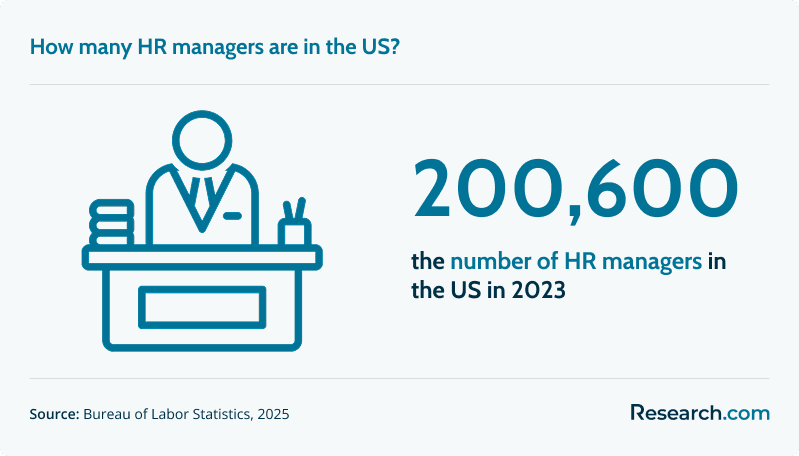
An MBA in HR can be especially useful in a large occupational field. There were approximately 200,600 HR managers in the US in 2023, and senior HR roles increasingly reward professionals who can combine HR knowledge with business leadership.
Who is the best fit for an MBA in HR?
An MBA in HR is not the right choice for every HR professional. It is most valuable when the degree directly supports a move into management, strategic HR, consulting, or executive leadership. Before enrolling, compare the degree with your current role, your experience level, and the type of work you want to do in the next five to ten years.
Professionals who may benefit most
| Candidate type | Why an MBA in HR may help | Decision note |
| Early-career HR professionals | It can provide structure for moving from assistant or coordinator roles into specialist, generalist, or supervisory work. | If you are still exploring the field, review the human resources assistant career path before committing to graduate school. |
| Mid-career HR specialists or managers | It can add strategy, leadership, and business training needed for director-level advancement. | Look for programs with analytics, change management, and executive communication coursework. |
| Business professionals moving into HR | It can bridge business experience with formal HR training. | Choose a program with enough HR-specific content to build credibility in the function. |
| Aspiring HR executives | It can support preparation for HR director, VP of HR, chief people officer, or similar senior roles. | Prioritize leadership development, applied projects, and strong employer or alumni networks. |
| Professionals with informal HR responsibilities | It can formalize experience in hiring, training, workforce planning, or employee relations. | Confirm whether a full MBA is necessary or whether a certificate or HR master’s degree would be more efficient. |
Professionals in healthcare should also compare adjacent leadership degrees. For example, those focused on healthcare operations may want to understand the difference between MHA and MBA before choosing an HR-focused MBA.
How does an MBA in HR build leadership skills?
Senior HR work requires more than knowledge of hiring, benefits, and compliance. HR leaders must diagnose organizational problems, advise executives, manage conflict, use data, lead change, and make people decisions that support business goals. MBA in HR programs are designed to build those capabilities through case studies, team projects, simulations, quantitative analysis, and applied business problems.
Leadership skills commonly developed in an MBA in HR
- Strategic workforce planning. Students learn to connect staffing, succession, retention, and development plans with organizational priorities.
- Business-based decision-making. MBA coursework helps students evaluate HR initiatives through cost, risk, performance, and long-term business impact.
- People management and conflict resolution. Group projects and leadership courses help students practice communication, negotiation, team motivation, and dispute management.
- Talent acquisition and development. HR-focused courses often cover recruitment strategy, employee development, succession planning, and high-potential talent programs. This overlaps with skills discussed in a hiring manager career guide.
- HR analytics. Students may learn how to use metrics related to turnover, engagement, performance, hiring, compensation, and workforce planning.
- Legal and ethical judgment. Employment law, compliance, privacy, discrimination, and workplace ethics are important areas for HR leaders.
- Executive communication. MBA programs often require presentations, written analyses, and group decision-making, which can strengthen communication with senior leaders.
Why specialized graduate business programs are gaining attention
AACSB-accredited schools reported that specialist master’s programs had 308,844 students enrolled in the 2023–24 academic year, compared with 215,789 in general MBA enrollments. This does not mean every professional should choose a specialized program, but it does show strong demand for graduate business education that combines management training with targeted expertise. An MBA in HR fits that pattern by linking enterprise leadership with human capital strategy.
What jobs can you pursue with an MBA in HR?
An MBA in HR can prepare graduates for roles that require both HR knowledge and business judgment. The strongest opportunities usually depend on prior work experience. A graduate with several years in HR may be positioned for management or business partner roles, while someone new to HR may still need to build functional experience before moving into leadership.
Common roles for MBA in HR graduates
| Role | Typical responsibilities | Why the MBA in HR can help |
| Human Resources Manager | Oversees HR operations, employee relations, recruitment, performance management, and compliance. | Combines people management with budgeting, strategy, and policy leadership. |
| HR Director | Sets HR strategy, manages senior HR staff, and advises leadership on workforce priorities. | Requires cross-functional influence and long-term organizational planning. |
| HR Business Partner | Works with business units to align hiring, talent, performance, and workforce decisions with operational goals. | Uses both HR expertise and business fluency. |
| Compensation Manager | Designs and manages pay structures, benefits, incentives, and compensation policies. | Requires analytical, financial, and compliance knowledge. |
| Talent Acquisition Manager | Leads recruiting strategy, employer branding, hiring processes, and talent pipelines. | Links hiring plans to growth, workforce needs, and competitive labor markets. |
| HR Consultant | Advises organizations on HR strategy, compliance, transformation, and talent systems. | Requires problem-solving, client communication, and broad business understanding. |
| Learning and Development Manager | Builds employee training, leadership development, and upskilling programs. | Connects employee capability-building with organizational performance. |
| People Analytics Specialist | Uses workforce data to guide hiring, retention, engagement, and performance decisions. | Benefits from quantitative business training and HR data interpretation. Professionals in this area may also benefit from understanding what does a systems analyst do. |
Some professionals begin in other fields and move into HR later. For example, someone who started in healthcare support may compare roles such as medical technician and medical assistant before building experience and later pursuing a business degree. If you are exploring that route, review what is the difference between a med tech and a medical assistant before planning a longer education pathway.
How much can MBA in HR graduates earn?
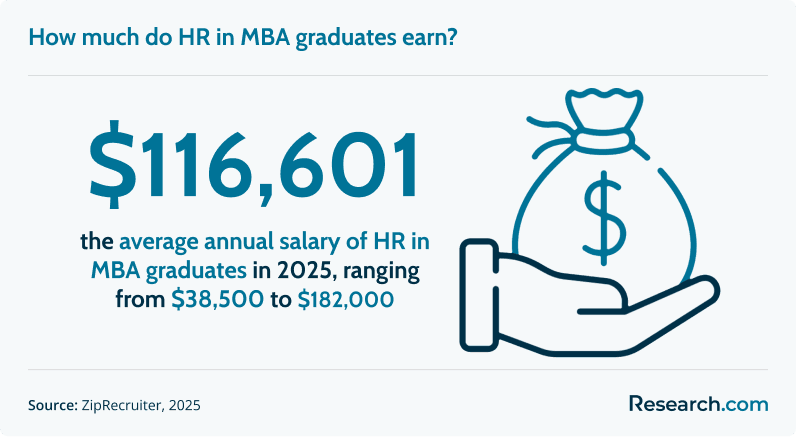
Compensation varies widely because “MBA in HR” is not a single job title. Salary depends on role, location, employer size, industry, prior experience, and whether the graduate moves into management or executive work. In 2025, the average annual salary for HR MBA graduates is approximately $116,601, with reported earnings ranging from $38,500 for entry-level positions up to $182,000 for senior leadership roles.
For context, HR managers in the US have a median annual salary of $140,030 in 2024. Industry can also make a major difference. Corporate management is the top industry employing HR managers, with an average annual salary of $173,010, followed by IT services and consulting at $183,570.
How to think about salary and ROI
- Do not assume the degree alone creates a salary jump. Employers usually weigh experience, leadership record, technical HR ability, and business impact alongside education.
- Compare total program cost with realistic target roles. Estimate whether the roles you are pursuing could justify tuition, fees, books, lost time, and potential debt.
- Look at career services and employer connections. A program with strong recruiting support may offer more practical value than a higher-priced program with limited career guidance.
- Consider your current position. Someone already managing HR functions may see faster returns than someone using the MBA to enter HR for the first time.
What is the job outlook for HR professionals with an MBA?
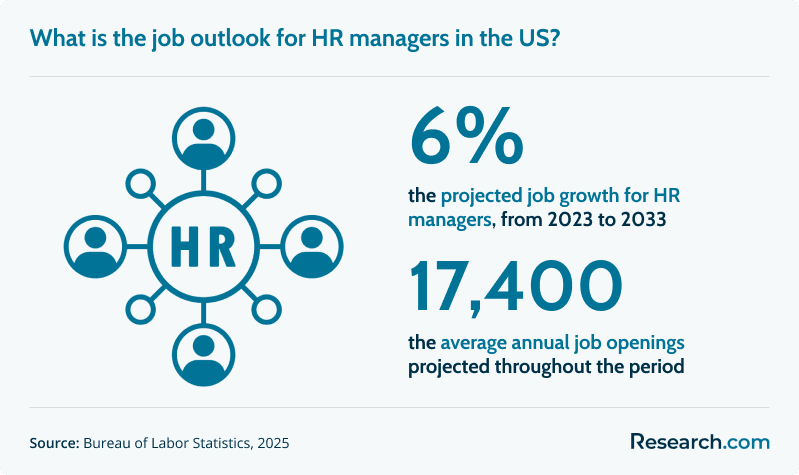
The overall outlook for HR management is steady. Employment of human resources managers is projected to grow 6% from 2023 to 2033, which is faster than the average for all occupations. About 17,400 openings for HR managers are expected each year over the decade.
Several factors support demand for skilled HR leaders: changing workplace regulations, competition for talent, hybrid and remote work practices, diversity, equity, and inclusion initiatives, employee retention challenges, and the growing use of HR analytics. An MBA in HR can help professionals respond to these needs by strengthening business strategy, data interpretation, and leadership skills.
Students who need flexibility should compare reputable online options carefully. For example, affordable AACSB-accredited online MBA programs may be worth reviewing if accreditation, schedule flexibility, and cost control are priorities.
How do employers compare an MBA in HR with a master’s in HR?
Employers do not view all HR graduate degrees the same way. An MBA in HR usually signals broader management preparation, while a master’s in HR usually signals deeper specialization in human resources. Neither is automatically better; the stronger choice depends on the role you want.
How employers may interpret each credential
| Credential | What it may signal to employers | Roles where it may fit well |
| MBA in HR | Business fluency, leadership potential, cross-functional thinking, and strategic HR perspective | HR manager, HR director, HR business partner, VP of HR, HR consultant |
| Master’s in HR | Advanced HR knowledge, technical expertise, policy understanding, and functional depth | Employee relations specialist, compensation specialist, HR compliance, talent management, advanced technical HR roles |
| General business degree | Broad management preparation without a dedicated HR focus | Operations, general management, consulting, or business leadership roles where HR is not the central function |
About 76% of prospective business graduate students consider multiple program types rather than focusing on only one degree. That is a smart approach. Before choosing, compare job descriptions for your target roles and note whether employers request an MBA, an HR-specific master’s degree, HR certifications, analytics experience, labor relations experience, or prior management responsibility.
Questions to ask before choosing between degrees
- Do I want to become a broader business leader who specializes in HR, or a deeper HR technical expert?
- Are my target roles asking for finance, strategy, and executive communication skills?
- Would a shorter certificate, HR certification, or master’s in HR meet my goals with less cost?
- Do I already have enough HR experience to benefit from the MBA at a higher level?
Can an MBA in HR lead to executive roles or further study?
An MBA in HR can support a path toward senior leadership because it helps professionals think beyond HR transactions and focus on organizational performance. Graduates who pair the degree with strong work experience may pursue roles such as HR director, vice president of HR, chief human resources officer, chief people officer, or organizational development executive.
The degree can also serve as a foundation for advanced academic work. Professionals interested in research, teaching, consulting, or large-scale organizational change may later consider an online doctoral degree in organizational leadership. A doctorate is not necessary for most HR management roles, but it can be relevant for people who want to specialize in leadership research, higher education, or executive consulting.
What should you know about MBA in HR tuition and financing?
MBA in HR costs differ by institution, format, residency status, program length, and school reputation. Students should compare total cost, not just tuition. Fees, books, travel, technology requirements, lost work time, and interest on loans can affect the real price of the degree.
Common ways to reduce or manage MBA costs
- Employer tuition assistance. Some employers help pay for graduate education if the degree supports your role or advancement path.
- Scholarships and grants. Check institutional awards, professional association scholarships, and need-based aid.
- Part-time or online study. Flexible formats may allow you to keep working while completing the degree.
- Transfer or prerequisite policies. Ask whether prior graduate credits or waived foundation courses can reduce time and cost.
- Accreditation and outcomes review. A low-cost program is not a good value if it lacks credibility or does not support your career goals.
When comparing price, focus on programs related to your target field. Broad affordability lists, such as a guide to the cheapest English degree online, can be useful for understanding how online program costs vary, but they should not replace MBA-specific cost and accreditation research.
Where is an MBA in HR especially useful?
An MBA in HR can be valuable anywhere organizations need leaders who understand both workforce strategy and business operations. The strongest fit is often found in industries with complex hiring needs, high turnover risks, regulatory concerns, rapid growth, or major organizational change.
Industries and roles where MBA in HR skills may be valuable
| Industry | Why HR leadership matters | Common roles |
| Corporate business | Large companies need HR leaders for succession planning, culture, executive development, and organizational change. | HR Director; Vice President of HR |
| Technology and IT services | Competitive hiring markets make retaining top talent is essential, especially when technical skills are scarce. | Talent Acquisition Manager; People Analytics Specialist |
| Healthcare and pharmaceuticals | These organizations must manage training, compliance, compensation, staffing shortages, and workforce safety. | Learning and Development Manager; Compensation Manager |
| Manufacturing and production | HR leaders often handle labor relations, safety programs, scheduling, compliance, and workforce development. | HR Business Partner; Labor Relations Manager |
| Consulting firms | Clients need help with HR transformation, change management, workforce strategy, and organizational development. | HR Consultant; Organizational Development Specialist |
| Government and public sector | Public agencies require strong policy knowledge, hiring systems, workforce planning, and compliance oversight. | HR Manager; Workforce Planning Specialist |
| Non-profits and education | Mission-driven organizations need HR leaders who can manage limited resources while supporting staff development and retention. | HR Manager; Learning and Development Manager |
In 2023, the largest concentrations of HR managers were in corporate management, with 29,260 employed, and staffing agencies, with 11,180 employed. Other major employers included IT services and consulting with 9,760, business and technology consulting with 8,110, and local government with 7,650.
Healthcare professionals should compare degree paths carefully. For example, nurses considering advanced clinical leadership may find that a DNP is more aligned than an MBA. If that applies to you, review what can you do with a DNP before choosing a business-focused degree.
What challenges should MBA in HR students expect?
An MBA in HR can be useful, but it is not a low-effort shortcut into senior leadership. Students should be realistic about cost, workload, competition, and the need to keep building experience while earning the degree.
Common challenges and better ways to handle them
| Challenge | Why it matters | Better approach |
| Choosing a program based only on brand or ranking | A highly visible school may not offer the HR curriculum, flexibility, or career support you need. | Compare curriculum, accreditation, employer connections, alumni outcomes, and cost together. |
| Underestimating the workload | MBA programs often require group projects, quantitative work, case analysis, and presentations. | Choose a format that matches your work schedule and personal obligations. |
| Assuming the MBA guarantees promotion | Employers still evaluate experience, leadership record, performance, and business impact. | Use the program to build measurable achievements, not just a credential. |
| Ignoring opportunity cost | Tuition is only part of the investment; time away from work or family also matters. | Calculate total cost and compare it with realistic career outcomes. |
| Neglecting ongoing skill development | HR is changing through analytics, AI tools, hybrid work, compliance shifts, and employee experience strategy. | Continue developing analytics, employment law, communication, and change leadership skills after graduation. |
Some professionals may decide that another advanced leadership path fits better. For example, education-focused leaders comparing doctoral routes may want to review accelerated doctoral programs in education online before committing to an MBA-centered plan.
Which accreditation and ranking factors matter?
Accreditation should be one of the first filters when evaluating an MBA in HR. Recognized business accreditation, such as AACSB, can indicate that a program has met defined standards for faculty quality, curriculum, institutional support, and continuous improvement. Accreditation does not guarantee a specific salary or job outcome, but it can affect employer confidence, transferability, and educational quality.
Program selection factors to compare
- Accreditation. Confirm institutional accreditation and look for recognized business school accreditation when possible.
- HR curriculum depth. Review whether the program includes talent management, employment law, compensation, workforce analytics, organizational development, and change leadership.
- Faculty experience. Look for instructors with HR leadership, consulting, analytics, or organizational strategy backgrounds.
- Career outcomes and support. Ask about career coaching, employer partnerships, alumni networks, internship access, and leadership development opportunities.
- Format and pacing. Compare full-time, part-time, online, hybrid, and accelerated options.
- Total cost. Include tuition, fees, books, travel, technology, and financing costs.
- Ranking methodology. Use rankings as one input, not the final decision. Check what each ranking measures.
When reviewing program structure, it can be helpful to compare how different online degrees organize accelerated or flexible learning. For example, an accelerated online bachelors degree mathematics guide may show how pacing and online delivery can vary across academic fields, though MBA-specific accreditation should remain your priority.
What trends are changing MBA in HR programs?
Modern MBA in HR programs are adapting because HR work is becoming more data-driven, technology-enabled, and strategically visible. Programs increasingly emphasize analytics, digital transformation, AI awareness, remote and hybrid workforce management, data privacy, agile leadership, and diversity initiatives.
Trends students should pay attention to
- HR analytics and people data. Employers increasingly expect HR leaders to interpret workforce metrics and use evidence in decision-making.
- AI and automation in HR. Recruiting tools, screening systems, employee engagement platforms, and workforce planning software are changing HR workflows.
- Hybrid work management. HR leaders need policies and leadership models that support distributed teams.
- Employee experience and retention. Organizations are focusing on engagement, development, internal mobility, and culture as retention tools.
- Data security and ethical technology use. HR teams handle sensitive employee data, so privacy and ethical decision-making matter.
- Cross-disciplinary learning. Some professionals complement HR leadership with knowledge in information systems, data, organizational psychology, or knowledge management. Those exploring adjacent fields may review options such as cheap MLIS online, though it serves a different career purpose than an MBA in HR.
How should you choose the right MBA in HR program?
The right MBA in HR is the one that fits your target roles, schedule, budget, learning style, and professional gaps. Do not choose solely because a program is online, affordable, fast, or highly ranked. Compare the complete value.
Step-by-step checklist for choosing a program
- Define your target role. Decide whether you are aiming for HR manager, HR business partner, HR director, compensation leadership, talent acquisition, consulting, or people analytics.
- Check admissions requirements. Review GPA expectations, work experience preferences, test requirements, essays, recommendations, and prerequisite coursework.
- Evaluate the HR concentration. Look for courses aligned with your goals, such as employment law, compensation, analytics, organizational development, labor relations, or strategic talent management.
- Compare delivery format. Decide whether full-time, part-time, online, hybrid, or evening study works best with your job and personal responsibilities.
- Verify accreditation. Confirm institutional accreditation and investigate business accreditation such as AACSB when relevant.
- Ask about career support. Look for coaching, alumni mentoring, networking events, employer partnerships, and leadership development resources.
- Calculate total cost. Include tuition, fees, technology, books, travel, and loan interest.
- Review outcomes carefully. Ask what graduates do after completion, but remember that individual salary and job results are never guaranteed.
Delivery trends to consider
Business schools are expanding digital, hybrid, and part-time learning options. MBA programs are increasingly available in online and hybrid formats, yet about 70% of students in specialist programs still prefer in-person learning. Full-time enrollment remains dominant, accounting for roughly two-thirds of total enrollment across all programs. Your best format depends on how you learn, how much flexibility you need, and whether networking or campus recruiting matters for your goals.
Is an MBA in HR worth it?
An MBA in HR is worth considering if you want to move into strategic HR leadership and need broader business training to get there. It can be a strong fit for professionals who want to influence workforce planning, organizational development, compensation strategy, talent systems, or executive-level people decisions. It may not be the best investment if your goal is a narrowly technical HR role, if you already have equivalent business training, or if the program cost is too high relative to your likely career path.
When an MBA in HR is likely to make sense
- You want to move from HR operations into management or director-level work.
- You need stronger finance, strategy, analytics, and leadership skills.
- Your target employers value MBA-level business training.
- You can manage the cost without taking on debt that does not match your expected career outcomes.
- You plan to use the program’s network, projects, and career services actively.
When another option may be better
- You want deep technical HR expertise more than broad business training.
- You need a faster or lower-cost credential to qualify for a specific HR function.
- You are not yet sure you want to stay in HR leadership.
- Your target role values certifications or experience more than a graduate degree.
- You are pursuing a different professional path, such as teaching or school leadership. In that case, compare fields first, including what's the difference between elementary and secondary education.
Should you pursue a doctorate after an MBA in HR?
A doctorate is not required for most HR management jobs, but it may be useful for professionals who want to teach, conduct research, lead organizational development initiatives, or work in advanced consulting. After an MBA in HR, doctoral study can deepen expertise in leadership, organizational behavior, education, or research methods.
Before applying, be clear about the purpose. If your goal is corporate HR leadership, additional work experience may matter more than another degree. If your goal is higher education, applied research, or senior consulting, doctoral programs may be worth evaluating. Cost-conscious students can compare options such as the most affordable EdD programs online.
What Graduates Say About the Benefits of an MBA in HR
- My MBA program gave me more than HR theory. The case studies and applied projects helped me connect workforce issues to real business problems, and learning with classmates from different industries changed how I approach talent decisions. Ezra
- The leadership training was the biggest benefit for me. I became more confident presenting to executives, negotiating priorities, and leading HR initiatives that affected the broader business. Harold
- I enrolled because I wanted to move out of a technical HR role and into strategic leadership. The mix of finance, operations, and HR courses helped me contribute at the executive level and take part in decisions about culture and growth. Vesper
Key Insights
- An MBA in HR is strongest for professionals who want strategic HR leadership, not just technical HR expertise.
- The degree combines business fundamentals with HR specialization, making it different from a master’s in HR, which is usually more focused on HR functions and policy.
- HR managers in the US have a median annual salary of $140,030 in 2024, but salary outcomes vary by role, experience, industry, location, and employer.
- The average annual salary for HR graduates with an MBA is $116,601 in 2025, with reported salaries ranging from $38,500 to $182,000.
- HR manager employment is projected to grow 6% from 2023 to 2033, with 17,400 annual job openings, indicating steady demand for qualified HR leaders.
- Corporate management employed 29,260 HR managers in 2023, while staffing agencies employed 11,180; other major employers included IT services and consulting with 9,760, business and technology consulting with 8,110, and local government with 7,650.
- Program choice matters. Compare accreditation, curriculum, cost, format, career support, and alumni outcomes before enrolling.
- Do not rely only on rankings or salary averages. The best MBA in HR is the one that matches your career goal, financial situation, schedule, and current experience level.
References:
- Association to Advance Collegiate Schools of Business. (2025). Master’s enrollment trends at AACSB schools: A shifting landscape. Retrieved May 13, 2025, from AACSB.
- Bureau of Labor Statistics. (2025). Human resources managers. Retrieved May 13, 2025, from BLS.
- Bureau of Labor Statistics. (2025). Occupational employment and wages, May 2023: 11-3121 human resources managers. Retrieved May 13, 2025, from BLS.
- Graduate Management Admission Council. (2023, May). Demand for graduate business degrees. Retrieved May 13, 2025, from ERIC.
- ZipRecruiter. (2025). HR MBA salary. Retrieved May 13, 2025, from ZipRecruiter.
Other Things You Should Know About the Benefits of an MBA in HR
To enroll in an MBA in HR program in 2027, candidates typically need a bachelor's degree, GMAT or GRE scores, and professional work experience in HR. Some programs may require specific courses or certifications related to human resource management.
Many business schools set a minimum GMAT score near 600 for full-time MBA admission, but some waive it for applicants with strong work experience or prior graduate study. Admissions committees also review GPA, essays, recommendations, and HR or management experience.


