2027 Most Affordable Online Urban Planning and Development Degree Programs

Co-Founder and Chief Data Scientist
Choosing an affordable online urban planning and development degree is not just a tuition decision. It is a career decision about whether you want to help shape housing, transportation, land use, sustainability, zoning, public policy, and community growth. With the United States projected to reach an urban population of 347.3 million by 2050, cities and regions will need professionals who can balance development pressure with environmental, economic, and social needs.
This guide is for prospective students comparing online and hybrid urban planning programs, working adults considering a career change, and current professionals who want a more affordable path into planning, public administration, community development, GIS, transportation planning, or real estate development. You will learn what these programs teach, how much they cost, how online study compares with campus learning, what career paths are available, what to check before enrolling, and which mistakes to avoid.
Quick answer: Is an affordable online urban planning and development degree worth considering?
An affordable online urban planning and development degree can be worth considering if you want a flexible route into planning-related work and you choose a properly accredited program with strong coursework in land use, transportation, sustainability, GIS, policy, and community engagement. The average annual salary for urban planners in the U.S. is $83,720, and the field is projected to grow 3% through 2034, with an estimated 1,500 new jobs and 3,400 annual openings.
- Best fit: Students interested in cities, public policy, environmental planning, transportation, housing, GIS, or community development.
- Main advantage: Online programs make it easier to study while working, caring for family, or living far from a planning school.
- Main caution: Not every online program offers the same level of fieldwork, GIS access, faculty support, or planning-specific accreditation.
- Career options: Graduates may work in local, state, or federal agencies, consulting firms, nonprofits, real estate development, transportation organizations, and community development groups.
What are the main benefits of an affordable online urban planning and development degree?
- A degree in this field can prepare students for roles such as urban planner, city manager, community development specialist, transportation planner, GIS specialist, policy analyst, and development analyst.
- The average annual salary for urban planners in the U.S. is $83,720, although pay varies by employer, location, experience, and specialization.
- Online study can reduce relocation barriers and give working students more control over when and where they complete coursework.
What can you expect from the most affordable online urban planning and development degree programs?
Affordable online urban planning and development programs are designed to teach the policy, design, analytical, and communication skills used in planning practice without requiring students to relocate or pause their careers. A strong program should go beyond theory. It should help students understand how zoning decisions are made, how transportation networks affect access, how land use shapes housing and economic opportunity, and how planners use data to make recommendations.
Most programs include coursework in urban design, land use planning, environmental sustainability, transportation, public policy, community development, research methods, and geographic information systems. Many also include applied projects, internships, studio-style assignments, or capstone work. These practical components matter because employers often want graduates who can analyze maps, interpret regulations, write planning reports, work with stakeholders, and present recommendations clearly.
Who should choose this degree, and who may want another path?
| Student profile | When an online urban planning degree makes sense | When another option may be better |
| Future public-sector planner | You want to work on zoning, land use, comprehensive plans, housing, transportation, or regional development. | You mainly want administrative leadership without planning-specific coursework; a public administration route may fit better. |
| Working adult or career changer | You need flexibility and can complete fieldwork, projects, or internships locally. | You need frequent in-person studio work, campus networking, or daily faculty interaction. |
| GIS- or data-focused student | The program includes GIS, spatial analysis, mapping, and applied planning projects. | The curriculum is mostly general policy with limited technical training. |
| Real estate or development professional | You want to understand land use regulation, community planning, entitlement processes, and development impacts. | You are primarily focused on finance, investment, or brokerage and may prefer a business or real estate-focused program. |
Where can graduates work?
Urban planning and development graduates can work in both public and private settings. Common employers include city planning departments, county and regional planning agencies, state and federal government offices, transportation authorities, consulting firms, environmental organizations, nonprofit community groups, real estate development companies, and policy research organizations. Work may involve land use studies, transportation plans, housing strategies, environmental impact assessments, public engagement, redevelopment proposals, or GIS-based analysis.
How much can graduates make?
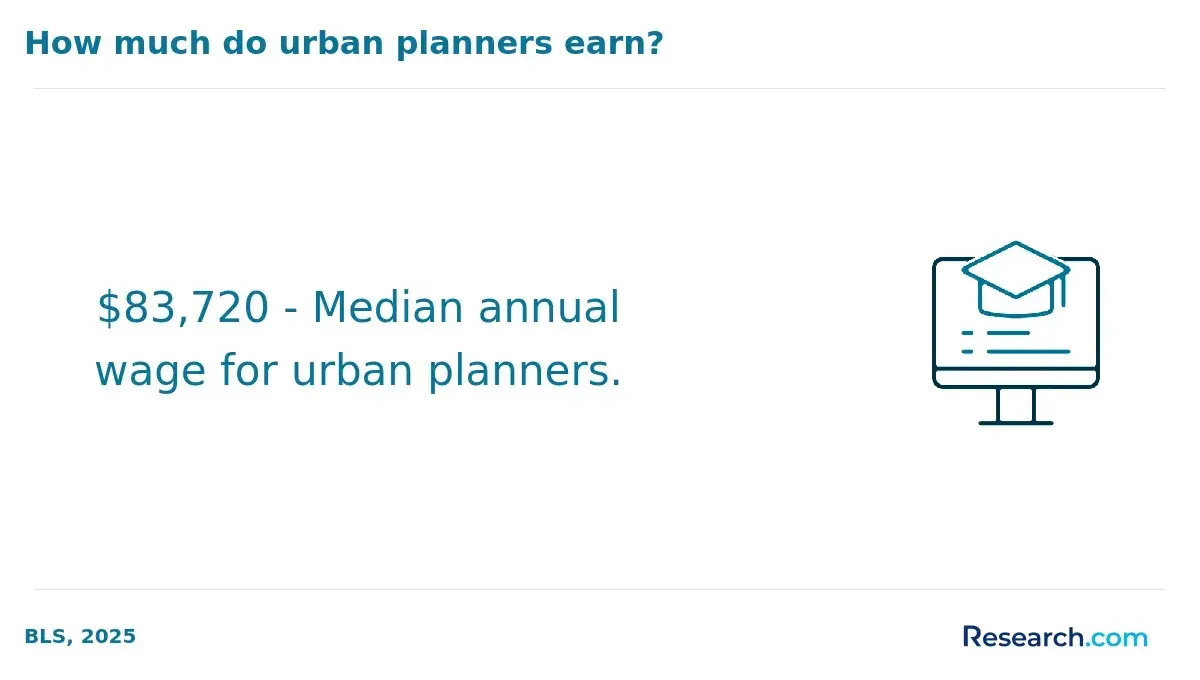
According to the U.S. Bureau of Labor Statistics, the median annual salary for urban and regional planners was $83,720. Pay can differ substantially depending on the employer, geography, industry, credentials, and level of responsibility. The highest earners are often found in specialized sectors, including federal government roles and legal services.
- 2027 most affordable online urban planning and development degree programs
- How long does an affordable online urban planning degree take?
- Online vs. on-campus urban planning programs
- Average cost of affordable online urban planning programs
- Financial aid options for online urban planning students
- Admissions requirements and prerequisites
- Common courses in online urban planning programs
- How online programs provide practical experience
- Urban planning specializations
- How to choose the right affordable online program
- Student support services for online planning students
- Career paths for urban planning and development graduates
- Accelerated pathways that can complement planning study
- Construction management skills and urban planning education
- Job market for urban planning graduates
- Accreditation and reputation
- Networking and industry partnerships
- Urban planning degree vs. 1-year online MBA programs
- Licensing and certification for urban planners
- Emerging trends in urban planning education
- Construction management and career outcomes
- Project management principles in urban planning
- Challenges and common mistakes in online urban planning study
- Key insights
2027 Most Affordable Online Urban Planning and Development Degree Programs
How this ranking was developed
This ranking is based on research and data analysis by the Research.com team using our published methodology. Program and institutional information was reviewed using the IPEDS database, Peterson's database, including its Distance Learning Licensed Data Set, and the College Scorecard for cost and outcome information. Students should still confirm tuition, format, accreditation, and degree requirements directly with each school before applying.
| School and program | Format | Credits | Listed cost | Accreditation listed |
| University of North Texas - Hybrid BA in Urban Policy and Planning | Hybrid | 120 | $27,937 in-state; $40,537 out-of-state | Southern Association of Colleges and Schools Commission on Colleges (SACSCOC) |
| Texas State University - Online BS in Urban and Public Affairs | Online | 120 | $12,220 in-state; $24,520 out-of-state | Southern Association of Colleges and Schools Commission on Colleges (SACSCOC) |
| Portland State University - Online BA/BS in Urban and Public Affairs | Online | 120 | $11,859 in-state; $12,855 Washington Border Discount; $16,827 Western Undergraduate Exchange; $32,019 out-of-state | Southern Association of Colleges and Schools Commission on Colleges (SACSCOC) |
| Arizona State University - Online Bachelor of Science in Urban Planning | Online | 120 | $574 per credit | Higher Learning Commission (HLC) |
| Liberty University - Online Master's in Urban Planning | Online | 36 | $565 full-time; $615 part-time | Southern Association of Colleges and Schools Commission on Colleges (SACSCOC) |
1. University of North Texas - Hybrid BA in Urban Policy and Planning
The University of North Texas offers a hybrid Bachelor of Arts in Urban Policy and Planning for students who want a mix of online, blended, and face-to-face learning. The program emphasizes how cities grow, how communities are planned, and how public policy shapes land use and development. Students complete 33 required courses and 12 additional credits in urban policy and planning.
- Program Length: 4 years
- Required Credits to Graduate: 120
- Tuition (Semester): $27,937 (in-state); $40,537 (out-of-state)
- Accreditation: Southern Association of Colleges and Schools Commission on Colleges (SACSCOC)
2. Texas State University - Online BS in Urban and Public Affairs
Texas State University offers a Bachelor of Science with a major in geography urban and regional planning. The curriculum is built around the geographic and policy skills used to plan communities, cities, and regions. Students study subjects such as land-use planning, transportation management, environmental policy, community development, and geographic analysis.
- Program Length: 4 years
- Required Credits to Graduate: 120
- Tuition (Semester): $12,220 (in-state); $24,520 (out-of-state)
- Accreditation: Southern Association of Colleges and Schools Commission on Colleges (SACSCOC)
3. Portland State University - Online BA/BS in Urban and Public Affairs
Portland State University offers an online Bachelor of Arts or Bachelor of Science in Urban and Public Affairs. The program is structured for students who want an interdisciplinary degree connected to public affairs, urban policy, public health, civic engagement, public administration, criminal justice, economics, politics, urban design, and international studies. It may be especially useful for working adults and transfer students who want flexibility while building a planning-related academic foundation.
- Program Length: 4 years
- Required Credits to Graduate: 120
- Tuition (Semester): $11,859 (in-state); $12,855 (Washington Border Discount); $16,827 (Western Undergraduate Exchange); $32,019 (out-of-state)
- Accreditation: Southern Association of Colleges and Schools Commission on Colleges (SACSCOC)
4. Arizona State University - Online Bachelor of Science in Urban Planning
Arizona State University offers an online Bachelor of Science in Urban Planning. The program focuses on the planning tools and concepts used to build healthier, more equitable, and more sustainable communities. Students study land use, transportation, environmental sustainability, public participation, urban design, problem-solving, and GIS.
- Program Length: 4 years
- Required Credits to Graduate: 120
- Cost per Credit: $574
- Accreditation: Higher Learning Commission (HLC)
5. Liberty University - Online Master's in Urban Planning
Liberty University offers a Master of Public Administration with a concentration in urban planning. This graduate program is designed for students who want to connect public administration, city operations, budgeting, law, economics, public relations, and urban planning. The 100% online format uses mostly 8-week courses and may appeal to working professionals seeking a planning-related master's pathway.
- Program Length: ~2 years
- Required Credits to Graduate: 36
- Cost per Credit: $565 (full-time); $615 (part-time)
- Accreditation: Southern Association of Colleges and Schools Commission on Colleges (SACSCOC)
Key findings for prospective urban planning students
- Affordable online urban planning and development programs can lead to roles in local, state, and federal agencies, private consulting, nonprofit work, community development, real estate development, and policy analysis.
- The field is projected to grow 3% through 2034, adding an estimated 1,500 new jobs and 3,400 annual openings.
- The average annual salary for urban planners in the U.S. is $83,720, with higher earning potential in specialized industries such as legal services and federal government.
- Core coursework commonly includes land use planning, urban design, transportation planning, environmental policy, GIS, and community development.
- Urbanization is a major long-term planning issue. China, India, and the United States are the top three countries with the largest projected urban populations by 2050.
- Online learning is most valuable when the program includes strong advising, practical assignments, local fieldwork options, and access to planning software.
How long does it take to complete the most affordable online urban planning and development degree programs?
Most bachelor's-level online urban planning and development programs take 4 years for full-time students, while master's programs commonly take 1 to 2 years depending on credit load, transfer policies, prior education, and whether the student enrolls full time or part time. The programs listed above include 120-credit bachelor's options and a 36-credit master's option.
| Degree level | Typical completion time | Best for | What can shorten the timeline |
| Bachelor's degree | 4 years | Students entering from high school, transfer students, and career changers without a bachelor's degree | Transfer credits, summer enrollment, prior learning credit, or accelerated course formats |
| Master's degree | 1 to 2 years | Students who already hold a bachelor's degree and want advanced planning, policy, or administration training | Full-time enrollment, relevant prerequisite coursework, or condensed terms |
| Supplemental certificate or short credential | Varies by provider | Professionals who want focused training in GIS, sustainability, project management, or transportation | Choosing a targeted program instead of a full degree |
Students comparing timelines across fields may also want to review other flexible options, including cheap online hospitality management programs or fast online degrees, especially if they are still deciding between planning, business, service management, and public-sector careers.
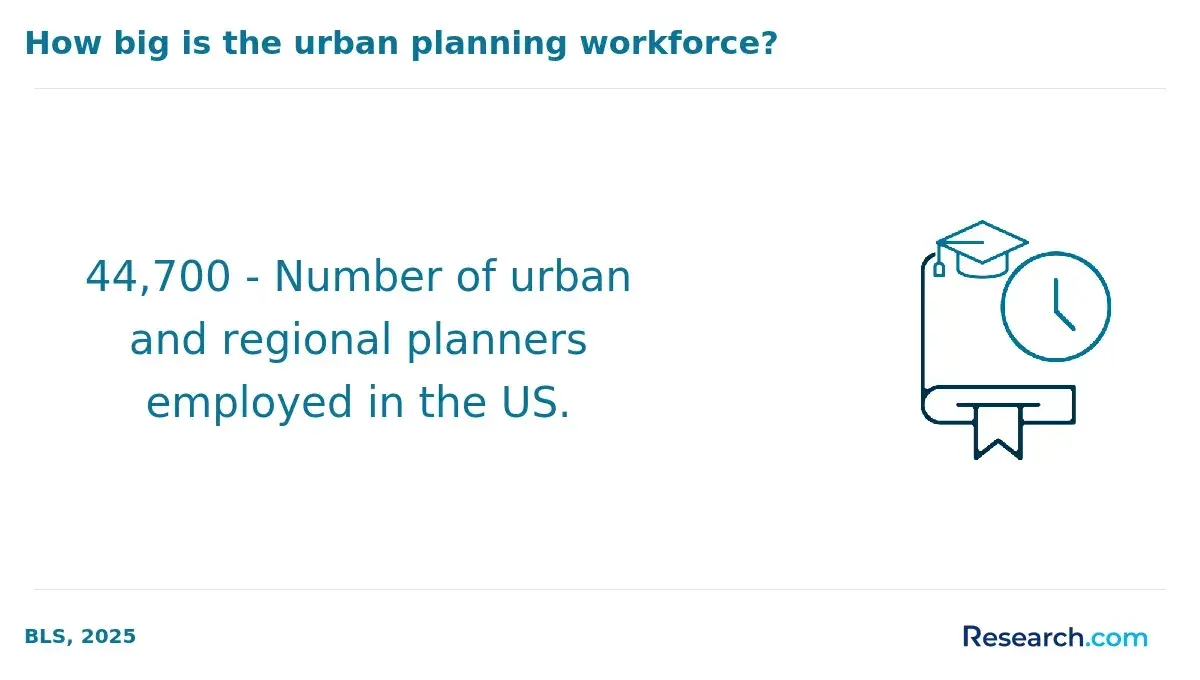
In 2025, there were 44,700 urban and regional planners working in the U.S.
How do affordable online urban planning programs compare with on-campus programs?
Online and campus-based urban planning programs often cover similar academic topics, but the learning experience can differ significantly. Online programs are strongest for students who need scheduling flexibility and can complete applied work in their own communities. Campus programs may be stronger for students who want in-person studios, field trips, local networking, and direct access to planning labs.
| Factor | Online urban planning program | On-campus urban planning program |
| Flexibility | Usually better for working students, caregivers, and students outside major metro areas. | Requires regular campus attendance and a more fixed schedule. |
| Practical experience | Can include local internships, virtual studios, GIS labs, capstones, and community-based projects. | May offer more frequent in-person fieldwork, design studios, and local agency partnerships. |
| Networking | Depends heavily on virtual events, faculty access, cohort design, and internship support. | Often easier to build relationships through campus events, guest speakers, and peer collaboration. |
| Technology access | Students should confirm GIS software access, remote lab availability, and technical support. | Campus labs may provide direct access to specialized software and equipment. |
| Best fit | Self-directed students who need flexibility and can stay organized. | Students who learn best through structured, in-person engagement. |
What is the average cost of the most affordable online urban planning and development degree programs?
Costs vary by school, residency status, degree level, fees, transfer credits, and enrollment pace. Based on the programs discussed in this guide, students may see costs around $569 to $574 per credit hour for some online options, while other schools publish tuition by semester and residency category. Always calculate total program cost rather than comparing only one tuition line.
When estimating affordability, include tuition, fees, books, technology requirements, GIS software access, internship travel, transfer credit limits, and how long you expect to remain enrolled. A program with a lower per-credit price may not be the cheapest if it accepts fewer transfer credits or requires extra semesters.
Students comparing graduate options may also want to examine broader affordability resources such as affordable online masters programs and online masters under 10k lists. These comparisons can help clarify whether planning, public administration, business, or another graduate route offers the better fit.
Return on investment depends on debt, salary, employer, location, and career progress. According to the BLS, the average annual salary for urban and regional planners was $83,720.
What financial aid options are available for online urban planning students?
Students in online urban planning and development programs may qualify for several forms of aid, but eligibility depends on the school, enrollment status, degree level, citizenship or residency status, satisfactory academic progress, and whether the institution participates in federal aid programs.
| Aid option | How it works | What to check before relying on it |
| Federal Student Aid | Students may qualify for grants, loans, and work-study by completing the Free Application for Federal Student Aid (FAFSA). | Confirm the school is eligible for federal aid and that your enrollment status meets aid requirements. |
| Scholarships | Schools, planning organizations, nonprofits, employers, and community groups may offer awards based on merit, need, field of study, or background. | Review deadlines, renewal rules, minimum GPA requirements, and whether awards apply to online students. |
| Grants | Grants generally do not need to be repaid and may be need-based, merit-based, or program-specific. | Ask whether grant funding is available for your degree level and whether it changes if you enroll part time. |
| Student loans | Loans can help cover remaining costs but must be repaid with interest after leaving school or dropping below required enrollment. | Compare federal and private loan terms carefully and borrow only what you can reasonably repay. |
| Employer support | Some public agencies, consulting firms, and employers may help pay for job-related education. | Ask about reimbursement limits, grade requirements, and service commitments. |
Before enrolling, compare the net cost after grants and scholarships, not just published tuition. Also ask whether online students pay additional technology fees and whether fieldwork or software costs are included.
What are the prerequisites for enrolling in affordable online urban planning and development programs?
Admission requirements vary by school and degree level. Bachelor's programs generally require a high school diploma or equivalent and may expect preparation in English, mathematics, social sciences, humanities, and basic research skills. Transfer students should ask how many credits can apply toward the degree and whether prior coursework satisfies general education or major requirements.
Master's programs typically require a bachelor's degree. Related undergraduate fields may include urban studies, geography, public administration, political science, environmental studies, sociology, economics, architecture, real estate, or public policy. Some graduate programs may also review GPA, prerequisite coursework, writing ability, professional experience, recommendations, or a statement of purpose.
If you are comparing planning with other flexible graduate options, you may also want to review cheap executive MBA programs, especially if your goal is management rather than planning practice. For any program, verify admission requirements directly with the institution before applying.
What courses are typically included in online urban planning and development programs?
Urban planning programs combine social science, public policy, design thinking, data analysis, and community engagement. Course titles vary, but strong programs should help students understand how cities function and how planners evaluate trade-offs among housing, mobility, environment, economic growth, and equity.
- Urban Geography and Analysis: Explores how people, infrastructure, land use, and economic activity are distributed across urban areas.
- Urban Planning Theory: Introduces the historical and contemporary ideas that shape planning practice and public decision-making.
- Land Use Planning: Covers zoning, development regulation, comprehensive planning, and the allocation of land for housing, commerce, industry, infrastructure, and public uses.
- Transportation Planning: Focuses on mobility, accessibility, public transit, roadway systems, pedestrian and bicycle planning, and transportation policy.
- Environmental Planning: Examines how environmental protection, sustainability, climate considerations, and natural resources influence development decisions.
- GIS and Spatial Analysis: Teaches students how to use mapping and data tools to analyze locations, patterns, infrastructure, demographics, and planning scenarios.
- Community Development: Addresses neighborhood revitalization, public engagement, housing needs, economic opportunity, and social conditions.
These courses can prepare graduates for work across government, consulting, nonprofit, and development settings. According to the latest BLS data, the top employer of urban and regional planners was local governments with a 32,180 headcount.
How do online urban planning programs incorporate practical experience?
A major question for online planning students is whether they will get enough hands-on preparation. The answer depends on the program. Strong online programs use internships, field assignments, GIS labs, capstones, applied case studies, and virtual collaboration to help students practice planning skills in realistic settings.
Internships and local fieldwork
Many online programs allow students to complete internships or field placements with local planning departments, regional agencies, nonprofits, consulting firms, or development organizations. These experiences may involve land use analysis, public meeting support, transportation research, environmental review, zoning documentation, or community outreach.
Capstone and studio-style projects
Capstone projects ask students to apply planning concepts to a complex real-world problem. A student might prepare a redevelopment concept, analyze housing needs, recommend zoning changes, assess environmental constraints, or design a community engagement strategy. These projects are especially useful when they produce portfolio samples for job applications.
GIS training and mapping assignments
GIS is a core planning tool. Online programs may provide remote access to software, virtual lab tutorials, mapping exercises, and spatial analysis assignments. Before enrolling, ask whether GIS access is included in tuition or requires additional fees.
Virtual teamwork
Urban planning is collaborative, so online programs often use group projects, discussion boards, video meetings, and peer review to simulate professional planning teamwork. This helps students practice communication, stakeholder analysis, and consensus-building.
What specializations are available in affordable online urban planning and development programs?
Specializations help students align their degree with a specific career direction. Availability varies by school, so review electives, faculty expertise, project opportunities, and internship connections before assuming a program supports your preferred focus.
| Specialization | What it emphasizes | Career direction it may support |
| Transportation Planning | Mobility systems, transit, roadway networks, accessibility, and transportation policy. | Transportation planner, mobility analyst, regional planning staff, transit agency roles. |
| Environmental Planning | Sustainability, environmental review, climate resilience, land conservation, and resource planning. | Environmental planner, sustainability analyst, public agency planner, consulting roles. |
| Economic Development | Urban growth, job creation, redevelopment, public investment, and local economic strategy. | Economic development specialist, policy analyst, redevelopment coordinator. |
| Community Development | Neighborhood improvement, housing, equity, public engagement, and social conditions. | Community development specialist, nonprofit program manager, housing policy roles. |
| Urban Design | The form, function, appearance, and usability of the built environment. | Urban design assistant, planning consultant, redevelopment project staff. |
Transportation planning can overlap with logistics and systems thinking found in affordable online supply chain management degree programs. Economic development may share policy and administrative themes with a public administration degree online. The highest-paying industry for urban and regional planners is the legal services industry, offering an annual average salary of $125,890.
How do you choose the best affordable online urban planning and development degree program?
The best affordable program is not always the one with the lowest advertised tuition. The right choice should match your career goal, budget, schedule, technical needs, and preferred level of support. Use the checklist below before applying.
| Selection factor | Why it matters | Questions to ask |
| Accreditation | Regional accreditation affects transferability, financial aid, and employer confidence. Planning-specific recognition may also matter for some career goals. | Is the institution regionally accredited? Is the planning program recognized by the Planning Accreditation Board (PAB), if applicable? |
| Curriculum fit | Your courses should match the type of planning work you want to do. | Does the program include land use, transportation, environmental planning, GIS, public policy, and community engagement? |
| Applied learning | Employers value practical skills and work samples. | Are internships, capstones, studios, or local fieldwork required or optional? |
| Faculty expertise | Faculty background can shape mentoring, research opportunities, and course quality. | Do instructors have experience in planning agencies, consulting, GIS, sustainability, policy, or development? |
| Career services | Planning careers often depend on internships, portfolio work, and professional networks. | Does the school help online students find internships, prepare resumes, and connect with employers? |
| Total cost | Per-credit tuition does not show the full price. | What is the total cost after fees, books, technology, software, transfer credits, and financial aid? |
| Online learning support | Online students need reliable advising, technology help, and clear course design. | Is tutoring available? Is technical support responsive? Are courses asynchronous, synchronous, or mixed? |
| Reputation and outcomes | Employer recognition and alumni success can affect opportunities. | Where do graduates work? Are alumni active in planning agencies, consulting, nonprofits, or development firms? |
Do not rely only on rankings. Use rankings as a starting point, then compare accreditation, curriculum, total cost, practical experience, and career support.
How do student support services impact online urban planning and development success?
Support services can make the difference between simply enrolling and actually finishing with job-ready skills. Online students should look for academic advising, tutoring, library access, writing support, technical help, internship coordination, and career services that are available remotely.
Career support is especially important in urban planning because students often need portfolio projects, internship experience, resume feedback, and introductions to planning-related employers. Virtual career fairs, alumni panels, professional association events, and faculty-led project work can help online students build connections despite being off campus.
Students interested in the development side of planning may also compare related pathways such as a real estate degree online, particularly if they want to combine land use knowledge with property markets, development feasibility, or investment analysis.
What career paths are available for graduates of affordable online urban planning and development programs?
Urban planning and development graduates can pursue roles that combine research, policy, design, data analysis, regulation, and public engagement. Entry-level responsibilities often include research, mapping, report writing, permit review, community meeting support, and analysis for senior planners or project managers.
| Career path | Typical work | Common employers |
| Urban and Regional Planner | Prepares plans, reviews land use proposals, analyzes community needs, and supports development policy. | Government agencies, consulting firms, nonprofits, regional planning organizations. |
| Transportation Planner | Studies mobility, transit, traffic, accessibility, and transportation infrastructure. | Transportation agencies, metropolitan planning organizations, consulting firms. |
| Environmental Planner | Integrates environmental protection, sustainability, and regulatory review into development decisions. | Public agencies, environmental firms, consulting companies, nonprofits. |
| Community Development Specialist | Works on neighborhood improvement, housing, public engagement, and social or economic development. | Nonprofits, city agencies, housing organizations, community development corporations. |
| GIS Specialist | Uses spatial data, maps, and analysis to support planning decisions. | Government agencies, consulting firms, utilities, transportation organizations. |
| Real Estate Development Analyst | Assesses development feasibility, site conditions, market factors, and regulatory issues. | Real estate firms, developers, consulting firms, public-private development groups. |
| Policy Analyst | Researches and evaluates policies related to land use, housing, transportation, sustainability, and growth. | Think tanks, government agencies, advocacy groups, research organizations. |
If urban planning is close to your interests but not quite the right fit, compare adjacent fields before committing. Related affordable options include affordable online environmental science degrees, affordable online construction management degrees, easy psychology degree programs, and easy healthcare degree programs.
What accelerated pathways can complement your online urban planning and development degree?
Urban planning increasingly overlaps with construction, sustainability, public administration, real estate, GIS, project management, and economic development. Students who want a broader professional profile can use accelerated or supplemental programs to build targeted skills without changing their entire degree path.
For example, an accelerated construction management degree may help students understand cost control, scheduling, site coordination, risk, and construction processes. That knowledge can be useful for planners who work on redevelopment, infrastructure, housing, or large urban projects where planning decisions must connect with implementation.
Can construction management skills strengthen an urban planning education?
Yes, construction management skills can complement urban planning because many planning decisions eventually become physical projects. Students who understand budgets, scheduling, procurement, building processes, and risk management may be better prepared to communicate with developers, engineers, contractors, and public works teams.
An online construction management degree may be useful for students who want to work at the intersection of planning and implementation. This combination can support roles involving redevelopment coordination, infrastructure planning, project oversight, and public-private development work.
What is the job market for graduates of affordable online urban planning and development programs?
The job market for urban planning graduates is shaped by population growth, housing demand, infrastructure needs, sustainability concerns, transportation planning, and redevelopment. Graduates may find opportunities in government agencies, consulting firms, nonprofits, and private companies focused on land use, community development, transportation, and environmental planning.
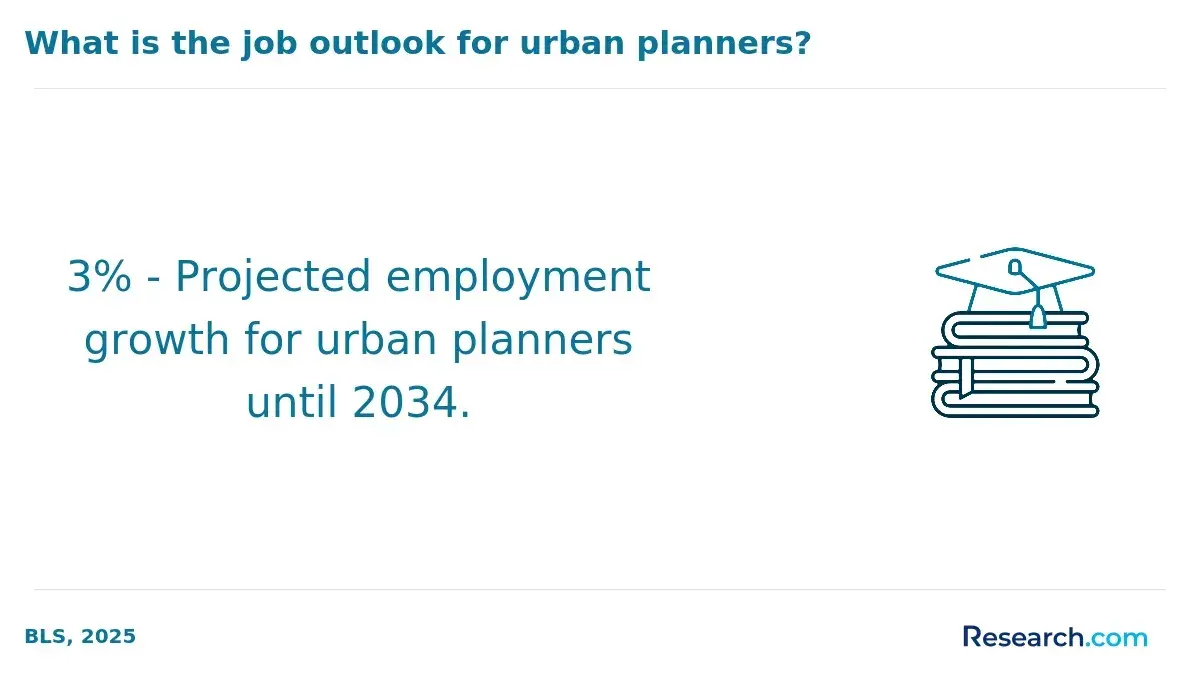
The field is projected to grow 3% through 2034, creating an estimated 1,500 new jobs and 3,400 annual openings. Job prospects can vary by region, budget cycles, public-sector hiring, development activity, and a candidate's technical skills, especially GIS, data analysis, public engagement, and policy writing.
How do accreditation and reputation affect online urban planning and development degrees?
Accreditation is one of the most important checks before enrolling. At minimum, students should confirm that the institution is recognized by an appropriate regional accreditor. Regional accreditation can affect federal financial aid eligibility, credit transfer, graduate admissions, and employer confidence. Students can start by reviewing this list of regionally accredited online colleges and then confirming details directly with the school.
Planning-specific accreditation can also matter. Students interested in professional planning careers should ask whether the program is accredited by the Planning Accreditation Board (PAB), whether the curriculum aligns with planning practice, and whether graduates pursue certification or advanced planning roles. Institutional reputation is not everything, but faculty expertise, alumni outcomes, employer relationships, and applied project quality can influence career opportunities.
How do networking and industry partnerships influence urban planning careers?
Networking matters in urban planning because many jobs involve local agencies, regional organizations, consulting firms, nonprofits, and community partners. Strong programs help online students connect with practitioners through internships, guest lectures, professional associations, virtual events, alumni networks, and collaborative projects.
Students who want to manage complex planning initiatives may also benefit from targeted management training. An affordable online degree in project management can strengthen skills in scheduling, budgeting, stakeholder coordination, and risk management, all of which are useful in planning and development work.
How does an online urban planning degree compare with the best 1 year online MBA programs?
An online urban planning degree and an MBA serve different purposes. Urban planning focuses on land use, community development, transportation, spatial analysis, environmental planning, public policy, and regulation. An MBA focuses more on leadership, finance, operations, strategy, marketing, and organizational decision-making.
| Program type | Best for | Less ideal if |
| Online urban planning degree | You want to work with cities, land use, public agencies, community development, transportation, sustainability, or GIS. | Your main goal is corporate management, finance, entrepreneurship, or executive leadership. |
| 1-year online MBA | You want faster business training focused on management, strategy, finance, and organizational leadership. | You need technical planning coursework, GIS, land use policy, or preparation for planning-specific roles. |
| Combined or sequential pathway | You want both planning expertise and business leadership skills for development, consulting, or public-private projects. | You are trying to minimize cost and time and do not need both skill sets. |
Professionals who already have planning experience and want stronger business skills may compare the best 1 year online MBA programs as a complementary option rather than a replacement for planning education.
What are the professional licensing and certification requirements for urban planning?
Urban planning is not licensed in the same universal way as some regulated professions. However, professional certification can strengthen credibility and may be valued by employers. In the United States, the American Institute of Certified Planners (AICP) credential is a widely recognized benchmark for planning professionals.
AICP certification typically involves education, professional planning experience, and passing a comprehensive exam. Requirements can vary by background, so students should review current AICP eligibility rules before selecting a program. If you plan to pursue certification later, ask schools whether their curriculum, advising, and alumni outcomes support that goal.
Students considering graduate-level advancement across multiple fields may also compare options such as easy master's degrees that pay well, but they should avoid choosing a program based only on perceived ease. Accreditation, relevance, cost, and career fit matter more.
What emerging trends are shaping urban planning and development education?
Urban planning education is changing as cities respond to technology, climate risk, infrastructure strain, housing affordability, demographic shifts, and public demand for more equitable development. Online programs that stay current should help students understand both traditional planning foundations and newer tools used in practice.
Smart cities and technology integration
Planning programs increasingly address digital tools, data analytics, sensors, infrastructure technology, and artificial intelligence. Students may learn how data can support decisions about mobility, land use, public services, and resource allocation while also considering privacy, equity, and governance concerns.
Sustainability and resilience planning
Climate change, extreme weather, energy systems, water management, and resilient infrastructure are now central planning concerns. Programs that include sustainability and resilience can prepare students to evaluate long-term community risk and adaptation strategies.
Interdisciplinary planning
Modern planners often work across public health, housing, economic development, transportation, environmental policy, social equity, and public administration. Interdisciplinary programs can help students understand how these systems interact rather than treating planning as only a land use function.
Short credentials and targeted upskilling
Not every professional needs a full degree immediately. Certificates and short programs can help workers build skills in GIS, sustainability, project management, transportation, or policy analysis. Students exploring shorter credentials may compare Short online degrees that pay well with full planning degrees to decide which path matches their timeline and career goal.
How can combining construction management with urban planning enhance career outcomes?
Combining urban planning and construction management can be valuable for students who want to move from planning concepts into project delivery. Planners who understand cost, scheduling, risk, site logistics, and contractor coordination may communicate more effectively with implementation teams and better anticipate whether a plan is feasible.
This combination can be useful in redevelopment, housing, infrastructure, public works, and private development. Students interested in the construction side of the field can explore how planning knowledge connects with construction manager salary information and related career paths.
How can project management principles improve urban planning outcomes?
Urban planning projects involve many stakeholders, deadlines, budgets, public meetings, environmental reviews, consultants, elected officials, and community concerns. Project management skills help planners define scope, assign responsibilities, monitor timelines, manage risk, and communicate progress.
Planning students who develop project management skills may be better prepared for consultant roles, public agency coordination, capital improvement planning, redevelopment programs, and cross-department initiatives. Students considering this direction can review master's in project management jobs to understand how project management training can support interdisciplinary careers.
What are the potential challenges and common mistakes when pursuing an online urban planning and development degree?
Online urban planning degrees can be effective, but they are not effortless. Students need self-discipline, reliable technology, access to planning tools, and a plan for gaining practical experience. The biggest risks usually come from choosing too quickly or assuming every online program provides the same preparation.
Common challenges
- Fewer in-person networking opportunities: Online students may need to be more intentional about joining professional groups, attending virtual events, and contacting local agencies for internships.
- Practical experience may require extra effort: Fieldwork, internships, and applied projects may need to be arranged locally, especially if the school is in another state.
- Online study requires structure: Students must manage deadlines, reading, group work, software assignments, and exams without the routine of campus attendance.
- Technology access can vary: GIS software, planning labs, technical help, and remote access tools differ by program, so confirm what is included before enrolling.
Common mistakes to avoid
| Mistake | Why it can hurt you | Better approach |
| Choosing based only on tuition | Low tuition may be offset by fees, software costs, limited transfer credit, or weak support. | Compare total program cost and expected time to completion. |
| Ignoring accreditation | Accreditation can affect aid, transfer options, graduate admissions, and employer perception. | Verify institutional accreditation and ask about planning-specific recognition where relevant. |
| Assuming online means less work | Planning coursework can involve research, mapping, writing, group projects, and applied analysis. | Plan weekly study time and confirm course format before enrolling. |
| Overlooking GIS and technical skills | Many planning roles expect data, mapping, and analytical competence. | Prioritize programs with GIS, spatial analysis, and portfolio-building assignments. |
| Not checking internship support | Graduating without applied experience can make entry-level job searches harder. | Ask how online students secure internships, fieldwork, or capstone partners. |
| Relying only on rankings | A ranked program may still be a poor fit for your schedule, location, specialization, or budget. | Use rankings as one input alongside curriculum, support, accreditation, and outcomes. |
Online degrees from accredited online colleges can provide a legitimate path into planning-related careers when students choose carefully and actively build experience.
References:
- ONET Online. (2025, December 15). 19-3051.00 - Urban and regional planners. https://www.onetonline.org/link/summary/19-3051.00
- Statista. (2025). Top twenty countries worldwide with the largest projected urban population in 2050 (in millions). https://www.statista.com/statistics/875076/countries-with-biggest-urban-population-projection
- U.S. Bureau of Labor Statistics. (2025, August 27). Urban and regional planners: Occupational outlook handbook. https://www.bls.gov/ooh/life-physical-and-social-science/urban-and-regional-planners.htm
- Zippia. (2026). Urban planner demographics and statistics in the United States. https://www.zippia.com/urban-planner-jobs/demographics
Key Insights
- Affordable online urban planning and development programs can be a practical route into planning-related work, but only if the program has credible accreditation, relevant coursework, applied projects, and strong student support.
- The best programs teach both policy and practice: land use, transportation, sustainability, GIS, community engagement, urban design, and planning analysis.
- Cost comparisons should focus on total price, not just tuition. Include fees, transfer credits, software access, books, internship costs, and time to completion.
- Online study works best for self-directed students who can manage deadlines and proactively build local field experience, networking connections, and portfolio samples.
- Urban planning career outcomes vary by location, employer, specialization, and experience. The average annual salary for urban planners in the U.S. is $83,720, but salary is never guaranteed by the degree alone.
- Before enrolling, ask schools about accreditation, GIS access, internship support, career services for online students, faculty expertise, alumni outcomes, and whether the program fits your target role.
Other Things You Should Know About the Affordable Online Urban Planning and Development Degree Programs
Yes. Many accredited programs accept up to 60 semester credits from regionally accredited colleges, which can reduce total tuition and shorten completion time. Schools usually require official transcripts and a minimum grade of C in transferable courses, and they often cap transfer credit at 50% of the degree.
In 2027, tuition fees for affordable online urban planning and development degree programs range from approximately $10,000 to $18,000 per year, depending on the institution and program structure. Scholarships and financial aid may further reduce costs for eligible students.
Yes, scholarships are often available for these programs, aimed at reducing costs further. Specific scholarships may cover partial tuition or offer awards based on merit or need. Check with individual schools for detailed offerings and application deadlines.