
2027 Easiest MHA Online Programs to Get Into

Co-Founder and Chief Data Scientist
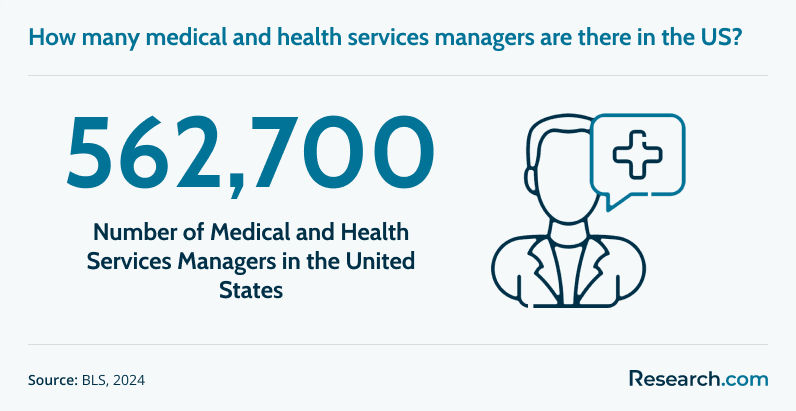
For medical facilities like hospitals and clinics to efficiently serve numerous patients all at once, comprehensive systems need to be in place to account for every possible activity, along with corresponding solutions. Healthcare administrators and managers are chiefly responsible for implementing and monitoring these systems. With around 562,700 of these professionals employed in the country, their importance in the healthcare industry cannot be overstated.
To help aspirants become healthcare administrators, this guide navigates the Master of Healthcare Administration (MHA) online programs that are relatively easy to get into but offer quality education. It also provides information in key areas that aspiring students will need to know, like costs, possible coursework, specializations, and potential career paths.
What are the benefits of getting an MHA online program?
- Completing an online MHA program enables graduates to become healthcare administrators and managers, hospital managers, healthcare policy analysts, and healthcare consultants.
- Medical and health services managers earn a median annual salary of $110,680.
- MHA online programs have an advantage over traditional programs in terms of affordability, accessibility, and flexibility.
What can I expect from an MHA online program?
- An online MHA program offers students a flexible, comprehensive education in healthcare management, combining theoretical knowledge with practical, real-world application.
- Students can expect a curriculum covering healthcare policies, economics, financial management, strategic planning, and leadership development, all designed to prepare them for management roles in healthcare organizations.
- The program typically emphasizes leadership skills, teamwork, and decision-making, with opportunities for hands-on experience through internships or projects.
- Online learning allows for flexibility, while networking with peers, faculty, and industry professionals fosters collaboration.
- Graduates leave equipped to handle the evolving challenges in healthcare, with expertise in technology, innovation, and managing diverse teams.
Where can I work with an MHA online program?
Graduates of MHA online programs can work in a variety of settings across the healthcare industry. Common employment opportunities include:
- Hospitals and Healthcare Systems: Administrative roles such as hospital managers, department heads, or operations directors, overseeing day-to-day operations, patient care services, and financial management.
- Healthcare Consulting Firms: As healthcare consultants, graduates can advise organizations on operational efficiency, strategic planning, and regulatory compliance.
- Long-Term Care Facilities: Management positions in nursing homes, assisted living centers, or rehabilitation facilities, overseeing operations, compliance, and patient care.
- Public Health Agencies: Working in governmental organizations at local, state, or national levels, managing public health programs, policy implementation, and community health initiatives.
- Insurance Companies: Managing roles in health insurance companies, working in claims processing, healthcare policy design, and insurance operations.
- Pharmaceutical Companies: Overseeing business operations, regulatory affairs, and policy compliance in companies that manufacture medical products or drugs.
- Non-Profit Healthcare Organizations: Leading community health initiatives, grant writing, and program management for healthcare-focused non-profits.
- Academic Institutions: Educators or administrators in healthcare management programs, or researchers in healthcare policy and management.
- Corporate Wellness Programs: Managing workplace wellness initiatives or health-related services within large corporations or organizations.
How much can I make with an MHA online program?
According to the United States Bureau of Labor Statistics (BLS), the average annual salary of medical and health services managers in the United States is $134,440, while their median annual salary is $110,680. Both figures are more than twice as high as the national average for all occupations in the United States, which is $48,060. This shows that graduates of MHA online programs are likely to have prestigious, high-paying jobs.
Additionally, medical and health services managers have a higher median annual salary than the collective median of other management occupations in the country ($102,510). To receive a salary boost, healthcare administrators can work in high-demand industries like hospitals and government facilities.
- Easiest MHA Online Programs to Get into for 2027 Best Programs
- How long does it take to complete an MHA online program? Completion Time
- How does an MHA online program compare to an on-campus program? How does an MHA online program compare to an on-campus program?
- What is the average cost of an MHA online program? Average Cost
- What are the financial aid options for students enrolling in an MHA online program? Financial Aid
- What are the prerequisites for enrolling in an MHA online program? Requirements
- What courses are typically in an MHA online program? What courses are typically in an MHA online program?
- What types of specializations are available in MHA online programs? What types of specializations are available in MHA online programs?
- How to choose the best MHA online program? How to choose the best MHA online program?
- What career paths are available for graduates of MHA online programs? Career Paths
- What are the common challenges in MHA online programs? What are the common challenges in MHA online programs?
- How do post-graduation support services contribute to career advancement? How do post-graduation support services contribute to career advancement?
- What is the job market for graduates with an MHA online program? Job Market
- How does effective health information management impact MHA online programs? How does effective health information management impact MHA online programs?
- How can complementary advanced degrees enhance healthcare leadership? How can complementary advanced degrees enhance healthcare leadership?
Easiest MHA Online Programs to Get into for 2027
Choosing an online Master of Healthcare Administration is not only about finding a respected healthcare leadership degree. Many applicants also need a realistic admissions path, flexible scheduling, transparent costs, and a program that can fit around full-time work. This guide focuses on online and hybrid MHA programs with comparatively high school acceptance rates while still highlighting accreditation, program length, credits, tuition, and career relevance.
You will learn which programs may be more accessible, how to compare them beyond acceptance rate, what online MHA coursework usually includes, how long the degree takes, what financial aid options may be available, and how to judge whether an MHA fits your career goals in healthcare management.
Quick answer: What is the easiest online MHA program to get into?
Based on the school acceptance rates listed in this guide, AdventHealth University and the University of New Haven have the highest reported acceptance rate at 91%, followed by George Mason University at 89%. However, a high institutional acceptance rate does not automatically mean that an MHA program has open admission. Applicants should still verify MHA-specific requirements such as GPA minimums, healthcare work experience, recommendations, prerequisite courses, and whether the program is CAHME-accredited.
How we rank schools
This ranking emphasizes accessibility while still considering academic quality indicators. Some online MHA programs are selective, but others admit a wider range of qualified applicants and still provide structured healthcare management training. To support consistency, we reviewed data from the IPEDS database, Peterson’s database, College Scorecard, and the National Center for Education Statistics (NCES). For more detail on how Research.com evaluates schools and programs, see our methodology page.
Online MHA programs with accessible admissions
| Rank | School and program | Length | Credits | Cost per credit | School acceptance rate | Accreditation |
| 1 | AdventHealth University — Master of Healthcare Administration | 2 years | 51-54 | $670 | 91% | Commission on Accreditation of Healthcare Management Education |
| 2 | University of New Haven — Online Master's in Healthcare Administration | 2 years | 36 | $828 | 91% | Commission on Accreditation of Healthcare Management Education |
| 3 | George Mason University — Health Administration in Health Systems Management MHA | 30 months | 45 | $895 | 89% | Commission on Accreditation of Healthcare Management Education |
| 4 | Suffolk University — Master of Healthcare Administration | 28 months | 45 | $1,385 | 86% | Commission on Accreditation of Healthcare Management Education |
| 5 | Robert Morris University — Master Science Health Administration | 2 years | 42 | $1,010 | 86% | Commission on Accreditation of Healthcare Management Education |
| 6 | University of Washington — Executive Master of Health Administration | 2 years | 69 | $1,045 | 86% | Commission on Accreditation of Healthcare Management Education |
| 7 | Texas State University — Healthcare Administration MHA | 2 years | 40 | $499 | 85% | Commission on Accreditation of Healthcare Management Education |
| 8 | Ferris State University — Master's of Healthcare Administration | 2 years | NA | $770 | 82% | Commission on Accreditation of Healthcare Management Education |
| 9 | University of Missouri — Master of Health Administration | 2 years | 42 | $1,187.6 | 82% | Commission on Accreditation of Healthcare Management Education |
| 10 | UNLV — Executive Master of Healthcare Administration | 2 years | 34 | $455.06 in-state; $1,551.06 out-of-state | 81% | Commission on Accreditation of Healthcare Management Education |
1. AdventHealth University Master of Healthcare Administration
AdventHealth University offers a two-year MHA built around healthcare leadership, ethical decision-making, communication, service, and professional development. The program is designed for students who want to lead healthcare teams while understanding both the business and mission-driven dimensions of care delivery. Evening and Sunday course options can help working professionals manage school alongside employment.
- Program length: 2 years
- Tracks or concentrations: None
- Cost per credit: $670
- Credits required: 51-54
- School acceptance rate: 91%
- Accreditation: Commission on Accreditation of Healthcare Management Education
2. University of New Haven Online Master's in Healthcare Administration
The University of New Haven’s online MHA is a 36-credit, two-year program for working professionals seeking preparation in healthcare leadership, finance, health law, information systems, and organizational management. The program is delivered 100% online and includes competency assessment through the Peregrine exam. It also reports a 94.5% job placement rate within three months of graduation and faculty experience described as 10+ years of combined expertise.
- Program length: 2 years
- Tracks or concentrations: None
- Cost per credit: $828
- Credits required: 36
- School acceptance rate: 91%
- Accreditation: Commission on Accreditation of Healthcare Management Education
3. George Mason University Health Administration in Health Systems Management MHA
George Mason University offers a fully online CAHME-accredited MHA in Health Systems Management. The curriculum focuses on leadership, healthcare business operations, analytics, and policy-aware decision-making. Students choose either Healthcare Quality or Executive Concentration and complete a field-based capstone practicum. The program can be completed in about 30 months and includes virtual engagement with policymakers in Washington, D.C.
- Program length: 30 months
- Tracks or concentrations: Healthcare Quality; Executive Concentration
- Cost per credit: $895
- Credits required: 45
- School acceptance rate: 89%
- Accreditation: Commission on Accreditation of Healthcare Management Education
4. Suffolk University Master of Healthcare Administration
Suffolk University’s MHA is designed for students who want flexible study options and access to Boston’s healthcare environment. The program offers full-time, part-time, and online formats, with completion possible in as few as 16 months, although the listed program length is 28 months. Students can focus on operations management, quality and patient safety, or healthcare data analytics while building skills in evidence-based decision-making and process improvement.
- Program length: 28 months
- Tracks or concentrations: Healthcare Operations Management; Quality and Patient Safety; Healthcare Data Analytics
- Cost per credit: $1,385
- Credits required: 45
- School acceptance rate: 86%
- Accreditation: Commission on Accreditation of Healthcare Management Education
5. Robert Morris University Master Science Health Administration
Robert Morris University’s online CAHME-accredited MHA uses a cohort structure and emphasizes applied learning. Students complete 42 credits over two years and participate in a personalized internship that connects coursework with real healthcare settings. The curriculum covers healthcare finance, quality management, strategic planning, population health, evidence-based management, and organizational improvement.
- Program length: 2 years
- Tracks or concentrations: None
- Cost per credit: $1,010
- Credits required: 42
- School acceptance rate: 86%
- Accreditation: Commission on Accreditation of Healthcare Management Education
6. University of Washington Executive Master of Health Administration
The University of Washington’s Executive MHA is a part-time online program intended for mid-career healthcare professionals. The curriculum is competency-based and includes leadership coaching, peer engagement, and exposure to industry expertise. Students use the program to strengthen business, management, and leadership skills while continuing to work.
- Program length: 2 years
- Tracks or concentrations: None
- Cost per credit: $1,045
- Credits required: 69
- School acceptance rate: 86%
- Accreditation: Commission on Accreditation of Healthcare Management Education
7. Texas State University Healthcare Administration MHA
Texas State University provides two MHA routes. The traditional hybrid option is generally suited to students entering the field or still early in their healthcare careers, while the fully online Executive MHA is designed for professionals with 5+ years of experience who are preparing for middle or senior management. Coursework covers management, organizational behavior, finance, strategic planning, and quality improvement, with thesis or field experience options.
- Program length: 2 years
- Tracks or concentrations: None
- Cost per credit: $499
- Credits required: 40
- School acceptance rate: 85%
- Accreditation: Commission on Accreditation of Healthcare Management Education
8. Ferris State University Master's of Healthcare Administration
Ferris State University offers a fully online CAHME-accredited MHA that can be completed in two years. The curriculum includes healthcare leadership, strategic planning, marketing, informatics, and a capstone experience in a healthcare setting. Admission expectations include a bachelor’s degree, a 3.00 GPA, professional references, and coursework in math, statistics, and social sciences.
- Program length: 2 years
- Tracks or concentrations: None
- Cost per credit: $770
- Credits required: NA
- School acceptance rate: 82%
- Accreditation: Commission on Accreditation of Healthcare Management Education
9. University of Missouri Master of Health Administration
The University of Missouri offers a blended Executive MHA for healthcare professionals with at least three years of experience. The 42-credit program takes two years and combines online coursework with occasional in-person sessions. Students study leadership, finance, strategy, healthcare policy, health informatics, epidemiology, and evidence-based decision-making, with preparation for roles such as CEO, CFO, and continuous improvement manager.
- Program length: 2 years
- Tracks or concentrations: None
- Cost per credit: $1,187.6
- Credits required: 42
- School acceptance rate: 82%
- Accreditation: Commission on Accreditation of Healthcare Management Education
10. University of Nevada Executive Master of Healthcare Administration
UNLV’s Executive MHA is primarily online and built for healthcare professionals with 5+ years of experience. The 34-credit program includes one required immersion session and a 3-credit capstone project. Coursework emphasizes strategy, finance, law, policy, operations, adaptive leadership, innovation, and decision-making for senior healthcare roles.
- Program length: 2 years
- Tracks or concentrations: None
- Cost per credit: $455.06 in-state; $1,551.06 out-of-state
- Credits required: 34
- School acceptance rate: 81%
- Accreditation: Commission on Accreditation of Healthcare Management Education
What graduates say about online MHA programs
- John: ""The online format made it possible for me to keep working and stay present for my family while completing my MHA. Being able to review lectures and assignments on a flexible schedule helped me apply leadership concepts directly in my healthcare role.""
- Bonnie: ""My online MHA exposed me to healthcare professionals from different regions and backgrounds. Faculty-led discussions, virtual projects, and peer collaboration helped me understand healthcare systems from a broader management perspective.""
- Jovy: ""I chose an online MHA because I needed a program that worked with full-time employment. The strongest part was the focus on practical administration problems, which helped me build confidence and take on more responsibility at work.""
Key findings
- The most accessible schools in this list report acceptance rates between 81% and 91%, but applicants should still check MHA-specific admissions requirements.
- Most listed programs take about 2 years, though some use executive, hybrid, or part-time models that may change the student experience.
- CAHME accreditation appears across the programs in this ranking and is an important quality signal for healthcare management education.
- Online MHA programs are often best suited for working healthcare professionals who need flexibility, but students must be proactive about networking, internships, and career planning.
- Cost varies widely, so applicants should compare total program cost, not only cost per credit.
How long does it take to complete an MHA online program?
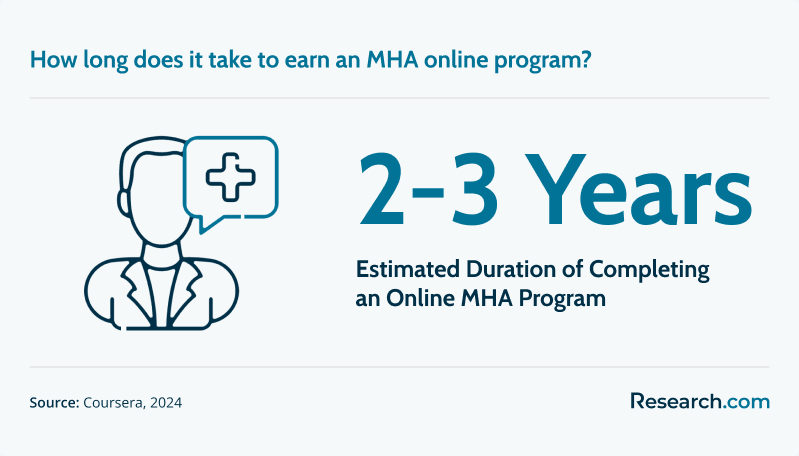
A full-time online MHA usually takes 2 to 3 years. The timeline may include coursework plus an internship, residency, fellowship, capstone, or field-based project. Internships may be scheduled during summer terms or academic breaks, while residencies commonly happen after coursework and can last a year.
Part-time students usually need more time. Depending on course load, a part-time MHA can take 3 to 4 years. Accelerated options may shorten the timeline, but they often require heavier weekly study hours. Students comparing flexible public health alternatives can also review the easiest online MPH program options, where credit load, internship expectations, and pacing matter in similar ways.
| Enrollment format | Typical completion time | Best for | Trade-off |
| Full-time online MHA | 2 to 3 years | Students who can prioritize graduate study and finish sooner | Less flexibility for demanding work schedules |
| Part-time online MHA | 3 to 4 years | Working professionals balancing employment, family, or clinical responsibilities | Longer time before graduation |
| Accelerated MHA | Shorter than standard formats when available | Students with strong time management and fewer outside obligations | Faster pace can increase workload pressure |
| Executive MHA | Often around 2 years | Experienced healthcare professionals seeking leadership advancement | May require prior healthcare experience and occasional campus or immersion sessions |
How does an MHA online program compare to an on-campus program?
Online and campus-based MHA programs can lead to similar academic outcomes, but they differ in how students learn, network, schedule coursework, and access hands-on experiences. The better choice depends on your work schedule, location, learning style, and need for in-person professional connections.
| Factor | Online MHA | On-campus MHA |
| Flexibility | Usually better for working adults, especially when courses are asynchronous | Less flexible because classes meet at set times and places |
| Networking | Requires more intentional effort through virtual events, alumni groups, and internships | Often easier through campus events, faculty access, student organizations, and local employers |
| Cost considerations | May reduce commuting, relocation, and housing costs | May include campus-related expenses but can offer local employer access |
| Learning environment | Works well for self-directed students comfortable with digital tools | Better for students who prefer in-person discussion and immediate classroom interaction |
| Field experience | Students may need to coordinate internships or practicums in their own region | Schools may have established local placement relationships |
When an on-campus MHA makes more sense
An on-campus MHA may be a better fit if you want a traditional classroom environment, frequent face-to-face faculty contact, local healthcare networking, and easier access to campus career events. Students who are relocating for a healthcare market or who want to build relationships in a specific city may benefit from in-person programs.
When an online MHA makes more sense
An online MHA is often the stronger choice for students who plan to continue working, live far from a campus, or need more control over weekly study time. As with other online graduate programs such as the cheapest online MLIS programs and the easiest MSW online programs, flexibility is valuable only if the student has the discipline to stay engaged, meet deadlines, and build professional relationships outside a physical classroom.
What is the average cost of an MHA online program?
Tuition for fully online MHA programs generally ranges from approximately $24,290 per year to $57,780 in total net costs across different schools. The average cost varies by institution, location, public or private status, residency classification, and required credits.
More specifically, the median annual tuition for public institutions is around $10,020, while private nonprofit institutions average about $14,670 annually. Some programs may exceed $80,000 in total cost, while other options are available for under $50,000. Certain programs list tuition as low as $5,640 to $6,570. Students comparing management degrees may also review the easiest MBA programs, but healthcare administration applicants should focus on MHA-specific curriculum, accreditation, and career alignment rather than tuition alone.
Cost factors to compare before applying
- Total tuition: Multiply cost per credit by required credits and check whether program fees are separate.
- Residency pricing: Public universities may charge different rates for in-state and out-of-state students.
- Immersion or campus visits: Executive and hybrid programs may require travel.
- Books and technology: Online programs may still require software, textbooks, exams, and technology fees.
- Time away from work: An accelerated or full-time program may carry opportunity costs if it reduces income.
The chart below shows the industries that hire the most medical and health services managers in the United States.
What are the financial aid options for students enrolling in an MHA online program?
Online MHA students may use several funding sources. As with students in an online public policy masters program, the first step is usually the FAFSA, which determines eligibility for federal aid. Direct Stafford Loans may provide up to $20,500 per academic year.
| Financial aid option | How it may help | What to check |
| Federal student loans | Can provide graduate-level borrowing through FAFSA-based eligibility | Interest rate, repayment plan, annual limits, and total debt |
| University scholarships | May reduce tuition through merit-based, need-based, or program-specific awards | Application deadlines, renewal rules, and whether online students qualify |
| Employer tuition assistance | Healthcare employers may help pay for education tied to advancement | Work commitment rules, grade requirements, and annual reimbursement caps |
| State grants | May support eligible in-state residents | Residency rules and whether graduate students are included |
| VA educational benefits | Can support eligible military service members and veterans | School participation and benefit coverage |
| Private loans | May fill funding gaps after other aid | Interest rates, cosigner requirements, deferment terms, and repayment risk |
What are the prerequisites for enrolling in an MHA online program?
Admissions rules vary by school, similar to how requirements differ among the best nutrition schools online. Most online MHA programs expect applicants to hold a bachelor’s degree from an accredited institution and may look for a minimum GPA around 3.0. Some schools consider applicants with lower GPAs when they have substantial healthcare or management experience. Many programs are also waiving standardized tests such as the GRE.
A complete application usually includes official transcripts, a resume, letters of recommendation, and a statement of purpose explaining the applicant’s healthcare leadership goals. Some schools also ask for short essays or interviews to evaluate motivation, communication skills, and fit.
Professional experience can matter. Many online MHA programs value applicants who have about two to four years in healthcare, and executive programs may require more. Applicants should check each program directly because requirements can differ significantly even when two degrees have the same title.
| Requirement | What applicants should prepare |
| Bachelor’s degree | Official transcripts from all colleges attended |
| GPA review | Documentation of academic performance and any explanation of weaker grades if allowed |
| Professional experience | Resume showing healthcare, administrative, clinical, policy, or management work |
| Recommendations | References from supervisors, faculty, or healthcare leaders who can speak to readiness |
| Personal statement | Clear explanation of career goals and why healthcare administration is the right path |
| Prerequisite coursework | Any required math, statistics, social science, or other foundation courses |
What courses are typically in an MHA online program?
MHA coursework covers the business, policy, operational, ethical, and technology side of healthcare delivery. Like the cheapest psychology masters programs, course titles and requirements vary by school, but most programs include a common administrative core.
- Healthcare management and leadership: Builds skills in organizational leadership, team supervision, decision-making, communication, and management in healthcare settings.
- Healthcare finance and accounting: Covers budgets, financial reporting, cost control, reimbursement, and financial decision-making in healthcare organizations.
- Healthcare economics: Examines how supply, demand, funding systems, policy, and market forces shape healthcare delivery.
- Health policy and ethics: Reviews healthcare laws, regulations, ethical frameworks, and policy decisions that influence administrators.
- Healthcare law and compliance: Focuses on patient rights, privacy, HIPAA, compliance obligations, and legal risks in healthcare operations.
- Strategic planning and marketing in healthcare: Teaches students how to plan services, evaluate markets, communicate value, and support organizational growth.
- Healthcare quality management: Introduces quality improvement, patient safety, accreditation standards, and performance measurement.
- Human resource management in healthcare: Covers recruitment, retention, employee performance, conflict resolution, staffing, and workforce development.
- Healthcare operations: Explores workflow, efficiency, service delivery, scheduling, and operational improvement across healthcare settings.
- Healthcare information systems: Reviews electronic health records, telemedicine, healthcare IT infrastructure, and data-informed management.
What are the emerging trends in online healthcare administration education?
Online MHA programs are increasingly shaped by digital healthcare delivery, analytics, telehealth, cybersecurity concerns, and remote collaboration. Programs are adding virtual simulations, cloud-based analytics projects, telehealth content, and applied assignments that mirror real administrative decisions. Students pursuing a healthcare administration degree online at the undergraduate level may see similar emphasis on flexible scheduling and technology-supported healthcare operations.
For MHA students, the most important trend is employer expectation. Healthcare leaders are expected to understand finance, compliance, patient experience, workforce challenges, quality improvement, and digital systems. A strong online program should not treat technology as a separate topic; it should integrate data, privacy, workflow, and decision-making throughout the curriculum.
What types of specializations are available in MHA online programs?
Healthcare administration is broad, much like the field covered in online project management degrees. Specializations help students match the degree to a specific career direction, industry setting, or leadership function.
| Specialization | Best fit | Typical focus |
| Healthcare Leadership | Students seeking executive or senior management roles | Leadership strategy, organizational change, and decision-making |
| Health Policy and Management | Students interested in regulation, policy, public systems, or advocacy | Healthcare policy, governance, and management strategy |
| Healthcare Finance | Students aiming for budget, revenue, or financial leadership roles | Budgeting, financial sustainability, reimbursement, and cost control |
| Healthcare Informatics | Students interested in data, EHRs, analytics, and digital systems | Healthcare data, information systems, workflow, and technology use |
| Long-Term Care Administration | Students planning to work with aging populations | Nursing homes, assisted living, home health, and resident care operations |
| Public Health Administration | Students interested in public agencies and community health programs | Public health program delivery, financing, and management |
| Global Health Management | Students interested in international healthcare systems | Global health policy, systems, and cross-border healthcare challenges |
| Clinical Operations Management | Students who want to manage clinics, practices, or hospital departments | Daily clinical operations, staffing, workflow, and service improvement |
The number of specialization options reflects why graduate-level study can matter in this field. According to Zippia, 44% of medical and health services managers have a master's degree, 25% have a bachelor's degree, 19% have a certificate, and 13% have an associate degree.
Can MHA online programs support strong networking and mentorship?
Yes, but students usually need to be more intentional than they would be on campus. Quality online MHA programs use discussion platforms, live webinars, group projects, virtual office hours, alumni networks, career services, and mentorship opportunities to help students build professional relationships. The best programs also connect students with healthcare executives, faculty with industry experience, and peers already working in hospitals, insurers, clinics, public health agencies, and other healthcare organizations.
Interdisciplinary networking can also be useful. For example, students who connect with professionals in pharmacy, public health, nursing, informatics, and operations may better understand how administrative decisions affect clinical teams. Those exploring adjacent clinical education routes can compare how online pharmacy schools approach professional preparation and healthcare regulation.
How to choose the best MHA online program
The right online MHA is not always the school with the highest acceptance rate or the lowest tuition. It is the program that matches your career stage, experience level, schedule, budget, and leadership goals. This is also true when comparing specialized healthcare graduate options such as the cheapest psych NP programs.
1. Confirm accreditation
Check institutional accreditation and whether the program is accredited by the Commission on Accreditation of Healthcare Management Education (CAHME). Accreditation helps indicate that a program meets recognized academic and professional standards in healthcare management education.
2. Match the curriculum to your career goal
If you want hospital operations, look for operations, quality, finance, and compliance coursework. If you want health IT leadership, prioritize informatics and analytics. If you want senior leadership, look for strategy, executive leadership, organizational behavior, and capstone work.
3. Check the delivery format carefully
“Online” can mean fully asynchronous, live online classes, hybrid weekends, required immersions, or local fieldwork. Review scheduling expectations before applying, especially if you work rotating shifts or have family obligations.
4. Review faculty and employer connections
Faculty with healthcare management, policy, clinical operations, finance, or executive experience can add practical value. Also check whether the school has relationships with healthcare employers, alumni mentors, and practicum sites.
5. Ask about career support
Look for resume help, interview preparation, job boards, alumni contacts, internship support, and leadership coaching. These services are especially important in online programs, where students may not have daily campus access.
Questions to ask before applying
| Question | Why it matters |
| Is the MHA program CAHME-accredited? | Accreditation can affect employer perception and program quality assurance. |
| Does the listed acceptance rate apply to the university or the MHA program? | Institution-wide acceptance rates may not reflect graduate program selectivity. |
| Are GRE scores required or waived? | Testing requirements can affect application time and cost. |
| How much healthcare experience do admitted students usually have? | Executive programs may expect mid-career applicants, while traditional MHAs may admit earlier-career students. |
| Are classes asynchronous, synchronous, or hybrid? | Format determines whether the degree fits your work schedule. |
| Is there a required internship, capstone, residency, or immersion? | Applied requirements can add time, travel, or coordination needs. |
| What is the full cost, including fees? | Cost per credit does not always show total program expense. |
| What career services are available to online students? | Online learners need equal access to networking, coaching, and job-search resources. |
What is the ROI of an MHA online program?
Return on investment depends on total tuition, time to completion, current income, employer support, debt, and whether the degree helps you move into higher-responsibility healthcare leadership roles. An MHA may be worthwhile for professionals who already work in healthcare and need graduate-level management training to compete for director, administrator, operations, compliance, quality, or executive roles. It may be less efficient for students who are unsure about healthcare leadership or who have not compared lower-cost pathways.
Students should calculate ROI using realistic assumptions rather than promised salary outcomes. Compare tuition, fees, loan interest, expected time in school, and the types of positions graduates actually enter. Those evaluating lower-cost healthcare career entry points may also review the best online college for medical billing and coding to understand how shorter healthcare credentials differ from graduate administration degrees.
Are complementary certifications beneficial alongside an MHA online degree?
Complementary certifications can be useful when they fill a specific skills gap. An MHA provides administrative and leadership training, but some roles may require stronger knowledge of clinical workflows, compliance, health IT, billing, quality, or long-term care operations. A targeted credential can strengthen a resume when it aligns with a clear job goal.
For example, an applicant interested in frontline clinical operations may compare options such as the cheapest CMA program to understand how hands-on credentials differ from management-focused graduate education. Certifications should support a career plan, not simply add more credentials without purpose.
How does technology integration enhance MHA online programs?
Technology is now central to healthcare administration. Strong online MHA programs expose students to electronic health records, health data, cybersecurity concerns, telehealth operations, digital workflow, and analytics-based decision-making. These areas help future administrators understand how technology affects quality, compliance, patient access, staffing, and financial performance.
Students especially interested in healthcare data and records management can compare MHA technology coursework with health information technology online degree programs. The key difference is that an MHA usually prepares students to lead systems and people, while health information programs may go deeper into records, coding, data governance, and information management.
What career paths are available for graduates of MHA online programs?
Online MHA graduates commonly pursue management and leadership roles across hospitals, clinics, long-term care organizations, insurers, public health agencies, consulting firms, and healthcare technology environments. Job titles vary by employer, prior experience, licensure rules, and local market demand.
| Career path | Typical responsibilities |
| Medical and Health Services Manager | Oversees healthcare facility operations, staffing, budgets, compliance, policies, and patient service quality. |
| Healthcare Consultant | Analyzes healthcare organizations and recommends improvements in efficiency, compliance, strategy, and performance. |
| Hospital Director | Leads hospital operations, including financial management, staffing, regulatory compliance, patient care strategy, and organizational performance. |
| Nurse Manager | Supervises nursing teams, coordinates care, manages budgets, supports training, and helps maintain quality standards. |
| Nursing Home Director | Manages nursing home or assisted living operations, staff, compliance, resident services, and quality of care. |
| Healthcare Recruiter | Sources, evaluates, and hires healthcare professionals to support staffing and patient care needs. |
| Compliance Director | Develops compliance programs, manages audits, trains staff, and monitors legal and regulatory obligations such as HIPAA and Stark Law. |
| Health Policy Analyst | Researches, evaluates, and explains health policy issues to support organizational or public-sector decisions. |
| Healthcare Quality Manager | Leads quality improvement initiatives, monitors performance measures, and supports patient safety goals. |
| Health Informatics Specialist | Uses healthcare data, EHRs, and technology systems to improve workflows, reporting, and patient care processes. |
Some students compare healthcare administration with adjacent fields before committing. For example, those considering roles that intersect with behavioral health, legal systems, or forensic settings may want to understand the difference between criminologist and criminal psychologist before choosing a healthcare leadership path.
What are the common challenges in MHA online programs?
Online MHA programs can be convenient, but they are not automatically easier. Students must manage deadlines, participate in virtual discussions, complete group projects remotely, and maintain motivation without daily campus structure. Limited face-to-face interaction can also make networking harder unless the student uses career services, alumni groups, webinars, and professional associations consistently.
| Common mistake | Better approach |
| Choosing a program only because it has a high acceptance rate | Review accreditation, curriculum, career support, cost, and graduation requirements. |
| Looking only at tuition per credit | Calculate total cost, including credits, fees, travel, books, and loan interest. |
| Assuming every online program is fully flexible | Confirm whether classes are asynchronous, live, hybrid, or tied to required campus visits. |
| Ignoring fieldwork or capstone requirements | Ask how internships, practicums, residencies, or projects are arranged for online students. |
| Waiting until graduation to network | Start building relationships with faculty, classmates, alumni, and employers during the first term. |
| Assuming an MHA guarantees a specific salary | Use salary data cautiously and compare outcomes by region, experience, employer, and role. |
Students who want to control costs while evaluating these trade-offs can compare the most affordable MHA programs.
Are accelerated programs a viable option for rapid career progression?
Accelerated MHA programs can work well for students who have strong time-management skills, stable work schedules, and a clear career goal. These programs compress coursework and may help students apply new management concepts sooner. The trade-off is intensity: fewer calendar months usually means heavier weekly workloads and less room for unexpected personal or work obligations.
Applicants considering a faster healthcare management pathway can compare options such as accelerated MBA healthcare administration online programs to see whether an MHA, MBA, or healthcare administration-focused business degree better fits their background.
How can interdisciplinary collaborations enhance an MHA online program?
Healthcare leaders rarely solve problems from one discipline alone. Effective administration often requires input from clinicians, pharmacists, public health professionals, IT teams, finance leaders, compliance officers, and data specialists. Online MHA programs that include cross-disciplinary projects, guest speakers, or electives can help students understand how decisions affect multiple departments.
Students interested in medication management, regulatory affairs, or clinical operations may find it useful to compare MHA coursework with online pharmacy programs. The goal is not to replace administrative training, but to understand how different professional perspectives shape healthcare delivery.
How do post-graduation support services contribute to career advancement?
Career support can significantly affect the value of an online MHA. Strong programs offer resume guidance, interview coaching, leadership development, job boards, alumni introductions, and mentorship. These services matter because many MHA students are not looking for a first job; they are trying to move from clinical, administrative, or operational roles into higher-level leadership.
Some students also add shorter credentials to support specific skills. For example, a student exploring frontline healthcare operations may compare an MHA with a medical assistant certificate online 6 weeks option to understand the difference between operational leadership preparation and direct patient-support training.
What is the job market for graduates with an MHA online program?
According to the BLS, employment of medical and health services managers in the United States is projected to grow by 29% from 2023 to 2033. That is much faster than the 4% projected growth for all jobs over the same period. The number of medical and health services managers is projected to rise from 562,700 in 2023 to 723,300 in 2033.
The sectors reporting the highest average annual salaries for medical and health services managers include wholesale trade agents at $254,660, merchant wholesalers at $233,160, and pharmaceutical and medicine manufacturing at $231,070. Hospitals and clinics, which are more traditional employment settings for healthcare administrators, also offer high salaries. Individual pay still depends on role, employer, region, experience, and scope of responsibility.
How does effective health information management impact MHA online programs?
Health information management is increasingly important in healthcare administration because leaders need accurate data to make decisions about quality, staffing, compliance, finance, and patient outcomes. MHA students who understand electronic records, analytics, privacy, and reporting systems are better prepared to work with IT and clinical teams.
Students who want deeper exposure to records management and data systems can compare MHA coursework with the fastest health information management online programs. Health information management can strengthen an administrator’s ability to interpret data, support compliance, and manage digital transformation.
How can complementary advanced degrees enhance healthcare leadership?
Some healthcare administrators benefit from advanced study outside traditional management, especially if they work in data-heavy, technology-driven, or research-oriented environments. Coursework in analytics, digital health, bioinformatics, or information systems can strengthen evidence-based decision-making and help leaders work more effectively with technical teams.
For example, professionals interested in big data, biomedical information, and health technology strategy may compare MHA training with an MSc bioinformatics online. A complementary advanced degree should be chosen only when it supports a specific leadership direction, not as a substitute for experience or clear career planning.
References
- BLS (2024, April 3). 11-9111 Medical and Health Services Managers. BLS occupational employment data
- BLS (2024, August 29). Medical and Health Services Managers. BLS Occupational Outlook Handbook
- Coursera (2024, September 21). Health Administration Degree: Types, Possible Jobs, and More. Coursera; related labor-market profile: BLS
- Sherrer, K. (2021, January 19). How Long Does It Take to Get a Masters in Healthcare Management? Vanderbilt University
- Zippia (2024, June 25). Health Care Administrator skills for your resume and career. Zippia
- Zippia (2024, April 5). Medicine And Health Service Manager Education Requirements. Zippia; program-length context: Vanderbilt University
Key Insights
- The easiest online MHA program to get into is not necessarily the best choice; use acceptance rate as a starting point, then verify accreditation, admissions rules, curriculum, cost, and career support.
- AdventHealth University and the University of New Haven have the highest listed school acceptance rate at 91%, but program-level admissions requirements may still include GPA, recommendations, experience, essays, or prerequisite coursework.
- Most online MHA programs take about 2 years, while part-time formats may take 3 to 4 years and accelerated formats require a heavier pace.
- CAHME accreditation is an important quality marker for healthcare management education and should be checked before applying.
- Online MHA programs work best for disciplined students who can manage deadlines, participate actively online, and build networking opportunities instead of waiting for them to happen.
- Before enrolling, calculate total cost, ask about field experience, confirm whether online students receive full career services, and choose a specialization that matches your target role.
- The job outlook is strong for medical and health services managers, with BLS projecting 29% growth from 2023 to 2033, but salaries and advancement depend on experience, employer, location, and leadership scope.
Other Things You Should Know About MHA Online Programs
MHA programs with flexible admission requirements in 2027 often prioritize accessibility. They might offer rolling admissions, have minimal prerequisites, or allow work experience to substitute for academic qualifications. Such programs include the University of Southern New Hampshire, Ohio University, and Walden University, which adapt admissions criteria to accommodate diverse applicant backgrounds.
Many of the easiest online MHA programs in 2027 do not require GRE scores, especially for applicants with a bachelor’s degree and a minimum GPA of 2.5 to 3.0. Some schools waive the GRE entirely, while others only ask for it from students with lower academic records.


