
2027 Most Affordable Online Associate’s Degree in Radiology

Co-Founder and Chief Data Scientist
In 2022, over 111,254 individuals in the workforce pursued associate degrees, reflecting a strong interest in higher education for career advancement. Despite this enthusiasm, many individuals encounter challenges in finding affordable educational options.
In this article, drawing upon my extensive experience guiding students toward successful career paths, I aim to explore the most affordable online associate’s degree in radiology. This degree provides a practical pathway for students to enhance their skills and employability in the field of radiology. It considers both the convenience of online coursework and the necessary in-person components, ensuring a balanced approach to education that meets both academic and practical requirements.
What are the benefits of getting an affordable online associate's degree in radiology?
- Obtaining an online radiology degree enables access to careers as radiologic technologists and technicians, which are vital roles in medical imaging and patient care.
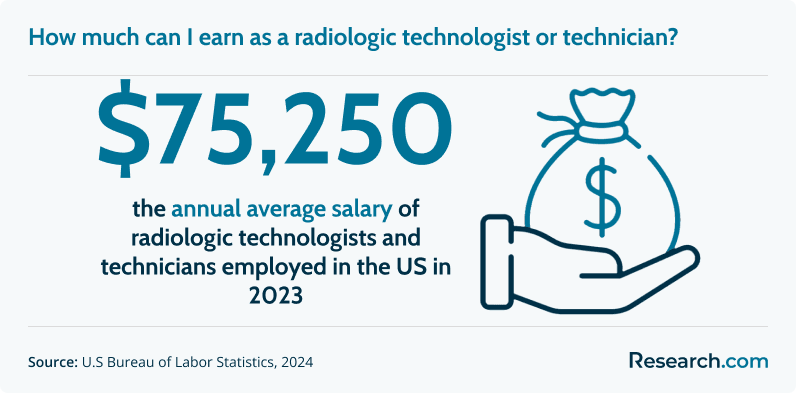
- Graduates can expect a median annual salary of $75,250 as radiologic technologists and technicians in the US, offering financial stability and growth opportunities.
- Pursuing this degree online provides flexibility in learning, accommodating diverse schedules, and complementing in-person requirements with remote coursework.
What can I expect from the most affordable online associate's degree in radiology?
Prospective students pursuing the most affordable online associate's degree in radiology can expect a comprehensive curriculum that blends theoretical knowledge with practical skills. Courses typically cover anatomy, medical terminology, imaging techniques, and patient care, preparing students to operate imaging equipment effectively. The flexibility of online learning allows students to balance their studies with personal and professional commitments, while clinical placements provide hands-on experience in real healthcare settings. Upon graduation, students are prepared to sit for certification exams and pursue careers in hospitals, clinics, and diagnostic imaging centers, where they play a crucial role in healthcare delivery.
Where can I work with an affordable online associate's degree in radiology?
With an affordable online associate's degree in radiology, graduates can pursue career opportunities in various healthcare settings. These include:
- Hospitals: Performing diagnostic imaging procedures in emergency rooms, surgery departments, and general radiology units.
- Clinics: Providing imaging services in outpatient settings, specialized clinics, and physician offices.
- Diagnostic Imaging Centers: Conducting routine and specialized imaging tests for patients referred by healthcare providers.
- Urgent Care Centers: Offering immediate diagnostic imaging services for non-life-threatening conditions.
- Orthopedic Practices: Assisting in imaging procedures focused on bone and joint conditions.
- Mobile Imaging Units: Traveling to different healthcare facilities to perform imaging services on-site.
How much can I make with an affordable online associate's degree in radiology?
Graduates with an affordable online associate's degree in radiology can expect to earn salaries ranging from competitive to high, with average earnings around $75,250 annually. The highest-paying industries for radiologic technologists and technicians include outpatient care centers, federal, state, and local government positions, and specialty hospitals, offering potential salaries upwards of $80,000 per year. These sectors often seek qualified professionals to operate advanced imaging technologies and provide crucial diagnostic services.
- 2027 Most Affordable Online Associate’s Degree in Radiology Best Programs
- How long does it take to complete the most affordable online associate's degree in radiology? Completion Time
- How do affordable online associate's degree programs in radiology compare to an on-campus program? Online vs On-Campus
- What is the average cost of the most affordable associate's degree in radiology? Average Cost
- What are the financial aid options for students enrolling in the most affordable associate's degree in radiology? Financial Aid
- What are the prerequisites for enrolling in the most affordable associate's degree in radiology? Requirements
- What courses are typically in the most affordable associate's degree in radiology? What courses are typically in the most affordable associate's degree in radiology?
- What types of specializations are available in the most affordable associate's degree in radiology? What types of specializations are available in the most affordable associate's degree in radiology?
- How do you choose the best and most affordable associate's degree in radiology? How do you choose the best and most affordable associate's degree in radiology?
- How are emerging trends transforming radiology education? How are emerging trends transforming radiology education?
- What challenges do online radiology students face and how can they be overcome? What challenges do online radiology students face and how can they be overcome?
- How Online Radiology Students Gain Practical Experience How Online Radiology Students Gain Practical Experience
- What technical requirements must be met for success in online radiology programs? What technical requirements must be met for success in online radiology programs?
- Can radiology graduates transition to healthcare administration roles? Can radiology graduates transition to healthcare administration roles?
- What student support services are available in affordable online radiology programs? What student support services are available in affordable online radiology programs?
- What career paths are available for graduates with the most affordable associate's degree in radiology? What career paths are available for graduates with the most affordable associate's degree in radiology?
- How can I advance my career with a radiology associate degree How can I advance my career with a radiology associate degree
- What is the job market for graduates with the most affordable associate's degree in radiology? Job Market
- What are the legal and ethical responsibilities for radiologic technologists? What are the legal and ethical responsibilities for radiologic technologists?
- How do online radiology degrees compare to other online medical degree programs? How do online radiology degrees compare to other online medical degree programs?
- Why is accreditation important for an online associate’s degree in radiology? Why is accreditation important for an online associate’s degree in radiology?
- Can accelerated healthcare programs enhance my radiology career? Can accelerated healthcare programs enhance my radiology career?
2027 Most Affordable Online Associate’s Degree in Radiology: Programs, Costs, and Career Fit
An online associate’s degree in radiology can be a practical route into diagnostic imaging, but it is not a fully remote degree. Radiologic technology is a patient-facing clinical field, so even programs with online coursework require supervised hands-on training in hospitals, clinics, or imaging centers. The real decision is not simply “Which program is cheapest?” It is whether the program is accredited, affordable after fees and clinical costs, available in your state, and designed to prepare you for certification and licensure.
This guide is for students comparing affordable online and hybrid radiologic technology associate programs, working adults who need flexible coursework, limited-scope radiology workers seeking advancement, and career changers evaluating whether radiography is worth the time and cost. You will learn how long these programs take, what they cost, how online clinical training works, what accreditation means, which careers may be available, and how to avoid expensive mistakes before enrolling.
Quick Answer: What Is the Best Affordable Online Associate’s Degree in Radiology?
The best affordable online associate’s degree in radiology is one that combines reasonable tuition with JRCERT accreditation, approved clinical placement, ARRT exam preparation, and state licensure alignment. Based on the programs listed below, costs range from approximately $7,400 to $25,900, with program lengths commonly running from 18 months to two years. Students should expect online didactic coursework, required in-person clinical rotations, background checks, health screenings, and strict technical standards for participating in digital labs and imaging coursework.
| Decision factor | What to look for | Why it matters |
| Accreditation | JRCERT or another recognized pathway accepted by ARRT and your state | Accreditation can affect certification eligibility, employer recognition, and transfer options. |
| Total cost | Tuition, fees, books, uniforms, immunizations, background checks, travel, and clinical costs | The lowest tuition is not always the lowest total price. |
| Clinical placement | Local approved sites or school-arranged clinical partnerships | You cannot become job-ready through online coursework alone. |
| Certification preparation | ARRT exam eligibility and board exam support | Many employers expect certification for entry-level radiography roles. |
| State authorization | Confirmation that the program accepts students in your state and meets local licensure rules | Online availability does not automatically mean the program works for every state. |
How do we rank schools?
Research.com evaluates online associate’s degree programs in radiology using a structured research process and our published ranking methodology. To support accuracy, our team reviews institutional and education datasets, including the IPEDS database from the National Center for Education Statistics, Peterson’s database and its Distance Learning Licensed Data Set, and the College Scorecard. These sources help compare institutional costs, distance learning availability, and education outcomes, but students should still verify current tuition, clinical placement rules, admissions requirements, and certification eligibility directly with each school before applying.
Affordable Online Associate’s Degree in Radiology Programs
The programs below are designed for students preparing for radiologic technology or radiography careers. Some are online or hybrid; others include online options with required in-person clinical components. Because radiography is regulated and clinically intensive, confirm whether each program is approved for your state and whether clinical sites are available near you.
1. Century College - AAS in Radiologic Technology
Century College offers an Associate of Applied Science in Radiologic Technology for students preparing for entry-level radiographer roles. The curriculum combines patient care, anatomy-based positioning, radiation safety, diagnostic image production, and supervised clinical learning. Students train to work with radiologists and healthcare teams in settings such as hospitals, clinics, surgical facilities, and orthopedic practices. Graduates are prepared to pursue the American Registry of Radiologic Technologists certification examination.
- Program length: 6 semesters
- Credits required: 78
- Cost per credit: $206.41 (in-state); $206.41 (out-of-state)
- Accreditation: Joint Review Committee on Education in Radiologic Technology (JRCERT)
2. Pima Medical Institute - AAS in Radiography-Bridge
Pima Medical Institute provides an Associate of Applied Science in Radiography-Bridge for limited-scope radiologic professionals who want to move toward full-scope radiography practice and ARRT certification. The program uses online coursework and includes an in-person clinical externship during the final semester. Students study anatomy, physiology, pathology, radiographic positioning, exposure methods, patient care, medical terminology, and professional communication.
- Program length: 20 months
- Credits required: 35.5
- Tuition cost: $7,437
- Accreditation: Joint Review Committee on Education in Radiologic Technology (JRCERT)
3. Ogeechee Technical College - AAS in Radiologic Technology
Ogeechee Technical College offers an Associate of Applied Science in Radiologic Technology that blends classroom instruction with clinical preparation for radiography employment. The program is built for students seeking work in radiology departments and related healthcare environments. Graduates earn the AAS degree and may sit for the national certification examination for radiographers, with training applicable to hospitals, clinics, physician offices, and other diagnostic imaging settings.
- Program length: 4 semesters
- Credits required: 77
- Tuition cost: $8,070
- Accreditation: Joint Review Committee on Education in Radiologic Technology (JRCERT)
4. Ball State University - AS in Radiography
Ball State University offers an Associate in Science in Radiography for students who want to enter medical imaging. The program emphasizes the dual nature of radiography: direct patient interaction and precise operation of imaging equipment. Students develop clinical competence, professional behavior, and technical skills needed for entry-level radiographer work. After completing the program, graduates may apply for the ARRT national certification examination and pursue Registered Technologist in Radiography status.
- Program length: 2 years
- Credits required: 60
- Tuition cost: $8,688 (in-state); $26,696 (out-of-state)
- Accreditation: Joint Review Committee on Education in Radiologic Technology (JRCERT)
5. Southeast Community College - AAS in Radiologic Technology
Southeast Community College offers an Associate of Applied Science in Radiologic Technology with training in diagnostic imaging, radiation use, and patient care. Students learn to produce medical images used for diagnosis and treatment planning in radiology departments, emergency rooms, intensive care units, surgical areas, and patient rooms. The college offers a Lincoln option with in-person coursework and clinicals in Lincoln, as well as an online option with online classes and clinicals at a preapproved hospital outside Lincoln. Graduates are prepared to sit for the American Registry of Radiologic Technologist Exam and apply for state licensure.
- Program length: 2 years
- Credits required: 68.5
- Tuition cost: $10,289.50
- Accreditation: Joint Review Committee on Education in Radiologic Technology (JRCERT)
6. Barton Community College - AS in Radiology Technology
Barton Community College offers an Associate of Science in Radiology Technology for students interested in healthcare imaging careers. The program introduces students to radiologic technology and related imaging areas such as MRI, CT, radiation therapy, nuclear medicine, and mammography. Students build a foundation in equipment use, imaging principles, patient safety, and professional practice, with the degree serving as preparation for continued training and career pathways in radiology.
- Program length: 4 semesters
- Credits required: 60
- Tuition cost: $14,808 (in-state); $14,832 (out-of-state)
- Accreditation: Joint Review Committee on Education in Radiologic Technology (JRCERT)
7. Parkland College - AAS in Radiologic Technology
Parkland College offers a two-year Associate of Applied Science in Radiologic Technology that prepares students to perform diagnostic imaging using X-ray and digital imaging systems. Clinical training takes place at area medical facilities, and graduates are prepared for the national RT certification exam. Career settings may include trauma centers, acute care hospitals, and outpatient clinics. Students may also pursue later specialization in CT, MRI, ultrasound, radiation therapy, or nuclear medicine.
- Program length: 2 years
- Credits required: 69
- Tuition cost: $15,204 (in-state); $23,844 (out-of-state)
- Accreditation: Joint Review Committee on Education in Radiologic Technology (JRCERT)
8. Indian Hills Community College - AAS in Radiologic Technology
Indian Hills Community College offers an Associate of Applied Science in Radiologic Technology focused on general X-ray examinations and physician-supported diagnostic imaging. More than half of the curriculum takes place in hospitals and clinical radiology departments, giving students substantial patient-care and imaging experience. Graduates are prepared to seek employment in hospitals and clinics after passing the ARRT Board exam, and some continue into CT, MRI, mammography, ultrasound, or radiation therapy.
- Program length: 24 months
- Credits required: 83
- Tuition cost: $20,364
- Accreditation: Joint Review Committee on Education in Radiologic Technology (JRCERT)
9. AdventHealth University - AS in Radiography
AdventHealth University offers an Associate of Science in Radiography with didactic and clinical components. The Distance Education Radiography option is available through the Orlando and Denver locations and gives students exposure to real cases, modern imaging technology, and supervised clinical learning. Graduates may enter the workforce or pursue advanced training in CT, MRI, administration, education, or sales.
- Program length: 2 years
- Credits required: 89
- Cost per credit: $555
- Accreditation: Joint Review Committee on Education in Radiologic Technology (JRCERT)
10. Northwestern College - AAS in Radiologic Technology
Northwestern College offers an Associate of Applied Science in Radiologic Technology through a career-focused education model. Founded in 1902, the college prepares students for healthcare employment through coursework in imaging technology, patient care, radiographic procedures, and equipment operation. The program is designed for students seeking a direct pathway into medical imaging practice.
- Program length: 2 years
- Credits required: 108
- Tuition cost: $25,900
- Accreditation: Joint Review Committee on Education in Radiologic Technology (JRCERT)
How to Compare Affordable Radiology Associate Programs
| Program | Best fit | Watch carefully |
| AAS in Radiologic Technology | Students who want a workforce-focused route into radiography | Clinical site availability, certification eligibility, and schedule demands |
| AS in Radiography or Radiology Technology | Students who may want transfer flexibility or further education later | Whether the degree alone meets radiography certification requirements |
| Radiography bridge program | Limited-scope radiology workers who need advancement training | Prior credential requirements and externship location |
| Hybrid or online-option program | Working adults who can complete clinicals locally | State authorization and whether the school helps arrange clinical placement |
What Graduates Say About Online Radiology Study
- Stephen: "Online coursework made it possible for me to continue working while completing my radiology training. The combination of remote classes and in-person clinical practice helped me feel ready for hospital work."
- Hannah: "The strongest part of my online radiologic technology program was the support system. Web-based labs, faculty guidance, and live learning sessions helped me stay on track and build confidence for patient-care settings."
- Kerry: "After military service, I needed a program that gave me structure without requiring me to put the rest of my transition on hold. The online format helped me manage school, relocation, and career planning at the same time."
Key Findings
- Affordable radiology associate programs are usually hybrid, not fully online, because students must complete supervised clinical training.
- Program costs in this list range from approximately $7,400 to $25,900, but students should compare total attendance costs, not tuition alone.
- JRCERT accreditation is a major quality marker because it supports certification preparation and employer confidence.
- Graduates commonly pursue radiologic technologist roles first, then add credentials in CT, MRI, mammography, or other imaging specialties.
- Online flexibility is useful, but it does not remove the need for scheduled clinical hours, reliable technology, and state-specific licensure planning.
How Long Does It Take to Complete an Affordable Online Associate’s Degree in Radiology?
Most affordable online or hybrid associate’s degree programs in radiology take 18 months to two years to complete, although exact timing depends on the curriculum, clinical schedule, transfer credits, and whether the student attends full time. Some programs are organized by semester, while others use a fixed cohort model that requires students to move through courses and clinical rotations in a specific sequence.
In 2022, there were 111,254 radiologic technologists and technicians in the US with an associate's degree in radiology. Employment data also show that around 129,430 radiologic technologists and technicians work in general medical and surgical hospitals. The chart below provides additional context.
How Do Online Radiology Associate Programs Compare With On-Campus Programs?
Online radiology associate programs can cover the same core academic areas as campus programs, including anatomy, radiation safety, patient care, radiographic positioning, and imaging principles. The major difference is delivery. Online or hybrid programs move lectures and some labs into digital formats, while on-campus programs offer more face-to-face instruction and easier access to campus labs. In both formats, students still need clinical experience in healthcare settings and must confirm eligibility for entry-level radiologic technologist roles and certification exams.
| Format | Advantages | Limitations | Best for |
| Online or hybrid | More flexibility for lectures, fewer campus trips, easier to balance with work | Requires approved clinical placement and strong self-management | Working adults and students far from campus who can complete clinicals locally |
| On-campus | More direct instructor access, campus lab use, and peer interaction | Less scheduling flexibility and possible commuting costs | Students who prefer structured in-person learning and nearby campus resources |
| Bridge program | Designed for limited-scope professionals seeking advancement | May require prior radiology experience or credentials | Current radiology workers who want to expand their scope of practice |
What Is the Average Cost of an Affordable Associate’s Degree in Radiology?
The most affordable associate’s degree programs in radiology in this list range from approximately $7,400 to $25,900. In-state tuition averages around $11,200, while out-of-state tuition averages approximately $16,400. These figures can change based on residency classification, institutional fees, required supplies, clinical travel, insurance, and exam-related expenses. Students comparing healthcare pathways may also want to review how these costs differ from options such as RN to BSN cost comparisons.
The return on investment can be meaningful for students who complete an accredited program, pass required exams, and secure employment. Radiologic technology is often grouped with fast degrees that can lead to healthcare roles in a relatively short timeframe. Radiologic technologists and technicians in the US earn $75,250 on average in 2023.
What Financial Aid Options Are Available for Affordable Online Radiology Students?
Students should complete the FAFSA and ask each school’s financial aid office which aid types apply to the radiology program, especially if the program includes clinical fees or nonstandard scheduling. Common options include:
- Federal grants. Pell Grants and Federal Supplemental Educational Opportunity Grants may be available to students who meet financial need requirements through the FAFSA process.
- Scholarships. Schools, healthcare employers, professional associations, and private organizations may offer scholarships for radiology or allied health students.
- Federal Direct Loans. Subsidized and unsubsidized federal loans can help cover eligible education expenses, but students should borrow only what they need.
- Work-study programs. Eligible students may be able to work part time through federal work-study while completing coursework. Similar aid planning is common in health-related programs, including online FNP programs and affordable online public health degree options.
- State aid. State grants and scholarships may be available based on residency, income, academic record, or workforce shortage priorities.
- Employer tuition support. Students already working in healthcare should ask whether their employer offers tuition reimbursement or clinical placement partnerships.
What Are the Prerequisites for an Affordable Associate’s Degree in Radiology?
Admissions requirements vary, and many radiologic technology programs are selective because clinical seats are limited. Applicants commonly need the following:
- High school diploma or equivalent.
- Minimum GPA requirements, often ranging from 2.0 to 3.0.
- Completed prerequisite courses in math, science, and sometimes health-related subjects.
- Standardized test scores such as SAT or ACT, although some schools may waive them.
- Background check, drug screening, immunization records, CPR certification, or health screening.
- Ability to meet clinical participation requirements, including physical, technical, and professional standards.
What Courses Are Typically Included in an Affordable Radiology Associate Degree?
Radiology associate programs are built around patient safety, diagnostic image production, and clinical decision-making. Common courses include:
- Radiographic procedures. Students learn patient positioning, image acquisition, and examination protocols for common diagnostic studies.
- Radiologic physics. This course explains radiation principles, exposure factors, equipment operation, and safety practices.
- Anatomy and physiology. Students study body systems, anatomical landmarks, and the structures most relevant to diagnostic imaging.
- Patient care in radiology. Coursework covers communication, patient transfer, ethics, infection control, and professional conduct.
- Medical imaging technology. Students are introduced to imaging modalities such as X-ray, CT, and MRI, including how they are used in diagnosis.
These courses help students build the academic base needed for clinical practice and certification preparation. In 2022, California ($114,123), the District of Columbia ($96,954), and Massachusetts ($92,285) reported the highest average salaries across various fields. The top-paying industries for radiologic technologists and technicians are outpatient care centers ($89,490) and the federal, state, and local governments ($87,400). See the chart below for more information.
What Specializations Are Available After an Associate’s Degree in Radiology?
Many students begin with general radiography and later add specialized credentials or training. Common radiologic technology specialization areas include:
- Computed tomography (CT). Focuses on cross-sectional imaging used to produce detailed internal views of bones, organs, and tissues.
- Magnetic resonance imaging (MRI). Uses magnetic fields and radio waves to create detailed images of internal structures.
- Mammography. Concentrates on breast imaging procedures used in screening and diagnostic evaluation.
- Bone densitometry. Involves imaging-based assessment of bone density, often related to osteoporosis evaluation.
- Radiation therapy. Uses radiation in the treatment of cancer and other conditions, requiring specialized training beyond basic radiography.
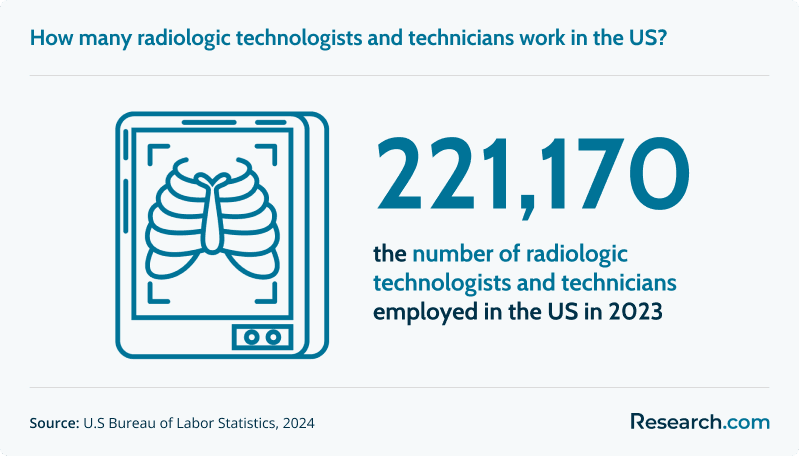
Specialization can help radiologic technologists move into more focused roles, but requirements vary by employer, state, and credentialing body. In 2023, there were a total of 221,170 radiologic technologists and technicians in the US.
How Do You Choose the Best and Most Affordable Associate’s Degree in Radiology?
Choosing the right radiology associate program requires more than comparing tuition. Use the following criteria before applying:
- Confirm accreditation. Look for accreditation by the Joint Review Committee on Education in Radiologic Technology (JRCERT) or another pathway recognized for your certification and state licensure goals.
- Verify clinical placement. Ask whether the school assigns clinical sites, helps locate them, or requires students to secure their own placement.
- Check state eligibility. Make sure the program accepts students from your state and meets your state’s licensure or certification requirements.
- Compare total cost. Include tuition, program fees, textbooks, uniforms, immunizations, insurance, travel, exam fees, and lost work hours.
- Review ARRT preparation. Ask about exam preparation, graduate outcomes, and whether recent graduates have successfully pursued certification.
- Assess support services. Strong advising, tutoring, technical support, and clinical coordination are especially important in online programs.
- Match the format to your life. Online coursework helps only if your work schedule, family obligations, and transportation allow you to complete clinical hours.
| Question to ask | Why it matters |
| Is the program accredited and recognized for ARRT eligibility? | Certification eligibility can affect employment options. |
| Where will I complete clinical rotations? | Clinical placement determines whether the program is logistically realistic. |
| Does the program meet requirements in my state? | Online programs may not be approved everywhere. |
| What is the total cost after fees and supplies? | Program fees and clinical expenses can change affordability. |
| What happens if I fail a course or cannot complete a clinical rotation? | Health programs often have strict progression policies. |
How Are Current Trends Changing Radiology Education?
Radiology education is adapting to digital imaging, telehealth workflows, simulation tools, and more advanced imaging software. Programs increasingly need to prepare students for image quality control, electronic health record use, digital communication with care teams, and technology-supported clinical decision-making. Simulation, augmented reality, and virtual reality may supplement instruction, but they do not replace required supervised clinical practice. Students comparing timelines may also want to review 1-year radiology tech programs to understand the trade-offs between speed, accreditation, and clinical readiness.
What Challenges Do Online Radiology Students Face?
Online radiology students often manage three demanding responsibilities at once: digital coursework, scheduled clinical hours, and technical learning tools. Common challenges include asynchronous course deadlines, limited clinical site options, communication delays, and the need to practice hands-on skills outside a traditional campus environment. Strong students plan their weekly schedule early, communicate with clinical coordinators, keep backup technology available, and ask about support services before enrollment. Those considering future degree completion may also compare accelerated online degrees that offer structured pathways beyond the associate level.
How Online Radiology Students Gain Practical Experience
Online radiology programs cannot be completed through lectures alone. Students must demonstrate patient care, positioning, equipment handling, safety procedures, and professional judgment in supervised settings. Practical training usually happens through clinical rotations, internships, simulation activities, and faculty-supervised competency checks.
Clinical Rotations and Internships
Clinical rotations place students in hospitals, clinics, imaging centers, or similar healthcare facilities where they apply classroom concepts with real patients and imaging teams. Even when lectures are online, clinical hours usually follow a fixed schedule and may require commuting, uniforms, health documentation, background checks, and professional conduct standards.
Some online associate degrees provide clinical coordination support or maintain partnerships with facilities near approved student locations. Before enrolling, ask whether the school places students directly or expects students to locate a site independently.
Online Simulation Labs
Simulation labs allow students to practice decision-making, imaging concepts, positioning logic, and equipment-related scenarios in a controlled environment. These tools can help students prepare for clinical work, but they are usually a supplement rather than a replacement for in-person clinical requirements.
Certification Preparation
Clinical rotations and simulations support readiness for certification exams such as the ARRT exam by helping students connect theory with practice. Students who graduate with documented clinical competence are better prepared to transition into entry-level radiography roles, although employment and salary outcomes are never guaranteed.
Choosing a Program With Strong Clinical Training
When comparing online radiology programs, prioritize clinical placement quality. Ask how many hours are required, where rotations occur, whether evening or weekend clinicals are available, and what happens if a site becomes unavailable. Geographic flexibility can be valuable, but only if the school has a realistic plan for approved clinical supervision near you.
What Technical Requirements Are Needed for Online Radiology Programs?
Students need reliable technology to participate in online coursework, virtual labs, video meetings, digital assessments, and simulation-based learning. At minimum, expect to need a dependable high-speed internet connection, a computer that meets current hardware and software requirements, access to the school’s learning management system, secure video conferencing tools, and the ability to follow digital privacy and security procedures when clinical information is discussed. Students exploring related allied health paths may also compare technology expectations in areas such as accredited online pharmacy school options.
Can Radiology Graduates Move Into Healthcare Administration?
Radiologic technologists can move toward supervisory or administrative roles after gaining clinical experience, but an associate degree alone may not be enough for management positions. Advancement often requires leadership training, budgeting knowledge, staffing experience, regulatory awareness, and sometimes a bachelor’s or graduate credential. Students interested in faster leadership pathways can explore the quickest way to become a healthcare administrator to compare healthcare administration education options.
What Student Support Services Should Affordable Online Radiology Programs Offer?
Strong support services can make the difference between finishing and falling behind. Look for academic advising, tutoring for science and imaging courses, clinical placement coordination, technical help, career services, exam preparation resources, and faculty access. Because radiology programs are sequential and clinically regulated, students should also ask about remediation policies, missed clinical hour procedures, and support for students who need help balancing work with program requirements.
What Career Paths Are Available With an Associate’s Degree in Radiology?
Graduates with an associate degree in radiology typically begin in diagnostic imaging and may later specialize. Common career directions include:
- Radiologic technologist. Performs X-ray and other diagnostic imaging exams under appropriate clinical protocols.
- MRI technologist. Operates MRI scanners to capture detailed images of organs and tissues.
- CT technologist. Uses computed tomography systems to produce cross-sectional images.
- Mammography technologist. Performs breast imaging exams used in screening and diagnosis.
- Bone densitometry technologist. Conducts imaging exams that assess bone density and related conditions.
- Radiation therapy technologist. Delivers radiation treatments according to oncology care plans after specialized preparation.
- Interventional radiologic technologist. Supports minimally invasive procedures by using imaging to help guide instruments inside the body.
Radiologic technologists commonly work in hospitals, outpatient centers, diagnostic laboratories, physician offices, and imaging clinics. Some professionals later change direction within healthcare. For example, students considering nursing can compare online accelerated BSN programs or advanced nursing options such as the cheapest MSN programs online.
Radiology is not the right fit for everyone. It requires patient contact, physical stamina, clinical professionalism, and comfort with medical technology. Students still comparing fields may also want to review affordable options in online engineering management programs, the cheapest online MBA in information technology, cheap online RN to MSN degrees, or cheap online construction management programs.
How Can I Advance My Career With a Radiology Associate Degree?
After earning an associate degree and gaining experience, radiologic technologists often advance by adding specialty credentials in MRI, CT, mammography, or other modalities. ARRT credentials can help demonstrate focused competence and may make a candidate more competitive for specialized imaging roles, depending on employer needs and state rules.
Another pathway is further education. A bachelor’s degree in radiologic sciences, imaging sciences, healthcare administration, or a related field can support advancement into leadership, education, or department management. Technologists interested in administration may compare options such as 1-year MHA programs online after meeting admission requirements.
Radiology experience can also support careers in clinical education, applications training, imaging equipment sales, quality assurance, or healthcare operations. The strongest advancement strategy is to combine clinical credibility with targeted credentials and continuing education.
What Is the Job Market for Radiology Associate Degree Graduates?
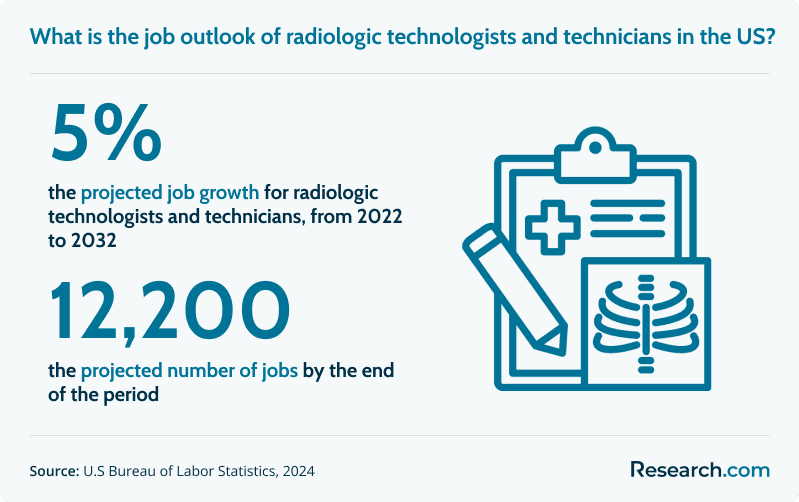
The job market for radiology associate degree graduates is supported by demand for diagnostic imaging services in hospitals, outpatient care centers, and diagnostic laboratories. From 2022 to 2032, radiologic technologists and technician jobs are expected to grow at a 5% rate, translating to approximately 12,200 new job openings in the field. Actual job prospects depend on location, certification, clinical experience, employer demand, and willingness to work varied shifts.
What Legal and Ethical Responsibilities Do Radiologic Technologists Have?
Radiologic technologists must protect patient privacy, follow radiation safety standards, communicate respectfully, and operate within their legal scope of practice. Key responsibilities include HIPAA compliance, accurate patient identification, informed consent awareness, confidentiality, radiation protection, quality control, and adherence to state-specific rules. Similar compliance expectations appear in other healthcare business and data roles, including fields connected to medical billing and coding salary pathways.
How Do Online Radiology Degrees Compare to Other Online Medical Degree Programs?
Online radiology associate programs are narrower and more technical than many broader healthcare degrees. They focus on diagnostic imaging, radiographic procedures, patient positioning, radiation safety, and clinical competencies. By contrast, online medical degree programs may cover a wider range of healthcare roles, some of which are administrative, clinical support-oriented, or designed for later advanced study. Choose radiology if you want imaging-focused clinical work; choose another online healthcare program if you prefer broader patient care, administration, billing, public health, or laboratory pathways.
Why Is Accreditation Important for an Online Associate’s Degree in Radiology?
Accreditation is one of the most important factors in radiology education. Accredited programs meet defined academic, clinical, and professional standards. Programs accredited by recognized agencies such as the Joint Review Committee on Education in Radiologic Technology (JRCERT) are commonly designed to support eligibility for certification exams such as the ARRT exam.
Accreditation can also affect employer trust, transfer credit options, eligibility for financial aid, and entry into advanced radiology or healthcare programs. A low-cost program that does not meet certification or licensure expectations may cost more in the long run if graduates cannot qualify for the roles they want.
Students comparing affordability across associate programs can also review this guide to the cheapest associate degree online, but radiology students should always prioritize accreditation and clinical eligibility over price alone.
Can Accelerated Healthcare Programs Enhance a Radiology Career?
Short healthcare programs can help radiology students or graduates build complementary skills, but they should not be treated as substitutes for accredited radiologic technology training. A focused option such as a 6-week medical assistant program may strengthen patient-care exposure, clinic workflow knowledge, or administrative awareness. This can be useful for students who want broader healthcare experience, but radiology certification and licensure still require the appropriate radiologic technology pathway.
Common Mistakes to Avoid When Choosing an Online Radiology Program
| Mistake | Why it can hurt you | Better approach |
| Choosing the lowest tuition without checking fees | Clinical costs, supplies, travel, and exam fees can raise the real price. | Ask for a full cost estimate before applying. |
| Ignoring accreditation | You may risk certification, licensure, or employer recognition issues. | Verify accreditation and ARRT eligibility directly. |
| Assuming “online” means no campus or clinical attendance | Radiology requires hands-on clinical practice. | Confirm clinical locations, schedules, and hour requirements. |
| Overlooking state authorization | A program may not be approved for students in every state. | Ask admissions and your state licensing authority before enrolling. |
| Relying only on rankings | A highly ranked program may not fit your location, schedule, or licensure needs. | Use rankings as a starting point, then verify fit. |
| Assuming salary outcomes are guaranteed | Pay varies by state, employer, shift, certification, and experience. | Compare local job postings and employer requirements. |
References
- Data USA. (2024). Radiologic technologists and technicians. Retrieved July 8, 2024, from Data USA.
- U.S. Bureau of Labor Statistics. (2024). Radiologic technologists and technicians. Retrieved July 8, 2024, from BLS.
- U.S. Bureau of Labor Statistics. (2024). Radiologists. Retrieved July 8, 2024, from BLS.
Key Insights
- The most affordable online radiology associate degree is not simply the cheapest program; it is the lowest-cost accredited program that can place you in approved clinical training and prepare you for certification.
- Expect a hybrid experience. Radiology lectures may be online, but patient positioning, equipment use, radiation safety, and clinical competencies must be practiced in person.
- Program costs in this list range from approximately $7,400 to $25,900, but total cost should include fees, travel, uniforms, health requirements, supplies, and exam expenses.
- JRCERT accreditation, ARRT exam preparation, and state licensure alignment should be verified before enrollment.
- Radiology can lead to entry-level imaging work and later specialization in CT, MRI, mammography, bone densitometry, radiation therapy, or interventional radiology support.
- Before applying, ask where clinicals happen, whether the program accepts students in your state, how graduates qualify for certification, and what support is available if you struggle with online coursework or clinical scheduling.
Other Things You Should Know About the Most Affordable Online Associate's Degree in Radiology
Yes. Programs accredited by the Joint Review Committee on Education in Radiologic Technology require in-person clinical rotations, usually about 1,000 hours, at approved healthcare sites. Online coursework covers theory, but hands-on patient positioning, safety, and imaging practice must be completed onsite.
The curriculum typically includes courses in radiographic procedures, radiation physics, anatomy and physiology, and patient care. Students also learn about radiographic equipment and image evaluation, ensuring a comprehensive education in radiological sciences for effective entry-level employment.


