
2027 Most Affordable Online Medical Billing and Coding Courses

Co-Founder and Chief Data Scientist
Searching for the most affordable online medical billing and coding courses offering genuine value for money can be daunting. With so many options available, I have seen prospective students struggling to find the perfect balance between cost-effectiveness and quality education.
In this guide, I present research and insights into choosing the most affordable online medical billing and coding courses. This is for individuals to embark on their journey toward a rewarding career in healthcare administration with confidence and clarity.
What are the benefits of getting an affordable online medical billing and coding course?
- Medical billing and coding professionals are in demand in physician offices and clinics, hospitals, and urgent care centers, where they handle coding, billing, and claims processing.
- Medical billers and coders can typically earn salaries ranging from $40,000 to $60,000 per year.
- Completing an online affordable medical billing and coding course can enhance your qualifications and improve your prospects for career advancement and higher earning potential within the healthcare industry.
What can I expect from an affordable online medical billing and coding course?
In an online medical billing and coding course, you can expect to cover various topics related to healthcare administration, medical terminology, coding systems, insurance claims processing, and regulatory compliance.
You will study the structure of the healthcare system, including healthcare delivery models, insurance types, and regulatory requirements. You will also learn how to assign diagnosis codes using the International Classification of Diseases (ICD) coding system, which is used to accurately represent patient diagnoses on insurance claims and medical records.
Where can I work with an affordable online medical billing and coding course?
Completing an online medical billing and coding course can open up various career opportunities in the healthcare industry. Hospitals employ medical billers and coders to ensure accurate coding of medical diagnoses and procedures for billing purposes, as well as to process insurance claims and manage reimbursement.
Medical billing and coding professionals are in demand in physician offices and clinics, where they handle coding, billing, and claims processing for services provided by healthcare practitioners such as doctors, surgeons, and specialists.
Outpatient clinics, urgent care centers, specialty healthcare facilities, and health insurance companies often hire medical billers and coders to manage their billing and coding processes and ensure compliance with healthcare regulations.
How much can I make with an affordable online medical billing and coding course?
The salary for individuals with training and certification in medical billing and coding can vary based on factors such as location, level of experience, certifications obtained, and the specific industry or employer. However, here are some medical coder salary ranges you can expect:
- Entry-Level Positions: Those starting out in the field may earn salaries ranging from $30,000 to $40,000 per year, depending on factors such as location and employer.
- Mid-Level Positions: With a few years of experience and possibly additional certifications, medical billers and coders can typically earn salaries ranging from $40,000 to $60,000 per year.
- Experienced Professionals: Experienced medical billers and coders with several years of experience and specialized certifications may earn salaries upwards of $60,000 to $80,000 per year or more, particularly in high-demand areas or specialized fields.
- 2027 Affordable Online Medical Billing and Coding Course List of Programs
- How long does it take to complete an affordable online medical billing and coding course? Course Length
- How does an affordable online medical billing and coding course compare to an on-campus program? How does an affordable online medical billing and coding course compare to an on-campus program?
- What is the average cost of an affordable online medical billing and coding course? Course Cost
- What are the financial aid options for students enrolling in an affordable online medical billing and coding course? What are the financial aid options for students enrolling in an affordable online medical billing and coding course?
- What are the prerequisites for enrolling in an affordable online medical billing and coding course? Admission Requirements
- What courses are typically in an affordable online medical billing and coding course? What courses are typically in an affordable online medical billing and coding course?
- What types of specializations are available in an affordable online medical billing and coding course? What types of specializations are available in an affordable online medical billing and coding course?
- How to choose the best affordable online medical billing and coding course? How to choose the best affordable online medical billing and coding course?
- What career paths are available for graduates of affordable online medical billing and coding course? Career Paths
- What is the job market for graduates of affordable online medical billing and coding course? Job Outlook
- What are the career advancement opportunities for certified medical billing and coding professionals? What are the career advancement opportunities for certified medical billing and coding professionals?
- How Are Technological Advancements Reshaping Medical Billing and Coding? How Are Technological Advancements Reshaping Medical Billing and Coding?
- Are there any risks associated with choosing an online medical billing and coding course? Are there any risks associated with choosing an online medical billing and coding course?
- How Can You Verify the Credibility of Your Online Medical Billing and Coding Course? How Can You Verify the Credibility of Your Online Medical Billing and Coding Course?
- Is medical billing and coding the right path compared to other healthcare administration degrees? Is medical billing and coding the right path compared to other healthcare administration degrees?
- What are the typical costs and benefits of accelerated online courses for medical billing and coding? What are the typical costs and benefits of accelerated online courses for medical billing and coding?
- What student support and career guidance services are offered? What student support and career guidance services are offered?
- How Does the ROI of an Online Medical Billing and Coding Course Compare to Other Affordable Programs? How Does the ROI of an Online Medical Billing and Coding Course Compare to Other Affordable Programs?
- What Challenges Might You Face and How Can You Overcome Them? What Challenges Might You Face and How Can You Overcome Them?
- Maximizing Career Potential with Healthcare Administration Degrees Maximizing Career Potential with Healthcare Administration Degrees
- Should You Consider Advanced Clinical Degrees to Complement Your Billing and Coding Expertise? Should You Consider Advanced Clinical Degrees to Complement Your Billing and Coding Expertise?
- What are the benefits of pairing technical billing skills with advanced clinical training? What are the benefits of pairing technical billing skills with advanced clinical training?
2027 Affordable Online Medical Billing and Coding Courses: Costs, Schools, Timelines, and Career Paths
Choosing an online medical billing and coding course is usually a practical career decision: you want training that is affordable, flexible, credible, and strong enough to prepare you for entry-level healthcare administration work or certification exams. The challenge is that programs vary widely in price, length, accreditation, curriculum depth, student support, and career preparation.
This guide is designed for career changers, working adults, recent high school graduates, and healthcare support workers who want a clear way to compare affordable online medical billing and coding courses. You will learn how long programs take, what they cost, what schools offer lower-cost options, what courses you can expect, which financial aid options may apply, and how to avoid choosing a program that does not support your goals.
Quick answer: What is the best affordable online medical billing and coding course?
The best affordable online medical billing and coding course is one that is offered by an accredited institution, fits your budget, prepares you for billing and coding work, includes coursework in medical terminology, ICD coding, CPT coding, insurance claims, compliance, and electronic records, and provides enough student support for online learning. Certificate programs are often the fastest option, while associate degree programs provide broader healthcare administration preparation.
If your priority is the lowest upfront cost, community colleges often offer the strongest value. If your goal is a broader credential or a path into healthcare management, an associate degree or later completion of a healthcare management program online may be worth considering.
How Research.com evaluates schools
Research.com ranks programs by reviewing school and program information from established education data sources and publicly available institutional details. Our goal is to help readers compare options based on credibility, affordability, delivery format, accreditation, and career relevance rather than relying only on advertising claims.
You can review our full methodology for more detail. The ranking process uses information from sources such as the IPEDS database, Peterson’s database, the College Scorecard database, and the National Center for Education Statistics.
When comparing online medical billing and coding programs, students should verify details directly with each school. Tuition, fees, certificate requirements, transfer policies, financial aid availability, and certification preparation can change.
1. Eastern Gateway Community College
Eastern Gateway Community College offers online medical coding training for students who want a flexible route into healthcare administration support roles. The program began in 2015 and is structured for learners who need asynchronous coursework they can complete around work or family responsibilities.
- Program Length: 1-2 years
- Tracks/Concentrations: Medical Coding
- Cost per Credit: $100-$150
- Required Credits to Graduate: 30-90
- Accreditation: Higher Learning Commission (HLC)
2. Purdue University Global-Indianapolis
Purdue University Global-Indianapolis provides online medical billing and coding coursework for working adults, career changers, and students seeking structured preparation in healthcare coding and billing practices. Launched in 2013, the program includes faculty support and access to coding-related technology and software used in the field.
- Program Length: 18-24 months (certificate program), 2-4 years (associate degree)
- Tracks/Concentrations: Medical Billing and Coding
- Cost per Credit: $300-$400
- Required Credits to Graduate: 30 - 90
- Accreditation: Higher Learning Commission (HLC)
3. Drexel University
Drexel University offers online medical billing and coding courses with a focus on healthcare revenue cycle management and coding procedures. Established in 2010, the program is intended for students entering the field as well as professionals who want to strengthen billing, coding, and revenue cycle skills through live virtual instruction, self-paced modules, and interactive practice.
- Program Length: 1-2 years
- Tracks/Concentrations: Medical Billing and Coding
- Cost per Credit: $500-$700
- Required Credits to Graduate: 30 - 90
- Accreditation: Middle States Commission on Higher Education (MSCHE)
4. West Georgia Technical College
West Georgia Technical College delivers online medical coding education for students preparing for entry-level healthcare administration and coding positions. Launched in 2017, the program covers coding fundamentals, billing systems, healthcare rules, and electronic health records.
- Program Length: 1-2 years
- Tracks/Concentrations: Medical Coding
- Cost per Credit: $100-$150
- Required Credits to Graduate: 30 - 90
- Accreditation: Southern Association of Colleges and Schools Commission on Colleges (SACSCOC)
5. Cowley County Community College
Cowley County Community College offers online medical coding coursework that emphasizes medical terminology, coding systems, and insurance billing procedures. Established in 2014, the program is designed to help students build practical skills and prepare for industry certification pathways.
- Program Length: 1-2 years
- Tracks/Concentrations: Medical Coding
- Cost per Credit: $100-$150
- Required Credits to Graduate: 30-60 (certificate programs) and 60-90 (associate degree programs)
- Accreditation: Higher Learning Commission (HLC)
6. Pima Community College
Pima Community College provides an online medical billing and coding certificate option for students seeking flexible preparation for healthcare administration roles. Initiated in 2016, the program uses asynchronous delivery so students can access lectures, assignments, and learning resources on their own schedules.
- Program Length: 1-2 years
- Tracks/Concentrations: Medical Billing and Coding
- Cost per Credit: $85-$100
- Required Credits to Graduate: 30-60 (certificate programs) and 60-90 (associate degree programs)
- Accreditation: Higher Learning Commission (HLC)
7. University of Alaska Fairbanks
The University of Alaska Fairbanks offers online medical coding coursework for students interested in healthcare administration, records, and coding-related positions. Launched in 2018, the program is built around accessible online study and industry-recognized preparation.
- Program Length: 1-2 years
- Tracks/Concentrations: Medical Coding
- Cost per Credit: $200-$300
- Required Credits to Graduate: 30-60 (certificate programs) and 60-90 (associate degree programs)
- Accreditation: Northwest Commission on Colleges and Universities (NWCCU)
8. Columbus State Community College
Columbus State Community College offers online medical coding coursework for students preparing for entry-level work in healthcare administration and coding. Established in 2015, the program uses asynchronous online classes so students can complete requirements with greater scheduling flexibility.
- Program Length: 1-2 years
- Tracks/Concentrations: Medical Coding
- Cost per Credit: $100-$150
- Required Credits to Graduate: 30 - 90
- Accreditation: Higher Learning Commission (HLC)
9. CUNY Graduate School and University Center
The CUNY Graduate School and University Center offers online billing and coding education designed for working professionals and adults changing careers. Launched in 2017, the program focuses on certification preparation and practical billing and coding skills for healthcare environments.
- Program Length: 1-2 years
- Tracks/Concentrations: Medical Billing and Coding
- Cost per Credit: Approximately $300-$400
- Required Credits to Graduate: 30 - 90
- Accreditation: Middle States Commission on Higher Education (MSCHE)
10. San Juan College
San Juan College offers an online medical coder-biller certificate pathway for students who want flexible training for healthcare administration and coding roles. Established in 2016, the fully online format allows students to complete coursework from any location with internet access.
- Program Length: 1-2 years
- Tracks/Concentrations: Medical Billing and Coding
- Cost per Credit: $70-$100
- Required Credits to Graduate: 30 - 90
- Accreditation: Higher Learning Commission (HLC)
How Long Does an Online Medical Billing and Coding Course Take?
Most online medical billing and coding programs are shorter than traditional degree programs. The right length depends on whether you want a focused certificate, a broader associate degree, or a fast-paced accelerated course. The lack of a trained workforce is the top challenge identified by 93% of health information professionals in collecting and coding patient data, which is one reason structured training and certification preparation matter.
Medical billing and coding programs are career-focused credentials. They are usually faster than unrelated degree paths, such as the cheapest engineering degree programs, because they concentrate on healthcare documentation, coding systems, insurance billing, and compliance.
| Program Type | Typical Completion Time | Best For | Main Trade-Off |
| Certificate program | 6 months to 1 year | Students who want a faster route into entry-level billing or coding roles | Less broad than a degree |
| Associate degree program | 2 years | Students who want general education, healthcare administration context, and transfer potential | Longer and usually more expensive |
| Self-paced course | Varies by student | Independent learners with unpredictable schedules | Requires strong time management |
| Accelerated course | As little as a few months | Career changers who need quick, focused training | Can be intensive and may provide less practice time |
Certificate programs: 6 months to 1 year
Certificate programs usually focus on the technical skills needed for medical billing and coding work. Like affordable paralegal certificate options, they are often designed for students who want targeted job preparation without completing a full degree.
Associate degree programs: 2 years
Associate degree programs may include medical billing and coding coursework within a broader field such as health information technology or medical office administration. The degree usually takes 2 years of full-time study, although the coding-specific portion may be closer to 1 year.
Self-paced programs
Self-paced online courses can be helpful if you work irregular hours or need more time to master coding concepts. The downside is that progress depends heavily on your discipline, study schedule, and comfort with online learning platforms.
Accelerated programs
Accelerated courses compress core content into a shorter period. They may be useful if you need rapid training, but students should confirm that the program includes enough practice with diagnosis codes, procedure codes, insurance claims, and compliance scenarios.
Online vs. On-Campus Medical Billing and Coding Programs
Nearly 20% of online students enrolled in health and medicine focused topics in 2023, reflecting strong interest in flexible healthcare education. For medical billing and coding, online learning can work especially well because much of the job involves digital records, coding manuals or software, documentation review, and claims systems.
| Factor | Online Program | On-Campus Program | Best Choice If... |
| Schedule | Often asynchronous or flexible | Requires set class times and commuting | Choose online if you work or have caregiving responsibilities |
| Interaction | Uses email, discussion boards, video meetings, and online tutoring | Offers face-to-face access to instructors and classmates | Choose campus if you learn best through in-person support |
| Practice | May use simulations, assignments, coding software, and virtual records | May include labs or in-person support sessions | Choose the program with stronger hands-on coding practice |
| Cost | Can reduce commuting and relocation expenses | May include transportation, parking, or campus fees | Compare total cost, not only tuition |
| Accountability | Requires self-direction | Provides more external structure | Choose campus if you need a fixed weekly routine |
Online programs are not automatically easier. A strong online medical billing and coding course still requires careful reading, repeated coding practice, attention to detail, and consistent study habits.
How Much Does an Affordable Online Medical Billing and Coding Course Cost?
Costs vary by institution, credential type, length, course materials, fees, and whether the program includes certification exam preparation. As with the cheapest online project management degree programs, the listed tuition is only one part of the total cost. Students should also ask about textbooks, coding manuals, technology fees, exam vouchers, proctoring fees, and transcript fees.
If you want a budget-focused starting point, compare the schools in this guide with a low-cost medical coding and billing online program and verify whether the program matches your certification and career goals.
| Program Type | Estimated Cost Range |
| Certificate Programs | $1,000 to $5,000 |
| Diploma Programs | $2,000 to $10,000 |
| Associate Degree Programs | $5,000 to $20,000 |
- Certificate Programs: Online medical billing and coding certificates commonly cost $1,000 to $5,000 and may take 6 months to 1 year to complete.
- Diploma Programs: Diploma programs often cost $2,000 to $10,000 or more and may include broader healthcare administration content in addition to billing and coding.
- Associate Degree Programs: Associate degrees in health information technology, medical office administration, or related areas may cost $5,000 to $20,000 or more and typically require 2 years of full-time study.
Questions to ask before paying tuition
- Does the tuition include textbooks, coding manuals, software, and exam preparation?
- Are certification exam fees included or separate?
- Is the program eligible for federal financial aid?
- Can credits transfer into an associate or bachelor’s degree later?
- What refund policy applies if you withdraw?
- Does the school publish job placement or certification pass information?
Financial Aid Options for Online Medical Billing and Coding Students
Financial aid availability depends on the school, program type, enrollment status, and student eligibility. Students in short noncredit programs may have fewer aid options than students enrolled in credit-bearing certificate or degree programs. Similar cost-planning concerns apply to students evaluating affordable online master's public administration programs.
Federal financial aid
Eligible students may qualify for federal aid such as Pell Grants, Direct Subsidized and Unsubsidized Loans, and Federal Work-Study. To be considered, students must complete the Free Application for Federal Student Aid, commonly known as the FAFSA. Always confirm that the specific program is eligible before enrolling.
State financial aid
Many states offer grants, scholarships, and other aid programs for residents. State grant aid for each full-time undergraduate student increased from $790 to $1,070 between 2011–12 and 2020–21. Students should check their state education agency or the school’s financial aid office for available programs.
Institutional aid
Some colleges offer scholarships, tuition discounts, or grants based on financial need, academic performance, program enrollment, or local workforce priorities. Ask whether aid applies to online learners and whether part-time students qualify.
Private scholarships
Students preparing for healthcare administration, medical coding, or medical billing careers may find scholarships through professional associations, community foundations, employers, and healthcare organizations.
This chart shows where most medical billers and coders are employed.
Admission Requirements and Prerequisites
Most affordable online medical billing and coding courses have accessible entry requirements. Based on a report by the American Health Information Management Association, 82% of health information professionals focus on educating medical billing and coding staff on privacy protection, security standards, and confidentiality requirements. That makes foundational readiness important, even when admissions requirements are modest.
- High school diploma or equivalent: Most programs require a high school diploma or GED certificate.
- Basic computer skills: Online students need to use email, word processing tools, web browsers, learning management systems, and digital course materials.
- English language proficiency: Students must read clinical documentation, understand course materials, communicate with instructors, and document information accurately.
- Basic mathematics skills: Billing tasks may require arithmetic, payment calculations, and attention to numerical accuracy.
- Time management: Online programs require regular study time, especially when courses are asynchronous or self-paced.
Common Courses in an Online Medical Billing and Coding Program
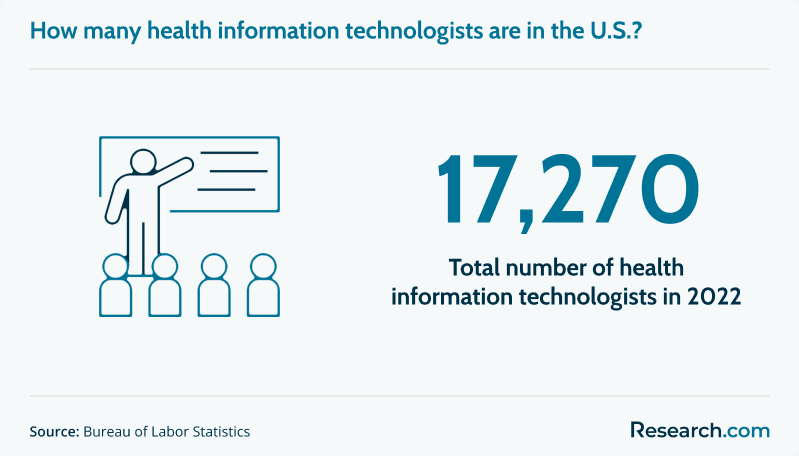
Online medical billing and coding programs usually combine healthcare terminology, coding systems, insurance reimbursement, compliance, and electronic records. In 2022, general medical and surgical hospitals employed 17,270 health information technologists, the highest among various industries.
Course content is also evolving as schools respond to artificial intelligence in medical coding, automation, and electronic health record workflows.
| Course Area | What You Learn | Why It Matters |
| Introduction to Medical Billing and Coding | Basic responsibilities of billers and coders, claims flow, and the role of accurate documentation | Gives beginners a practical view of the revenue cycle |
| Medical Terminology | Language used in anatomy, procedures, diagnoses, and clinical documentation | Helps coders understand provider notes and assign appropriate codes |
| Healthcare Systems and Regulations | Insurance structures, HIPAA, healthcare delivery models, and coding rules | Supports compliant billing and patient data protection |
| ICD Coding | Diagnosis coding using the International Classification of Diseases system | Diagnosis codes are central to medical records and insurance claims |
| CPT Coding | Procedure and service coding using Current Procedural Terminology | Procedure codes help document and bill for services provided |
Medical coding is different from software coding. Students comparing this path with technology training should review how healthcare coding differs from the programming taught in the best coding bootcamp options.
Specializations in Medical Billing and Coding
Some programs allow students to focus on a specific billing or coding environment. From 2021 to 2022, the average median salary of certified professional coder increased from $58,055 to $58,895. Specialization can help students build stronger expertise, but it should match the type of employer they want to pursue.
Students interested in related front-office healthcare roles may also compare medical coding with a medical office certificate online.
Hospital coding
Hospital coding focuses on inpatient and outpatient services, diagnosis related group coding, hospital reimbursement methods, documentation standards, and Medicare-related compliance considerations.
Physician office coding
This track emphasizes coding and billing in clinics, medical practices, and outpatient facilities. Students learn how to work with physician services, CPT codes, payer rules, and reimbursement workflows.
Insurance claims processing
This area focuses on claim forms, payer requirements, claims submission, denial management, and appeals. It is useful for students who want to work with insurance billing departments or third-party billing companies.
Medical coding auditing
Coding auditing prepares students to review coding accuracy, identify documentation problems, and check whether coding practices follow relevant standards and payer rules.
Medical coding compliance
Compliance-focused coursework teaches students how to reduce risk by following coding standards, documentation rules, privacy requirements, and payer policies.
How to Choose the Most Affordable Online Medical Billing and Coding Course
Approximately 70% of students enrolled in online colleges said they started the process of choosing their school by visiting the institution's website. That is a reasonable first step, but it should not be the only step. A polished website does not prove that a program is affordable, accredited, transferable, or useful for certification preparation.
- Verify accreditation first. Choose programs offered by accredited institutions or programs with clear recognition in the field. Accreditation affects credit transfer, financial aid, and employer confidence.
- Match the credential to your goal. Choose a certificate if you want fast technical preparation. Consider an associate degree if you want broader healthcare administration knowledge or a possible transfer path.
- Review the curriculum in detail. Look for medical terminology, ICD coding, CPT coding, healthcare regulations, insurance claims, electronic records, and billing workflows.
- Check certification preparation. Ask whether the program prepares students for recognized exams and whether exam costs are included.
- Compare total cost. Include tuition, fees, books, coding manuals, technology requirements, exam vouchers, and retake fees.
- Evaluate instructor qualifications. Strong programs use instructors with healthcare coding, billing, health information, or revenue cycle experience.
- Ask about online support. Look for tutoring, academic advising, technical support, library access, disability services, and career guidance.
- Check transfer and completion policies. If you may pursue a degree later, confirm whether credits transfer into related programs.
Common mistakes to avoid
| Mistake | Why It Can Hurt You | Better Approach |
| Choosing only by lowest tuition | A cheap course may exclude books, coding tools, exam prep, or support | Compare total program cost and included services |
| Ignoring accreditation | Credits may not transfer and aid options may be limited | Confirm institutional accreditation before enrolling |
| Assuming online means self-paced | Some online programs have fixed deadlines or live sessions | Ask about course format, pacing, and attendance requirements |
| Not checking certification alignment | You may finish the course but still need extra exam preparation | Ask which certification exams the curriculum supports |
| Relying only on rankings | A highly ranked program may not fit your schedule, budget, or state requirements | Use rankings as a shortlist, then verify program fit |
Career Paths After an Online Medical Billing and Coding Course
The average medical records specialist income in 2023 was $71,361. Graduates of online medical billing and coding programs may qualify for several entry-level healthcare administration, health information, and revenue cycle roles, depending on the credential completed, employer requirements, experience, and certification status.
Medical coder
Medical coders review clinical documentation and assign diagnosis, procedure, and service codes used in claims, records, reporting, and reimbursement. With additional experience and certification, coders may pursue credentials such as Certified Professional Coder or Certified Coding Specialist.
Medical biller
Medical billers prepare and submit claims, follow up with insurers, post payments, resolve billing issues, and help healthcare providers receive reimbursement for services.
Medical records technician
Medical records technicians maintain patient information, organize electronic health records, protect confidentiality, and support accurate health data management.
Health information technician
Health information technicians work with healthcare data, records, coding, billing, registries, or quality improvement functions in hospitals, clinics, nursing homes, and government agencies.
Medical office manager
Medical office managers oversee administrative operations in clinics and healthcare practices. Billing and coding knowledge can be useful for coordinating revenue cycle tasks, supervising office staff, and ensuring compliance.
This chart shows the average annual income of medical coders based on years of experience.
Job Market Outlook for Medical Billing and Coding Graduates
The job market for medical billing and coding graduates is tied to healthcare service volume, documentation requirements, insurance reimbursement, electronic records, and employer demand for accurate health information. The field can be a practical entry point into healthcare administration, but employment outcomes depend on location, certification, experience, and the quality of training.
The transition to electronic health records and the use of ICD-10 coding standards have increased the need for workers who can accurately interpret documentation and assign codes. As of 2023, 80% of health information professionals use a standardized coding system.
Healthcare organizations also focus on revenue cycle performance, compliance, and claim accuracy. Graduates who develop strong data and documentation skills may later explore adjacent roles, including database management careers, especially if they add technical training.
Many employers prefer applicants with professional certification, such as Certified Professional Coder or Certified Coding Specialist. Graduates who pair coursework with certification preparation may have a competitive advantage in the job market.
Career Advancement Opportunities for Certified Billing and Coding Professionals
Certification, experience, specialization, and additional education can help billing and coding professionals move beyond entry-level roles. Advancement is not guaranteed, but the following paths are common in healthcare administration settings.
- Supervisory and management roles: Experienced professionals may move into billing department supervision, revenue cycle coordination, or administrative team leadership.
- Specialized coding: Coders may focus on hospitals, physician offices, auditing, compliance, or specific healthcare service areas.
- Advanced certifications: Credentials such as Certified Coding Specialist can support movement into hospital coding, auditing, or higher-responsibility roles.
- Consulting: Experienced professionals may advise healthcare organizations on coding accuracy, denial management, documentation improvement, or compliance.
- Further education: Students who want broader leadership options may consider healthcare administration, health information management, or related degrees.
How Technology and AI Are Changing Medical Billing and Coding
Medical billing and coding work is becoming more technology-driven. Electronic health records, claims systems, automation tools, and AI-assisted coding software can streamline repetitive tasks and flag documentation issues. These tools do not remove the need for human judgment; coders still need to understand medical terminology, payer rules, documentation quality, compliance, and when automated suggestions may be incorrect.
Students should look for programs that teach current coding systems and provide exposure to realistic electronic records, billing workflows, and coding practice. Programs that ignore technology may leave graduates less prepared for modern revenue cycle environments. For more context on labor demand and the realities of the role, review Research.com’s guide on whether medical billing and coding is in demand.
Risks of Choosing the Wrong Online Medical Billing and Coding Course
Online programs can be flexible and affordable, but they are not risk-free. The biggest risks include weak curriculum quality, limited instructor access, poor technical support, lack of certification preparation, unclear accreditation, and insufficient coding practice.
Before enrolling, compare the program with other healthcare education paths. For example, students evaluating administrative training may also look at online pharmacy programs to understand how different healthcare credentials vary in length, cost, clinical depth, and career outcomes.
Red flags to watch for
- The school does not clearly explain accreditation.
- The program promises guaranteed jobs or guaranteed salaries.
- Certification exam preparation is vague or missing.
- Students receive little access to instructors or tutoring.
- The total cost is unclear until after enrollment.
- The program does not include practice with ICD coding, CPT coding, claims, and documentation scenarios.
How to Verify Program Credibility
Credibility matters because billing and coding programs are career-focused. A low-cost course is not a good value if employers do not recognize it, credits cannot transfer, or the curriculum does not prepare students for certification or workplace expectations.
- Confirm institutional accreditation. Check the accreditor listed by the school and make sure the information is current.
- Review instructor qualifications. Look for instructors with coding, billing, health information, revenue cycle, or healthcare compliance experience.
- Ask about certification preparation. Find out which exams the program is designed to support.
- Check transfer policies. If you may continue into a degree, ask whether credits apply.
- Request outcome information. Ask about completion rates, certification exam preparation, employment support, and alumni outcomes when available.
- Read independent feedback carefully. Student testimonials can be useful, but they should not replace accreditation and curriculum verification.
Program credibility can affect long-term options in many healthcare fields. Students comparing administrative and clinical paths may find it useful to review Research.com’s guide on how to become a pharmacist salary to see how training requirements and salary expectations differ across healthcare careers.
Is Medical Billing and Coding Right Compared With Other Healthcare Administration Degrees?
Medical billing and coding is a strong fit for students who want a focused, technical healthcare administration role involving records, claims, codes, documentation, and reimbursement. It is less ideal for students who want direct patient care, broad management responsibility from the start, or a clinical scope of practice.
| Path | Best For | Typical Focus | When to Choose It |
| Medical billing and coding certificate | Students seeking faster entry into healthcare administration support work | Codes, claims, medical terminology, billing, compliance | Choose this if you want focused job preparation without a full degree |
| Associate degree in health information or medical office administration | Students wanting broader preparation and possible transfer options | Health records, office systems, healthcare administration, general education | Choose this if you want a wider academic foundation |
| Healthcare administration degree | Students aiming for leadership, operations, or management roles | Finance, policy, management, operations, leadership | Choose this if your long-term goal is administration beyond coding |
If your goal is to move into management quickly, options such as 1 year MHA programs online may be relevant after you complete a bachelor’s degree or meet graduate admissions requirements.
Accelerated Online Medical Billing and Coding Courses: Costs and Benefits
Accelerated online courses appeal to students who want to enter the healthcare workforce quickly. These programs may be useful, but speed should not be the only deciding factor. A very short course must still provide enough practice for coding accuracy, claim preparation, and certification readiness.
Cost of accelerated medical billing and coding courses
The cost for a 4-week online course can vary, but many programs fall within the range of $500 to $2,000. This price range may include study materials, online modules, and sometimes certification preparation. Longer programs can cost upwards of $3,000 or more.
Benefits of accelerated courses
- Fast completion: Accelerated programs may take 4 to 12 weeks, depending on structure and intensity.
- Focused content: The curriculum usually concentrates on core billing and coding knowledge rather than broader general education.
- Lower upfront cost: Shorter programs may cost less than longer diploma or degree programs.
- Online flexibility: Many accelerated options allow students to study remotely while balancing work or family commitments.
- Career-change potential: These courses can help adults test the healthcare administration field without committing immediately to a longer degree.
When an accelerated course may not be enough
- You need college credits that transfer into a degree.
- You want extensive instructor feedback and coding practice.
- You are new to healthcare and need more time with terminology and documentation.
- You want a credential from a college with broader student support services.
If you are considering a very short program, compare curriculum depth, total cost, and support services carefully. Research.com’s guide to 4 week online course for medical coding and billing cost can help you evaluate this faster route.
Student Support and Career Services to Look For
Support services can make the difference between finishing a program and falling behind. This is especially true for online learners who may be balancing coursework with jobs, caregiving, or other responsibilities.
- Academic advising: Helps students plan course loads and understand completion requirements.
- Tutoring: Useful for difficult topics such as coding guidelines, medical terminology, and claims processing.
- Technical support: Essential for online platforms, proctored exams, and digital course materials.
- Career services: May include resume help, interview preparation, job search guidance, and employer connections.
- Certification guidance: Helps students understand exam requirements, timelines, and preparation resources.
- Virtual networking: Webinars, alumni connections, and discussion forums can help students learn from working professionals.
Students who want a starting point for school comparison can explore accredited medical billing and coding schools and then verify each program’s support services directly.
How to Think About ROI for a Medical Billing and Coding Course
Return on investment is not just a salary comparison. For a medical billing and coding course, ROI depends on tuition, fees, certification costs, completion time, whether you can keep working while enrolled, employer recognition, local job demand, and your long-term career plan.
Students comparing ROI across fields should consider both cost and career direction. For example, the cheapest online masters in construction management may lead to a very different labor market and skill set than medical billing and coding. A lower-cost credential is only a good investment if it moves you toward the type of work you actually want.
ROI questions to ask
- What is the total cost after fees, books, technology, and certification exams?
- How quickly can I complete the program while maintaining my current responsibilities?
- Does the program prepare me for certification exams employers recognize?
- Can I use the credits toward a higher credential later?
- Are local employers hiring entry-level billers, coders, or health information workers?
- Does this program support my long-term plan, or is it only the cheapest option?
Challenges Online Students Face and How to Handle Them
Online medical billing and coding courses require independence. Students often struggle with pacing, technical issues, dense terminology, and limited real-time interaction. These challenges are manageable if you plan for them before classes start.
| Challenge | Why It Happens | How to Respond |
| Falling behind | Asynchronous courses can make deadlines feel distant | Create a weekly study schedule and set calendar reminders |
| Difficulty with medical terminology | Healthcare language is unfamiliar to many beginners | Use flashcards, repetition, and short daily review sessions |
| Limited hands-on practice | Some programs rely too heavily on readings | Choose courses with coding exercises, case examples, and simulations |
| Technical problems | Online platforms, browsers, and proctoring systems can fail | Test technology early and confirm support hours |
| Unclear career path | Students may not know which roles or certifications fit them | Use career services and speak with advisors before graduation |
Students who want more hands-on healthcare exposure may also compare billing and coding courses with medical assistant programs fast, which may involve more clinical or patient-facing preparation depending on the program.
How Medical Billing and Coding Can Lead to Healthcare Administration
Medical billing and coding can be a starting point for broader healthcare administration work. Professionals who understand claims, records, documentation, compliance, and reimbursement often develop knowledge that is useful in revenue cycle management, office supervision, and operations support.
If you want to move beyond technical coding work, a healthcare administration degree online accredited may help you build skills in leadership, healthcare policy, operations, budgeting, and organizational management.
This path may make sense if you enjoy the healthcare business environment and want to manage teams, improve administrative systems, or take on broader decision-making responsibilities over time.
Should You Pair Billing and Coding With Advanced Clinical Education?
Most medical billing and coding students do not need an advanced clinical degree. However, some professionals eventually become interested in clinical systems, pharmacy, patient care operations, or healthcare leadership roles that require deeper scientific and clinical preparation.
Comparing administrative credentials with schools with PharmD programs can help students understand the difference between revenue cycle work and clinical professional education. These paths differ substantially in cost, duration, prerequisites, licensure expectations, and career responsibilities.
Graduate Perspectives on Online Medical Billing and Coding Courses
- Sarah: "The online format made it possible for me to keep working while studying. I could review lessons after my family responsibilities were handled, and the course helped me build skills I could apply to healthcare administration roles. The instructor support and online platform made the program feel manageable."
- David: "I chose an online billing and coding course because I needed flexibility. The self-paced structure let me move through the material around my schedule, and the online resources helped me prepare for certification. Even without being on campus, I was able to connect with instructors and classmates through virtual discussions."
- Karylle: "I was unsure about online learning at first, but it helped me avoid commuting and gave me more control over my study schedule. Instructor feedback and the online learning community helped me stay motivated, and completing the program gave me confidence to pursue healthcare work."
Benefits of Combining Billing Skills With Clinical Knowledge
Some professionals benefit from understanding both the administrative and clinical sides of healthcare. Billing and coding skills build familiarity with documentation, claims, reimbursement, and compliance, while clinical education can deepen understanding of patient care, medications, workflows, and interdisciplinary teams.
This combination may be useful for professionals who want to work in revenue cycle leadership, clinical documentation improvement, compliance, or healthcare operations. Students considering deeper clinical education can compare options such as accelerated PharmD programs with administrative pathways before committing to a longer and more expensive credential.
References
- American Academy of Professional Coders (2023). 2023 Medical Coding and Billing Salary Report.
- American Health Information Management Association (2023). Social Determinants of Health Data.
- American Health Information Management Association (2023). Social Determinants of Health Data.
- American Health Information Management Association (2023). Data for Better Health.
- College Board (2023). Trends in Student Aid: Highlights.
- U.S. Bureau of Labor Statistics (2022). Health Information Technologists and Medical Registrars.
Key Insights
- Affordable does not always mean high value. Compare total cost, accreditation, certification preparation, support services, and transfer options before enrolling.
- Certificate programs are usually the fastest route. Many can be completed in 6 months to 1 year, while associate degree programs typically take 2 years.
- Community colleges often offer strong affordability. Several listed programs report cost-per-credit ranges near $100-$150, while some universities charge higher rates.
- Online learning is flexible but requires discipline. Students should confirm whether courses are self-paced, asynchronous, live, or deadline-driven.
- Certification preparation can affect employability. Many employers prefer certified coders, so ask which exams the curriculum supports.
- Technology skills are increasingly important. EHR systems, automated claims tools, and AI-assisted coding are reshaping daily work, making current software exposure valuable.
- Medical billing and coding can be a career entry point. Students who later want leadership roles may build from coding into healthcare administration, revenue cycle management, compliance, or health information careers.
Other Things You Should Know About Affordable Online Medical Billing and Coding Course
Yes. Most accredited online medical billing and coding courses require a high school diploma or GED before enrollment. Some programs also ask for basic computer skills and internet access. If the course leads to certification prep, schools may recommend English, biology, or keyboarding before starting.


