
2027 What Degree Is Needed to Become a Surgeon?

Co-Founder and Chief Data Scientist
Becoming a surgeon is not a matter of choosing a “surgery major.” In the United States, the required path is a bachelor’s degree, a medical degree, a license to practice medicine, and years of supervised surgical residency training. The decision matters because the route is long, expensive, competitive, and physically and emotionally demanding—but it can also lead to one of the highest-paid and most consequential careers in healthcare.
This guide explains what degree is needed to become a surgeon in 2026, how long the training takes, what surgeons actually do, how residency and board certification work, what salary and job outlook data show, and how to decide whether this career fits your goals, stamina, and financial situation.
Quick answer: What degree do you need to become a surgeon?
To become a surgeon in the U.S., you need a Doctor of Medicine (M.D.) or Doctor of Osteopathic Medicine (D.O.) degree after completing a bachelor’s degree and medical school prerequisites. There is no required undergraduate “surgeon degree” or specific major. After medical school, you must complete a surgical residency, pass licensing exams such as the USMLE or COMLEX, and obtain board certification in your surgical specialty.
Surgeons are highly compensated compared with many other healthcare occupations. In 2024, the average yearly salary of surgeons was $348,890, compared with $283,570 for physicians (U.S. Bureau of Labor Statistics, 2025). However, those earnings come after a long training period, high educational costs, demanding schedules, and significant responsibility for patient outcomes.
What degree is needed to become a surgeon Table of Contents
- What surgeons do
- Degrees required to become a surgeon in 2026
- Step-by-step path to becoming a surgeon
- Surgeon job outlook
- Managing the cost of surgical training
- Certifications and professional skills surgeons need
- Surgeon salary in the United States
- Resilience and mental well-being in surgery
- Advanced academic qualifications for surgeons
- Surgical technology and emerging trends
- Challenges and real-life expectations
- Choosing a surgical residency program
- Alternative ways to complete prerequisite coursework
In 2024, about 59,510 surgeons were employed in the United States (U.S. Bureau of Labor Statistics, 2025). That makes the profession relatively small, with only 0.178 surgeons per thousand people. Compensation is one reason many students consider this path: since 2020, more than 60% of surgeons have earned more than $200,000 annually.
The work is also difficult in ways that salary data cannot capture. Surgeons often work long shifts, respond to emergencies, make decisions under intense pressure, and carry responsibility for life-changing outcomes. Professional groups have also highlighted the risk of burnout, especially as surgeons face workforce shortages, administrative pressure, and high patient demand.
The job can be physically demanding as well. Surgeons may stand for long periods, hold awkward postures, and use equipment that was not always designed for different body types. Research discussed by the American College of Surgeons has suggested that as many as seven in 10 surgeons across specialties experience musculoskeletal pain or injury, and women surgeons may be more susceptible because some surgical tools and workstations are designed around people with greater muscle mass.

What does a surgeon do?
A surgeon is a licensed physician who treats disease, injury, deformity, and certain functional problems through operative procedures. Surgeons evaluate patients, determine whether surgery is appropriate, explain risks and alternatives, perform procedures, manage complications, and oversee recovery after the operation.
Surgery is not limited to one type of work. Some surgeons remove tumors, repair damaged tissue, perform organ transplants, reconstruct body structures, restore blood flow, insert implants, or use minimally invasive tools to correct internal problems. Many also supervise residents, contribute to clinical research, and help develop safer techniques for future patients.
| Surgeon responsibility | What it involves | Why it matters |
| Diagnosis and surgical evaluation | Reviews imaging, lab results, symptoms, medical history, and non-surgical alternatives. | Helps determine whether surgery is necessary and whether the benefits outweigh the risks. |
| Preoperative planning | Obtains informed consent, coordinates with anesthesiology and care teams, and prepares the surgical approach. | Reduces avoidable complications and ensures the patient understands the procedure. |
| Operating room performance | Uses surgical instruments, imaging, robotic systems, or minimally invasive tools to complete the procedure. | Requires precision, judgment, dexterity, and the ability to respond quickly to complications. |
| Postoperative care | Monitors healing, manages pain, treats infection risks, and follows up with patients and families. | Recovery quality often depends on careful follow-up after the operation. |
| Professional development | Completes continuing education, studies new evidence, and maintains certification. | Surgical standards change as techniques, safety practices, and technology evolve. |
What degree is needed to become a surgeon in 2026?
The required professional degree for surgeons is either an M.D. or a D.O. Both are physician degrees, both can lead to surgical practice, and both require medical school, licensing exams, and residency training. Students commonly ask what major they should choose to become a surgeon, but medical schools usually care more about prerequisite coursework, academic performance, clinical exposure, MCAT preparation, and evidence that the applicant understands medicine.
Common undergraduate majors for premedical students include biology, chemistry, biomedical sciences, human physiology, health sciences, and nursing. These can be useful because they often include biology, chemistry, physics, mathematics, and laboratory courses that medical schools expect. However, students can major in another field if they complete the required prerequisites and build a competitive application.
An M.D. or D.O. usually takes four years after the bachelor’s degree. The first part of medical school focuses heavily on biomedical science and clinical foundations. The later years include clinical rotations in areas such as surgery, internal medicine, pediatrics, psychiatry, and other specialties. Students comparing physician pathways can review the different types of doctor’s degrees to understand how M.D., D.O., and other doctoral credentials differ.
| Education stage | Typical requirement | Decision point for aspiring surgeons |
| Bachelor’s degree | Usually four years, with medical school prerequisites. | Choose a major you can perform well in while completing science and math requirements. |
| Medical school | M.D. or D.O. degree, typically four years. | Seek surgical rotations, research, mentorship, and strong clinical evaluations. |
| Licensing exams | USMLE for M.D. students or COMLEX for D.O. students. | Strong performance can affect residency competitiveness. |
| Surgical residency | Three to seven years depending on specialty. | Residency determines your surgical training environment, case exposure, mentors, and future specialty options. |
| Board certification | Specialty exam through the appropriate surgical board. | Certification signals specialty competence and is commonly expected by hospitals and employers. |
Is there such a thing as a doctorate in surgery?
Yes, but the term can be confusing. In the U.S. path to surgical practice, the core professional degree is the M.D. or D.O. A separate doctorate in surgery is not normally required to operate as a surgeon. When universities refer to a doctorate in surgery, they are often describing a research-focused credential, such as a Ph.D., Doctor of Medical Science, or similar doctoral qualification related to surgical research rather than basic eligibility to practice surgery.
These advanced degrees are usually pursued by physicians who want to build academic, research, teaching, or leadership careers. They may study surgical outcomes, device innovation, transplantation, cancer surgery, trauma systems, robotics, or another specialized area. Most doctorate surgery programs are offered in the United Kingdom, and program titles and requirements vary by institution and country.
Examples of doctorate-level surgery programs
- Doctor of Medicine (M.D.) in Surgery. In some contexts, this title may refer to advanced clinical or academic training for physicians pursuing surgical expertise.
- Doctor of Philosophy (Ph.D.) in Surgery. This research degree centers on original scholarship and usually requires a dissertation in a defined area of surgical science or practice.
- Doctor of Science (D.Sc.) in Surgery. This advanced academic credential may be designed for highly experienced researchers who have already produced substantial scholarly work.
How to become a surgeon
The path to surgery is sequential. You do not become a surgeon simply by finishing medical school; you become one through supervised operative training, licensing, specialty certification, and continued practice under professional standards.
- Complete a bachelor’s degree. Choose a major that supports strong grades and includes medical school prerequisites such as biology, chemistry, physics, mathematics, anatomy, physiology, and biochemistry where required.
- Prepare for and take the MCAT. Medical schools use MCAT scores, GPA, clinical experience, recommendation letters, service, research, and interviews to evaluate applicants.
- Earn an M.D. or D.O. Medical school provides the medical foundation for all physicians. Students interested in surgery should pursue surgical electives, mentors, research, and clinical evaluations that strengthen residency applications.
- Pass required licensing exams. M.D. students take the United States Medical Licensing Examination (USMLE), while D.O. students take the Comprehensive Osteopathic Medical Licensing Examination (COMLEX).
- Match into and complete surgical residency. A general surgery residency is commonly five years, while other surgical specialties or pathways may require different timelines. Residency develops operative skill, clinical judgment, emergency response, and postoperative care expertise.
- Earn board certification. Surgeons typically obtain certification through the American Board of Surgery (ABS) or the American Osteopathic Board of Surgery (AOBS), depending on degree type and specialty route.
- Maintain licensure and certification. Surgeons must complete continuing medical education and keep credentials current. Some physicians supplement clinical knowledge with programs in areas such as health informatics or healthcare administration, including medical office certificate programs, when those skills support leadership or practice management goals.
- Consider fellowship training. Surgeons who want to specialize further may complete a fellowship in areas such as colorectal surgery, surgical oncology, trauma surgery, pediatric surgery, vascular surgery, or another subspecialty.
How long does it take to become a surgeon?
In the United States, becoming a surgeon generally takes about 10 to 14 years after high school when undergraduate education, medical school, residency, licensing, and exams are included. Fellowship training can extend the timeline further for subspecialists.
| Degree Required: | Doctor of Medicine (M.D.) or Doctor of Osteopathic Medicine (D.O.) |
| Key responsibilities: | Diagnosing and evaluating patients' medical problems and deciding on the best surgical treatment. Planning and preparing for the surgery, including obtaining informed consent, reviewing medical records, and coordinating with other health care providers. Performing the surgery safely and effectively, using appropriate techniques, instruments, and equipment. Monitoring and managing patients' postoperative recovery, including prescribing medications, providing wound care, and preventing complications. Communicating with patients and their families about the surgery outcomes, risks, and follow-up care. Keeping up to date with the latest surgical knowledge and skills through continuing education and research. |
| Training Required: | 10 to 14 years |
| Licensure and Certification | All states require doctors to be licensed. Doctors need a board certification to practice surgery in a specialty. |
| Job Growth (2024 to 2034) | 3% (additional 2,000 jobs by 2031) |
| Average Salary (2024) | $337,980 |
Job outlook for surgeons
The U.S. Bureau of Labor Statistics projects surgeon employment to grow by 3% from 2024 to 2034, which is slower than the average for all occupations and much lower than the respiratory therapy job outlook of 14% (U.S. Bureau of Labor Statistics, 2025). Slow percentage growth does not mean surgeons are not needed; it reflects how specialized, expensive, and capacity-limited surgical training is.
In 2024, there were only 0.402 surgeon jobs for every thousand. By 2034, projections show 1,900 additional surgeon jobs, raising the workforce from 59,250 to 61,150. Workforce reports also point to a continuing shortage of surgeons, especially in areas where hospitals struggle to recruit and retain specialists.
Outlook varies by specialty. Ophthalmologists are projected to grow by 4% through 2034, adding 500 new jobs. Orthopedic surgeons are projected to grow by 2%, with 400 additional jobs, while pediatric surgeons are projected to grow by 1%, with 100 additional jobs. In 2024, there were 17,900 orthopedic surgeon jobs and 5,160 pediatric surgeon jobs across the country.
Why surgeon shortages matter
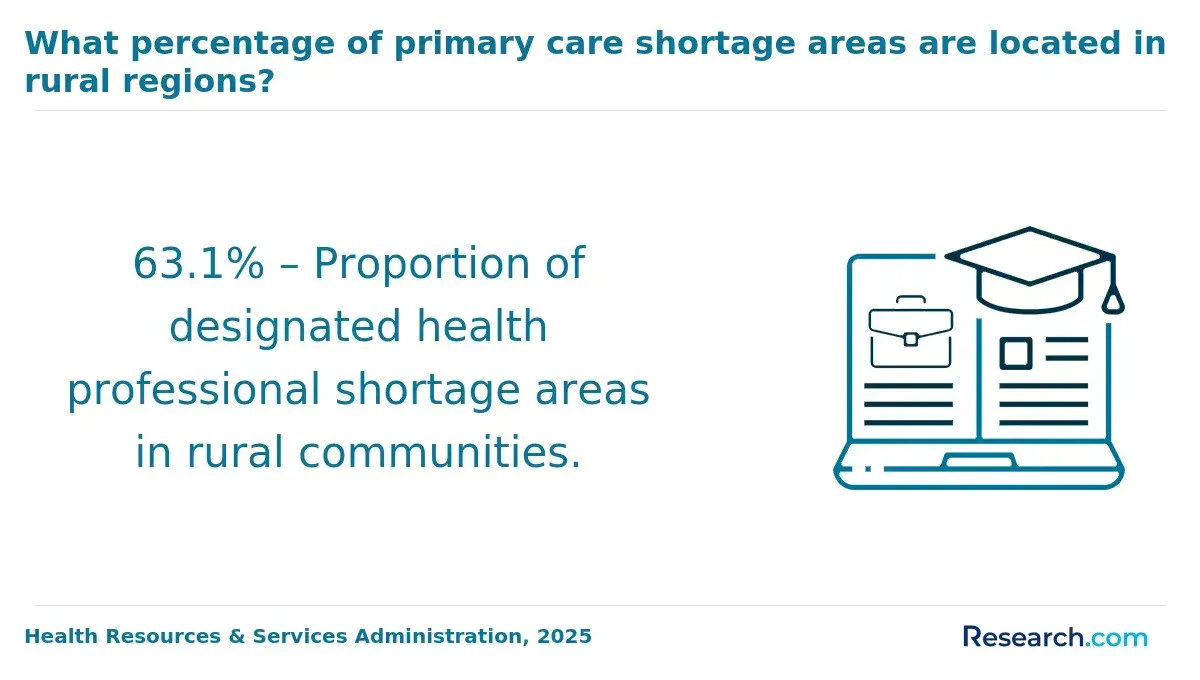
Shortages are not evenly distributed. Rural and underserved communities often experience more severe gaps in general surgery access, which can delay urgent care, strain hospitals, and force patients to travel for procedures. Similar access concerns appear in other healthcare professions as well; for example, the job outlook for occupational therapists is projected to grow by 12% in the next 10 years (U.S. Bureau of Labor Statistics, 2025).
Workforce planning requires more accurate data on where shortages exist and which specialties are most affected. Federal policy discussions have included incentives, research, funding, and other tools to address physician supply. Even with those efforts, the country faces a projected shortage of 15,800 to 30,200 surgeons by 2034.

How can aspiring surgeons manage financial challenges during training?
Surgical training is financially demanding because students spend many years in school and residency before reaching full earning potential. A practical plan should begin before medical school applications and include tuition, living expenses, exam fees, interview costs, relocation, residency salary limits, and loan repayment strategy.
- Compare total cost, not just tuition. Include fees, housing, transportation, health insurance, equipment, and the cost of living near clinical sites.
- Use federal aid first when appropriate. Federal loan programs may offer repayment protections that private loans do not.
- Ask about scholarships and service programs. Some schools, hospitals, states, and federal programs support students who commit to underserved areas or specific workforce needs.
- Plan for residency income. Residency is paid training, but income is usually far below attending-surgeon compensation while loan interest may still be a concern.
- Reduce application expenses where possible. Students completing prerequisites or early coursework may compare options such as online colleges with no application fee when the credits are accredited and acceptable to future medical schools.
What certifications and professional skills are essential for success as a surgeon?
Surgeons need formal credentials and a broad set of professional abilities. Licensure permits medical practice, while board certification demonstrates specialty competence. Additional training such as Advanced Trauma Life Support (ATLS) or subspecialty-specific certifications may be important depending on practice setting, hospital privileges, and specialty requirements.
Technical skill is only one part of the job. Surgeons also need disciplined judgment, communication under pressure, leadership in the operating room, ethical decision-making, teamwork with anesthesia and nursing staff, and the ability to explain risk clearly to patients and families. Students still planning their undergraduate route may compare foundational pathways, including associate degree vs bachelor degree which is better, but should remember that medical school requires completion of a bachelor’s degree and specific prerequisites.
| Skill or credential | Why it matters in surgery |
| State medical license | Required to practice medicine in every state. |
| USMLE or COMLEX | Demonstrates medical knowledge and clinical readiness during the physician training pathway. |
| Board certification | Commonly expected for specialty practice and hospital privileges. |
| Manual dexterity and spatial reasoning | Supports precise work in high-stakes operative environments. |
| Communication and informed consent | Helps patients understand risks, alternatives, and likely outcomes. |
| Stress management | Reduces the risk that fatigue and pressure compromise performance or well-being. |
Surgeon salary in the United States
Surgeon compensation varies by specialty, location, industry, experience, call responsibilities, and practice model. Salary comparisons among surgeons differ greatly from comparisons in other healthcare fields, such as the physical therapist vs occupational therapist salary comparison.
In 2024, the average salary for all surgeons is $343,990 (U.S. Bureau of Labor Statistics, 2024). Among surgical specialties, orthopedic surgeons have the highest average salary at $378,250 per year, followed by pediatric surgeons at $362,810, all other surgeons at $360,670, and ophthalmologists at $312,120. For all other surgeons, the top-paying industry is Offices of Physicians, with an average annual salary of $393,240, followed by Outpatient Care Centers at $372,500 and Offices of Other Health Practitioners at $218,800.
The states with the highest concentration of surgeon jobs, measured by employment per thousand, are West Virginia (0.67), Minnesota (0.61), and South Dakota (0.57). The states with the highest total employment of surgeons are New York (3,340), Texas (1,780), and Minnesota (1,710).
How can you develop resilience and maintain mental well-being as a surgeon?
Surgery exposes physicians to urgent decisions, long hours, complications, grief, and high expectations from patients, families, and hospitals. Resilience is not simply “being tough.” It involves building systems that protect performance and mental health over a long career.
- Use peer support and mentorship. Trusted colleagues can help normalize difficult cases and provide perspective after complications.
- Develop recovery routines. Sleep, exercise, nutrition, and time away from clinical duties are not optional for sustainable performance.
- Seek professional help early. Counseling or physician wellness services can be useful before stress becomes a crisis.
- Set boundaries where possible. Surgeons may not control every schedule demand, but they can still protect key personal commitments and recovery time.
- Maintain interests outside the operating room. Some physicians broaden their intellectual life through additional study, though an easy bachelor degree is not a substitute for surgical preparation.
Is an advanced academic qualification essential for surgical advancement?
An additional academic qualification is not required for every surgeon. Many surgeons build successful clinical careers with an M.D. or D.O., residency, fellowship where needed, licensure, and board certification. However, an advanced research degree can be useful for surgeons who want to lead clinical trials, teach in academic medicine, compete for research funding, or move into health-system leadership.
Before pursuing another doctorate, ask whether it directly supports your intended role. A research doctorate may make sense for academic surgery, surgical innovation, or outcomes research. A management or informatics credential may be more useful for administrative leadership. Cost also matters; some physicians compare flexible options such as a cheap doctorate degree online, but any program should be evaluated for accreditation, rigor, faculty expertise, and relevance to surgical career goals.
What are the emerging trends and innovations in surgical techniques and technology?
Surgery continues to change as hospitals adopt tools that improve visualization, precision, planning, and recovery. Aspiring surgeons should not expect technology to replace the need for judgment; instead, they should expect to train continuously as instruments, imaging, robotics, and data systems evolve.
- Minimally invasive surgery. Laparoscopic and related techniques use smaller incisions when clinically appropriate, which may reduce pain and recovery time for some patients.
- Robotic-assisted surgery. Systems such as the da Vinci Surgical System can support control, precision, and access in selected procedures, especially in specialties where robotic platforms are widely used.
- Artificial intelligence and machine learning. AI tools may support image analysis, surgical planning, risk prediction, and workflow improvement, but clinical responsibility remains with trained professionals.
- Augmented reality and virtual reality. AR and VR can support simulation, anatomy visualization, and procedural rehearsal for training and planning.
- 3D printing. Patient-specific models and custom implant planning can help surgeons prepare for complex reconstructive and orthopedic procedures.
Challenges and real-life insights from surgeons
Students often focus on the prestige of surgery, but the daily reality is more complex. Surgeons must combine technical skill with emotional discipline, stamina, humility, and lifelong learning. Many describe the career as deeply meaningful, yet also difficult to separate from personal identity because the stakes are so high.
| Common challenge | What aspiring surgeons should understand | Better preparation strategy |
| High-stakes decisions | Not every outcome is controllable, even when care is appropriate. | Build mentorship, reflective practice, and strong communication skills. |
| Long and irregular hours | Call schedules, emergencies, and operative demands can disrupt personal routines. | Learn time management and evaluate lifestyle expectations by specialty. |
| Physical strain | Standing, posture, and repetitive motions can contribute to injury. | Use ergonomic training and report equipment or positioning problems early. |
| Technology adaptation | Robotics, AI, imaging, and simulation require ongoing training. | Choose programs that offer broad exposure without sacrificing fundamentals. |
| Teaching and leadership | Senior surgeons often supervise residents, students, and multidisciplinary teams. | Develop feedback, delegation, and team communication skills. |
Medical education quality also depends on the institution, clinical partnerships, faculty, and research environment. Some aspiring physicians begin their academic search with non profit universities, but future surgeons should verify that every course and degree supports medical school admission requirements.
What role does residency program selection play in your surgical career success?
Residency is one of the most important decisions in a surgical career because it shapes your operative volume, autonomy, mentorship, research opportunities, specialty exposure, and professional network. A strong medical school record helps, but students should also think strategically about the environment in which they will train for several intense years.
Evaluate programs by accreditation, case mix, board pass outcomes, resident support, faculty availability, research infrastructure, fellowship placement, culture, and workload. Undergraduate preparation also matters before that point; students still selecting a major can compare college majors based on academic strength, prerequisite fit, and preparation for medical school rather than perceived prestige alone.
What alternative options exist for completing prerequisite coursework?
Traditional campus-based undergraduate programs are not the only way to complete prerequisite courses, but future medical school applicants must be cautious. Online or hybrid coursework may be acceptable at some medical schools and less acceptable at others, especially for laboratory sciences. Always confirm policies before enrolling.
- Check regional accreditation. Medical schools generally expect coursework from accredited institutions.
- Confirm lab requirements. Biology, chemistry, organic chemistry, and physics often require lab components.
- Ask medical schools directly. Policies on online prerequisites can vary.
- Protect transferability. Do not assume every credit will transfer or satisfy medical school prerequisites.
- Compare cost and rigor. Options such as the cheapest online nursing prerequisites can help students think about affordability, but premedical requirements must match medical school expectations.
Is being a surgeon the right career for you?
Surgery may be a strong fit if you are drawn to direct patient care, anatomy, urgent problem-solving, technical procedures, and long-term mastery of a difficult skill. It may not be the right path if you want a short training timeline, predictable hours early in your career, or a healthcare role with less exposure to emergencies and complications.
Before committing, compare surgery with other healthcare careers and specialties. Shadow surgeons in more than one setting, talk to residents, ask about call schedules, learn about debt and repayment, and consider how you respond to stress, uncertainty, and responsibility. Students exploring adjacent clinical fields may also review options such as an online masters in speech language pathology or ask practical career questions like What do I need to become a physical therapist assistant? if they want a shorter route into patient care.
Some physicians later pursue additional academic credentials or niche expertise, including flexible options such as shortest doctoral programs online courses, but those choices should support a clear professional goal. For aspiring surgeons, the non-negotiable route remains medical school, licensing, residency, and specialty certification.
Common mistakes to avoid when planning a surgical career
- Choosing a major only because it sounds “premed.” Medical schools do not require one specific major; strong grades and completed prerequisites matter more.
- Ignoring accreditation and course acceptance. Online or transfer courses may not satisfy every medical school’s policies.
- Underestimating the timeline. The full path can take 10 to 14 years before independent practice, and fellowship may add more training.
- Looking only at salary. Compensation is high, but so are training costs, stress, hours, and liability.
- Assuming every specialty has the same lifestyle. Call burden, emergency volume, operative schedule, and practice setting vary widely.
- Waiting too long to seek mentorship. Surgical mentors can help with research, rotations, residency strategy, and realistic career expectations.
- Neglecting well-being. Burnout and physical strain are real risks; healthy habits and support systems should begin during training.
Questions to ask before choosing the surgeon path
- Am I willing to spend 10 to 14 years in education and training before full independent practice?
- Can I handle high-pressure decisions where patient outcomes may be uncertain?
- Have I shadowed surgeons in hospital, clinic, emergency, and postoperative settings?
- Do I understand the financial cost of medical school and the income limitations during residency?
- Which surgical specialties match my interests, tolerance for call, and desired practice setting?
- What support systems will help me stay healthy during medical school and residency?
- Am I interested in clinical practice only, or do I also want research, teaching, or leadership roles?
Key Insights
- The required degree is an M.D. or D.O. There is no required undergraduate surgery major; medical school prerequisites, performance, MCAT preparation, and clinical readiness matter most.
- The path is long. Becoming a surgeon usually takes 10 to 14 years through college, medical school, residency, licensing, and exams.
- Salary is high but not guaranteed. Surgeon pay varies by specialty, industry, state, experience, and practice model; in 2024, reported averages include $348,890, $343,990, and $337,980 in different parts of the source data.
- Residency is career-defining. Case volume, mentorship, culture, research opportunities, and specialty exposure can strongly affect future options.
- Shortages remain a concern. The U.S. faces a projected shortage of 15,800 to 30,200 surgeons by 2034, with rural areas often experiencing sharper access problems.
- Technology is changing surgical practice. Robotics, minimally invasive techniques, AI, AR, VR, and 3D printing are expanding what surgeons must learn, but they do not replace clinical judgment.
- Well-being is a professional requirement. Long hours, high-stakes work, burnout risk, and musculoskeletal strain make resilience, ergonomics, and support systems essential.
References:
- HRSA. (2025). State of the Primary Care Workforce, 2025. https://bhw.hrsa.gov/sites/default/files/bureau-health-workforce/data-research/State-of-the-Primary-Care-Workforce-2025.pdf
- Medicushcs. (2026). *2026 healthcare trends: Insights for physicians and advanced practitioners*. https://medicushcs.com/locum-tenens/resources/healthcare-trends-insights-for-physicians-and-advanced-practitioners
- UN News. (2026). Global health systems 'at risk' as funding cuts bite, warns WHO. https://news.un.org/en/story/2026/02/1166869
- U.S. Bureau of Labor Statistics. (2024, August 29). Occupational Outlook Handbook: Physicians and Surgeons. https://www.bls.gov/ooh/healthcare/physicians-and-surgeons.htm
- U.S. Bureau of Labor Statistics. (2025). Employment Projections 2024-2034. https://www.bls.gov/emp/
- U.S. Bureau of Labor Statistics. (2025, April 3). Occupational Employment and Wage Statistics. https://www.bls.gov/oes/current/oes_nat.htm
- U.S. Bureau of Labor Statistics. (2025, April 3). Occupational Employment and Wages, May 2024: 29-1240 Surgeons. https://www.bls.gov/oes/current/oes291240.htm
- U.S. Bureau of Labor Statistics. (2025). Occupational Outlook Handbook: Healthcare. https://www.bls.gov/ooh/healthcare/
Other Things You Should Know About A Degree Need to Become a Surgeon
To become a surgeon in the U.S., you need to complete a bachelor’s degree followed by a medical degree (M.D. or D.O.). Additionally, you must complete a residency program in surgery, which lasts from three to seven years depending on the subspecialty.
It typically takes about 10 to 14 years to become a surgeon. This includes four years of undergraduate education, four years of medical school, and three to seven years of residency training.
Surgeons diagnose and evaluate patients' medical conditions, plan and perform surgical procedures, monitor postoperative recovery, communicate with patients and their families, and stay updated with the latest medical knowledge and skills.
Surgeons face long hours, high-pressure work environments, the risk of burnout, and ergonomic challenges that can lead to musculoskeletal injuries. They also need to manage high education costs and stay current with medical advancements.
To become a board-certified surgeon in 2027, start with earning a Bachelor's degree in a science-related field. Follow with a Medical Doctor (MD) or Doctor of Osteopathic Medicine (DO) degree from an accredited medical school. Complete a residency in general surgery, typically lasting 5 years. Pass the USMLE for licensing, then pass the relevant board certification exam.
Yes, you can pursue advanced research degrees such as a Ph.D. or Doctor of Medical Science (DMSc) in surgery. These programs focus on research, scholarly work, and academic pursuits within the field of surgery.
The states with the highest concentration of surgeon jobs per thousand are West Virginia (0.67), Minnesota (0.61), and South Dakota (0.57).
Becoming a surgeon can be a fulfilling and rewarding career for those who have the passion, skills, and commitment to help others. It requires significant dedication, long hours, and the ability to work under pressure. Consider the pros and cons carefully before deciding if it is the right career choice for you.


